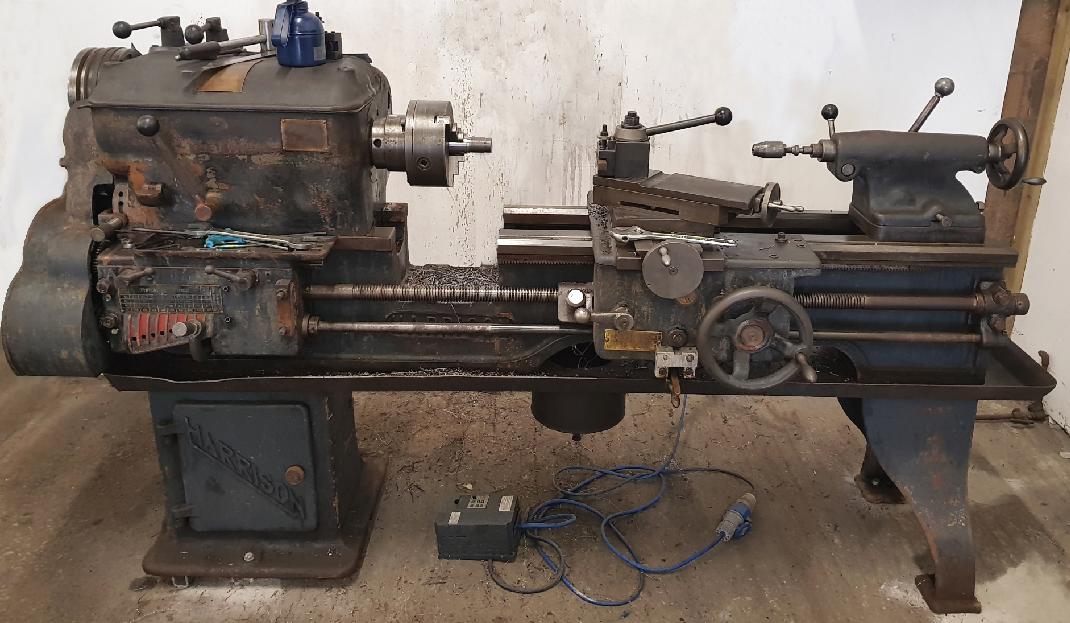
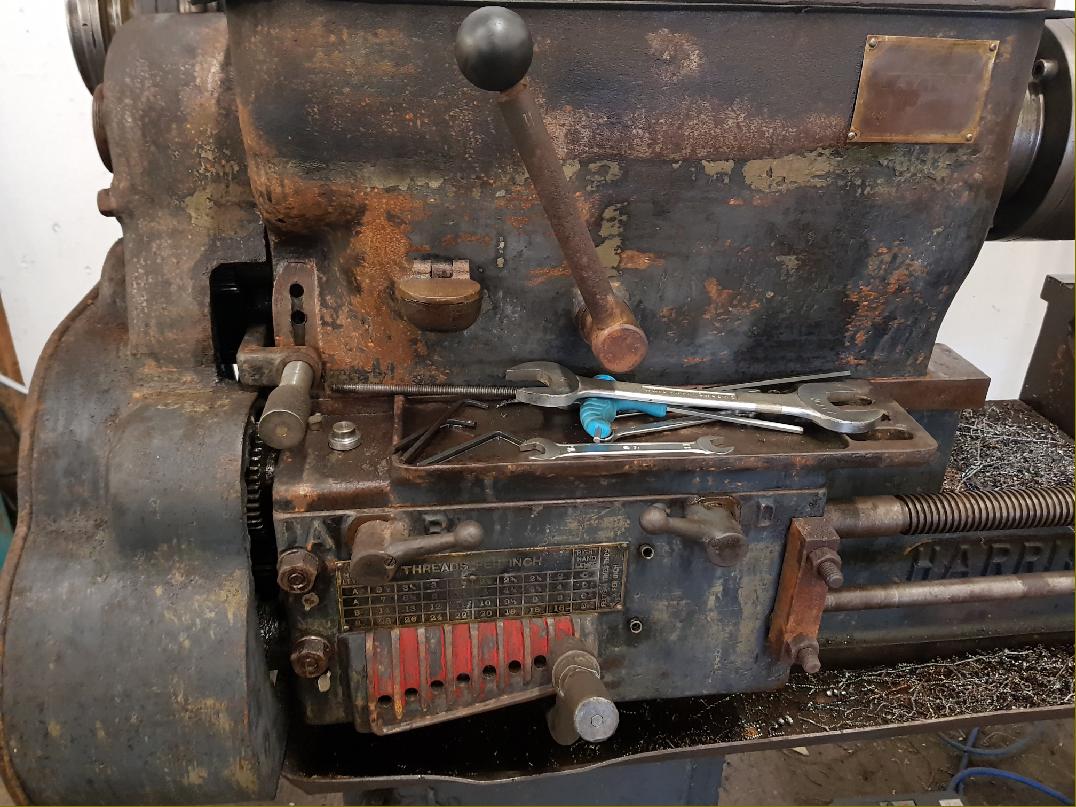
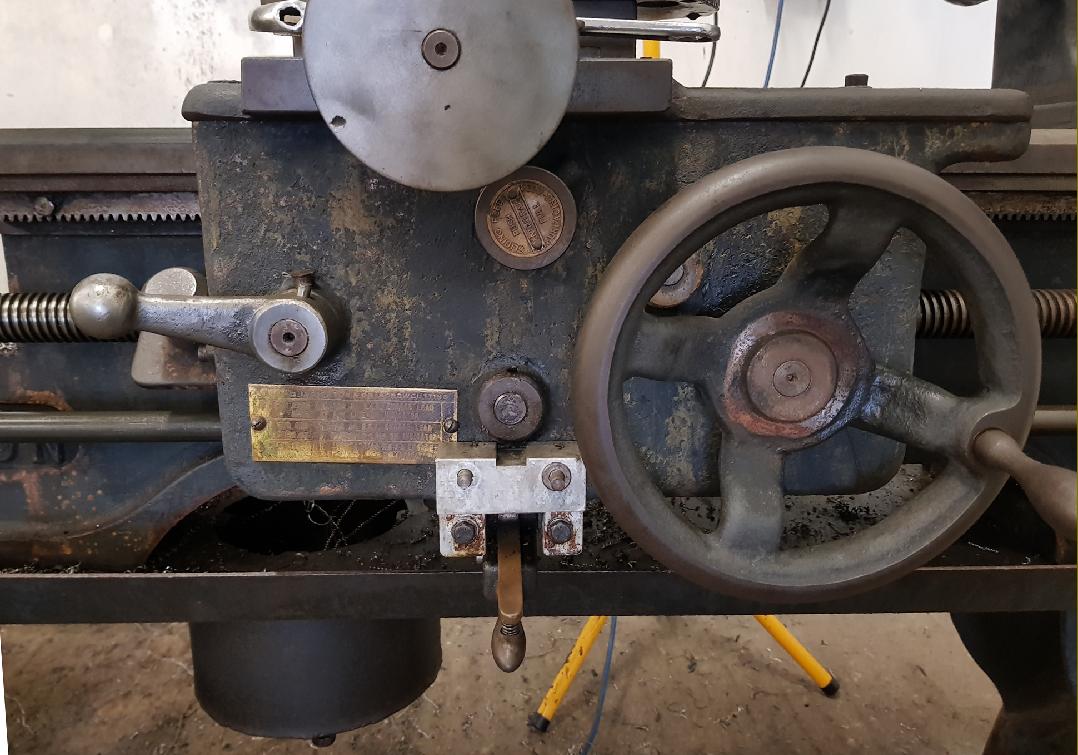
The screwcutting gearbox had hardened and shaved gears running on ball-bearing-supported, multi-splined shafts and was fed lubricant from a pressurised supply; it was able to generate 66 threads from 2 to 120 tpi (including the useful 11.5 and 27 and pipe-thread pitches) or, on the optional metric version, from 1/4 mm to 9 mm pitch. Sliding feeds varied from 0.0019" to 0.57" and surfacing feeds from 0.009" to 0.028" per revolution of the spindle; automatic stops were provided for the sliding feed.
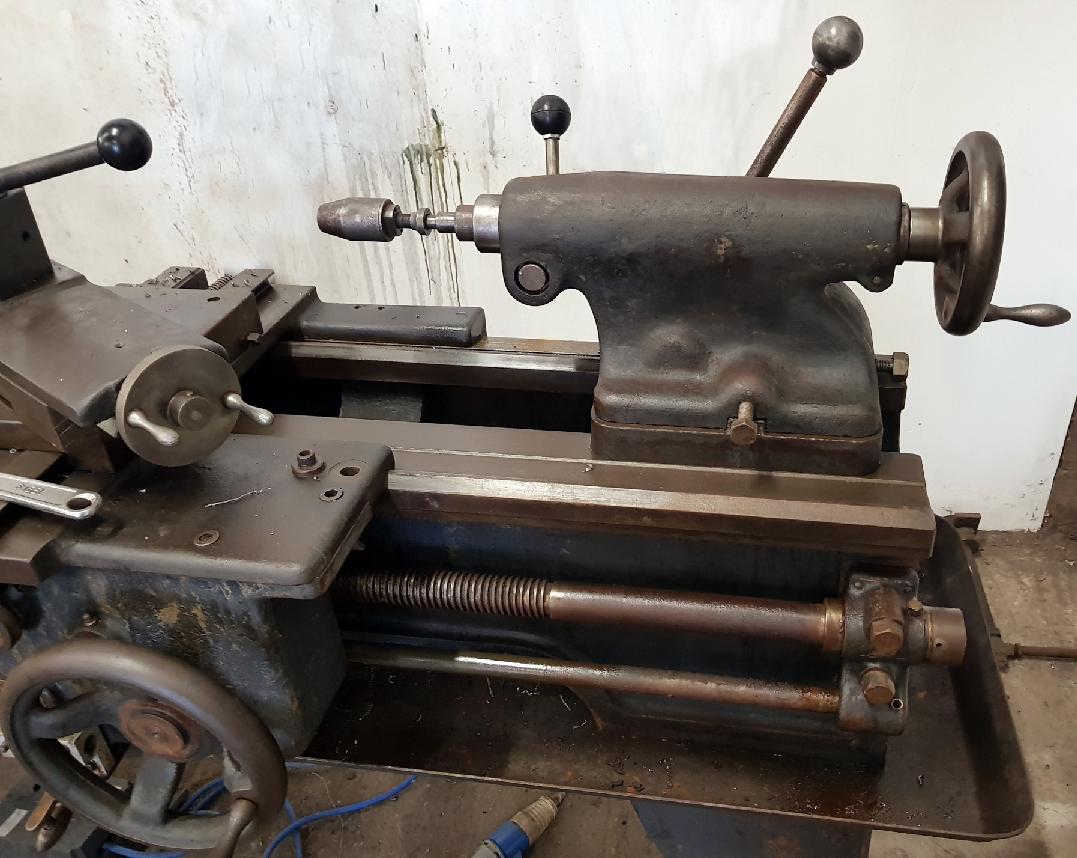
Above and below: The first model of the 17-Inch had a rather inadequately proportioned compound slide rest that flexed under the heaviest cuts; Harrison improved the situation considerably by employing an unusual design where two widely-spaced V-shaped, cross-slide ways were machined across the saddle with two long L-section plates (held by socket screws) to restrain the slide's vertical movement. With the slideways of the top slide arranged in an identical fashion the result was a significantly strengthened and more rigid assembly which gave a much smoother, more certain operation when working the lathe to its maximum capacity.
A detachable gap piece was fitted to the bed and with this section removed a piece of material 26 inches in diameter and 9.5" deep could be machined.
Two sizes of fixed steady were offered, both with proper screw-adjusted arms.