Home   Machine Tool Archive   Machine Tools For Sale & Wanted     Email  Tony@lathes.co.uk

South Bend 9-inch Lathe Clones
For South Bend Spares click here - Handbooks and Parts Lists are also available
Blomqvist - Boxford - Hercus - Joinville - Moody - PurcellSanches Blanes
- Sheraton - Smart & Brown - Storebro

Stands & Drive Systems    Headstock Details    Carriage Assembly    Screwcutting   
9-Inch Home Page   
South Bend Home Page   Accessories   South Bend 9-inch Clones
Original 1934 9-inch Model 5    In the Factory

The South Bend 9" "Workshop" lathe was copied by at least ten makers and illustrated below - and on other pages - are examples of the machine as developed in Australia, Brazil, England and Sweden. Where more details have been found for particular manufacturers hyperlinks against each machine will take you to further pages. In England Boxford and Smart & Brown made examples, the latter as part of a wide range of machines but the former as their only lathe. Three examples were made in Australia in the years immediately following World War Two: the Hercus, Purcell and Sheraton. The most successful of these was Hercus, who produced a machine that was steadily developed to meet more modern requirements. Purcell was owned by Mr. William Crooks who, having bought the Purcell Engineering Company in 1940, expanded that company's range (previously marketed using the "Vanguard" label) to include smaller lathes and other machine tools. In addition to the South Bend copy the company also made other lathes of various sizes - and information about these is sought. Although production of Purcell lathes ceased around 1960, Mr Crooks also had an interest in a distribution company, Demco Machine Tools of Sydney who marketed the New Visby and Record brands. The Sheraton was made in Bayswater, Melbourne, from the early 1950s until 1981. The Sheraton "Conquest" was a geared-head version of the South Bend 10-inch whilst other, smaller lathes of a different design, the Cub and Cadet for example, were also manufactured.  Sheraton had, apparently, a very close relationship with Demco and leased most of their (usually Czechoslovakian TOS) machine tools from them; in turn Demco (the import agents for TOS) acted as agents for  Sheraton lathes. Reports from Australia suggest that one of the reasons for the demise of  Sheraton was its move from what was described as a "...dingy, brick rabbit-warren old factory..." on Heidelberg Road to new premises some distance away. Many skilled workers, being unwilling to travel so far, took redundancy compensation and the company lost several key personnel. At some point the Sheraton concern was purchased by the UK-based 600 machine-tool group who also handled, through their Selson Company, the import of TOS lathes into the UK - as well as many other world-wide machinery interests.
Another copy, though somewhat developed, was the Moody, manufactured by Matthew Moody & Sons of Terrebonne in Quebec, Canada. This lathe had an 11-inch swing, a roller-race headstock, a much larger spindle bore and a number of detaile differences. If you have a Moody, please make contact.
Even in Sweden, home to many makers of fine-quality machinery, the benefits of copying an established machine were recognised and both the Blomqvist and Storebro companies manufactured their own lightly-modified version until, it is believed, the early 1970s; a gearbox-equipped (Model A) Blomqvist can be seen at the bottom of this page and a changewheel (Model C) version of the Storebro here.
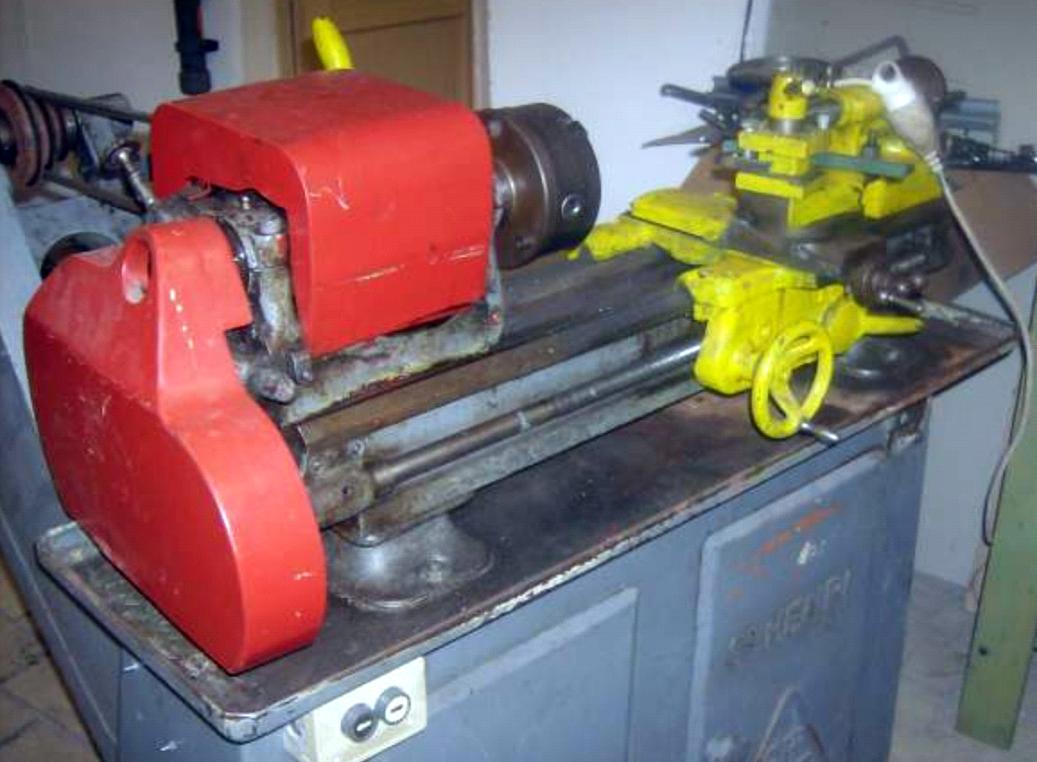
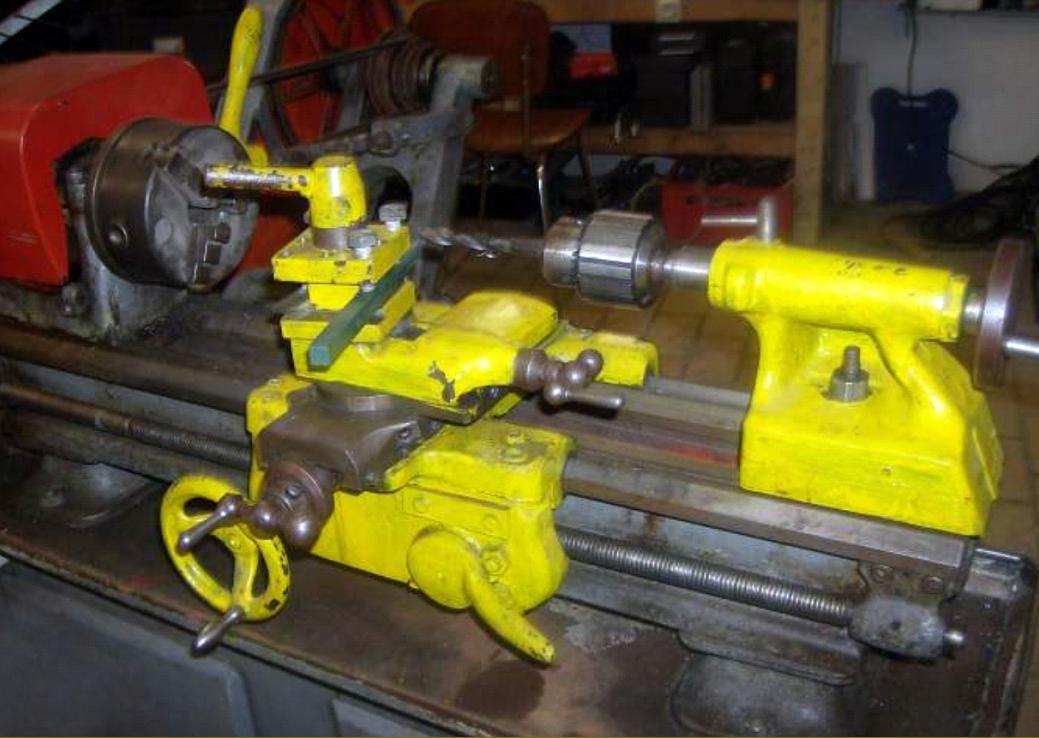
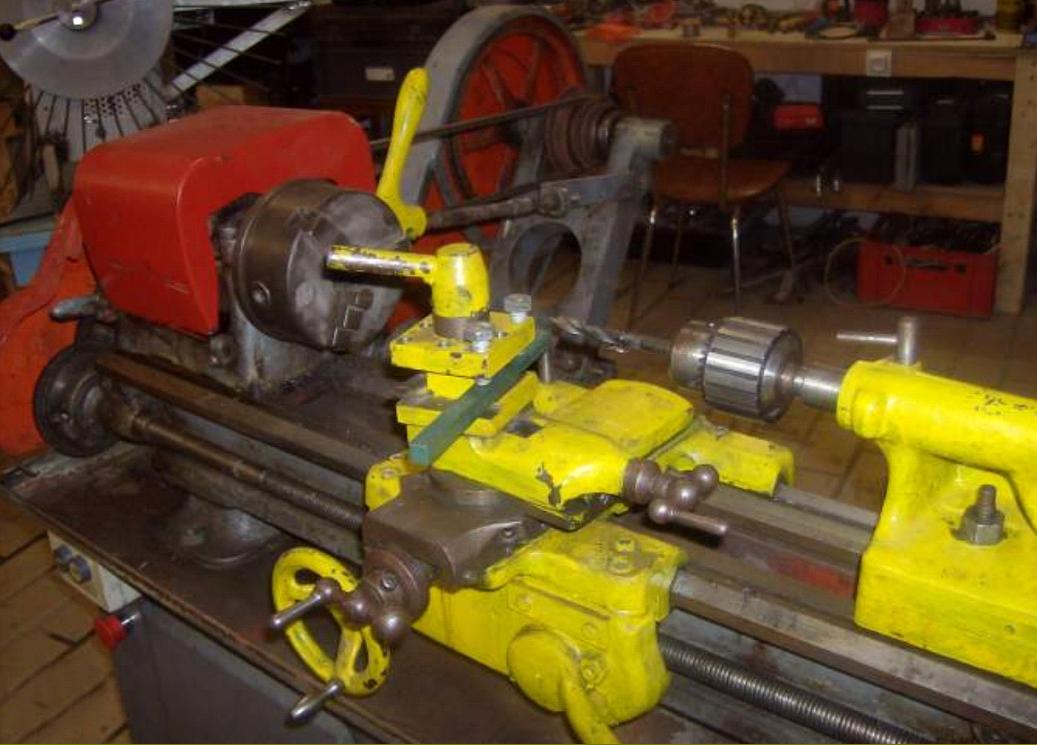
Although probably not produced in great numbers copies were also made in Brazil by Sanches Blanes S.A. (with machine labels marked:
Industria de Maquinas Ferramentas. Ribeiraopires SP Industria Brasileira) and by a company of which little is known "Usina Metalúrgica Joinville S.A." at Joinville city, Santa Catarina State. The latter machine exhibited far more significant changes to the original than any other clone with adjustable bronze headstock bearings and an entirely novel design of apron. If any reader can help with details of the Joinville company the writer would be pleased to hear from them.
Further details of the standard American 9-inch "Workshop" South Bend 9-inch lathes can be found here..

American-manufactured Model A South Bend with screwcutting gearbox and power cross feed.

Hercus is an Australian built version of the South Bend 9 inch "Workshop" lathe; the machines were in production, as the 200 Series, with a 10" swing and able to pass 26 mm (1") through the spindle bore, until 2001. As may be seen, although the styling has been largely "squared off", the tailstock and top slide were still definitively, and charmingly, South Bend in appearance. The most significant changes were the neat, built-on 16-speed countershaft unit and the enclosure of  it, and the changewheels, to modern safety standards.
Production of Hercus machine tools began in the 1940s and it instructive to note that the firm's founder, Mr. F.W. Hercus, wrote to the British press in 1954 (but without revealing that he was a machine-tool manufacturer) outlining the Australian Customs' requirements for immigrants bringing their own model-engineering tools with them. He also pointed out that, whilst it took sixteen weeks' work  in England, at £7 per week, to buy a Model C South Bend, in Australia an "equally good" copy  could be bought with just ten weeks' wages. More Hercus information can be found HERE

The English Smart & Brown "Sabel"  4.5" x 18". This was a beautifully-made copy of the South Bend  9-inch - but with a more fully enclosed headstock  (somewhat along the lines of the South Bend "Light Ten"), and a re-designed spindle assembly with larger bearings, a fractionally larger bore and the nose thread increased from 1.5-inch to 1.75-inch t.p.i. . The lathe was offered on a large sheet-metal cabinet stand with a superbly engineered if rather over-deep countershaft unit. It was available without the screwcutting gearbox in two other versions: the "SAB", which retained the power cross feed apron, and the "S"  (presumably for Standard) which did not. Various numbers of spindle speeds and speed ranges were offered, but most lathes appear to have been supplied with a 16-speed drive unit which spanned 45 to 1200 rpm. As an example of the wonderful attention to detail (although some spoilt-sports would call it neglectfully-wasteful over-engineering) instead of just bolting the Dewhurst reversing switch to the face of the stand it was mounted on the headstock - tucked away at the back and operated by a cross shaft from a chrome-plated bronze lever mounted on the front face. To guild the lily the end of the cross shaft carried a large gear in bronze which acted on another small bronze gear fastened to the spindle of the switch..
Although spares are no longer available for this range of  S & B lathes, most Boxford and South Bend parts and accessories will fit, providing a cheap and easily route to restoration. "Sabel" was the name of the original S & B works in Biggleswade, Bedfordshire, England.
(A comprehensive handbook and a set of 50 original sectional drawings are available for this model)

English Boxford Model AUD Mk. 1 on an underdrive stand.

Swedish-build Blomqvist South Bend clone with a roller-bearing headstock and bed and feet cast as one

Home      Machine Tool Archive      Lathes for Sale
Email  Tony@lathes.co.uk

South Bend 9-inch Copy
Stands & Drive Systems    Headstock Details    Carriage Assembly    Screwcutting   
9-Inch Home Page    South Bend Home Page   Accessories   South Bend 9-inch Clones
In the Factory   Original 1934 9-inch Model 5
Blomqvist - Boxford - Hercus - Joinville - Moody - PurcellSanches Blanes
- Sheraton - Smart & Brown - Storebro