|
The Following is Extracted from the South Bend 9-inch section of the Archive
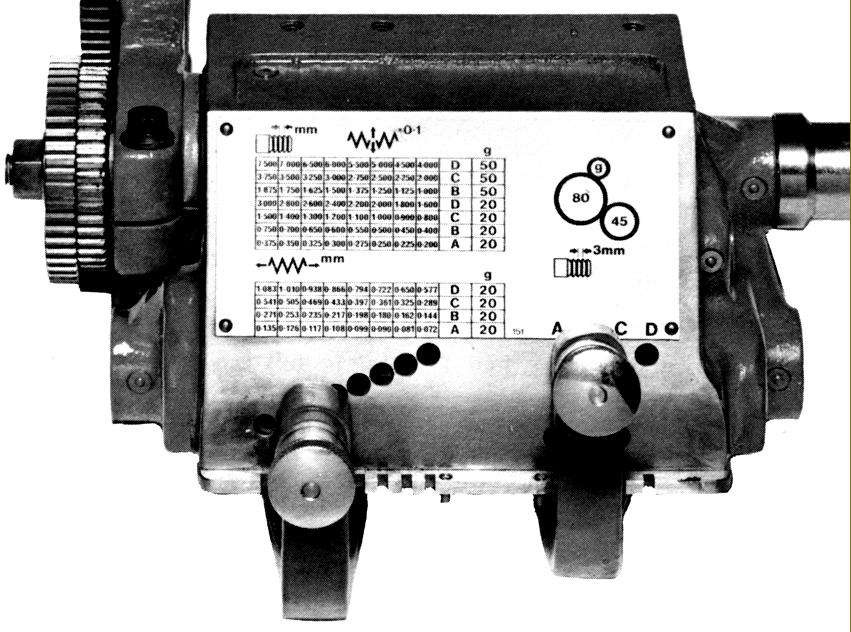
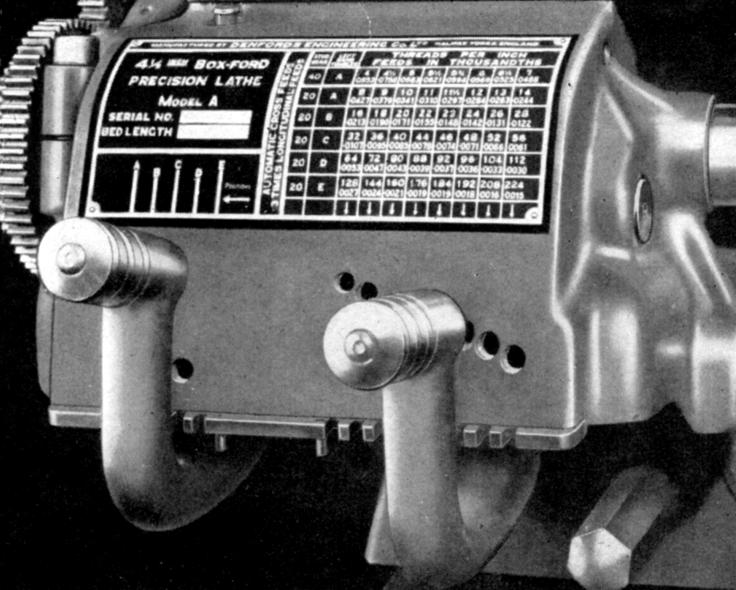
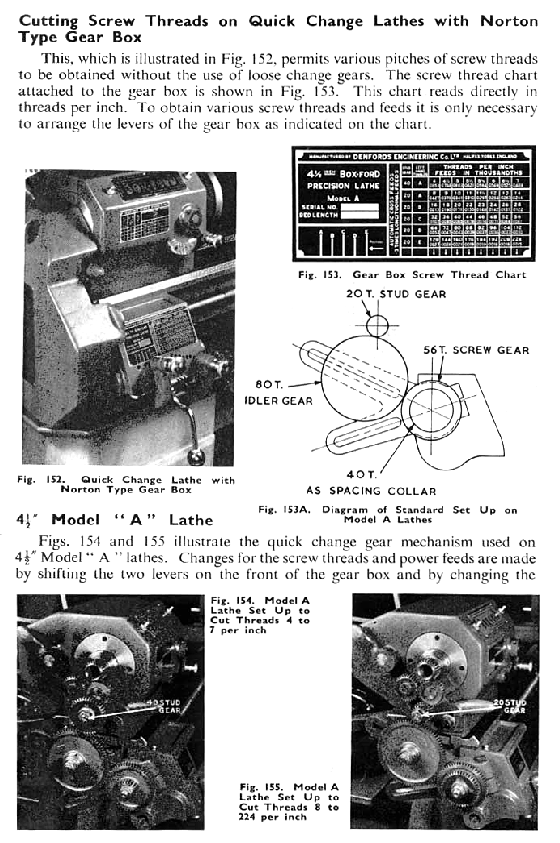
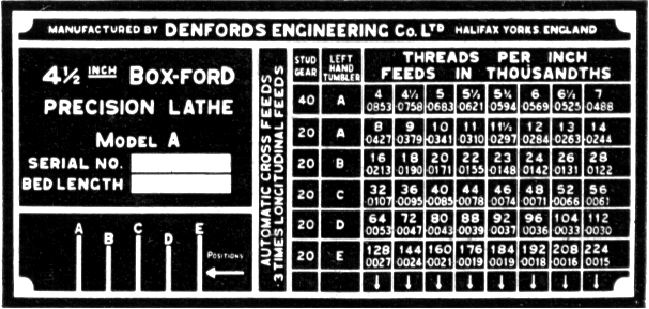
It was five years after the lathe's introduction, in 1939, before South Bend finally offered the option of a screwcutting gearbox. Both Metric and English versions were produced, with kits available to convert one type into the other by the use of translation gears mounted externally on the forked quadrant arm. The English and metric screwcutting gearboxes were different and are easily recognised. The English box had the diagonal line of indent holes on the right hand half of the box's front face, the metric version had them across the left-hand half. The chart for the top of the English-threads gearbox is on this page and the metric Gearbox on this page. "English" threading Model A lathes with an 8 threads-per-inch leadscrew and a screwcutting gearbox had a standard ex-factory drive train consisting of: 20t, 40t, 56t and an 80t idler. To convert this gearbox to cut Metric threads the following gears are needed: 24, 26, 28, 32, 36, 44, 48, 127/100 compound Metric threading Model A lathes with a 6 mm pitch leadscrew and a screwcutting gearbox had a standard ex-factory drive train consisting of: 20t, 45t, 50t and an 80t idler. To convert this gearbox to cut English threads the following gears are needed: 18, 22, 26, 38, 54, 64, 88, 135/127 compound and a 48/24 compound. Because these gearboxes have no supply of oil to dip into, it is essential to be liberal with the oil can, especially into the bearings. Keep the bracket arm that carries the changewheels just nipped tight; if the bearings seize, or the carriage runs into the chuck, this will allow the gears to force themselves out of mesh and avoid expensive damage. It is very straightforward, in theory, to convert a changewheel-equipped model C or B to carry both the gearbox and power-feed apron from a Model A and, should you have one of the two lesser models and come across a poor-condition A with the necessary parts, it would be a good idea to acquire it and upgrade your own machine. As a minimum you would need not only the complete apron and gearbox but also a cross-feed screw with a drive gear, the correct changewheels (20t, 45t, 50t and an 80 idler with a boss) the slotted leadscrew and the "Y-shaped" changewheel bracket (the bracket on the B and C is slightly different--the bulge where the clamping bolt passes through fouls the gearbox). On pre-gearbox year models it will be necessary to drill an extra hole through the bed at the headstock end to take the third mounting screw. When everything is in place check (by hand and with the changewheel bracket removed) that the assembly rotates easily; if it doesn't, slacken the screws holding both the gearbox and the leadscrew hanger bracket, then retighten them a little at a time rotating the leadscrew whilst you do so. Unfortunately there is a caveat to all this for, whilst the gearbox is a problem-free fit, experienced South Bend mechanics report that the company did not hold the tolerances of saddles fitted to the C to the same tightness as those intended for an A. The result is that the gear on the cross-feed screw may not mesh properly with its apron-mounted drive, being either too slack or too tight. All the gears necessary to generate metric and other pitches are now available at a good saving on the factory price.
Home Machine Tool Archive Lathes for Sale E-MAIL Tony@lathes.co.uk Boxford Screwcutting with the Gearbox (hidden page) Boxford Models A, B, C, AUD, BUD & CUD Boxford Data & Text Boxford VSL& 500 Vari-speed Boxford Accessories ME10 Precision Boxfords
|
|