|
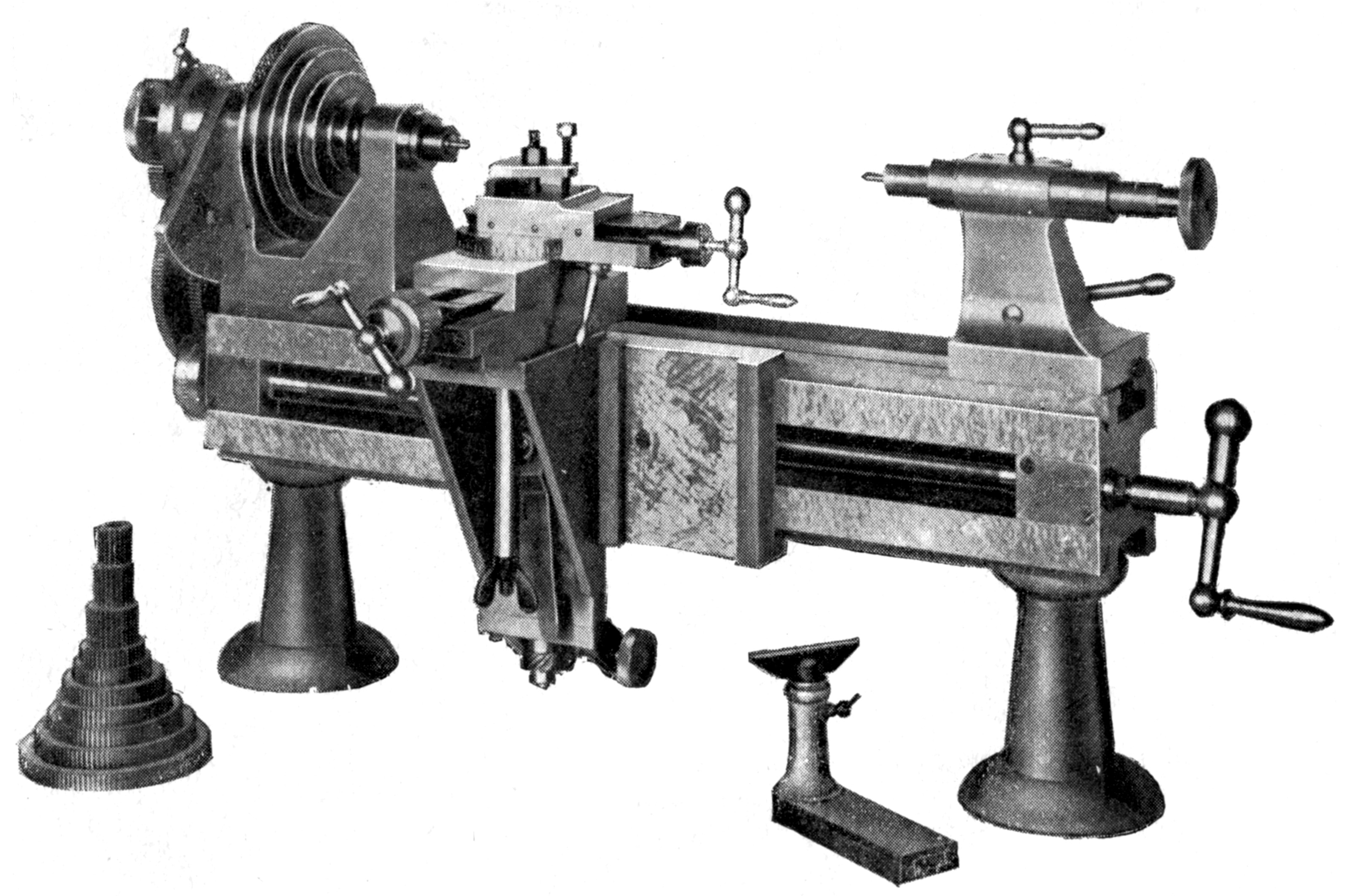
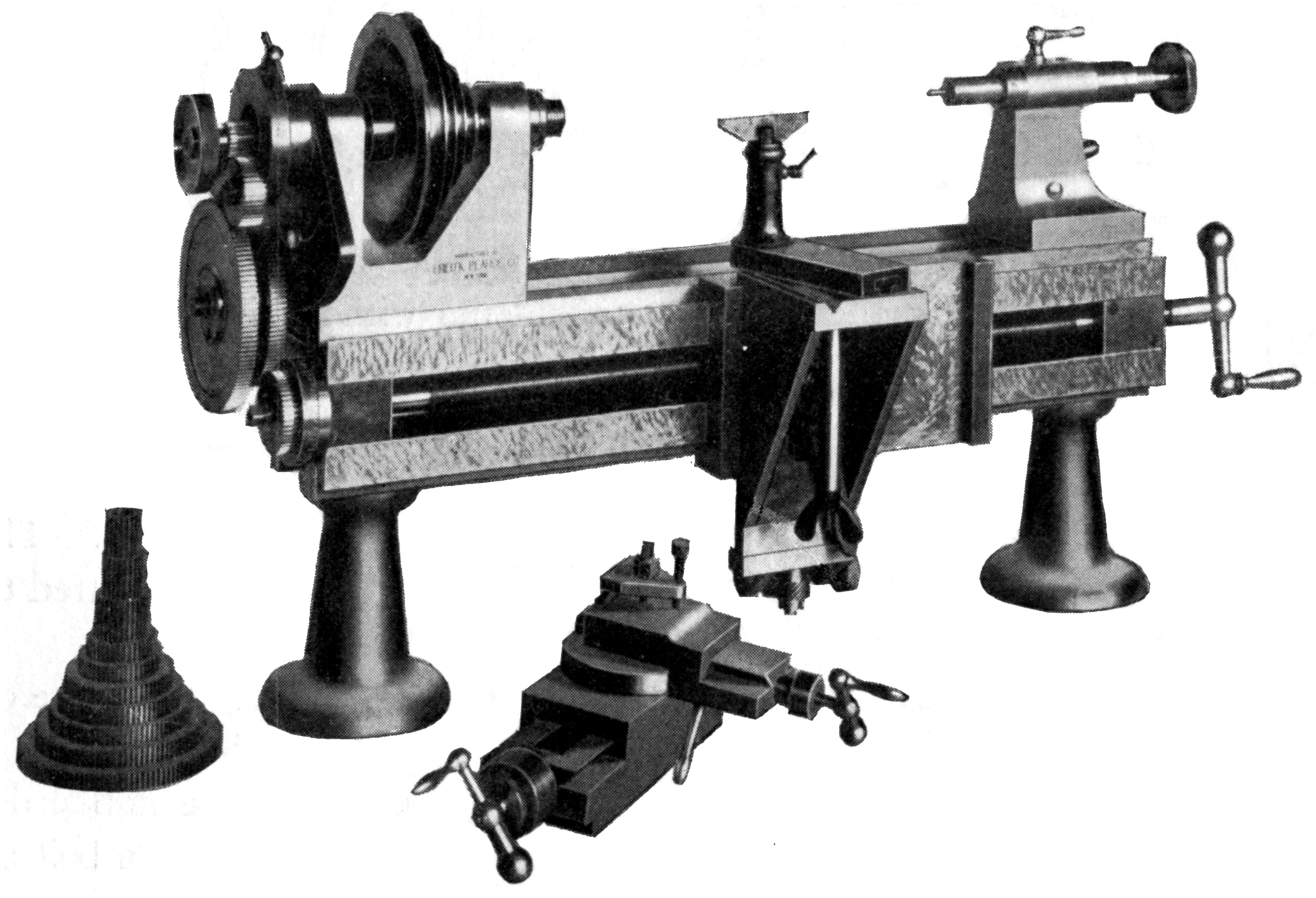
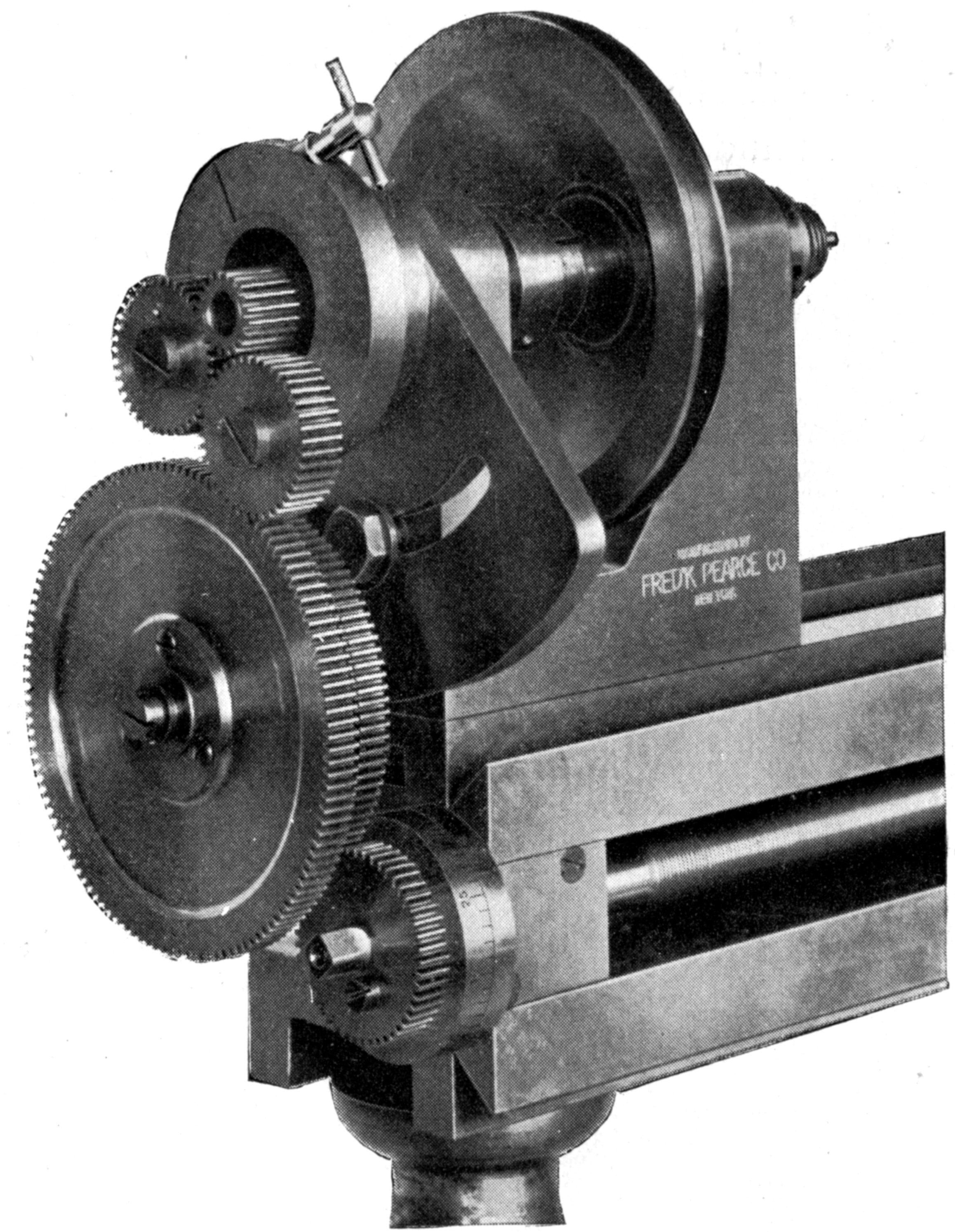
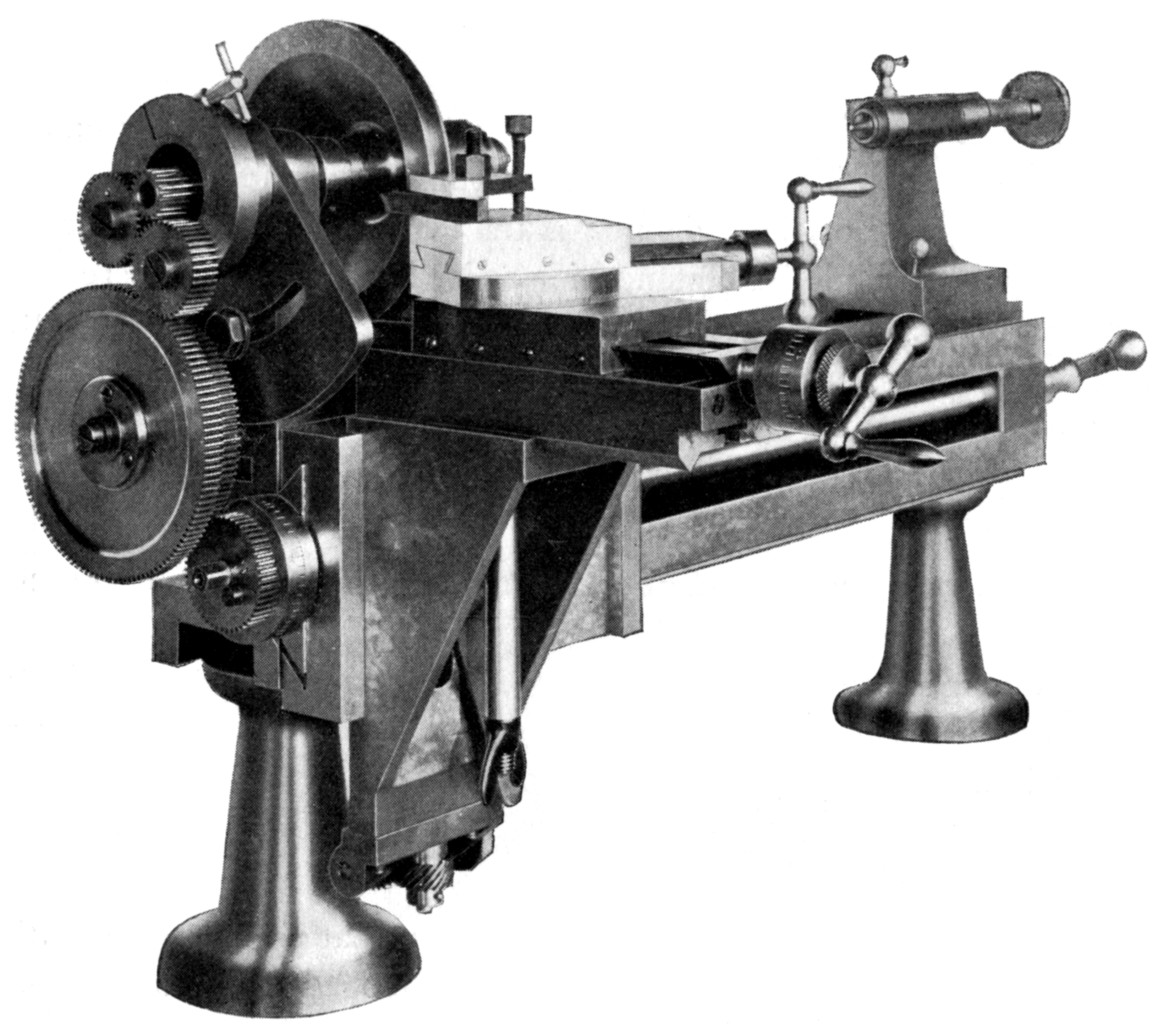
Continued: Headstock Elegantly styled, with crisp lines, a superb finish and the maker's name engraved on the front face, the headstock echoed watch-lathe practice in having both its cone bearings and hardened spindle in tool steel. Naturally, the mating parts were lapped together to ensure a perfect fit and a long, trouble-free life at high speeds. The spindle was hollow, machined to accept draw-in standard WW collets and, with a ground thread nose, able to mount chucks and other screwed fittings. A 4-step pulley was used, for drive by a smooth running (though limited torque capacity) round "gut" rope. Interestingly, the headstock (with its flat faces) bore a resemblance in its general appearance that used on the miniature precision Rolls-Royce lathe of the 1940s. Screwcutting and power feed Both the tumble-reverse and changewheel assemblies used a simple but ingenious (and possibly unique) type of mounting. Arranged so that it could rotate around the left-hand spindle bearing, the tumble-reverse bracket was carried on a boss, slotted and pierced through on a chord line with a locking screw. The two gears were mounted on studs, protruding from the outer face of a lower segment, but no separate output stud gear was used, the tumbler gears mating directly with the gear below. Changewheels were carried on a flat plate, also arranged to rotate around the bearing and set immediately inboard of the tumble-reverse assembly. The lower section of the plate was slotted, to allow for adjustment, but as only one gear-mounting stud was provided this would have placed a severe restriction on the range of pitches available nor allowed the setting of a compound gear train for a carriage fine feed. Unfortunately, in addition, there were serious limitations to the employment of screwcutting and the power sliding feed. The first was a lack of backgear, and hence no gear-driven slow speeds - a problem that could have been partially alleviated by using a suitable countershaft to obtain 125 r.p.m., or thereabouts. However, even if this problem could have been overcome, there remained the difficulty of a serious design fault - a full nut on the fine-thread, 20 t.p.i. leadscrew combined with the lack of a dog clutch (or other means) of instantly stopping the drive. Once the changewheels were engaged, and the carriage moving, there was, apart from stopping the motor or using a fast-and-loose pulley assembly on the countershaft, no means of releasing the cut - and certainly no method of stopping it accurately at the end of a thread. The only redeeming factor was the use of a very fine pitch, accurately-made leadscrew (within 0.003" error in 12 inches) for this, combined with a large handle at the tailstock end of the bed, allowed the operator to maintain a steady rate of slow feed by hand. Sadly, the opportunity was not taken to fit the handle with a micrometer dial to read the position of the carriage accurately. Continued Below:
|
|