More information about Lorch Lathes is available in various Sales Brochures;
click HERE for details
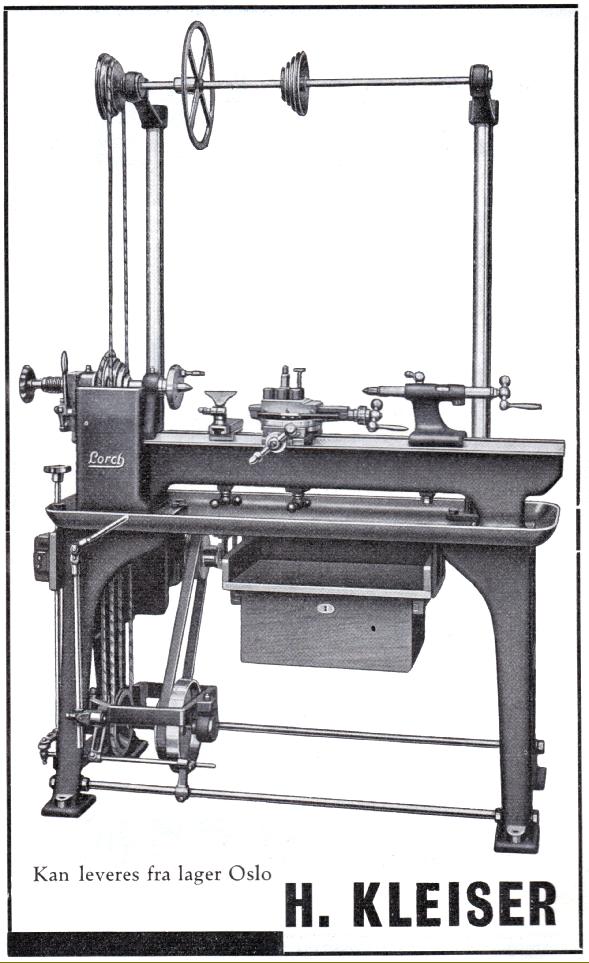
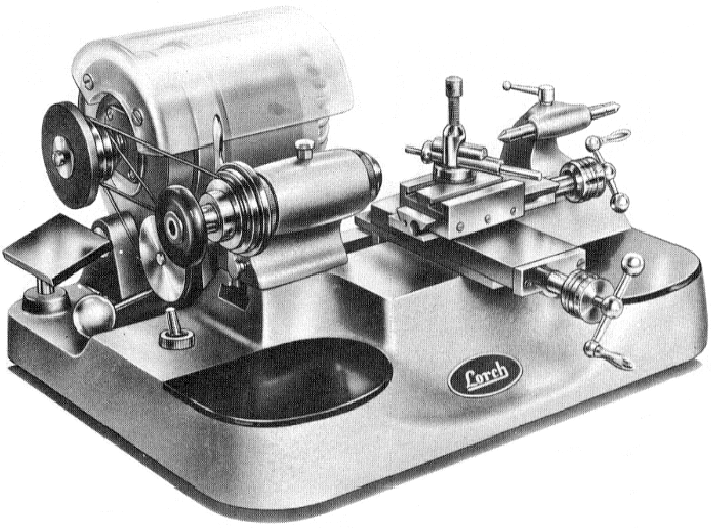
Founded in 1885 and trading under the names "F.Lorch", "L.S.& Co." and "Lorch, Schmidt & Co." Lorch was a German precision machine-tool company driven out of business when, in November 1976, the merchant bank backing it withdrew support. Lorch enjoyed a long and illustrious history as makers of precision lathes, high-quality watch-making production machinery, specialist watch-repair tools and collets - the latter widely used by other makers needing precision work-holding capabilities. Lorch never made large industrial-size machines, limiting their range to lathes of no more than 5-inches (125 mm) centre height and with the bulk of their production being smaller bench precision and watchmakers' types - a well known and long-lasting example being the "Geneva-pattern" machine badged "Triumph". Also produced, though in very limited numbers, were versions of the heavier plain-turning lathes adapted as horizontal milling machines - a ploy also adopted by some American makers of similar lathes such as Ames, Cataract, Pratt & Whitney, Stark and Waltham.
What the marketing philosophy was in regard to the three different "brands" is not known, with seemingly identical lathes being badged simultaneously with different labels - though after WW2 the "Lorch, Schmidt & Co." label was abandoned. Over the years each of the three names was given to many different types of machine - from tiny watchmaker lathes (sold individually and in boxed sets) through small and medium-sized plain-turning bench lathes (not dissimilar to the American Stark and similar makes) to larger backgeared and screwcutting models. The latter type, with centre heights from 4 to 6 inches (100 to 150 mm) were often listed in catalogues under the Lorch Schmidt heading. Although the larger lathes evolved steadily to follow other makers - typically more massive castings, larger headstock spindles and improved bearings running with the ability to taker deeper yet more accurate cuts - the smaller lathes had almost finished their development by 1910. A comparison with Lorch lathes made in the first decade of the 20th century with those produced in the early 1950s will show surprisingly few changes: apart from some cleaning up of details, larger micrometer dials, built-on countershaft units and integrated electrical switch gear there was simply no need to alter them, so well had the originals been designed and constructed. However, there was one exception, from the early 1950s a greater effort was put into modernising the design of the watchmakers' lathes. Unfortunately (or happily), the result has been a bewildering variety of types and sizes - sometimes designated only by the particular kind of the compound slide rest, or headstock - or combination of such feature. It was also possible for customers to specify their own particular requirements of collet capacity, lever or screw-feed slide rests, screw, lever or capstan-driven tailstock barrels, thread-cutting or thread-chasing equipment, etc., and so create a unique machine for their particular purposes. With such a plethora of models to choose from identifying a particular Lorch model without access to a range of reference resources can be very difficult and, just to confuse matters further, the factory almost never fitted Type or Model name plates to any of their products--although if you look very carefully its sometimes possible to make out a model stamping at the tailstock end of the bed.
Although comparatively rare in the UK - these were very expensive machines when new and usually confined to professional users in experimental and similar workshops - they are relatively common in continental Europe. Greatly sought after not only for their inherent mechanical beauty they are also, even today (because of their superior design and quality of construction) a genuinely useful machine. Some fine restorations have been carried with enthusiast try to collect, as with other similar areas of mechanical interest, the complete accessory range. With such a plethora of models to choose from identifying a particular Lorch model without access to a range of reference material can be very difficult and, just to confuse matters further, the factory almost never fitted Type or Model name plates to any of their products.
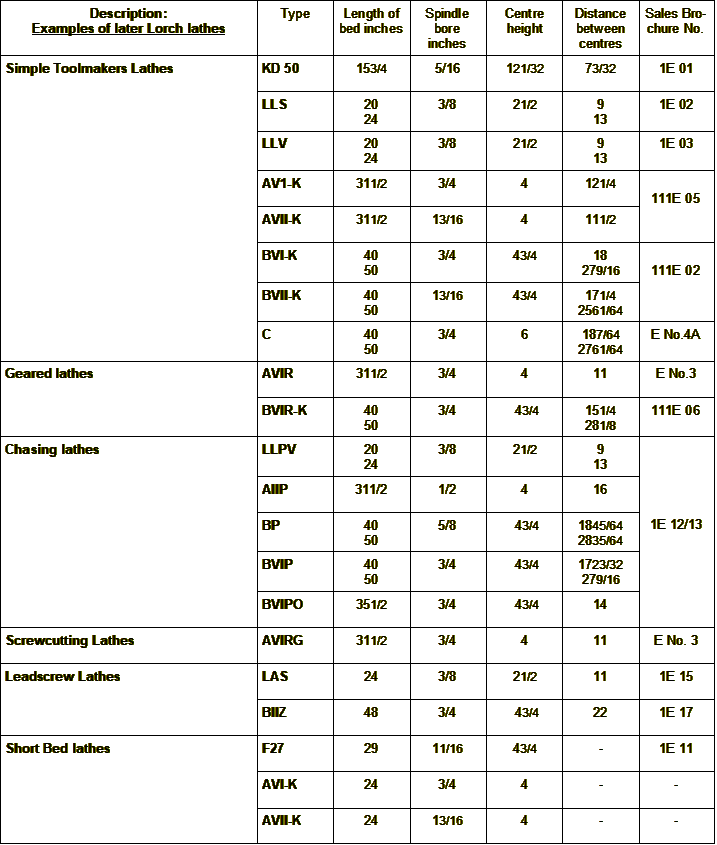
To see how the models were arranged towards the end of production click here.
To see the range available from around 1920 to 1950 click here.
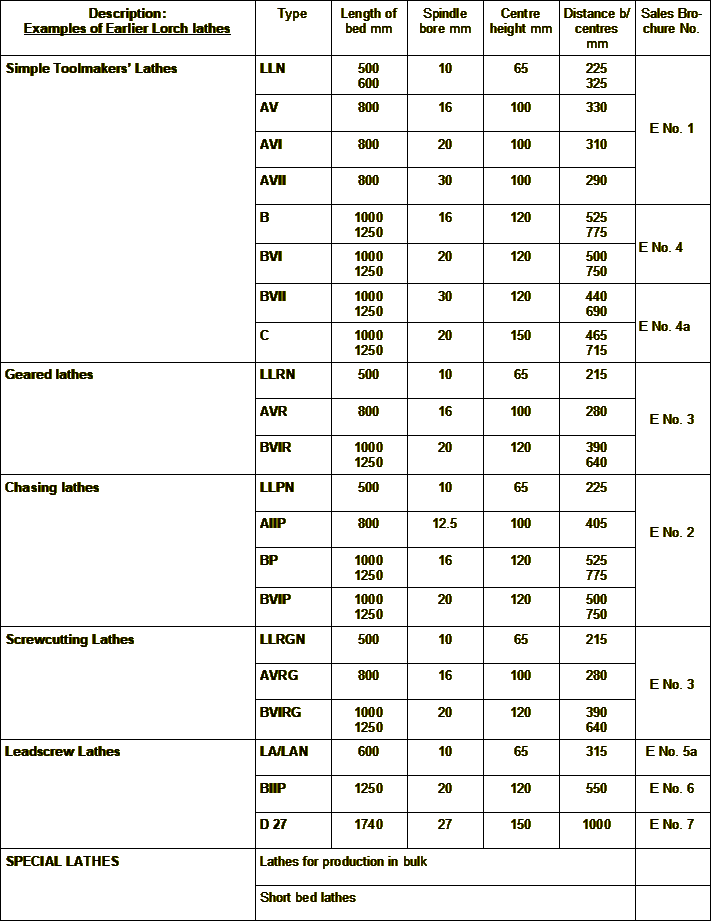
For examples of earlier lathes from 1885 to 1914 - often badged as Lorch Schmidt - click here
For convenience, the Accessories have been divided into older and newer types (Pre and Post 1950) - this does not, however, indicate a significant change at that exact time for many of the items, whether produced in 1920 or 1970, performed exactly the same function and their design evolved gradually over many decades..
LAS Precision Screwcutting
Toolmaker's Plain Lathe AV1-K
Precision Plain Lathes: LLS, LLV & KD50
Toolmakers' Screwcutting Lathe AVI-L
Precision Screwcutting Lathe B27LZ
Toolmakers' Miniature Lathes: LA, LAN, LLN & LLPN Plain and Screwcutting with leadscrew
Toolmakers' Lathes: AV, AVI & AVII
Toolmakers' Lathes: LLR(G)N, AVR(G) & BVIR(G)
Toolmakers' Lathes: BVII, C, B, BVI & Chase Screwcutting
Earlier Lathes Fitted for Production Work
Short-bed Lathes
Larger Screwcutting Lathes D27 & BIIZ
Post 1950 Accessories
Pre 1950 Accessories
Thread-chasing Lathes
Optical Thread Chasing
Early "Precision Bench Lathe"
Lorch Dividing Apparatus for Watchmakers' Lathes
Lorch COLLETS
Lorch Watchmakers' Lathes Boxed Sets
Lorch Watchmakers' Lathes
Lorch "Triumph" Watchmakers' Lathe
Lorch Lathe Restoration