 |
|
|
|
|
|
|
|
|
|
|
|
|
|
|
|
|
|
|
|
|
|
|
|
|
|
|
|
|
|
|
|
|
|
|
|
|
|
|
|
|
|
|
|
|
|
|
|
|
|
|
|
|
|
|
|
|
|
|
|
|
|
|
|
|
|
|
|
|
|
|
|
|
|
|
|
|
|
|
|
|
|
|
|
|
|
|
|
|
|
|
|
|
|
|
|
|
|
|
email: tony@lathes.co.uk
Home Machine Tool Archive Machine-tools Sale & Wanted
Machine Tool Manuals Catalogues Belts Books Accessories
LORCH LAS, AV1-K, AV11-K, LLRGN, AVRG, BVIRG, LLRN, AVR & BVIR LATHES
More information about Lorch Lathes is contained in various Manuals, Parts Lists
and well-illustrated Sales & Technical Specification Brochures and can be purchased on-line here
NOTE: Lorch lathes were advertised using Roman numerals - but are also found stamped using decimal notation e.g. the AV1-K might be found stamped A 6 K and the AV11-K as A 7 K
Larger lathes branded Lorch, Schmidt & Co.
LAS Precision Screwcutting and LAS, AV1-K, AV11-K, LLRGN, AVRG, BVIRG, LLRN, AVR & BVIR Lathes
Sliding Headstock Screwcutting BVIPK
Lorch LL "tall-feet" Clockmakers' Lathe
Precision Plain Lathes: LLS, LLV,LLK
Precision 50 mm Lorch KD50
Toolmakers' Screwcutting Lathe AVI-L
Screwcutting Type AB Precision Screwcutting Lathe BL27LZ
Precision Screwcutting Lathe B30LZS
Toolmakers' Miniature Lathes: LA, LAN, LLN & LLPN Plain and Screwcutting with Leadscrew
Lorch lathes--Newer Accessories
Lorch lathes--Older Accessories
Larger Screwcutting Lathes D27 & BIIZ
Lorch Dividing Apparatus for Watchmakers' Lathes
Lorch COLLETS
Lorch Watchmakers' Lathes
Lorch Watchmakers' Lathe New in the Box
Lorch "Triumph" Watchmakers' Lathe
Lorch Junior Watchmaker's Lathe
Lorch Watchmakers' Lathes Comprehensive Catalogue in French
Lorch Lathe Restoration Lorch Lathe Restoration - 2
Early Lorch Model A Lathes - circa 1885 to 1920
Lorch Milling Machines
|
|
|
|
|
|
|
|
|
|
|
|
|
|
|
|
|
|
|
|
|
|
|
|
|
|
|
|
|
|
|
|
|
|
|
|
|
|
|
|
|
|
|
|
|
|
|
|
|
|
|
|
|
|
|
|
|
|
|
|
|
|
|
|
|
|
|
|
|
|
|
|
|
|
|
|
|
|
|
|
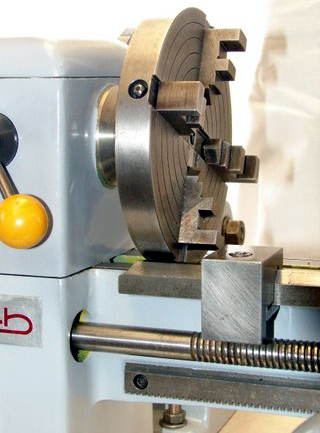
Introduced during the 1950s as a replacement for the LA and LAN models of the 1930s and 1940s, the 65 mm centre height by 280 mm between centres Lorch Model LAS (2.5" x 11.25") was sold as a small, high-precision backgeared and screwcutting lathe intended for use in experimental departments, research labs, toolrooms - or anywhere that a compact, accurate and adaptable machine might be required. The makers claimed a turning accuracy on both sliding and surfacing feeds of better than 0.00012", a figure almost in the grinding-machine class.
With a neat and effective 1 : 8 ratio epicyclic backgear for slow speeds, together with a conventional leadscrew drive via changewheels to give both metric and imperial pitches (for extra-fine longitudinal feeds a drive by belt was also available), the LAS did indeed find favour with those needing a more versatile machine for general precision work. A huge range of accessories was produced for all Lorch lathes - and a good number for the LAS - which must be considered one of the finest miniature, backgeared, screwcutting types ever made. The bed was of enormous weight and rigidity - and the clever mechanism that operated the single-lever backgear assembly a delight of precision engineering. The speed range depended upon the chosen drive motor but, in standard form, the twelve provided on the LAS spanned a quite-sufficient 67 to 3000 r.p.m. using a 2800 r.p.m. 0.27 h.p. motor. Alternatives included a 1400 r.p.m. 0.35 h.p. unit that gave 375 to 2100 r.p.m.; a 0.45 h.p. 2800 r.p.m. motor giving 750 to 4200 r.p.m. and a 2-speed 1400/2800 r.p.m. motor that gave 375 to 4200 r.p.m. Several different designs of countershaft were listed, the simplest of which had a single supporting upright with a pulley at each side of the central bearing.
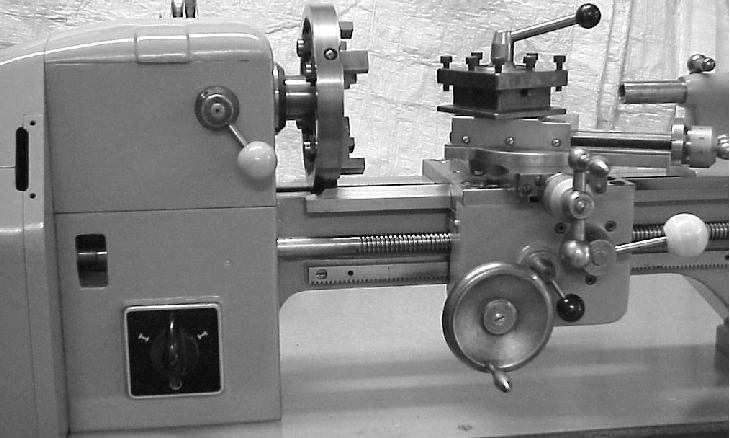
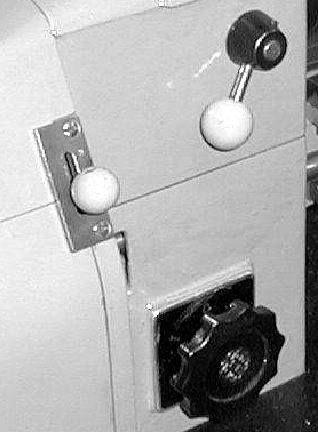
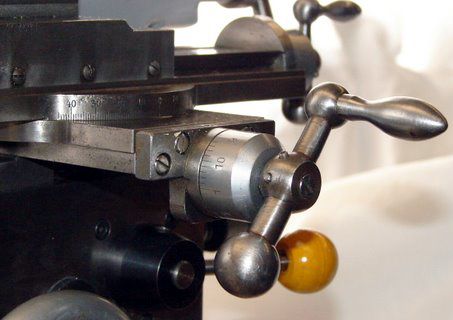
Oddly, for a German designed and manufactured lathe, there were some strange, not to say eccentric touches: on many late examples the rather small feed-screw micrometer dials were in white plastic and the tumble-reverse arm was (very cleverly) manufactured from a strip of spring-steel rod, the thrust of which was utilised to provide an indent location for the forward, reverse and neutral positions. One very useful feature was the automatic knock-off to the saddle drive, this being activated by a button of the left-hand face of the apron impinging against an adjustable stop on the bed, or by a small lever on the face of the apron - the latter giving the operator perfect control over the stopping point. The English Raglan "5-inch" lathe used a similar and equally effective mechanism.
With an M20 threaded nose, the spindle had a bore of 25/64", the drawbar held "Lorch long" collets having a maximum though-collet capacity of 15/64" and a 'not-though' being 5/16". The cross slide travel was 3.25" and the long-travel top-slide travel (mirroring bench-precision lathe practice) the same.
Screwcutting was by a 3mm pitch leadscrew (an English thread was available as an option) with a very large set of changewheels provided as part of the standard equipment. Transposing gears for metric to imperial and imperial to metric conversions could be purchased at extra cost.
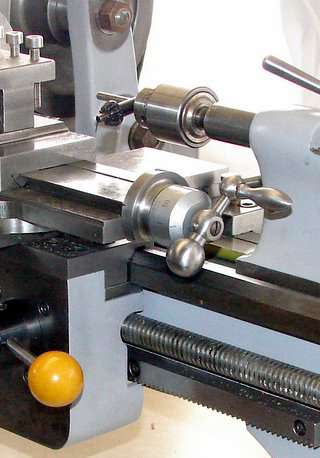
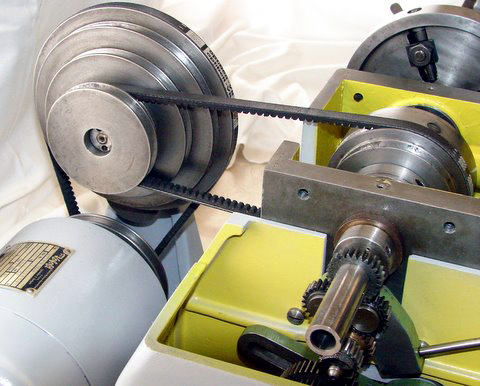
One extra was particularly interesting, a belt-driven fine feed for the carriage. While Lorch provided a complex, epicyclic unit for others models, on the LAS they appeared content to mount a 2-step pulley - on a stud tapped into the bed's end housing - with a very small gear protruding from its face that engaged with the ordinary changewheels. Drive came from a small pulley fixed to the end of the headstock spindle - the whole assembly being breathtakingly expensive...
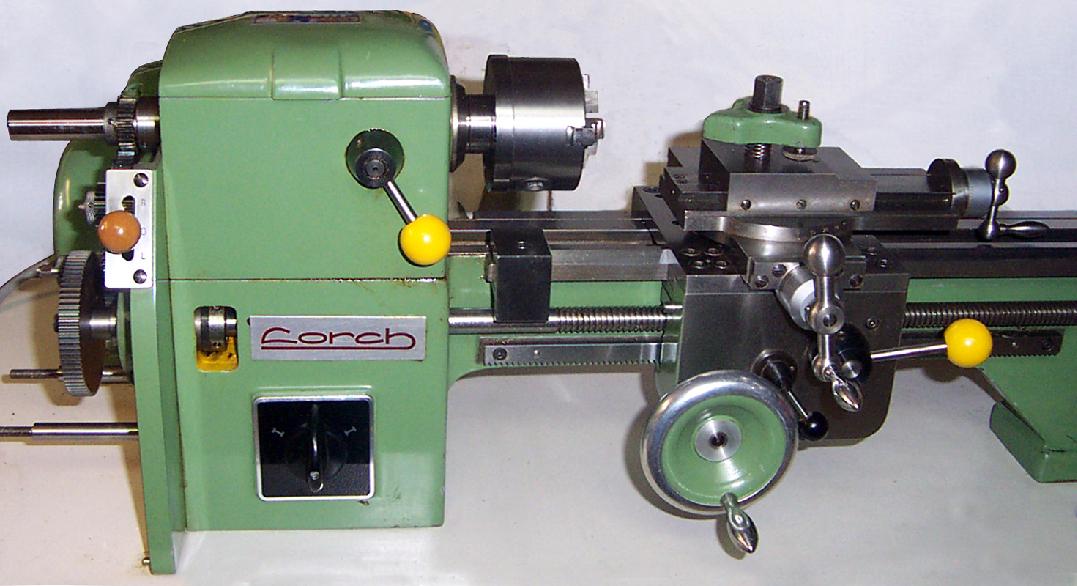
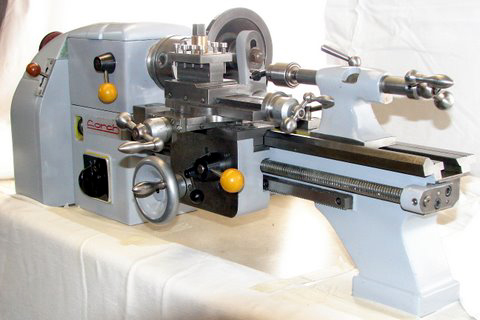
Finished as standard in green paint (as shown in the first picture below) the lathe was usually supplied on a welded steel-plate the stand of unusual weight - it was partially filled with concrete - topped by a thick wooden board covered with linoleum. Mounted on this stand, and driven by a 3-phase motor, the lathe ran with uncanny smoothness.
Complete with stand, chucks, collets and essential accessories, LAS sold for nearly £2000 in 1962 - in 2022 that's equal to about £16000, so you can see why they are now so sought after..
|
|
|
|
|
|
|
|
 |
|
|
|
|
|
|
A Lorch LAS in its original maker's finish
|
|
|
|
|
|
|
|
|
|
|
 |
|
|
|
|
 |
|
|
|
|
|
|
|
|
A tumble Reverse Indent Plate in place.
|
|
|
|
|
|
|
|
|
|
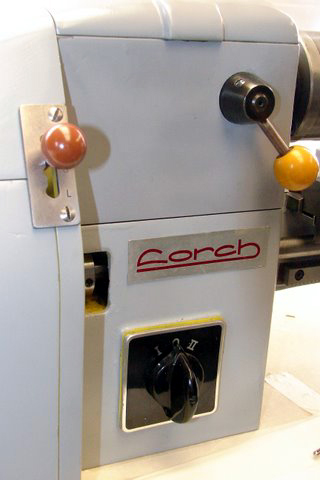
A nearly-finished restoration …. The tumble reverse lever and location plate are missing from this LAS. The tumble reverse selector arm was an elegantly simple affair formed from a spring-steel rod which provided the necessary location force by engaging in small indentations in the location plate
|
|
|
|
|
|
|
|
|
|
|
|
 |
|
|
|
|
|
|
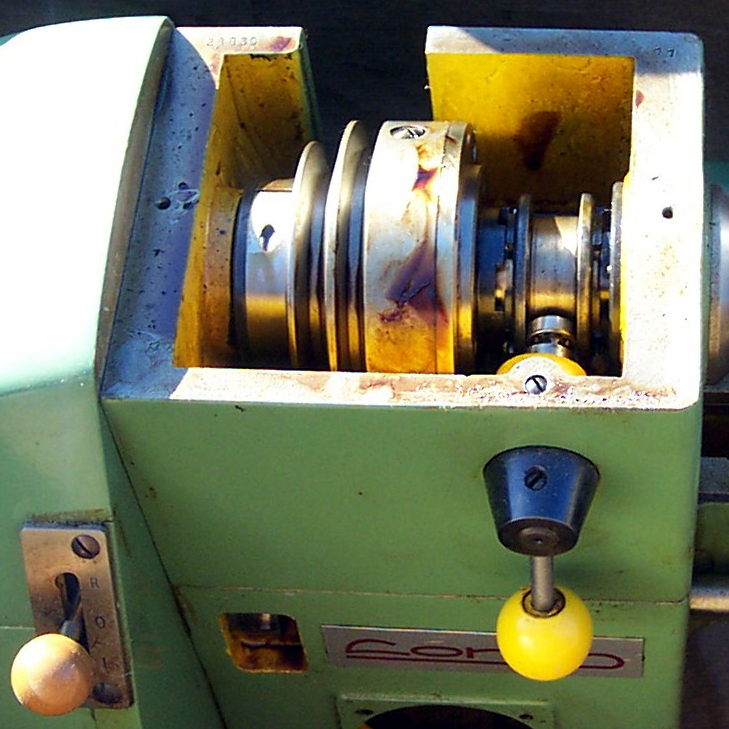
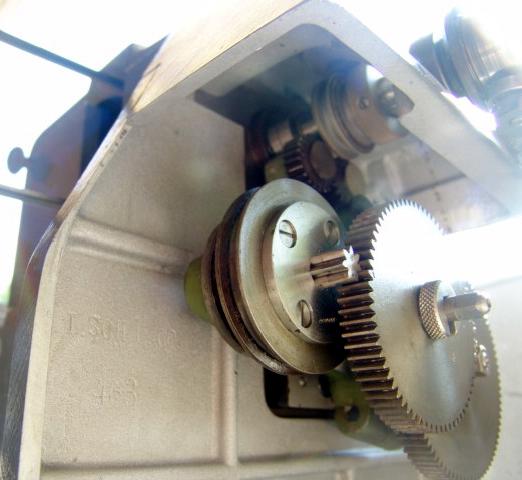
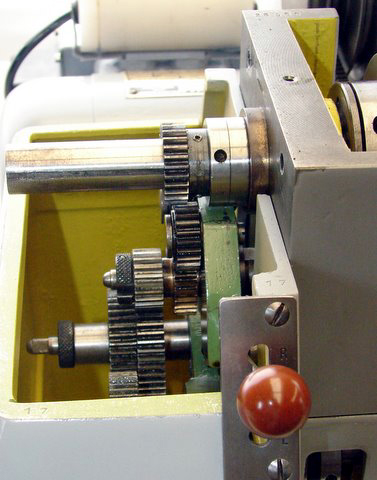
The headstock cover lifted off two studs to reveal the neat, fully enclosed single-lever epicyclic backgear assembly. This partially restored machine is missing the sliding bronze "thrust block" that fits in the sliding engagement sleeve on the main spindle. This is an example of an unused Lorch LAS as delivered to the Australian navy and found at a surplus sale.
|
|
|
|
|
|
|
|
|
|
|
|
|
|
|
|
|
 |
|
|
|
|
|
|
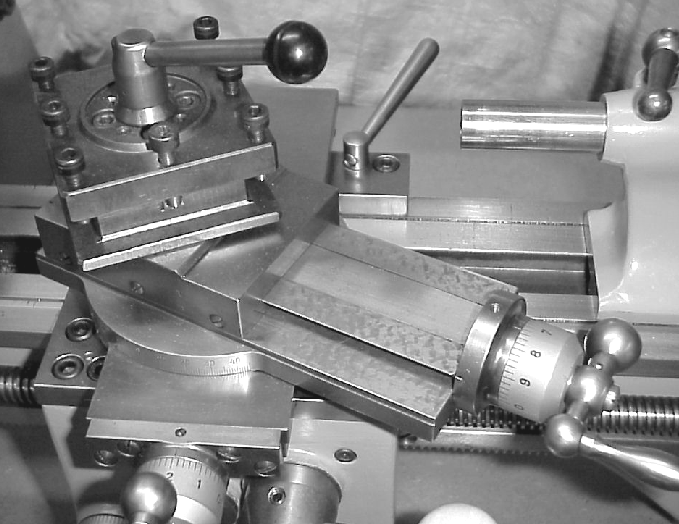
Compound slide rest - for some unaccountable reason Lorch later
switched to feed-screw micrometer dials made of plastic.
|
|
|
|
|
|
|
|
|
|
|
 |
|
|
|
|
|
|
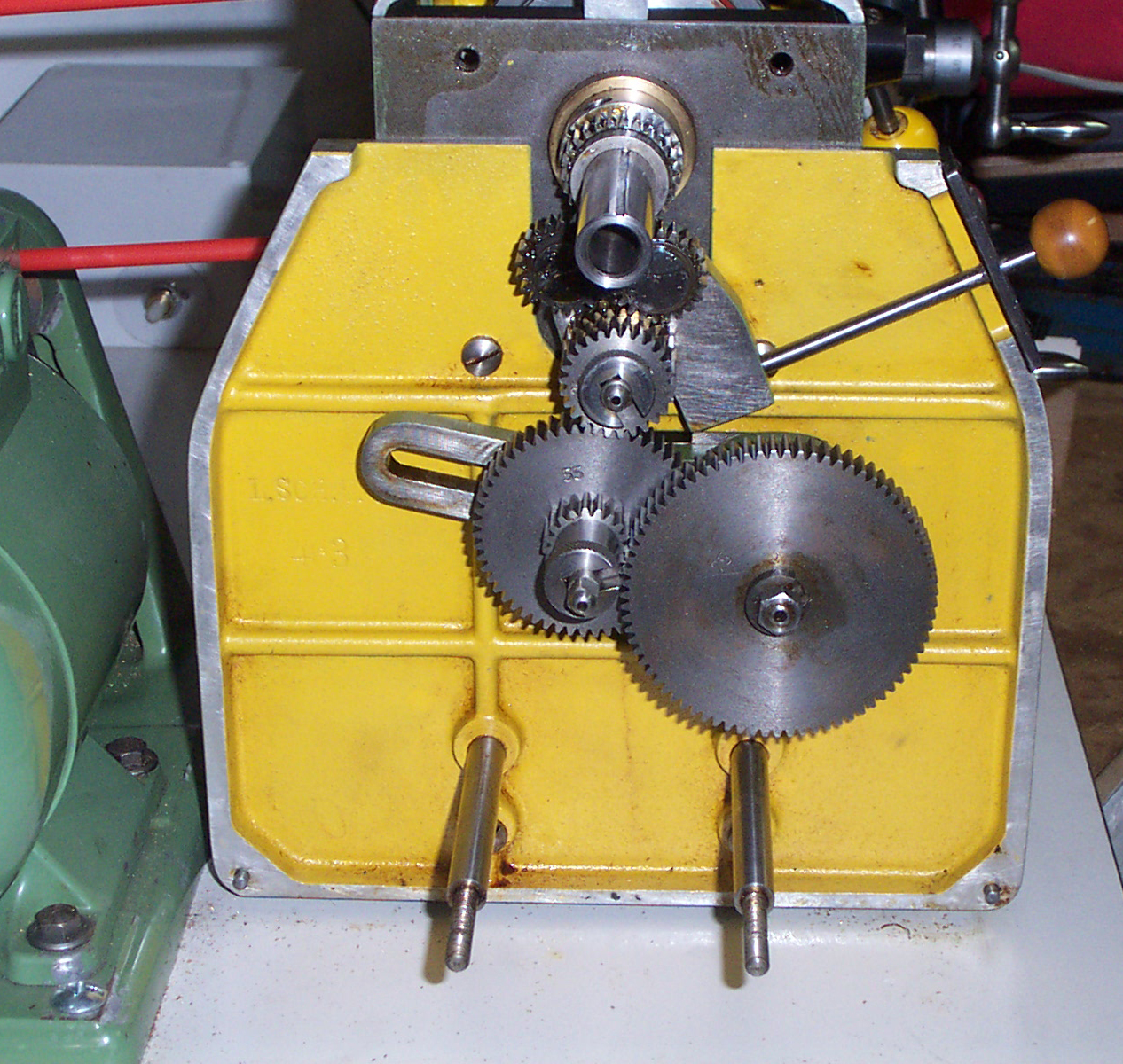
Inside the LAS changewheel cover. The slotted washer on the changewheel stud speeded up changes of ratio.
|
|
|
|
|
|
|
|
|
|
|
 |
|
|
|
|
|
Optional (and very expensive) belt-driven fine feed
for the carriage drive. The feed-reduction pulley
is to the left and has, on its outside face, a small gear
that engages with the standard changewheels
|
|
|
|
|
|
|
|
|
|
|
 |
|
 |
|
|
|
|
|
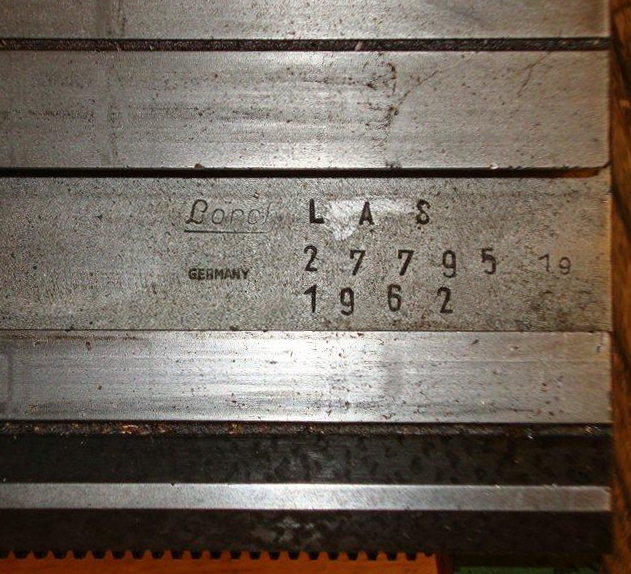
The proper way to stamp a machine tool: country of origin, maker, model, serial number and date of manufacture
|
|
|
|
|
|
|
|
|
|
|
br>
|
|
|
|
|
|
 |
|
 |
|
|
|
|
|
|
|
 |
|
|
|
|
|
|
 |
|
|
|
|
|
|
|
|
|
 |
|
|
|
 |
|
|
|
|
|
|
|
|
|
 |
|
|
|
|
 |
|
|
|
|
|
|
|
|
 |
|
|
|
|
 |
|
|
|
|
|
|
 |
|
|
|
|
|
|
|
|
 |
|
|
|
|
|
|
br>
|
|
|
|
|
|
|
|
|
|
 |
|
|
|
|
 |
|
|
|
|
|
|
|
 |
|
|
|
|
|
|
|
|
 |
|
|
|
|
|
|
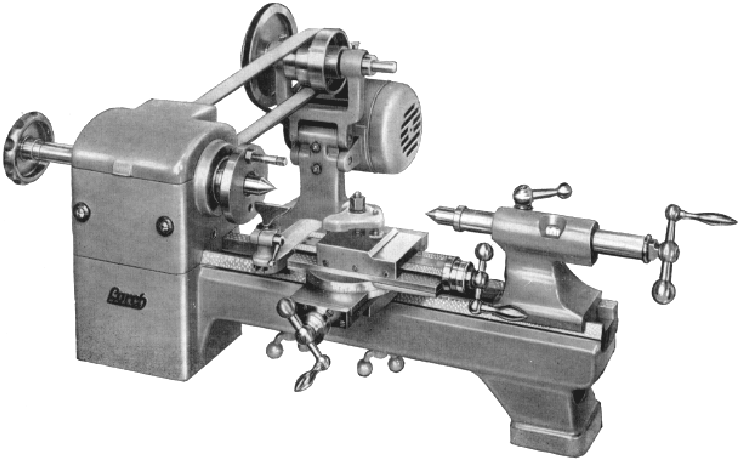
Lorch Type AVI-K/AVII-K 100 mm x 800 mm a plain-turning version of the screwcutting LAS lathe with Bench Countershaft No. 84. The drive could be arranged from behind the lathe - or from below.
The Lorch Precision Toolmaker's Lathes AVI-K and AVII-K were distinguished only by the size of their collet capacity - 20 mm diameter shanks in the case of the former, and 30 mm for the latter. The centre height was 100 mm with, in the case of the standard bed-length machines, a between-centres capacity of 800 mm. The spindle bore of the AVI-K was 19 mm and that of the AVII-K 20.6 mm
Both lathes were available for bench or stand mounting - or as special short-bed production types with chase screwcutting, bed-mounted capstan units and lever-operated collet closers.
A range of motors was offered with the three standard examples (all of which could be ordered with two or three speeds) being rated at 2800, 1400 and 700 rpm - these gave 6 spindle speeds ranging, respectively, from: 530 to 3000 rpm, 265 - 1500 rpm and 132 to 750 rpm. A turning accuracy of 0.00012" (0.003 mm) was claimed.
|
|
|
|
|
|
|
|
|
|
|
 |
|
|
|
|
|
|
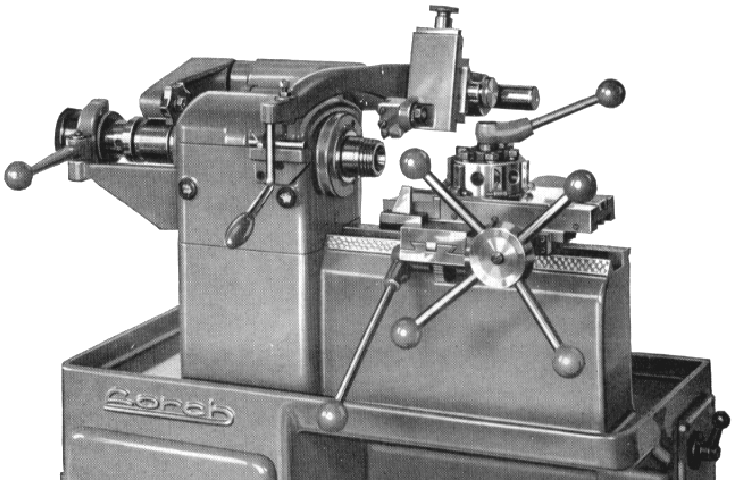
Special short-bed version mounted of the AVI-K/AVII-K on the Underdrive cabinet No. 38t with the optional foot brake No. 92 (not shown). The lathe is equipped with the capstan head No. 24a, thread-chasing device No. 85 - and a standard fit lever-action collet closer.
|
|
|
|
|
|
|
|
|
|
|
 |
|
|
|
|
|
|
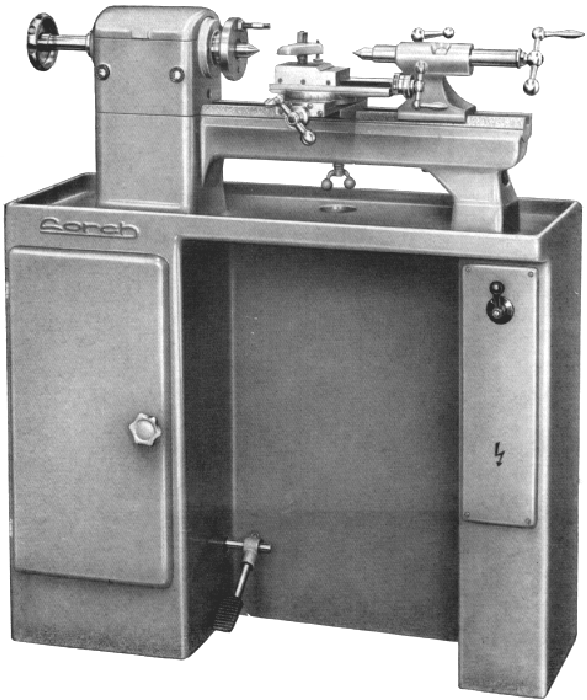
Lorch Type AVI-K/AVII-K mounted on the Underdrive Cabinet Stand No. 38t with optional foot brake No. 92
|
|
|
|
|
|
|
|
|
|
|
br>
|
|
|
|
|
|
 |
|
|
|
|
|
|
|
|
|
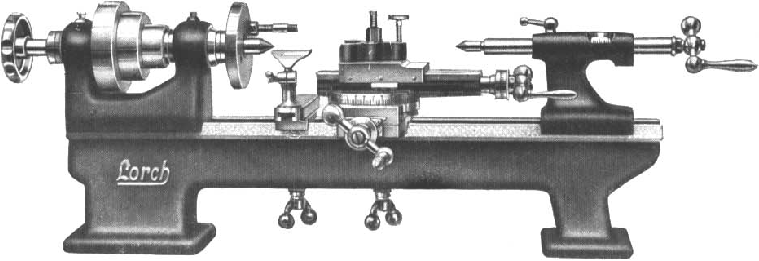
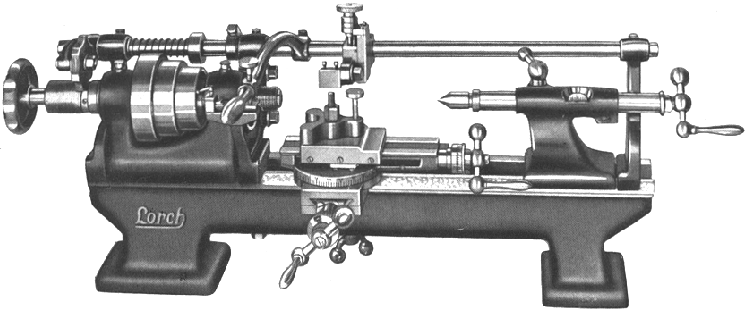
Basic Precision Toolmaker's Lathe Model AV with light headstock
The AV, AVI and AVII Lorch plain-turning lathes all had the same length of bed and centre height but were fitted with different headstock spindles having bores of 0.63" (16 mm) , 0.78" (20 mm) and 1.3125" (33 mm) to accept, respectively, collets with maximum through bores of: 0.39" (10 mm), 0.656" (16.5 mm) and 1.0625" (27 mm).
The headstock spindle was completely hardened and ran in adjustable, hard bronze bearings. The ball-bearing spindle-thrust race was completely covered and a simple draw-in collet holding system was fitted as standard. Because the larger bore spindles necessitated slightly different headstock casting, the between-centres of capacity of the larger variants was reduced from the 13 inches of the basic Model AV to 12.25" for the AVI - and 11.5" for the AVII.
The compound slide rest was the same for all models and had a longitudinal travel of 5.3" (135 mm) and a cross movement of 6" (150 mm)
|
|
|
|
|
|
|
|
|
|
 |
|
|
|
|
|
|
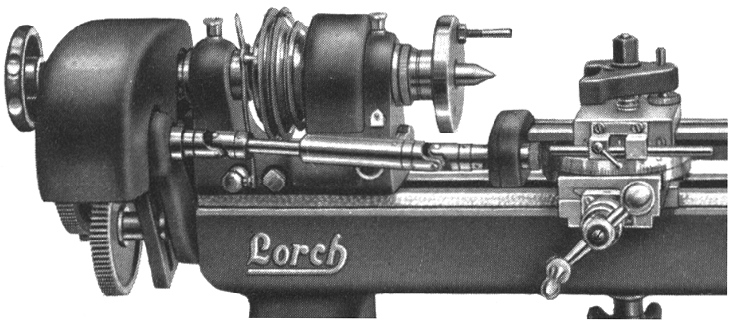
Model AVI fitted with the heavier headstock and also equipped with a Chase-type threading attachment. The latter device could be fitted to all but the smallest of the Lorch Precision Instrument and Toolmaker's lathes.
|
|
|
|
|
|
|
|
|
|
|
 |
|
|
|
|
|
|
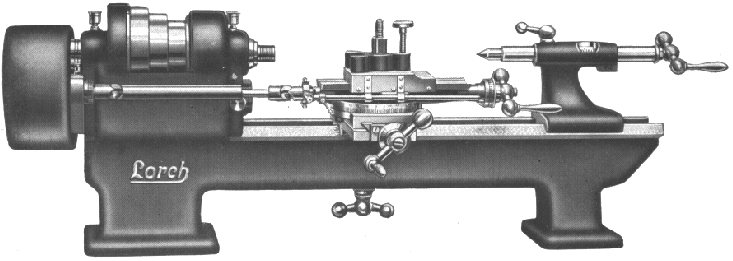
Miniature Precision Lathe Model LLRGN 65 mm x 225 mm with a screwcutting feed fitted to the top slide. This was once a common accessory for high-quality plain-turning lathes and saved the complication and expense of a full leadscrew drive.
This series of six backgeared Lorch lathes (Types LLRGN, AVRG, BVIRG, LLRN, AVR & BVIR) was built in three sizes, each being available as either a plain turning machine - without a G in the Model Type - or with "top slide" screwcutting. The three machines were similar in layout but substantially different in detail. The smallest version, the LLRGN, had a centre height of only 65 mm and a between-centres capacity of 215 mm (2.6" x 8.5"). Like all Lorch lathes its headstock spindle was hardened and ran in hard bronze bearings - the bore in this case being was 10 mm and accepted collets with a maximum capacity of 8 mm. The backgear ratio was 1 : 6
The AVRG was substantially larger with a 100 mm (4") centre height and took 280 mm (11") between it's No. 1 Morse taper centres. The collet capacity was more than doubled at 17 mm and the backgear ratio deepened to 1 : 8.
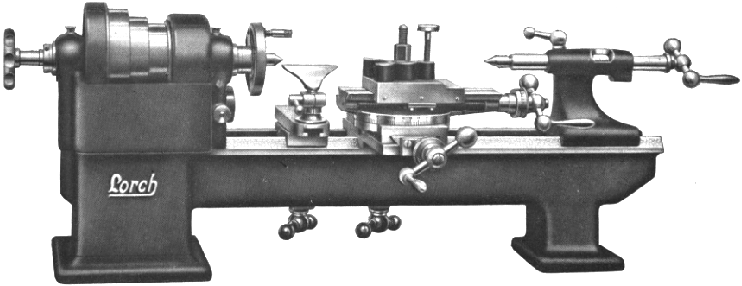
The largest machine of the trio, the BVIRG had a centre height of 120 mm (4.7") was available in two bed lengths of 1000 and 1250 mm (39" and 49"); this gave it the ability to accept work which was either 390 or 640 mm (15.4" or 25.2") long respectively. The backgear ratio fell between the other two lathes at 1 : 7.
|
|
|
|
|
|
|
|
|
|
|
br>
|
|
|
|
|
|
 |
|
|
|
|
|
|
Largest of the type, the Model BVIRG had a centre height of 120 mm (4.7") was available in two bed lengths of 1000 mm and 1250 mm (39" and 49") with between-centres capacities of 390 mm or 640 mm (15.4" or 25.2") respectively.
|
|
|
|
|
|
|
|
|
|
|
 |
|
|
|
|
|
|
The mid-sized 100 mm (4") centre height Model AVR shown here in plain-turning form.
|
|
|
|
|
|
|
|
|
|
|
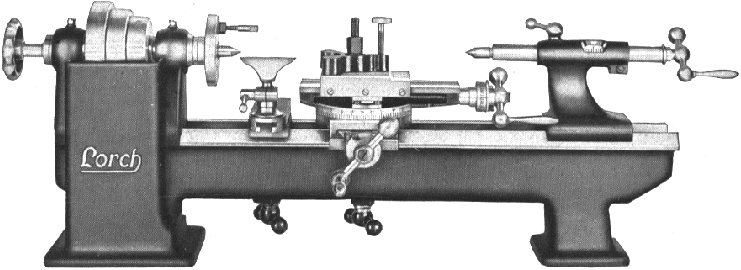 |
|
|
|
|
|
|
Lorch LAS Photographic Essay
More information about Lorch Lathes is contained in various Manuals, Parts Lists
and well-illustrated Sales & Technical Brochures and can be purchased on-line here
LORCH LAS, AV1-K, AV11-K, LLRGN, AVRG, BVIRG,
LLRN, AVR & BVIR LATHES
E-MAIL Tony@lathes.co.uk
Home Machine Tool Archive Machine Tools For Sale & Wanted
Machine Tool Manuals Machine Tool Catalogues
NOTE: Lorch lathes were advertised using Roman numerals - but are also found stamped using decimal notation e.g. the AV1-K might be found stamped A 6 K and the AV11-K as A 7 K
Larger lathes branded Lorch, Schmidt & Co.
LAS Precision Screwcutting and LAS, AV1-K, AV11-K, LLRGN, AVRG, BVIRG, LLRN, AVR & BVIR Lathes
Sliding Headstock Screwcutting BVIPK
Lorch LL "tall-feet" Clockmakers' Lathe
Precision Plain Lathes: LLS, LLV,LLK
Precision 50 mm Lorch KD50
Toolmakers' Screwcutting Lathe AVI-L
Screwcutting Type AB Precision Screwcutting Lathe BL27LZ
Precision Screwcutting Lathe B30LZS
Toolmakers' Miniature Lathes: LA, LAN, LLN & LLPN Plain and Screwcutting with Leadscrew
Lorch lathes--Newer Accessories
Lorch lathes--Older Accessories
Larger Screwcutting Lathes D27 & BIIZ
Lorch Dividing Apparatus for Watchmakers' Lathes
Lorch COLLETS
Lorch Watchmakers' Lathes
Lorch Watchmakers' Lathe New in the Box
Lorch "Triumph" Watchmakers' Lathe
Lorch Junior Watchmaker's Lathe
Lorch Watchmakers' Lathes Comprehensive Catalogue in French
Lorch Lathe Restoration Lorch Lathe Restoration - 2
Early Lorch Model A Lathes - circa 1885 to 1920
Lorch Milling Machines
|
|
|
|
|
|
|
|
|
|
|
br>
|
|