|
|
|
|
|
|
Home Machine Tool Archive Machine Tools For Sale & Wanted Manuals E-MAIL Tony@lathes.co.uk
Craftsman 6" (Atlas) Mk. 2 Lathe Early Craftsman 6" pictures click HERE Other Craftsman 6" pictures click HERE Craftsman 9" & 12" Dunlap Craftsman Model 80 & 109 Last 109 Model Craftsman Home Page Conversion to Metal Lathe Kit 12-inch De-lux Lathe Photographs In order to make this section more useful the author would like to acquire a set of good quality photographs of an original lathe. If you can help, please do get in touch.
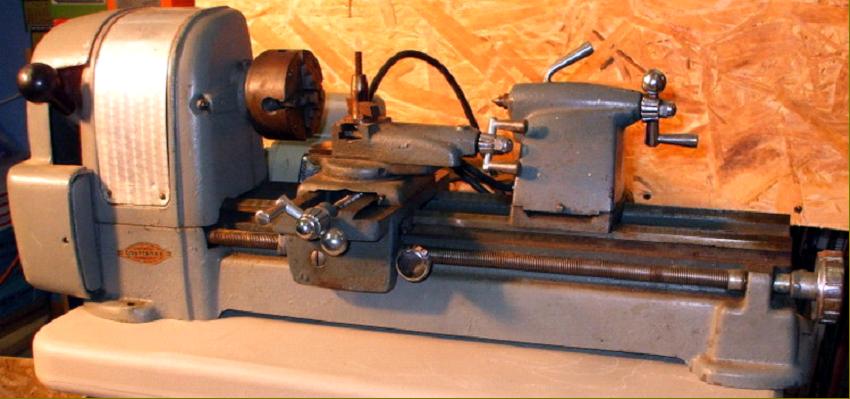
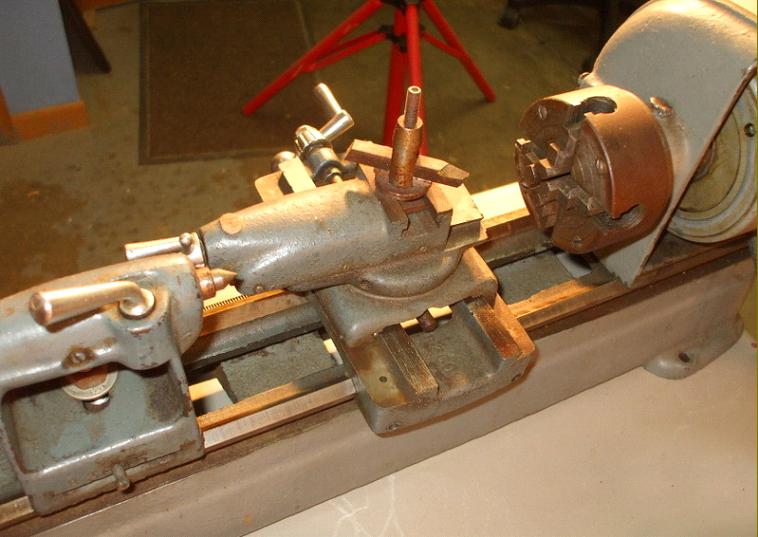
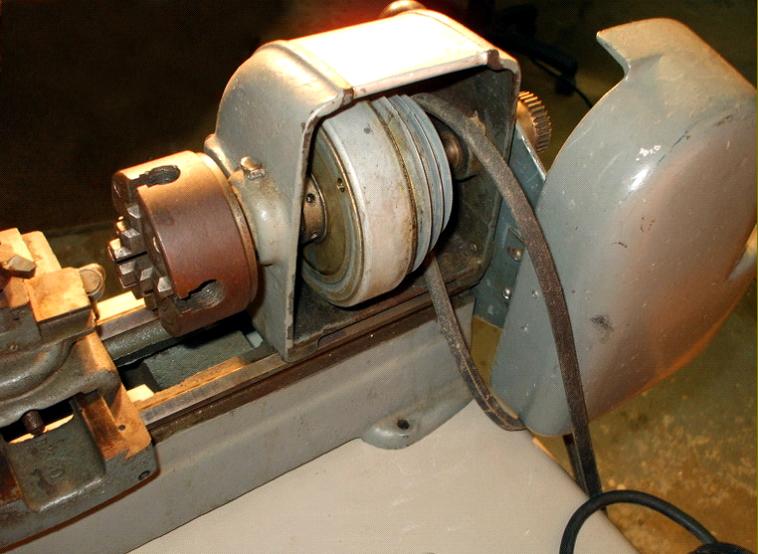
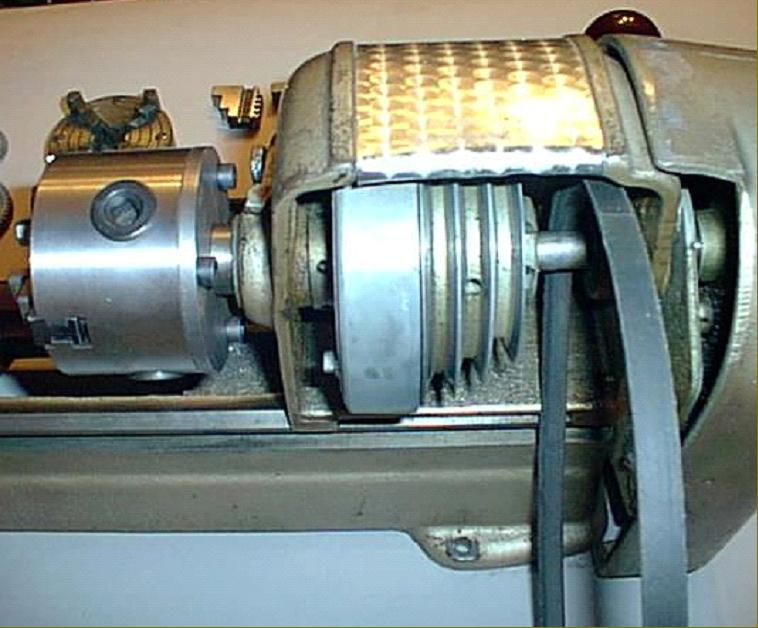
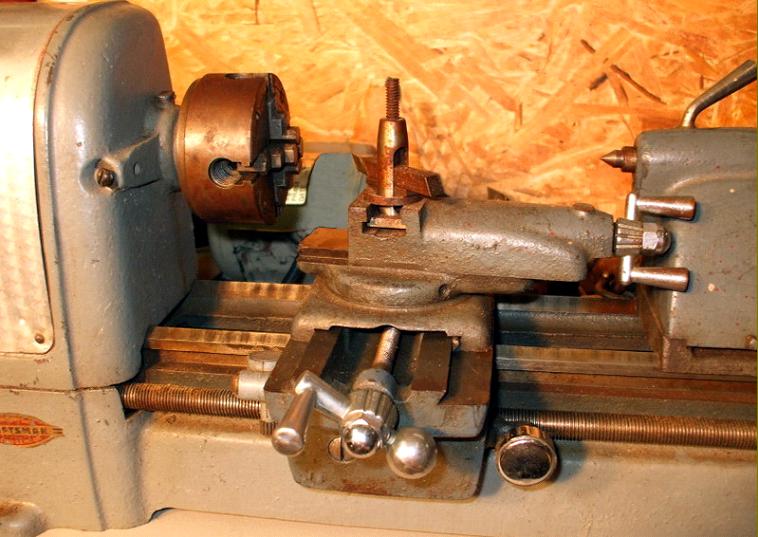
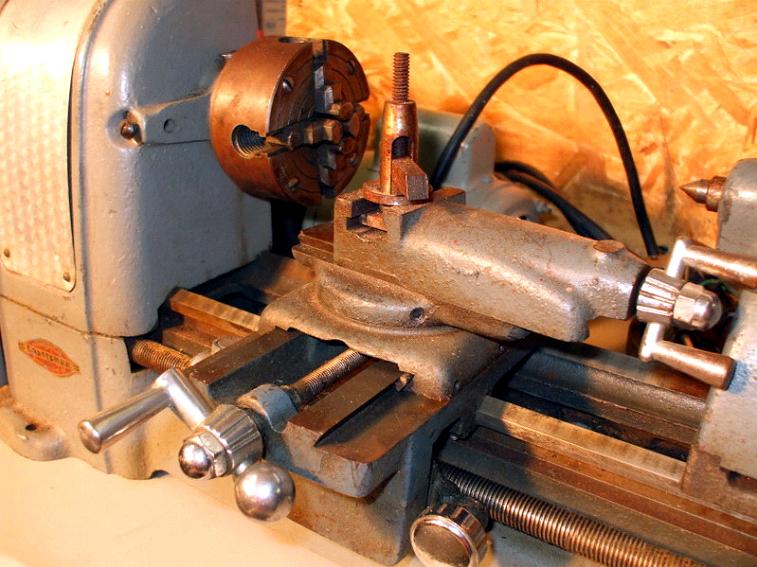
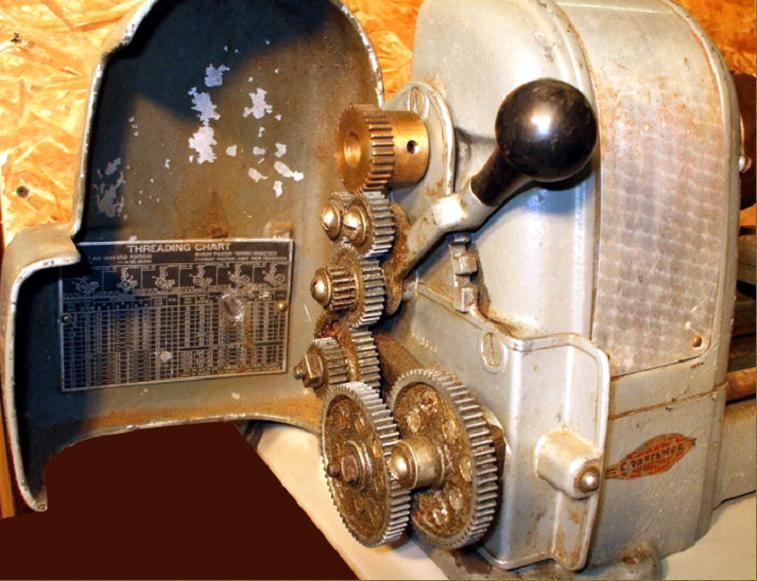
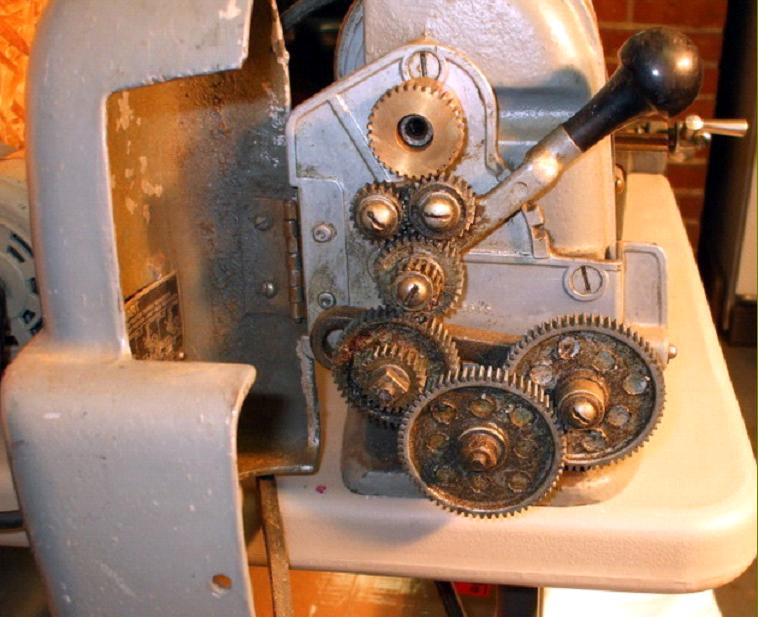
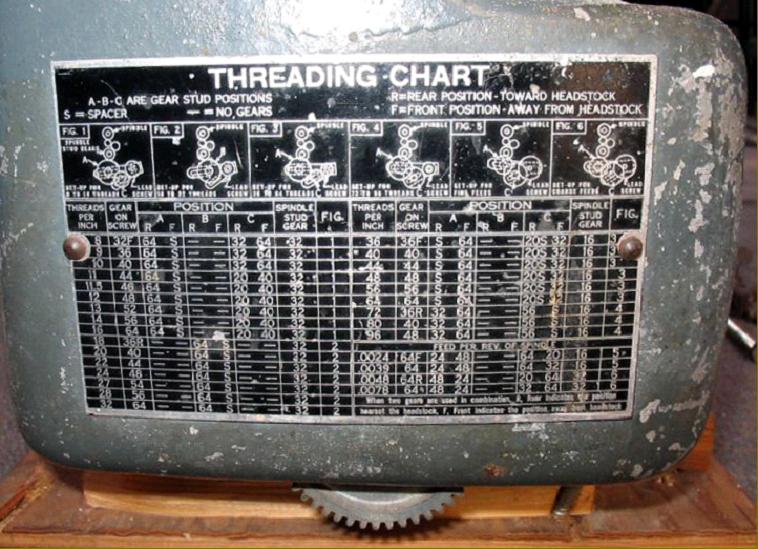
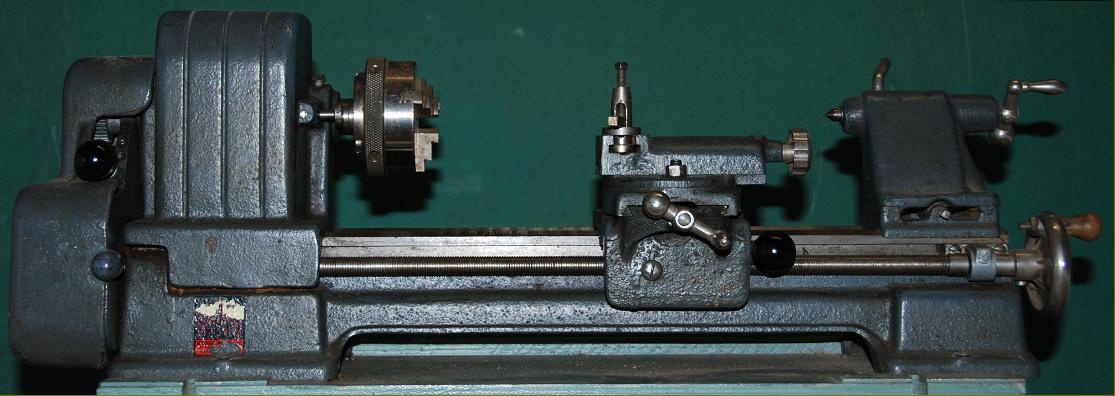
By 1974, after 37 years of production, the 6" Craftsman (and made by Atlas) was withdrawn from sale and an almost entirely new model introduced to replace it. Two versions were available, one Imperial (English) and the other metric; the latter able to cut only metric threads - of which 23 were available from 0.1 mm to 3.0 mm. The leadscrew, cross feed and top slide screws were also of metric pitch and the feed dials, tailstock barrel, threading chart were all in metric calibrations - in other words, a complete metric machine rather than just a simple screwcutting conversion. The version with English calibrations offered threads between 8 and 96 tpi (or optionally, at extra cost, from 5 tpi) using, in addition to ordinary changewheels, a novel and ingenious system of "Gearsettes" - combinations of changewheels (sold in 6 different sets) marked with a circular metal disc that indicated the thread and feed range - together with an indication of which other gearwheels would mesh with them to provide the correct set up. As a comparison the Myford ML7 will only cut down to 8 tpi with the changewheel cover closed - if coarser threads are required the cover has to be left off and gears larger than 75t used on the exposed bracket. A major change involved removing the countershaft assembly and fitting the headstock drive pulley in an overhung position on the left-hand end of the 17/32" bore, 1" x 10 tpi, headstock spindle; unfortunately this modern method of engineering a headstock drive (it used a narrow Gates-type belt) had the effect of reducing the number of spindle speeds from 16 to 8 but with a still-respectable range of 55 to 2300 rpm with the maker's recommended 1/3 hp 1725 rpm 60 cycle motor. The Emco Compact 8, Myford 254 and various modern Chinese lathes also use a similar drive system - but were not the first small lathe makers to employ this cost-saving set up, the EXE Company of Exeter, England, used exactly the same idea on their machines in the 1930s, as did several makers of cheaper, less highly stressed wood-turning lathes. The tailstock spindle was 3/4" in diameter, had a travel of just 1.25 inches and was bored to take a No. 1 Morse taper - these were less-than adequate figures but (together with the very short cross slide), the only real failures in otherwise well-specified machine. In 1974 the lathe was painted grey but at some unknown point, before production ceased in 1980, this was changed to blue. Whilst early Atlas-badged models appear to have been fitted with Japanese-manufactured NTN ball bearings on the headstock spindle (later models used Timken tapered-roller bearings) the Craftsman spares list shows that only plain bronze bearings were used. However, there is every possibility, certainly if earlier Craftsman practice is a guide, that numbers of these lathes would have been supplied with the same spindle and bearing specification as the Atlas versions. The lathe was 34" long, 17" deep and stood 11 inches high; it weighed approximately 92 lbs without its (extra-cost) electric motor. If you have one of these machines the writer would be very interested to hear from you. Models numbers (Sears numbering) was based on 101.21**, for example 101.21200, and would have varied according to the specific model and type of motor fitted. Further pictures can be seen in the Atlas section of the Archive..
|
|
|
|