
|
Home Machine Tool Archive Machine-tools for Sale & Wanted Books Accessories Boley Capstan Lathes Late Model 4L Boley Milling Machines Stands & Drives 4BK Watchmakers' Lathes 1a, 2a, etc Watchmakers' Lathes Headstock Bearings Triangular Bed Lathe Bevelled-edge Bed Lathe Model 5LZ Production Lathe Size 2 BE2 Precision Drill - an especially fine example being the superb 86-page Lathe & Watchmakers' Tools Catalogue |
|
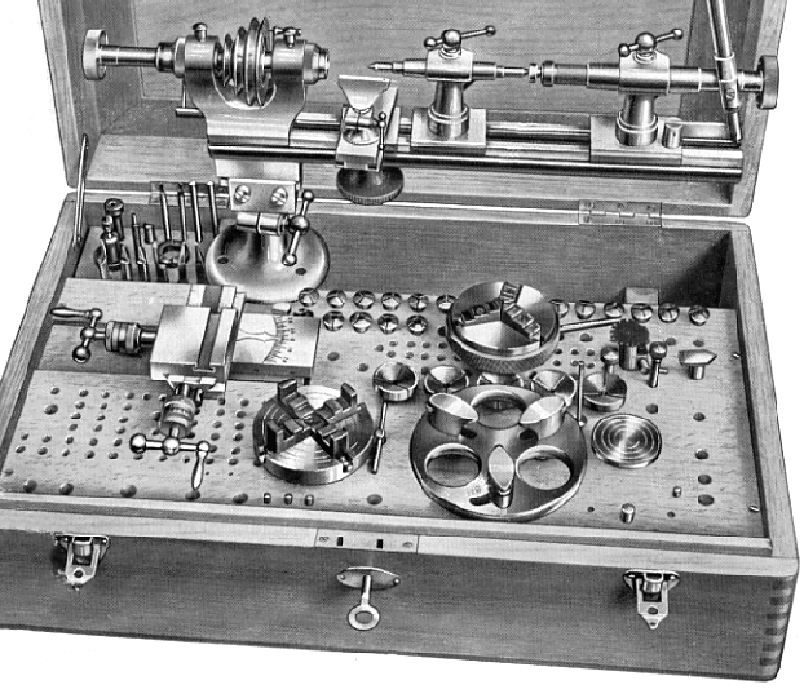
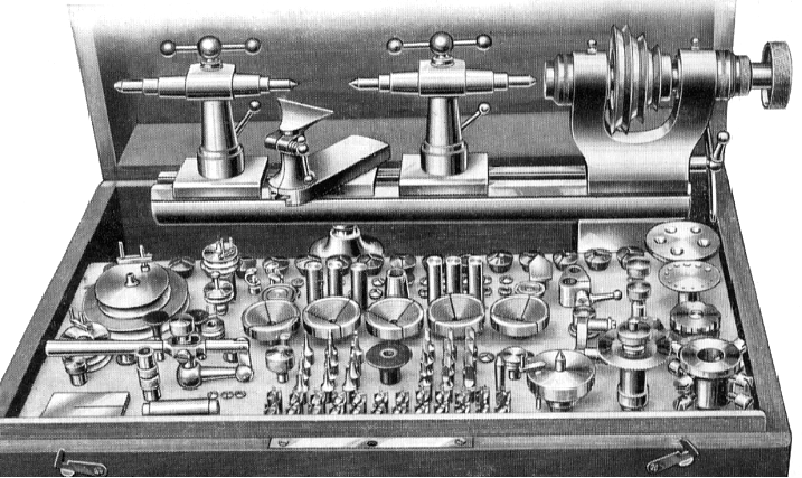
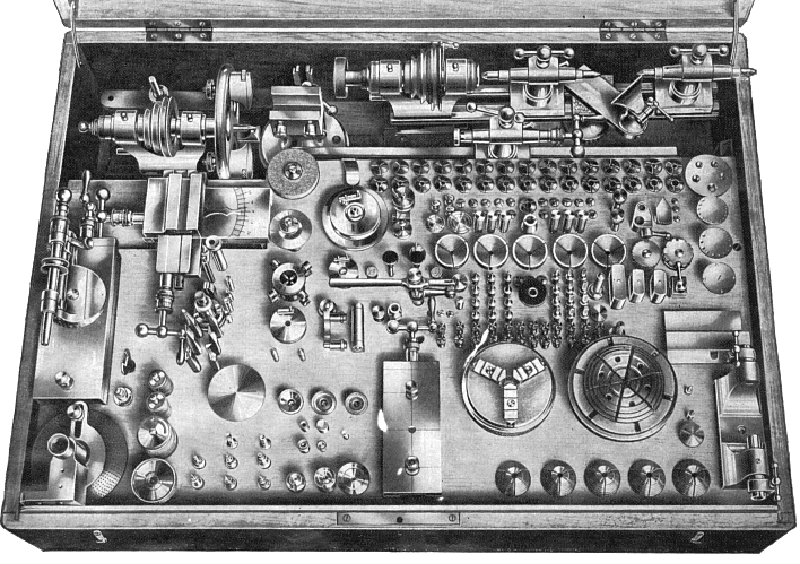
Boley & Leinen were a completely separate company from G.Boley - but founded in the same geographical area. I also knew the son (Gunther's father) who was owner and manager of the firm at the end of the war - when, as an American Serviceman, I had my first contact with Boley and Leinen and with the firm of G.Boley. In any event, I was told that the manner by which Boley & Leinen acquired the Boley part of the name was a matter of acute embarrassment to the Leinen family. The founder of the firm, Gunther's grandfather, had been employed by G. Boley, and left them, initially, to manufacture the bench vise of his design. This vise was always marked "Leinen" even though it was always manufactured by Boley & Leinen. G. Boley also made an exact copy of this very popular item. My understanding is that Leinen was quite successful with the vise and decided to go into the watchmaker's lathe business; in direct competition with G. Boley; an already well-established name. Supposedly he search the town directory and located a not particularly well-off widow with the family name of Boley and persuaded her to become a "partner" in his firm. His firm thus became Boley & Leinen. This is really all that I know of the matter. It would, of course be very interesting to know what relation the widow's husband had been to the G. Boley of the pioneer lathe firm. Unfortunately 1 have more or less. lost touch with Carl Mahr and anyone else in the Esslingen region. |
|
|
||
|
|
||
|
|
||
|
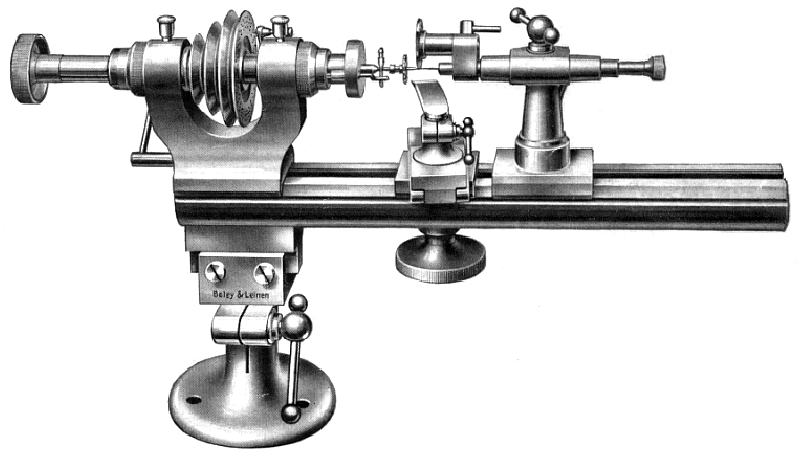
Boley & Leinen "Reform" Swing over bed 100 mm with headstock designed for 8 mm |
||
|
Boley Capstan Lathes Late Model 4L Boley Milling Machines Stands & Drives 4BK Watchmakers' Lathes 1a, 2a, etc Watchmakers' Lathes Headstock Bearings Triangular Bed Lathe Bevelled-edge Bed Lathe Model 5LZ Production Lathe Size 2 BE2 Precision Drill - an especially fine example being the superb 86-page Lathe & Watchmakers' Tools Catalogue Home Machine Tool Archive Machine-tools for Sale & Wanted Books Accessories |