|
|
|
|
|
|
Email: Tony@lathes.co.uk lathes.co.uk Home Page Machine Tool Archive Machine Tools For Sale & Wanted Machine Tool Manuals Machine Tool Catalogues
Halifax 524, Acorntools & Sphere 10-Inch Atlas Copies British-market Versions: Sphere, Halifax and Acorntools Atlas 6" Atlas 9" late-model Atlas 12-inch Atlas Utility Lathes Acorn, Halifax & Sphere Copies Early Metalcraft Lathes Atlas Screw-Machine (capstan) Screwcutting Gearbox and Pick-O-Matic Threading Atlas Factory Catalogue Covers Atlas Home Page Accessories Countershafts Atlas Miller Atlas Shaper
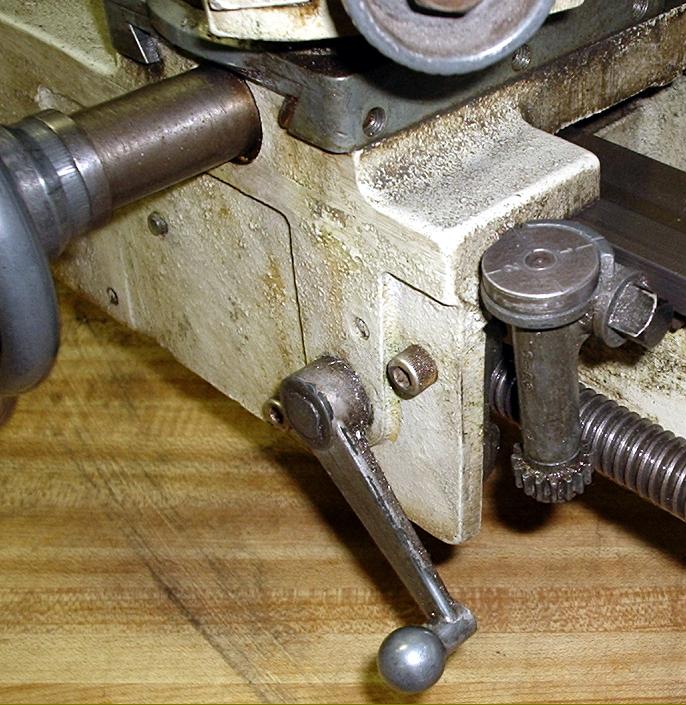
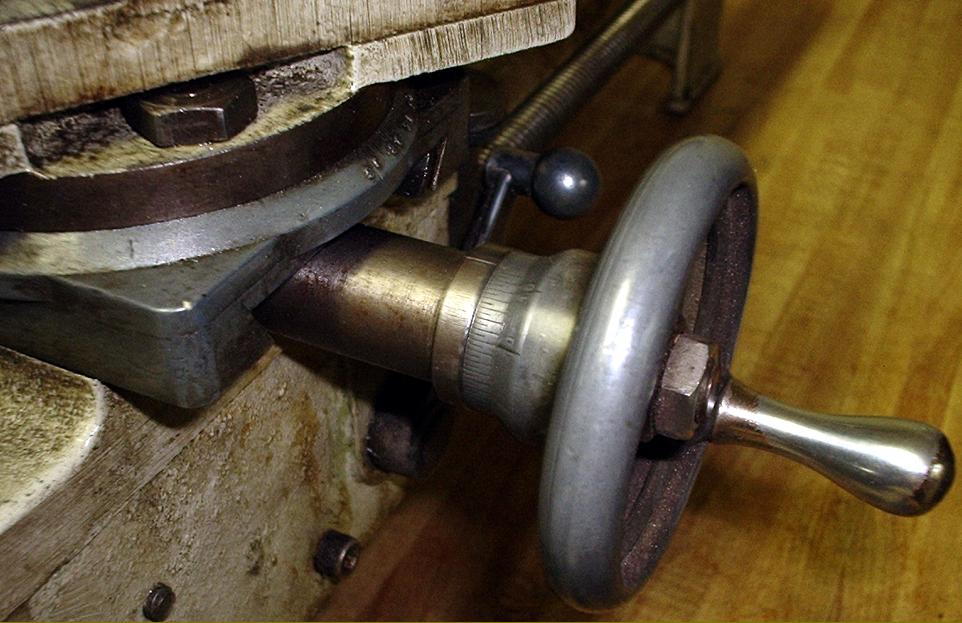
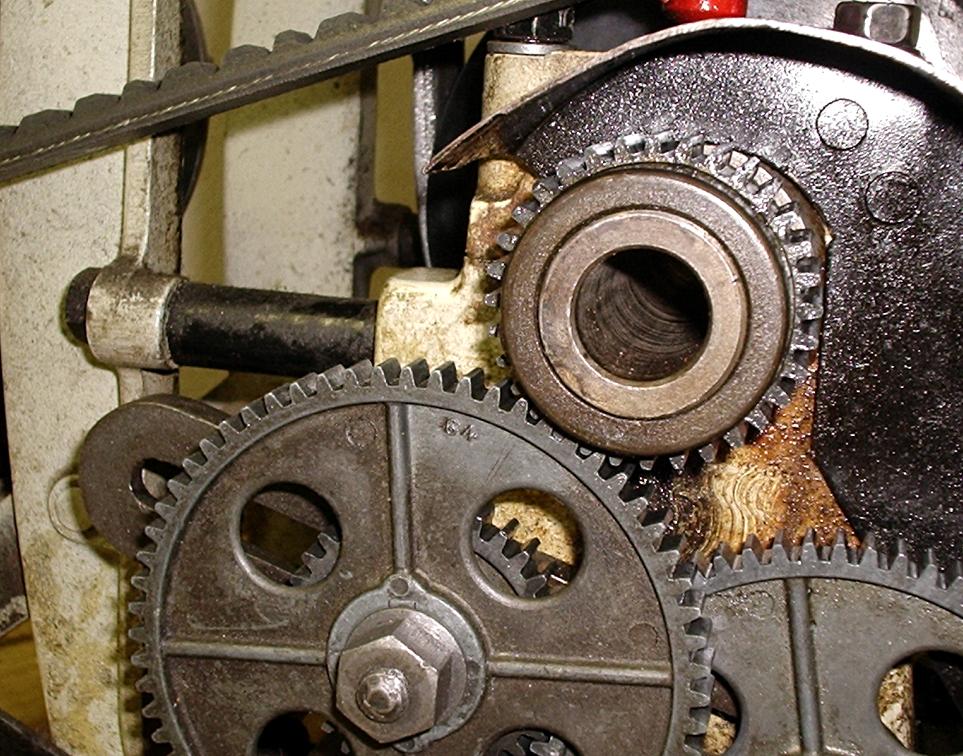
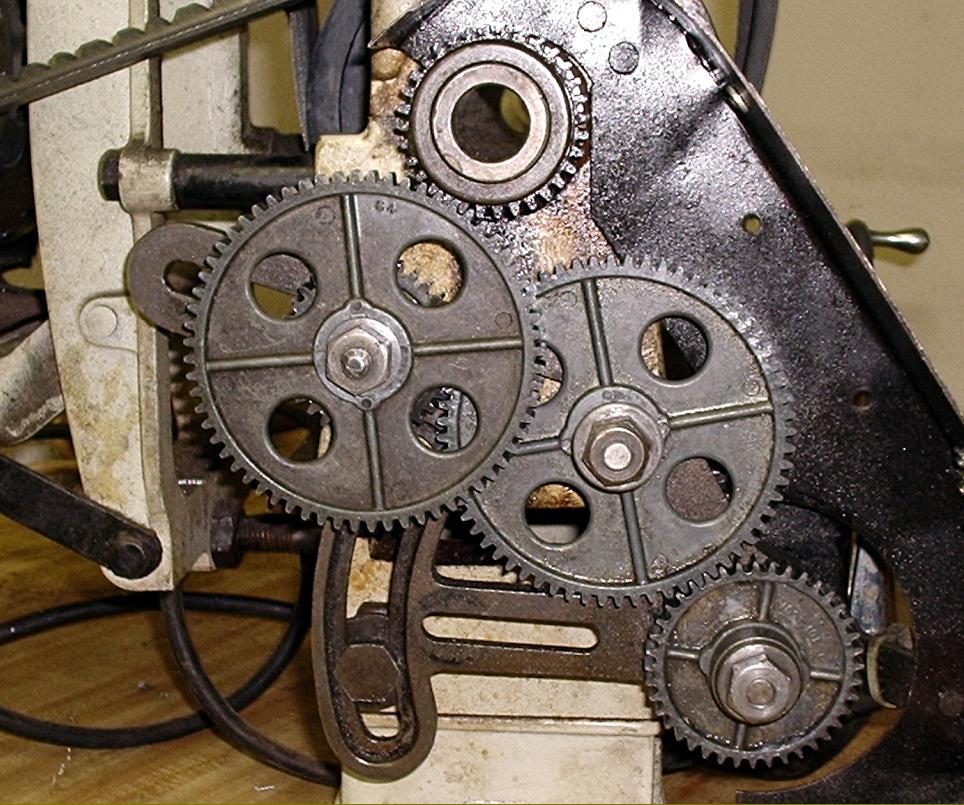
Halifax and Acorntools The British Halifax Model "524" 5-inch centre height by 24 inches between-centres lathe of the late 1940s and early 1950s was very recognisably based on the American Atlas "10-inch" lathe and marketed by the UK Atlas Agents the "Acorn Machine Tool Company 1936 Ltd." of 610 - 614 Chiswick High Road, London W.4. Sold originally with a Halifax badge, it was renamed, probably in 1951, as the "Acorntools" so as to match the name already given by the company to their capstan version of the Atlas 10-inch. Like the similar "Sphere" model it was, in both Halifax and Acorntools guises, essentially identical to the original American machine and, allowing for the 1450 rpm English motor rather than the 1725 rpm American one, had the same speed range; both the countershaft unit and the headstock were of the Atlas 10F "vertical" type but with the changewheel and headstock-belt covers manufactured in engineering plastic. A bold feature was the early use of the same plastic for the headstock and countershaft pulleys and this appears to have been an entirely successful idea - the writer can remember examining, some years ago, a completely worm out Halifax where the pulleys were still in perfectly serviceable condition. However, had a heavy object dropped on them no doubt they would have been less far less able to shrug it off than ones in cast-iron, aluminium or ZAMAK. Details of where and how the Halifax/Acorntools was constructed are lost in time but there is one small clue in a 1956 letter from Acorn to a Midlands distributor where they refer to an Atlas parts lists as containing: "….all spares which go into the manufacture of a Halifax Lathe". This statement would appear to lend some strength to the proposition that Halifax (and possibly Sphere) lathes were built from a mixture of UK-sourced parts - the main castings, shafts and other larger items - and some genuine Atlas spares probably consisting of the ZAMAK items. However, whether these parts were from existing stocks or specially imported is unknown. A further puzzle is the reason for commissioning specially-made plastic changewheel guards and countershaft and headstock pulleys when metal originals would have been available cheaply from the USA. There was also a price difference between the Halifax and Atlas machines: for an equal specification with 24-inch between-centres capacity (and including a motor), in 1949 the Atlas was £84 : 10s : 0d and the Halifax £74 :10s : 0d. - a useful saving of some 12%. Some, if not all Halifax, Acorntool and Sphere lathes were fitted with a broader and longer cross slide that ran on wider ways, a feature that partially addressed one of the main weakness of the original Atlas design. With so many alterations and specially-constructed parts the writer now leans towards the idea that these lathes were indeed constructed in the UK - though with some of the otherwise expensive-to-produce ZAMAK components imported. As a point of interest, on the broader slide the wider section of the dovetail was 2.96" across (Atlas about 2.15") and the narrower 2.66" (Atlas 1.83"). The full width of the wider cross-slide casting was 4.21" with the result that the circular boss carrying the top-slide swivel degree marks was set completely inside the edges, instead of reaching or even overlapping them as on the original design. Acorn offered a complete range of Atlas, Halifax and Sphere parts and some of the 1955-prices make interesting reading (average weekly earning during 1955 were just short of £11 per week): a bare headstock casting was £7 : 10 : 0d with a spindle, amazingly, at exactly the same price; Timken bearings were £2. : 15 : 0d each and, whilst the very large "bull" gear on the spindle was £2 : 10 : 0d the smaller bronze gear was £3 : 12 : 6d. For £23 : 5 : 9d. Acorn offered the owners of plain "babbit" bearing Atlas lathes a Timken taper roller bearing conversion kit; this included a new headstock casting, spindle, bearings (and assorted small parts) with the remainder of the items coming from the existing assembly. They also offered a new, fully-machined headstock casting fitted with bronze-bearing for those whose babbit bearings were worn out. Another British-market version of the Atlas, the "Sphere", can be seen here. and full details of the original Atlas 10-inch lathes here. The standard handbook for the 10-inch Atlas covers these lathes in every detail. If any reader can supply high-quality pictures of an original Halifax lathe, or has any sales literature, the author would be very interested to hear from them.
Sphere Lathe A direct mechanical copy of the American Atlas 10-inch lathe the Sphere, like the other English "Halifax" and "Acorntools" clones, had several interesting changes to the specification and materials used in its construction. It is entirely possible that the whole machine was made in Britain, but also feasible for larger parts such as the bed and headstocks to have been imported - for example, the "Sphere" logo and description "British Made" was cast into the headstock foot, an easily-changed component. However, as the range of changes and modifications were so numerous this would indeed appear to have been a UK product: the cross slide was wider and, on some of the changewheel-equipped models, the casing of the leadscrew reversing gearbox was made in a hard black engineering plastic, a material also used for the changewheel case, the headstock belt covers, the double-step pulley on the countershaft, the two matching 4-step pulleys on countershaft and headstock and, on some lathes, the carriage-traverse handwheel. Whilst some Sphere lathes may have been supplied with plain bearings (the Acorntools version certainly was) more than one example has been found with Timken taper rollers--but instead of being pressed into the headstock housing they were held in place using the twin-bolt caps from the plain-bearing model. A gearbox-equipped version was also offered, though this, like the Atlas equivalent, is far less common The standard handbook for the Atlas 10-inch lathes covers the Sphere, Halifax and Acorntools models in every detail..
|
|
|
|