|
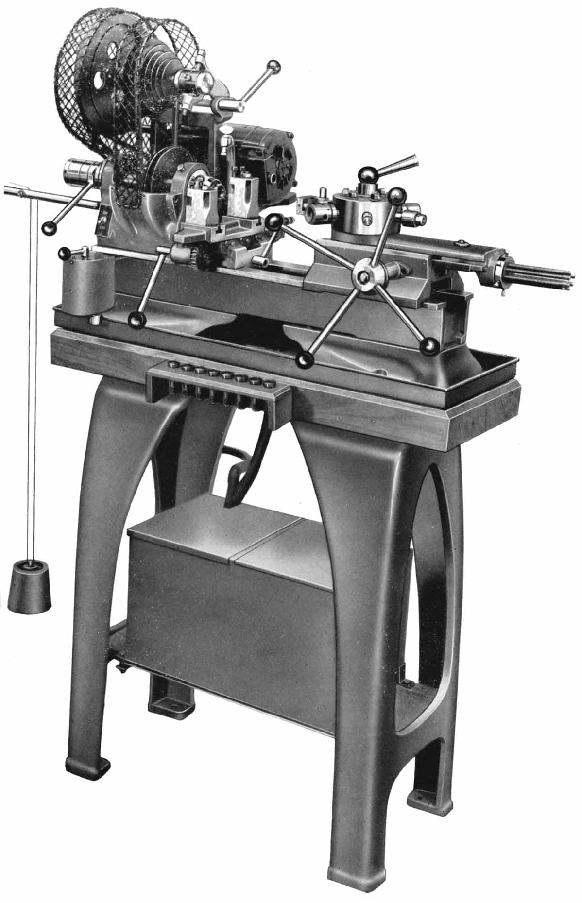
Marketed during the 1940s and early 1950s the 5-inch centre height Atlas capstan lathe (screw-machine) was sold only in the UK and with examples also found in Australia and New Zealand, its then colonies. Sold by the Acorn Machine tool Company the lathe appears not to have been included in any American catalogue and raises the usual conundrum associated with the brand - how much of the machine was American, and how much English ? Certainly the optional lever-action, ball-bearing-thrust collet closer was "home-produced" (or specially commissioned from Atlas) being distinctly different to that sold by Atlas as an accessory for the USA-built version of the ordinary centre lathe. The collet closer was changed at some point for a heavier-duty version of the type that used three hardened toggles.
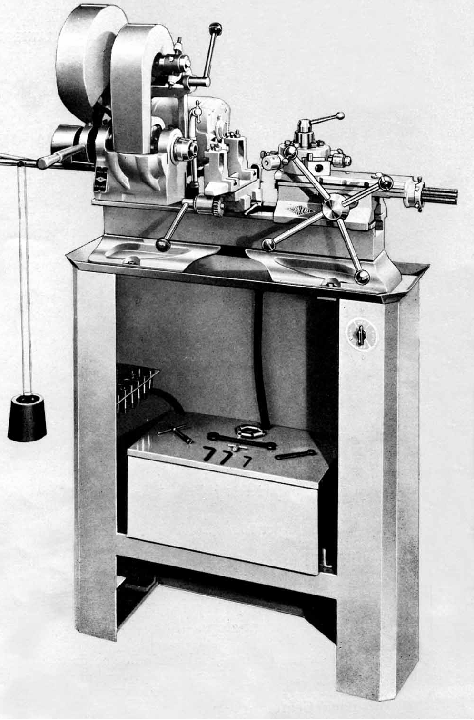
Ground-finished, the 27-inch long bed was mounted on cast-iron standards (legs) with a heavy wooden top, a rather small chip tray and a line of collet storage holes in front of the bed. Coolant equipment, essential if the lathe was to be used for continuous production, could be factory installed on a shelf between the legs. The makers also offered a simple gravity-propelled 3-foot long bar-feed assembly that bolted to the outer face of the headstock, below the spindle line, with support by a single floor foot.
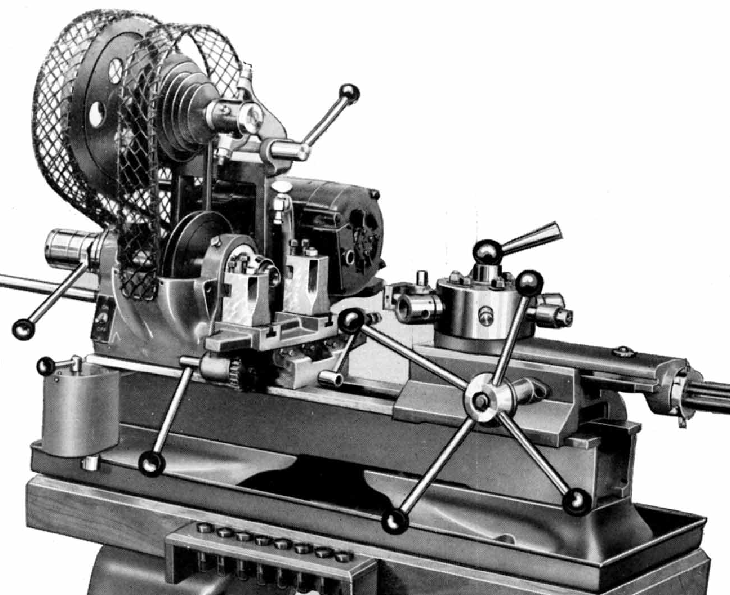
A standard headstock was employed, using a spindle of high-tensile steel, ground-finished and bored on the (standard 8 t.p.i. nose) to a 15-degree taper to take drawback type collets with a nose-thread protection cap furnished as standard. The spindle ran on taper-roller bearings, had a collet capacity of 1/2", a chucking capacity of 3/4" and, driven by the recommended 1425 r.p.m. motor, 8 speeds of: 164. 266, 418, 500, 685, 800, 1275 and 2272 r.p.m. The countershaft was of the standard Atlas Hyatt-bearing "Vertical" type with early models having wire-mesh belt guarding of minimal proportions and strictly utilitarian design. Later models were fitted to pressed-steel stands, with neater all-steel guards, and could, at extra cost be equipped with backgear, a fitting that allowed access to 8 slower speeds of 28, 43, 68, 80, 107, 120, 200 and 303 r.p.m.
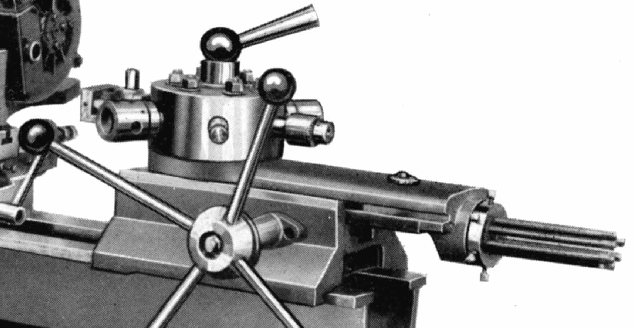
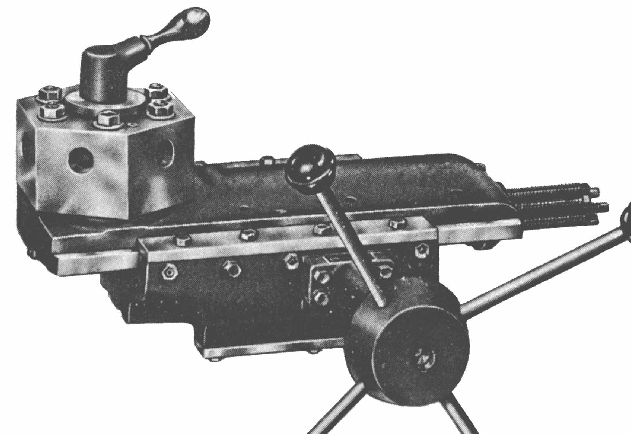
Of a distinctly different appearance to the US-marked accessory type, the bed-mounted turret assembly ( carried a six-station head manually locked and unlocked and rotated by a 4-handle capstan wheel and bored to accept tools with a shank diameter of 3/4-inch. The slide travel was 3.5 inches and the usual six individually-adjustable stops were fitted, rotated by a bevel-gear mechanism. Each capstan unit was fitted to its bed at the works and, to ensure correct alignment, the holes in the rotating head bored from the headstock using a special jig.
Of the simple bolt-on type, the cut-off (forming) slide was without the option of a power feed, its 4 inches of travel being lever-operated through a rack-and-pinion gearing. It was fitted with front and rear T-slot-mounted toolposts (with hardened clamping screws) and adjustable stops for each direction of travel.
While the Atlas 10-inch would not have been able to compete with either the work-rate or metal-removal capabilities of a dedicated capstan of similar capacity, such as a Ward or Herbert Size "0", it would have had a definite place in the production shop required to handle short runs of smaller components..
|
|