E-Mail Tony@lathes.co.uk 
Home    Machine Tool Archive    Machine Tools For Sale & Wanted
Machine Tool Manuals   Machine Tool Catalogues   Belts   Accessories


Emco Unimat DB200 & SL1000 Accessories
Emco Home Page  Accessories  Earliest Unimat - Photographs   Mk. 2 Photographs 
Mk. 2B Photographs   Mk. 4 Photographs  SL1000/DB200 Photographs  Russian Copy 
Unimat Nameplates   Unknown Version   Motors  Motor Repair Computer Control
Home-made SL1000  ROWIC - Argentinean Unimat   Collets

Instruction Books, Parts Books and drive belts are available for the DB200 & SL1000
Additional information is sought about early versions of these lathes: if any reader has access to 1950s technical and advertising material, has an original early Unimat and is handy with a camera (or even has a lathe with just a different badge on the headstock) the writer would very much like to hear from you.

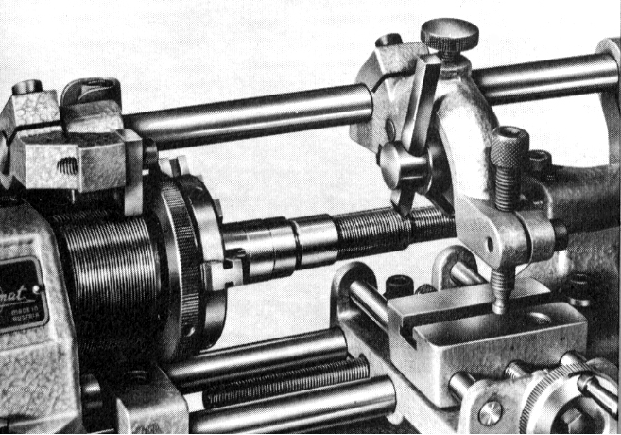
Part 1271. Screwcutting on the DB200 and SL1000 was only possible by employing a very old-fashioned (but accurate) system of using Master Thread guides and a "chasing" arrangement; this limited the range of treads to those provided by the maker. The Master Thread Ring can be seen positioned behind the chuck; the pitch of the master thread was reproduced on the workpiece by a cutting tool sliding along the upper round bar. Metric threads of: 0.5, 0.6, 0.7, 0.8, 0.9, 1.0, 1.25 and 1.5 mm pitch were available and 16, 18, 20, 22, 24, 26, 28, 30, 32, 36, 40, 48, 50 and 56 t.p.i. (threads per inch). For screwcutting very much slower speeds than those normally provided were necessary and Emco offered both a mechanical slow-speed kit (a motor-mount bracket that carried an extra pulley) and electronic speed control of the motor. If you damage a "Master Thread" check to see if its made of "brass"; if so, you may be able to carefully peel away the spoiled top layer to reveal another set of threads beneath--the unit being made up of layers. It is also possible to make your own Master Thread Ring and Follower: you don't have to adhere to the all original dimensions but these were:
outside diameter = 42.5 mm 
inside diameter = 35.5 mm   
length = 30.08 mm 
end flange thickness = 0.305 mm
end flange centre hole diameter = 17 mm 
end flange screw holes (3) = 4.35 mm

Follower: length = 26.9 mm
width = 12 mm 
thickness = 6 mm 
overall length= 26.9 mm centre 
mounting screw = 6.3 mm

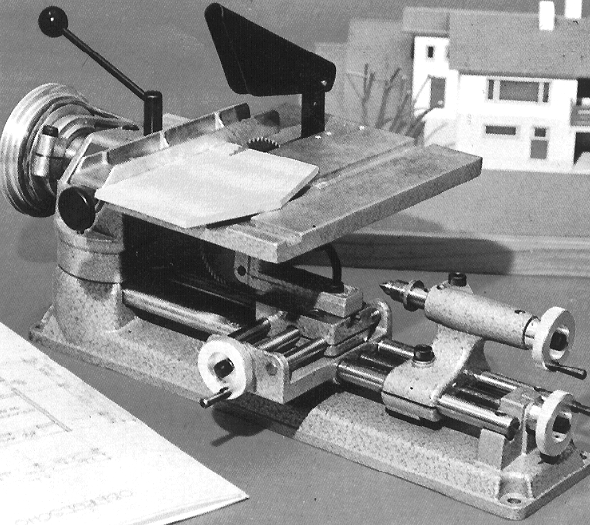
Part 1240 Saw bench assembly - in order to accommodate a reasonably-sized blade the headstock has been mounted on the maker's raiser block. The arbor carrying the saw blade was produced in various lengths enabling the table to be positioned so as to clear the different motors fitted over the years.

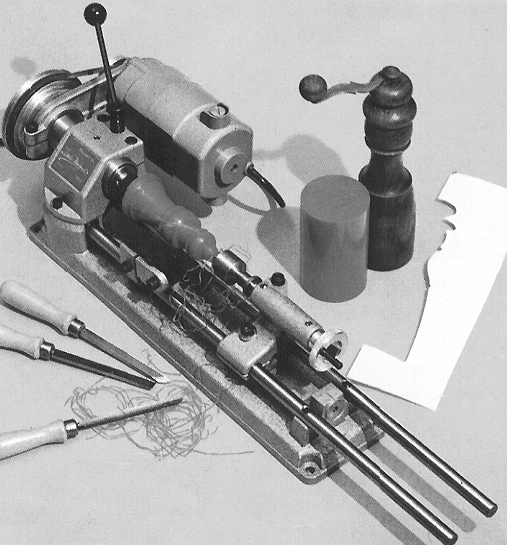
Part Long-bed wood turning kit with turning tools, drive centre (Part 1205) and extra-long bed rails (Part 1395). Although not very clear from the picture the T-rest being used is the fully-adjustable 4.75-inch long Part 1202.  A completely different 2-inch long triangular rest, Part 1201, was also offered. Described by the makers as a "simple rest" it had its front edge on centre height and was non-adjustable.

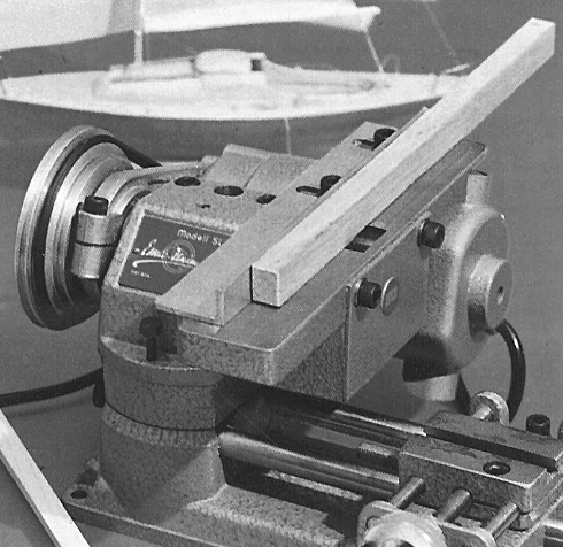
Part 1050 Planing Attachment - note the headstock raiser block Part 1311

Part 1062 Routing
attachment

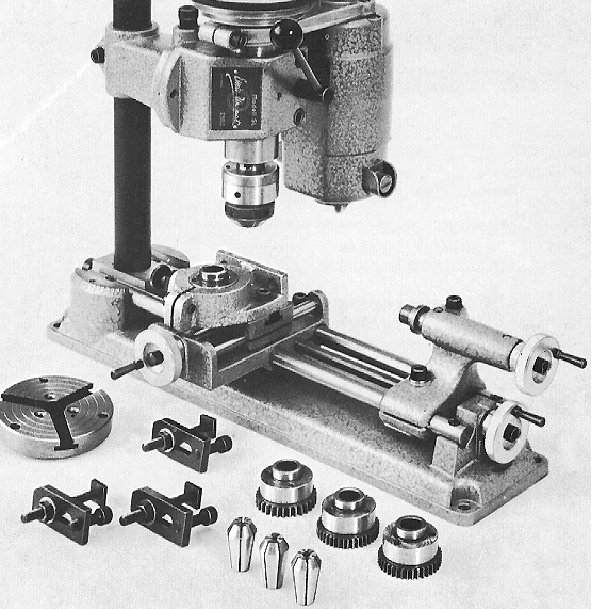
Part 1260 Dividing Attachment and Part 1020  Collet Holder
Shown mounted on the cross slide - and complete with optional plates of 30, 36, and 40 indexes, the dividing unit was supplied with a 48 index plate as standard.
The Collet Holder, mounted on the milling spindle was available with collets from 0.5 mm to 8 mm in 0.5 mm steps. Inch collets were also supplied from 1/32" to 6/16" in steps of 1/32".
Also in the picture is Part 1261 the T-slotted circular table complete with 3 T clamps (Part 1210/02).

Part 1080 set up as a Fretsaw

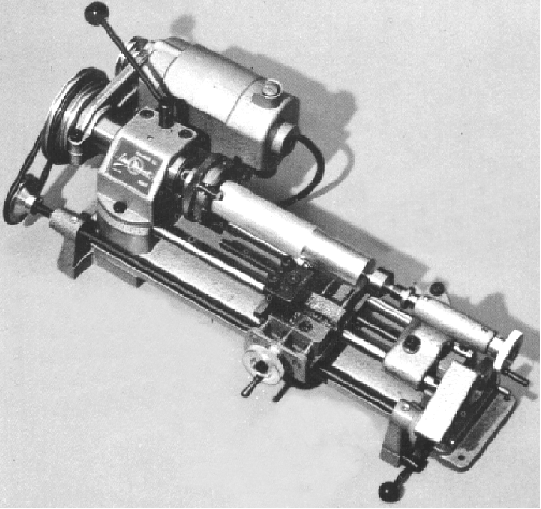
Part 1290 Part Power-feed attachment
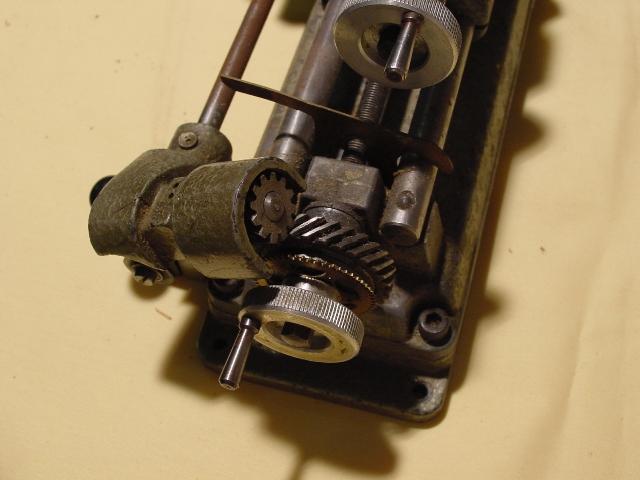
Here the little Unimat is being stretched to the limits of its strength and capacity - aided by a belt-driven longitudinal-feed attachment. This was a relatively complex accessory - and beautifully made. At the tailstock end of the lathe a worm and wheel mechanism (covered by a flat plate in the picture) provided a further step-down ratio - the ball-ended engagement lever for this unit can be seen protruding forwards in line with the tailstock.

Tailstock end of the well-made power-feed unit

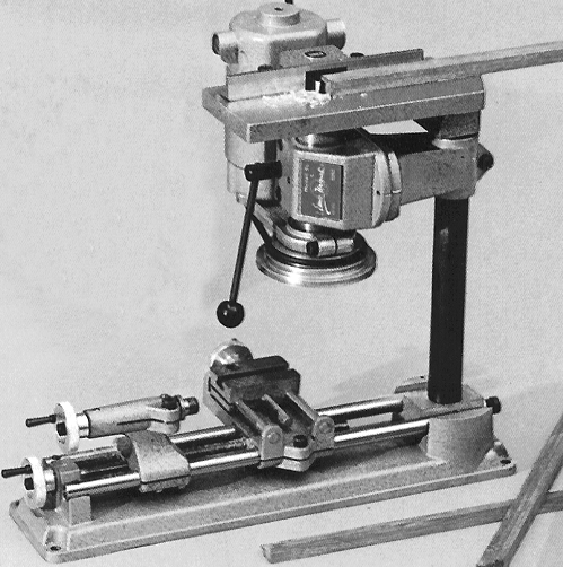
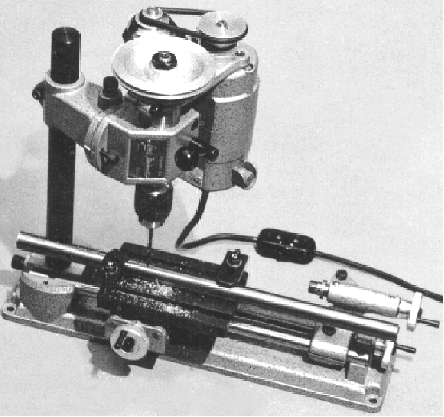
Drill
Here the milling table is being used to clamp a long, round bar whilst the vertical attachment is used as a high-speed drill.

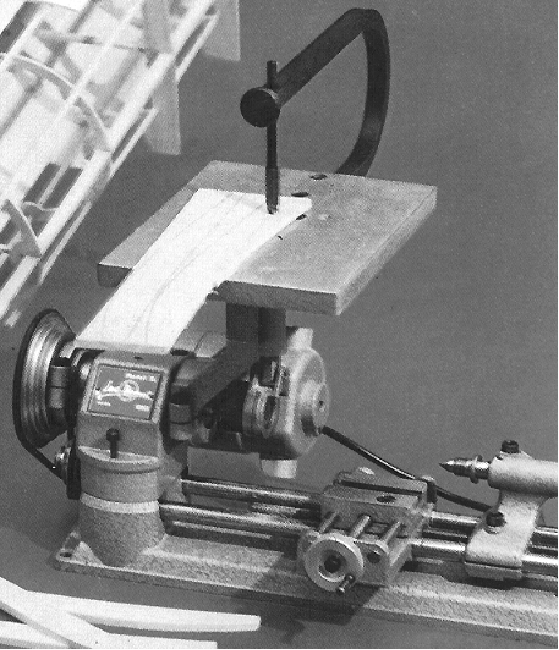
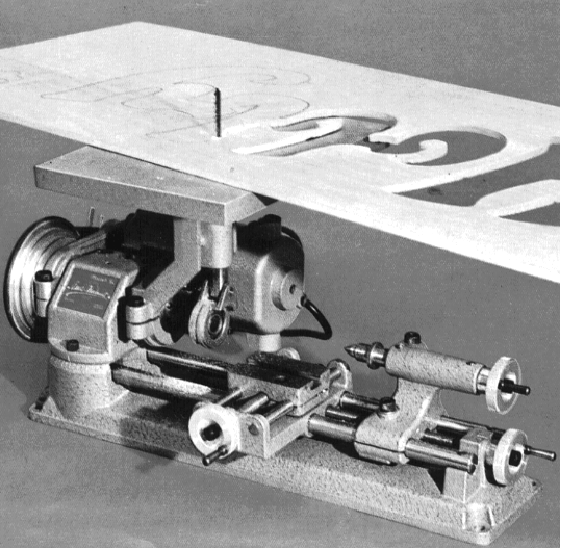
Part 1080 set up as a  Jig Saw. This useful accessory was driven by an eccentric attached to the spindle nose.

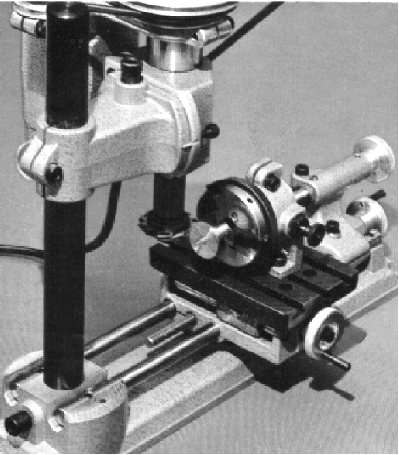
Gear Cutting
This illustration shows the vertical attachment in position. The headstock and motor drive assembly was removed from the lathe and fastened to the end of a solid bar. The bar was then located in the spigot hole left by the headstock. The headstock spindle assembly was arranged to slide in and out of the headstock casting, aided by a large spring.
The arrangement illustrated shows the dividing head mounted on a T slotted milling table, holding a gear which is being generated with a modular cutter held in an arbor on the end of the headstock spindle.

E-Mail Tony@lathes.co.uk 
Home    Machine Tool Archive    Machine Tools For Sale & Wanted
Machine Tool Manuals   Machine Tool Catalogues   Belts   Accessories


Emco Unimat DB200 & SL1000 Accessories
Emco Home Page  Accessories  Earliest Unimat - Photographs   Mk. 2 Photographs 
Mk. 2B Photographs   Mk. 4 Photographs  SL1000/DB200 Photographs  Russian Copy 
Unimat Nameplates   Unknown Version   Motors  Motor Repair Computer Control
Home-made SL1000  ROWIC - Argentinean Unimat   Collets
Instruction Books, Parts Books and drive belts are available for the DB200 & SL1000