
|
Home Machine Tool Archive Machine-tools for Sale & Wanted Raglan Home Page Factory Jigs & Fixtures Little John Mk. 1 Raglan Capstan Lathes Raglan Miller Raglan Wood Lathe Raglan Loughborough Training Lathe Accessories |
|
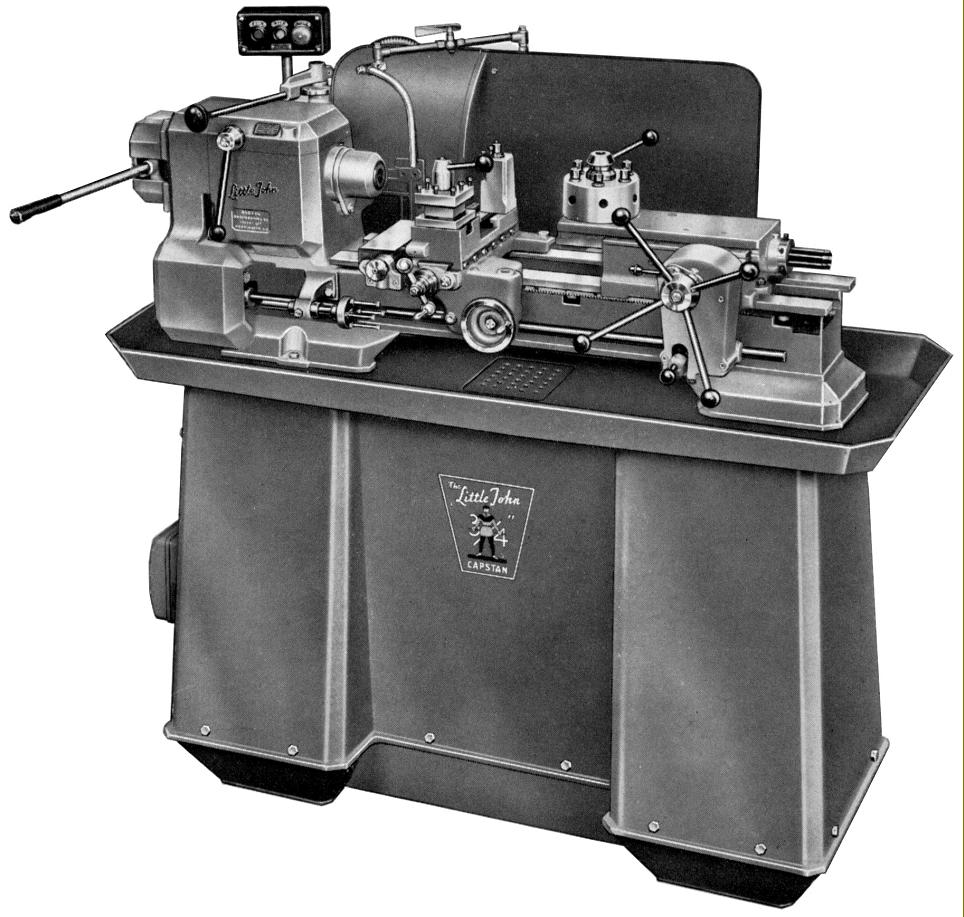
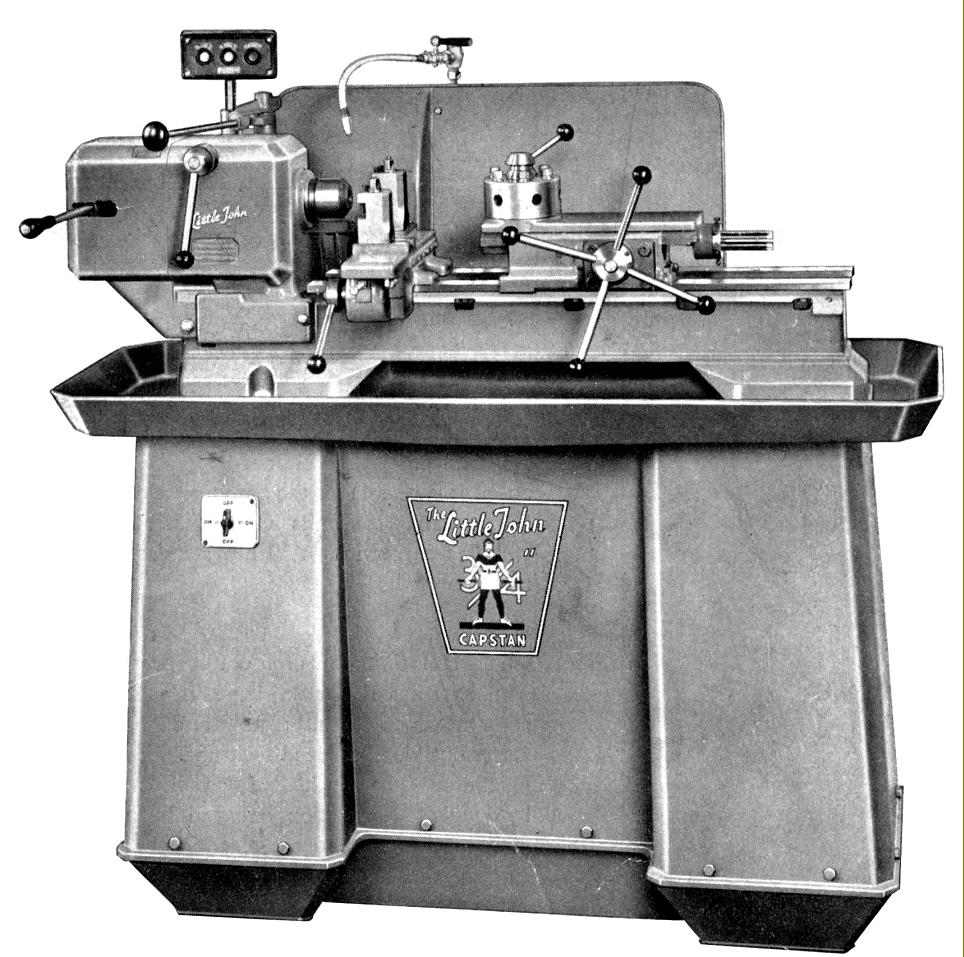
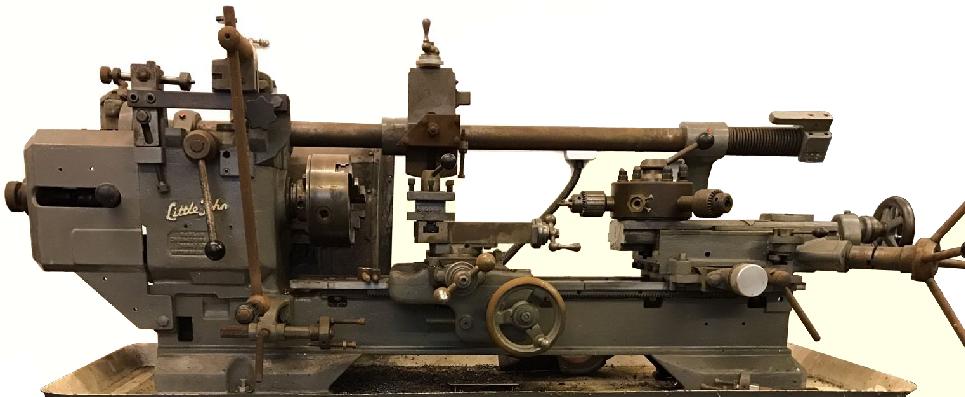
Raglan Mk. 1 Capstan: based closely on the standard "Little John" centre lathe and usually fitted to a plain stand - as shown - without any storage cupboards or drawers |
|
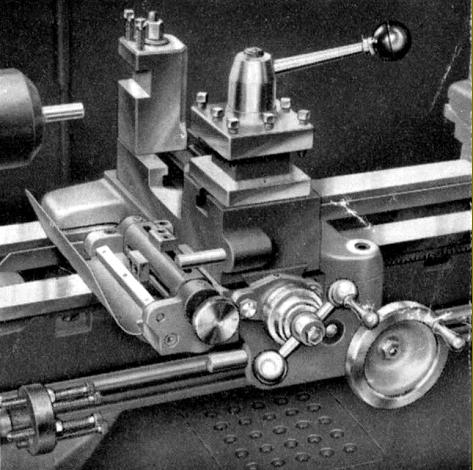
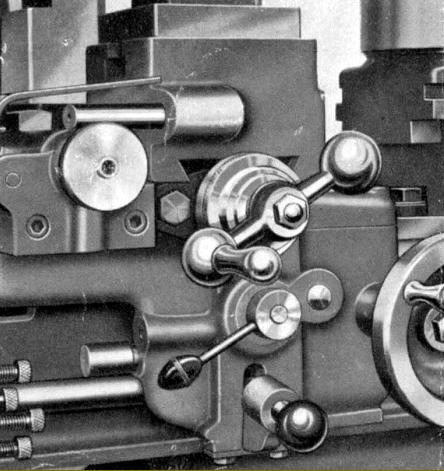
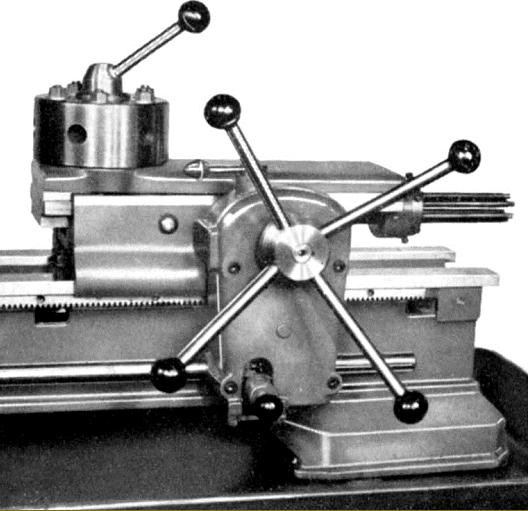
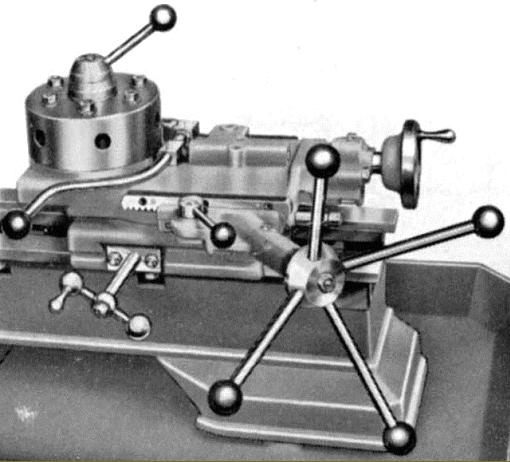
In of the ordinary cut-off slide on the standard machine, a proper carriage was available. The example shown has hand traverse along the bed, a 4-way front toolpost and a rear toolpost for parting off or forming. |
|
Also on the options' list was this powered carriage with drive provided by a keyed shaft and equipped with automatic knock off - the same 4 position rotating stop as used on the hand-feed carriage being fitted. |
|
|
|
|
|
|
|
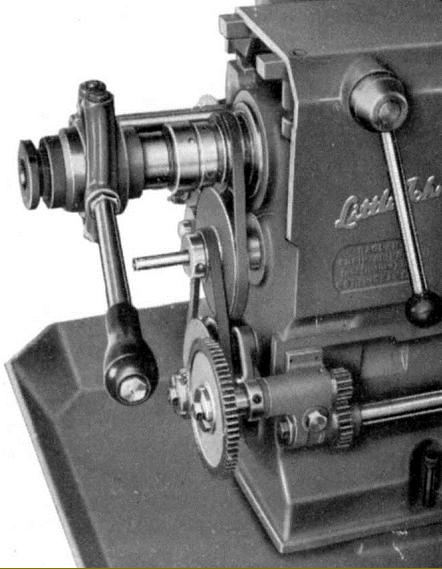
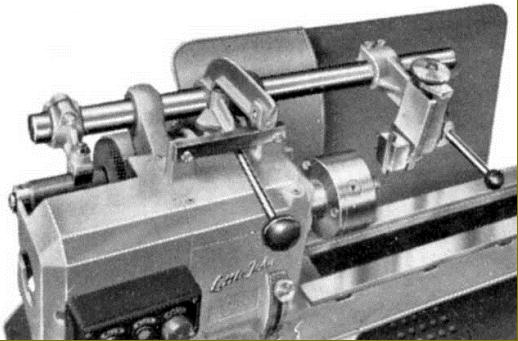
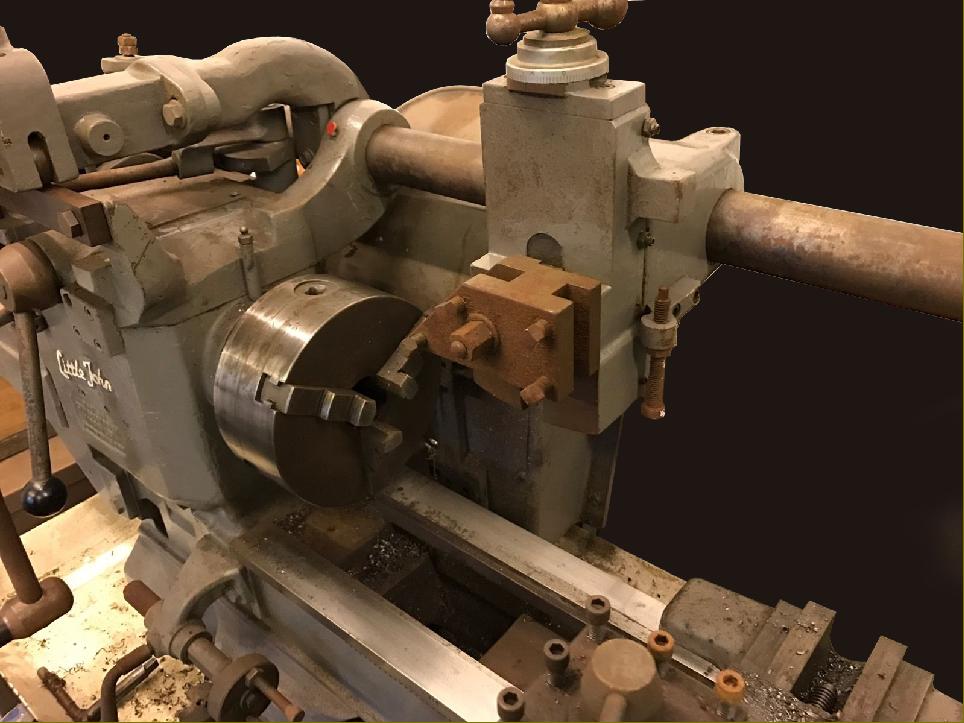
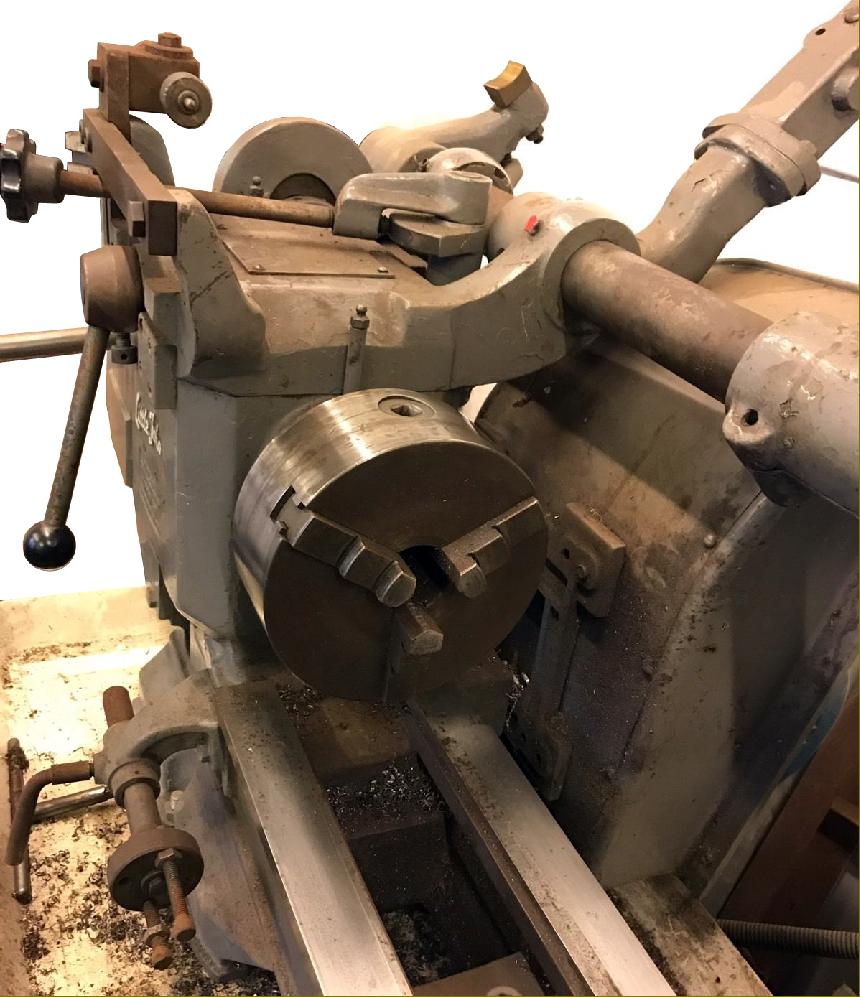
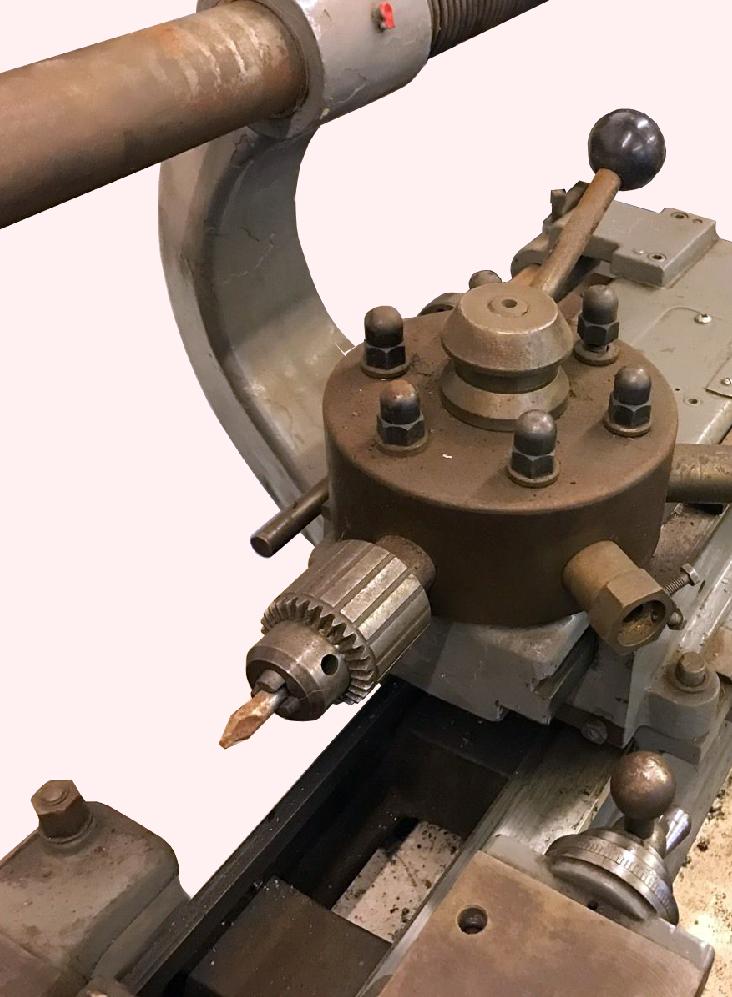
The rarest of all Raglan Accessories - the Thread Chasing Attachment with its travel bar supported in a specially-cast headstock top with, in this case, rear-mounted brackets. However, another design has been discover, shown in the photographs below: this installation employed a rather heavier headstock cover, a tool holder adapted from that used on the ordinary centre lathe and a much longer, spring-loaded toolpost support arm that was braced at its tailstock by a substantial cast-iron bracket. The arm could be moved longitudinally against spring pressure by a handle carried in the headstock top cover. |
||
|
Brass Finishers Turret Lathe fitted with a universal Turret Slide. The turret, which could be swivelled and traversed across the bed, was quickly advanced by the usual capstan handle but could also be moved slowly by a handwheel on the end. |
||
|
|
|
The end of the toolpost support arm was braced at its tailstock end by a substantial cast-iron bracket. |
||
|
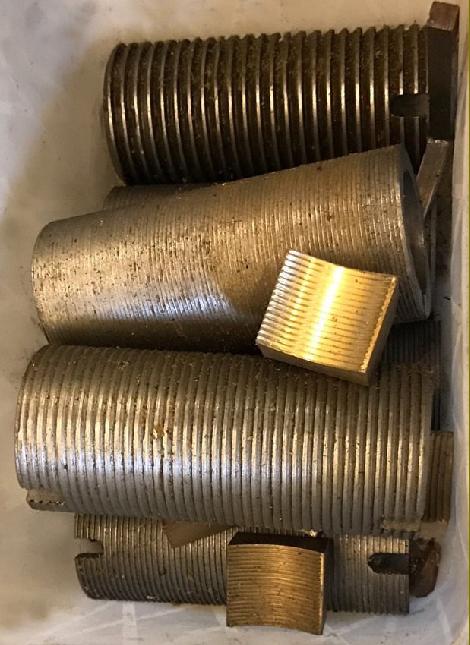
Raglan thread "masters" and associated bronze followers. |
||
|
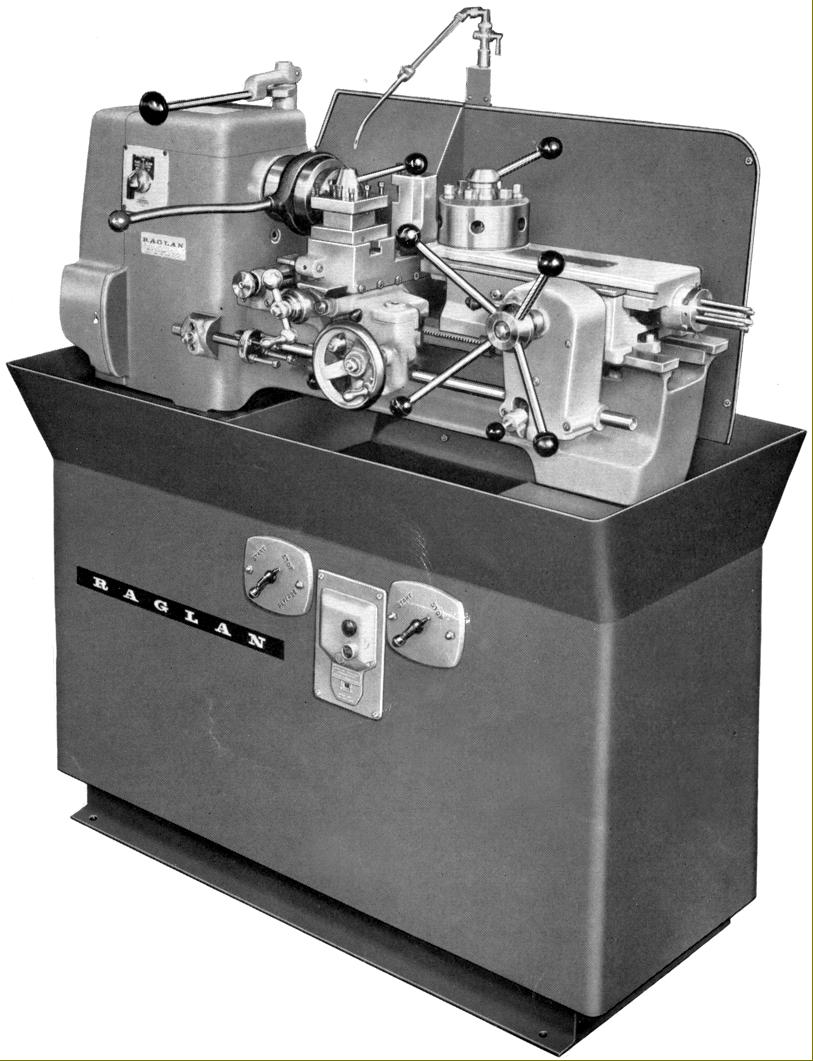
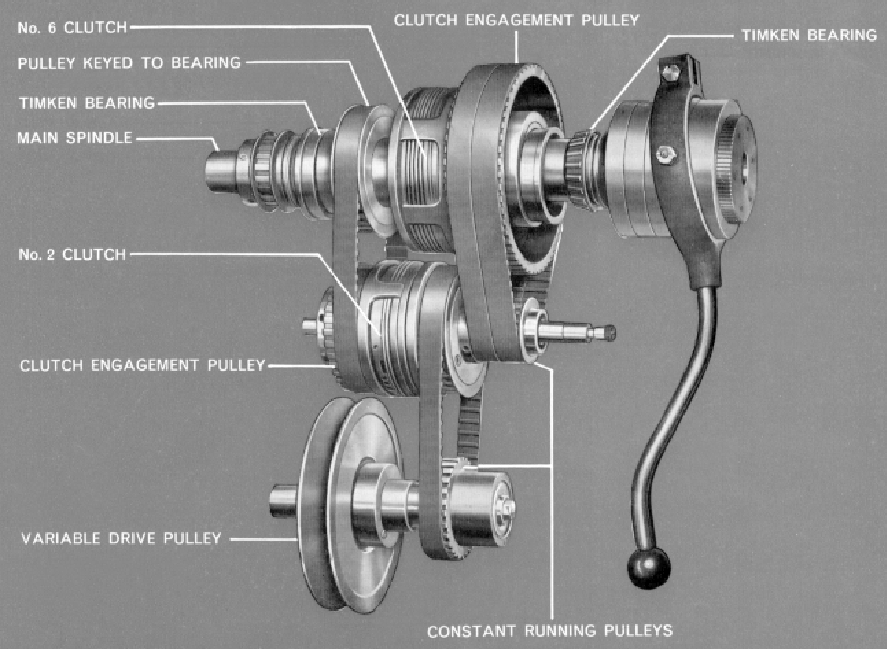
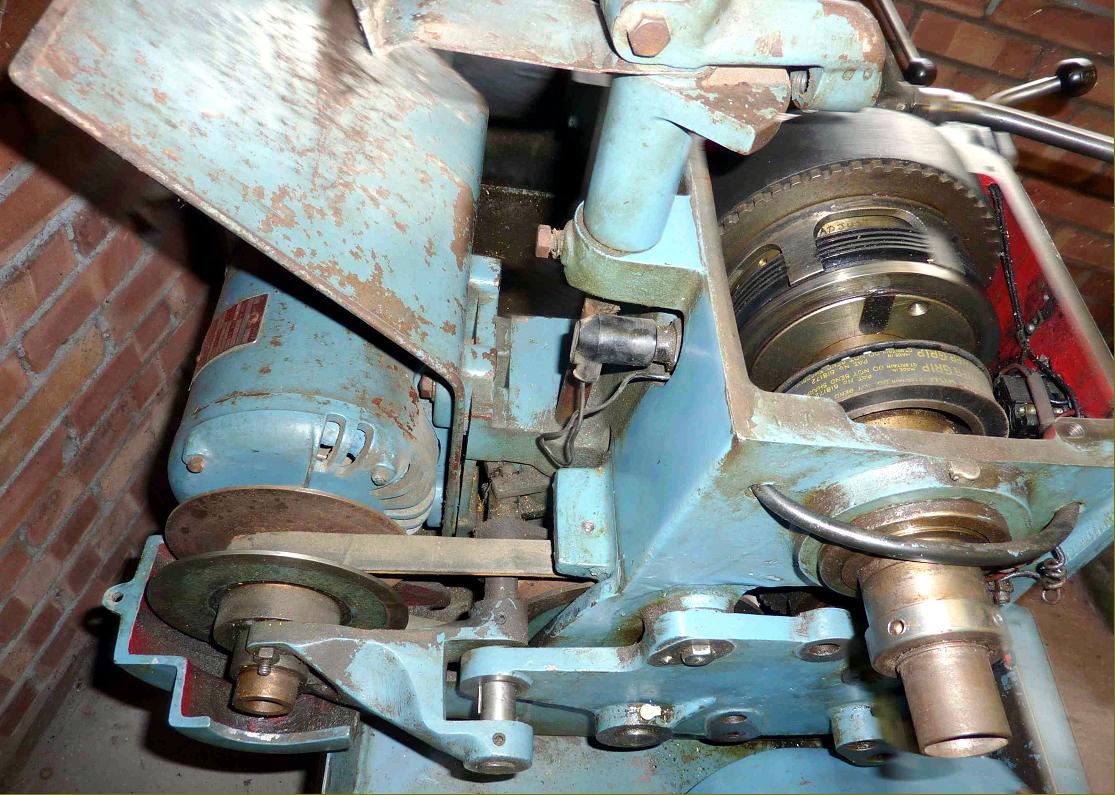
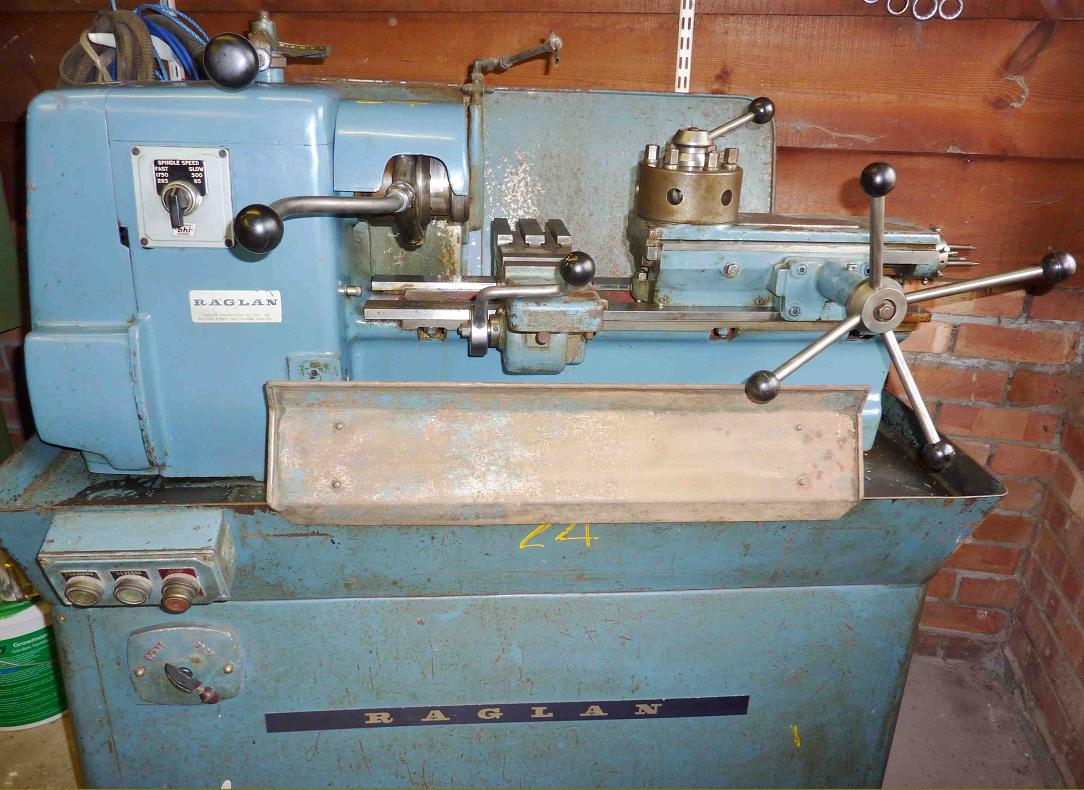
The Raglan Mk. 2 Capstan. Using many of the same conversion parts as the Mk. 1, the Mk. 2 was based on the much improved and newly-introduced Raglan Five-inch centre lathe. Available, like its predecessor, in various configurations, that shown above has the optional power feed mechanism to both turret slide and saddle - the latter also fitted with an automatic knock-off, actuated by a four-station rotary stop. The headstock was fitted with the normal Raglan mechanical variable-speed drive but was provided, in addition, with two electro-magnetic clutches that allowed an almost instantaneous change from high to low speed and back again. Using a single-speed motor (and controlled by a simple switch on the headstock) two stepless speed ranges were available: 85 to 500 r.p.m. on the lower setting and 285 to 1750 r.p.m on the higher. See below for details of how the system worked.. |
|
|
|
|
||
|
Factory Jigs & Fixtures Little John Mk. 1 Raglan Capstan Lathes Raglan Miller Raglan Wood Lathe Raglan Loughborough Training Lathe Accessories Home Machine Tool Archive Machine Tools For Sale & Wanted |