|
 |
 |
 |
 |
 |
 |
 |
 |
 |
 |
 |
 |
 |
 |
 |
 |
 |
 |
 |
 |
 |
 |
 |
 |
 |
 |
 |
 |
 |
 |
 |
 |
 |
 |
 |
 |
 |
 |
|
|
|
|
|
|
|
|
|
|
|
|
|
|
|
|
|
|
|
|
|
|
|
|
|
|
|
|
|
|
|
|
|
|
|
|
|
|
|
|
|
|
|
|
|
|
 |
|
|
|
|
|
|
To change speeds on the Cinedo the operator pulled out a knob on the face of the speed-indicator disc, turn it left or right to "dial" the speed required and then release it - whereupon (as for decades previously on many Cincinnati machines) hydraulics shifted the necessary gears into engagement.
|
|
|
|
|
|
|
 |
|
|
|
|
|
|
Section through the speed-change mechanism
|
|
|
|
|
|
|
 |
|
|
|
|
|
|
Changes of table feed rate were by a crank handle mounted conveniently on the front face of the knee (as on late versions of the long-lived MI millers) with a half rotation, left or right, making a change to the next higher or lower setting
|
|
|
|
|
|
|
 |
|
|
|
|
|
|
Micrometer dials of a reasonable diameter were fitted (though one might have expected them to be larger) with a quick-adjusting function that allowed them to be pulled outwards against a light spring pressure, turned and reset. No locking screws or other securing parts were used that might have caused them to tilt over or alter their setting.
|
|
|
|
|
|
|
 |
|
|
|
|
|
|
Automatic Backlash Eliminator. The mechanism was contained in a single housing and comprised two separate feed nuts, each carrying teeth that meshed with an individual rack. The racks were arranged to sit each side of a spur gear which, when rotated, moved one forwards and the other backwards - so causing the nuts to rotate slightly in opposite directions. As the nuts turned, the effect was to eliminate backlash by making the pair grip the feedscrew firmly by seating each hard against opposite sides of the thread.
|
|
|
|
|
|
|
 |
|
|
|
|
Like all Cincinnati general-purpose millers the Cinedo had a particularly massive and rugged knee. Instead of the common V-ways on the column-to-knee and knee-to-saddle mountings used by many other manufacturers, Cincinnati employed square ways fitted with a total of three gib strips that allowed a very precise adjustment of each sliding surface.
|
|
|
|
|
|
|
 |
|
|
|
|
|
|
Tight-fitting way wipers on the knee-to-column ways
|
|
|
|
|
|
|
 |
|
|
|
|
|
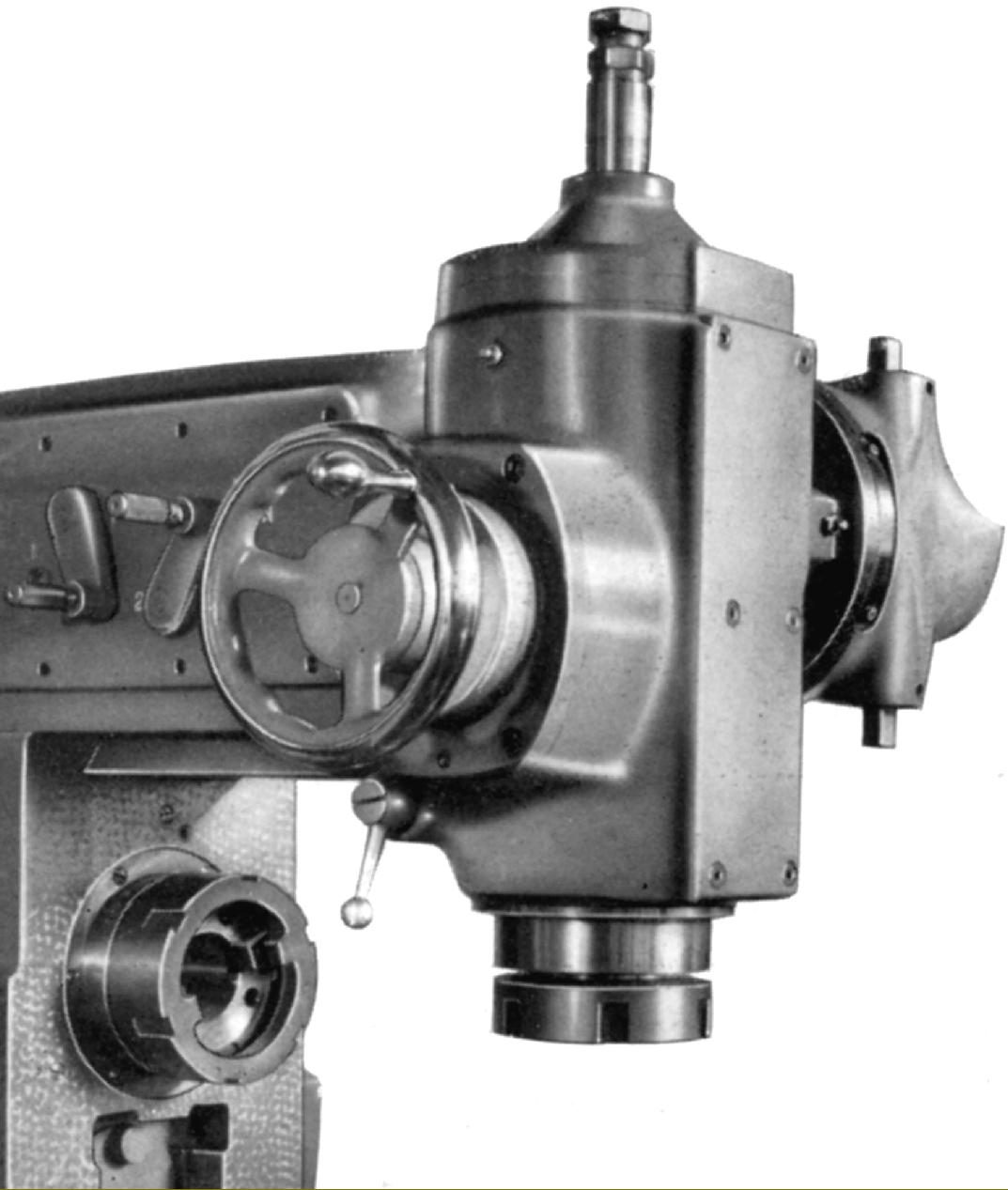
Hardened and ground in forged nickel-chrome steel the main spindle ran in two precision class taper-roller bearings and one ball-type anti-friction bearing. On horizontal models the spindle diameter at the front bearing was 4 inches on 200 series machines and 4.375 inches on the 300 and 400. On vertical machines the same diameters were 3.75 inches on the 200 and 4.5 inches on the 300 and 400
|
|
|
|
|
|
|
 |
|
|
|
|
|
|
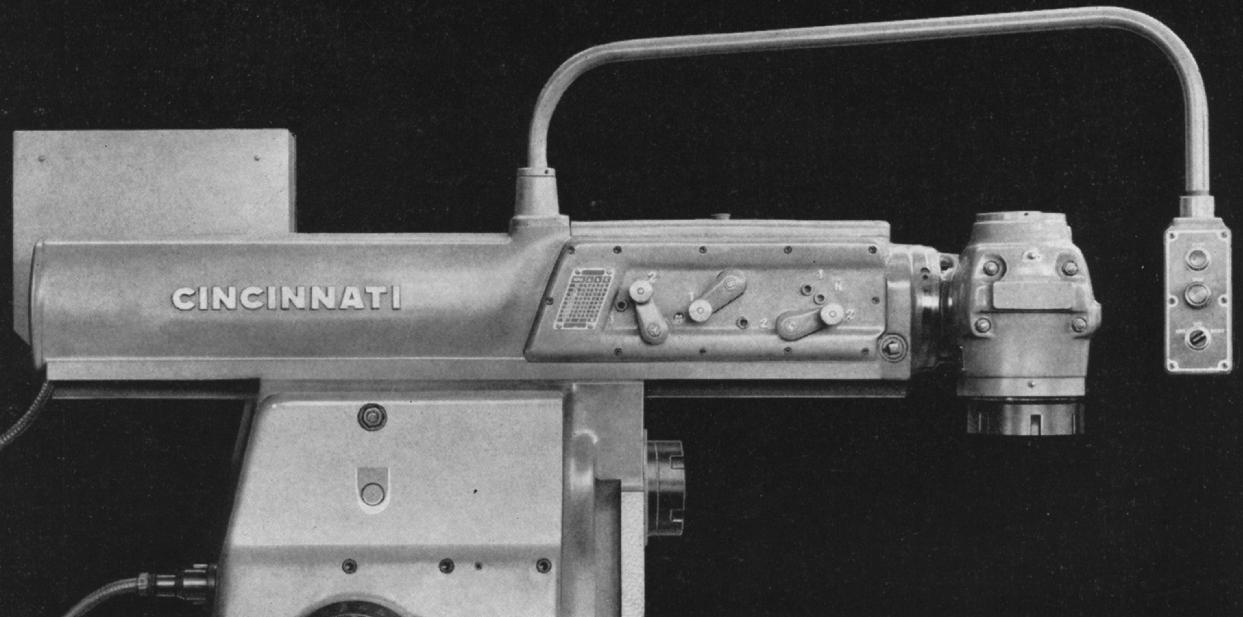
A constant problem with any machine-tool used to the limits of its capacity and strength is vibration; and to help overcome some if its effects Cincinnati replaced the ordinary hollow-cast overarm with what they called a "Dynapoise" unit. This incorporated a mass-balance weight that was set at the factory during pre-delivery, final run-off testing, to give the smoothest possible cut at high rates of metal removal.
|
|
|
|
|
|
|
 |
|
|
|
|
|
|
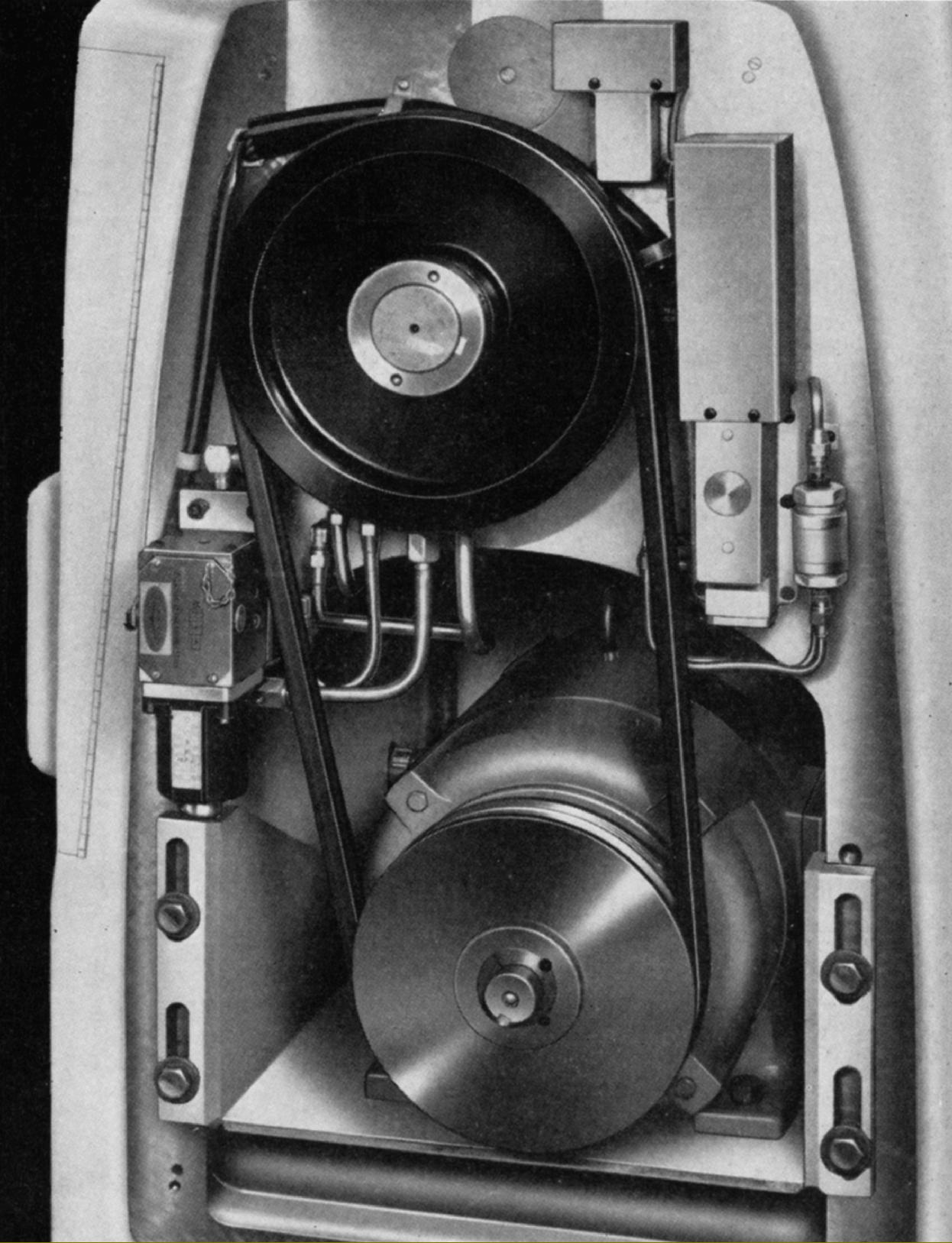
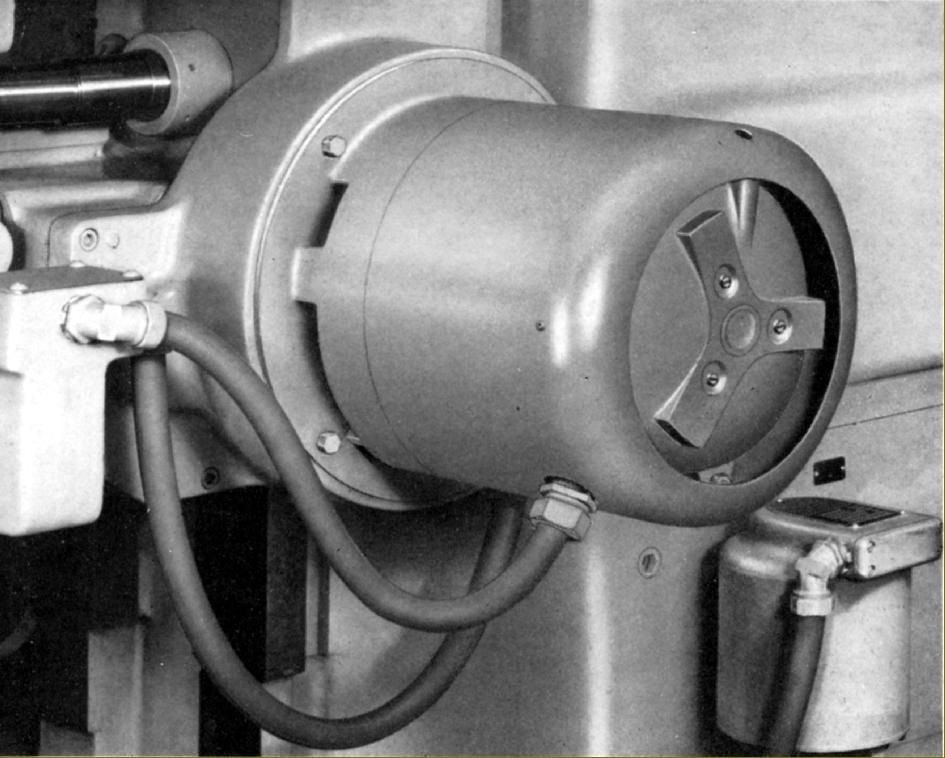
Mounted in the base of the column on a simple, vertically adjustable platform, the motor drove up to the spindle gearbox by V-belts. The two smaller machines both had 10 h.p. motors, the Model 315-16 a 15 h.p. and the 420-16 a 20 h.p.
|
|
|
|
|
|
|
 |
|
|
|
|
|
|
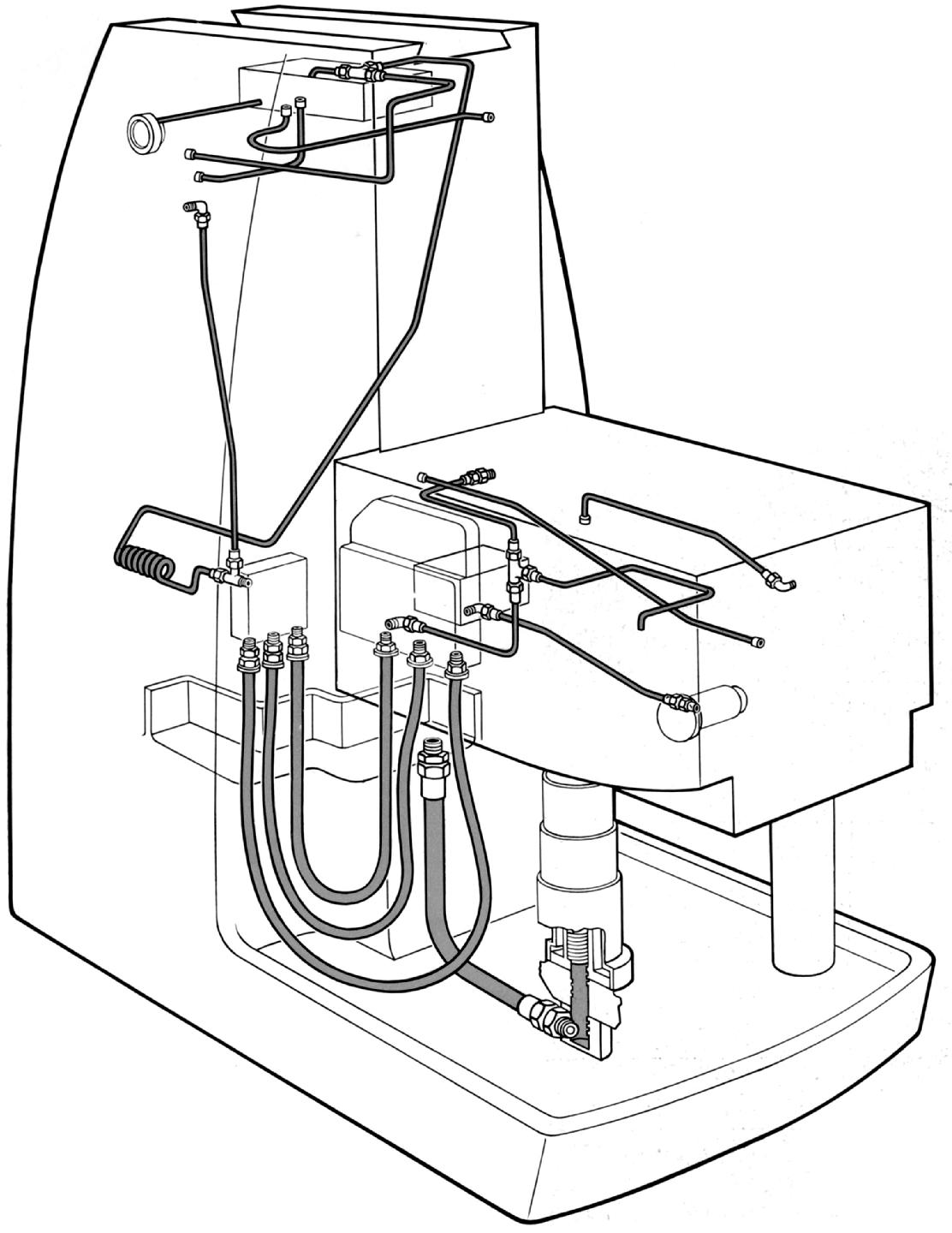
Lubrication diagram. A main reservoir was fitted inside the knee where, as soon as the main motor started, a mechanical pump both sprayed oil over the various mechanism inside and provided a supply under pressure to the table, column and saddle ways and to the moving parts of the feed mechanism.
|
|
|
|
|
|
|
 |
|
|
|
|
|
|
|
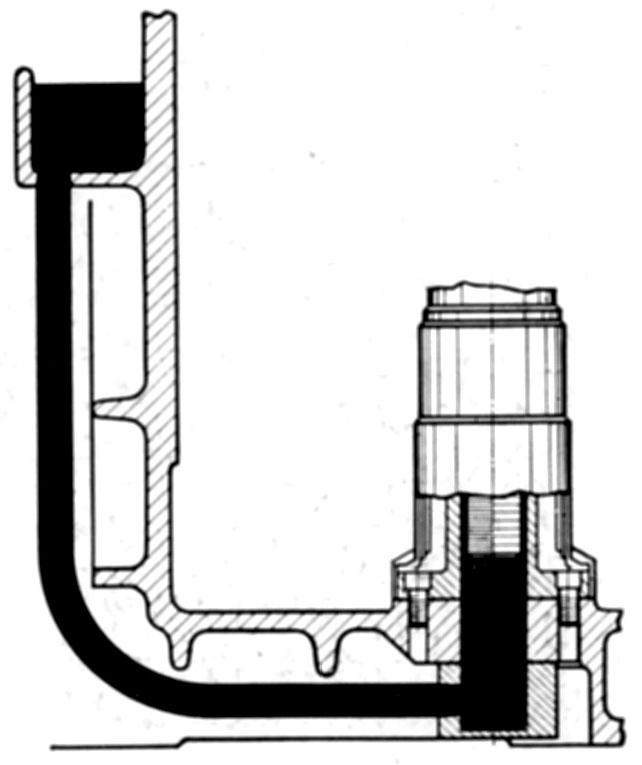
Continuing Cincinnati practice since the early 1940s, the heavily stressed knee elevation mechanism - it consisted of a one-piece, nitrided-steel screw, supported on taper roller bearings and running through an aluminium-bronze nut - was completely enclosed in a bath of EP oil. A separate header-tank positioned to one side (and level with the screw's top) fed oil down a pipe to fill the housing as the screw rose and fell.
|
|
|
|
|
|
|
|
|
|
|
|
|
|