lathes.co.uk Home Page     Machine Tool Archive     Machine Tools For Sale & Wanted
E-Mail  Tony@lathes.co.uk

Ames Lathes - USA
   Ames Millers   Ames in Production   Ames Photographs   Headstock Details   
Tailstocks   Screwcutting   Stands & Countershafts   Grinding & Milling Attachments   
Slide Rests   Factory Building   Enclosed Headstock Model   Other Ames Products
Ames Triplex Multi-Function Machine

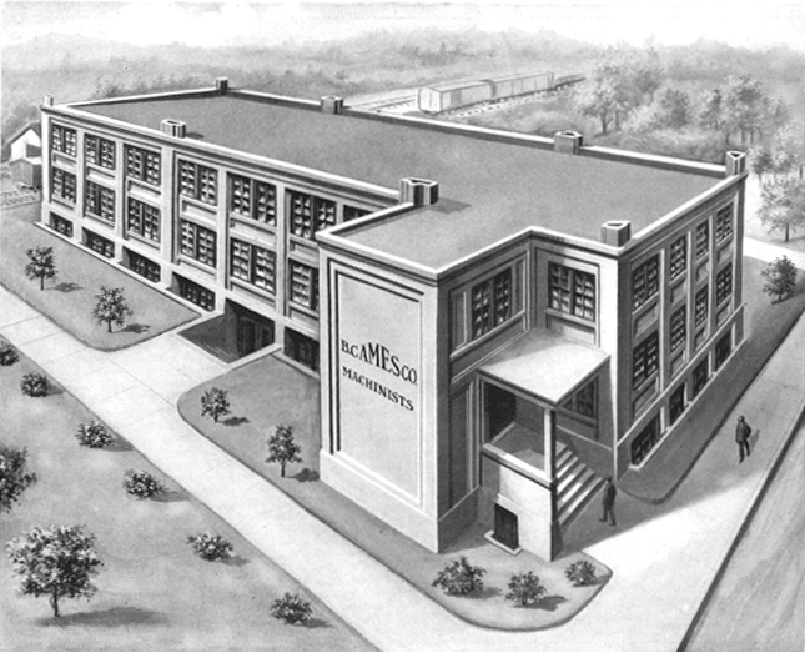
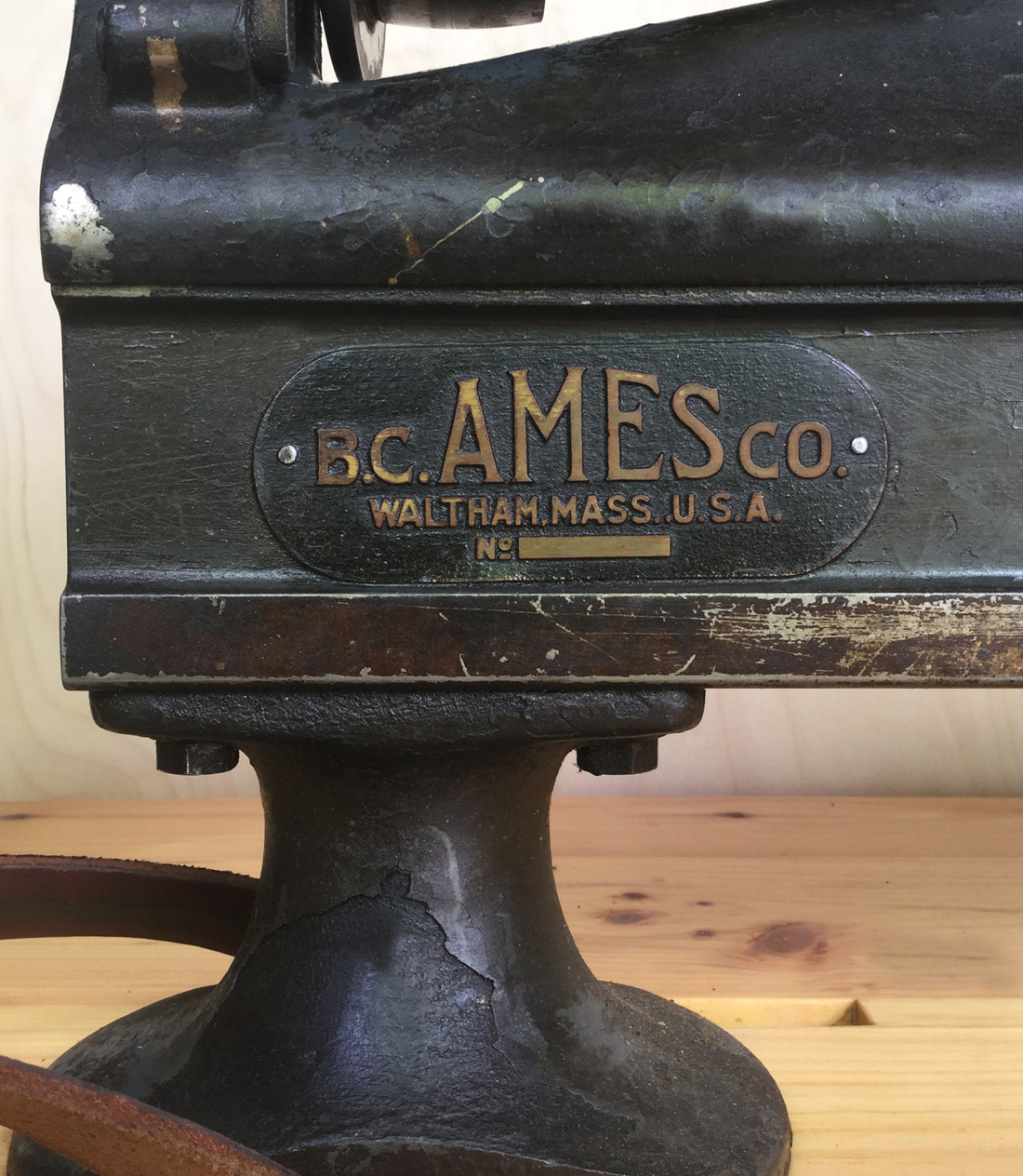
When Bliss Charles Ames opened his works on Ash Street in Waltham, Ma. in the late 1890s, he was joining an exclusive club of manufactures* who, though they produced relatively few machines, made a significant contribution to improving the standards of quality and precision employed in American manufacturing industry. Amongst his fellow high-class machine-tool makers in Waltham were Stark, the American Watch Tool Company, The Waltham Machine Works, Wade and F. W. Derbyshire - with others, including  Pratt & Whitney, Rivett, Cataract, Hardinge, Elgin, Hjorth, Potter, Remington, Sloan & Chace and Pearce in other parts of the U.S.A.
Ames quickly became well-known (as the B.C. Ames Co.) for a range of very accurate machine tools and precision measuring equipment; they did not produce a huge number of machines - the specialised marked for precision bench lathes and millers was relatively small and the competition fierce. In the early 1920 an average of one hundred No. 3 lathes were being produced each year, a number that fell to a low of just two or thee at the height of the depression in the early 1930s; sales picked up to nearly fifty a year during the middle and late 1930s followed by an explosion in growth during the years of World War 2 when, if the serial numbers are to be believed, as many as eight hundred and six left the factory during 1942 and 1943.
The entire range of No. 3 and EH3 Bench Lathes, Bench Millers, Slotters and Shapers were all made until 1957, when production abruptly ceased.
Today the Ames company still thrives in the precision engineering field and concentrate on high quality measuring and inspection equipment.
* including:
Hjorth, Potter  Pratt & Whitney, , Rivett, Stark, Wade, Waltham Machine Works, WadeRivett, Cataract, Hardinge, Elgin,, Remington, Sloan & Chace.

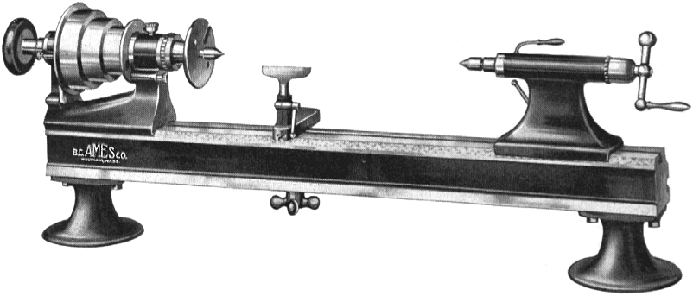
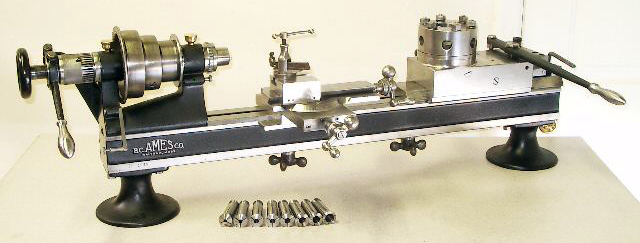
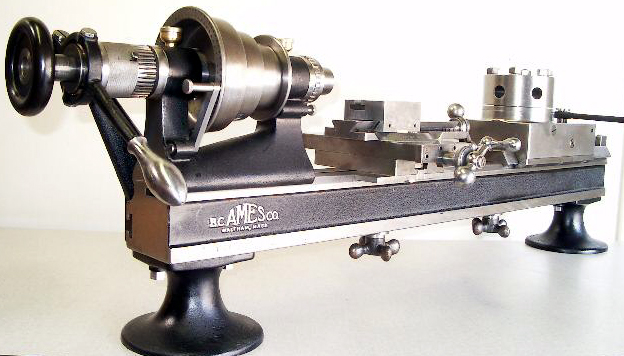
Ames 83/8" x 21" precision bench lathe 1900 - 1930
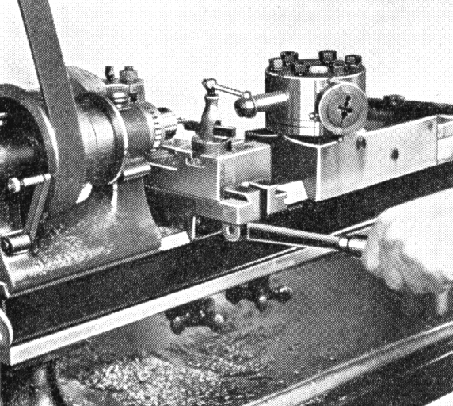
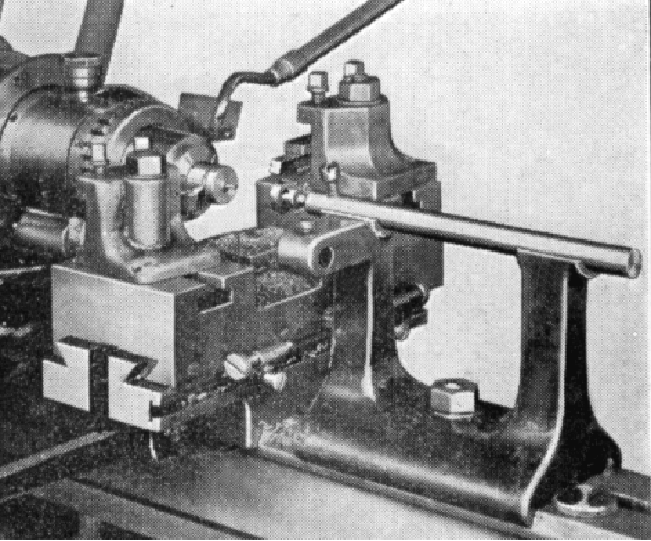
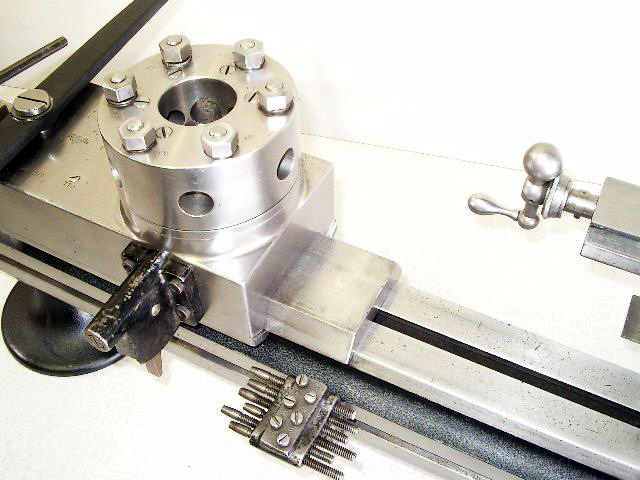
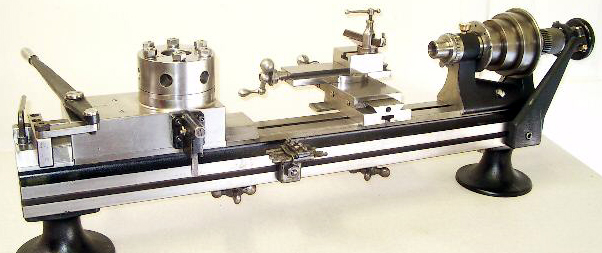
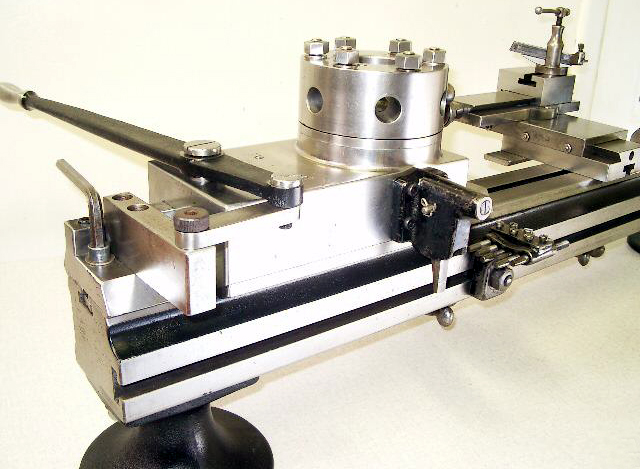
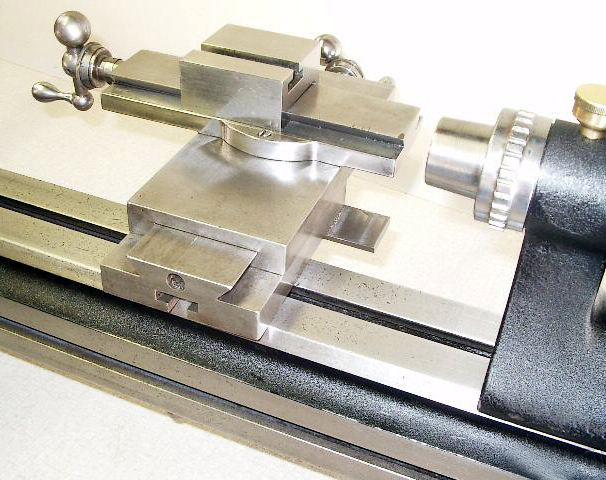
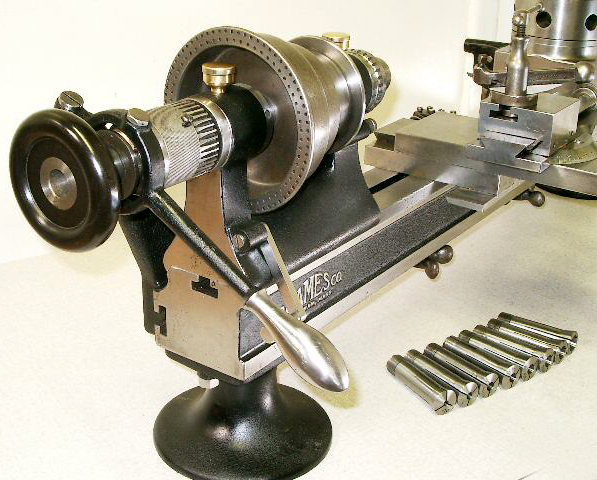
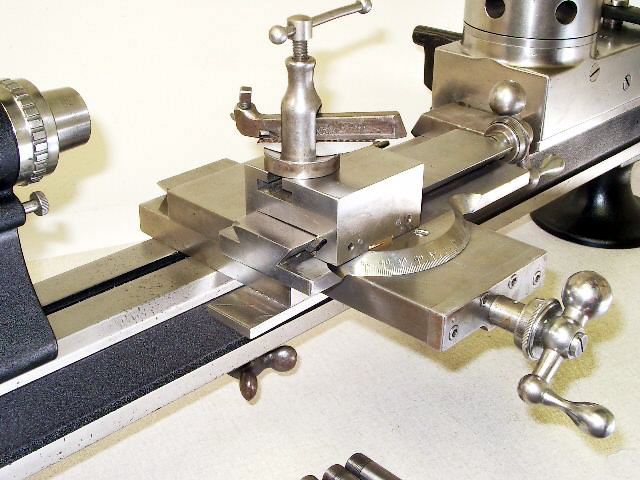
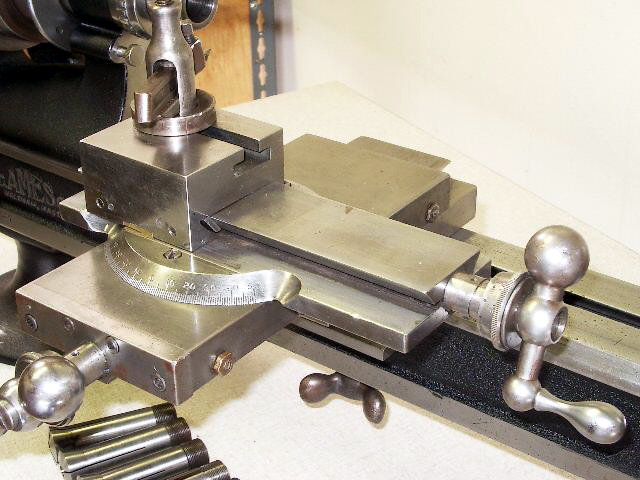
The small bench machine illustrated above, typical of an Ames lathe, was available with a complete range of screw and lever-feed slides, different tailstocks, various quick-release collet fittings for the headstock spindle, relieving and milling attachments and special accessories for production engineering.
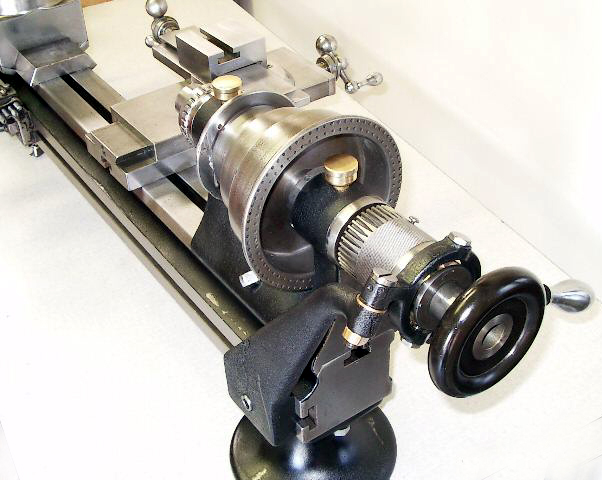
Like many other Precision lathes the Ames' 3-step cone pulley had its smallest diameter by the spindle nose - so allowing the front bearing to be increased in size and surrounded by a greater mass of supporting metal.
Unusually, the spindle carried  two rings of indexing holes around the larger of the two pulley flanges - and a further ring of holes around the smaller flange designed to assist in the removal of chucks and collets, etc., from the spindle nose.
Although the beds carried serial numbers, Ames claimed that any headstock, bed and tailstock combination would line up accurately, so allowing the easy transfer of specialised production equipment from machine to machine within a factory.

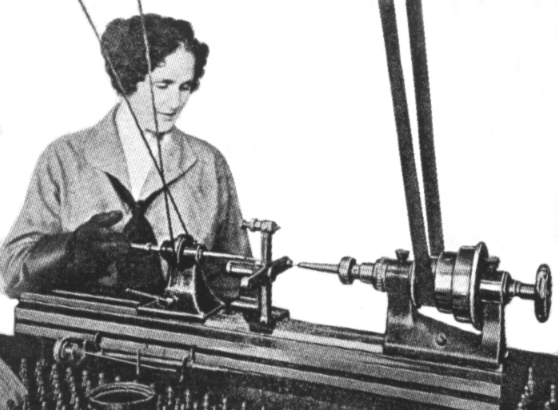
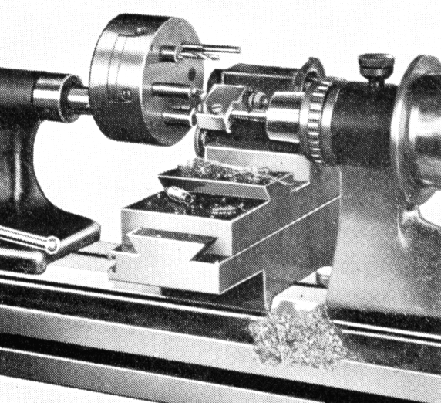
Broaching a hexagon collet using a rack-feed tailstock.
Broaching is a fairly unusual process to carry out on a small lathe but it is perfectly possible, given sharp tools and some care, to make a success of it.
The indexing holes which equipped the headstock of the Ames (and many other lathes) were, of course, an essential part of the procedure.

lathes.co.uk Home Page     Machine Tool Archive     Machine Tools For sale & Wanted
E-Mail  Tony@lathes.co.uk

Ames - USA
   Ames in Production     Ames Photographs    Headstock Details    Tailstocks   
Screwcutting   Stands & Countershafts    Grinding & Milling Attachments    Slide Rests
Ames Millers   Ames Triplex Multi-Function Machine