|
|
|
|
|
|
|
|
|
|
|
E-MAIL tony@lathes.co.uk lathes.co.uk home page Machine Tool Archive Machine Tools For Sale & Wanted Machine Tool Manuals Machine Tool Catalogues Belts
Alexander Master Toolmaker Miller Alexander/Deckel Cutter Grinders Copies of the Master Toolmaker's Handbook are available If any reader can supply photographs of an Alexander in good, original condition, the writer would be pleased to hear from you
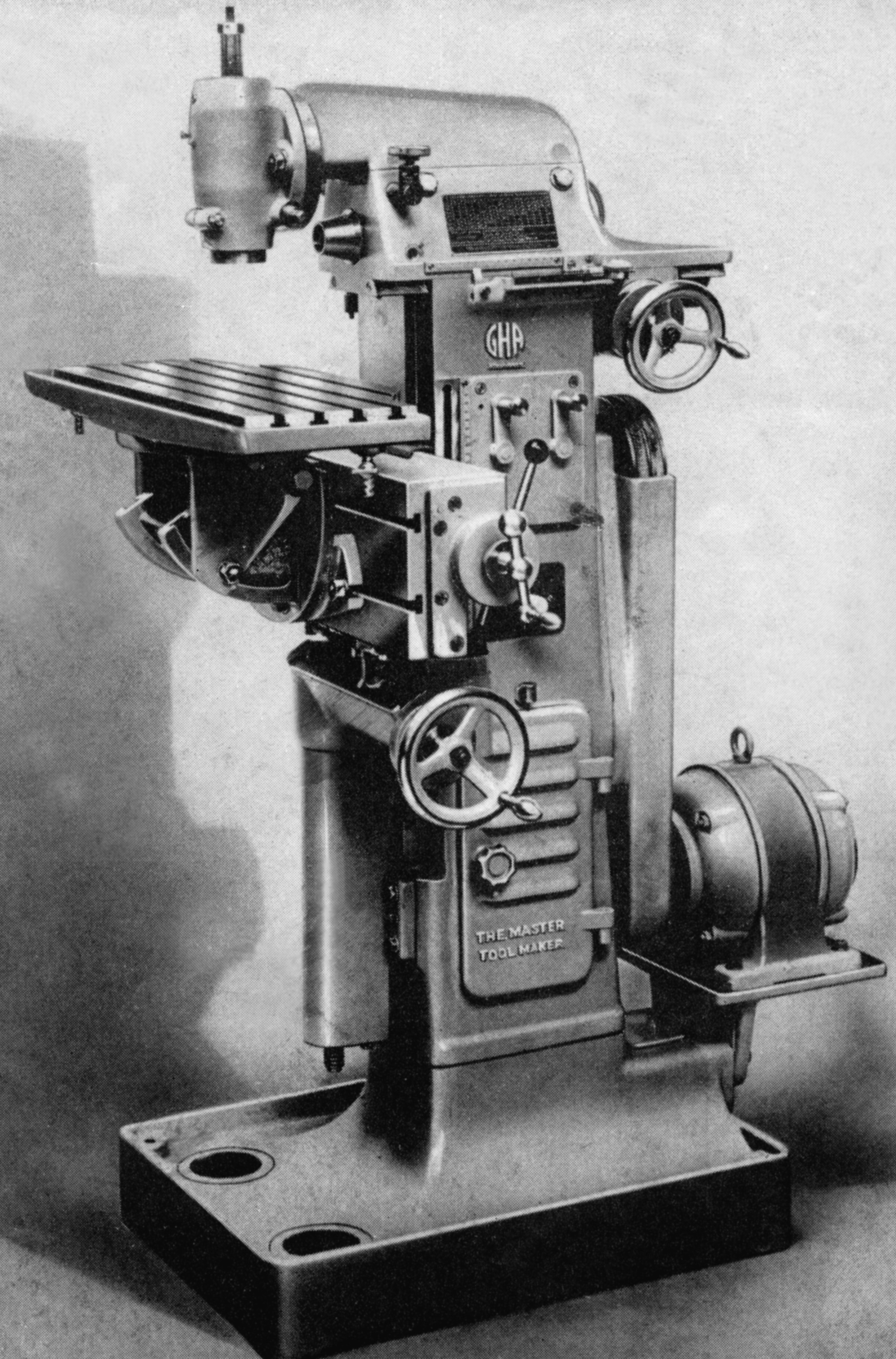
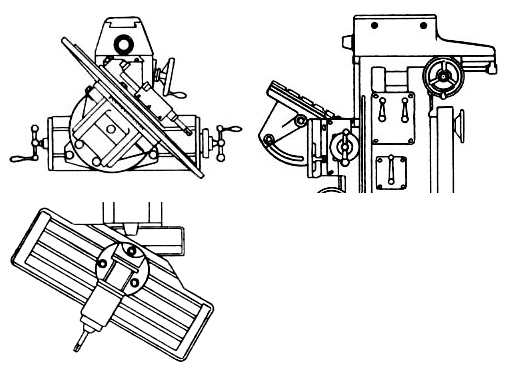
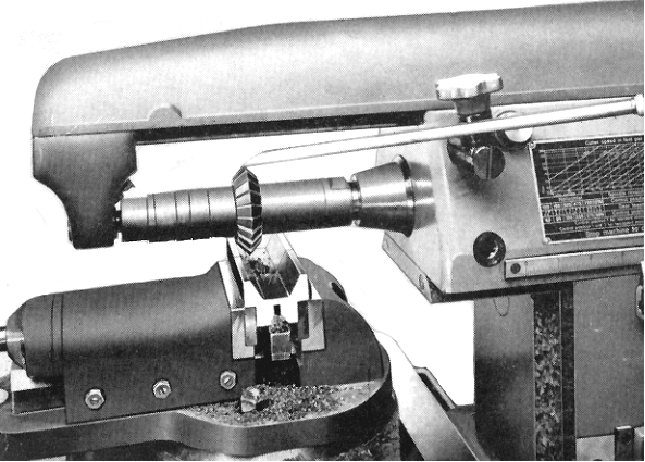
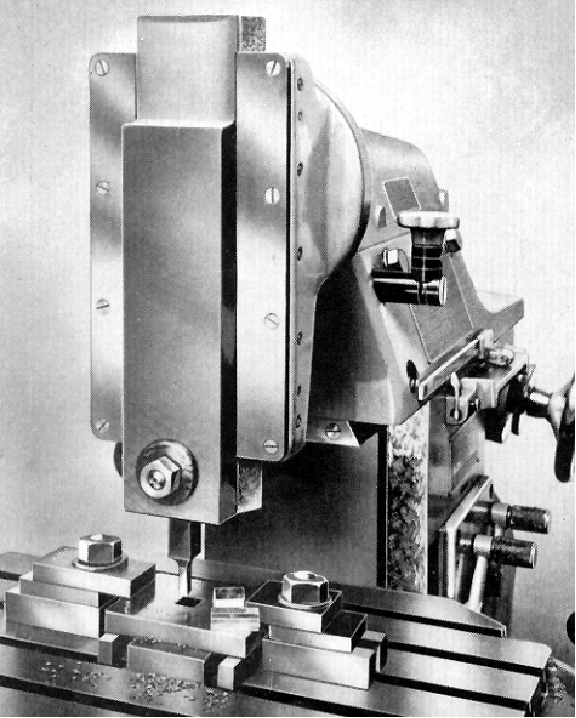
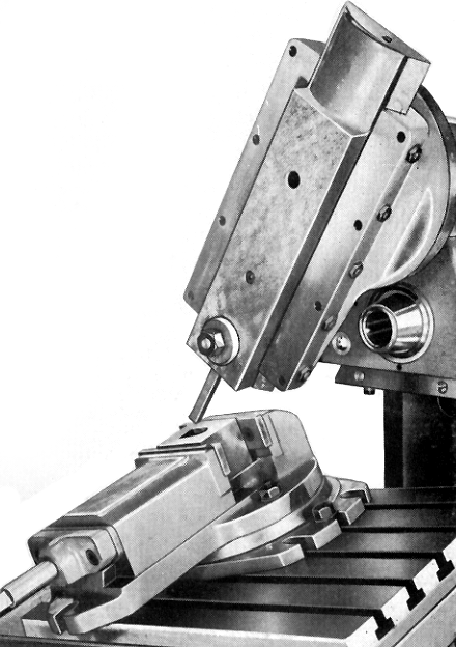
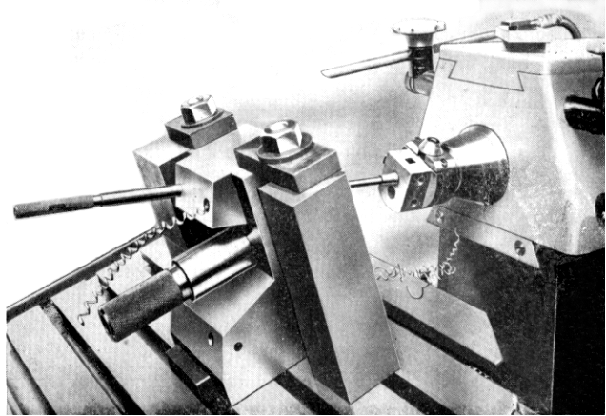
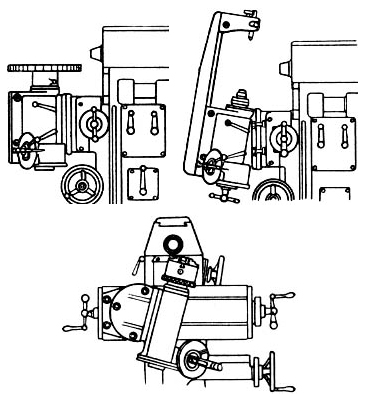
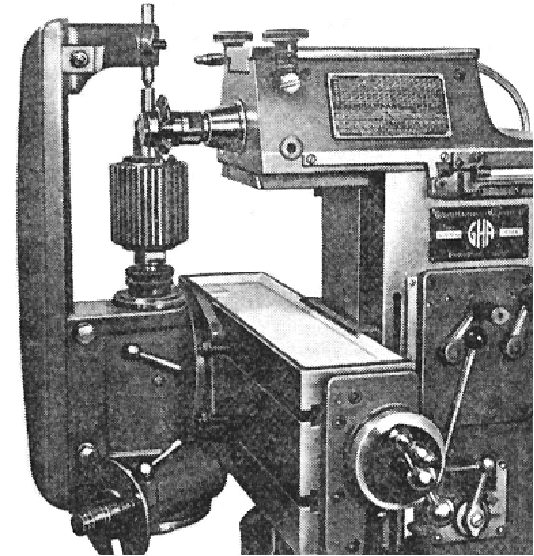
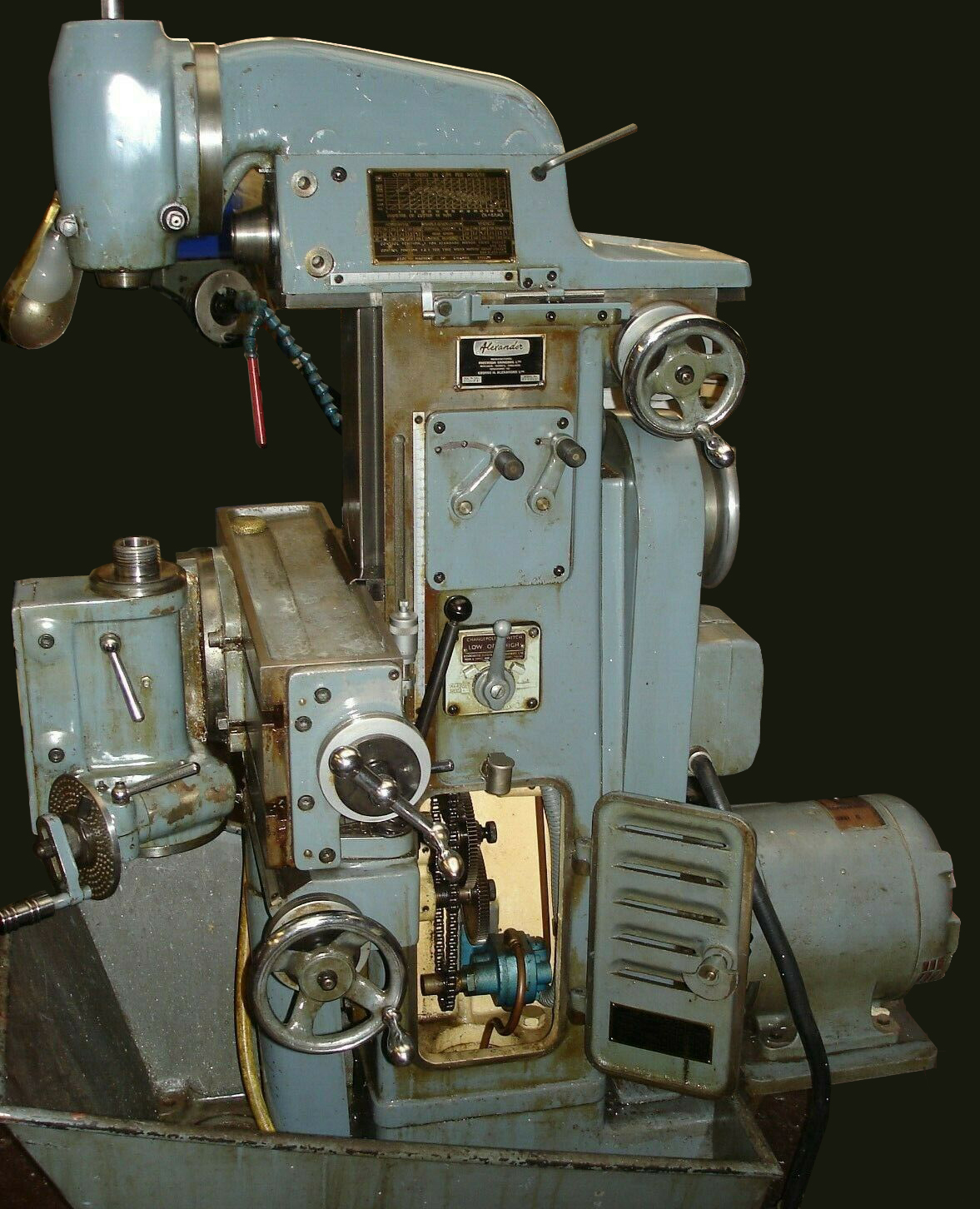
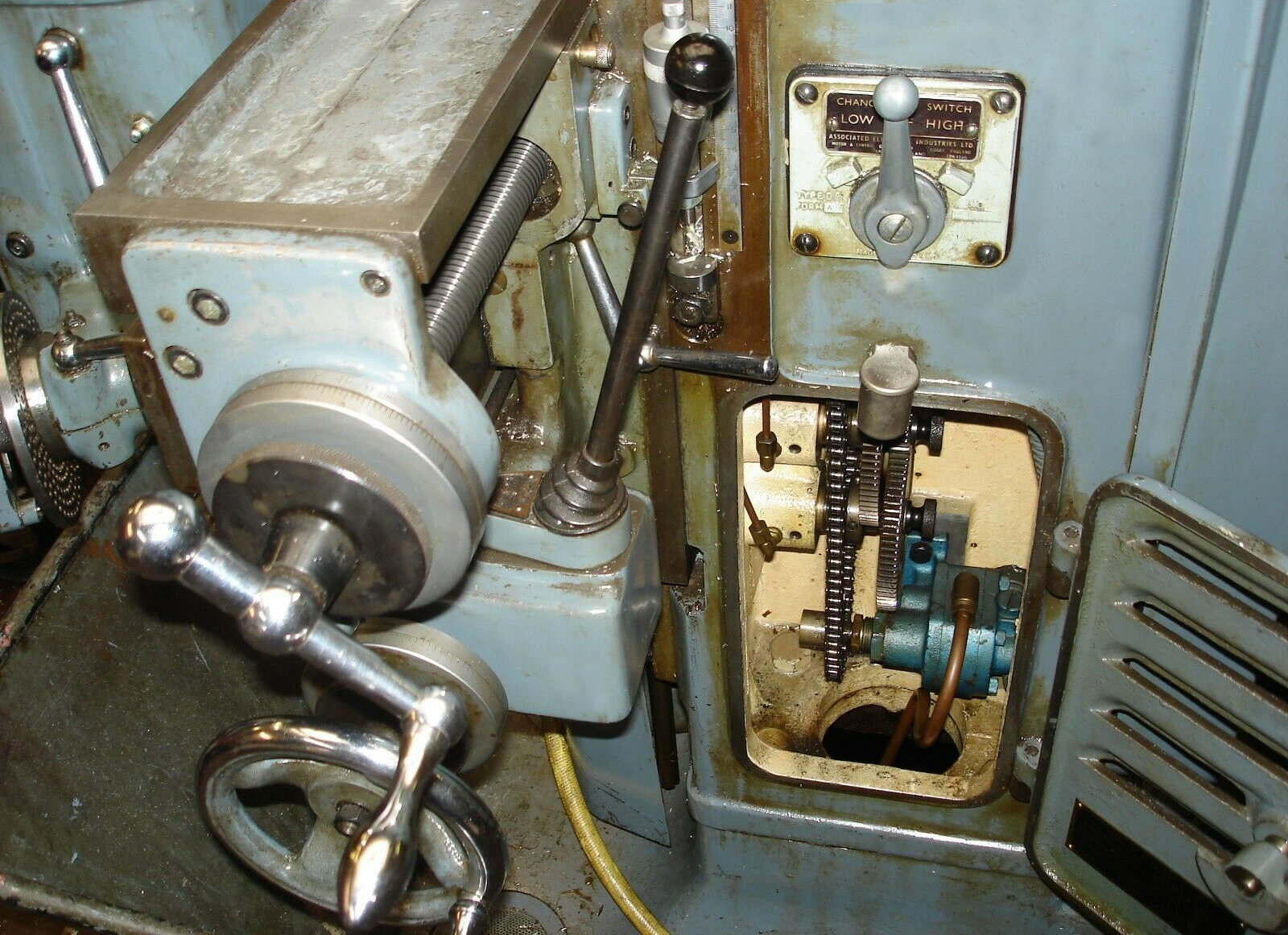
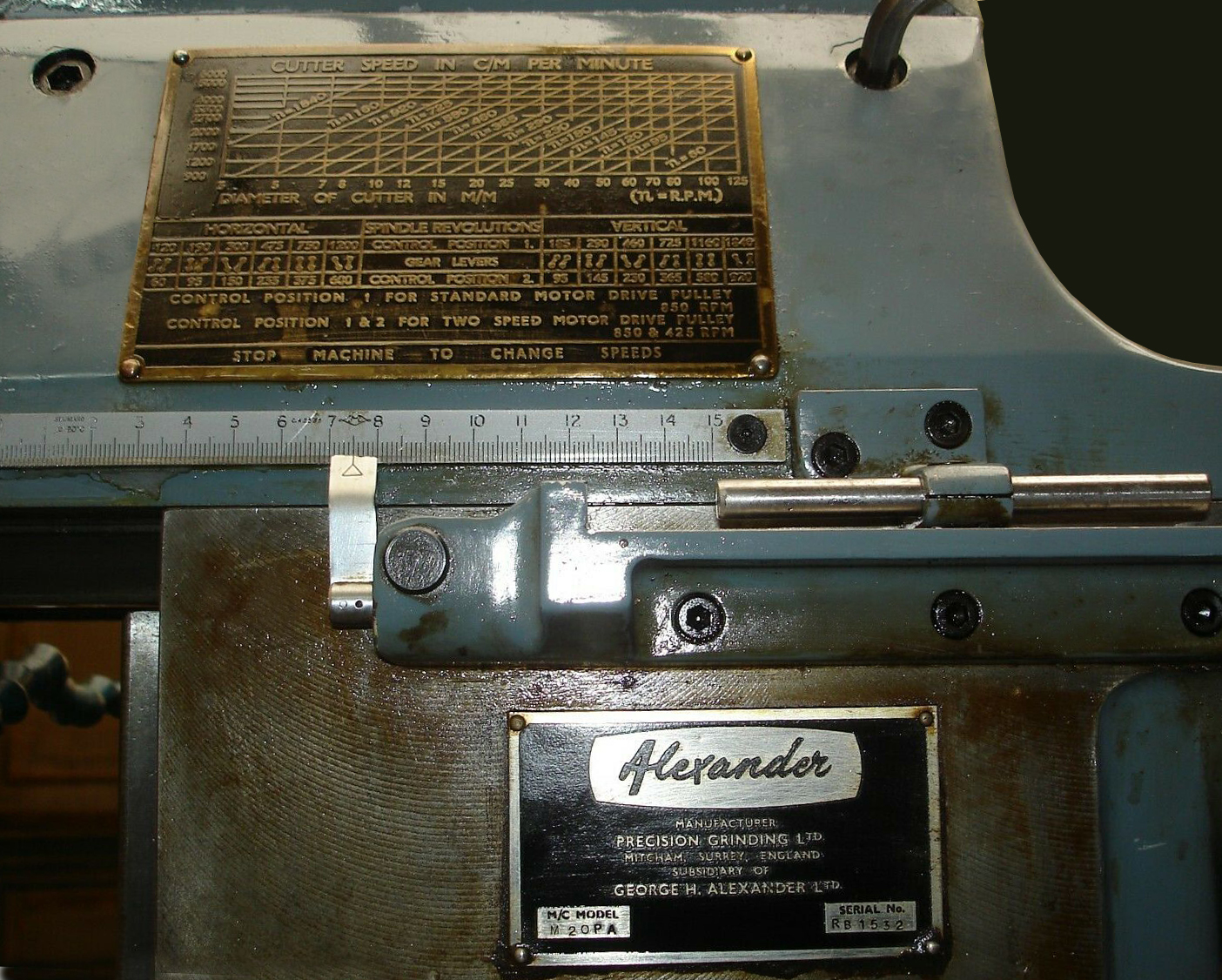
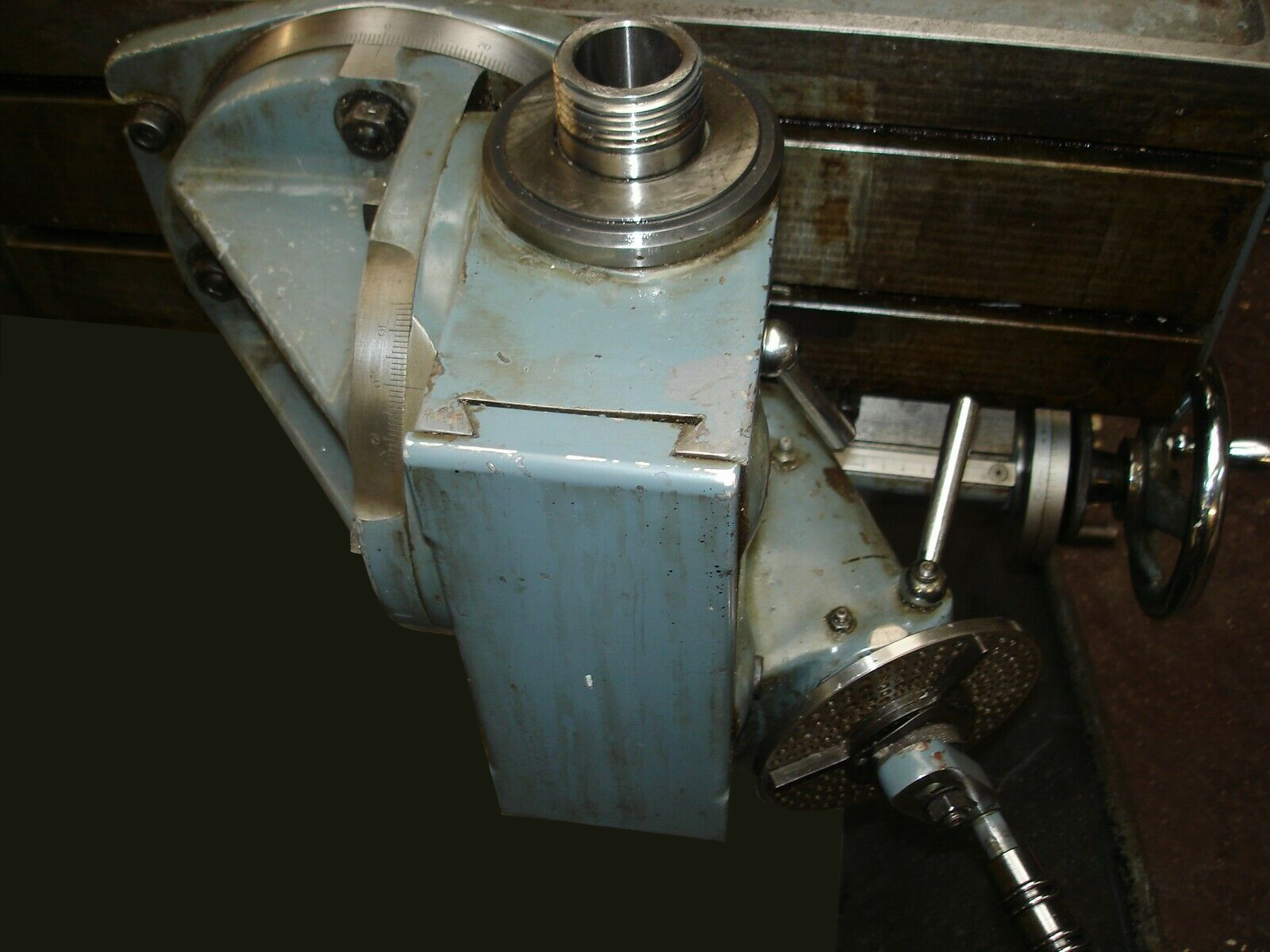
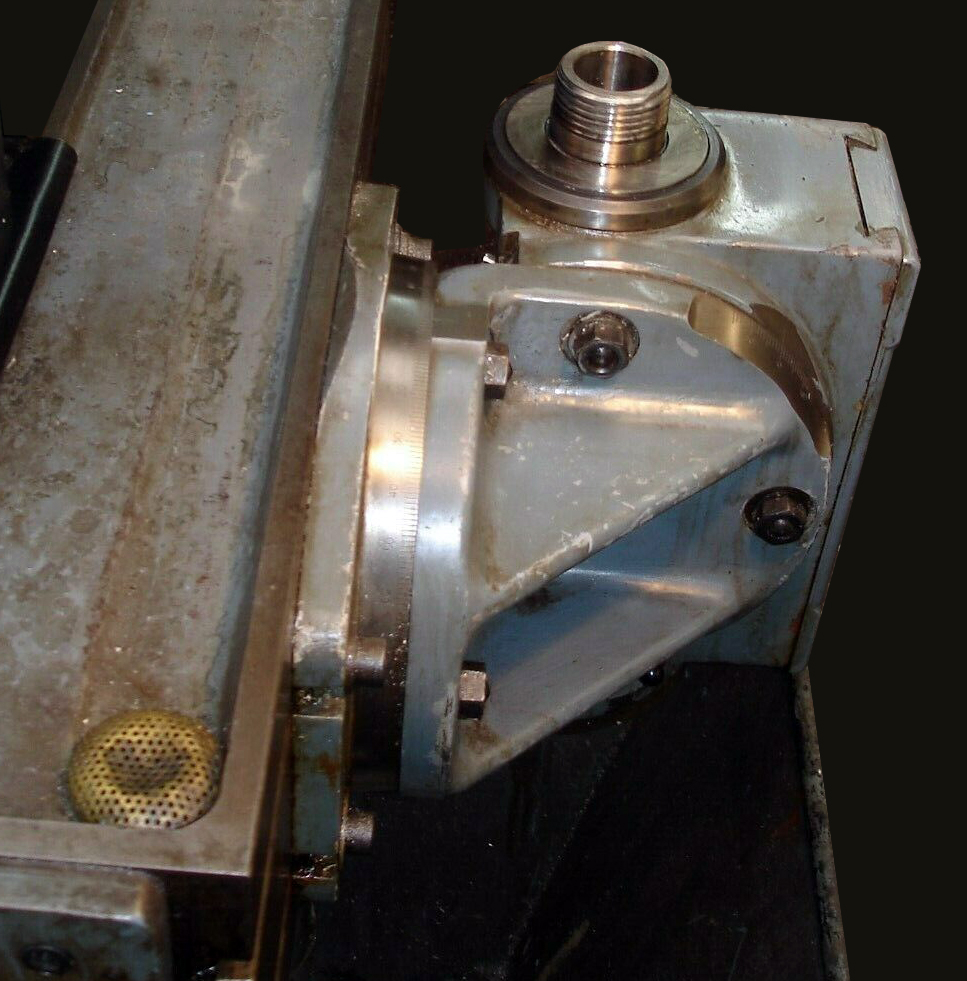
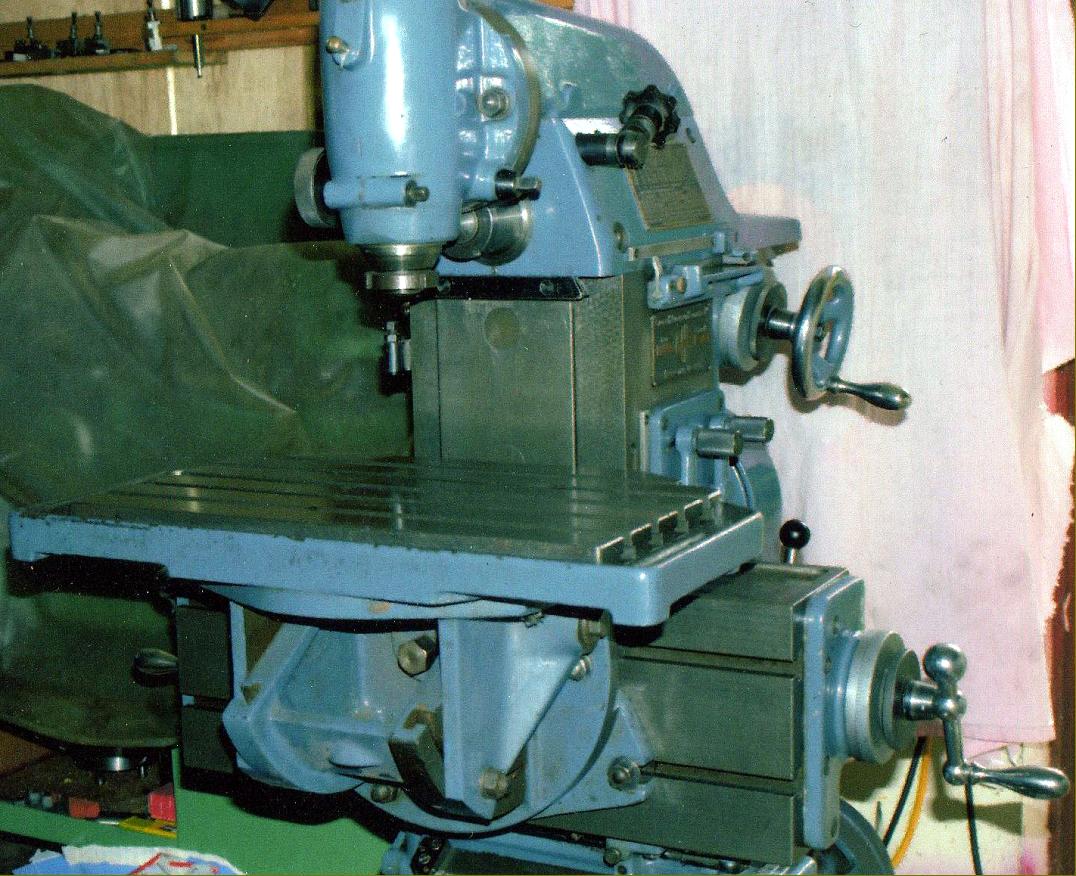
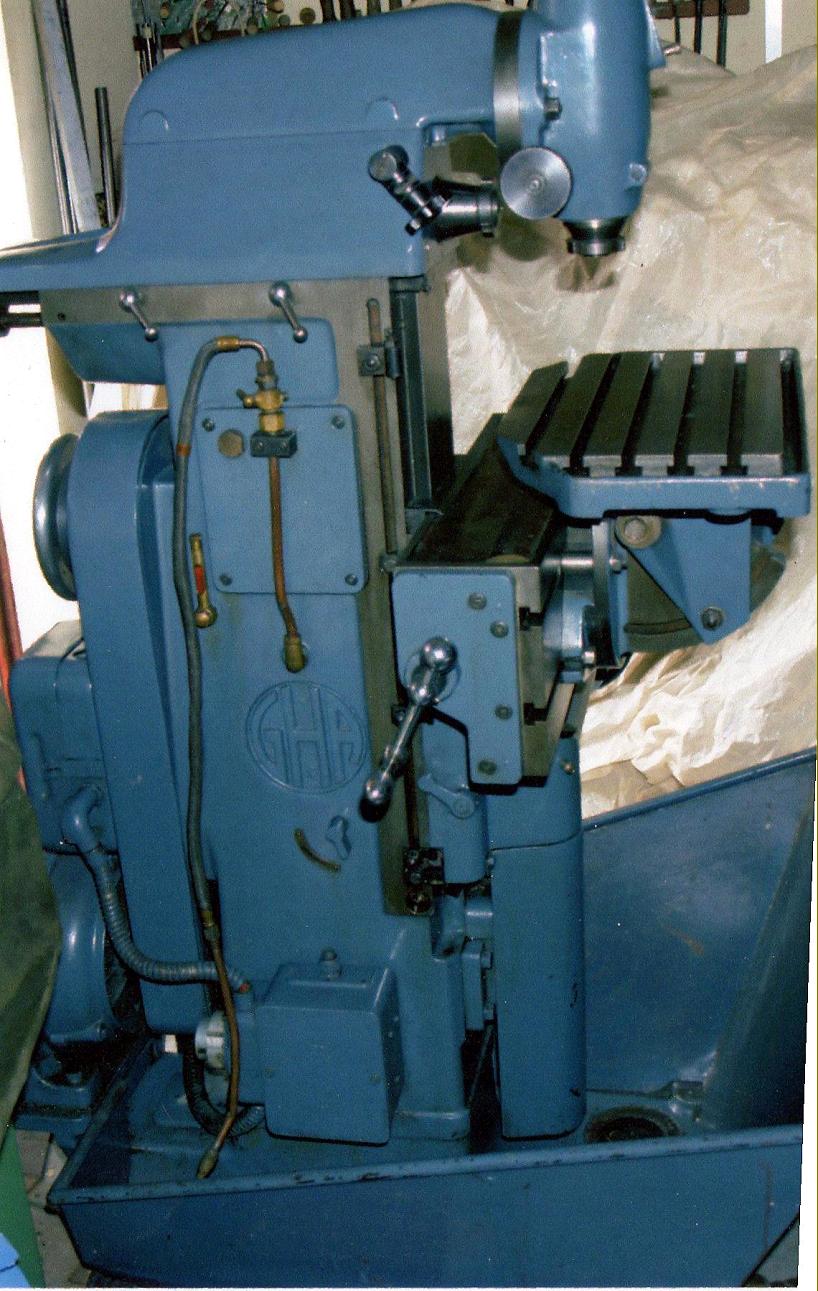
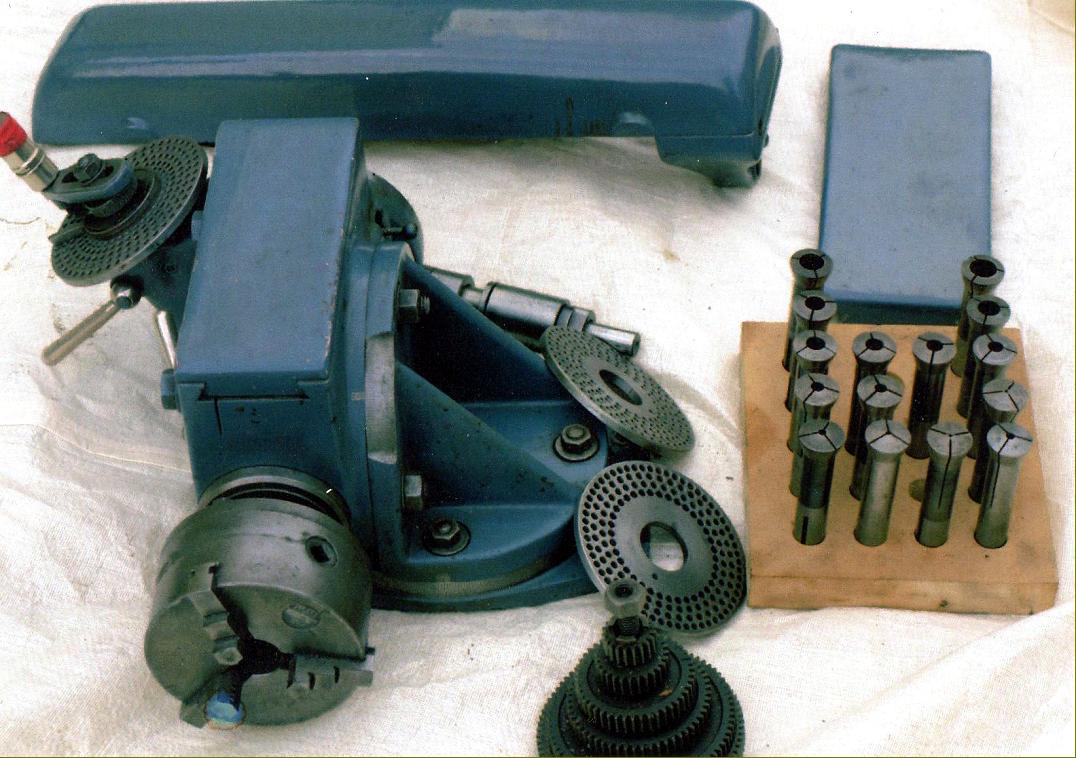
Like many other European and Russian makers the English firm of Alexander copied the original German Deckel FP1 Universal Toolroom Miller - itself similar in many ways to the Maho, Thiel and other makes* . With its ingenious, adaptable and versatile design, the Alexander leant itself to solving a multitude of machining problems, the secret of the type's success being its ability to mount a number of different heads - horizontal, standard vertical and slotting - in combination with a variety of tables - plain, plain-tilting and compound swivelling. All the heads could be driven backwards and forwards across the top of the main column, by a handwheel working through reduction gearing, to provide an in-out feed, while the tables bolted to a flat, vertical T-slotted table equipped with power longitudinal and vertical feeds. By juggling the choice of heads and tables, and utilising other accessories, a skilled technician was seldom defeated in his attempts to produce the most complex of milled and drilled components - and all to a very high standard of accuracy. Alexander called their machine the "Master Toolmaker" and, as their advertising literature claimed, it really was: "The machine for the awkward job". Both vertical and horizontal sockets took a No. 4 Morse taper and were provided with an adaptor able to accept spring collets up to 11/16" bore. The standard head assembly, whether carrying the horizontal overarm or vertical head, had a maximum travel of 57/8". For the English market the drive motor was a massive built 1.5 hp 1425 rpm, single-speed 3-phase unit, mounted on an adjustable supporting bracket at the rear base of the main column. A two-speed motor was an option, but seems to have been rarely fitted. The motor drove up to the spindle gearbox (with its hardened and ground gears), through two matched-length "B" section V belts, each 56" long. With the single-speed motor 6 horizontal spindle speeds were available - 120, 190, 300, 475, 750 and 1200 rpm while the two speed motor extended the range to a more useful 60, 95, 120, 150,190, 235, 300, 375, 475, 600, 750 and 1200 rpm. The standard "vertical table" had a clamping area of 73/4" by 215/8", with 97/8" of horizontal travel and 115/8" of vertical. Fitted to the vertical table was either a plain horizontal table of 231/2" x 81/4", or what the maker's described as an "Angular Table", which was available in two sizes with clamping areas of 103/8" x 171/4" - or 103/8" x 24". The Angular Table, which made the machine so versatile, could be tilted horizontally 30 degrees either side of zero, vertically 45 degrees either side of zero - and also vertically towards and away from the machine column by 30 degrees in either direction. The distance from the centre of the horizontal spindle to the table face was 115/8". Able to be moved under power both horizontally and vertically, the table was fitted with adjustable stops that automatically disengaged the drive. The drive, controlled by a single "joy stick" lever, gave six rates of feed in each direction with the power fed through a simple "gearbox", with the ratio changed by the operator arranging 4 sets of "pick-ff" (paired) gears in a housing built into the right-hand side of the column. It is known that the gears included (possibly amongst others): 19T, 27T, 35T, 45T, 55T, 65T, 73T and 81T. The gears, which had face-dogs to engage with the fixed gears, were slipped onto fixed studs to give the desired rate of feed with a mild-steel shear pin hidden beneath a spring cover just inboard of the lower gear. A word of warning about the Alexander vertical head: this was fitted with a 39-tooth 21-degree pressure angle gear whilst Deckel appear to have used the same gear, but with a rather old-fashioned specification of 14.5 degrees. Running the gears together is not recommended. Further details of the Master Toolmaker can be found under the Deckel section of the Archive - and particulars of the useful Alexander/Deckel tool and cutter grinders here.
*Proof of the type's success - the genus Precision Universal Milling Machine - is evident from the number of similar machines made in various countries including: Austria: Emco Model F3 Belgium: S.A.B.C.A. Model JRC-2 Czechoslovakia: TOS Model FN22, 32 & FN40 Optic Spain: Metba Models MB-0, MB-1, MB-2, MB-3 and MB-4) England: Alexander "Master Toolmaker" and the Ajax "00", an import of uncertain origin. France (?): Perron Montier Germany: by several companies including: Macmon Models M-100 & M-200 (though these were actually manufactured by Prvomajska); Maho (many models over several decades); Thiel Models 58, 158 and 159; Hermle Models UWF-700 and UWF-700-PH; Rumag Models RW-416 and RW-416-VG; SHW (Schwabische Huttenwerke) Models UF1, UF2 and UF3; Hahn & Kolb with their pre-WW2 Variomat model and Wemas with their Type WMS. Italy: C.B.Ferrari Models M1R & M2R; Bandini Model FA-1/CB and badged as Fragola (agents, with a version of the Spanish Meteba). Japan: Riken Models RTM2 and RTM3 Poland: Fabryka Obrabiarek Precyzyinych as the "Avia" and "Polamco" Models FNC25, FND-25 and FND-32 Russia: as the "Stankoimport" 676 Spain: Metba Models MB-0, MB-1, MB-2, MB-3 and MB-4 Switzerland: Aciera Models F1, F2, F3, F4 and F5; Schaublin Model 13; Mikron Models WF2/3S, WF3S, WF-3-DCM & WF-2/3-DCM; Christen Types U-O and U-1 (and Perrin frères SA, Moutier) and Hispano-Suiza S.A. Model HSS-143. The former Yugoslavia: Prvomajska (in Zagreb with Models ALG-100 and ALG200); Sinn Models MS2D & MS4D; Ruhla and "Comet" Model X8130, imported to the UK in the 1970s by TI Comet. At least five Chinese versions have been made, including one from the Beijing Instrument Machine Tool Works. A number of the "clones" merely followed the general Thiel/Maho/Deckel concept whilst others, like Bandini and Christen, borrowed heavily from Deckel and even had parts that were interchangeable. Should you come across any of these makes and models all will provide "The Deckel Experience" - though you must bear in mind that spares are unlikely to be available and, being complex, finely-made mechanisms, they can be rather difficult and expensive to repair..
|
|
|
|
|
|
|
|
|
|
|
|
|
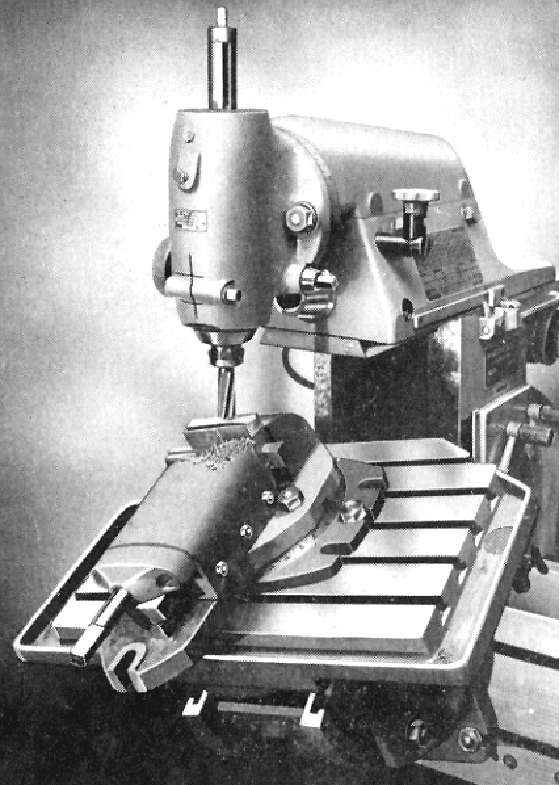
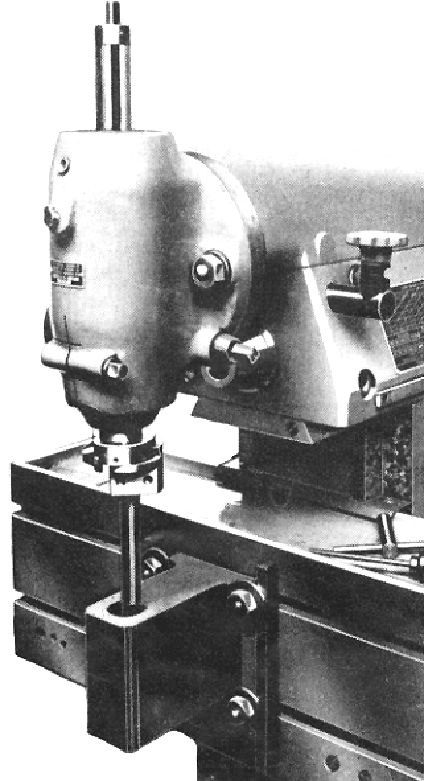
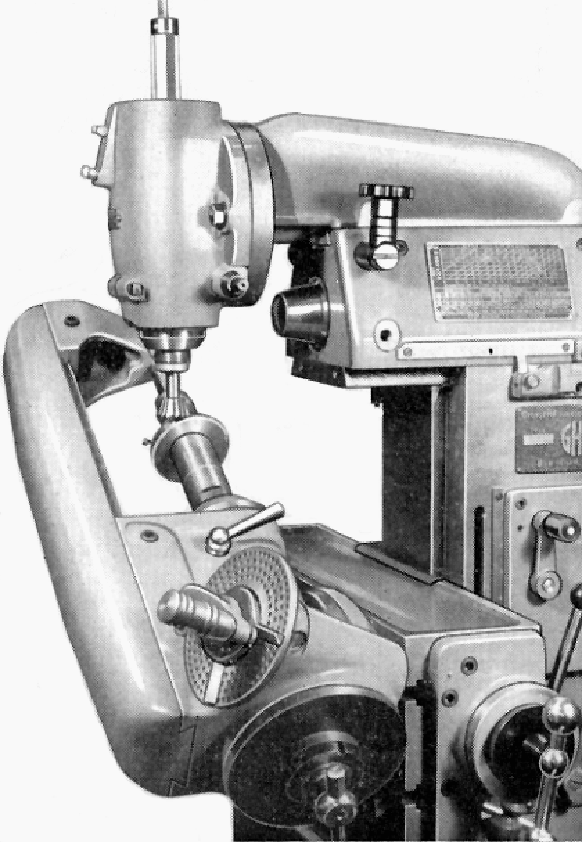
Alexander/Deckel standard vertical head. When fitted with the single-speed electric motor six spindle-speeds were available of 190, 300, 475, 750, 1200, and 1900 rpm. With the two-speed motor the range became: 95, 150, 190, 235, 300, 375, 475, 600, 750, 950, 1200 and 1900 rpm. The head could be swivelled 45 degrees either side of vertical, had a quill movement of 23/8" and could be traversed in and out for a total of 57/8". The No. 4 Morse taper was provided with an adaptor to take spring collets with a maximum bore of 11/16". A high-speed vertical head was also available, equipped with its own motor drive and capable of reaching 6000 rpm.
|
|
|
|