Sloan & Chace Milling Machine
Milling Machines Gear & Pinion Cutting Engines Staff & Pivot Lathe
Sloan & Chace Home Page Drills & Tapping Machines Sloan & Chace Photographs
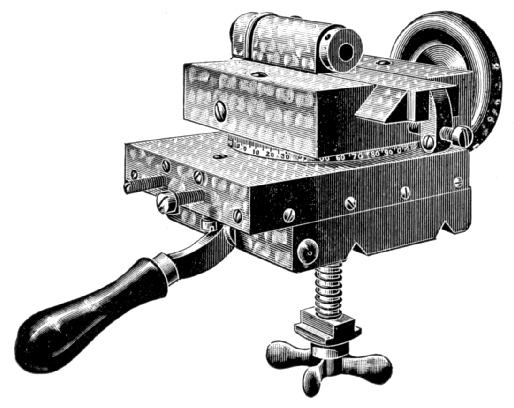
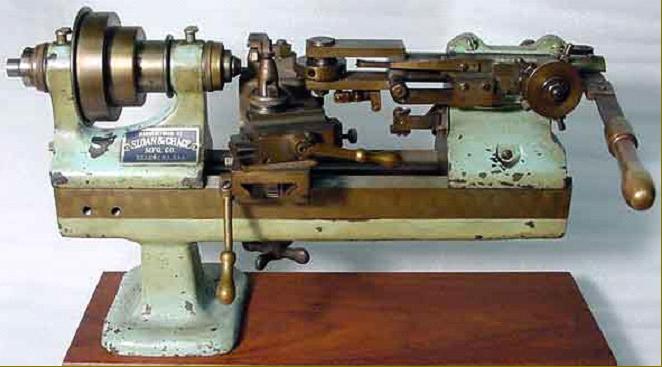
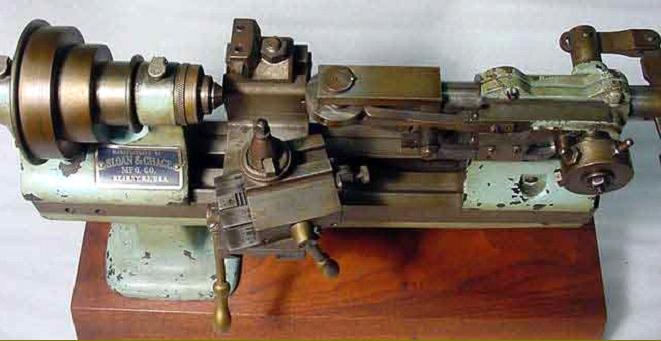
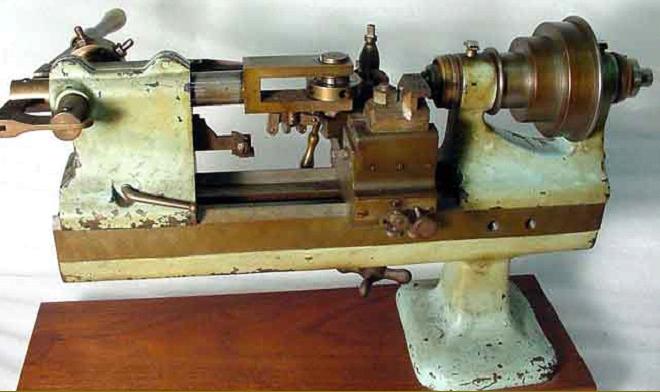
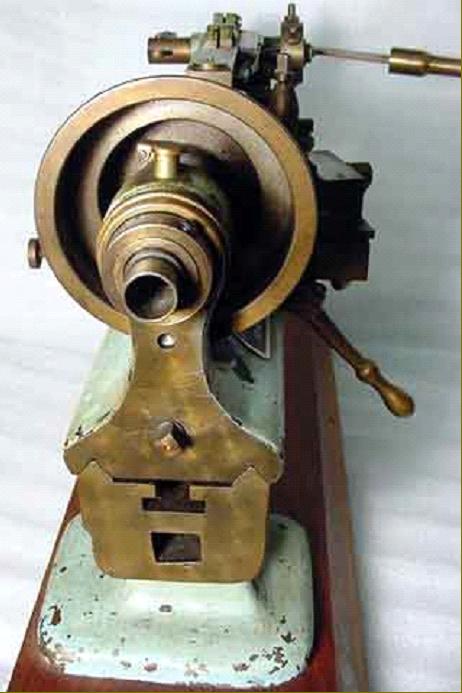
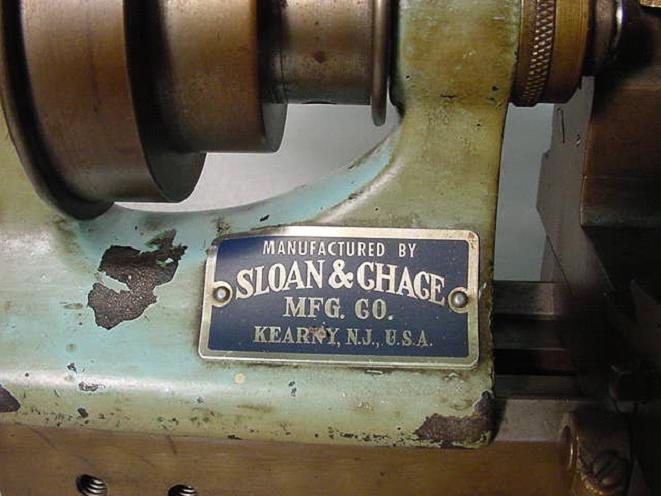
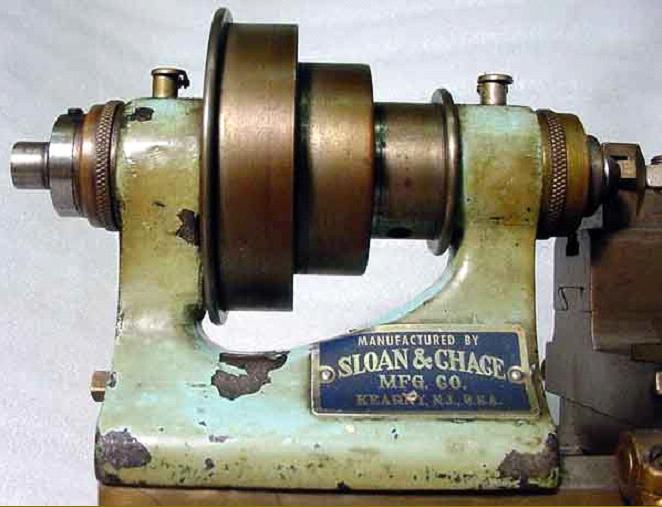
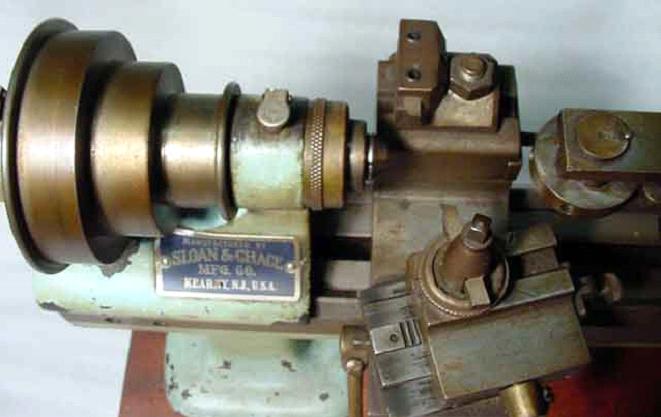
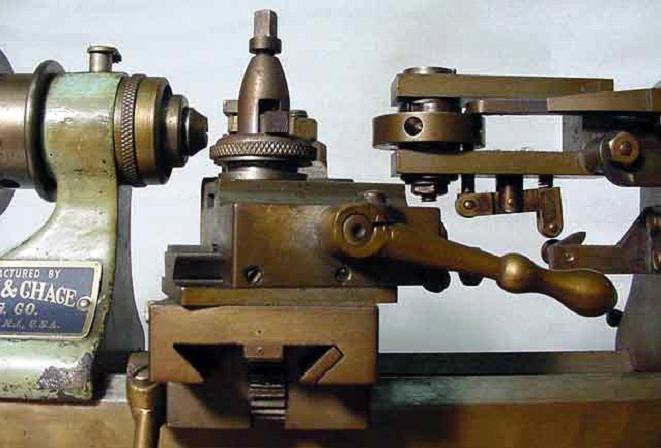
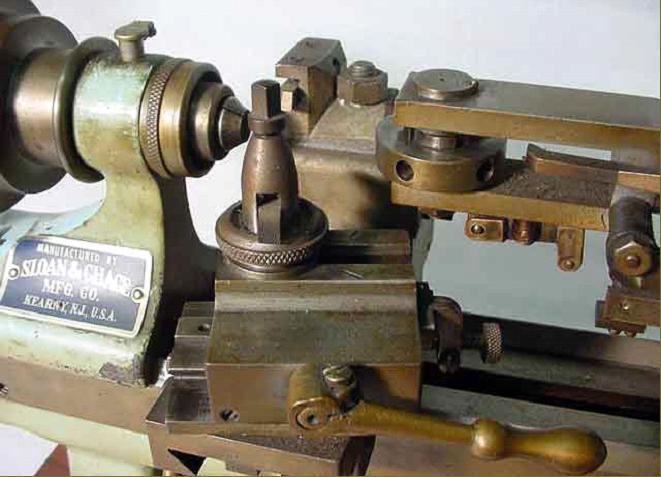
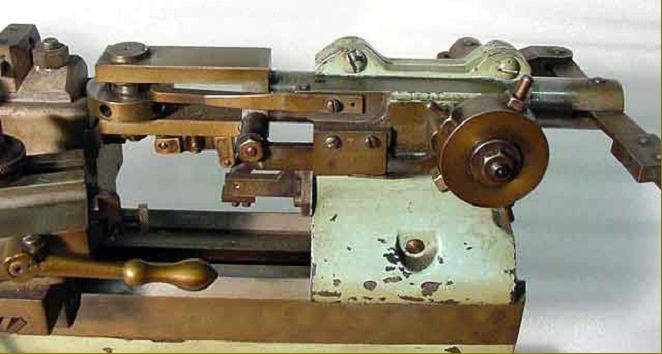
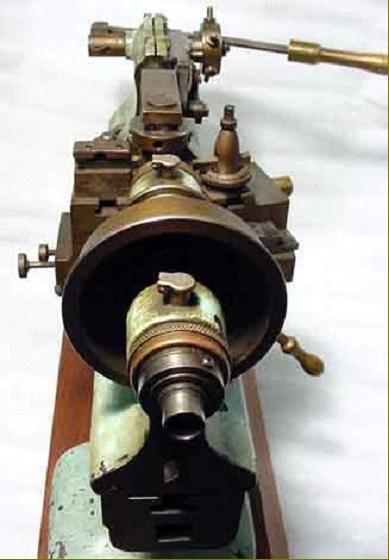
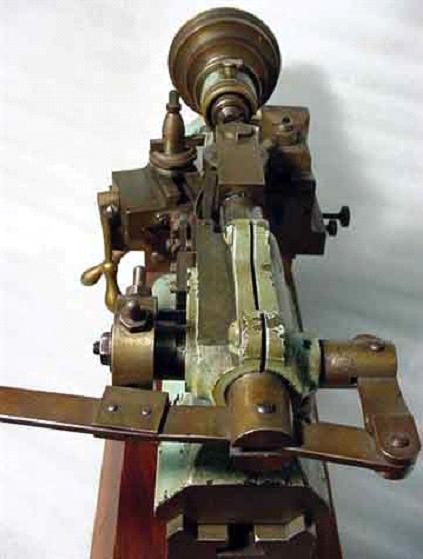
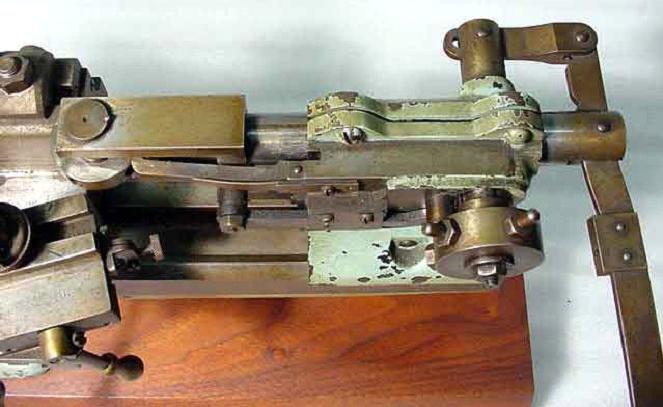
The Sloan & Chace precision bench miller was a compact but heavy (308lb) machine intended for tool-room, experimental and light production work. It was available as either the "No. 2" with either a conventional, non-swivel table driven longitudinally by a quick-action rack-and-pinion feed, and by a screw cross feed, or as the "No. 3", a special toolroom model (illustrated) with a table that could be swivelled in the horizontal plane as well as tilted left and right in the vertical.
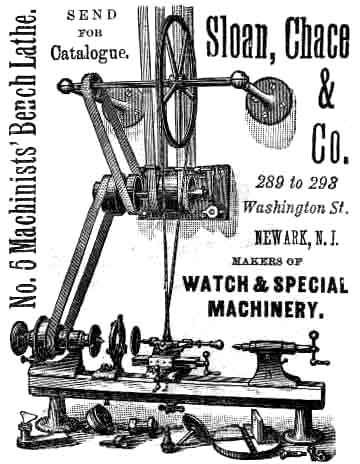
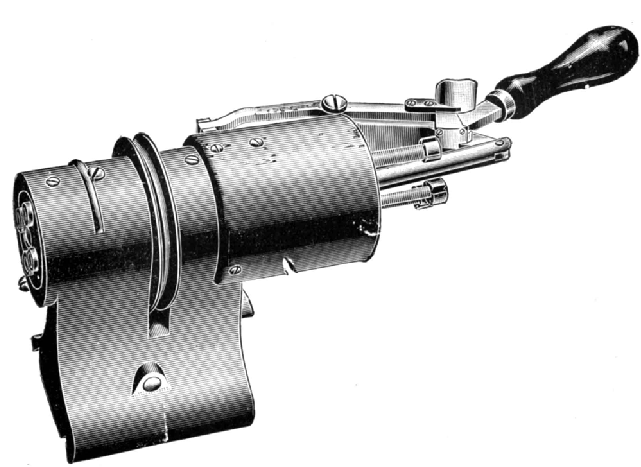
The internals of the "spindle-head" assembly would almost certainly have come, unmodified, from the company's No. 5 1/2 bench lathe, the makers explaining that work could be transferred in a collet, or mounted on a faceplate, from the lathe to milling machine and back again without the need to disturb its setting. The spindle was hardened and ground and ran in split, parallel-bore cast iron bearings fitted into tapered sleeves with threads on one end. By turning adjuster nuts the sleeves could be drawn into the headstock and so compressed to set the bearing clearance. To adjust the spindle end float an adjustable collar, of hardened steel, was screwed into the end of the 3-step cast-iron pulley and bore against the inside face of the front spindle bearing - the thrust being taken against the inboard face of the spindle-thread abutment shoulder.
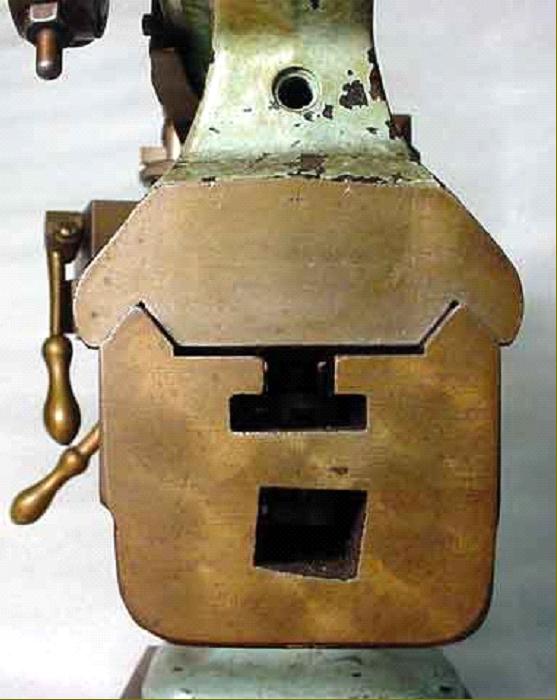
The table was 22" long and about 4" wide; however, it was here that the distinctive twin inverted V ways of the company's lathe beds put them at a disadvantage for, whilst all their competitors could offer small millers with tables formed to the same simple cross section as their lathe beds (with a flat top and bevelled edges) Sloan & Chace could not. This meant that, whilst with every other make of American small precision lathe it was possible to transfer all the special (and in some cases very expensive accessories) straight from lathe to miller (or visa versa) and so save a considerable amount of money, with the Sloan & Chace special adaptor plates (that reduced the machine's vertical capacity) had to be used. The table had 10" of longitudinal travel, 4.75" in traverse and 7" vertically; the micrometer dials could be zeroed and were engraved to show table travel in increments of 0.001".