
|
Home Machine Tool Archive Machine-tools Sale & Wanted "Universal 3-inch", "Delphin" & ExeCut Manuals in various languages are available for this lathe |
||
|
Although the former USSR (Russia) has, over many decades, produced a huge variety of industrial lathes, the former Communist-controlled and centralised industrial systems with many manufacturers producing identical models, was not known for an interest in smaller types, especially those intended for the model engineer or home-shop enthusiast. Some copies of German lathes were manufactured for watch, clock and instrument manufacture and repair including the "GODOVIKOV" (based on the Boley No. 1b), and a screwcutting version of the same machine the Model T-11; the T-28 (modelled on the 10 mm collet Schaublin 70); a little watchmaker's lathe, the "KHARKOVSKI" (a direct copy of a 6 mm Lorch) and the C-95, a watchmakers' lathe widely manufactured throughout the former Soviet Union and one more, from an unknown makers, WW-type of pleasing appearance and apparently well constructed. (if you own a Soviet-built lathe, the writer would be interested to hear from you). However, one enterprising designer obviously saw the export potential for a small, very-well equipped machine able to turn both metal and wood and to be sold at a bargain price. Accordingly, a suitable lathe was designed at the Scientific Research Institute for Cutting Machine Tools (VNIITEMR) in Moscow. and designed as the "Technika" (Tekhnika in English) with manufacture beginning in the town of Penza (Pensa) to the very highest quality standards in a strategic defence plant. Export was taken care of by the then state-controlled firm who handled all such sales, "Stankoimport". In the English-speaking West the lathe became known as the "Universal 3 Inch" (though as the "Delphin Universal-3 Bench Machine Tool" and "ExeCut" in Australia) and as the TSCH-32-ME in some other countries. |
|
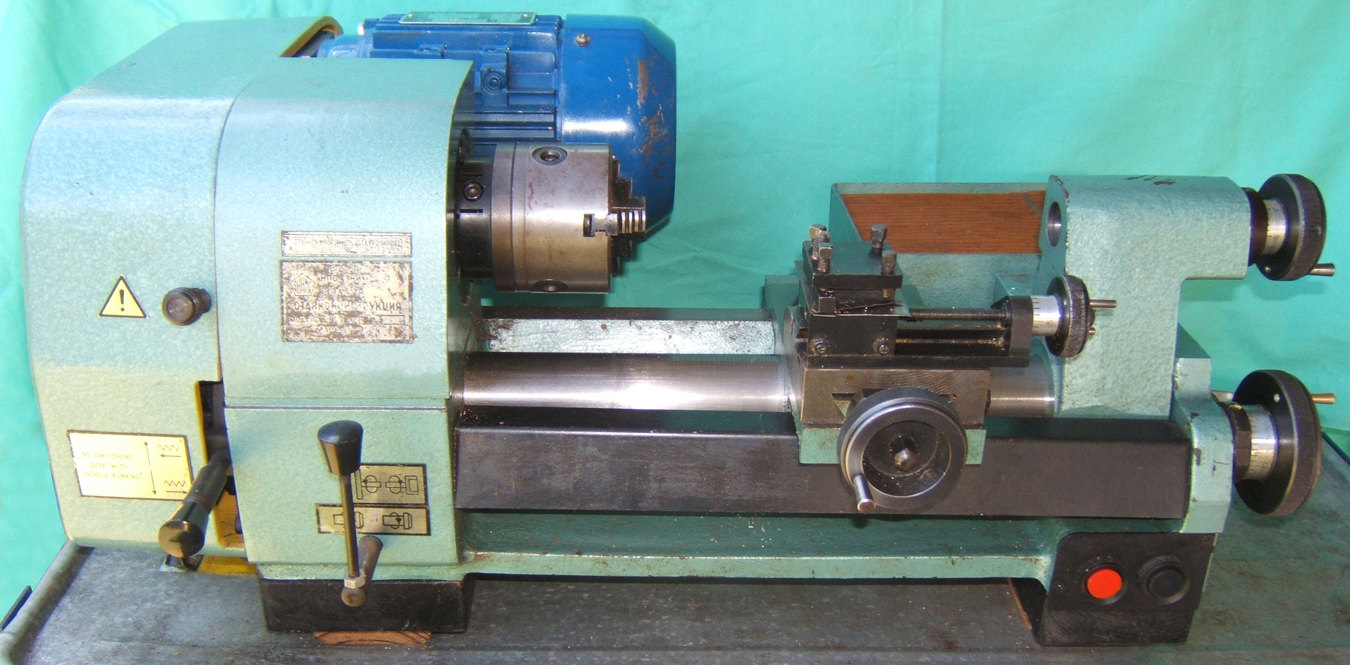
Unusual bed arrangements with the main section is constructed from a length of ground-finished 50 mm diameter steel bar held between the walls of a cast iron "frame" - with the bedway formed from the top edge of the back "wall". The robust looking tailstock barrel has a rather restricted travel of 30 mm, and is fitted, unfortunately, with only a No. 1 Morse taper. On this example the motor is non original and will be recognised by electronic enthusiasts as the DC drive from a mainframe computer. |
||
|
Continued: |
|
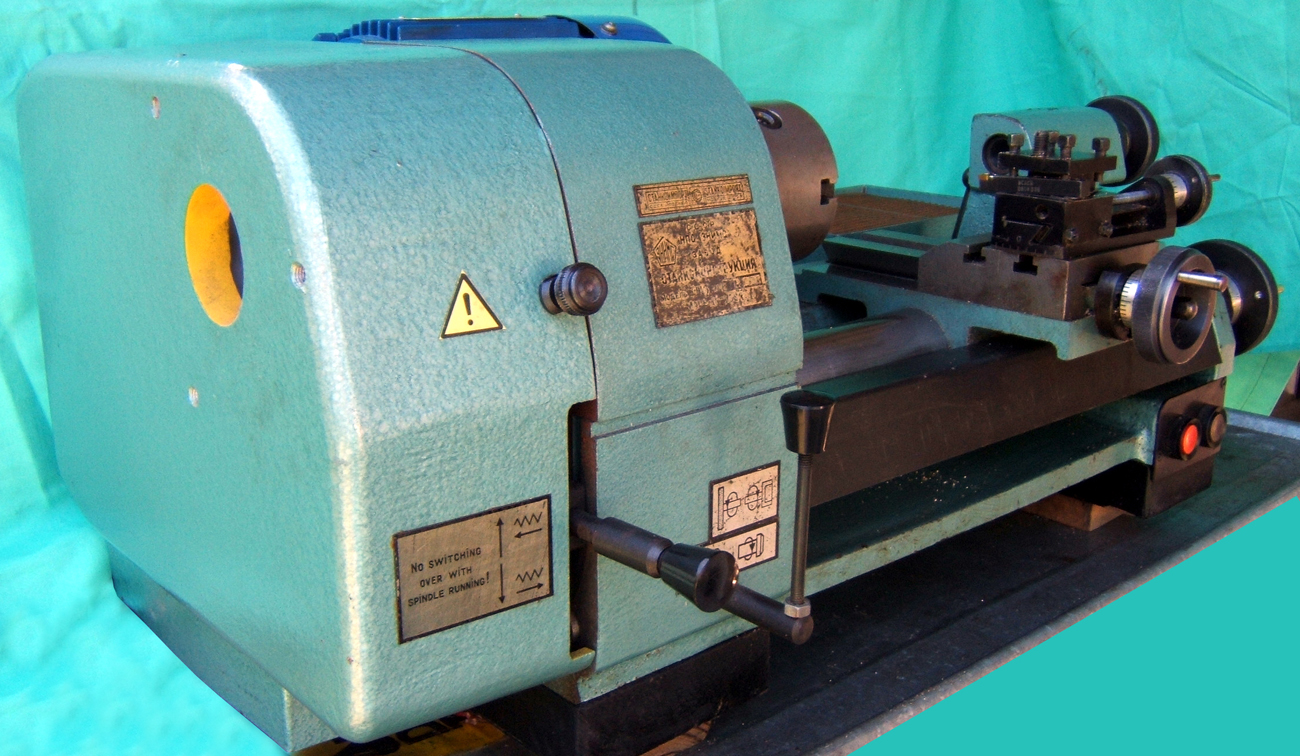
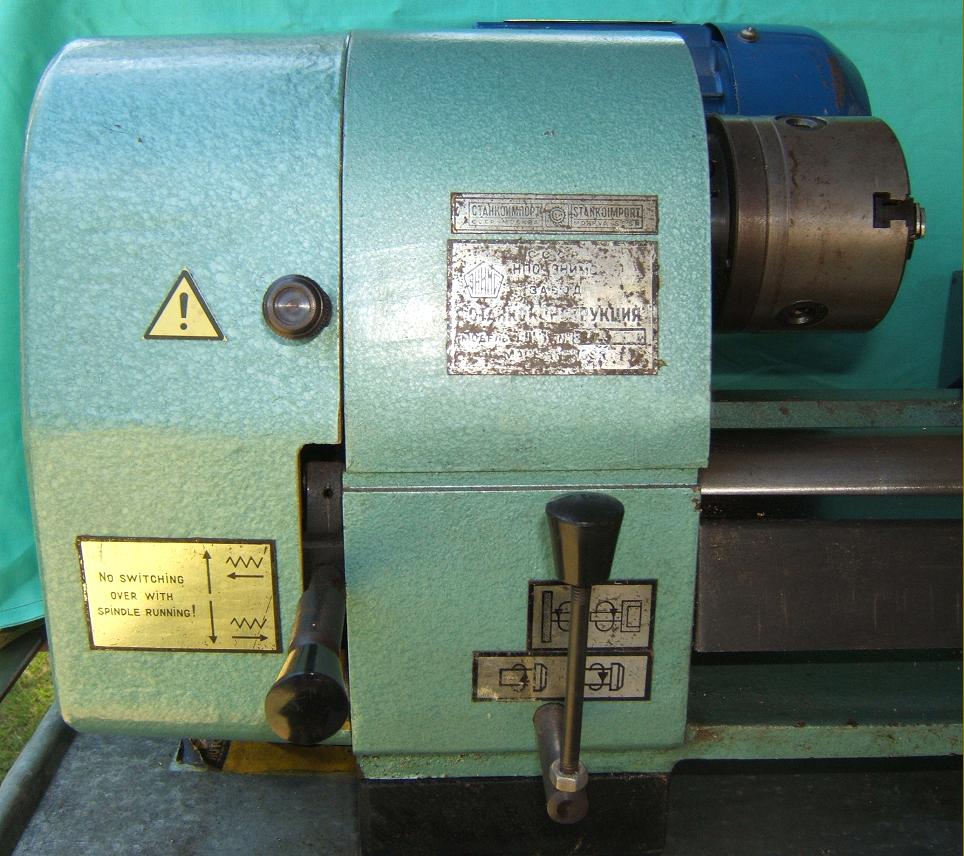
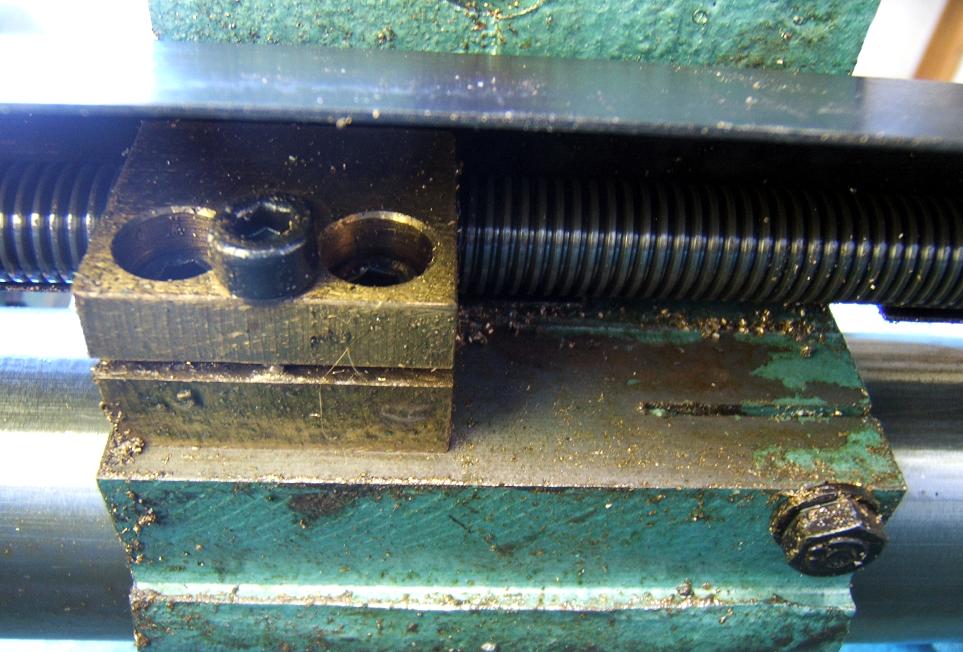
The leadscrew runs down the front of the bed and is protected by a deep, full-length cover; there are no clasp nuts, the leadscrew is permanently engaged to the carriage by a "full nut". The lever to the left operates the tumble reverse, the one to the right an electrical spindle reverse. The label on the front of the headstock reads "Stankokonstruczia" (constructed for the Stankoexport Company) |
||
|
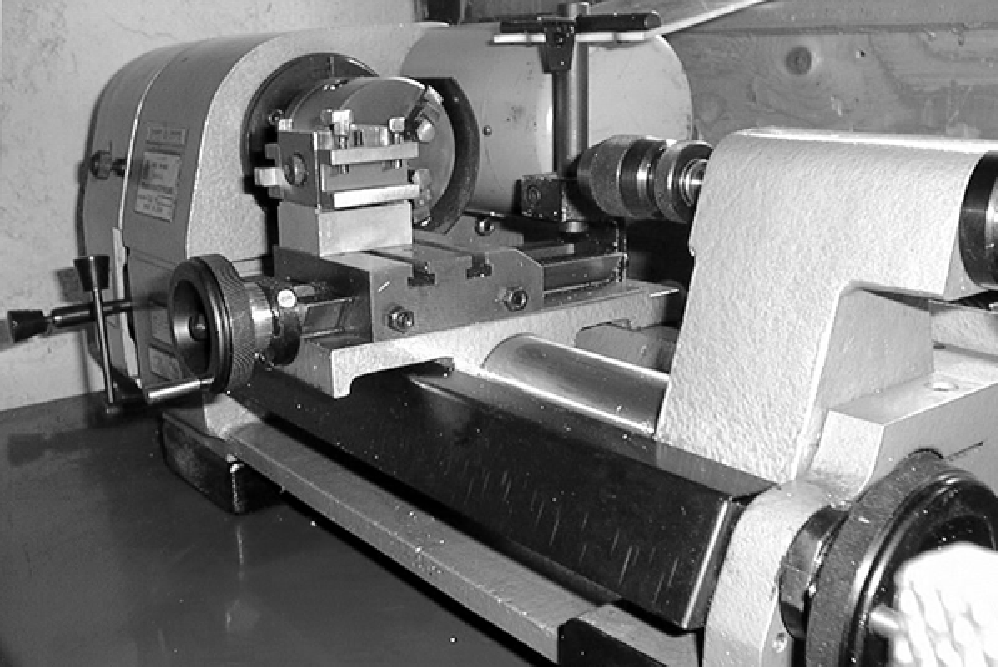
Because the clasp nut is "full" and the carriage cannot not be disengaged from the leadscrew, a large graduated handle is fitted to the latter to provide a hand-operated drive. |
||
|
|
|
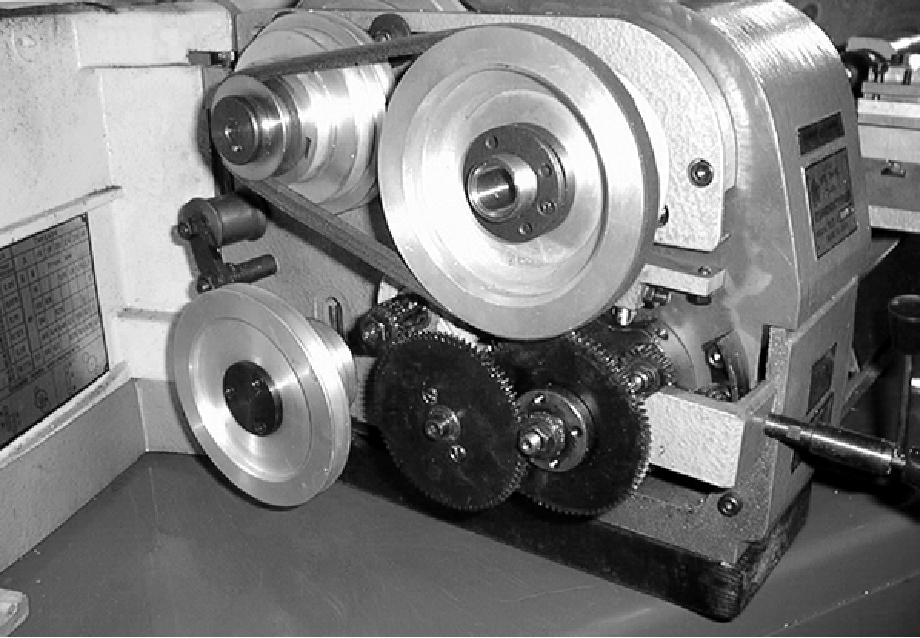
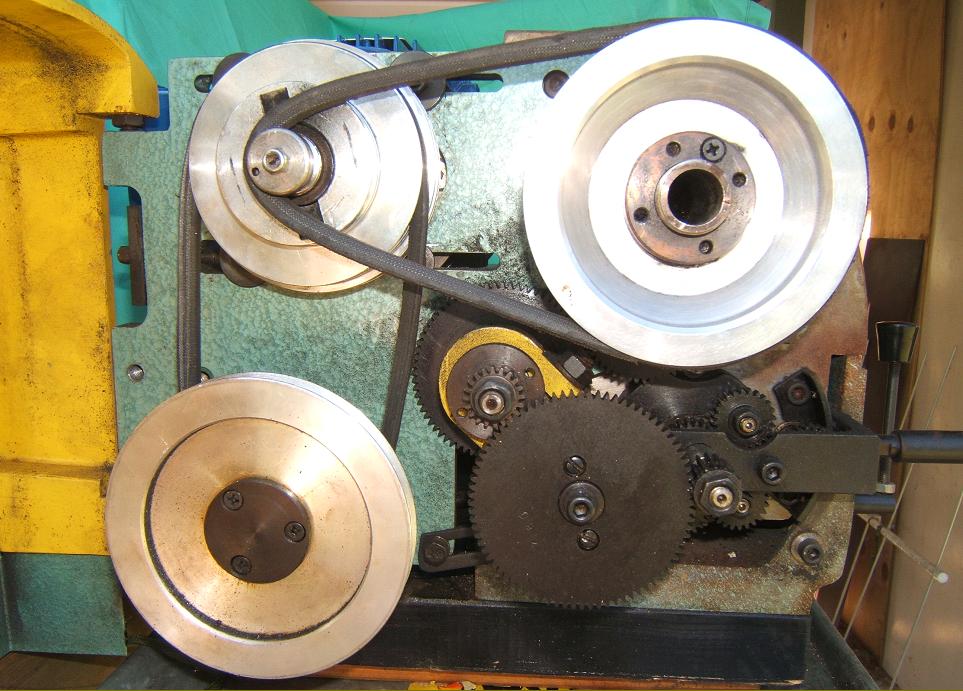
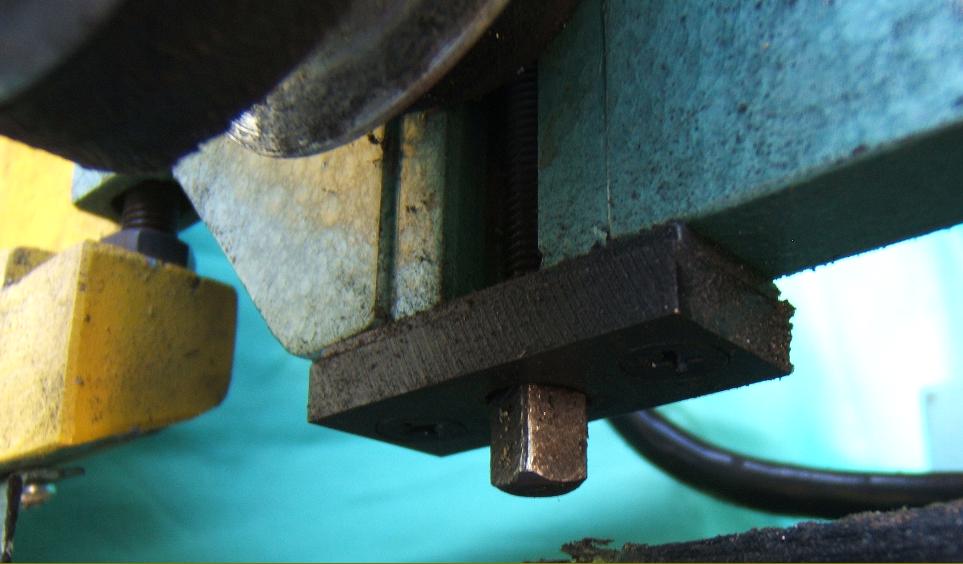
Following modern practice in having a cheap-to-manufacturer arrangement of an overhung pulley on the end of the rigidly-mounted headstock spindle, drive came either directly from the motor or, to obtain the full speed range, by running a belt from the motor pulley to the bottom left-hand pulley and then another back up to the spindle. It may be that the headstock spindle pulley is intended to be reversed (with the changewheels removed for clearance) to obtain and even wider speed range. A jockey pulley (visible between the motor and intermediate pulleys) is provided to press against the back of the V belt to provide tension in the low speed range. The wooden bed-feet are factory units, necessary because the up/down adjustment of the idler pulley - to tighten the belt - is done from underneath and with the lathe flat on the table (unless positioned to overhang the edge of the bench) the adjuster could not be reached.. |
||
|
|
|
|
|
Home Machine Tool Archive Machine-tools Sale & Wanted "Universal 3-inch" and "Delphin" |
||