|
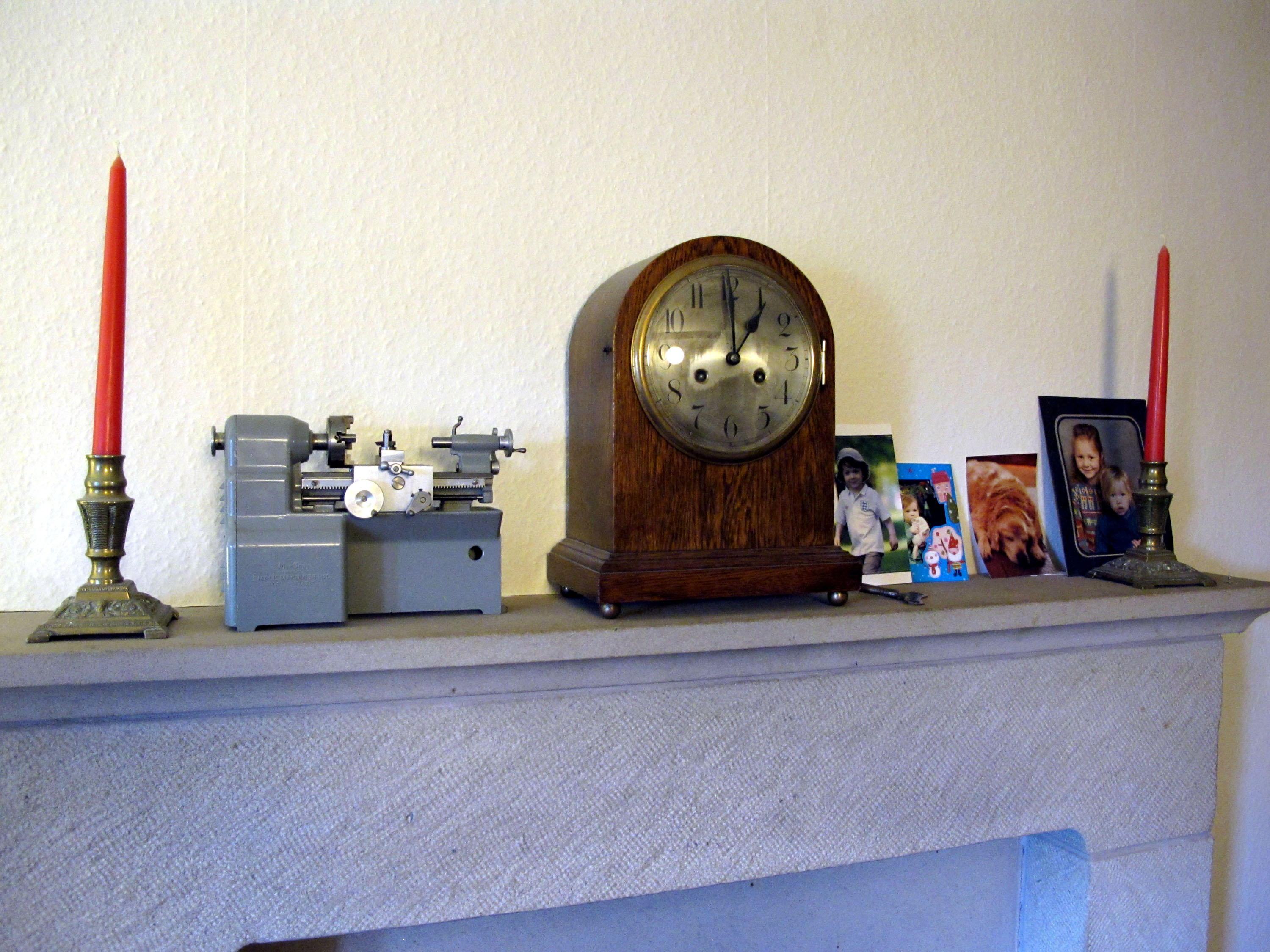
The perfect mantelpiece ornament
Continued:
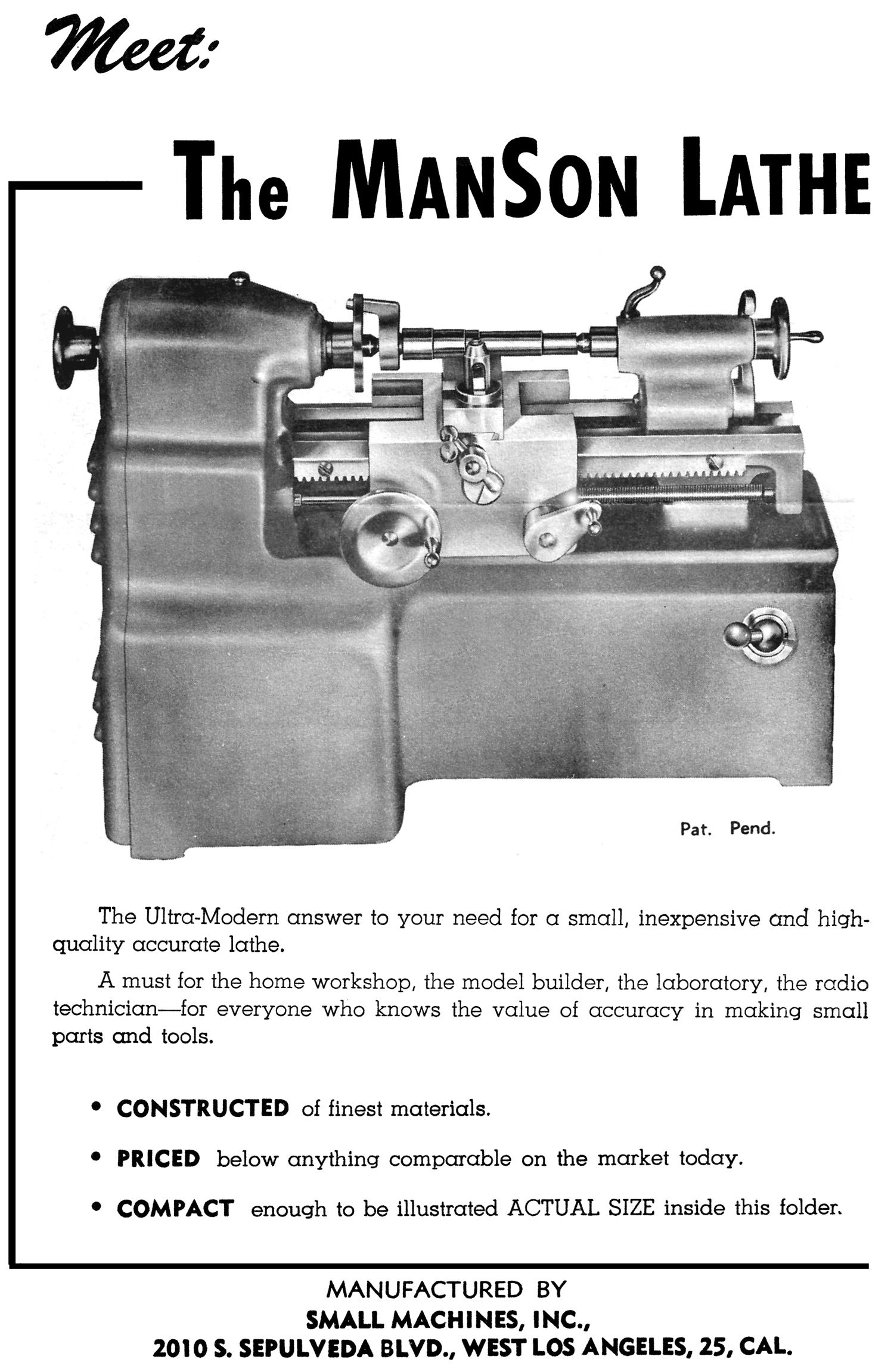
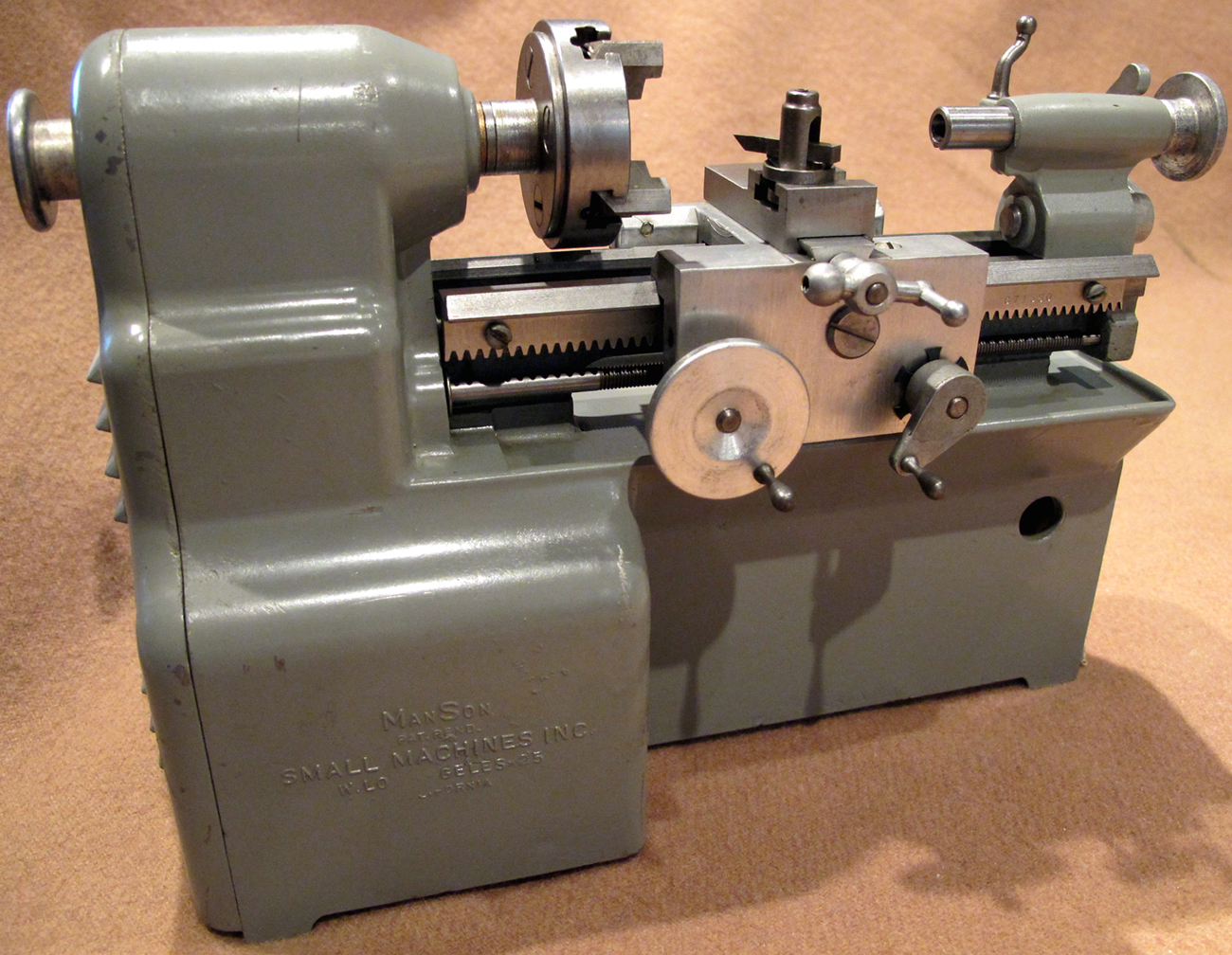
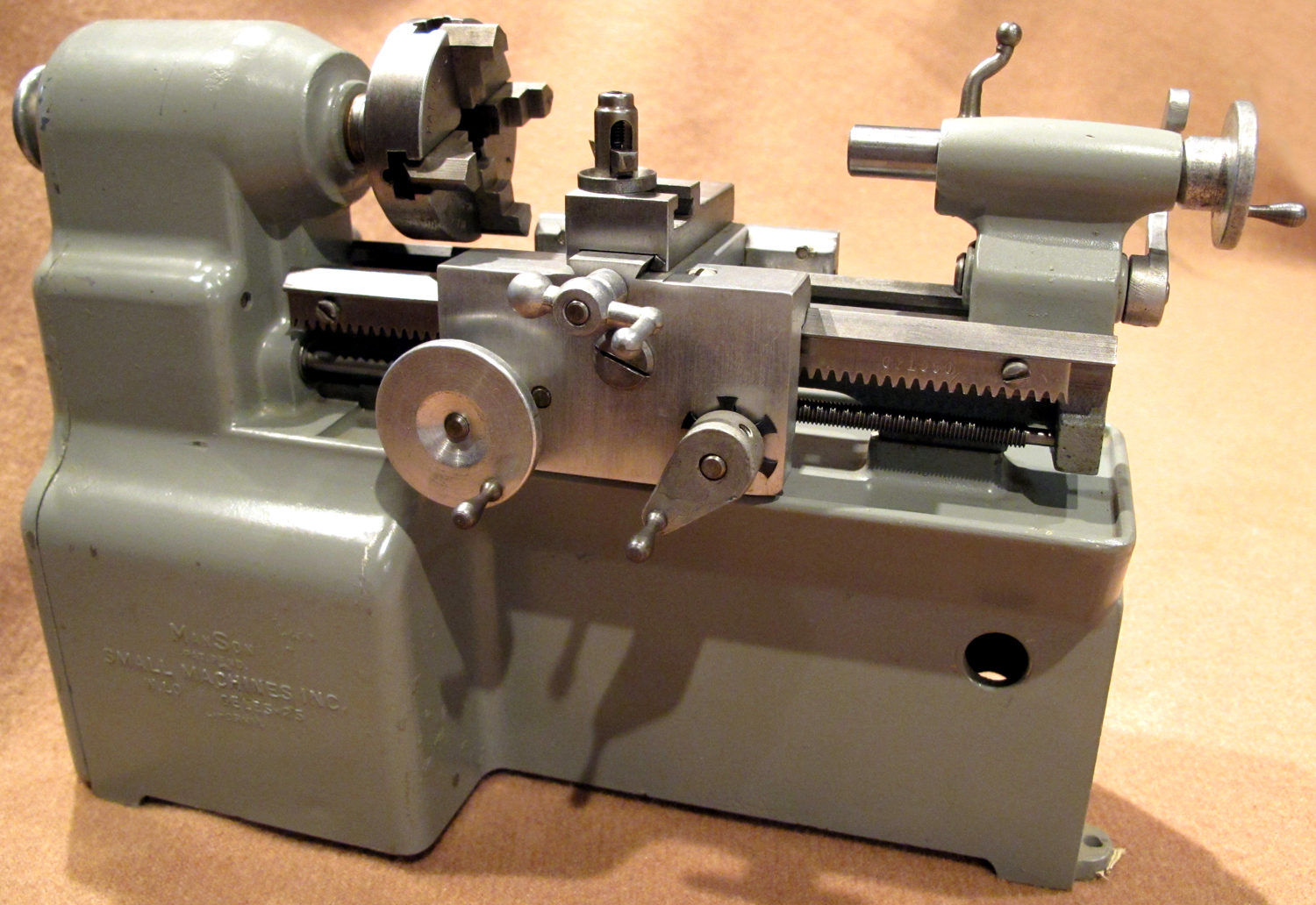
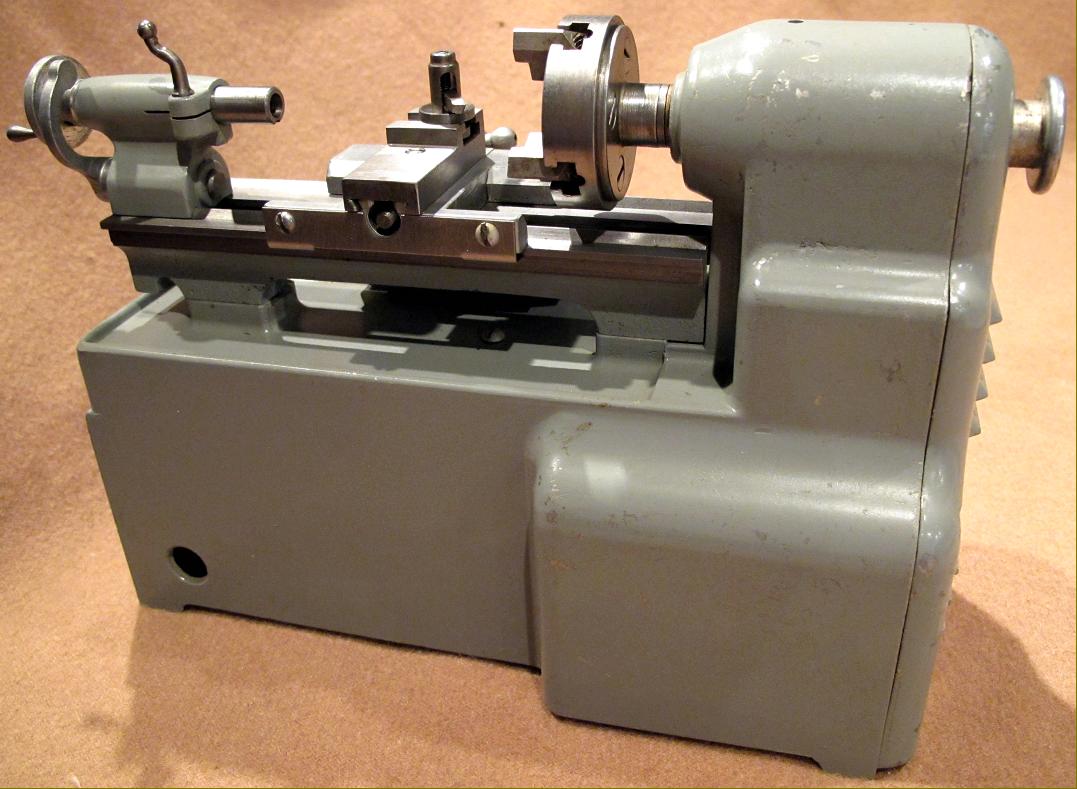
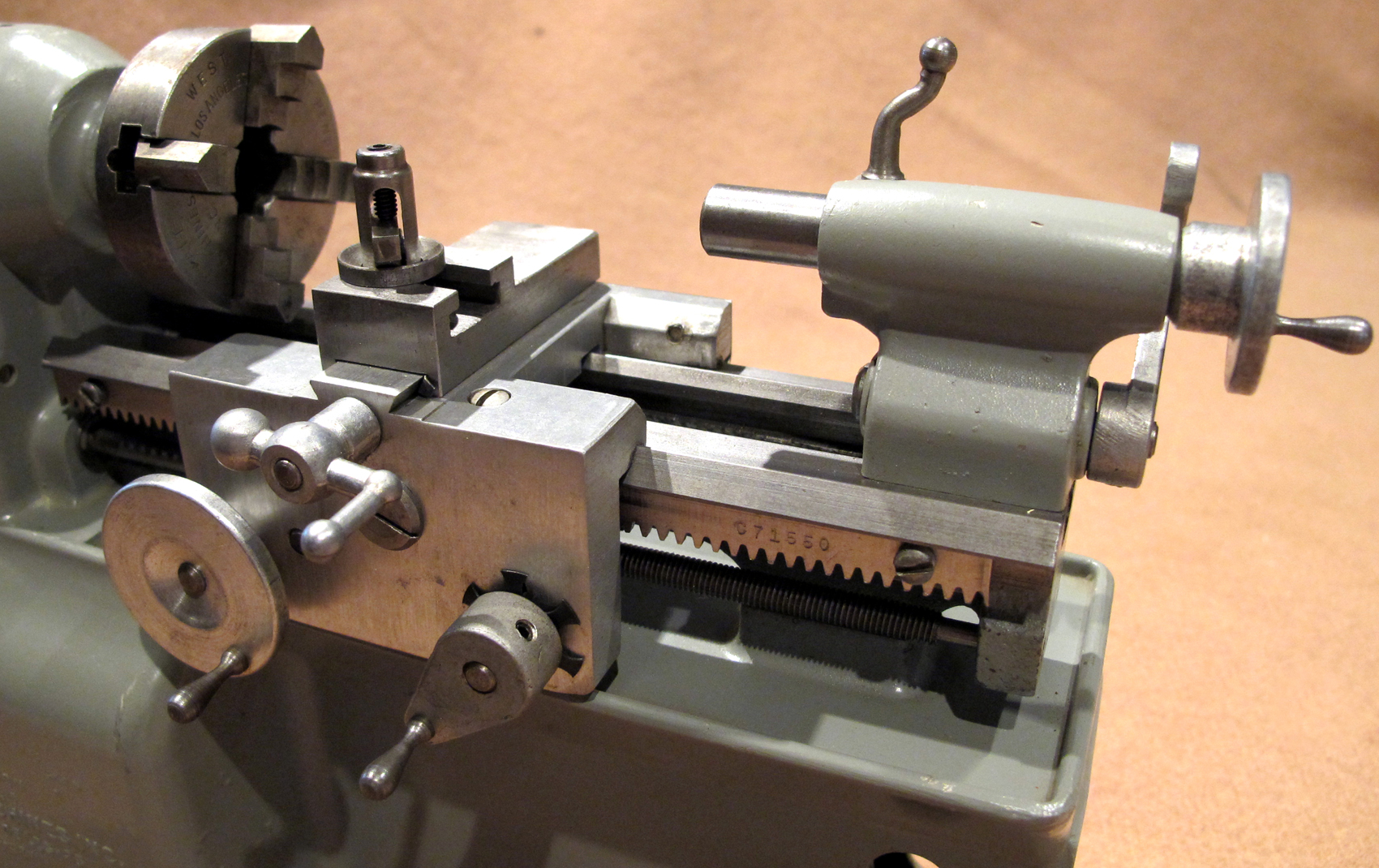
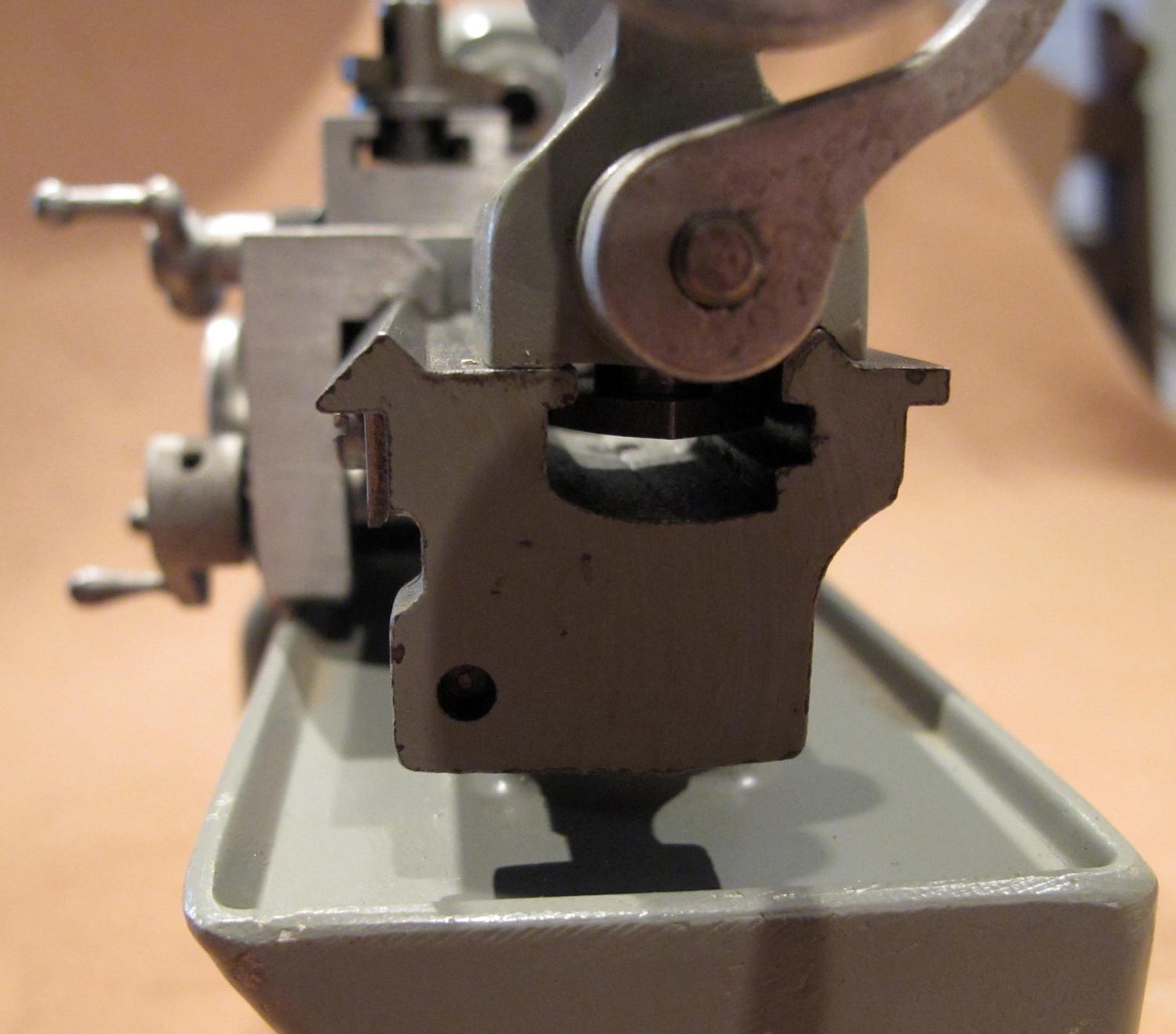
Made in die-cast aluminium, the combined base and headstock carried a cast-iron V-way bed that was screwed to bosses at each end of the integral chip tray. The headstock spindle, running in self-oiling, porous-bronze bearings, was bored through 3/16" and carried a nose threaded 7/16" x 20 t.p.i American National Fine - these tiny dimensions limiting the collet capacity to 1/8" (3 mm). Early models lacked any means of getting oil into the bearings - later machines had a hole drilled in the top of the casting with a knurled-edge blanking plug (often missing) to keep out dirt. It is thought that new lathes might have been provided with a piece of sticky-backed tape to hold the plug in place during transit - the tape possibly being printed with lubrication instructions.
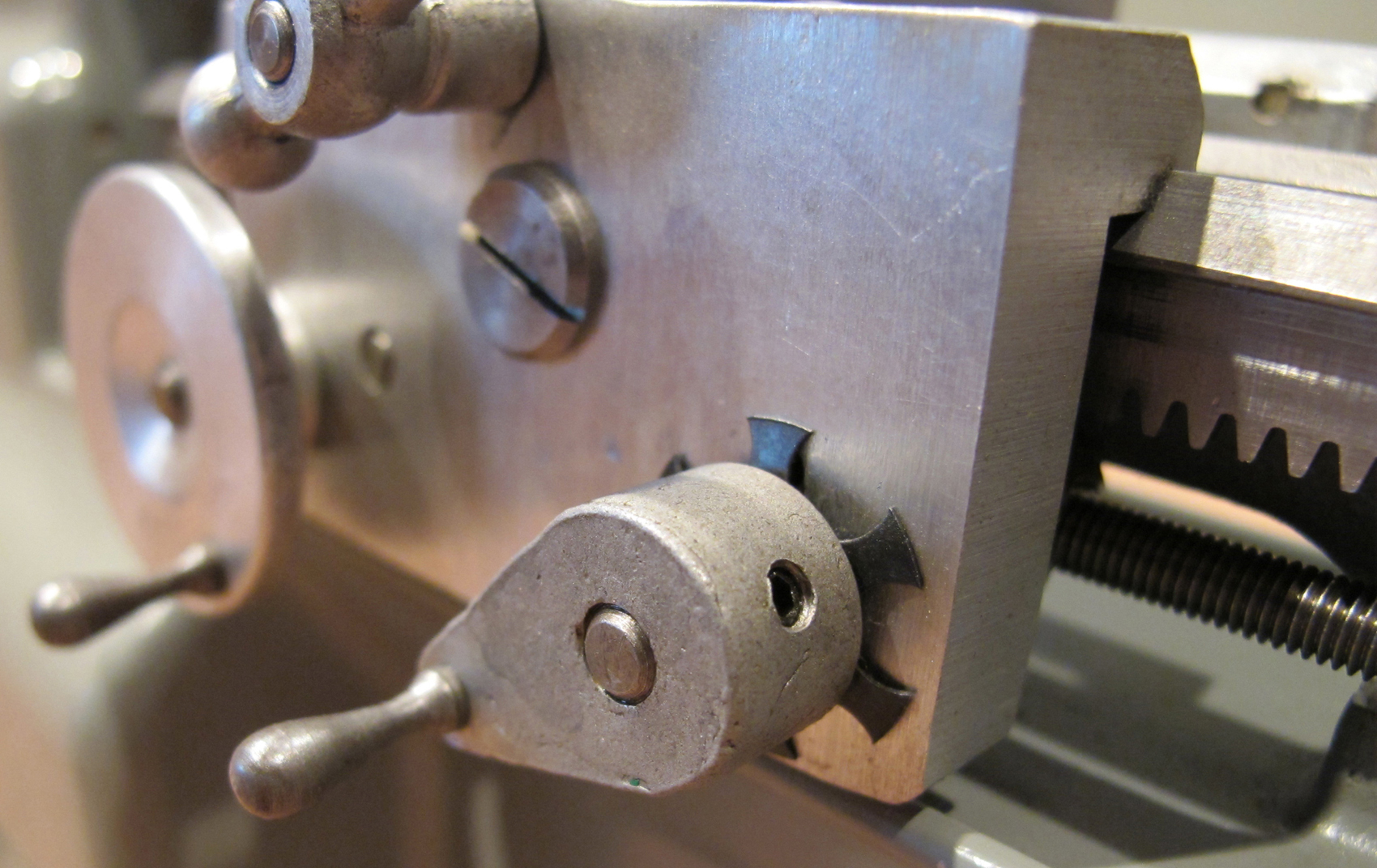
Featuring relatively enormous saddle wings, the aluminium carriage could be moved along the bed by either a hand-operated rack feed or under power from the "leadscrew". The base of the lathe contained a crude open frame 110 volt motor with exposed winding and fitted with a 4-blade fan, that drove upwards, via a neoprene "O" ring belt, to a wheel with an inboard gear attached, positioned just below the headstock spindle; the inboard gear drove another attached to the end of the spindle whilst a small gear (on the spindle) drove back down through a compound train of slender, clock-like gears to the 32 t.p.i. leadscrew. Unfortunately, because the leadscrew drive gears were fixed in place and could not be changed, the lathe was not capable of screwcutting; even so, this must be the world's smallest production lathe ever to have been fitted with a power-sliding facility where the entire carriage assembly moved along the bed.
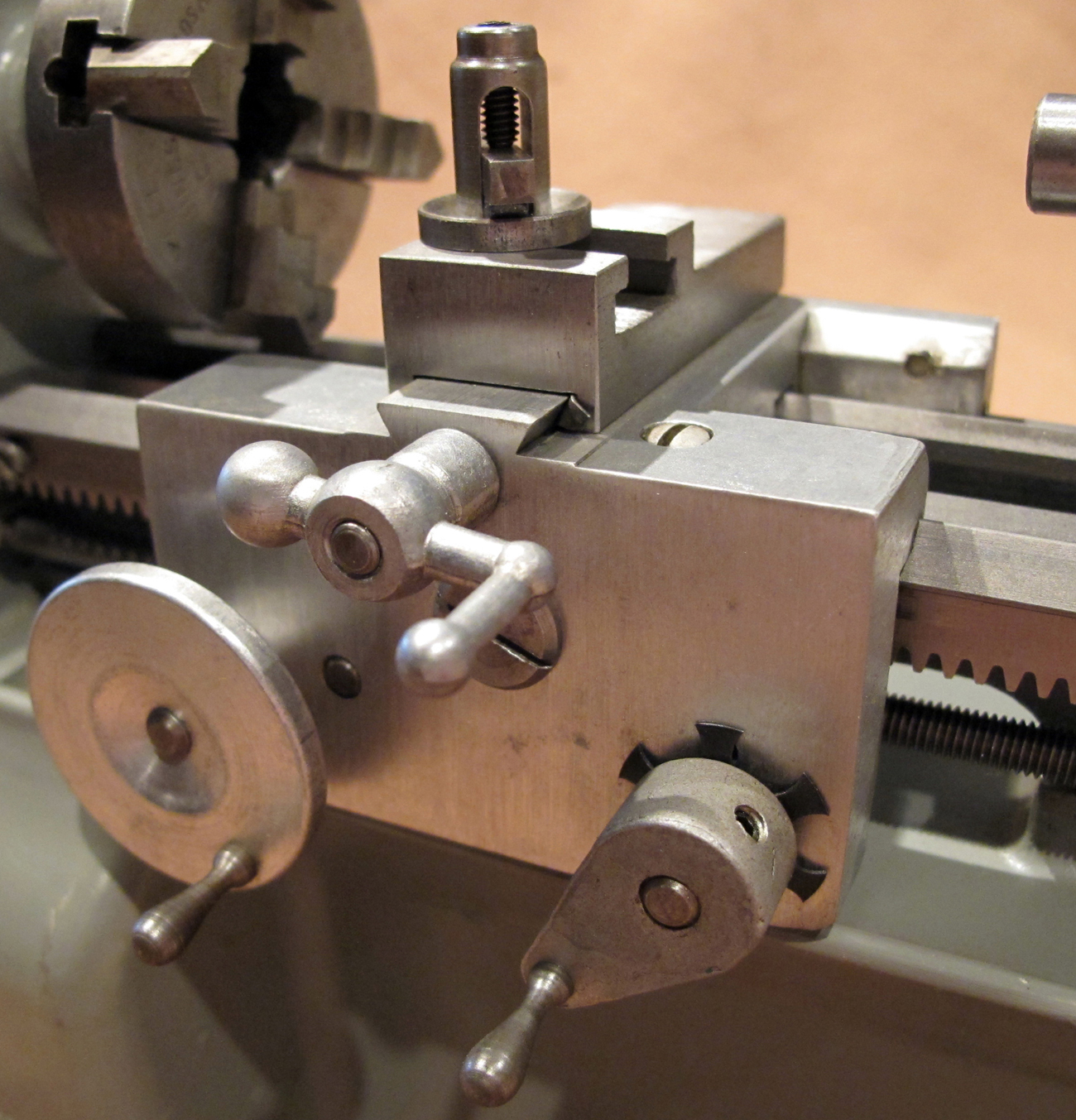
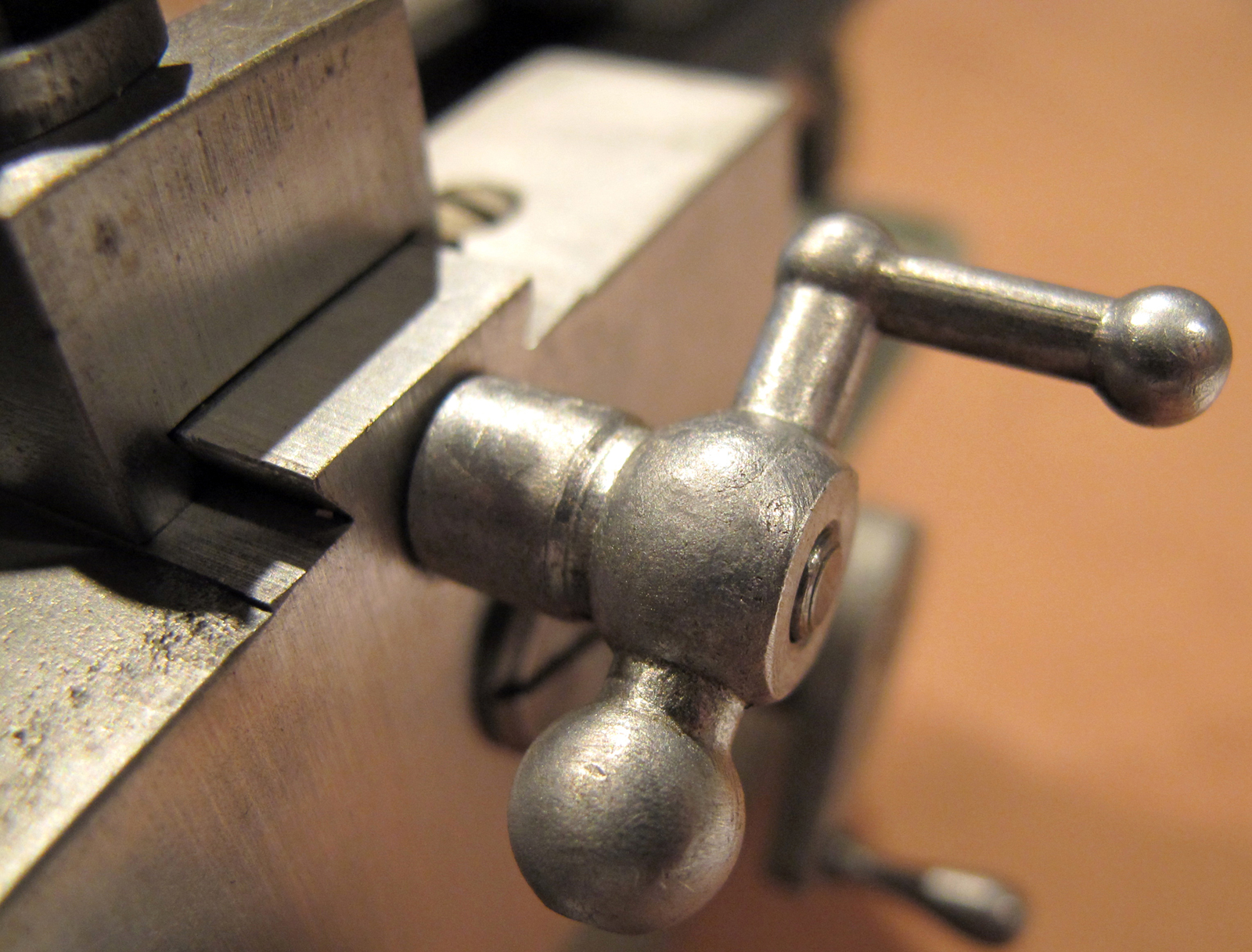
Although it would have been much cheaper and easier to have fitted a plain, parallel types, every handwheel on the lathe (including the proper, but miniature cast-aluminium ball-ended "balanced" wheel on the cross-feed screw) was provided with curved finger grips.
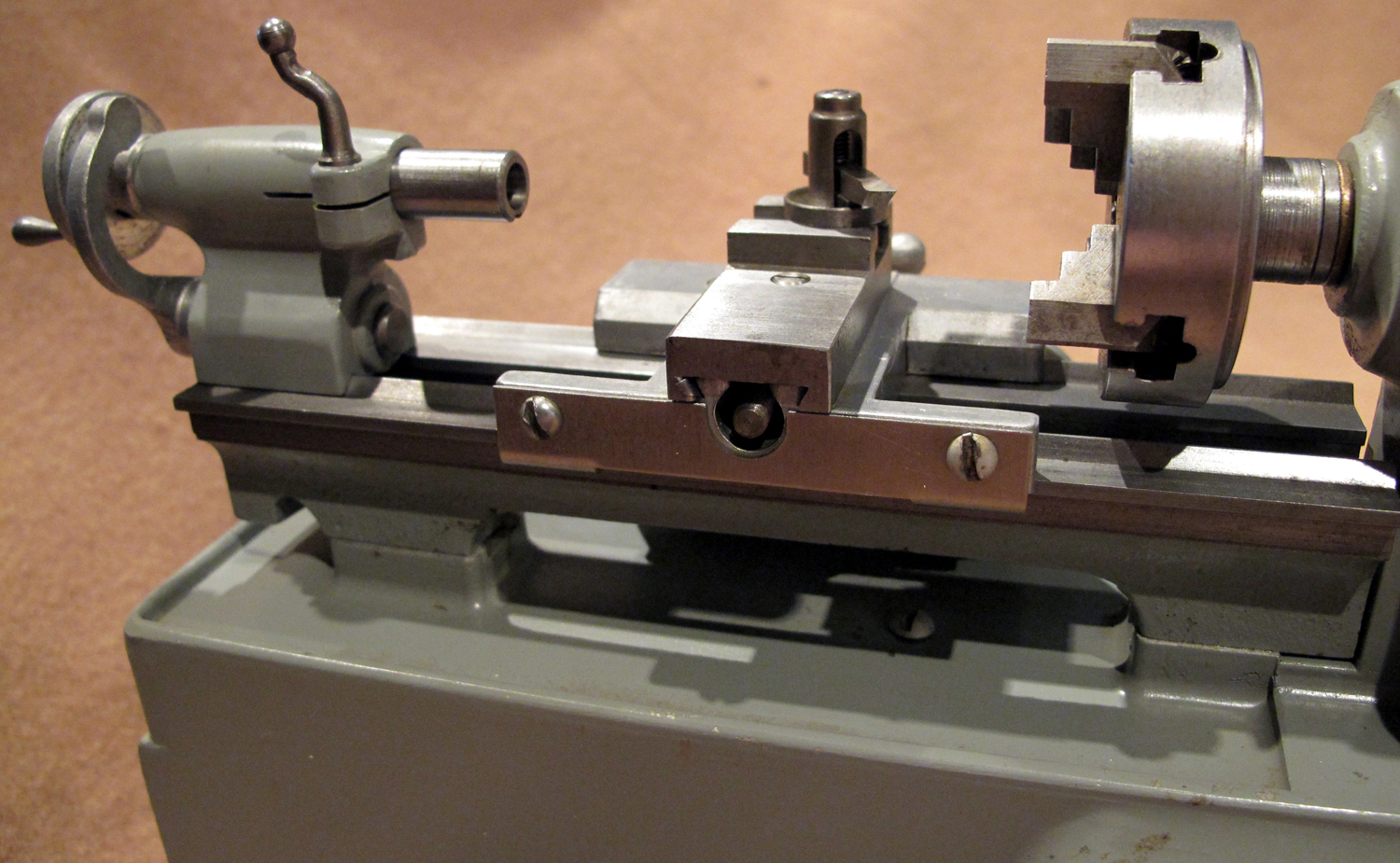
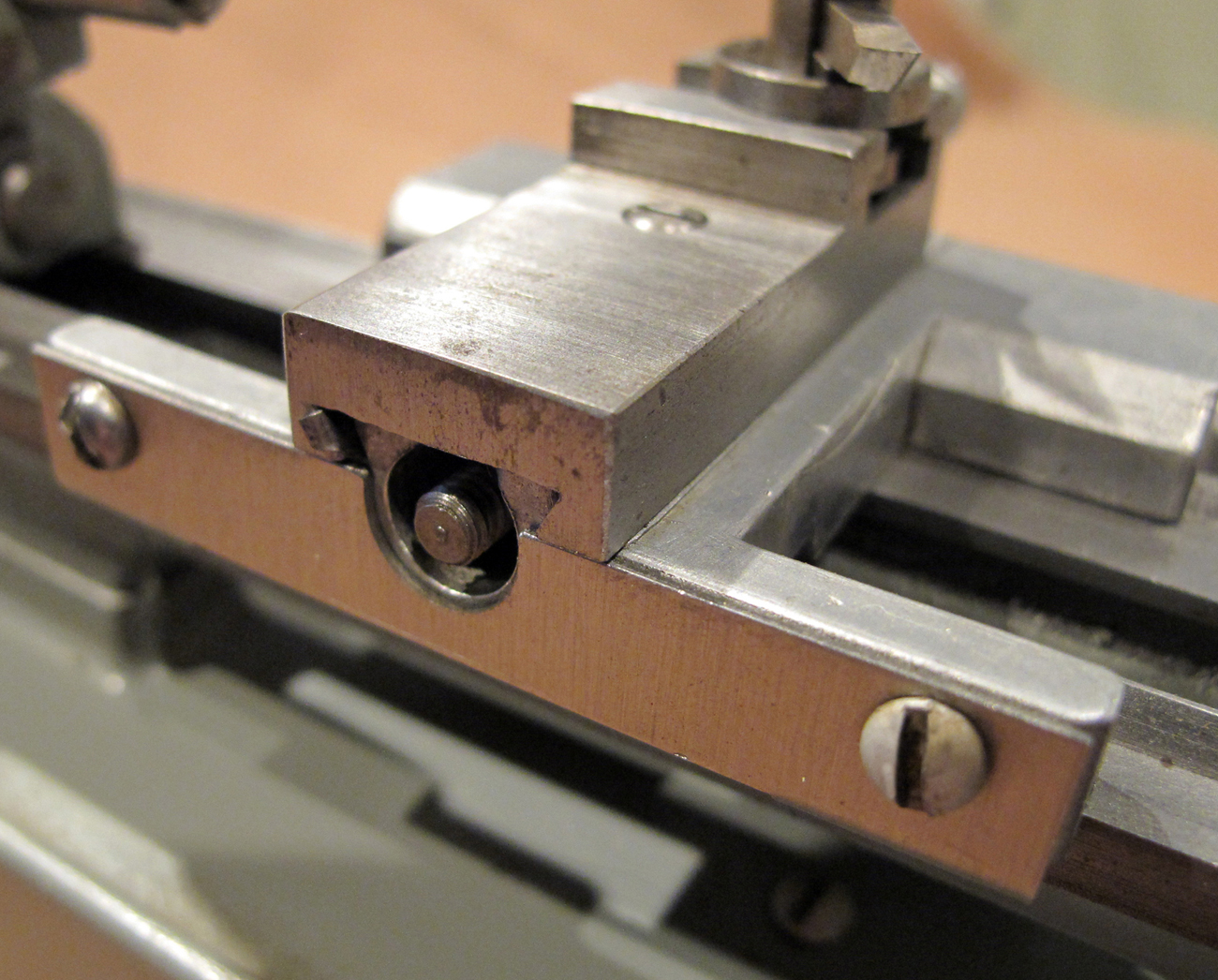
Both the cross slide and the saddle it ran on (which was cast in one piece with the apron) were in aluminium. The cross slide gib strip was interesting: a "corrugated" strip of spring steel, designed to be self-adjusting - and successfully so, considering the small forces involved. Examination of the strip at the points where it bents over at the ends (to retain it) shows that this area was also touched on a grinding wheel to ensure flatness.
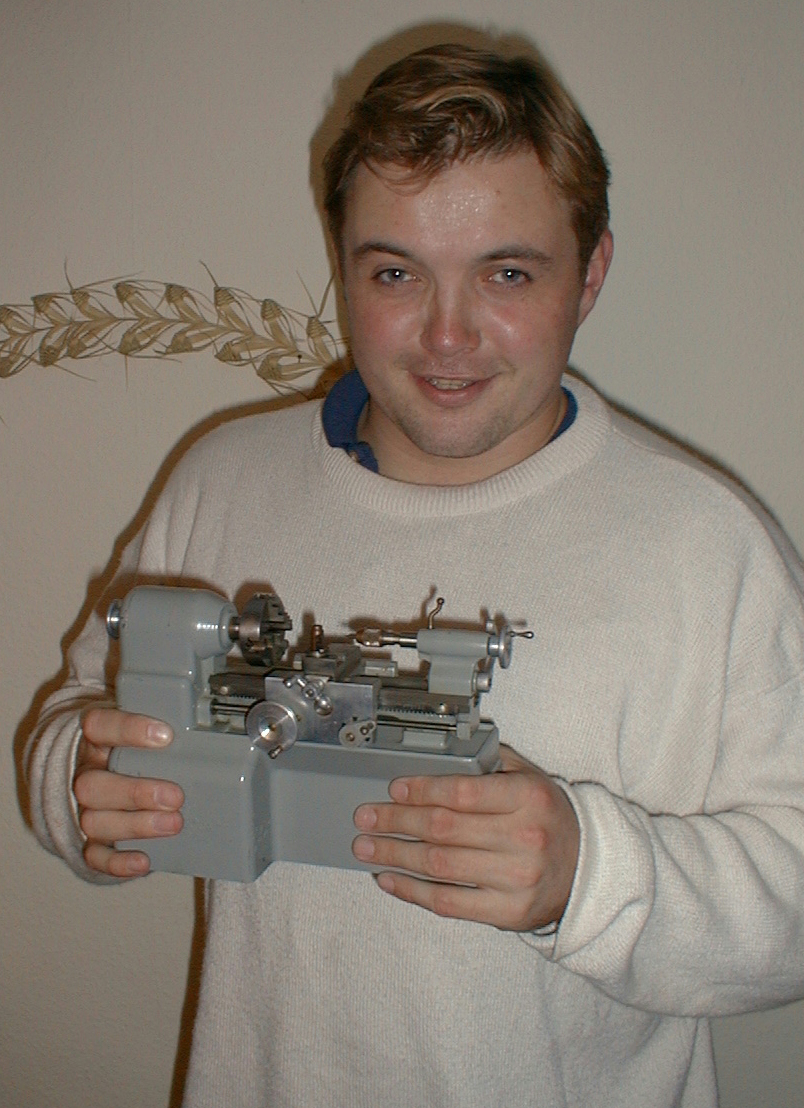
There was no backgear on the original models and the number of spindle speeds, from the fan-cooled motor, was limited to two - from double-step pulleys. The machine was finished in grey - and weighed just 6 lbs or (probably for the later models packed for dispatch) 10 or 12 lbs (4.5 or 5.4 kg) according to which publicity catalogue you believe..
A 11/4" faceplate, two centres, a toolpost, motor and switch were supplied as part of the regular equipment and the initial cost was $49.75--though this soon rose to $58.50. For an extra $2.25 a single drive-dog was supplied, together with a tool bit and test rod. As a comparison, in 1948, the Craftsman "80" 6-inch swing by 12 inches between centres, backgeared screwcutting lathe cost $42 without a motor - and $55.50 with.
Originally packed in a 6" x 4" wooden box and offered (in 1949) at $34.50), Manson listed a small accessory kit. The wooden box was superseded by a hardwood-lined, 6" x 4" plastic box and finally a wood-lined metal case. The first kit contained a 4-jaw independent chuck (stamped with the ManSon name and address), a collet-holding nose-piece to take the supplied four collets (in stress proof steel) of 1/32", 1/16", 3/32" and 1/8"; a 11/2" or 13/4"-diameter faceplate with eight tapped holes, a tailstock drill-chuck, two tailstock collets, one countersink centre drill, two lathe dogs (sizes 3/16" and 3/8"), two high-speed tool bits (ready sharpened and ground) and an Allen-wrench. Similar kits, but with different ranges of accessories, were also produced. Depending on the date of manufacture, the 4-jaw chuck was also known to have been supplied in a larger size, with an aluminium body, but without any maker's identification.
Relatively expensive, it appears from the numbers surviving that few can have been sold, but the Company did list all the items separately including two items not in the kits, namely: test rods in dural or brass 5/16" in diameter and 21/2" long with drilled centre holes; a tap and die set ($12.50) in a metal case containing 4 taps and 4 dies sized 00-90, 0-80, 1-72 and 2-56, one tap and die holder, 4 bushings and 1 set-screw wrench.
At first no 3-jaw chuck was offered - a common failing amongst the makers of small lathes for any sub-2" diameter 3-jaw has always been a difficult to produce economically, yet accurately, on a production basis. The delay in obtaining a suitable 3-jaw was, however, short-lived, for with the introduction of the DuoLathe in 1948, a 3-jaw self-centring chuck was offered as an optional extra for only a few dollars more than the independent 4-jaw. Today, many miniature-lathe enthusiasts use a suitably-mounted Jacobs or similar brand of "tailstock" chuck on the headstock spindle; these tiny units are very accurate and, whilst hardly as versatile as the real-thing, can be surprisingly useful. Unfortunately, the ManSon is so minute that only the shortest version of the smallest Jacobs chuck is suitable. It is never long before the owner of a very small lathe realises that only collets allow really accurate work is to be turned out and, on the DuoLathe with its ball-bearing supported spindle, this became a possibility. As a note of interest, some late versions of the original lathe had the tailstock end of the bed milled to accommodate a removable leadscrew-support bracket (as used on Duo and later models) - this allowing the carriage to be slid off without the need for further dismantling.
Was the ManSon a practical proposition? One owner writes: "It is possible to take a cut so small that the shavings appear to be the size of a human hair in one long string without breaking (if you have a good sharp tool) this is imperative for this machine. The maximum cut you can take is only about .006 to 010. inch but if you work within the unit's limits it is a very fine addition to any workshop."
Marked by the printers '1957', the last known dated information originating from the Company came three years after the introduction of another small lathe that was to dominate its market sector for many years - the Emco "Unimat"
If you have a ManSon of any type the writer would appreciate any comments about its specification, performance and a note of its serial number.
Duo Lathe Master Lathe Duo lathe Photo Essay Accessory Kits
|
|