 |
|
|
|
|
|
|
|
|
|
|
|
|
|
|
|
|
|
|
|
|
|
|
|
|
|
|
|
|
|
|
|
|
|
|
|
|
|
|
|
|
|
|
|
|
|
|
|
|
|
|
|
|
|
|
|
|
|
|
|
|
|
|
|
|
|
|
|
|
|
|
|
|
|
|
|
|
|
|
|
|
|
|
|
|
|
|
|
|
 |
|
|
|
|
|
|
|
|
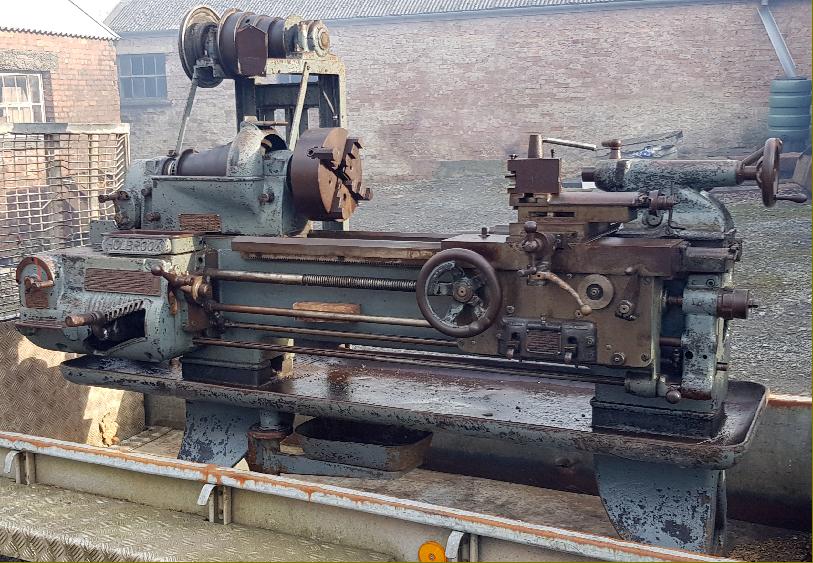
A late-model Holbrook T13 Serial No. 4420 from around 1935-36
Displaying many features also found on American Hendey lathes of the same period (the Model 4C in particular being fitted with a variety of ingenious and useful fittings to speed up work), the new owner writes about this wonderful acquisition:
One of the last 4-step, cone-pulley flat-belt drive models - the lathe also being available with an all-geared headstock - the whole machine is massively built with a wide bed in the form of an exceptionally well braced cruciform box casting. The very large diameter headstock spindle runs in parallel white metal bearings with shim adjustment under half bearing caps and a ball thrust race fitted to the front face of the back bearing.
The changewheels drive a one-tooth dog clutch on the input shaft sitting under the head (a Hendey-type fitting) that then drives a three-stage gearset changed by the rotating lever on the left-hand end of the front-mounted gear box... this then drives the Norton-type cluster that is switched between threading and feedscrew by the large lever on the right-hand side of the gearbox. This one-tooth dog clutch arrangement (only to be used at slow speeds) allowed an instant reverse when screwcutting.
The apron has two, neat, finger-type triggers to engage either sliding or surfacing feed worm gears on the separate feedshaft below the leadscrew. Below the feedshaft is the very useful "knock-off" shaft, this being used for turning to stops, these being fitted with micrometer adjustment via the small thimble mounted at the bottom edge of the apron. The fourth and lowest shaft (rotated by the lever mounted at the bottom right-hand side of the apron) turns quadrants within the gear box to operate the one tooth dog clutch under the head for stopping and reversing the feed.
One sophisticated design feature that appears to be peculiar to Holbrook T and C types, is the double-action cross slide assembly. At the end of the top slide you can just see that the cross slide dovetail containing the cross-slide screw has a further dovetail facing downwards, the whole assembly containing the screw able to slide within the saddle casting...this having a projection to the rear normally anchored in place by a taper-seat bolt to the saddle. When taper turning is required, removing the taper bolt and then replacing it so that the cross slide assembly is now controlled by the shoe riding on the taper-turning angled beam on the casting behind the saddle. In addition, the cross slide is fitted with a quick-withdrawal mechanism to allow high speed threading - a very handy feature indeed for the turner on piece work….
I'm not sure that I can tell you much more right now, but it's in a dreadfully filthy state and lots of cleaning is required just to see what I've got...There are broken cover castings as well...so we will have to practice some pattern making. A cone head T-15 rebuild can be seen here
|
|
|
|
|
|
|
|
|
|
 |
|
|
|
|
|
|
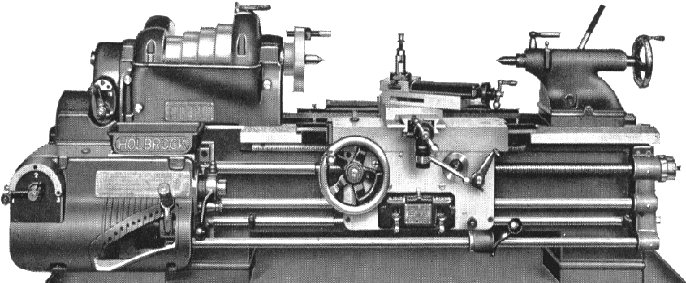
Holbrook Model T No. 13 (6.5" centre height) lathe with open flat-belt drive
|
|
|
|
|
|
|
|
|
|
|
|
|
|
|
|
|
 |
|
|
|
|
|
|
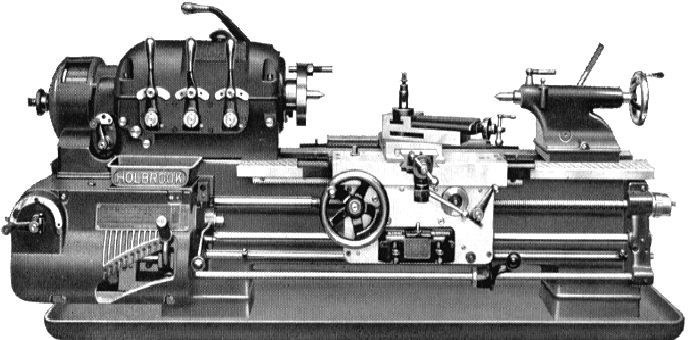
Holbrook Model T No. 13 but fitted with an all-geared headstock
|
|
|
|
|
|
|
|
|
|
|
 |
|
|
|
|
|
|
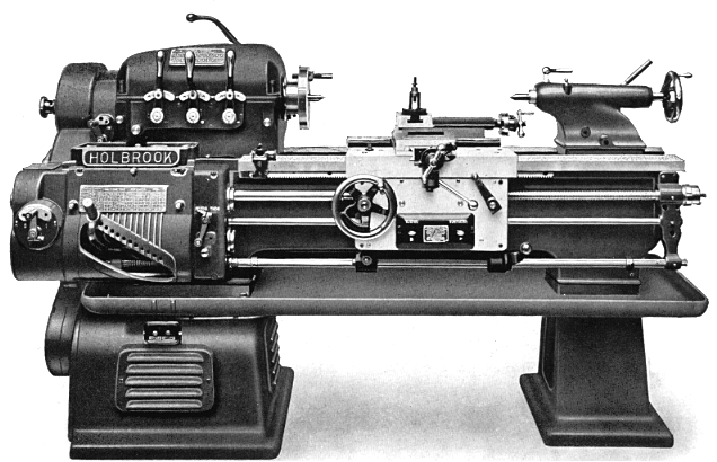
Holbrook Toolroom Lathe Model T No. 13 in its self-contained motorised
|
|
|
|
|
|
|
|
|
|
|
|
|
|
|
|
|
 |
|
|
|
|
|
|
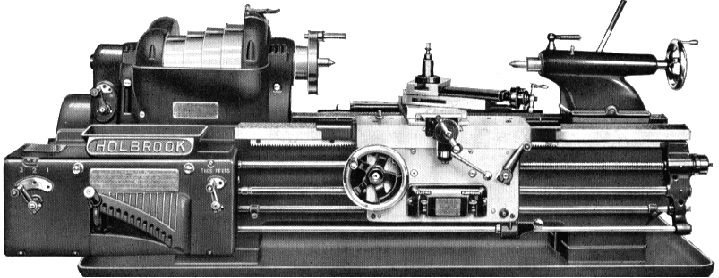
Holbrook Model T No. 15 (7.5" centre height) lathe with open flat-belt drive
|
|
|
|
|
|
|
|
|
|
|
 |
|
|
|
|
|
|
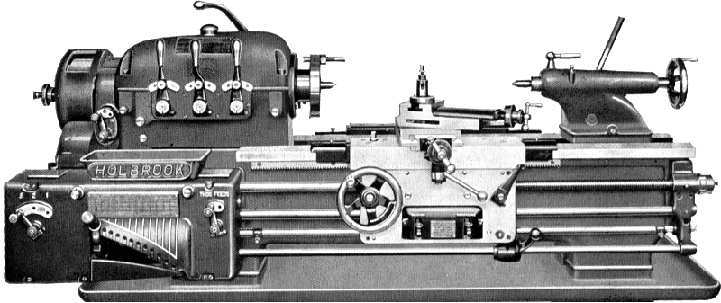
Holbrook Model T No. 15 fitted with an all-geared headstock
|
|
|
|
|
|
|
|
|
|
|
 |
|
|
|
|
|
|
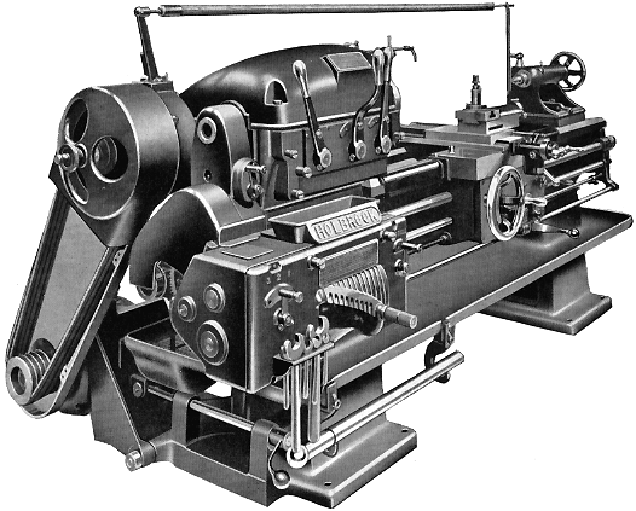
Holbrook Toolroom lathe Model 17 in its self-contained motorised form. The
long bar running above and along the length of the lathe bed operated the clutch.
|
|
|
|
|
|
|
|
|
|
|
|
|
|
|
|
|
 |
|
|
|
|
|
|
|
|
|
|
|
 |
|
|
|
|
|
|
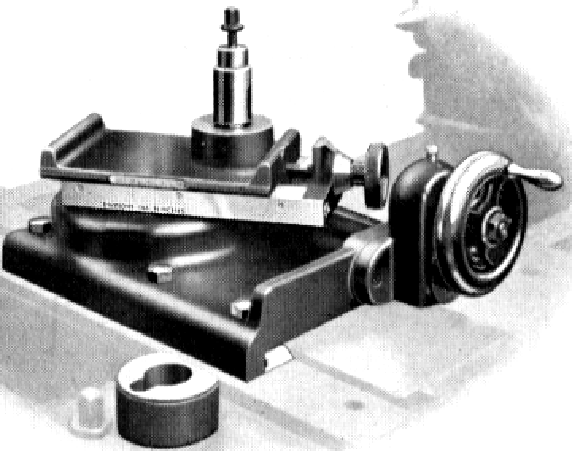
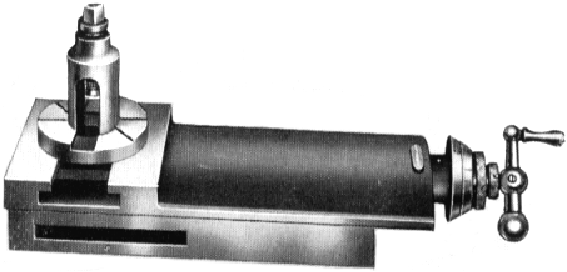
Standard top slide with American-type toolholder
|
|
|
|
|
|
|
|
|
|
|
 |
|
|
|
|
|
|
|
|
|
|
|
 |
|
|
|
|
|
|
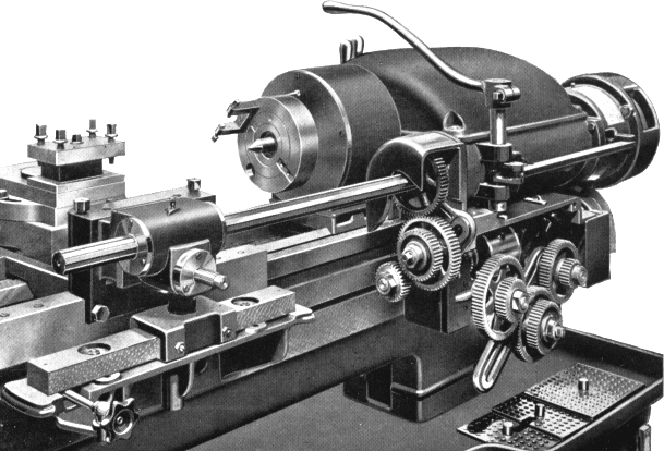
The comprehensive and effective Holbrook Universal Relieving Equipment
converted the Model T Toolroom Lathe into a proper "Relieving Lathe".
|
|
|
|
|
|
|
|
|
|
|
|
|
|
|
|
|
 |
|
|
|
|
|
|
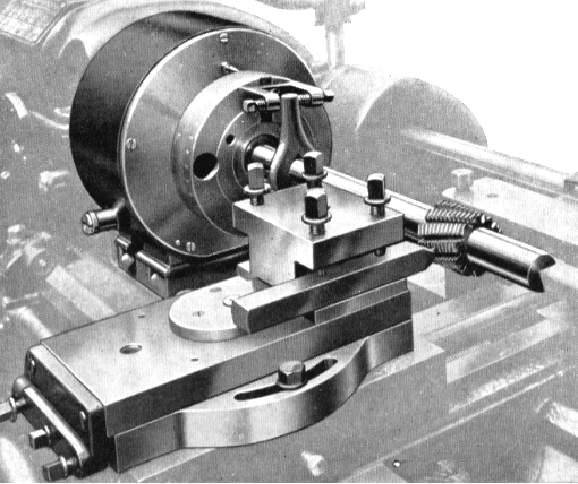
The Sub-head speed reducer gave 1 revolution for every six of the headstock spindle which drove it. Besides its use in the relieving equipment set, it could also be employed to assist in the cutting of threads which had very long leads.
|
|
|
|
|
|
|
|
|
|
|
 |
|
|
|
|
|
|
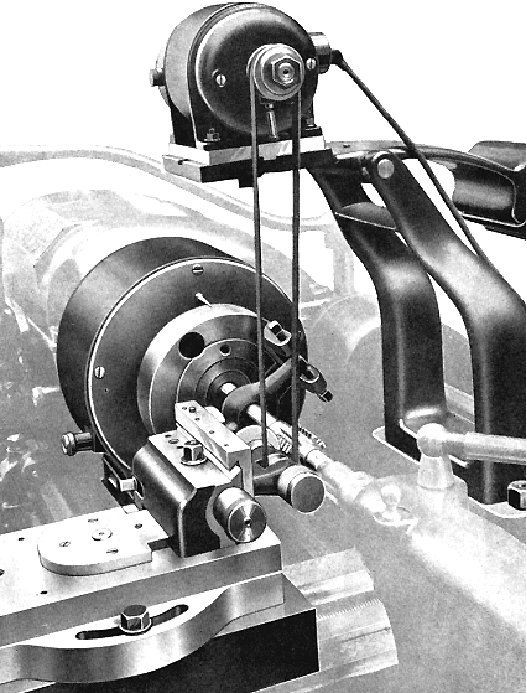
Holbrook Model T overhead driven relief-grinding equipment for use on hardened hobs and taps, etc.
|
|
|
|
|
|
|
|
|
|
|
 |
|
|
|
|
|
|
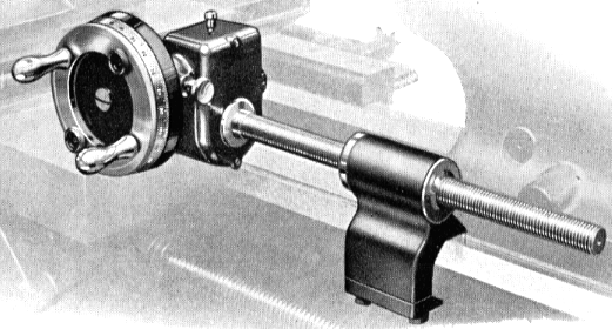
The precision Carriage Spacing Accessory had a dial that read to 1/10,000". The main unit clamped to the saddle and the bushed support to the bed. The carriage could then be accurately position anywhere within the 12" reach of the special high-accuracy leadscrew.
|
|
|
|
|
|
|
|
|
|
|
|
|
|
|
|
|
|
|