|
Conrik and Great Scot were marketing names used by the Mars Machine Tool Manufacturing Co. Pty. Ltd. of Bridge Street, FortitudeValley, Brisbane, Australia a company originally known as Rapson and Dutton. The firm produced a wide range of machine tools and other products including millers, shapers, planing machines, radial-arm drills, boring mills, hoists, bandsaws and even such items as diverse as paper guillotines and diesel engines. In advertisements they described themselves as ''Marine, Diesel and Aircraft Engineers'' and claimed expertise in the ability to design and manufacture ''Special Machines for all Industries''. One advertisement even boasted: "The widest range of machine tools in the Southern Hemisphere".
The Conrick was sold, from 1939, by Nock & Kirby Ltd. of George St., Sydney. The Conrick name derives from the Company name, being the first three letters from both parts of the name combined, but with the order of the letters reversed in both parts. A detailed advertisement appeared in the Sydney Morning Herald on the 18th of October, 1939 (on page 9), with an illustration and an extensive list of dimensional data for The New Conrick Lathe. The distance between centres was given as 28", the swing over the bed 10" and the swing in the gap as 13" - figures that differ from those in subsequent catalogues and probably due to a revision of specification before production commenced.
The Great Scot lathe was marketed by Thomas Herbert and Co. Pty. Ltd. of Clarence Street, Sydney. This Company was the Sole Distributing Agent for N.S.W. for Mars machine tools from 1945, and possibly earlier. Again, the Sydney Morning herald carried an advertisement on the 14th of November 1945 for the Mars Machine Tool Manufacturing Co. Pty. Ltd. (page 13). advertisement, S.M.H. 14/11/45, page 13).
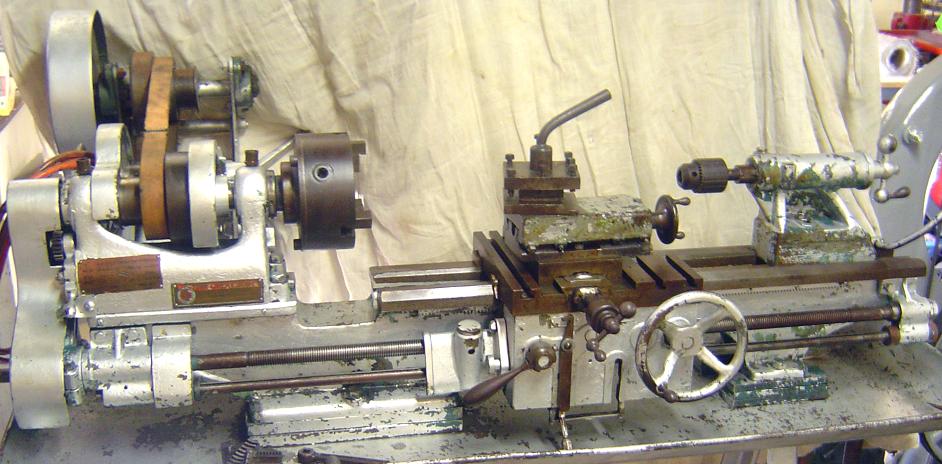
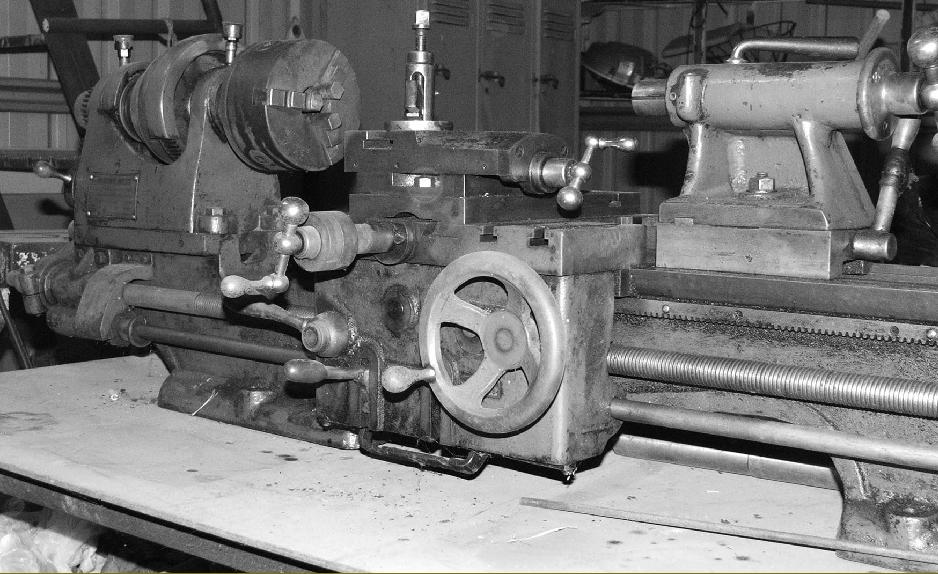
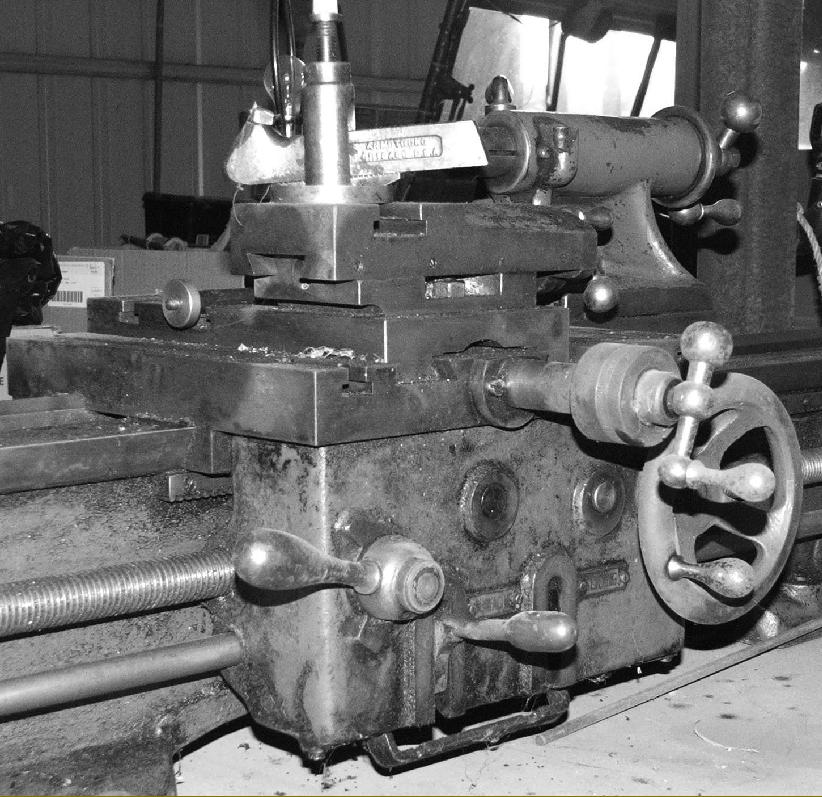
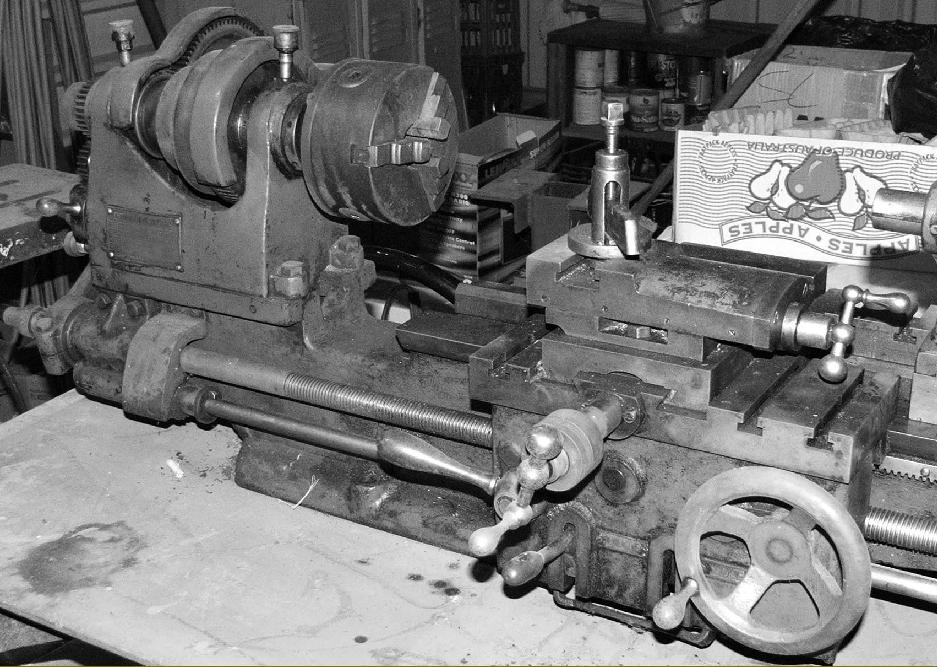
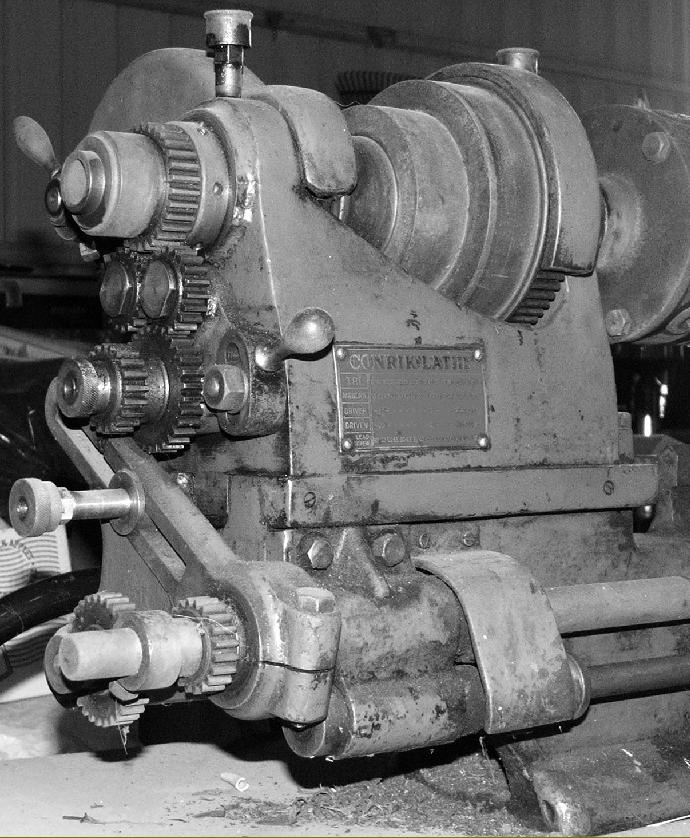
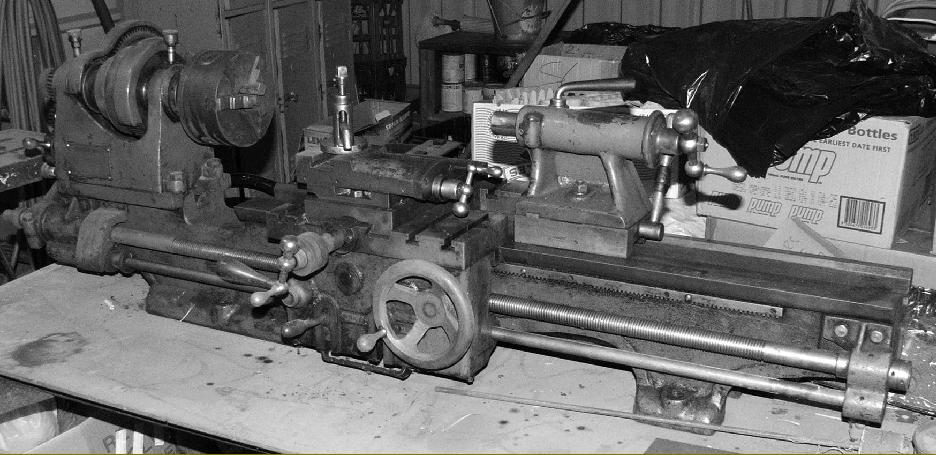
Badged as both a "Conrik" and "Great Scot", and looking very much a lathe designed during the late 1930s, this heavily-built 126mm (6") x 750mm (29.5") backgeared and screwcutting lathe is comparatively rare. The designer had obviously taken inspiration from the contemporary flat-belt drive Colchester Master and made an almost exact copy of the entire carriage assembly, including the top and cross slides. However, the bed was unusual with an open gap bed, a single V-way to the rear, a flat surface to the front and a 60-degree front edge - a most unusual combination. Like the Colchester, the power sliding and surfacing feeds were both selected and engaged by a single lever that slid along the lower edge of the apron before being lifted into the appropriate slot, where a locking mechanism held it in place. Changewheels were used for screwcutting with the drive passing through a tumble-reverse mechanism that had to be unbolted before the feed direction could be reversed. The power-feeds' drive shaft was geared to the leadscrew and could be engaged and disengaged by a sliding gear fitted with a knurled gripping ring. The saddle carried useful transverse T-slots to both left and right of the cross slide and the boss of the cross-feed screw end bracket - again like the Colchester - was machined away on its top surface to allow the cross slide to come right back against the inner face of the micrometer dial. The cross slide carried two T slots behind the top slide - again, an uncommon (but useful) fitting on this size of lathe.
If any reader has a similar lathe with different branding the writer would be interested to hear from you..
|
|