|
 |
 |
 |
 |
 |
 |
 |
 |
 |
 |
 |
 |
 |
 |
 |
 |
 |
 |
 |
|
|
|
|
|
|
|
|
|
|
|
|
|
|
|
|
|
|
|
|
|
|
|
|
|
|
Home Machine Tool Archive Machine Tools For Sale & Wanted E-MAIL Tony@lathes.co.uk
Britannia Lathes 14, 15 & 16 Lathes Nos. 2, 3, 4, 5 & 6 Lathes Nos. 8 & 13 Lathes 14, 15 & 16 Lathes Nos. 17, 18, 19, 20, 21, 22, 23, 25 & 29 Shapers & Planers Millers Britannia Home Ornamental Turning Attachments Lathe No. 3 Photographs Early 1930s Model
|
|
|
|
|
|
|
|
|
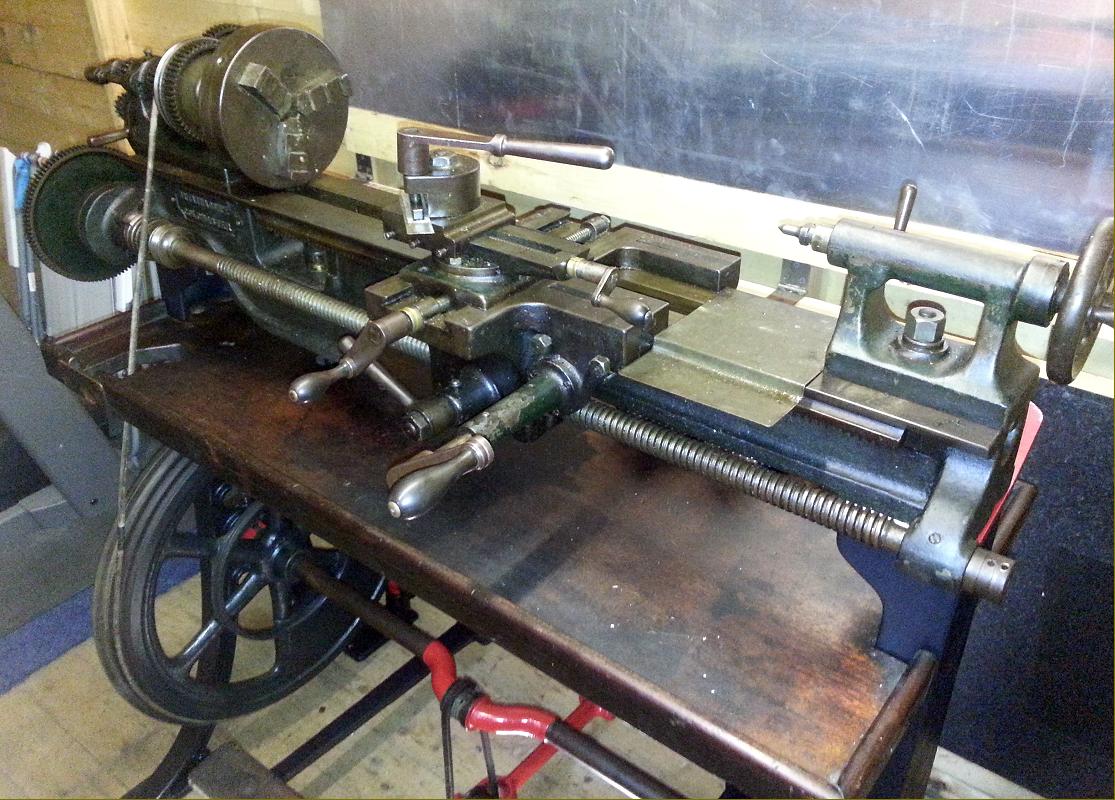
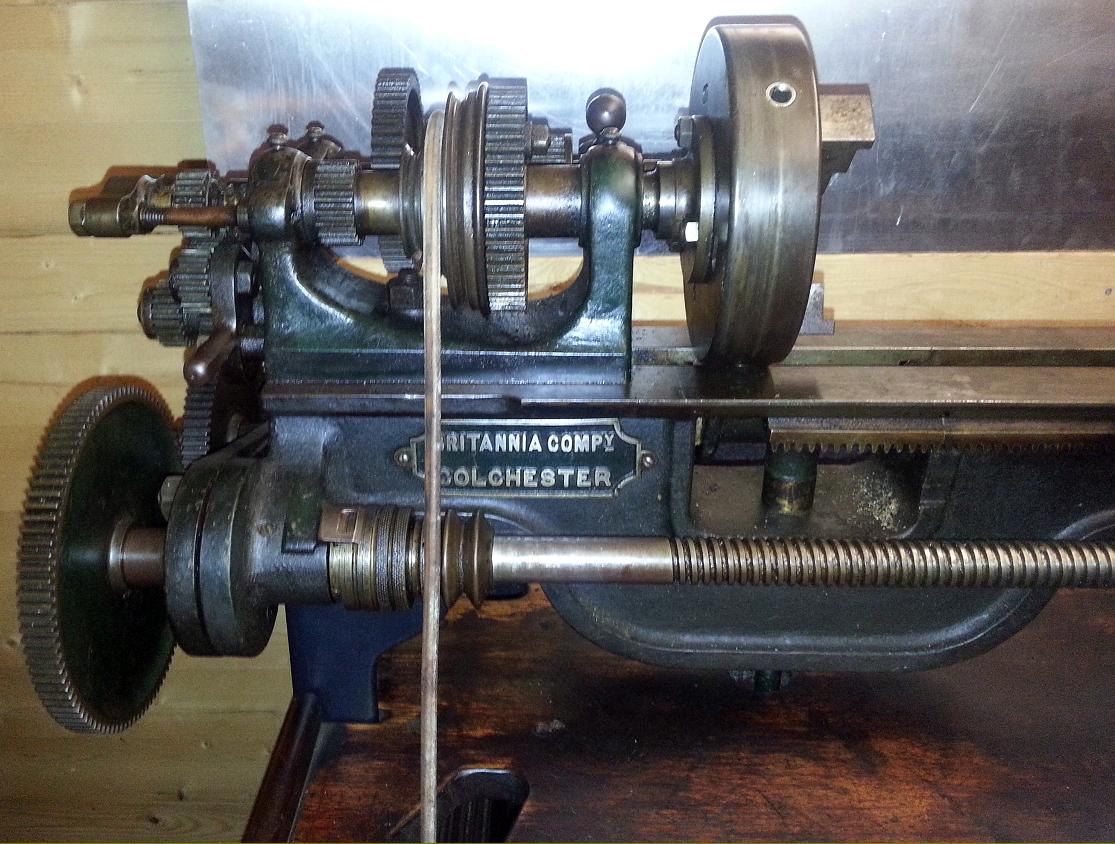
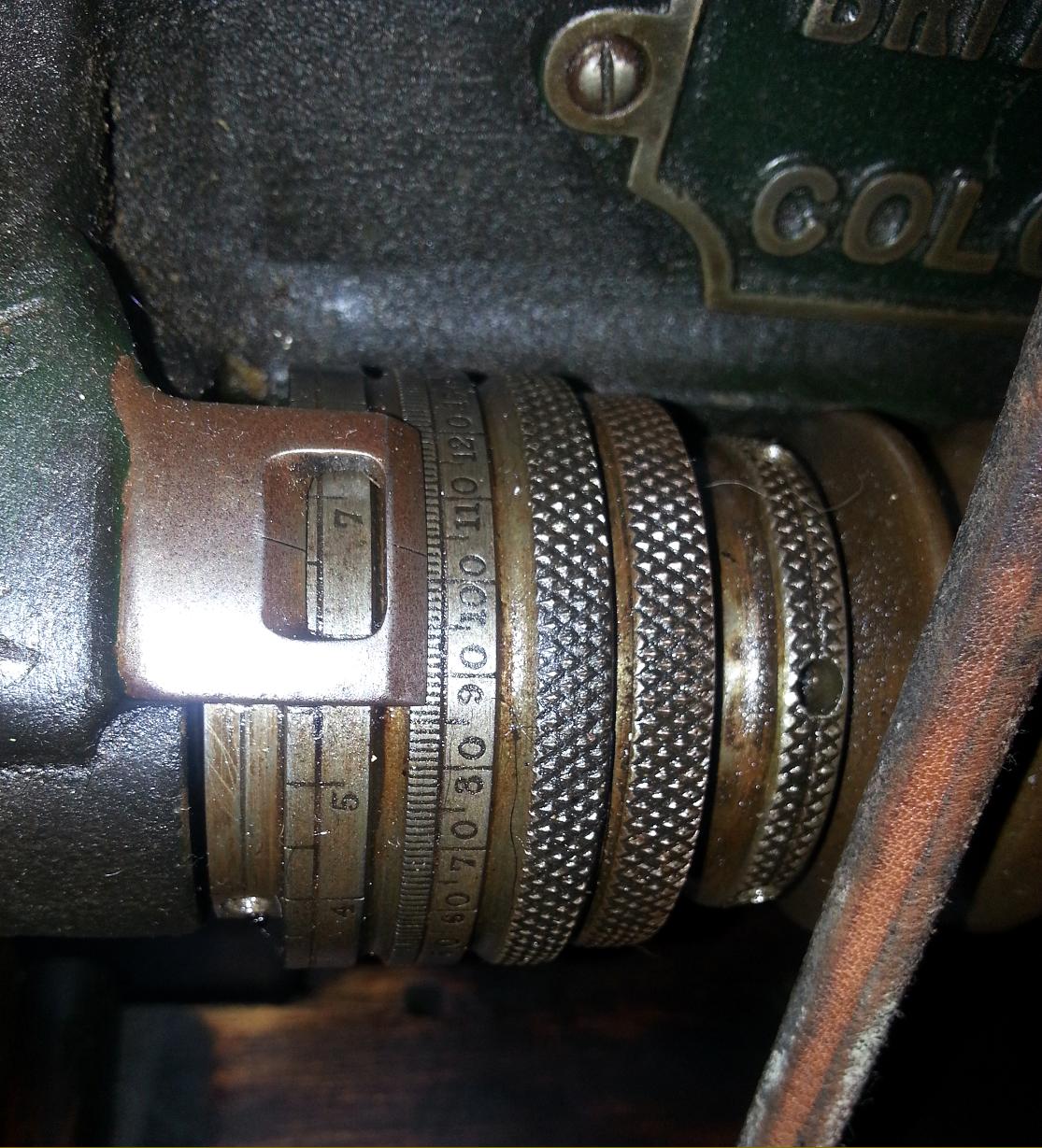
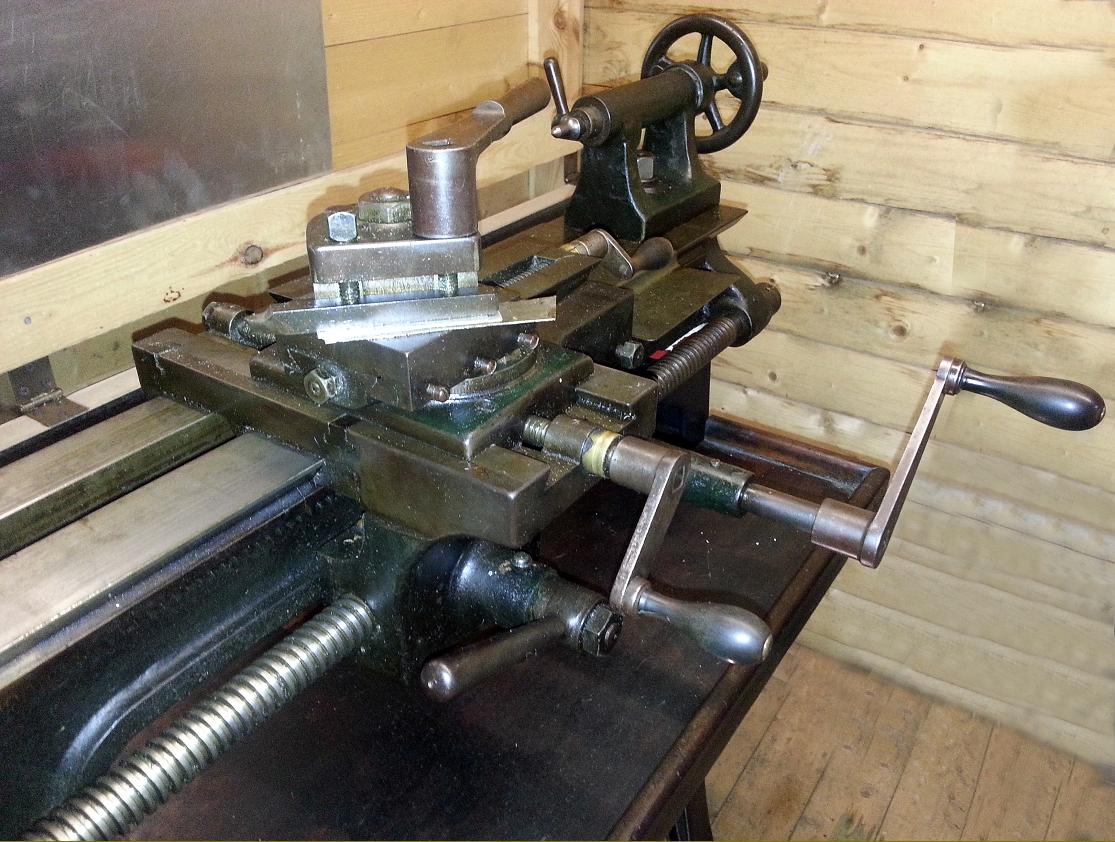
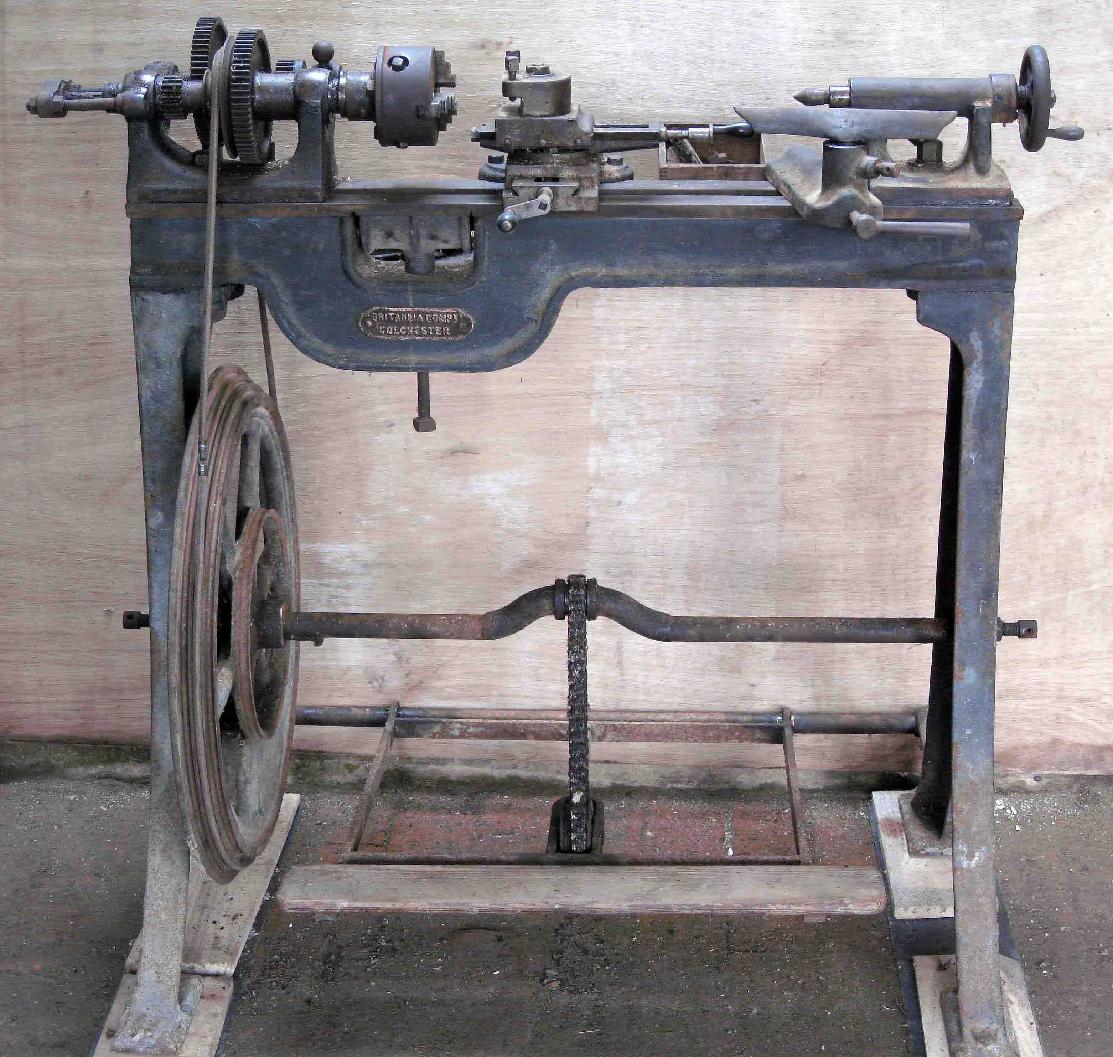
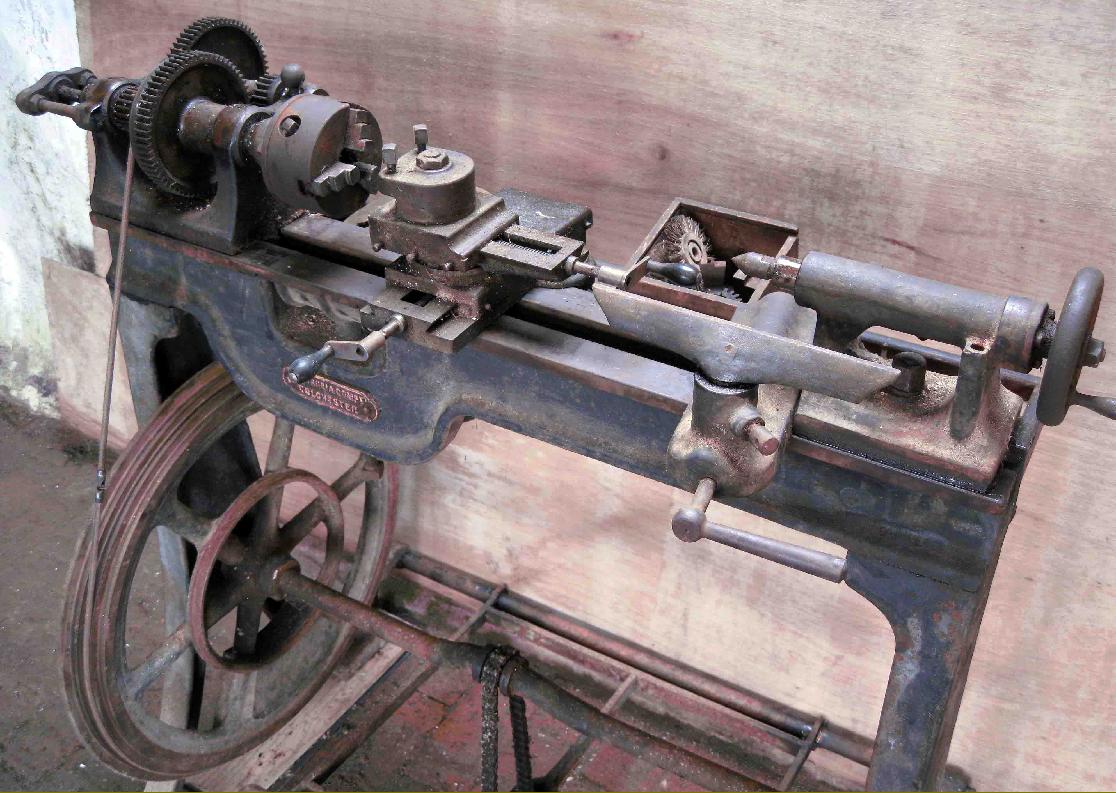
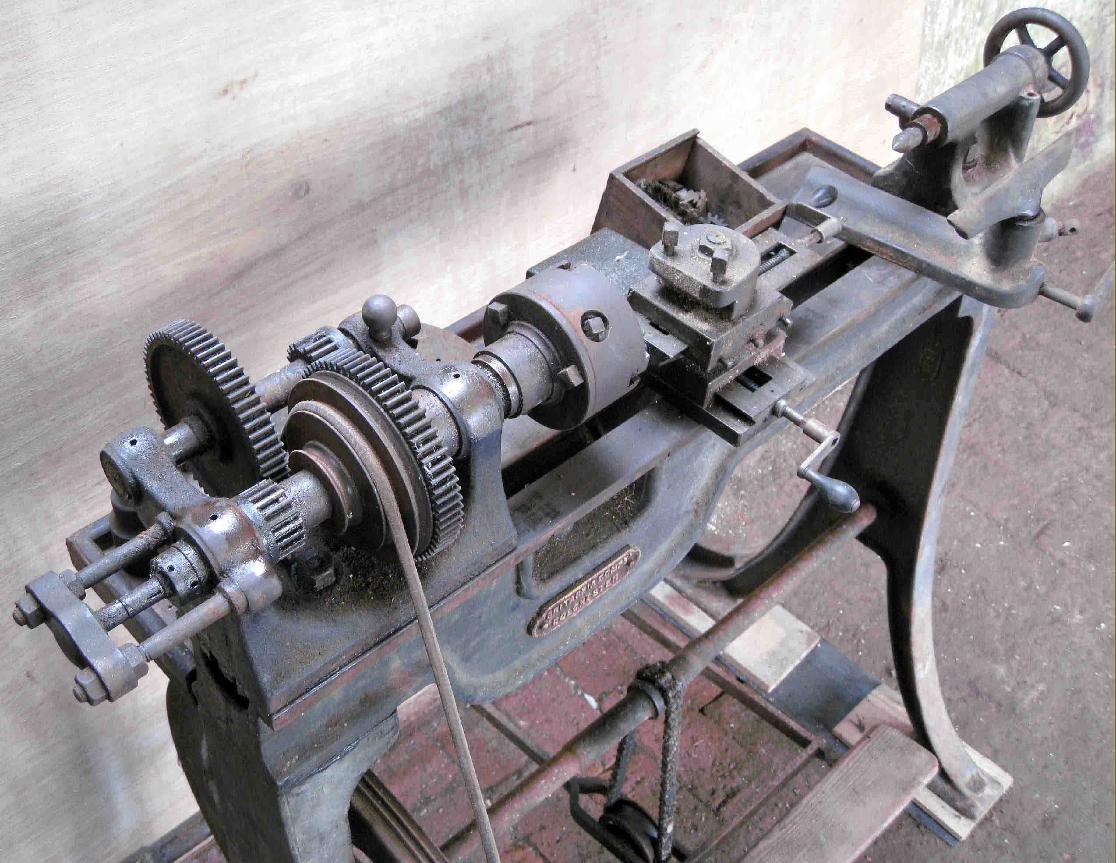
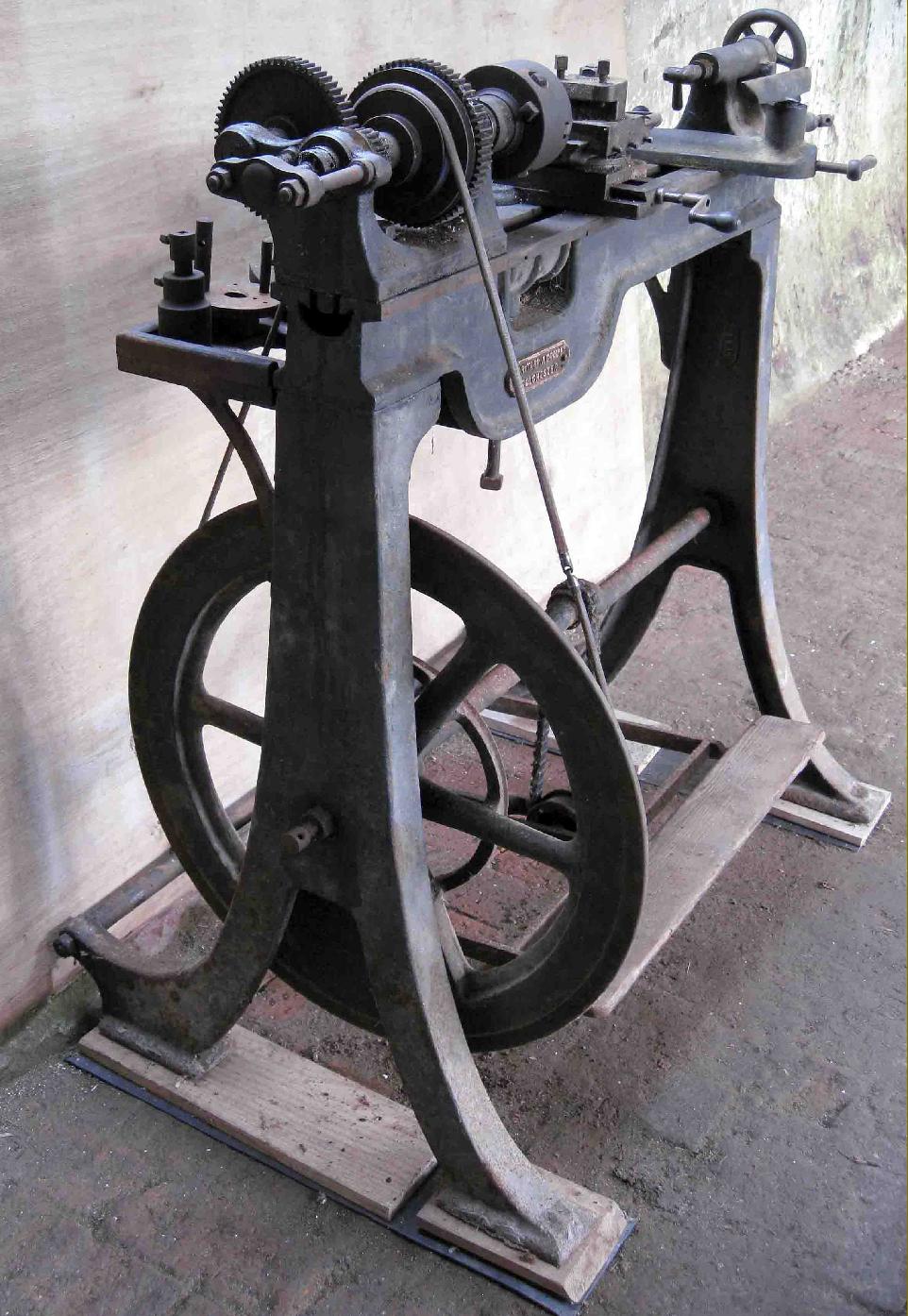
Britannia No. 14 3.5-inch centre height backgeared, gap-bed, screwcutting lathe on the maker's 20-inch diameter flywheel (treadle) stand and fitted with a (5-speed) light-duty "cord" drive. The drive from spindle to leadscrew - as on all screwcutting Britannia lathes - was through a tumble-reverse mechanism (in the language of the time a "reversing motion") a most useful system, forms of which were even seen on the comparatively primitive lathes of the early 1800s. Besides the leadscrew feed, a rack-driven feed was also fitted to the carriage and this, as on Britannia lathes of the time (and most others of the era) was of the "directly-geared" type and designed so that a fractional rotation of the long operating handle produced a disproportionately large movement linear of the carriage - rendering it useless for feeding the cutting tool by hand. However, as a means of quickly resetting the carriage between cuts it was ideal - and advertised by the company for that sole purpose. 4.75 inches wide and 3.75 inches deep the bed was only available, when first advertised, in a single length of 42 inches (although shorter examples have been found) - that allowed a maximum of 25 inches to be accommodated between centres. The generous gap admitted a piece of material up to 3.5 inches thick with a maximum diameter of 14.25 inches. 22 "as-cast" changewheels of 1/4" pitch were supplied to drive the leadscrew - that was connected to the apron by two gun-metal clasp nuts. The compound slide rest had no micrometer collars on the feed screws - although the swivelling top slide did carry markings for 50 degrees either side of its central position. In 1899 the price was £18 : 18s : 0d., but if taken as a bench lathe this fell to £16 : 5s : 0d. Britannia No. 14 photographs can be seen here
|
|
|
|
|
|
|
|
 |
|
|
|
|
|
|
Britannia No. 14 3.5" centre-height lathe
|
|
|
|
|
|
|
|
|
|
|
 |
|
|
|
|
|
|
Britannia 4-inch, 4.5-inch and 5-inch centre height backgeared, gap-bed, screwcutting No. 15 lathe on a single-flywheel treadle stand and fitted with a (5-speed) light-duty rope drive. Because the leadscrew feed also provided, when driven by the correct arrangement of changewheels, a slow-acting feed to the carriage, lathes of this type were advertised for many years as "self-acting". A conventional, directly-geared rack feed was fitted to the carriage which, like that on the No. 14, was not designed to allow the tool to be moved under hand guidance, but simple to reposition it quickly after a long cut. The bed was 6.125 inches wide, and 4.5 inches deep, and available in two lengths of 4 and 5 feet - which gave 30 and 42 inches between centres respectively. The gap allowed a maximum diameter of 16 inches to be swung - which might have been hard work considering the limited power available from the relatively light, single flywheel and primitive gut-drive belt - though for 21 shilling extra, a set of flat pulleys was offered which would have improved matters considerably. 22 changewheels of 1/4" pitch and with an as-cast finish were supplied for screwcutting; fully machined gear wheels were extra throughout the range but the engagement clasp nuts were of gun metal and properly arranged in a top and bottom pair. An interesting option - for £4 extra - was the provision of power sliding (a feed along the bed) and surfacing (across the ways) by a separate "backshaft" which ran down the back of the bed. How the drive to this was arranged is not entirely clear - it is known that a worm wheel was used but no pictures appear in any of the sales literature; however, a set of connecting gears driving across the width of the bed, from either the headstock or tailstock end of the leadscrew, was the normal way of arranging this once common feature. The compound slide rest had, like many competing makes, no micrometer collars on the feed screws - although the swivelling top slide did carry degree markings for setting the angle correctly. In 1899 the price for a 4 foot backgeared and screwcutting 4-inch model on the treadle stand was £25 : 4s : 0d. , for the 4.5-inch centre height version £26 : 15s : 0d and for the largest, 5-inch model, £28 : 7s : 0d. The 5 foot bed was an extra £2.
|
|
|
|
|
|
|
|
 |
|
|
|
|
|
Above and below - the 5-inch and 6-inch centre height backgeared, gap-bed, screwcutting Britannia No. 16 lathe on a twin-flywheel treadle stand and fitted with flat-belt drive - both this and the bolt-on leadscrew-hanger bearings distinguishing it from other Britannia lathes of the same capacity. Two bed lengths were offered, of 5 and 6 feet, which gave 35 and 46 inches between centres respectively. This was the smallest of the firm's "serious" lathes (the flat belt could transmit a reasonable amount of power) and was available either on the stand illustrated or with a separate countershaft for drive by "overhead or steam power". The bed was 7 inches wide (but only 5.5 inches deep) and carried a detachable gap 9 inches wide and 5.25 inches deep - a useful size for a variety of general work, but hard on the poor apprentice who had to provide the motive power in a workshop without an engine. The headstock spindle could be ordered with either hard-steel or gunmetal bearings and was sized differently for the two centres heights: the 5-inch lathe carried a thread 11/4 inches in diameter whilst that fitted to the 6-inch version was all of 1/8" larger - which, for the tiny difference it made, could hardly have been worth effort of tooling up for. A set of 22 changewheels - of 1/4" pitch - were supplied for screwcutting, with the clasp nuts of gun metal and arranged in a clamping pair - unlike many other (relatively) inexpensive lathes where only one was fitted, with the thrust taken on an opposing, plain pad. Like the smaller No. 15 (and all the larger lathes) the option was offered of power sliding and surfacing by a separate "backshaft" running down the rear of the bed. The compound slide rest had no micrometer collars on the feed screws - although the swivelling top slide did carry degree markings. The lathe was relatively heavy, the 6-inch centre, 6 foot bed model tipping the scales at a little over half a ton. In 1899 the price for a 5-inch centre height "short-bed" backgeared and screwcutting model on the treadle stand was £35 : 14s : 0d., with an extra charge of some £4 : 14s : 0d. if the 6-inch throw "long-bed" version was required. For those brave enough to risk lengthening a 5-inch deep bed even further, a modest charge of £2 was charged for every extra foot of length ordered. If the maker's stand was not needed, the basic lathe could be supplied on cast-iron legs (standards), and with a wall or ceiling-mounting countershaft, for a saving of thirty shillings. A tailstock arranged with a separate base plate that allowed the top section to be set over for taper turning was an extra £1.
|
|
|
|
|
|
|
 |
|
|
|
|
|
|
Britannia No. 16 Lathe on the maker's twin-flywheel treadle stand. The detached gap piece clearly reveals the generous size of the 9-inch long , 5.25-inch deep gap.
|
|
|
|
|
|
|
|
|
|
|
|
|
|
|
Home Machine Tool Archive Machine Tools For Sale & Wanted E-MAIL Tony@lathes.co.uk
Britannia Lathes 14, 15 & 16 Lathes Nos. 2, 3, 4, 5 & 6 Lathes Nos. 8 & 13 Lathes 14, 15 & 16 Lathes Nos. 17, 18, 19, 20, 21, 22, 23, 25 & 29 Shapers & Planers Millers Britannia Home Ornamental Turning Attachments Lathe No. 3 Photographs Early 1930s Model
|
|
|
|
|
|