Weidenhoff Lathe U.S.A.
Continued on page 2
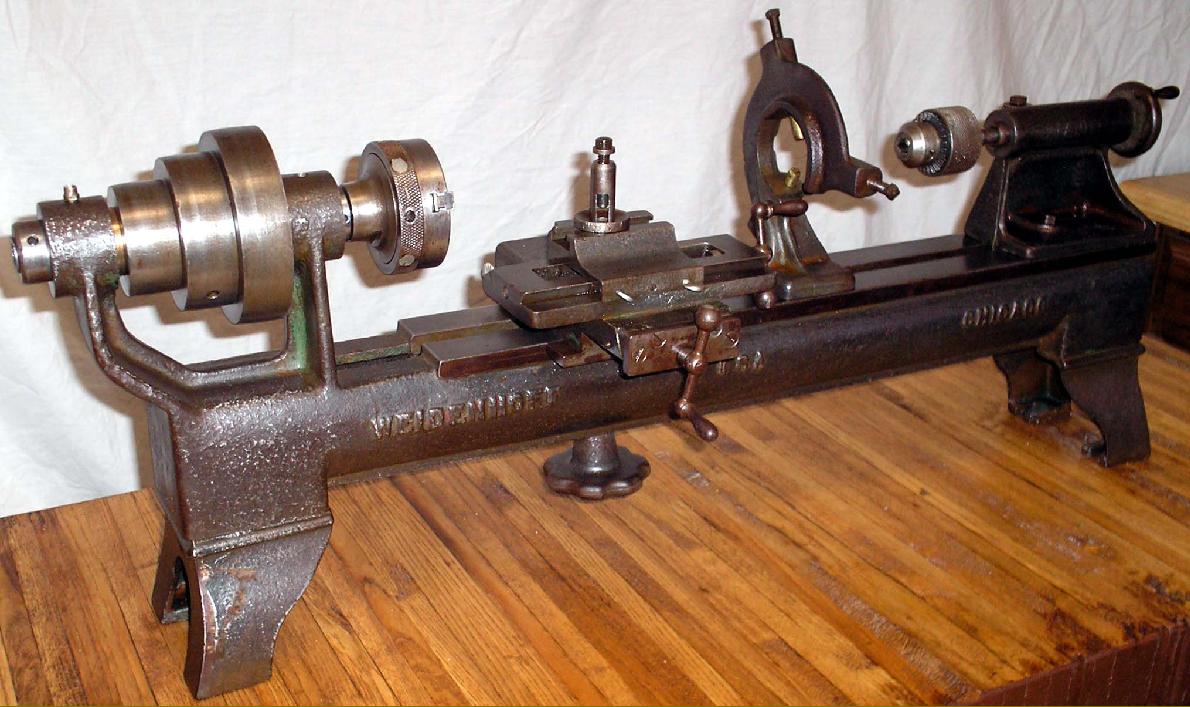
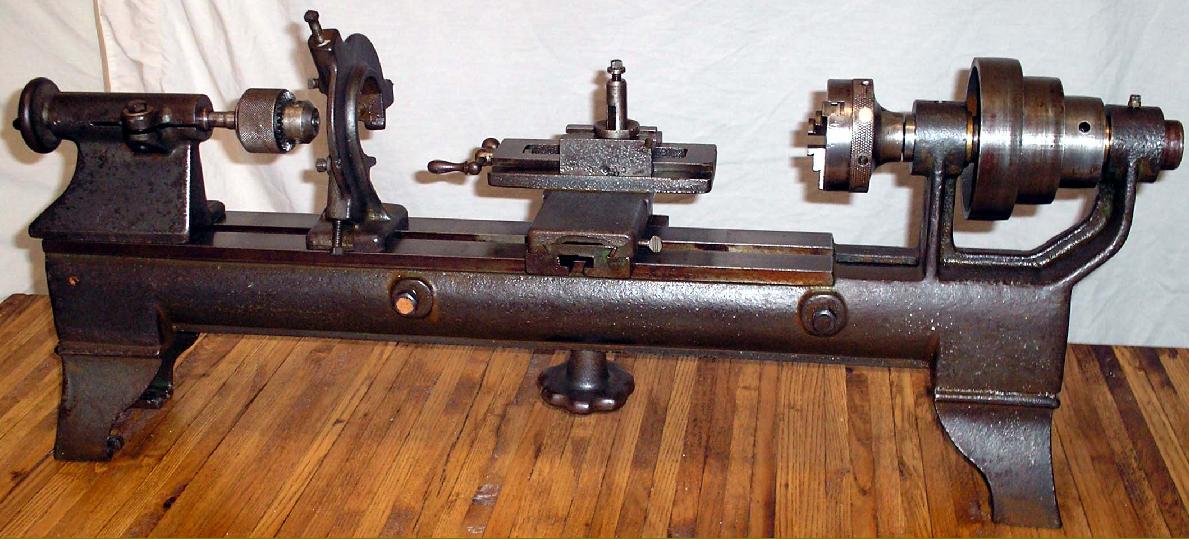
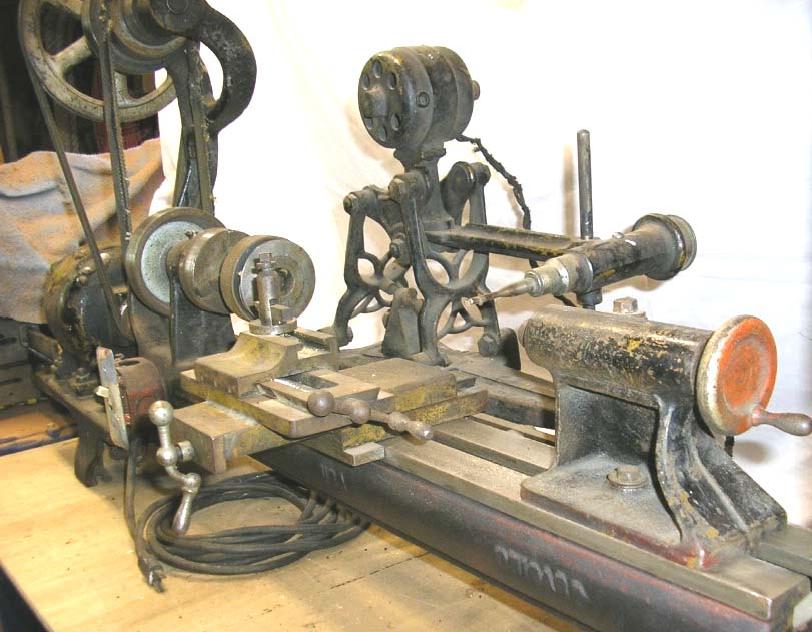
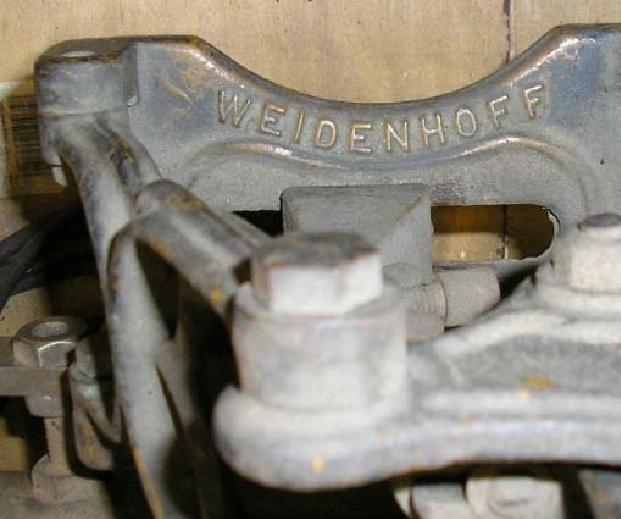
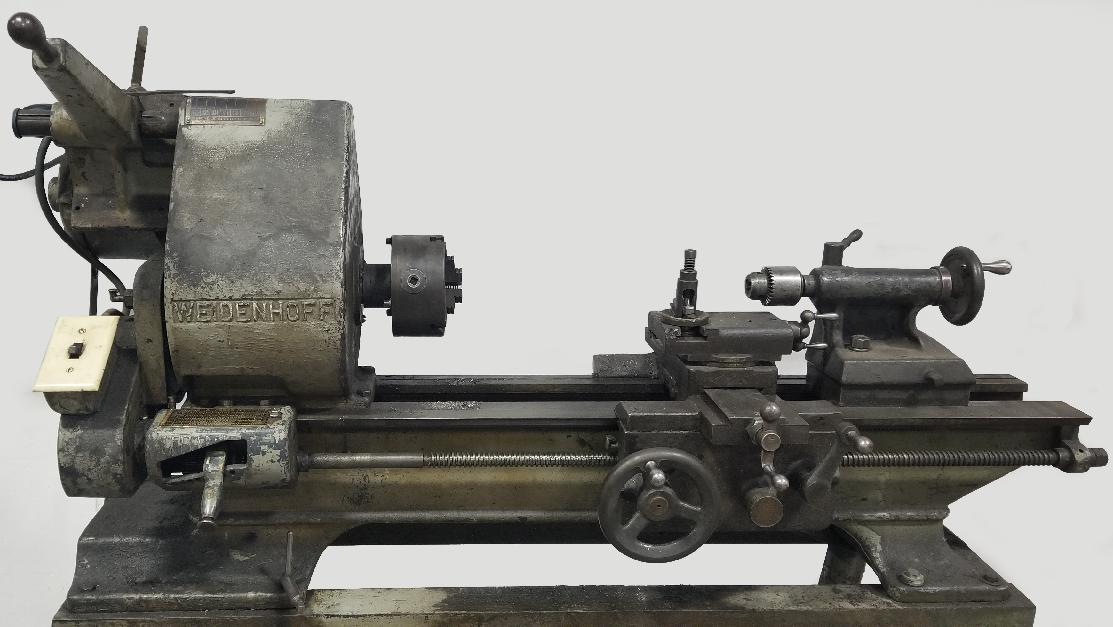
Weidenhoff appear to have offered a number of lathes during the 1920s and 1930s, these including the small plain-turning bench model shown below and also the friction-drive Schaffner, this carrying the (easily-changed) headstock cover with a cast-in Weidenhoff name strip.
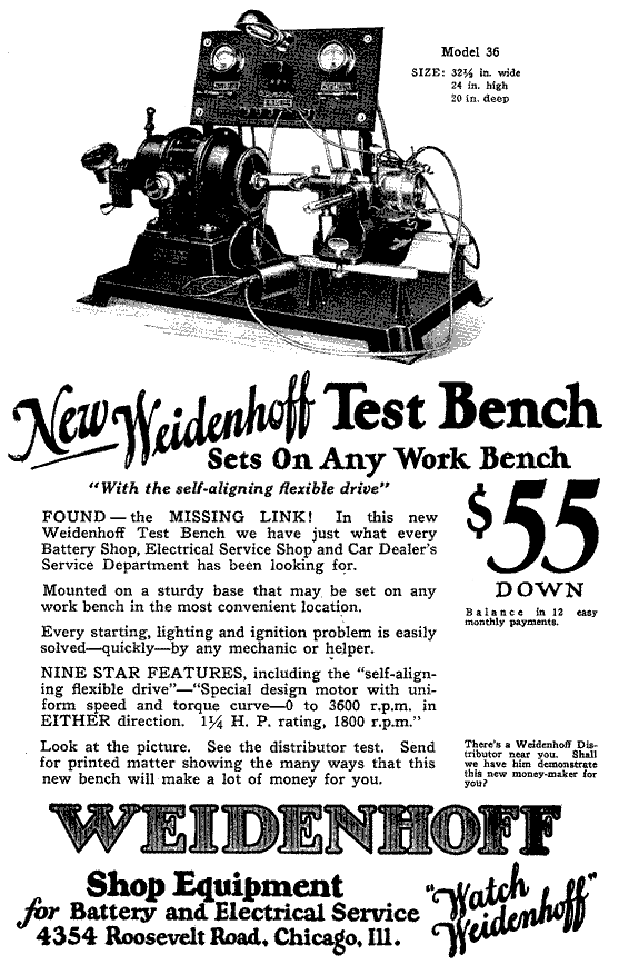
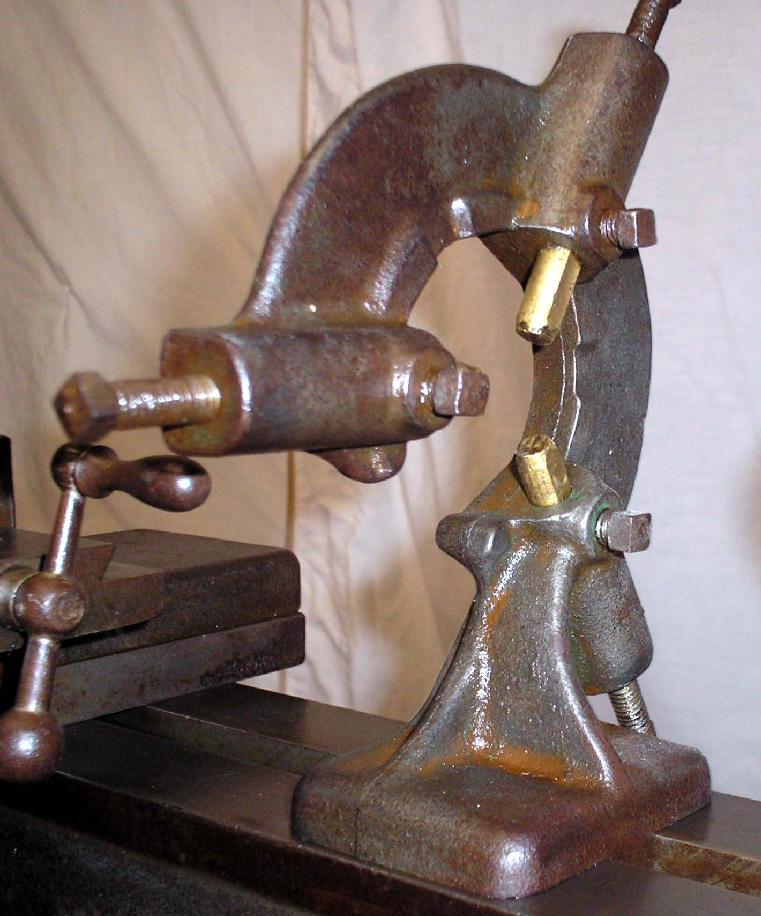
Joseph Weidenhoff was bases first at 4354 Roosevelt Road, Chicago, Illinois and, during the early years of the 20th century, their 3.5" x 16" lathe was a plain-turning machine was typical of a once-popular, lighter and less-expensive design of bench lathe intended for simple turning jobs in the home or small professional workshop. The Weidenhoff lathe could also carry various accessories to extend its versatility in the automobile electrical-repair business - one in particular being of especially ingenious design and construction and intended for the (apparently semi-automatic) undercutting the mica segments on an armature once it had been turned true.
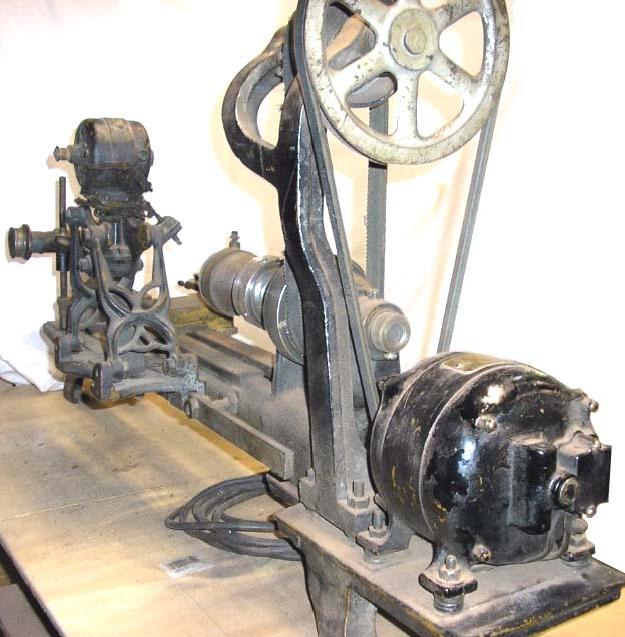
The machine could also be supplied with a built-on countershaft unit together with a separate powered attachment to run the mica undercutting attachment.
So successful were the company in the automobile electrical field that, in 1938, a Federal Trade Commission was forced to issue a directive banning them from fixing prices and colluding with competitors to rig the market. At least part of Weidenhoff's business was moved to Iowa, in 1946, when the company bought a plant on the east side of Algona, eventually selling out their interests, in 1956, to Snap-on-Tools.
Whilst of sound construction for the time, and in no way a cheaply-built lathe, the Weidenhoff would have offered little competition to the established contemporary American makers of fine-quality bench lathes such as Levin, Bottum, American Watch Tool Company, B.C.Ames, Bottum, Hjorth, Potter, Pratt & Whitney, Rivett, Wade, Waltham Machine Works, Wade, Pratt & Whitney, Rivett, Cataract, Hardinge, Elgin, Remington, Sloan & Chace, W.H.Nichols, Crystal Lake and (though now very rare) Bausch & Lomb, Frederick Pearce, Van Norman, Ballou & Whitcombe, Sawyer Watch Tool Co., Engineering Appliances, Fenn-Sadler, "Cosa Corporation of New York" and UND.
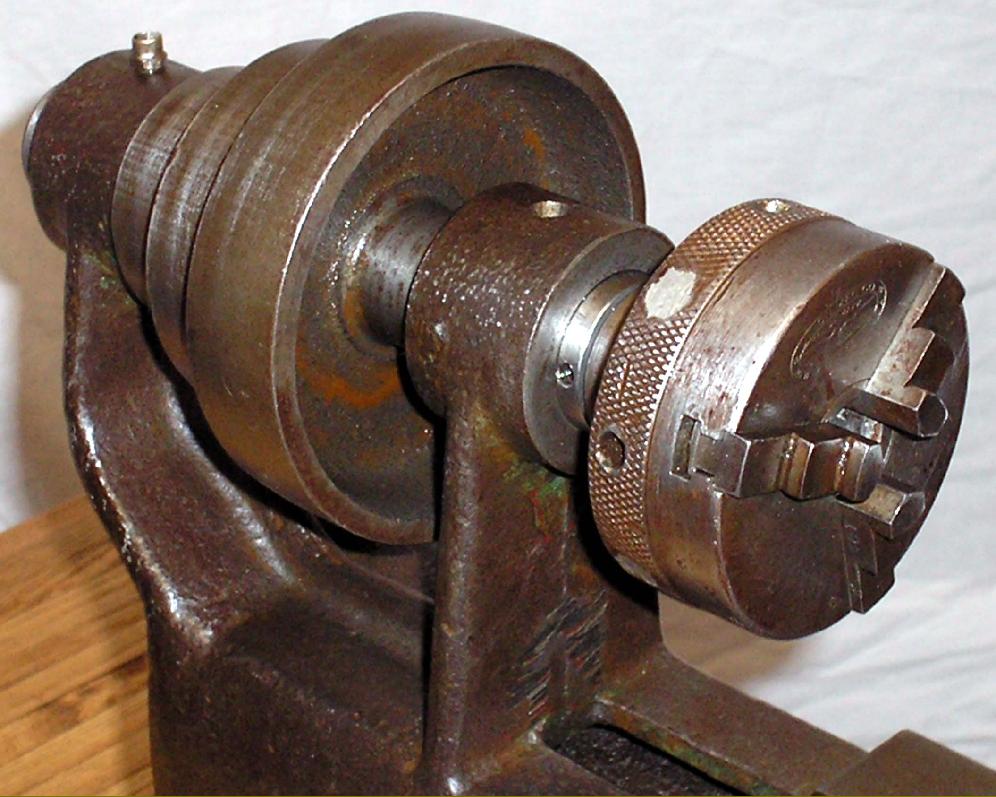
Cast as one with the heavy bed the headstock was, by contrast, of particularly light construction with unbraced posts of the slenderest kind to carry the bearings. The cross slide was fitted with an enclosed and protected cross-feed screw while the top slide was of the traditional long-travel kind necessary with this type of lathe - it being the only means of providing a longitudinal tool feed. In keeping with its humble origins neither feed screw had a micrometer dial (though that was not unusual at the time on many small lathes) and the tailstock and headstock centres were either No. 1 Morse taper, or of a similar size in a Jarno.
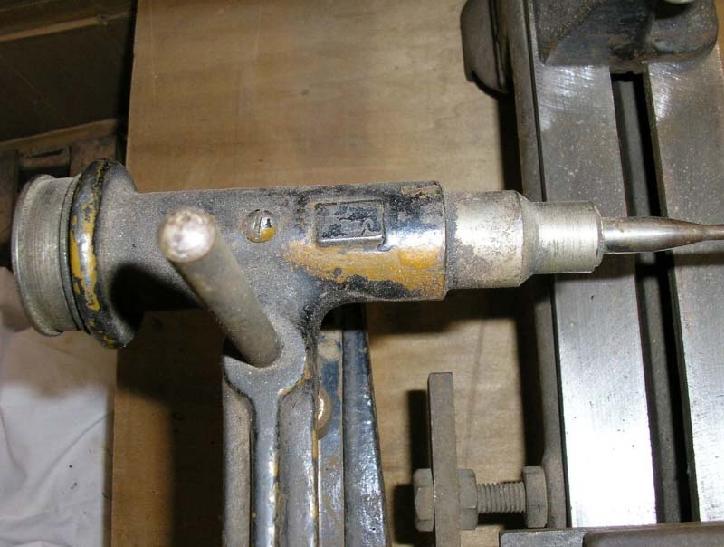
Located by a simple tennon fitting into a central slot that ran down the centre of the bed, the tailstock lacked any form of gib strip, or other adjustment, to compensate for fit or wear.
If any reader has a Weidenhoff lathe the writer would be pleased to hear from you.