|
 |
 |
 |
 |
 |
 |
 |
 |
 |
 |
 |
 |
 |
 |
 |
 |
 |
 |
 |
 |
 |
 |
 |
 |
 |
 |
|
|
|
|
|
|
|
|
|
|
|
|
|
|
|
|
|
|
|
|
|
|
|
|
|
|
|
|
|
|
|
|
|
|
|
 |
|
|
|
|
|
|
A stark with its headstock pulley arranged in reverse of that normally found and with an unusual mounting on the flat end of the lathe bed - a small compound table set up for use as a horizontal milling machine complete with a swivel dividing head and tailstock - and with the cutter carried on an extension of the headstock spindle; the bevel-gear operated knee elevation was a particularly compact and well-executed design. The original version of this attachment can be seen here.
|
|
|
|
|
|
|
|
|
|
 |
|
|
|
|
|
The Stark lathe, like many in its class, could be fitted with traditional "chase screwcutting" where a T slot, which ran down the back of the bed, held supports which carried a sliding shaft to which was attached a toolholder. Above the shaft, at the headstock end of the lathe, was a "master thread" driven by a selection of gears from the end of the main spindle in such a way that its threading range was extended by a multiple of six. A follower (with an insert carrying a few threads of the same pitch) pressed against the master thread and transmitted its form to the workpiece via the sliding shaft and a threading tool held in an adjustable slide rest. Whilst this system produced absolutely accurate threads, and was especially suited to delicate operations on thin-wall tubes used to construct such items as microscopes, the length of thread that could be cut, and the number of threads per inch or mm, depended upon the availability of the appropriate master. Similar arrangements can be seen on the pages devoted to the American makers Goodell-Pratt, Pratt & Whitney, Ames, Potter, Waltham Machine Works and Wade.
|
|
|
|
|
|
|
|
 |
|
|
|
|
|
|
|
|
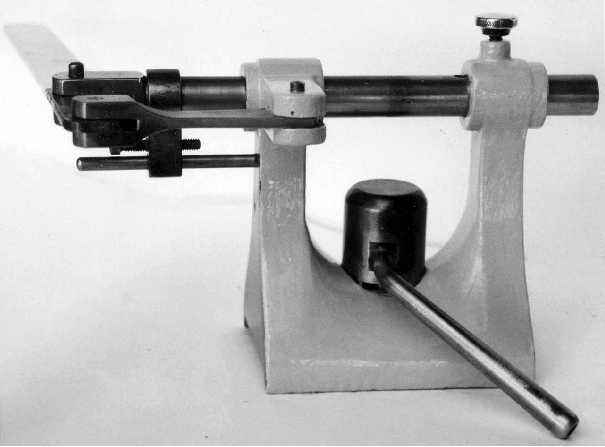
Swing Tailstock or Jewelling Tool: Originally designed for rapidly opening holes in clock plates to receive jewels the unit was developed to enable it to accurately finish bore holes to receive parts that might vary slightly in diameter from piece to piece. The aim of the device was to ensure the highest possible accuracy by holding, between a gauge plate and gauging finger at the top of the unit, the actual jewel (or lens, etc.) that was going to be fitted into the bored hole. If the setting instructions were followed the bored hole would be exactly the same size as the part held by the gauging device.
|
|
|
|
|
|
|
|
|
|
|
|
|
 |
|
|
|
|
|
|
|
|
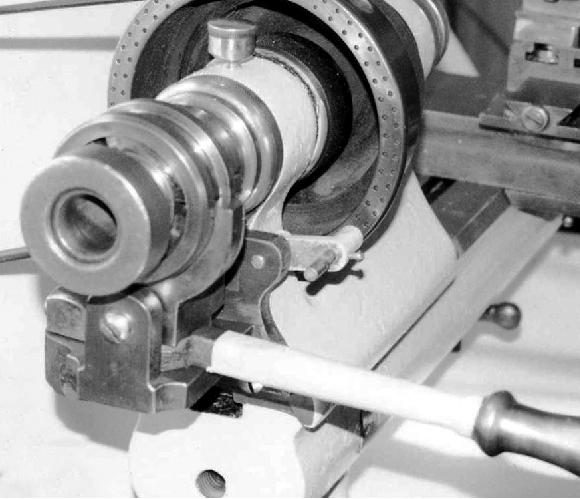
Filing and Sawing Attachment: This useful device (full-sized versions were a popular addition to toolrooms until the 1960s) clamped to the bed and was driven by an eccentric held in the end of the headstock spindle. Files and saws up to 4" long could be held in the top yolk - with the possibility of mounting longer but unsupported ones by using a holder in the lower slide. The table was 4.5" in diameter and provided with a scale marked in degrees so that it could be set over at any angle. Fittings were available to mount the unit on all but the No. 5 lathe.
|
|
|
|
|
|
|
|
|
|
|
|
|
 |
|
|
|
|
|
|
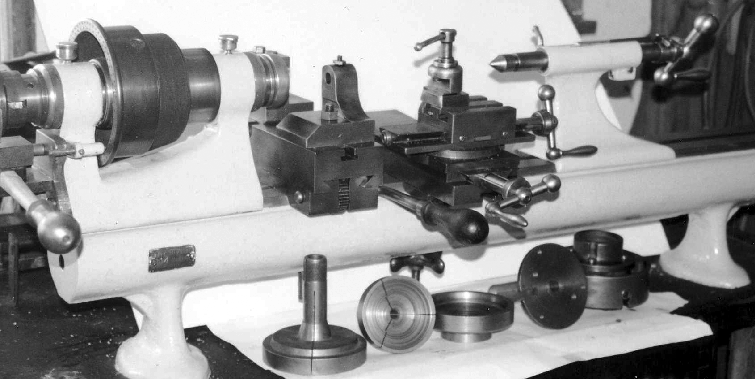
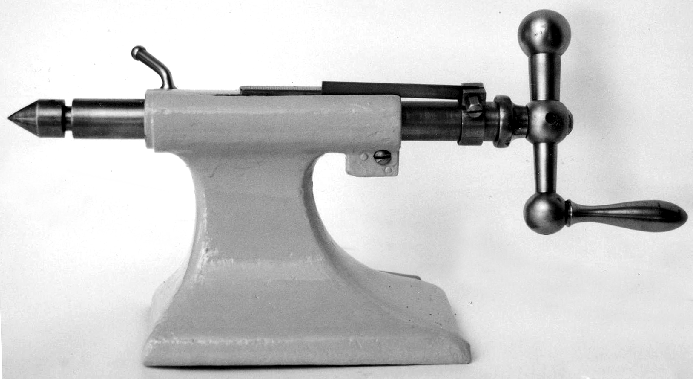
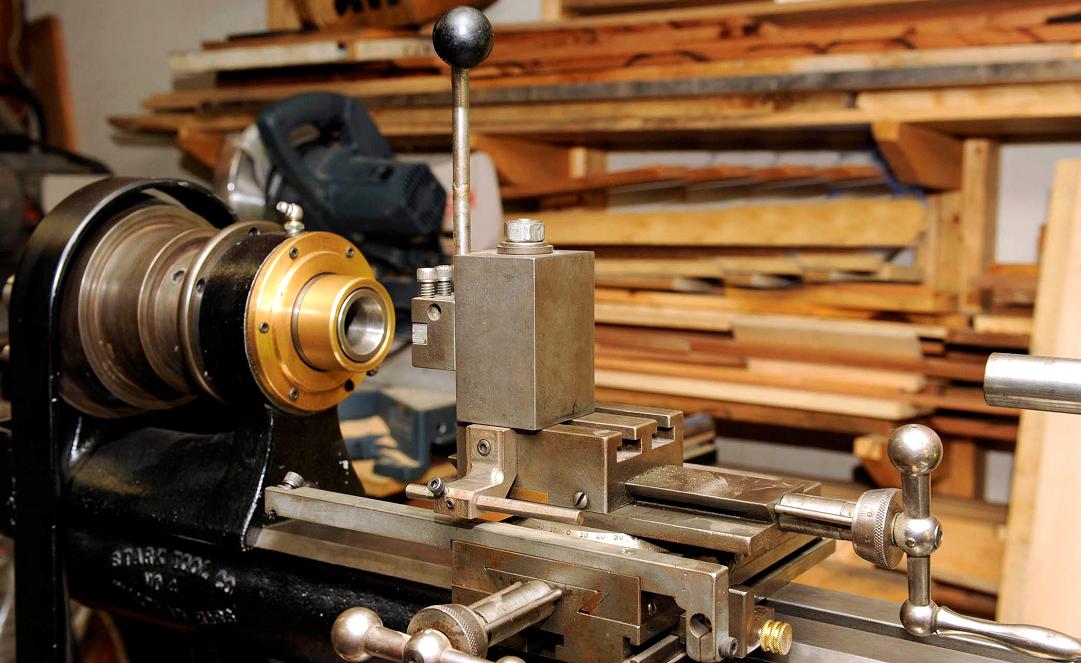
Stark No. 4 Lathe with lever-action collet closer, lever tailstock and a lever-action cut-off or "Forming Slide".
|
|
|
|
|
|
|
|
|
|
|
 |
|
|
|
|
|
|
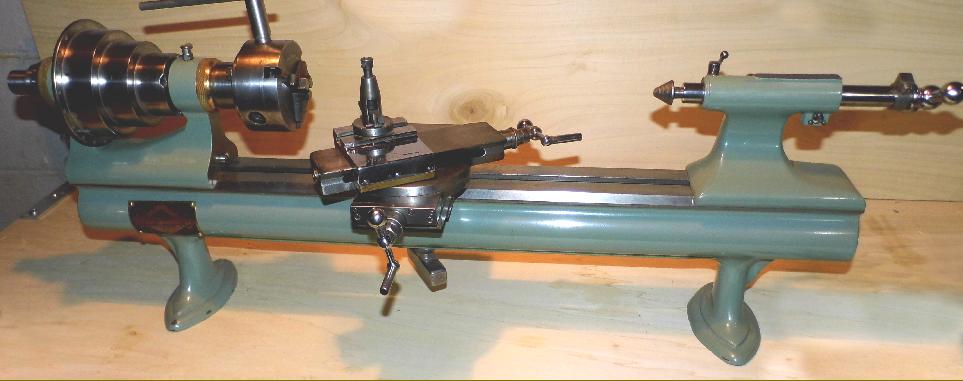
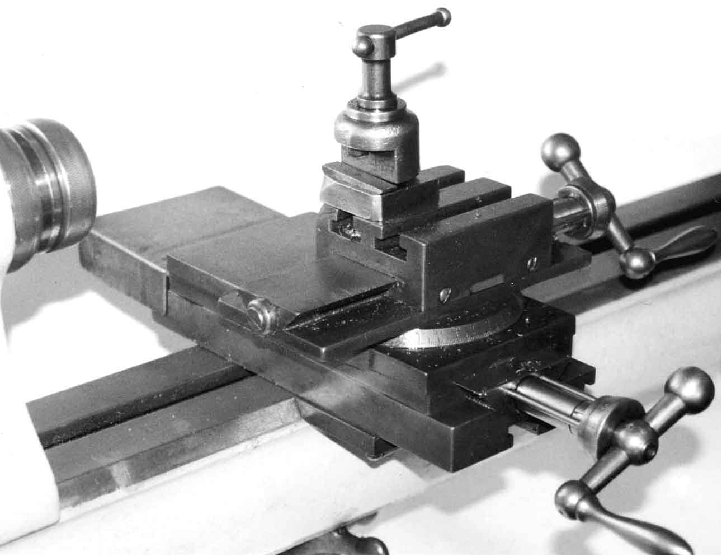
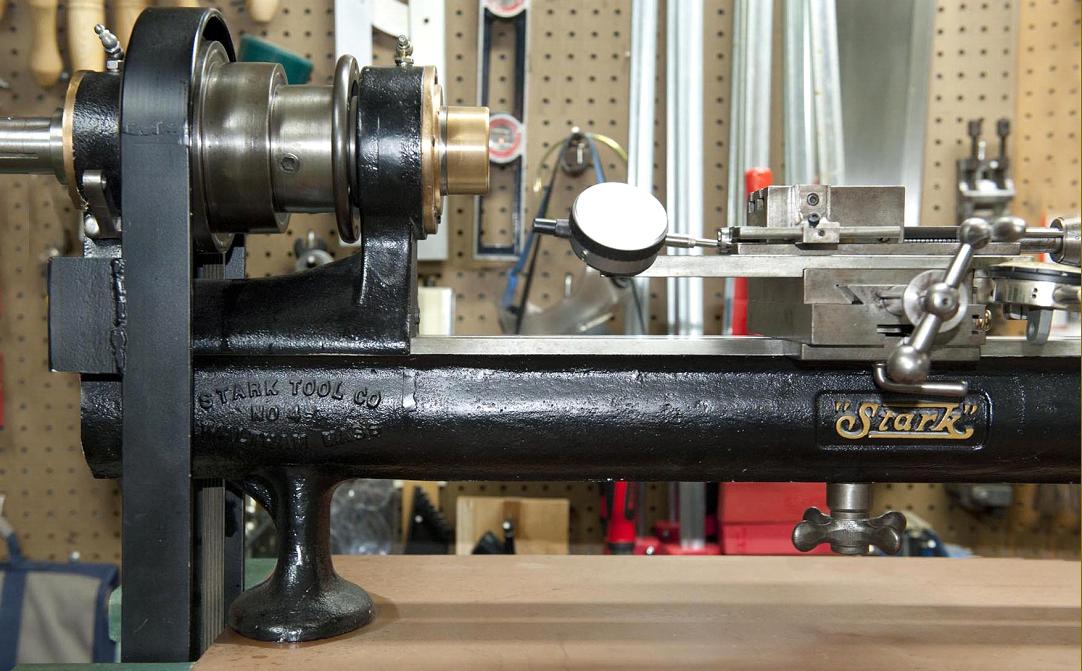
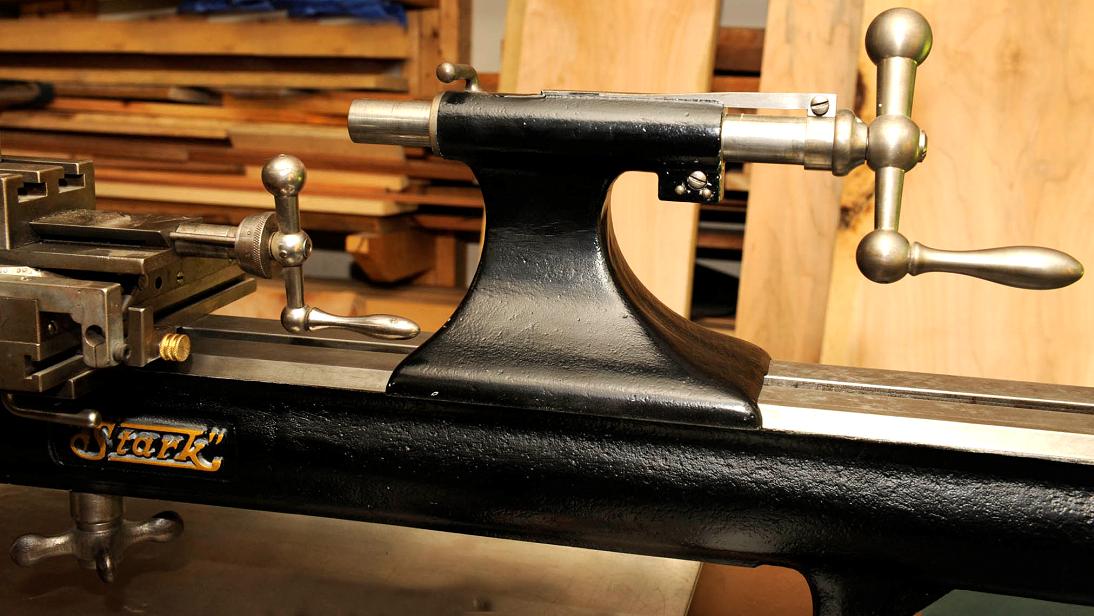
Stark No. 4 Lathe with Draw-in collet closer, tapped-hole faceplate, compound slide rest with a boring-tool holder - and a tailstock fitted with a barrel depth stop. The bed, with the T-slotted front is of the type to accept the "Chase" screwcutting attachment whilst the left-hand foot, with its braced extension to the end of the bed, shows that this model was also equipped to mount the milling or filing attachments.
|
|
|
|
|
|
|
|
|
|
|
|
|