|
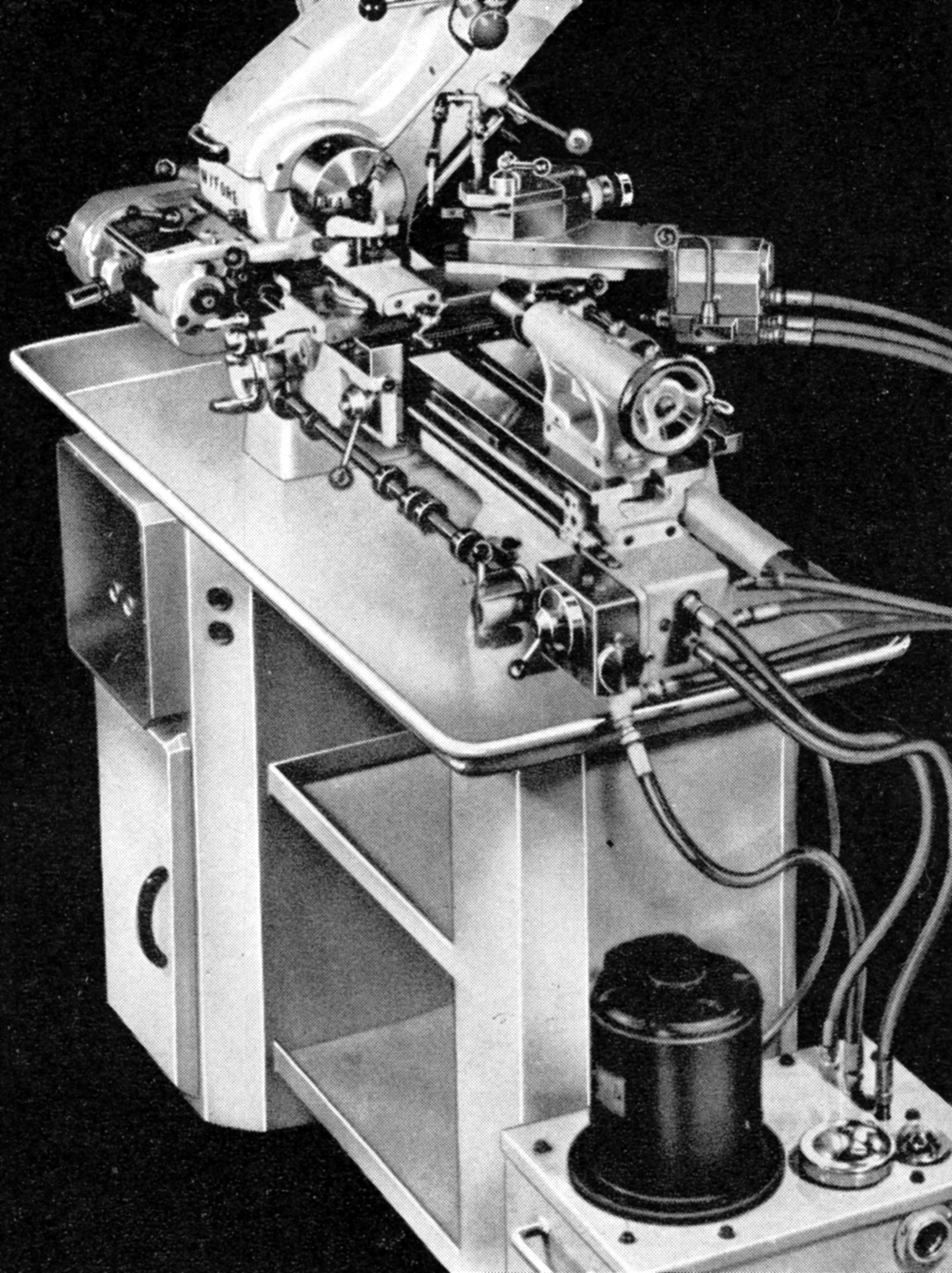
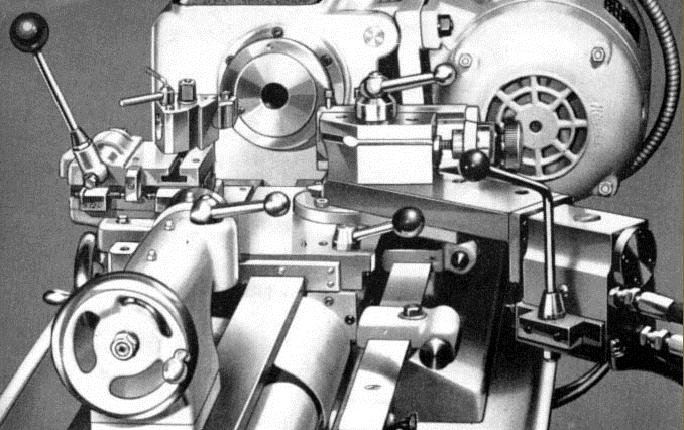
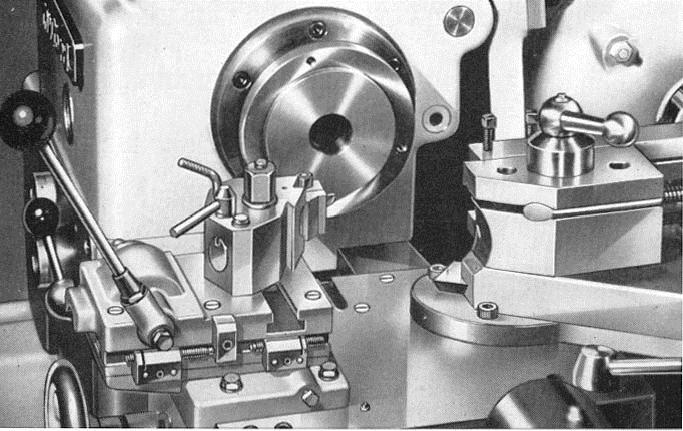
A hydraulic copying lathe, the Myford Mini-Kop was, in its day, widely used by both industry and technical training institutes and also exported - especially to the USA and Canada. The lathe was built in four versions: the rare Model 1 of which just 50 were built, the Model 1a and the Models 3 and 3a. The first versions of the MiniKop were built in two versions: one a heavily modified Super 7B and the other a similarly-altered ML7 Tri-Leva - both being multi-function machines able to perform as an ordinary screwcutting of hydraulic copying lathe. The first true, dedicated Mini-Kop, constructed only for hydraulic copying and incapable of being used as an ordinary centre lathe, was the Model 1A . The Models 3 and 3A were almost identical - apart from their spindles and the fitting of single-cut, Automatic-cycle control on the 3A.
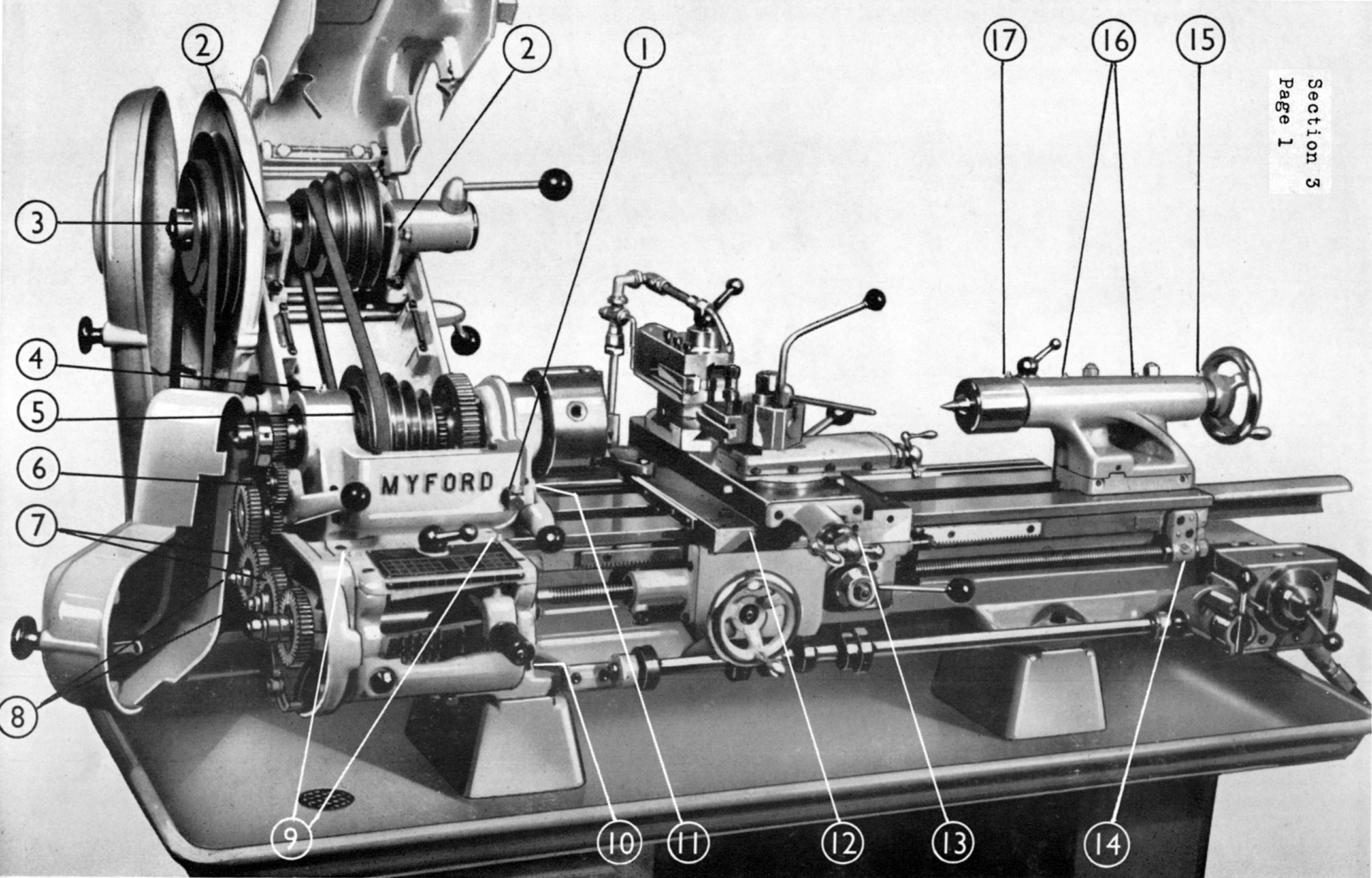
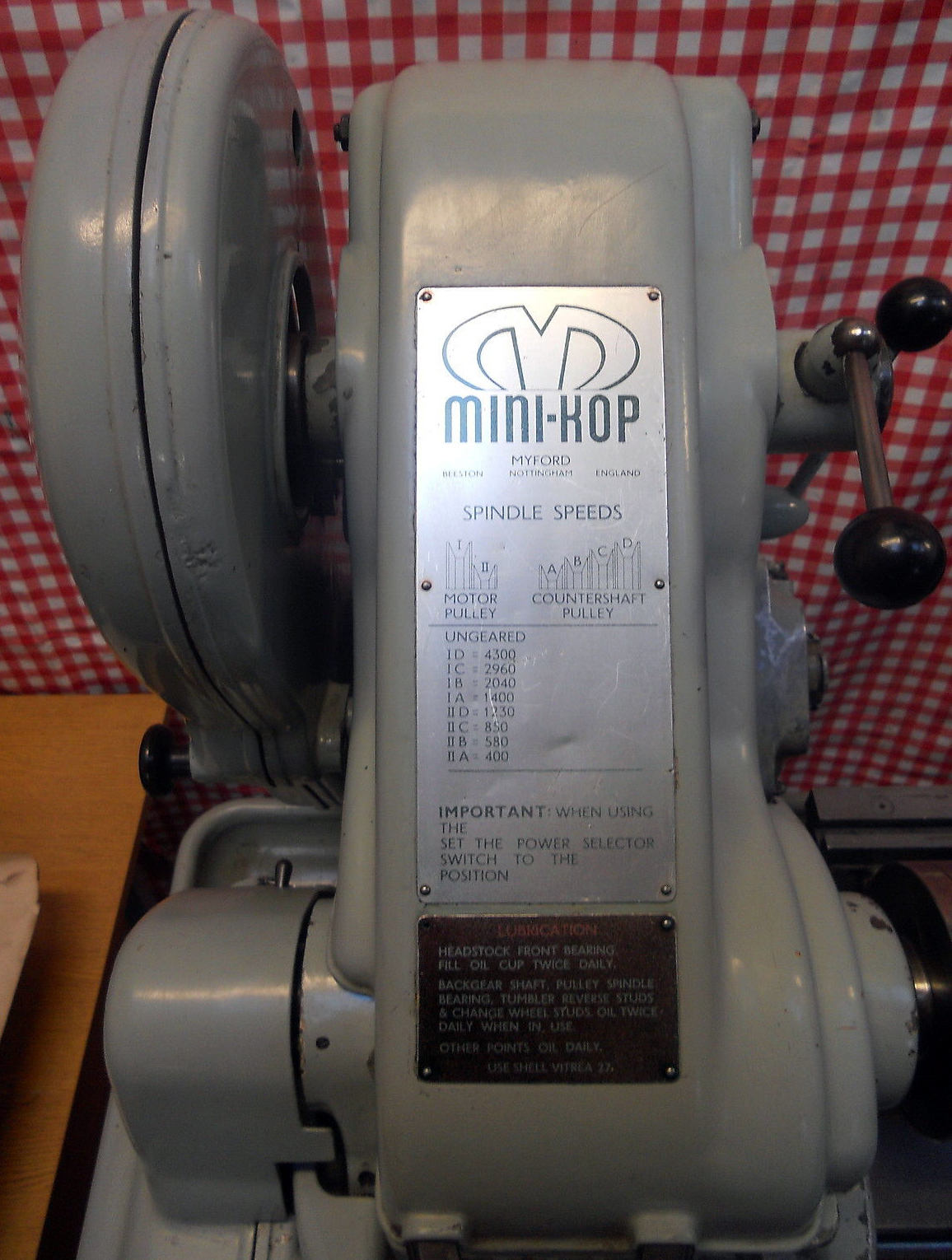
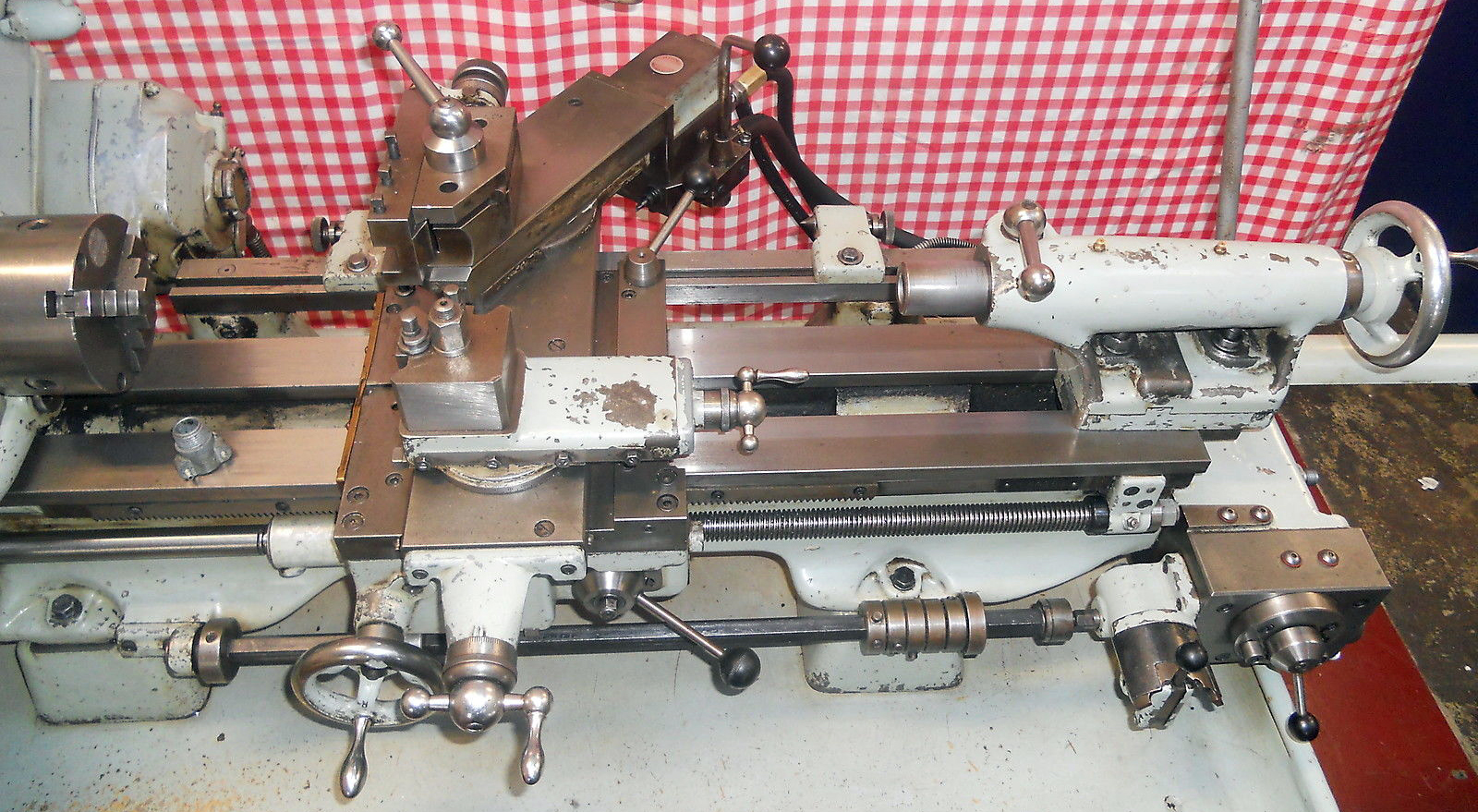
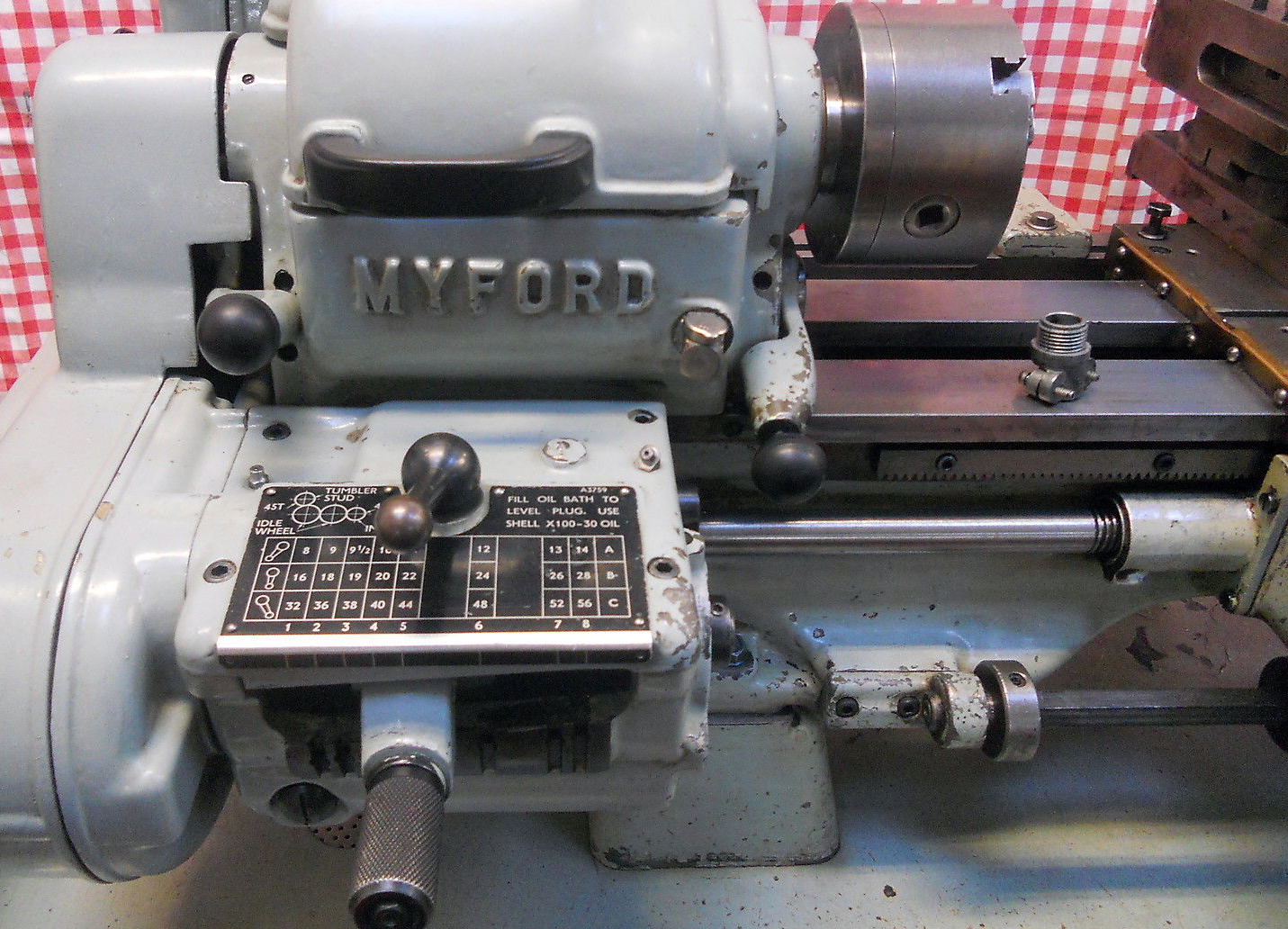
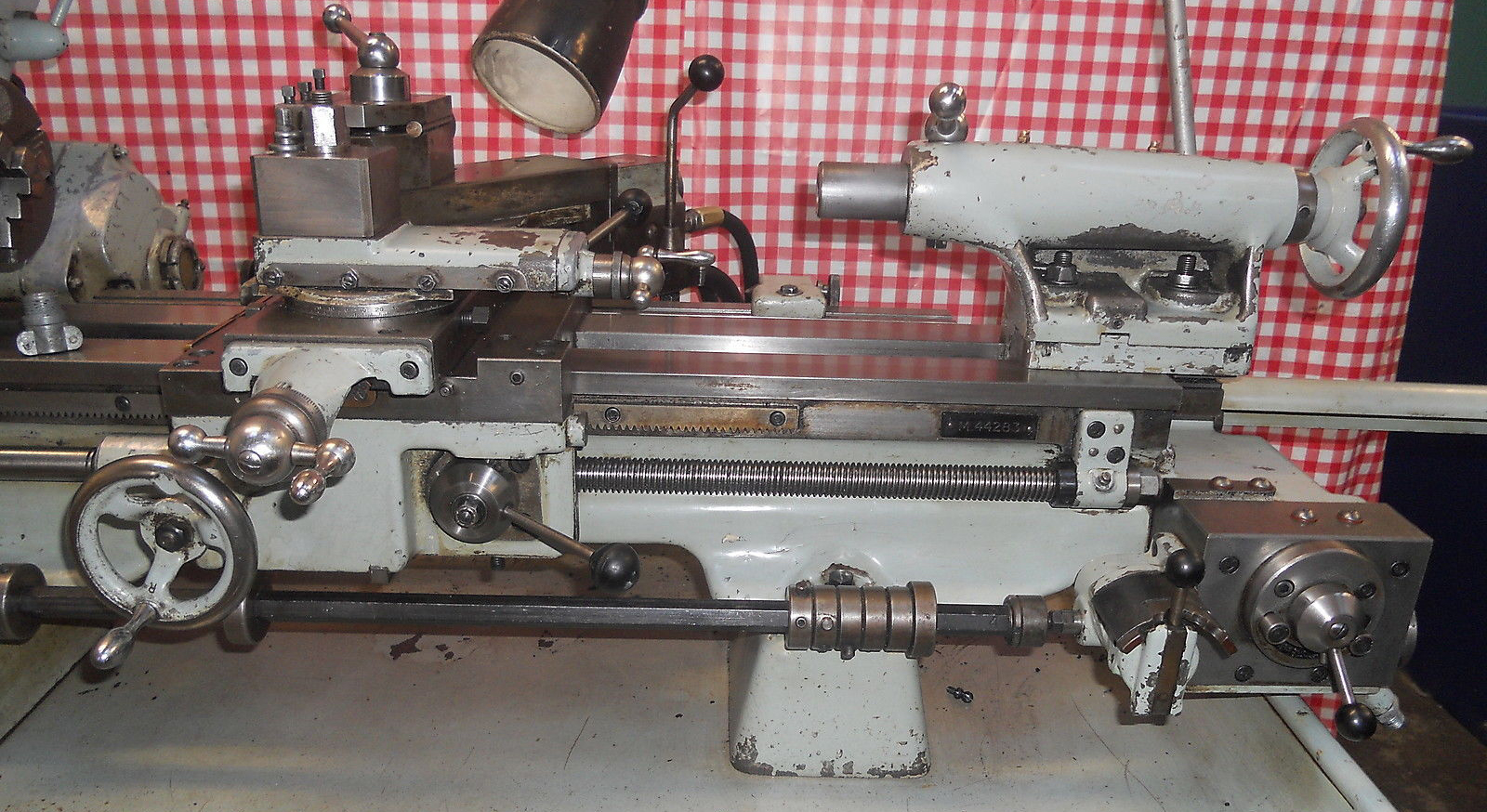
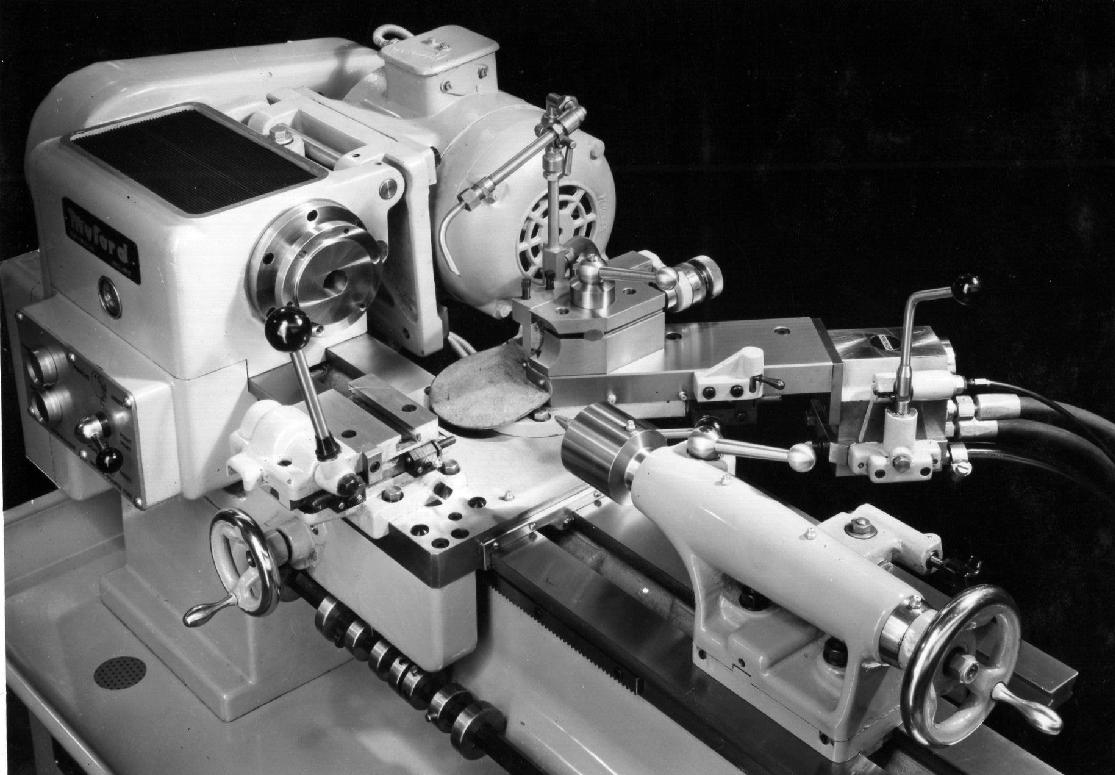
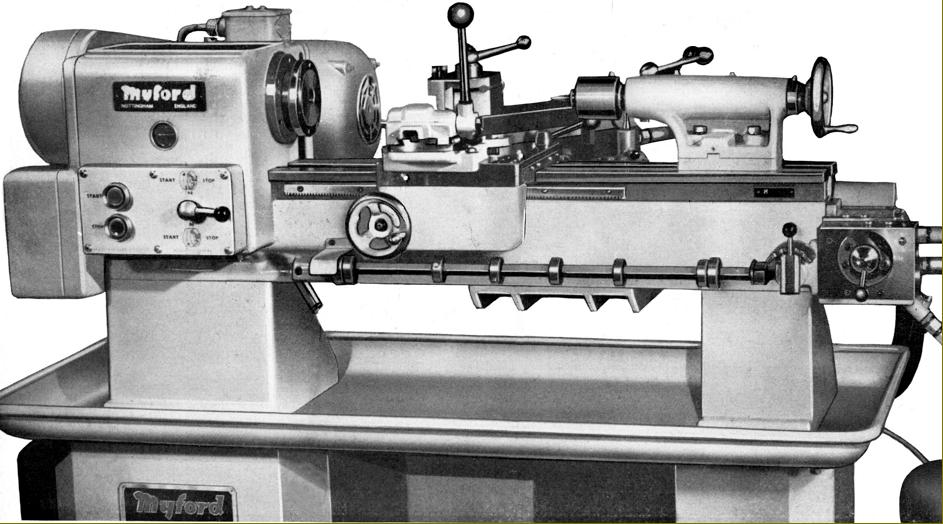
A complete, unmodified Model 1 Mini-Kop has only recently been discovered (many examples must have been converted back into ordinary centre lathes) but the parts are easily spotted: the bed had bosses cast into its front surface by the feet to accept holders for the automatic knock-off rod; the Super-7-style cross slide had no T-slots and both front and rear mounting holes to accept the ordinary top slide or a special toolholder; the apron was different and the controls transposed (the carriage handwheel to the left and the clasp nuts to the right) and the saddle fitted with a raised section at its right-hand end. Although the headstock appears to have been standard - with the ordinary adjustable bronze front spindle bearing, ball races at the rear and incorporating backgear - the speeds were radically different with the direct-drive belt range spanning a low of 400 to a high of 4300 r.p.m. - the highest being over twice as fast as a standard machine.
Intended for serious work, the Model 1 was beautifully made - and very expensive. In 1959, when an ordinary Super 7B was £120, the Mini-kop Model 1 was listed at a breathtaking £696 in basic, ready-to-run form. Few can have been sold, those surviving being, unsurprisingly, few in number.
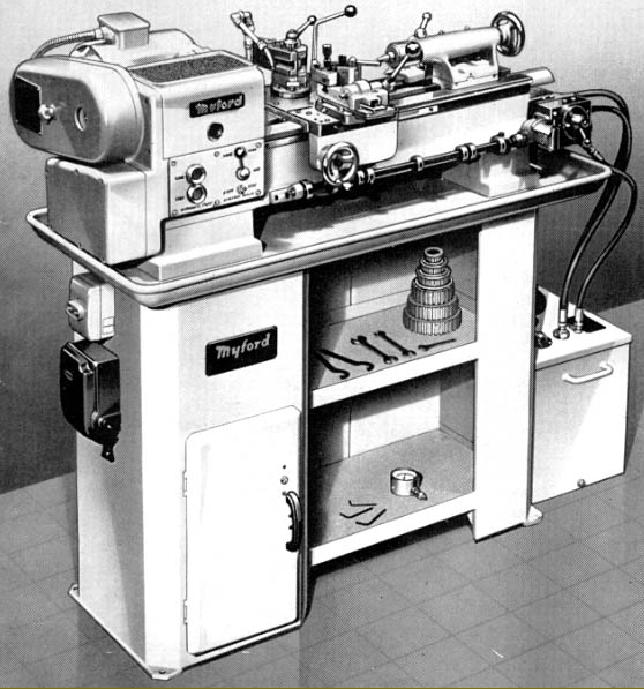
Easily distinguished from other versions by its standard Myford "Industrial" cabinet stand (with a left-hand cupboard and two open shelves) the Model 1a is relatively common - whereas the quite different, more highly developed 3a (there was no model 2) was fitted to a custom-made stand with a very deep chip tray, a plain front, no storage capacity and a separate control consul at the tailstock end.
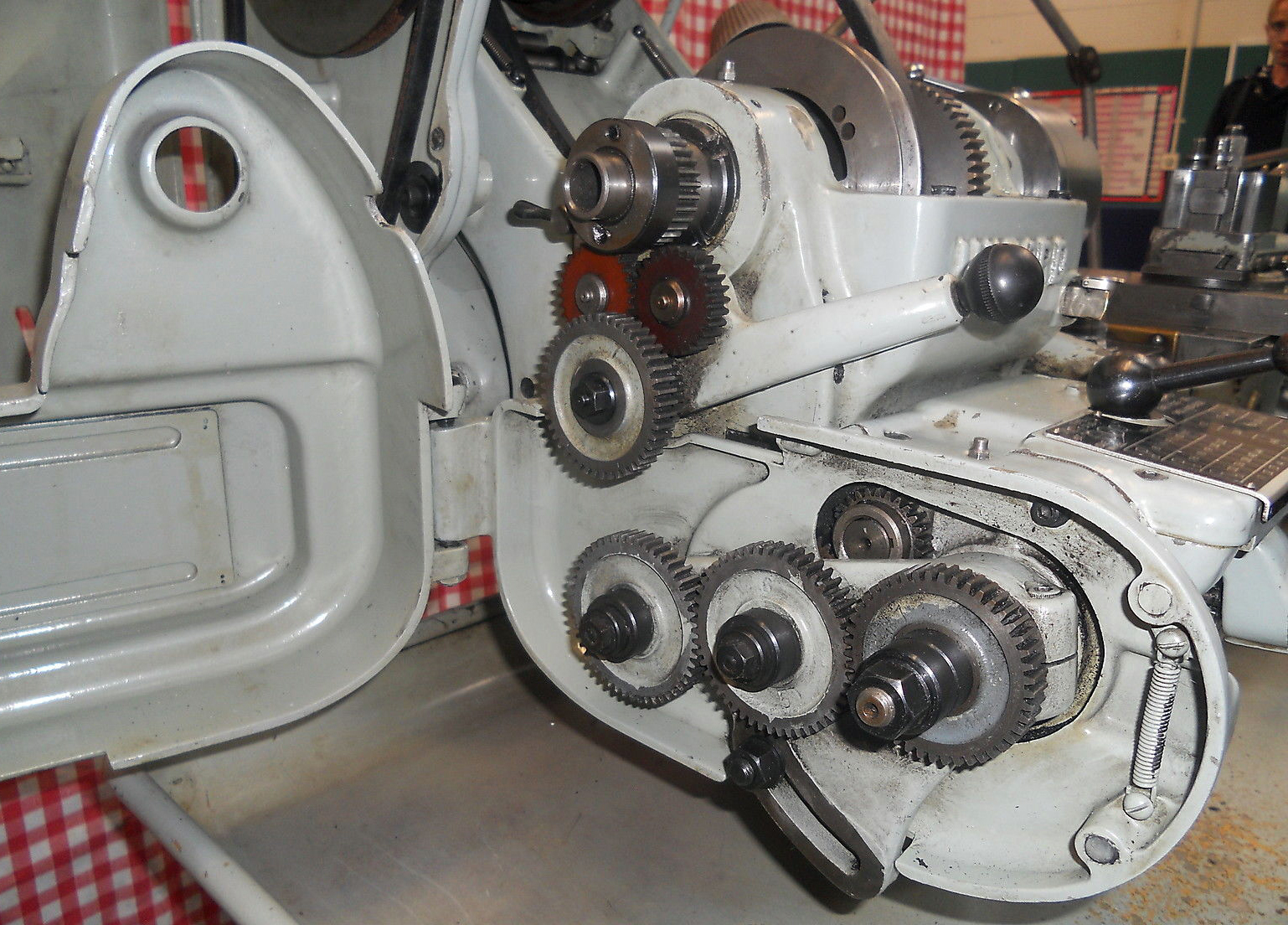
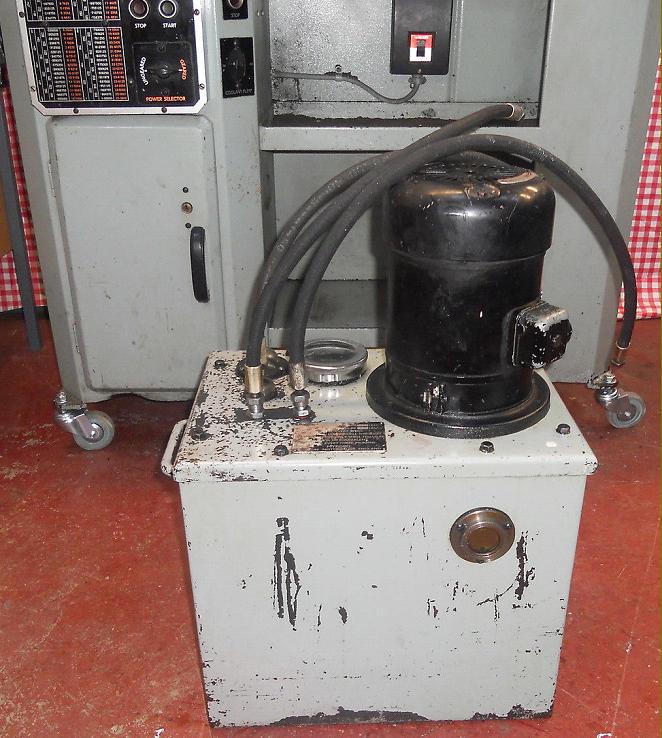
The writer has seen several Min-Kops transformed into ordinary centre lathes; however, the bed on all but the Model 1 Mini-Kop is wider than that on the ordinary 7-Series - hence the saddle assembly from those lathes will not fit. However, the original saddle is very thick and it's possible to machine this down and bolt a cut-down Series 7 saddle on top complete with the cross and top slide assembly. Some adjustment to the tool height is then required, but the process is, apparently, possible. Unfortunately, after the Model 1, the headstock spindle did not have a thread but was formed instead with an integral flange. Whilst this can be re-machined, in the usual way, to mount a chuck, it is better to make up an intermediate distance-piece in cast-iron and machine that for any particular mounting required. A powerful, slip-free drive was provided by a 2 h.p. 3-phase motor and a wide, toothed belt - any change of speed requiring the pairs of drive pulleys to be swapped for alternatives.
The Mini-Kop in all its forms followed the Myford tradition of being a beautifully made lathe with fine detailing and an excellent finish. Although essentially simple machines, and easy to operate, it is vital to consult the operation manual to get the various settings right and absolutely essential to make sure that the hydraulic oil is perfectly clean and the system properly set up..
Some high-resolution pictures--may be slow to open
|
|