|
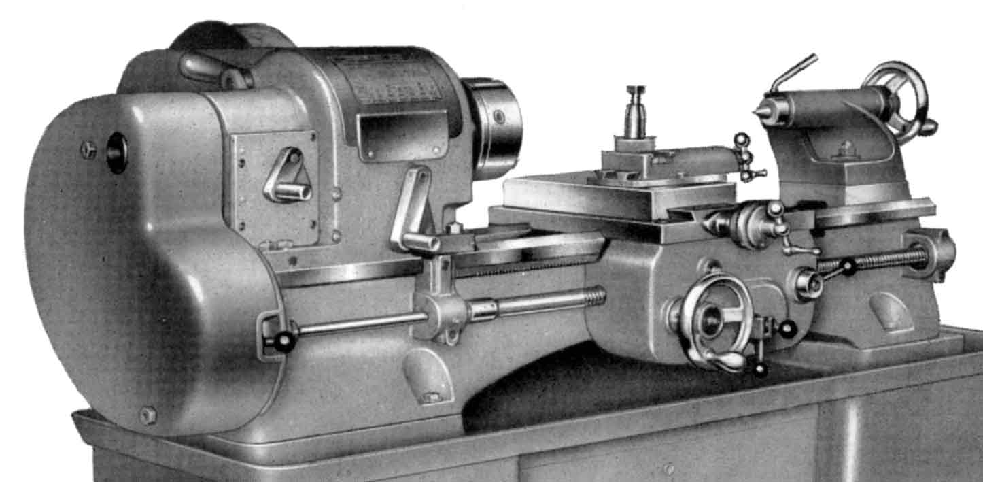
Listed alongside the geared-head Type 'AG' for the first few years of the 1950s, the Kerry Type 'BD' lathe must have been an attempt to list a more reasonably-priced machine. With the spindle belt driven, the 'BD' was supplied only with changewheels for screwcutting and feeds, there being no option of a quick-change gearbox. Despite the lower price (through few can have been sold: it is extremely rare on the second-hand market) the lathe was still heavily built and used an 8-inch wide V-and-flat bed of massive proportions with heavy cross bracing. A choice of two bed lengths was offered: 48-inches and 65-inches that gave, respectively, 221/2 and 391/2-inches between centres. The capacity of the bed's gap - 17'' by 31/2'' - was reasonable for the lathe's size but offered only on the longer-bed version.
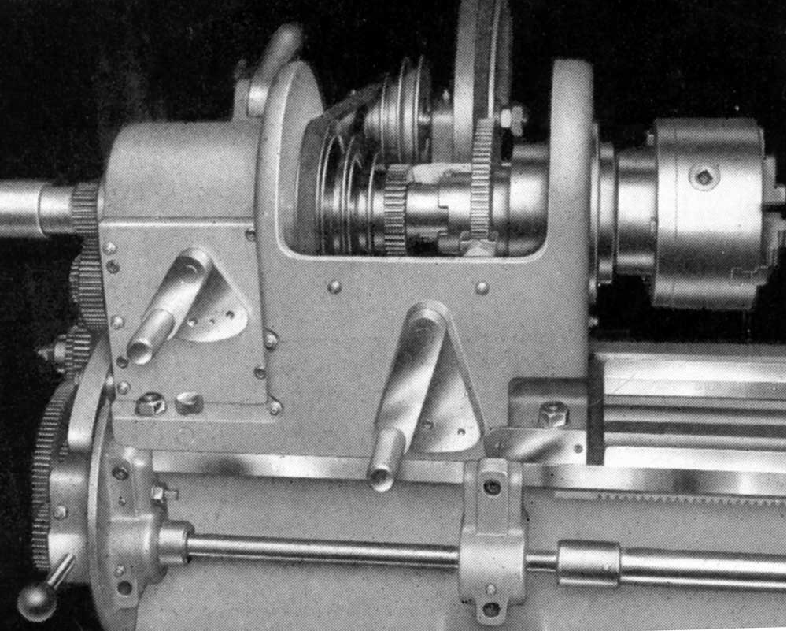
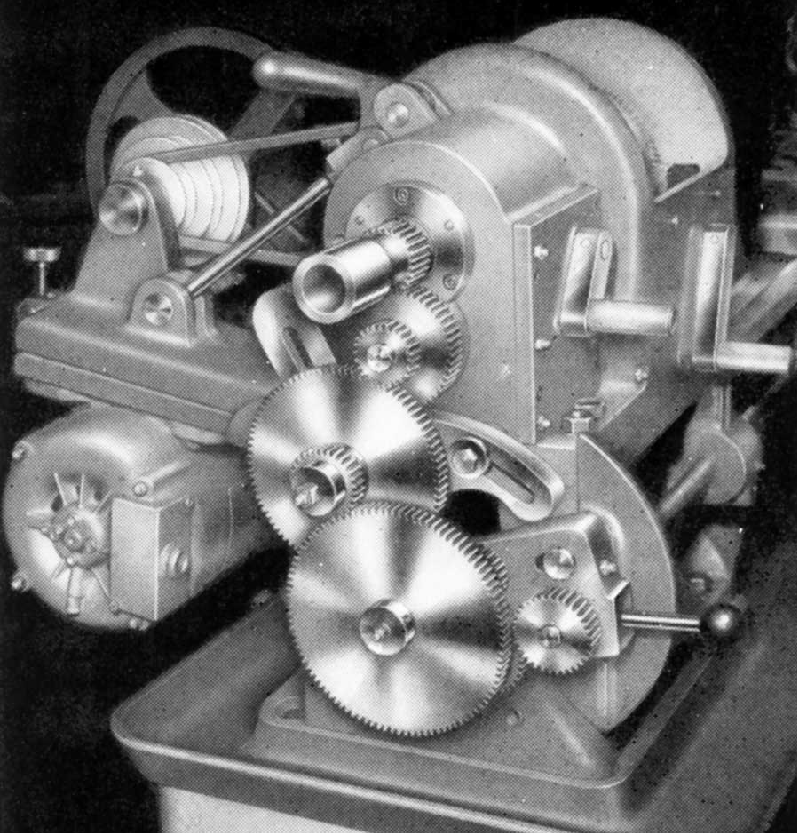
A heavy casting, the headstock held a high-tensile, nickel chrome 1-inch bore, 4-Morse taper spindle running in a pair of Timken taper roller bearings. The backgear assembly was arranged to work through a single lever on the front of the headstock that engaged and disengaged the bull wheel from the 3-step V-pulley while simultaneously sliding the gears into and out of mesh. Fastened to the back of the bed, behind the headstock, was a pair of cast-iron plates mounted back-to-back and joined on a common hinge; the lower plate carried a 0.5-hp 3-phase motor and the upper a simple but rugged countershaft unit. To tension the primary belt a hand-screw forced the plates apart while the secondary belt (with a need to be slackened for speed changes) was tightened and released by a quick-action, over-centre lever acting through a rod connected to a boss on the top plate. The combination of a 2-step V-belt drive from the 1500 rpm motor and a 3-step headstock pulley (with backgear) gave a total of 12 speeds: 30, 40, 54, 73, 97, 131, 180, 242, 323, 438, 582 and 786 rpm. It was also possible to specify a 3000-rpm motor and thus still have a reasonably slow bottom speed combined with a rather more useful 1572 rpm maximum. In line with what had (only just) become sensible common practice in the small-lathe market all belts were guarded on those sides that faced the operator.
On the left-hand end of the headstock was an oil-immersed, 3-speed gearbox that gave three rates of sliding and surfacing feed for each setting of the changewheels. Instead of the tumble-reverse assembly being in the usual place immediately below the headstock spindle it was positioned, unusually, on the bracket though which the leadscrew passed.
Grasped by double nuts, the leadscrew was in high-tensile steel and mounted between angular-contact ball races - the one at the headstock end held in a bolt-on housing positioned to shorten the distance between the two supports. Power sliding and surfacing was fitted as standard, the drive being transmitted to the usual apron-mounted worm and wheel mechanism by a key running in a slot cut in the leadscrew. Selection of feeds was by push button and engagement by an easily-moved, flick-up-and-down lever on the face of the apron that did not "load-up" as the depth of cut increased.
Fitted with decently large micrometer dial and a top slide that could be rotated through 360 degrees, the compound slide rest was offered with the option of a wide, T-slotted cross slide while the tailstock spindle contained a 2-Morse taper spindle engraved with ruler divisions with the top able to be off-set on its base for turning shallow tapers.
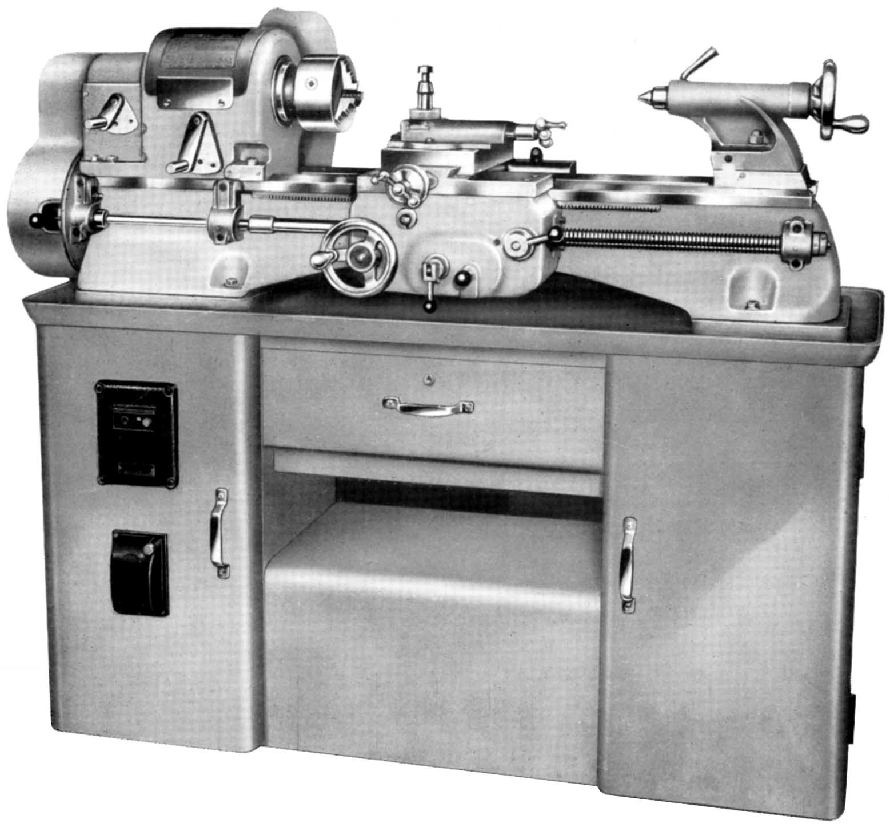
Although the built-on countershaft allowed the lathe to be offered for bench mounting the makers listed a modern, cleanly-designed sheet-metal stand with a deep drawer in the middle, a generously proportioned storage cabinet on the right and a (rather shallow) welded-on chip tray. Electrical controls were housed in the left-hand cabinet and accessible by just swinging open the (non-locking) door..
|
|