
|
Home Machine Tool Archive Machine-tools Sale & Wanted Graduate Lathes Page 2 Harrison Jubilee Lathe Harrison "Union" Lathes Harrison Home Page |
|
|
||
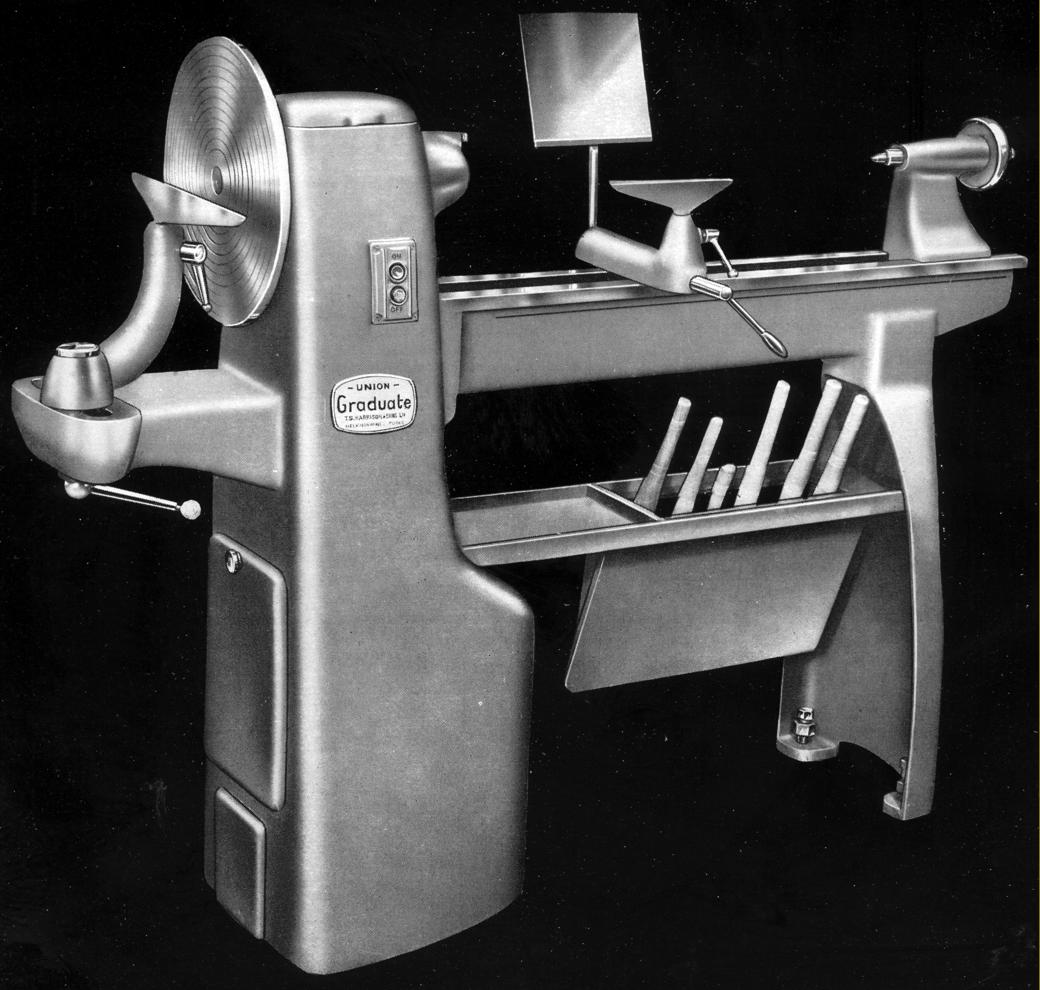
Not counting the multi-purpose Model L1A, the first proper wood lathe produced by Harrison was the treadle-driven Light Pattern Hand Lathe of the late 1920. However, it is for the 1939 Jubilee that the Company is best known - a model that was to find great favour in educational establishments and amongst professional turners who needed a strong, compact, well-made and self-contained machine. It was joined in 1959 by the even better Graduate, a type that was originally advertised as the Harrison Union Graduate. With Harrison part of the 600 Group, production of this long-lived model was moved to various locations including examples built by Multico (where the Tyne Little Gem, Tyme Cub, Tyme Avon, Classic and Challenger wood lathes were also manufactured) the Graduate Lathe Co. (of Northfleet in Kent ) with their variable-speed drive inverter controlled "Graduate GL" as well as various third-party rebuilders including L.R.E. with their "Variturn" models.
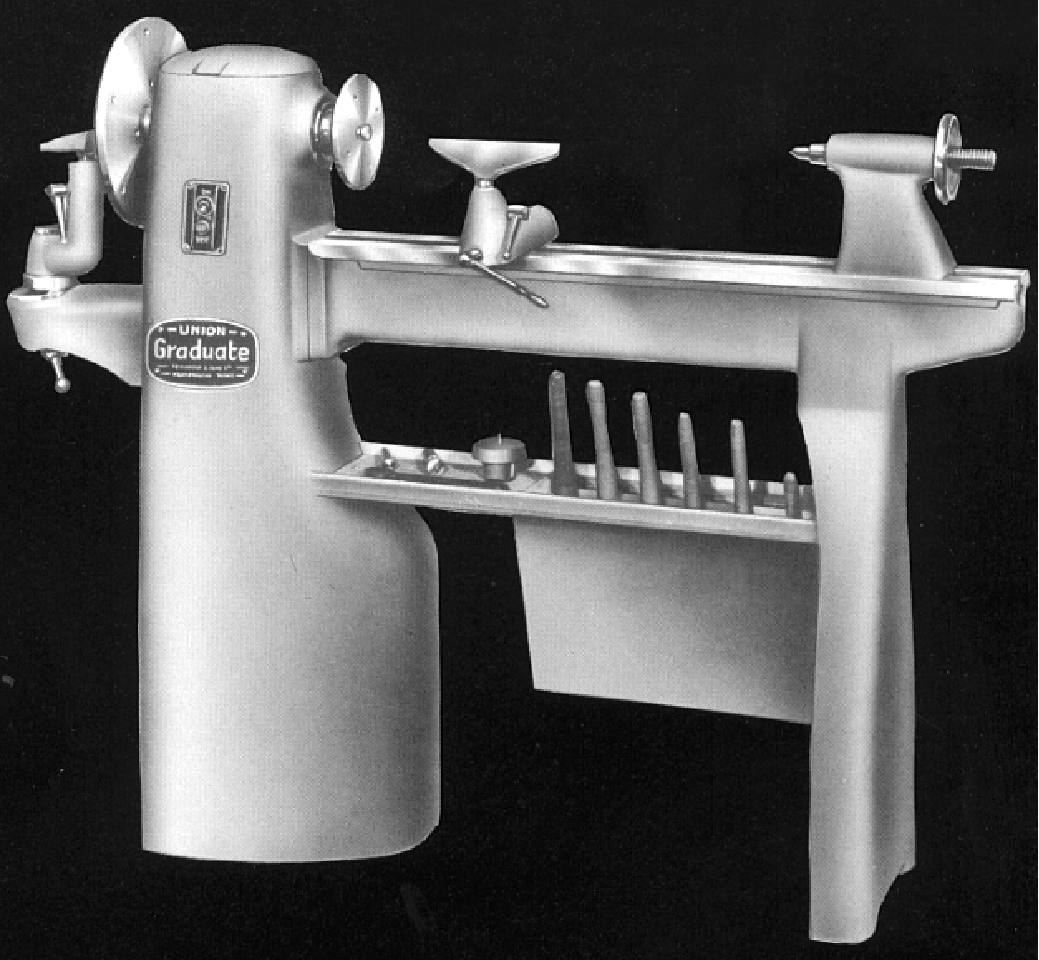
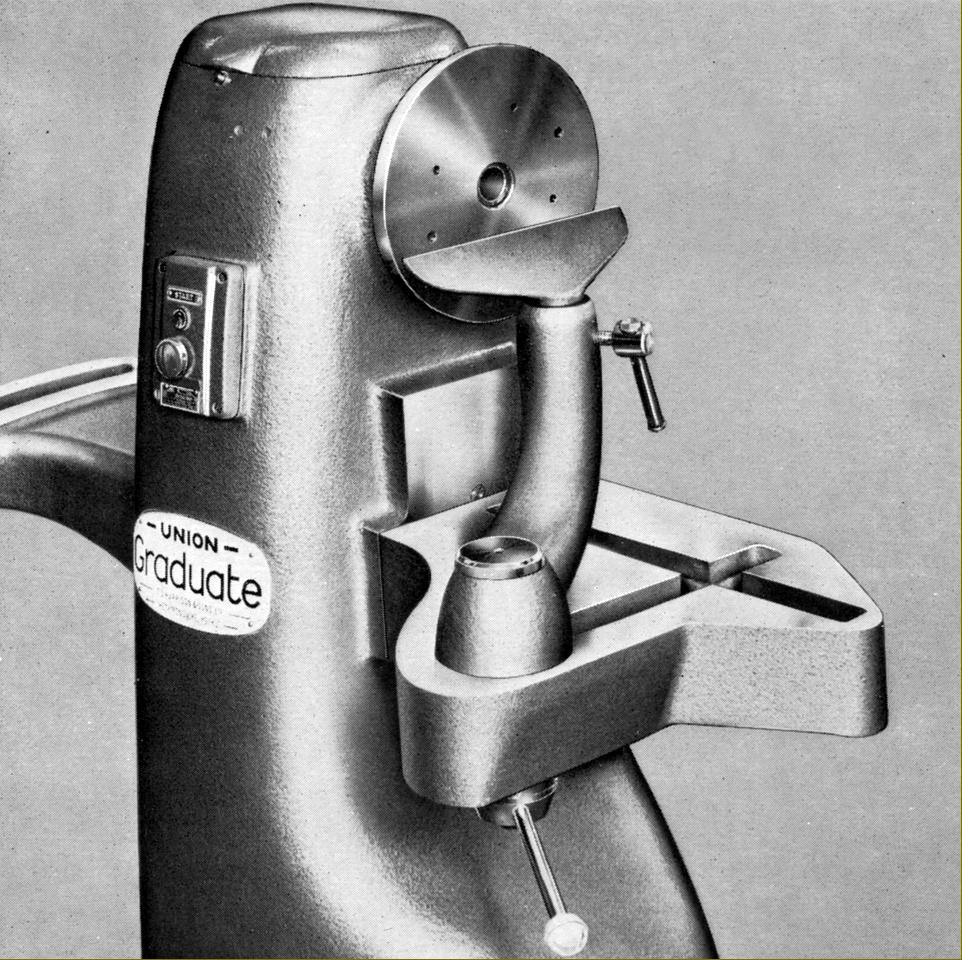
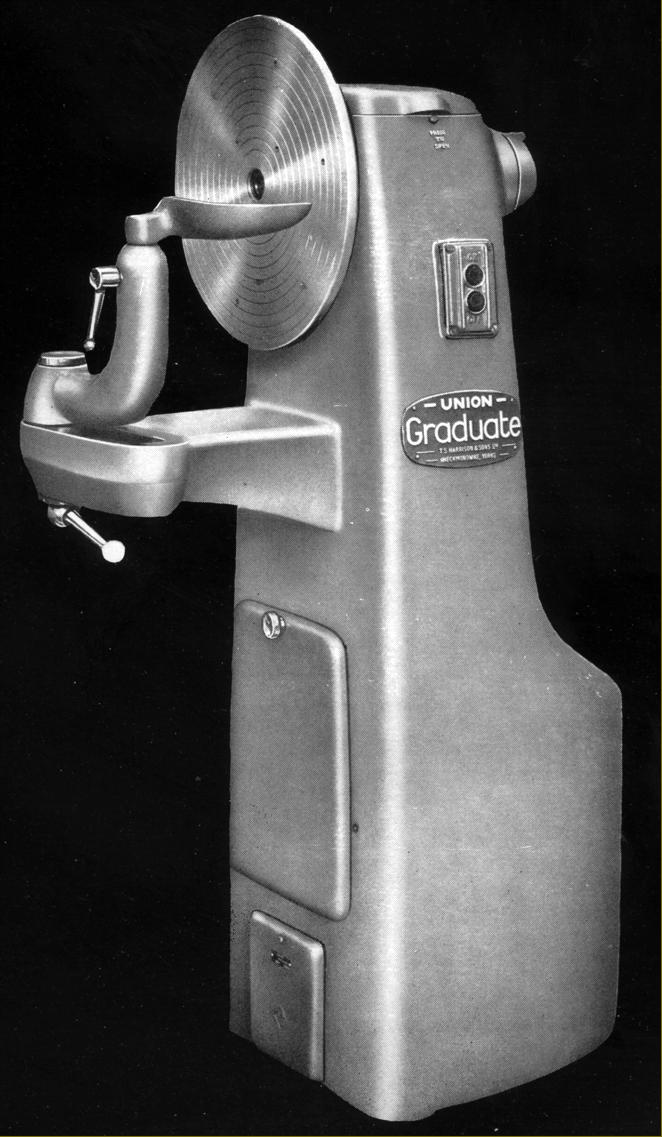
Beautifully made, the Graduate is constructed entirely from cast iron and steel, is immensely strong, rigid and safe - all important considerations when turning larger pieces of wood. The centre height is 6 inches and between-centres capacities of 30, 42 and 54 inches have been offered, though in recent years only the shortest model has been offered. The standard-fit bowl-turning attachment can accept material up to 6 inches deep at a diameter of 18 inches, or 12 inches if limited to a thickness of 12 inches.
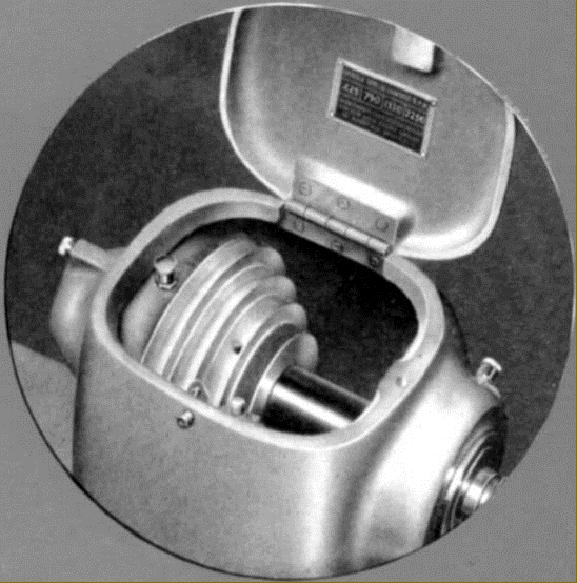
With a No. 3 Morse-taper, the 0.75-inch bore spindle has a right-hand thread of 1.5" x 6 t.p.i on the end of the spindle facing the tailstock and, on the bowl-turning end, a left-hand 1.5" x 6 t.p.i. Both threads are 55° Whitworth form. The spindle runs in ball races and is driven through its four speeds of 425, 790, 1330 and 2250 rpm by a 0.75 hp 1425 rpm motor, although higher speeds are perfectly possible if the motor pulley is increased in diameter.
Safely enclosed within the main cast-iron pedestal, the motor and drive system are accessed through a largish door on the left-hand face of the column. To change speeds the motor, mounted on a hinged plate, is lifted by a lever, the top cover opened and the belt moved across - both covers being wired with safety switches to cut the motor when opened. A mechanical variable-speed drive option, using expanding and contracting pulleys with a speed range from 100 to 2300 r.p.m., was also offered, but this is rare and, following a dramatic fall in the price of electronic controllers, a better system was introduced that used a 3-phase motor controlled by a 1-phase to 3-phase inverter - a system that any owner of a standard machine could easily replicate at comparatively low cost (see this page for further details).
Formed from a box-section iron casting, the bed has machined ways and is bolted and dowelled to the main pedestal. The gap between the ways is used to guide the tailstock whose No. 2 Morse-taper spindle is bored 9/16" clear through so that it can be used to guide augers for deep-hole boring.
Although the Graduate always holds its price well, and hence is expensive to acquire second-hand, they are an excellent investment and, taken care of, can be sold for an equivalent sum even after many years of use. For the serious wood-turner it can be strongly argued that there has never been a better mid-sized machine on the market.
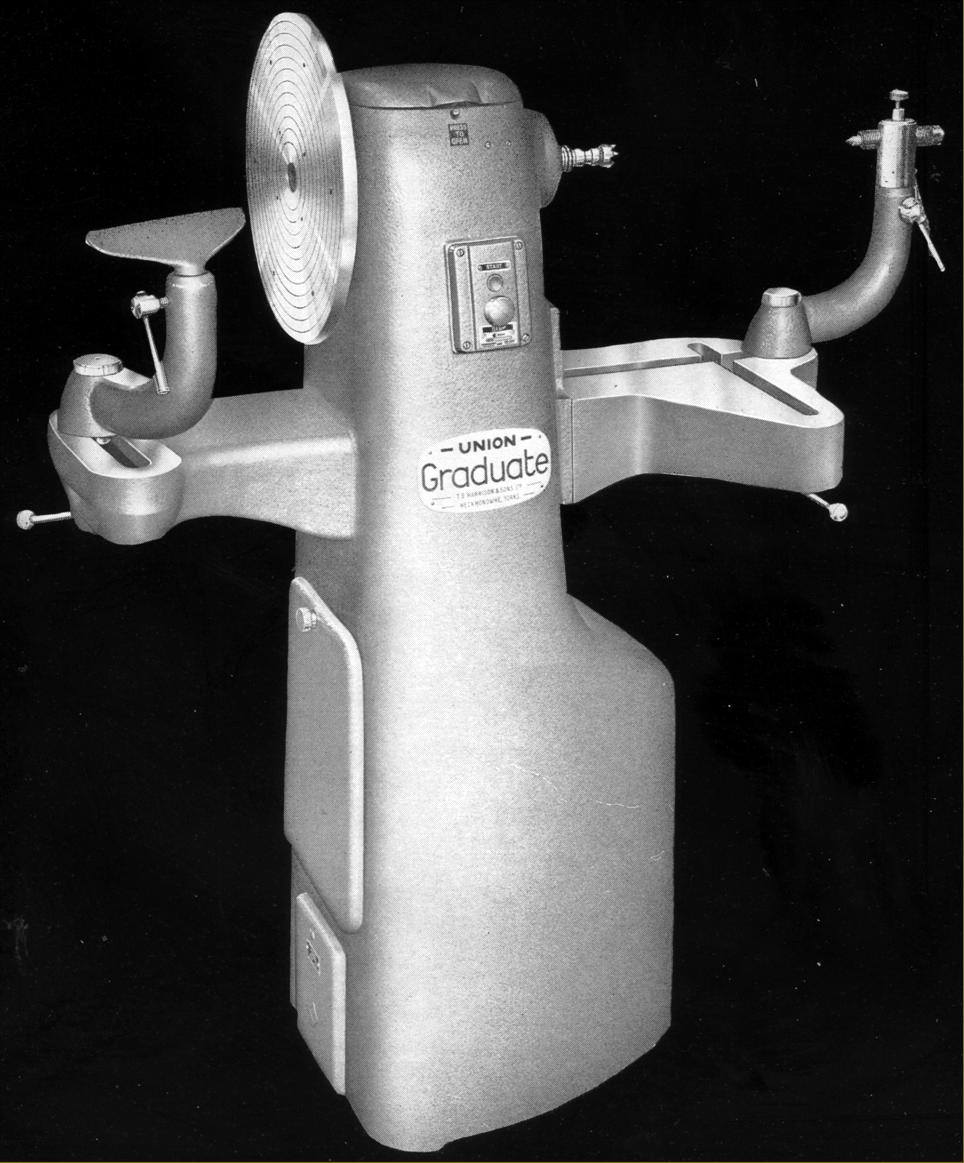
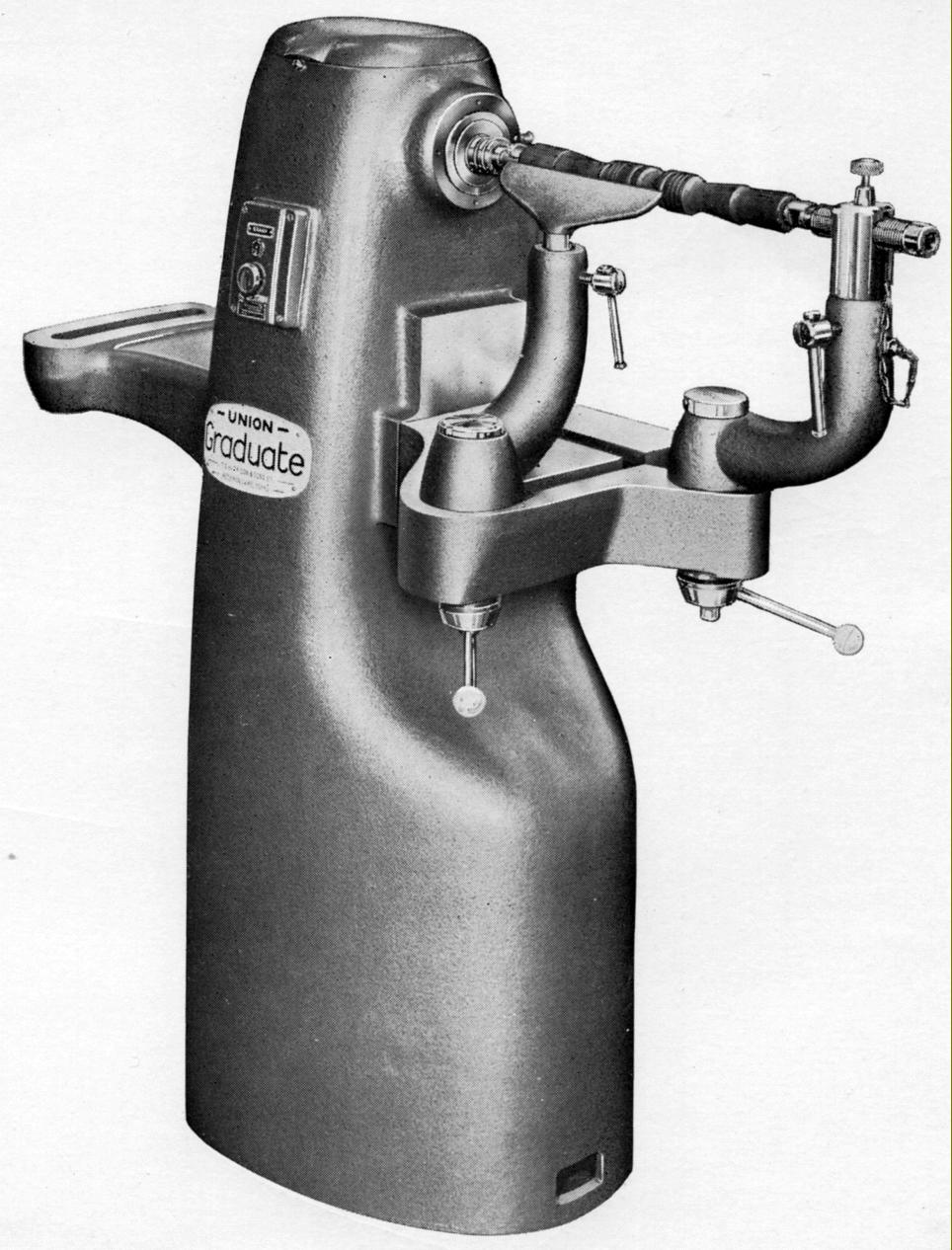
Two other versions are available: a dedicated bowl turning unit, consisting of the just the headstock pedestal end, and a "short-bed" version, both of which are illustrated below. All versions come apart very easily and can be transported in a small trailer or even the luggage compartment of a hatchback with its rear seats folded. The end plate of the bed, through which the connecting bolts pass, has two dowels whose holes would have been drilled and reamed at the factory after the bed was connected to and aligned with the headstock - almost certainly using some form of jig. Cleaning the joint faces carefully and making sure the dowels are fully home should ensure an accurate realignment. Of course, if the lathe is subsequently bolted to the floor (it's not necessary), it may pull things out of line.
Harrison listed the expected range of extras including a sanding table with mitre guide; aluminium sanding disc; faceplates and backplates in diameters of 3", 4", 6", 8", 12" and 14"; turning tools; low-volt light unit, curved arm rest for deep bowl turning on the left-hand rest (supplied as part of the standard equipment with the bowl lathe); deep-hole boring attachment; Perspex chip guard; lever-action tailstock; a rack-driven carriage assembly with cross slide for turning non-ferrous metals and precision wood working and egg cup chucks, etc..
|
The right-hand "swan-neck" support allows short (16 inches) between-centres work to be undertaken |
||
|
|
||
|
|
|
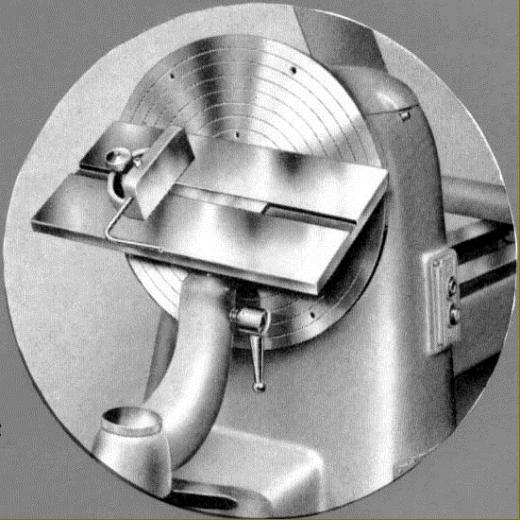
The Sanding Table fits directly into the bore of the bowl-turning post and is used in conjunction with a special sanding disc. The table tilts through 45 degrees and, combined with a mitre fence, permits the sanding of compound-angle faces. Sanding faceplates are available in 8", 10" and 12" diameters. |

|
|
|
and a handbook for the older Jubilee Home Machine Tool Archive Machine-tools Sale & Wanted |