|
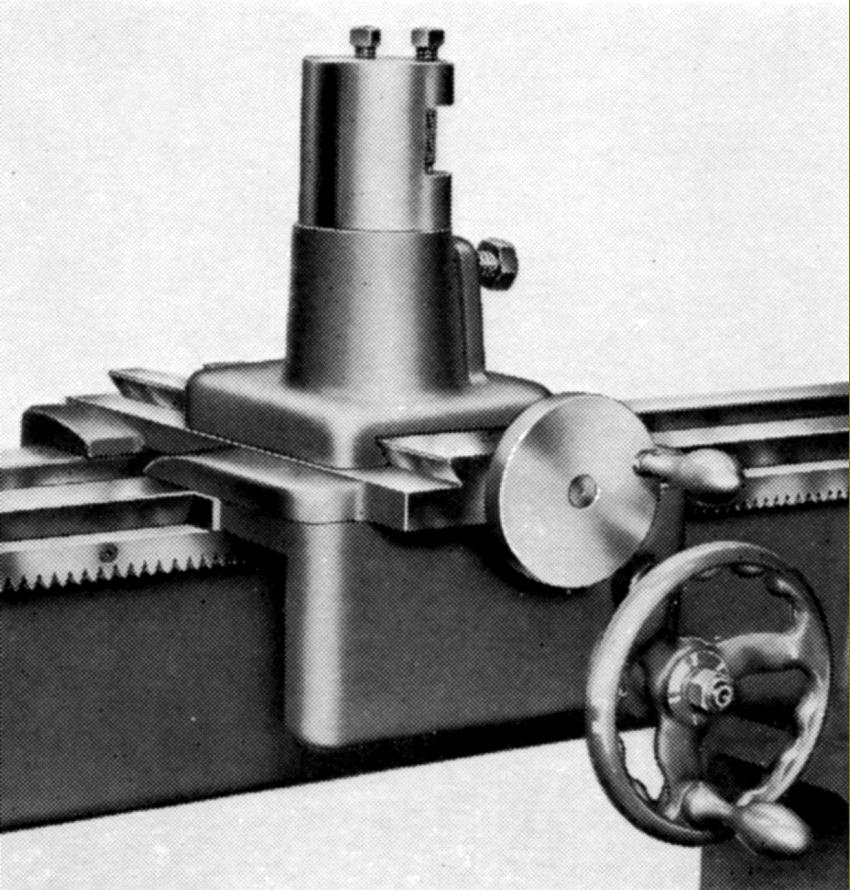
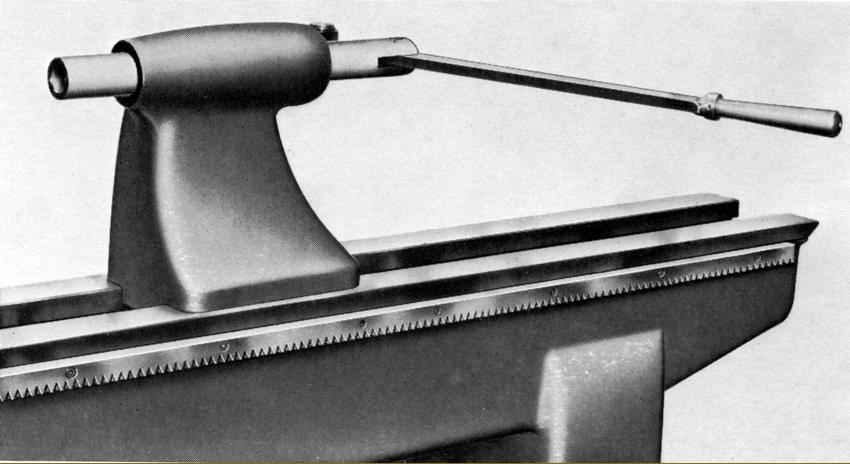
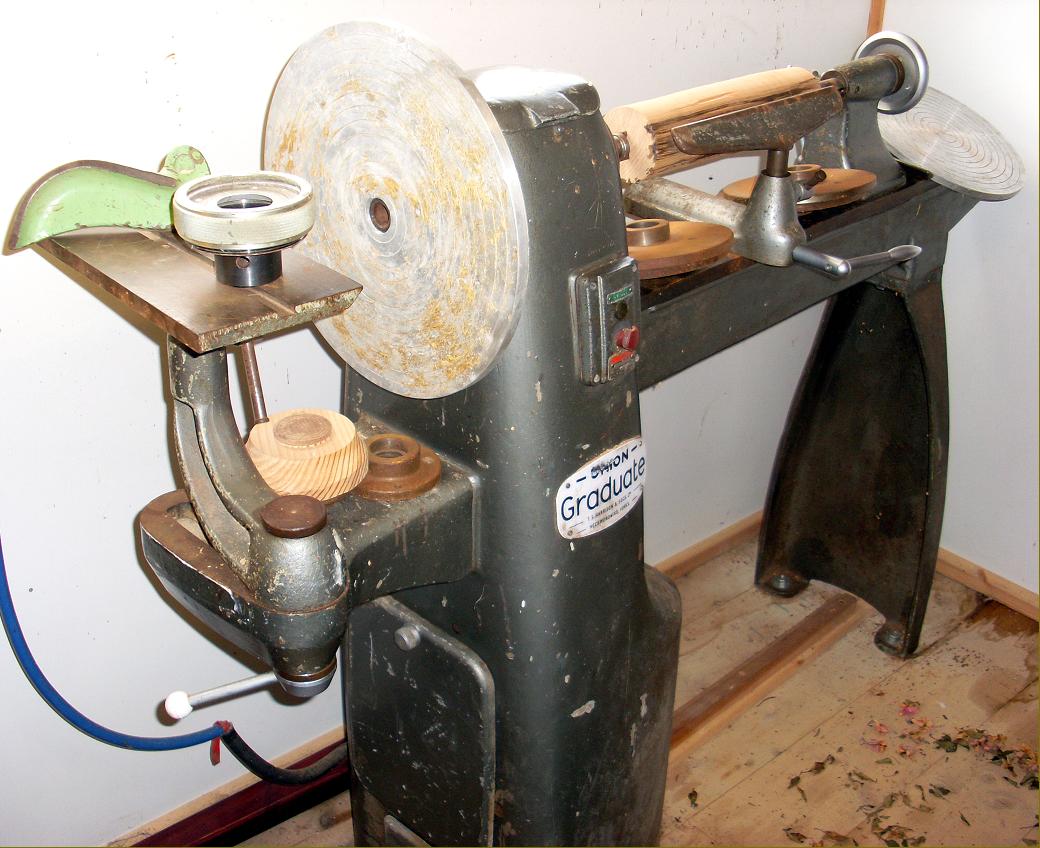
Continued: In addition to the "Light Pattern" machines two backgeared and screwcutting Union models were made with 3.5 and 5-inch centre heights. These were not heavy, commercial lathes but economical machines intended for … technical schools, garages, metal workers, amateurs, etc … Though both resembled the light lathes - and used the same form of flat-topped bed but with V-edges to guide the rather short saddle - each was a separate model with no parts in common. 3-inch: With a specification that shows it was built down to a price the design of the 3.5" x 22" Model L.1.A.S. lathe was absolutely typical of its era. Whilst later versions used a relatively large-diameter ball bearing at the front of the spindle, early models were fitted with a plain bearing closed down by twin bolts - though both used the same rather light, single pinch-bolt plain bearing at the rear. Most spindles have been found with the maker's specification of a 3/8-inch bore, No. 1 Morse taper with a 1" x 8 t.p.i. thread, but others are believed to have been used as well - including that found on the 5-inch at 1.25" x 12 t.p.i.. The backgear was the simple kind that slid into place, with engagement possible without the use of spanners - a spring-loaded pin being used to couple pulley and bull-wheel together. Spindle speeds naturally varied slightly according to the type of countershaft used - bench, wall, ceiling, foot-treadle and motor-driven units all being available - but the six available (when driven from a 400 r.p.m countershaft) generally spanned a useful 32 to 800 r.p.m. arranged in geometrical progression. The 3-step headstock pulley took 1-inch wide belt and had diameters of 2", 3" and 4". Unlike many similar lathes that ran their treadle-driven flywheel on plain bearing, Harrison used a pair of ball bearings, fitted a "frictionless" chain for drive - and also ensured that the assembly (with cone diameters of 20.75, 21.375 and 22 inches) was properly balanced. The most sophisticated drive unit employed a 0.5 h.p. motor flange-mounted against the inside face of the headstock-end leg - and incorporating a reduction gearbox (optimistically termed silent pinions) around its output shaft. The bed was given a permanent gap to swing material 10.5-inches in diameter and the 1" x 8 t.p.i. leadscrew - allowing for the full-nut on the apron - was fitted with a dog-clutch by the headstock and a handle at the tailstock end. To permit the generation of left-hand threads a simple form of reverse was used on the leadscrew drive with a bracket, carrying a permanently-mounted gear, that could be swung into place when required. Off-set right to the left-hand side of the saddle - to let the cutting tool reach up to the spindle nose across the permanent bed gap - the compound slide rest assembly lacked micrometer dials on both cross and top slide - though most examples have been found with the 6.75" x 3.75" cross slide equipped as a boring table with T-slots to the rear of the top slide. Secured with just a single bolt - pressing against an inverted cone - the top slide could be quickly removed; the feed screws ran through replaceable bronze nuts - the makers resisting the temptation to tap these directly into the casting in a fashion then common amongst other purveyors of less-expensive lathes. In the late 1930s the basic bench model sold for £15 : 10s : 0d equipped with a countershaft, the treadle lathe for £17 : 10s : 0d and the motorised version for £ 26 : 0s : 0d. Backgear and changewheel guards were supplied as standard but covers for the drive belts were extra: fifteen shilling for a lower shield or £2 : 0s :0d for full enclosure. He lathe was supplied as standard with a faceplate, two Morse centres, one wood-drive centre, 10 changewheels, a screwcutting chart, spanners and drive belt. 5-inch: Enjoying by far the best specification of any Union lathe the 5" x 30" model L.2.A.S. was fitted with drive to the 1" x 4 t.p.i. leadscrew through a proper tumble reverse mechanism, single-lever engagement of backgears, clasp nuts on the apron and a bed whose planed top was hand-scraped to an accurate finish. The spindle, with a 1.25" x 12 t.p.i. Nose, ran in ball races at both ends - that at the front being a combined radial and thrust unit - with a single-lever enraged backgear ensuring that no fastenings needed to be release before the slow-speed range could be selected. The stand was identical in design to that used on the 3.5-inch model, though the gearbox on the motor-drive type had an output speed of 200 rather than 400 r.p.m. to give spindle speeds that spanned a usefully slow 15 to a inadequately high of 375 r.p.m. Using a 1.25-inch wide belt the cone diameters on the treadle-powered flywheel were slightly altered at 20.75", 21.375" and 22", as were those on the headstock spindle at 2.75", 4" and 5.25". Basic equipment supplied as standard consisted of: a faceplate, drive plate, a set of (unspecified) changewheels two centres, a travelling steady, spanners and a screwcutting chart. Anumber of accessories was available for both lathes - the usual chucks, steadies, metric conversion changewheel, turning tools, hand T-rests in two sizes, faceplates, etc - and also a milling slide and a special milling and gear-cutting attachment of the type offered until the late 1960s..
|
|