
|
Home Machine Tool Archive Machine-tools Sale & Wanted Universal Models Plain Millers 11,12 & 13 Plain Millers 131/2, 14 & 14A Plain Millers 15 & 16A |
||
|
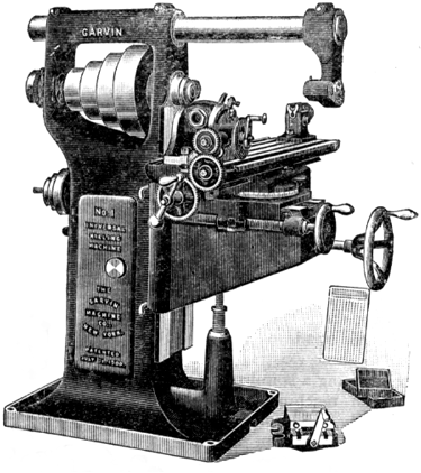
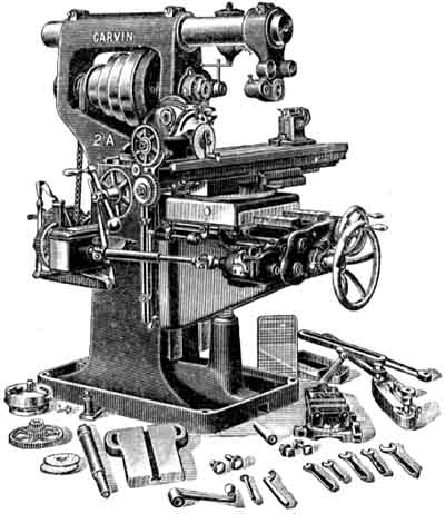
Garvin were an American firm, based in Spring and Varick Streets in the heart of the shipping district of New York City. The company offered a very wide range of products amongst which were millers in plain, horizontal, vertical, manufacturing, duplex and hand-operated types; smaller types of planers and profilers; "screw machines" (capstan lathes), a variety of spiral-gear and worm-milling attachments, spring-coiling machines, rotary tables, index centres of many kinds, tool and cutter grinders, die slotting machines, dividing heads, countershafts (including an ingenious slow-speed spiral-geared model), support bracketing, single and gang drill presses, headstocks, compound slide rests, capstan tooling - and a range of screwcutting and plain-turning lathes. |
|
|
||
|
|
||
|
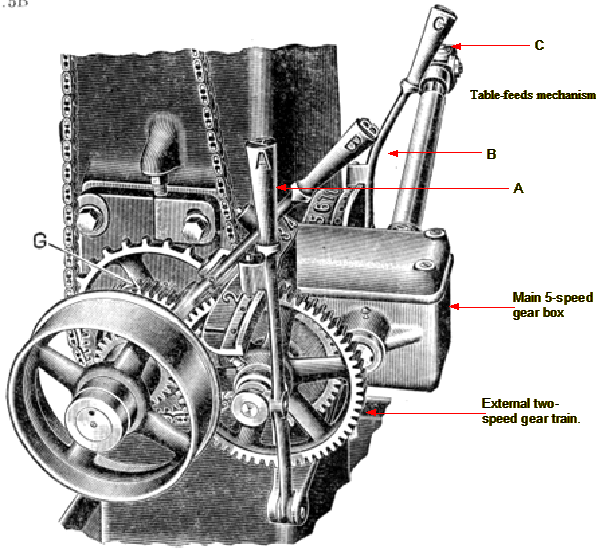
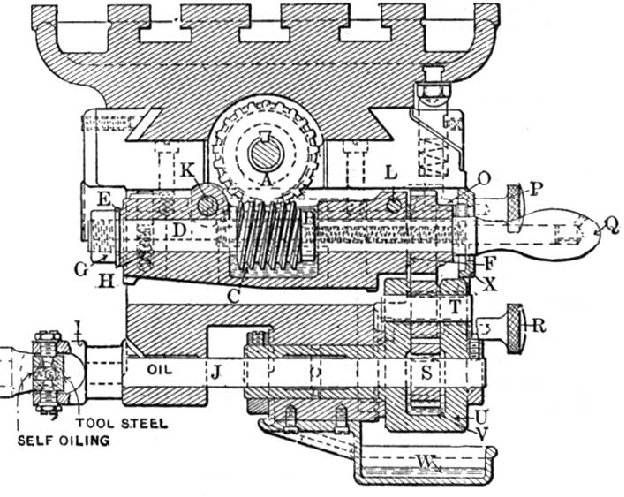
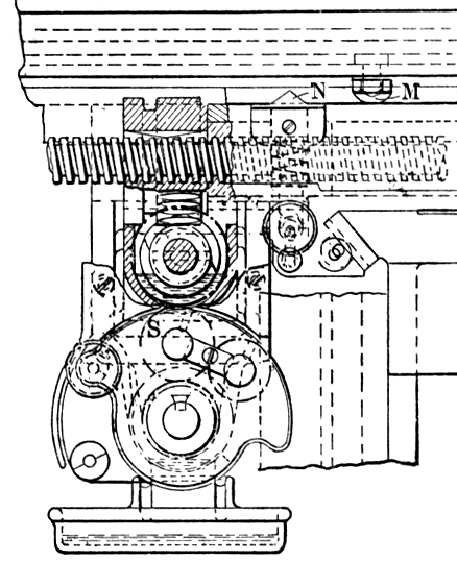
An important feature of the Garvin millers was the provision of a wide range of table feeds. The feeds could be selected from either a drive taken from the miller spindle, or from the belt-drive countershaft with each being clutched into engagement by a selection of levers. |
|
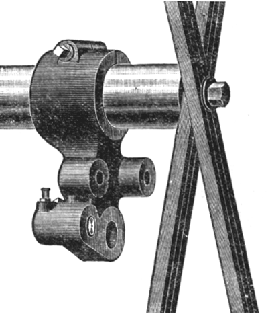
The arbor-support braces could be attached either to the yolk - or the end of the overarm. |
||
|
|
||
|
Home Machine Tool Archive Machine-tools Sale & Wanted Universal Models |
||