Fischer Lathes Page 2
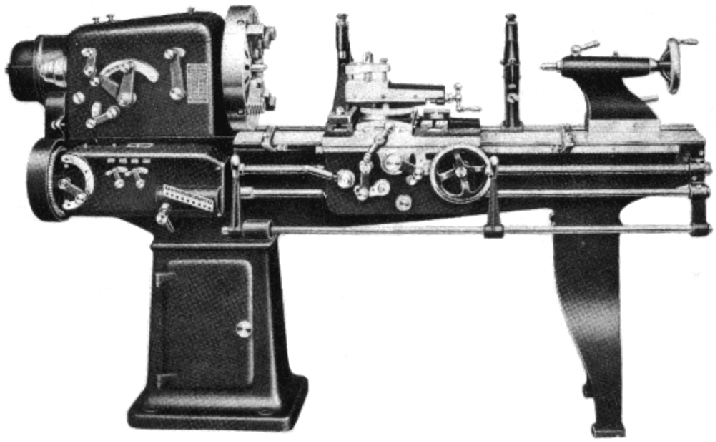
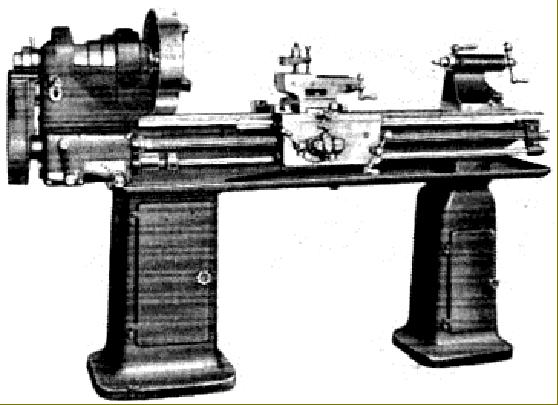
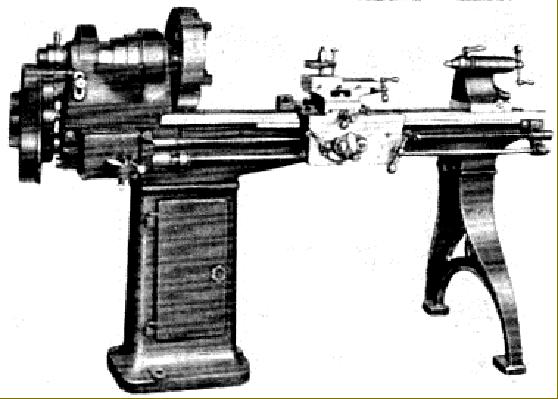
Fischer were lathe makers based in the German town of Freital, in Saxonia. Inscribed on one of the older machine illustrated below - probably from the early 1920s - is the following legend:
Fischer & Co. Komm Ges Speczialfabric fur Drehbanke Freital i. Sa. Other pre-WW2 machines have been found with: Fischer Spezialfarbik für Drehmaschinen GmbH, Freital in Sachsen. After WW2, the town of Sachsen became part of the GDR (German Democratic Republic, the communist-controlled East Germany) and company's name was changed to VEB, a German abbreviation for Volkseigener Betrieb, the People's Enterprise, and became part of the WMW (Machine Tool Union) of the GDR.
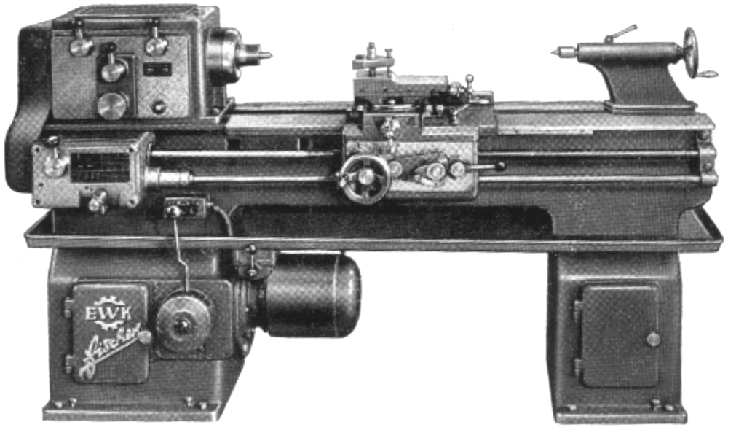
However, in common with many other manufactures who fled to the West, the Fischer brand was also to be produced in West Germany, its name being joined with that of EWK (Eisenwerke Kaiserslautern)
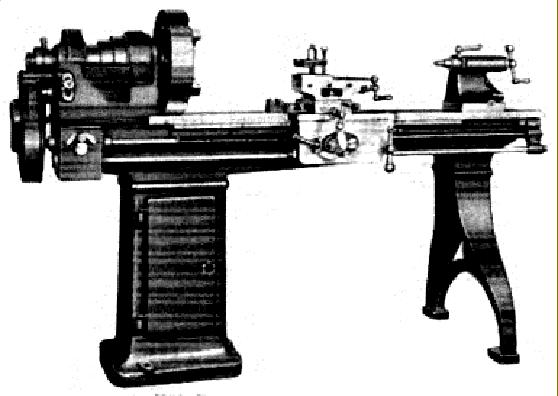
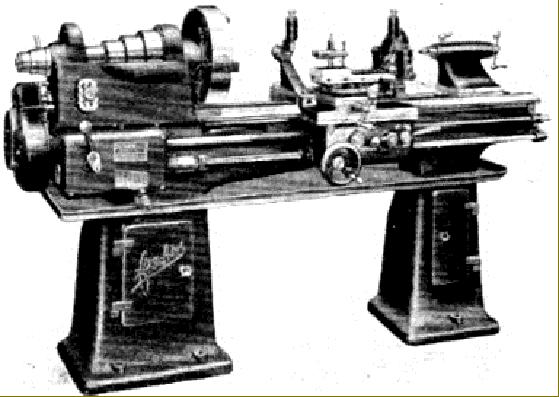
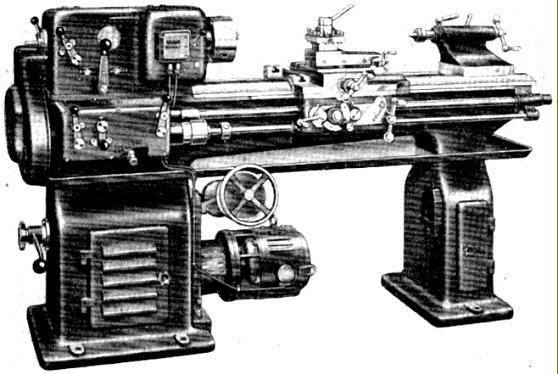
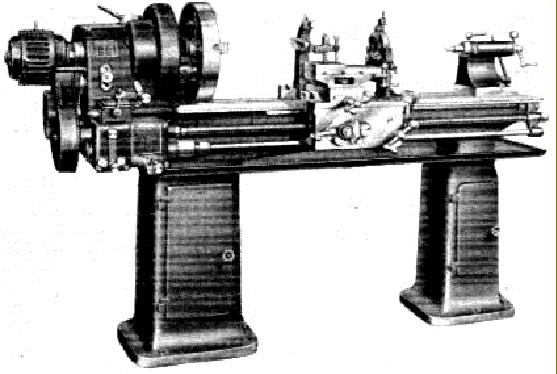
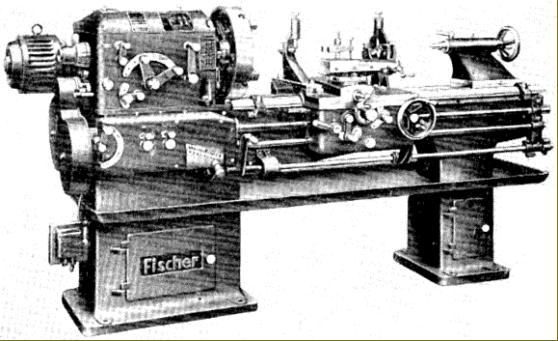
Fischer were prolific manufacturers who offered a wide range of lathes - those made during the 1920s and 1930s generally being available - as was the matching range from Colchester in the UK - with either all-geared or open flat-belt drive headstocks. In the UK, to disguise their German origin, the lathes were often branded with different names, one of the most common being IXL. Thus labelled, the lathes were first factored early in the 20th century by George Adams in London who, as the agent for Pittler lathes, had strong German connections. Control of imports then passed to both Tyzack and J.G.Graves. Both companies with very large mail-order businesses with Tyzack tending towards tools and machine-tool sales but J.G.Graves (of Sheffield) selling everything from combs to motorcycles.
In Australia, Fischer lathes have been found sold as being Staerker & Fischer, a company first set up to compete against Marconi in the infant years of Wireless
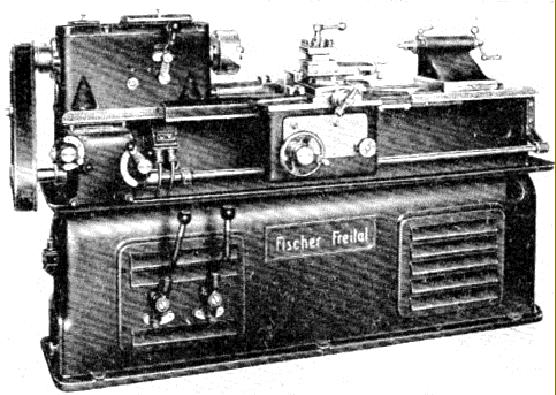
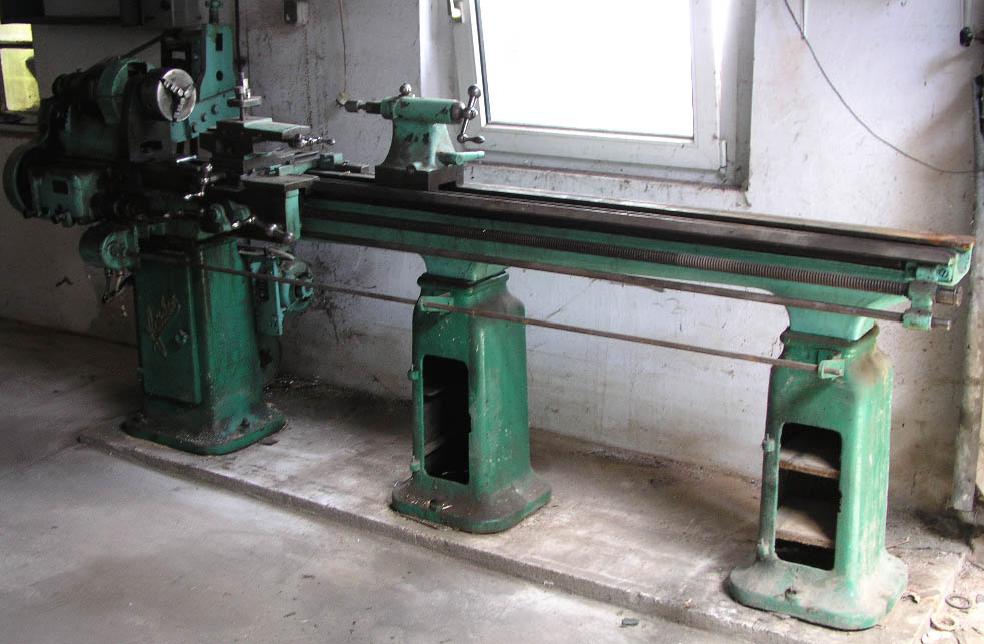
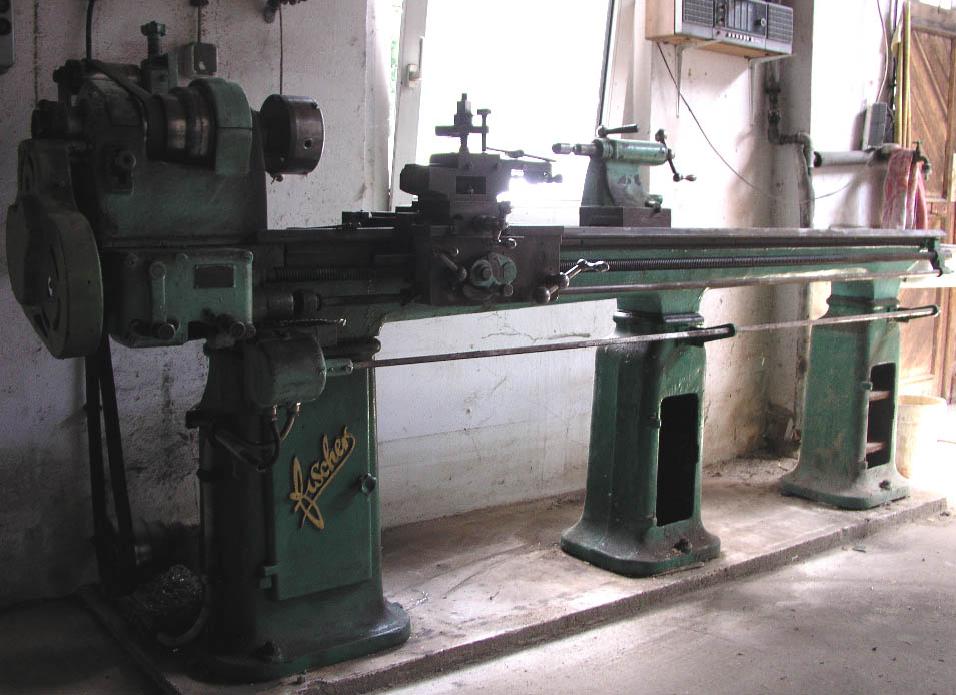
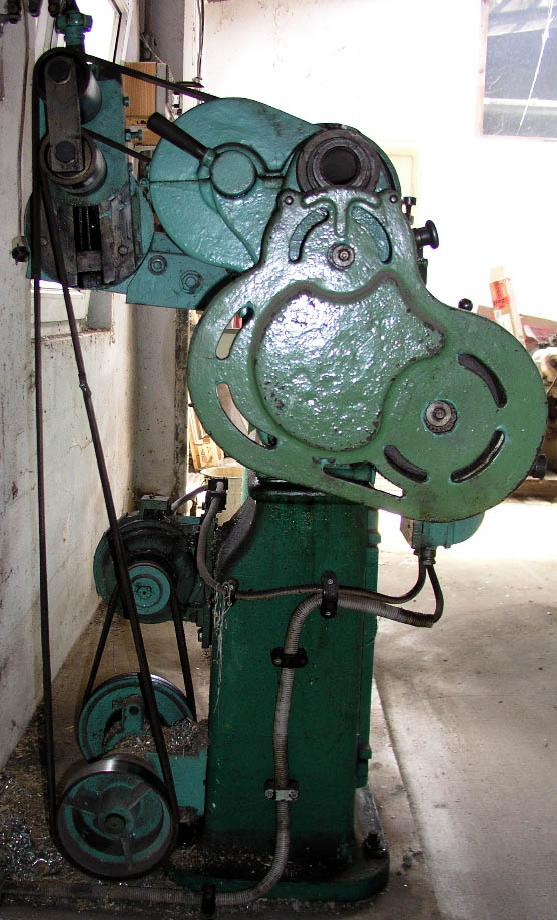
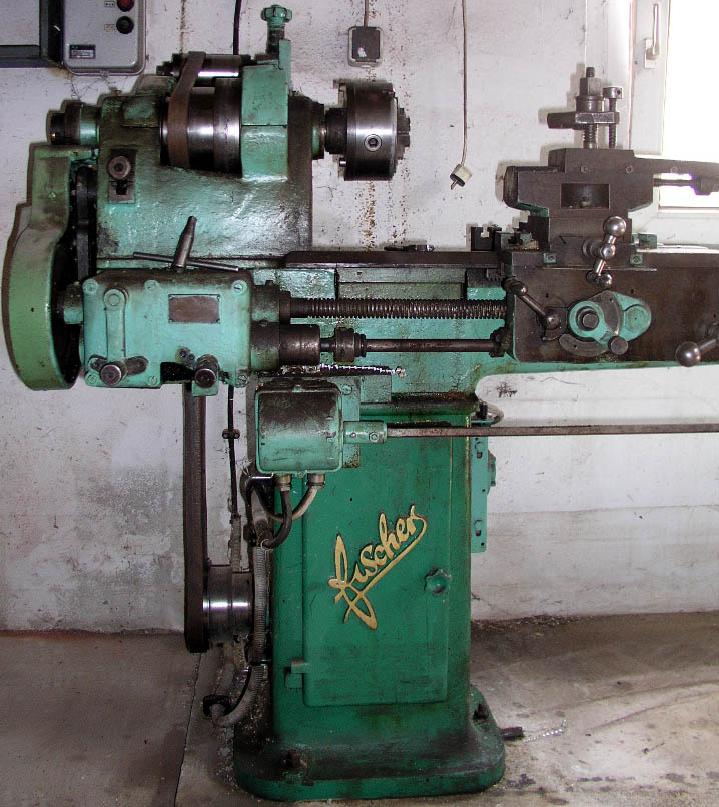
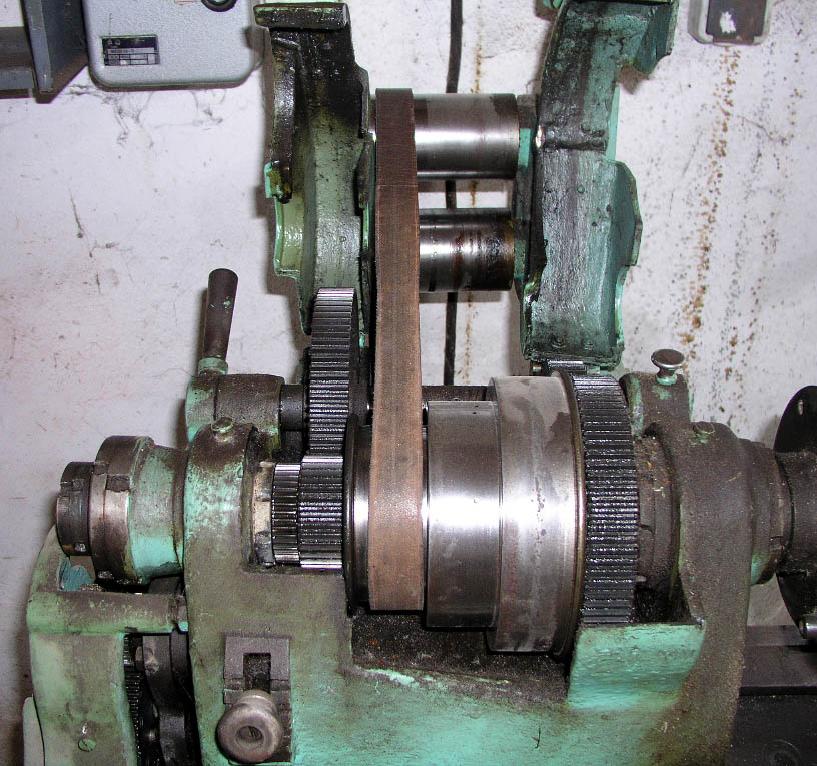
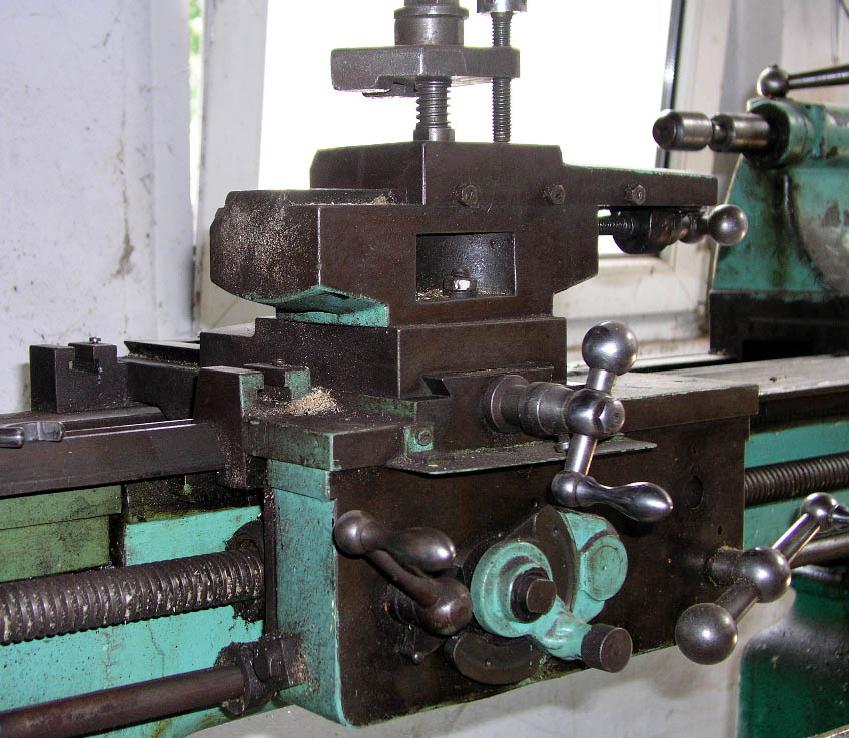
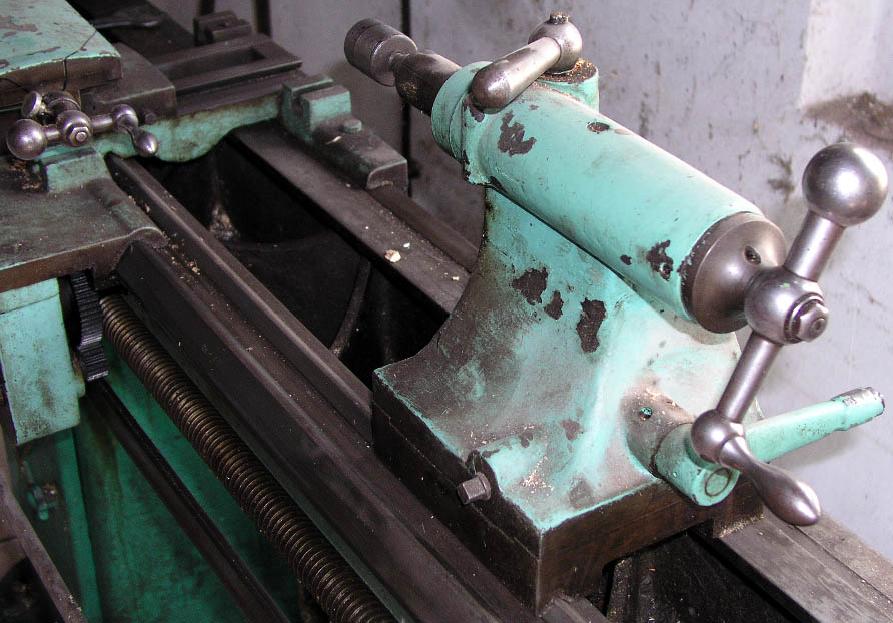
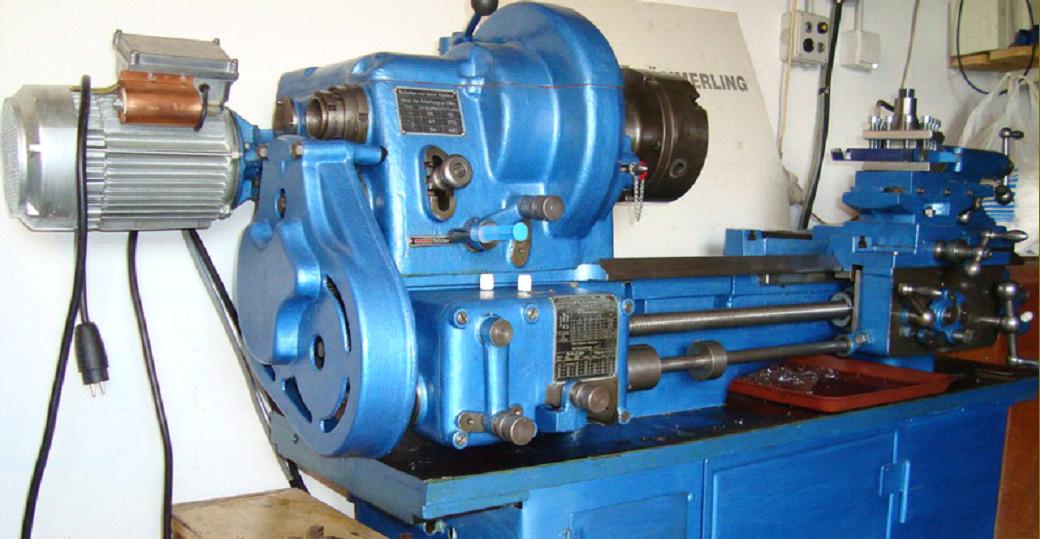
Shown below are several examples of the Fischer lathe, including a dark green-painted Type KBS with a swing over the ways of approximately 15 inches and a distance between centres of 40 inches. The V-belt driven headstock incorporated a clutch with the six spindle-speeds selected by two levers, one on the front of the headstock and the other on top - the label on the headstock reading:
Scalten-nur beim Auslant
Umdr. der Arbeit ssp. pr. 1 min.
Hebel Mit Vorgelege ohne Vorgelege
Middle 26 151
Bottom 47 273
Top 84 490
A basic translation would read: Let the lathe stop before changing gear and Lever with reduction gear and without reduction gears Thus, the spindle-speed range ran from: 26, 47 and 84 r.p.m. in backgear and: 151, 273 and 490 r.p.m. in direct drive.
A conventional tumble-reverse mechanism was incorporated inside the headstock casting and below the left-hand end of the headstock spindle; it drove down to a screwcutting gearbox with outputs to a leadscrew and a powershaft for sliding and surfacing feeds.
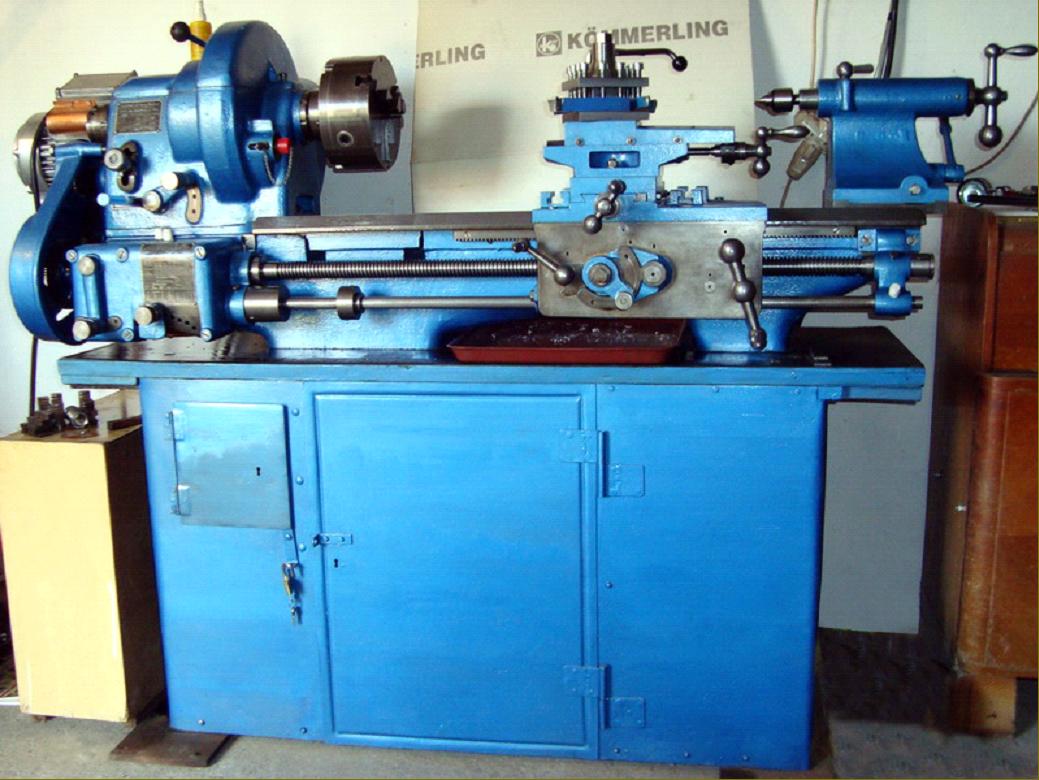
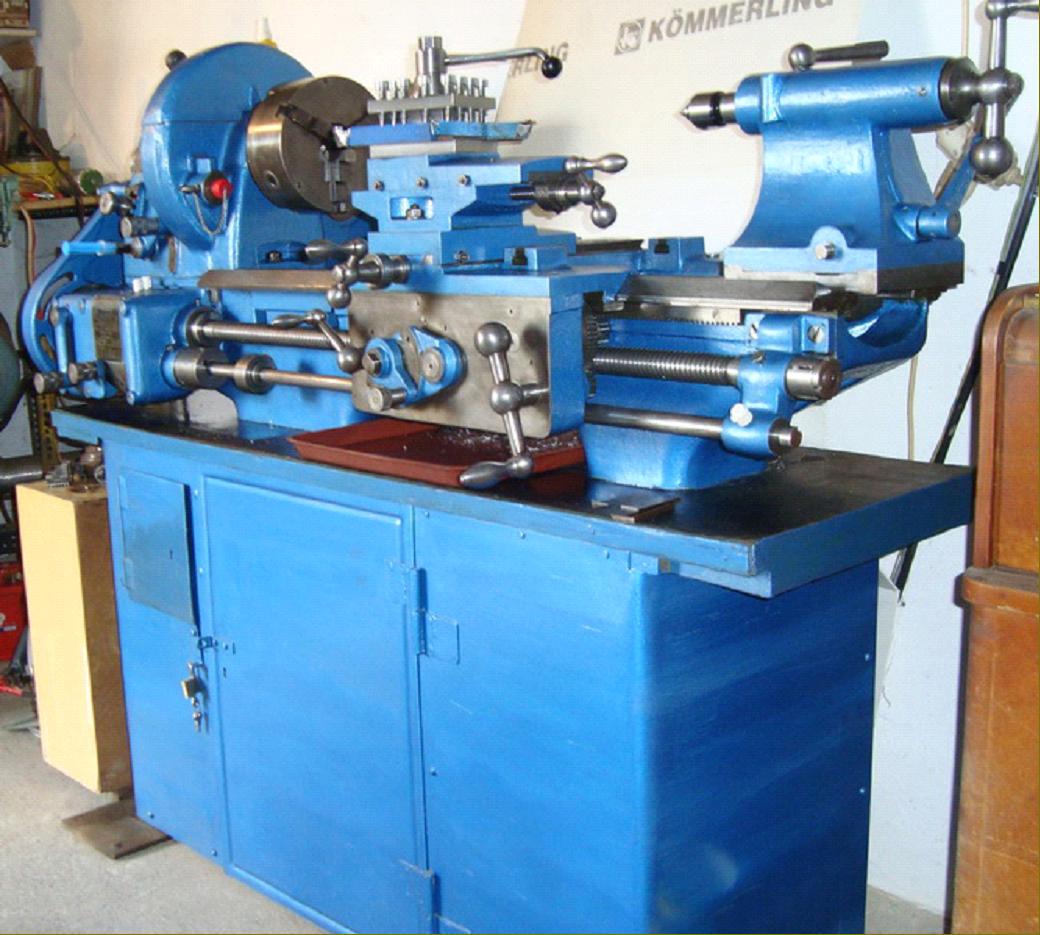
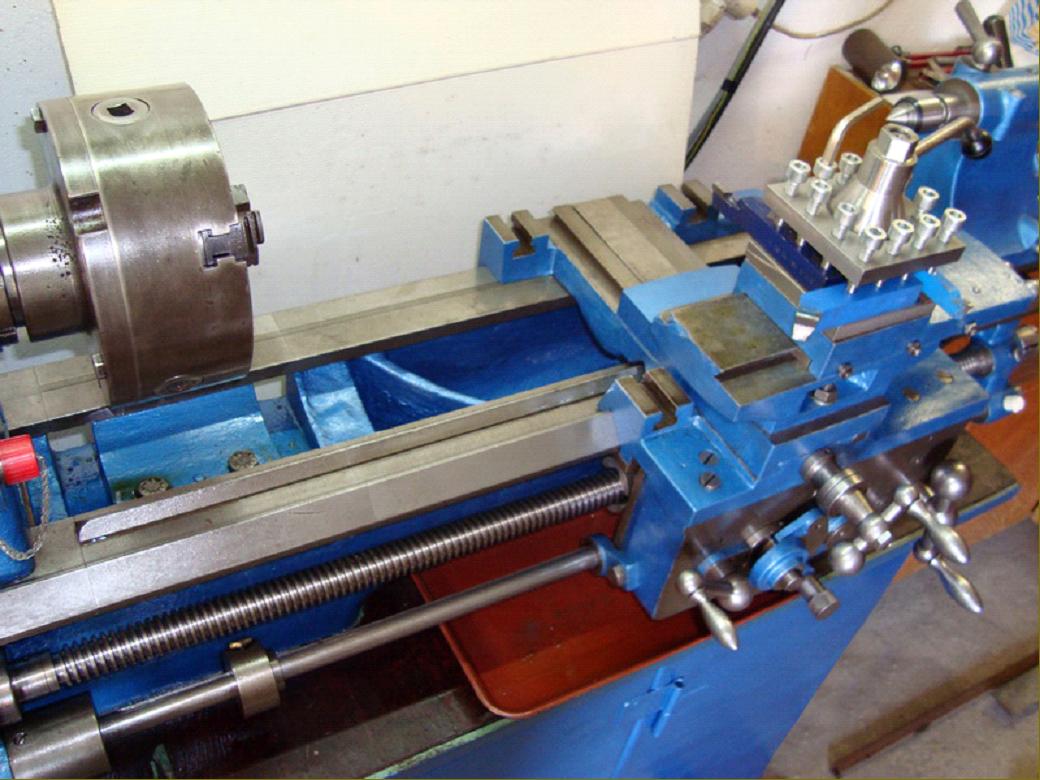
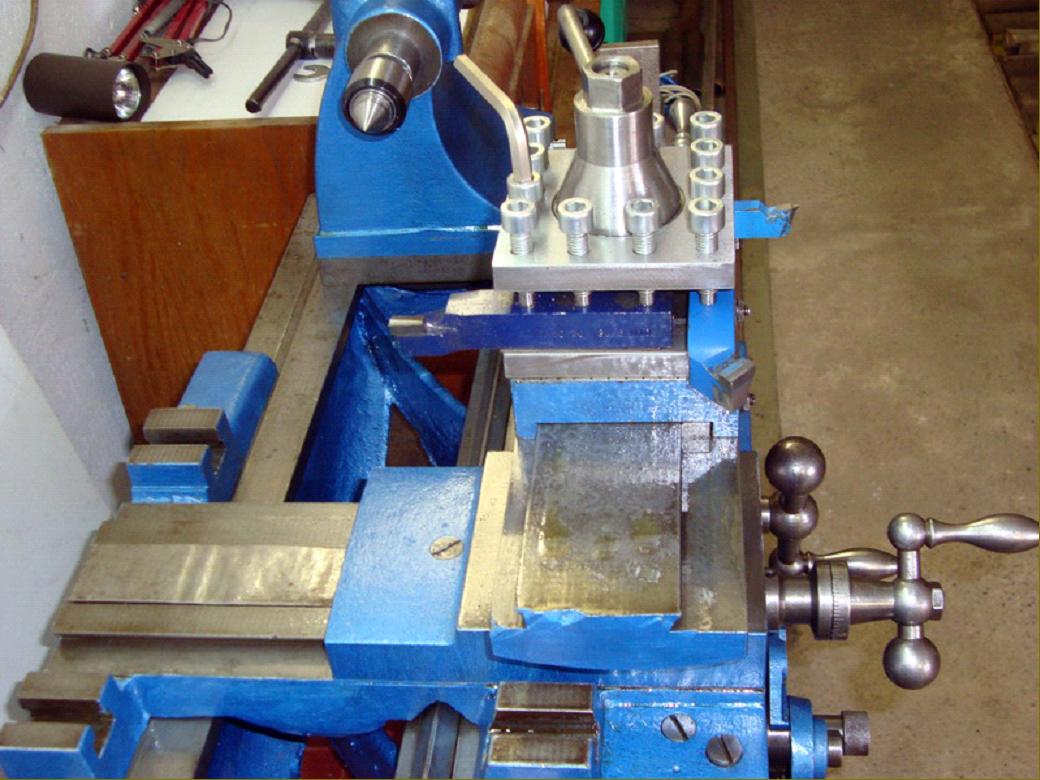
Also shown is a nicely restored 1941 example; painted blue this is a well proportioned lathe with excellent detailing.
If any reader has details of Fischer machine tools, the Fischer Company or Fischer advertising literature the writer would be pleased to hear from you.