|
Little is known of the background to the Childs Company, other than that they appear to have been, at one time, based in Fort Wayne, Indiana, and made a variety of small horizontal and vertical millers, a small plain-turning lathe, table saws, wood vises and at least one simple wood-turning lathe - all aimed, obviously, at the amateur and possibly the professional workshop dealing with smaller or lighter components. Other listed address for the Company includes Conneaut, OH, where they were known to have been based from October 1948 until July 1949; Conyers, GA listed as their base from 1971 until February 1973 and Winter Haven, FL.
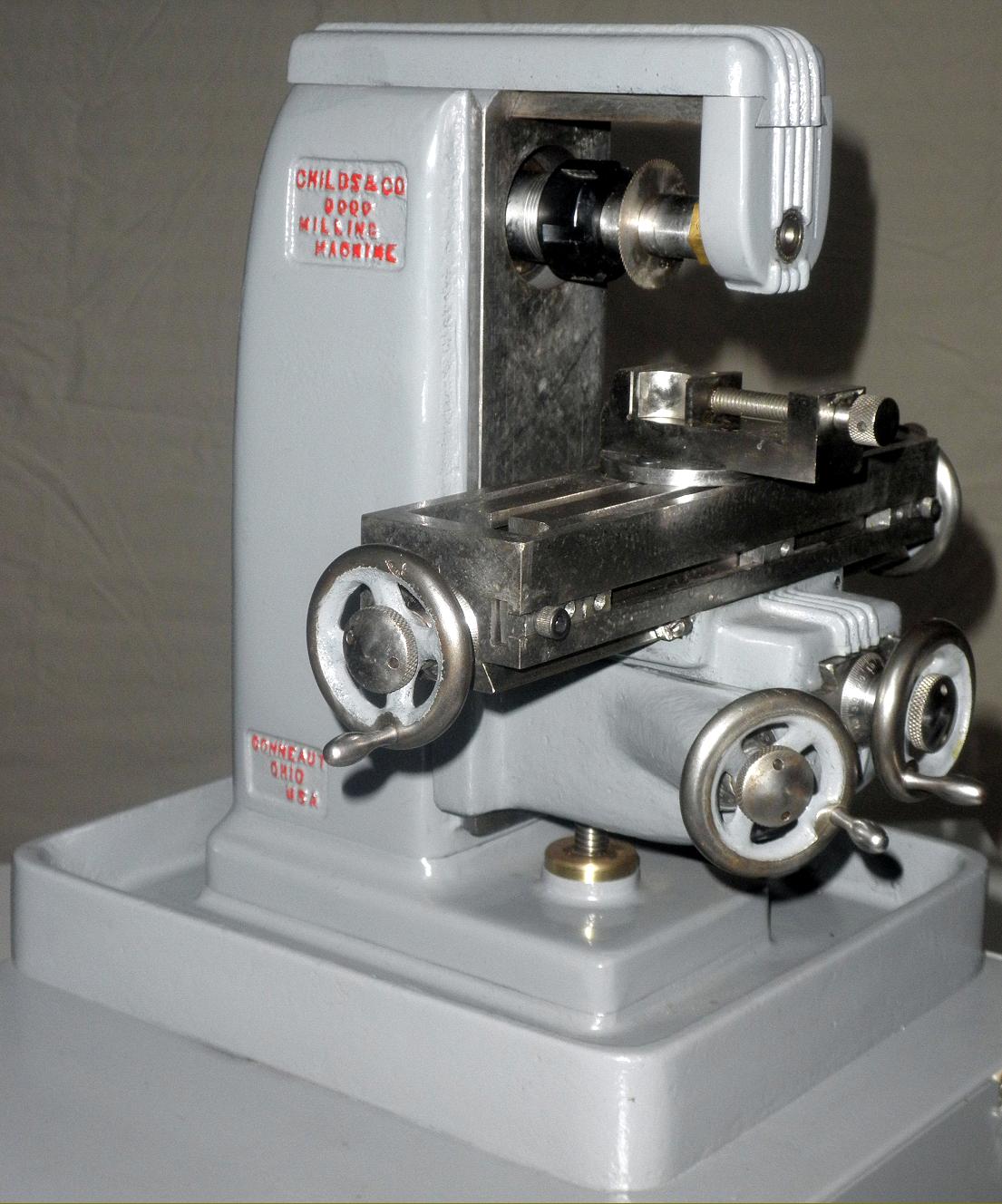
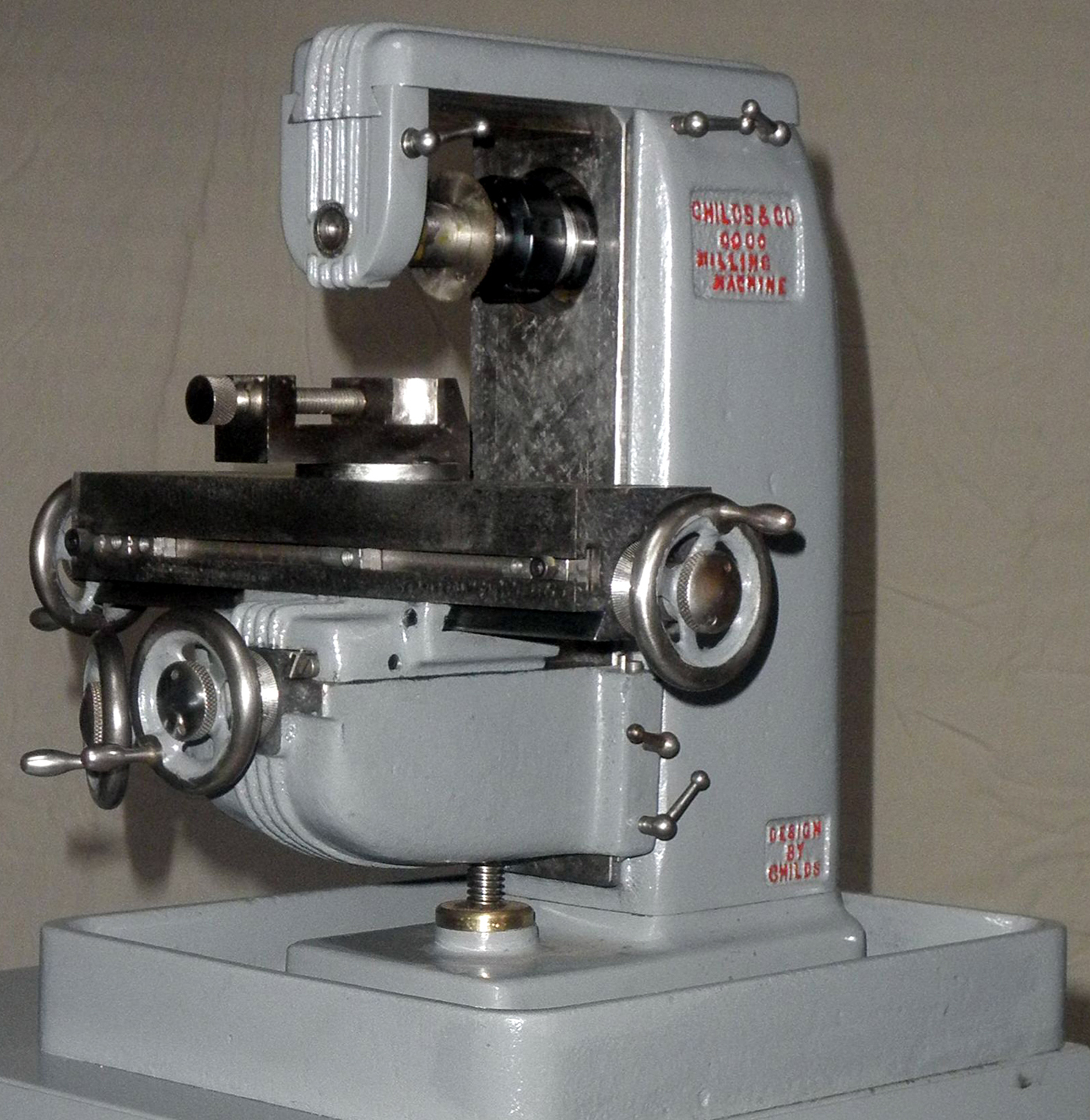
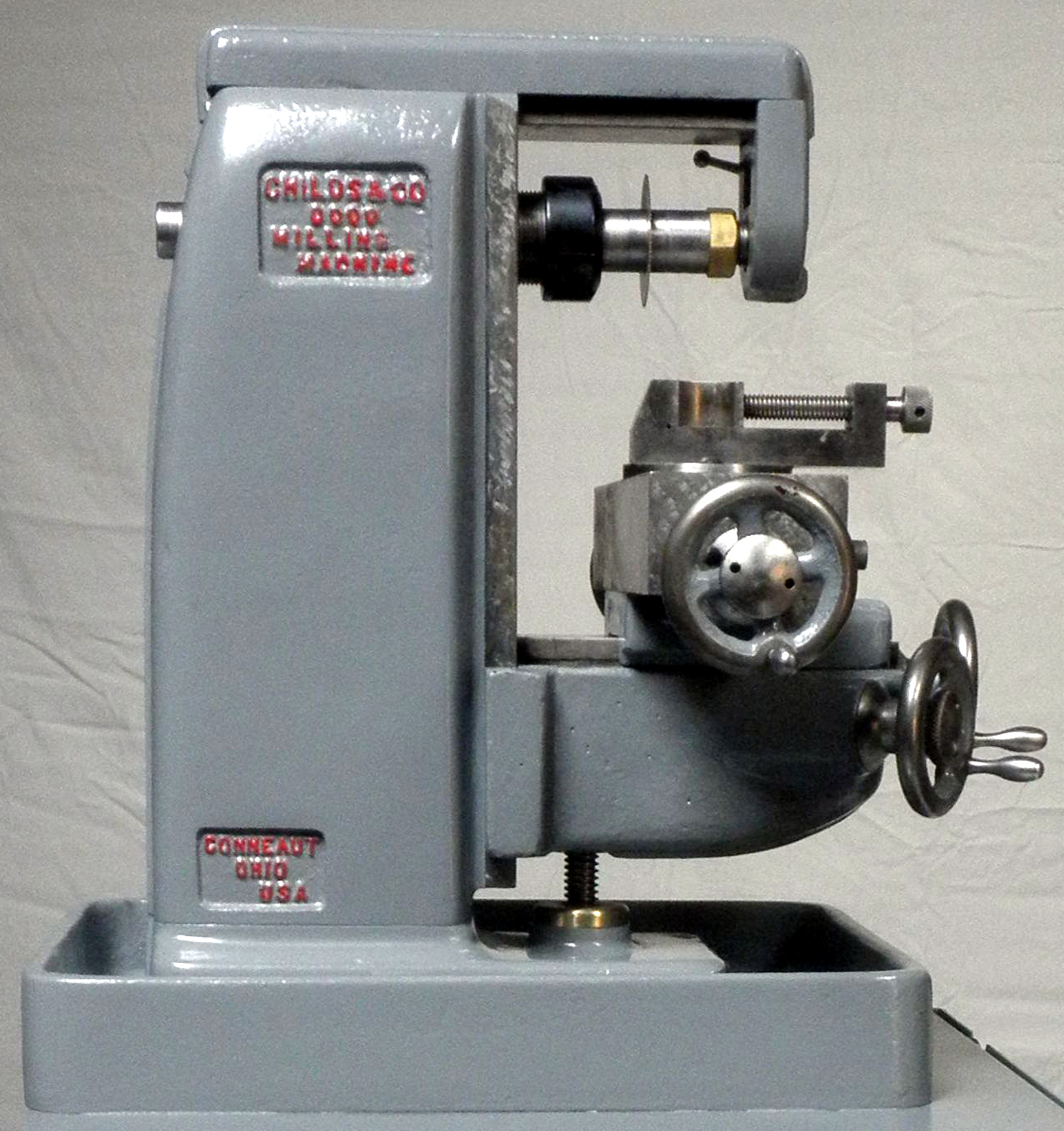
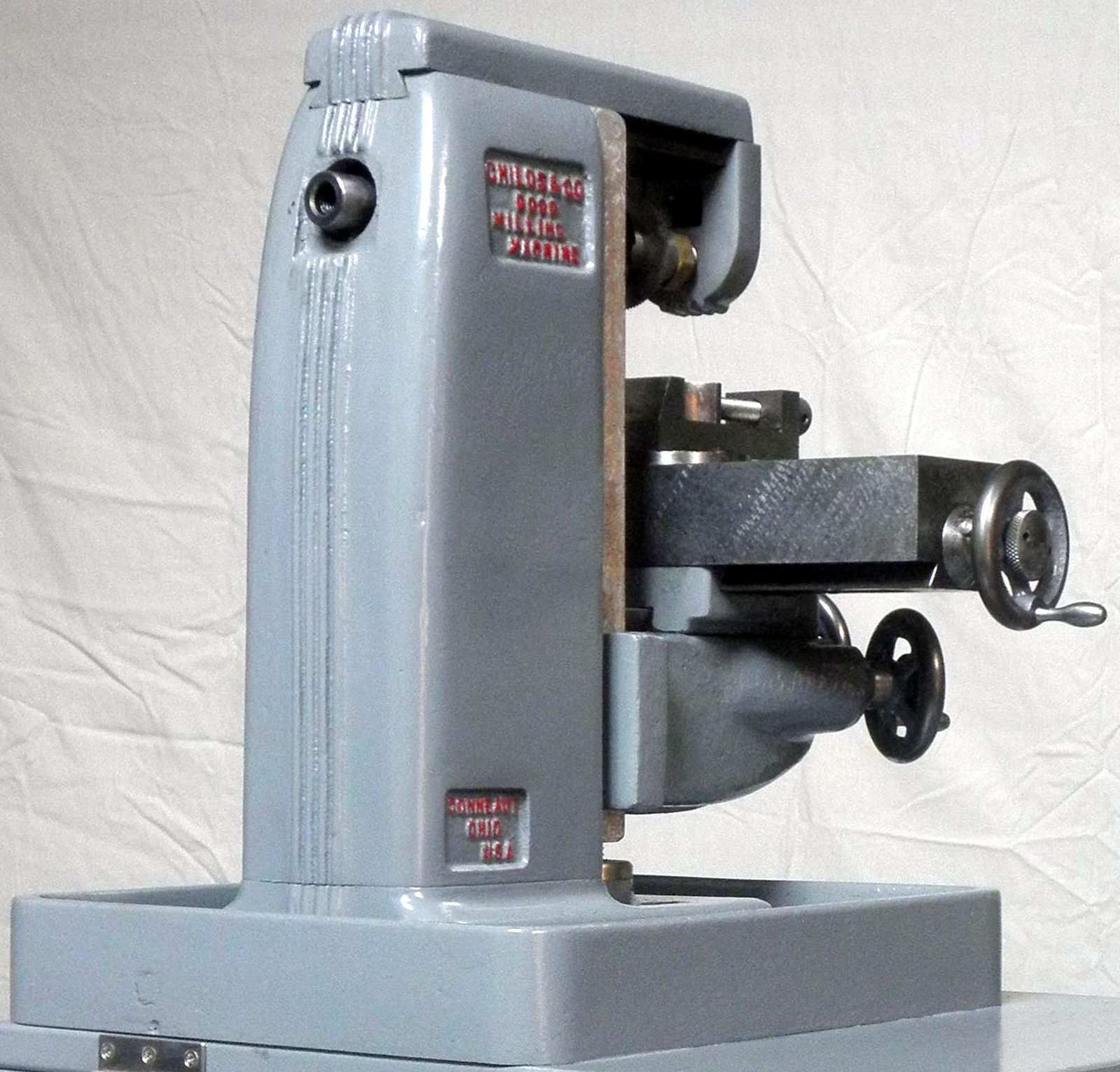
While most makers in the 20th century contented themselves with a Model number for their smallest machine of "0", and sometimes "00", Childs branded theirs as the "00000", an entirely apt designation for what was a horizontal miller of miniature (almost model-like) proportions. Unfortunately, details of that particular machine have been hard to discover, though we now know that it was built in at least two versions--what we might call the Mk.1, with traditional rounded castings, and the more modern-looking, rectangular Mk.2. Both had the column ways on the left-hand face of the column with the Mk.2 having an unusual table some 20 inches long but only two inches wide with a single, central T-slot. A surviving example of the Mk.2 was unknown until 2023 and is shown together with a Mk.1 at the bottom of this page.
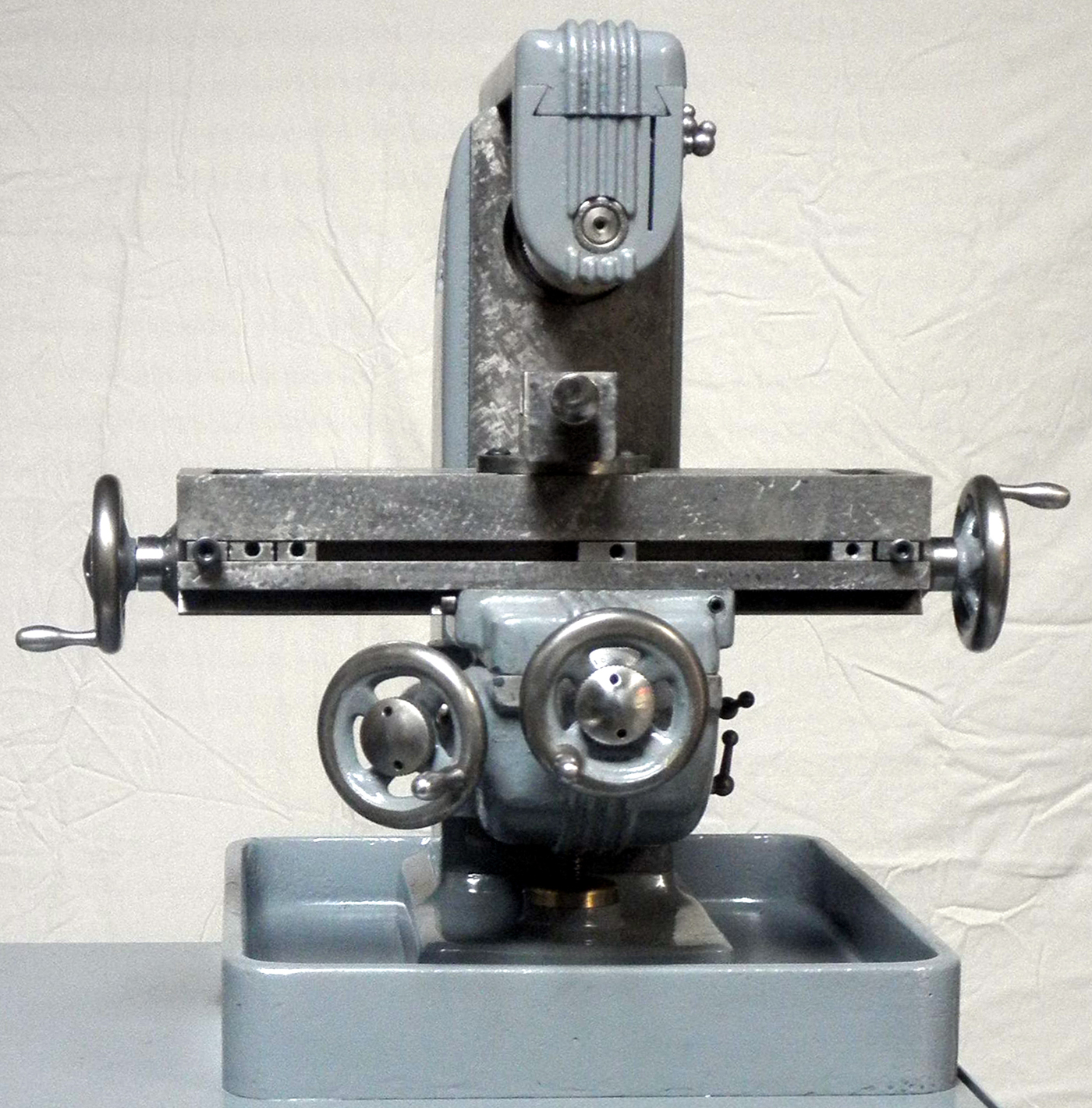
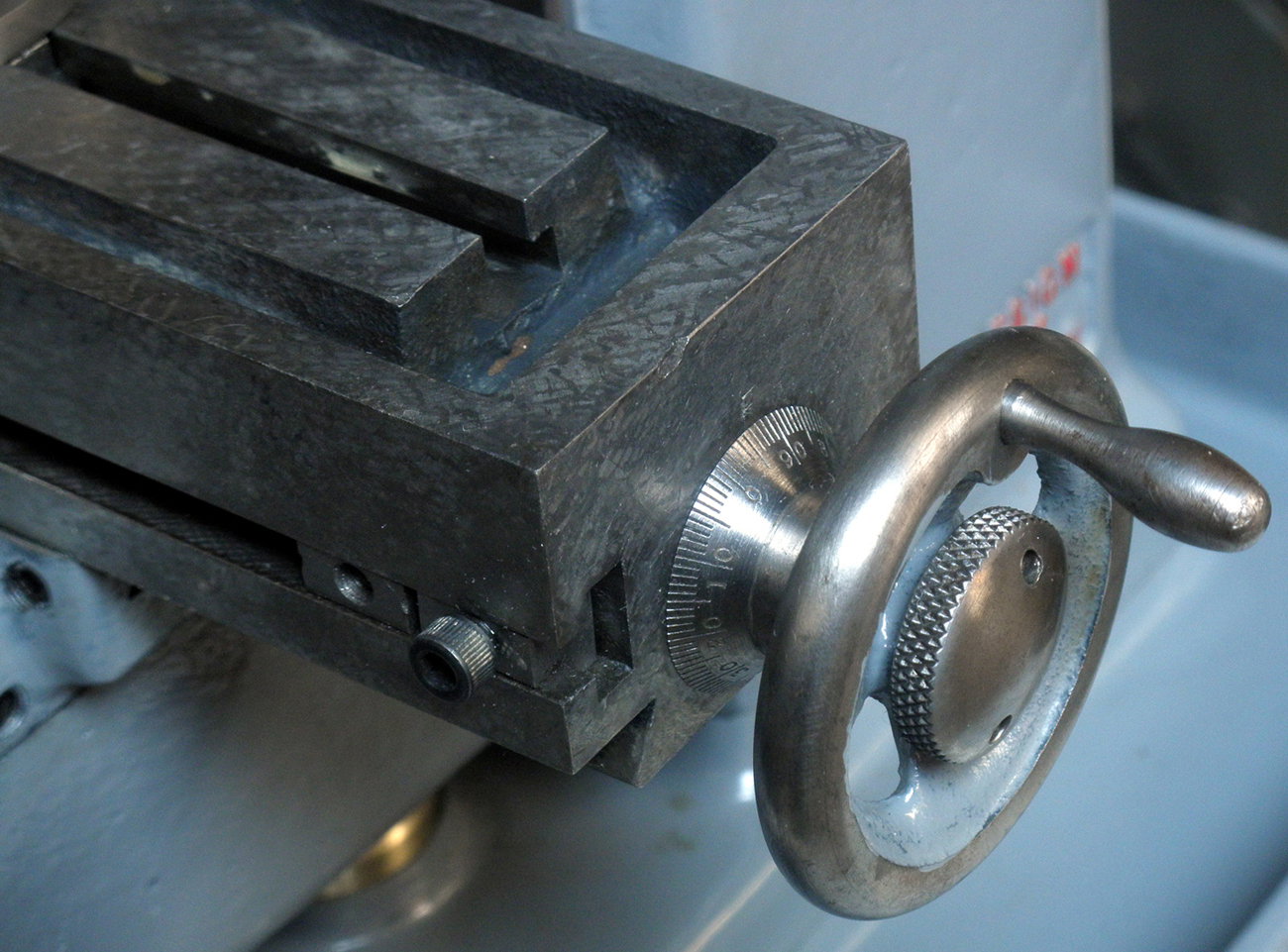
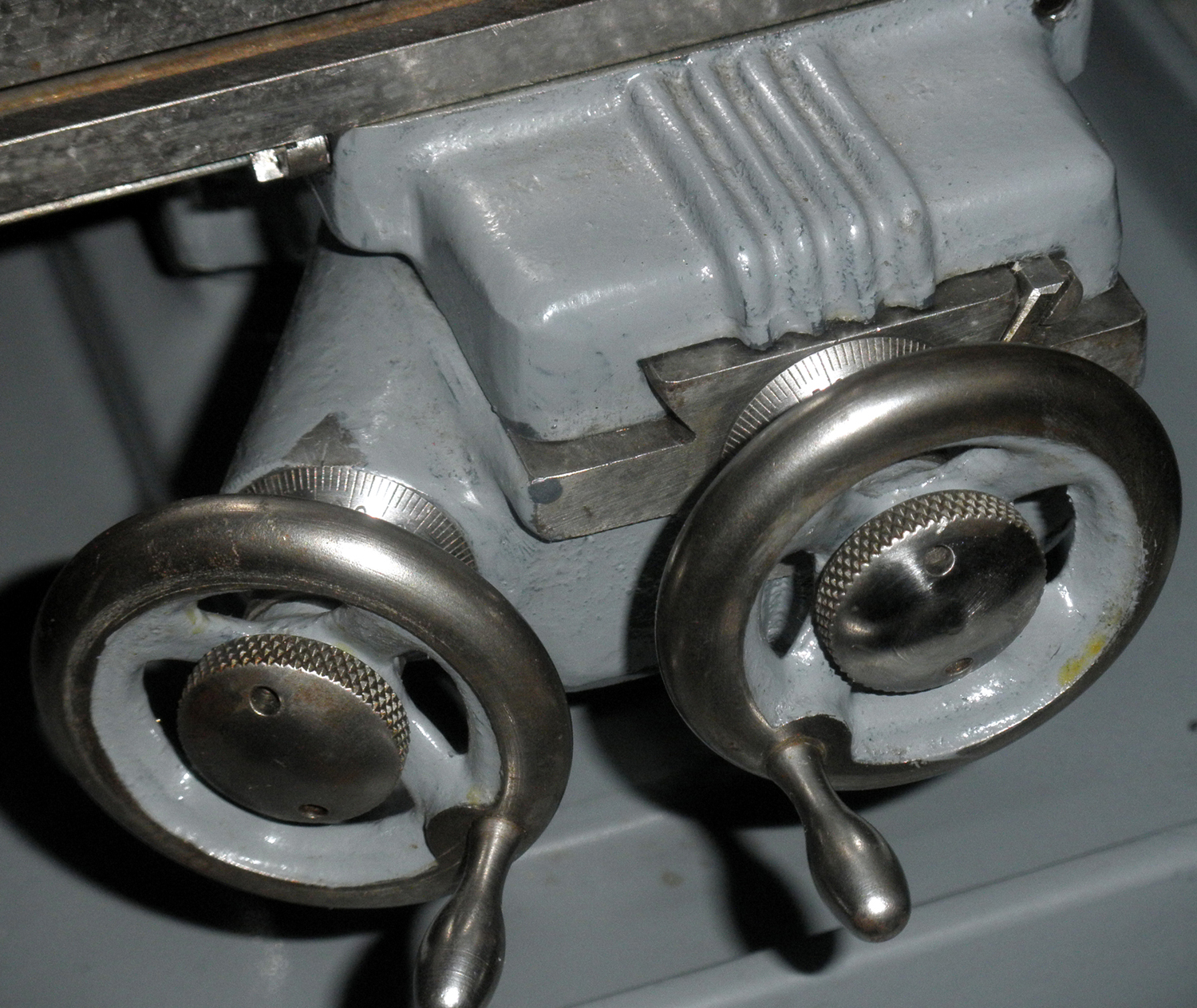
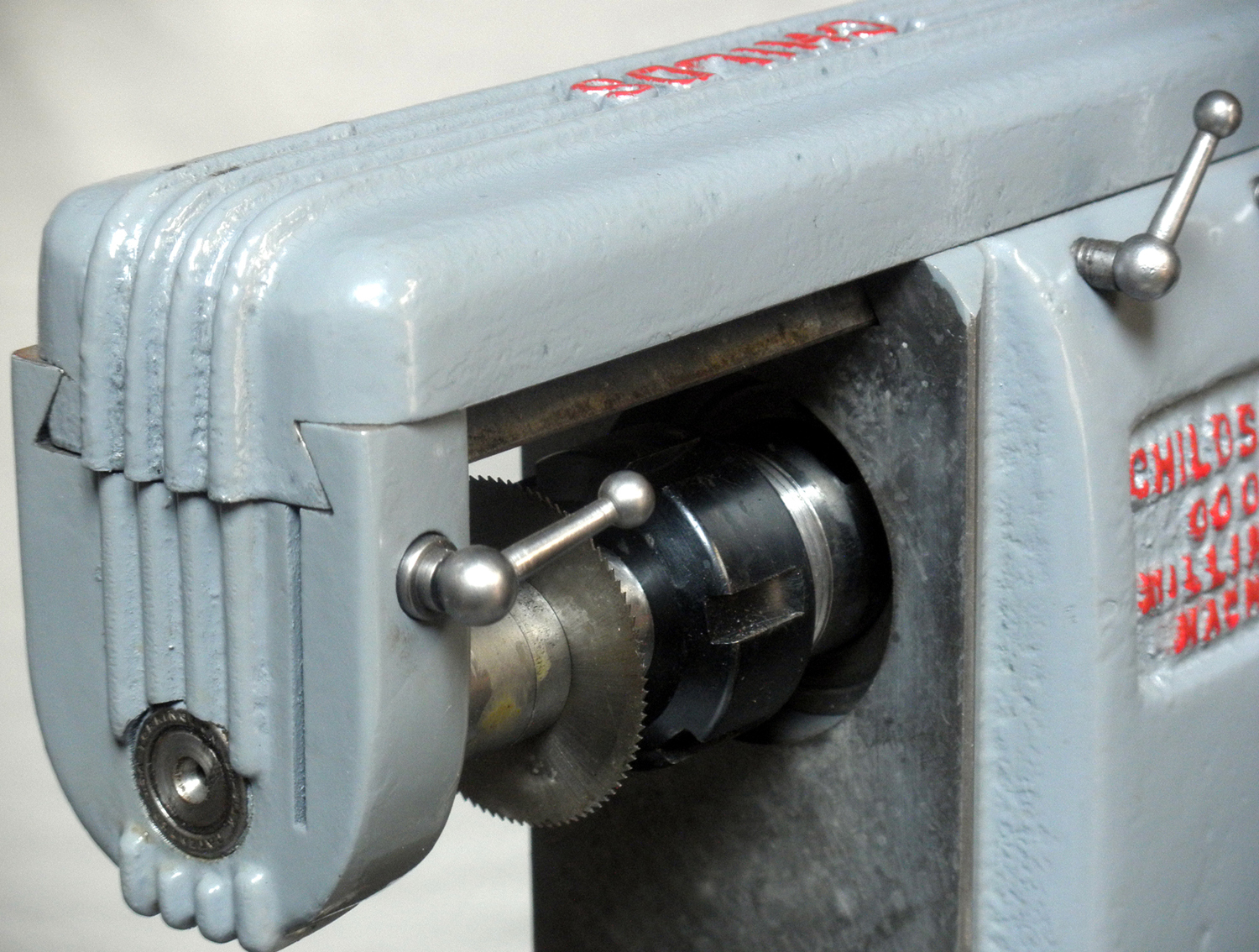
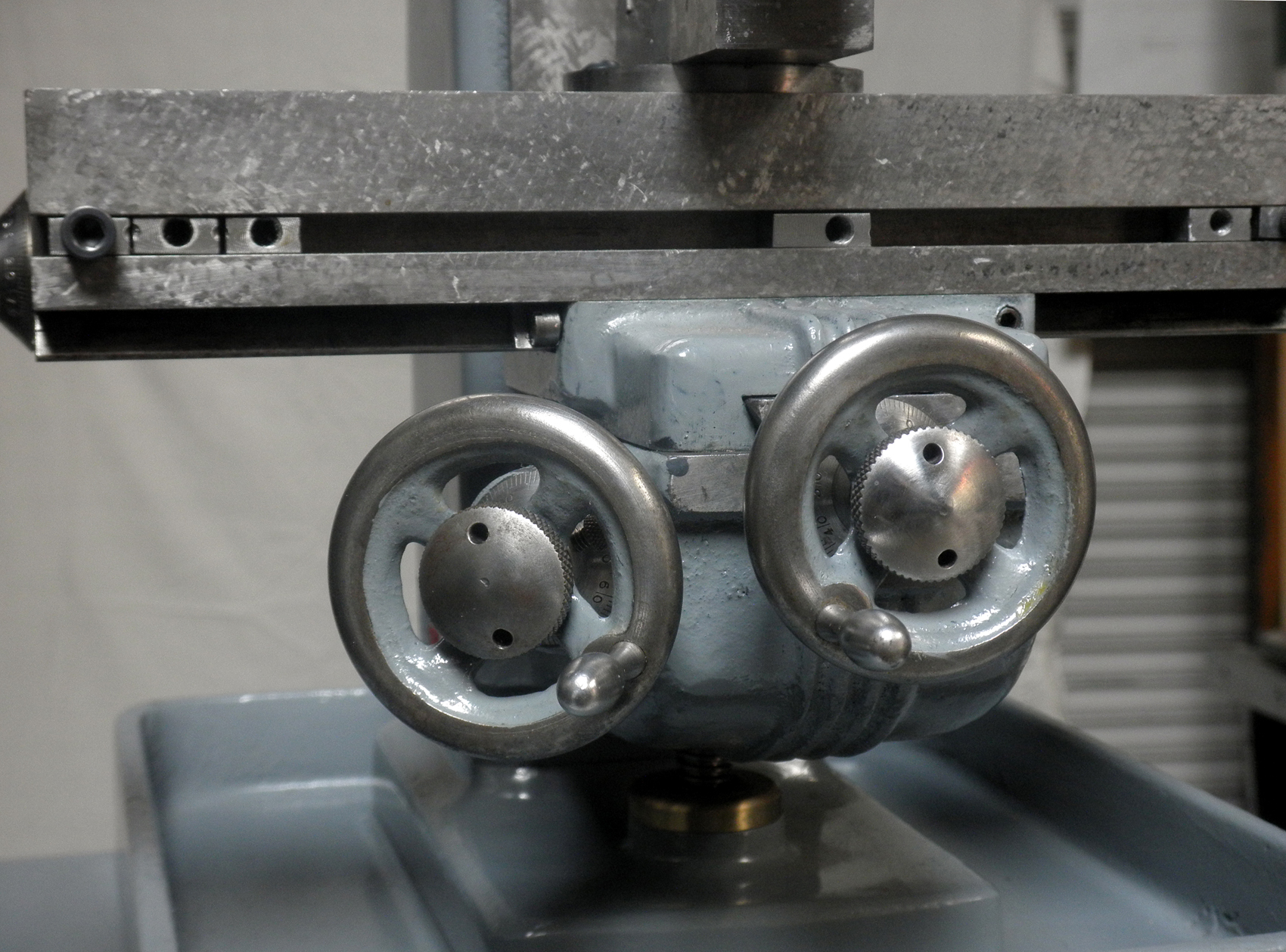
In comparison, the Company's Model 0000 was a monster with an overall height (on its legs) width and depth of 40, 10 and 12 inches respectively - similar to the first version of the English-made Centec. However, although small, the machine, with its distinctive ribbing to overarm and knee, was of a hefty build; its weight was around 100 lbs, whilst its specification and features both hinted at the intention for it to be used as a serious workshop tool. Although, in comparison with the rest of the machine, the single T-slot table was enormously thick, it was only 2.5" wide and its working area reduced to just 1.75" x 8.5" by a surrounding coolant trough. Longitudinal movement was around 7 inches and traverse and vertical, just slightly more than 3. Handwheels were provided at both ends (many similar machines had to be content with one) with crisply engraved, bevelled-face zeroing micrometer dials that could be locked by neat, knurled-edge wheels that drew the dial along the axis of the feed shaft and so avoided upsetting the reading. Instead of the round-overarm so frequently found on millers of this class, the Childs was equipped with a robust-looking, much more rigid dovetail type - and with a decently-sized drop bracket and a mandrel driven by a Morse taper spindle or, in some cases (and presumably intended for stub milling only), one that took Brown & Sharp collets of the ordinary screw-machine type. The main column sat in a cast-iron tray with the properly-constructed, 9-speed all-V-belt drive countershaft slung, in an exposed position, between the stand legs and - hinting at a capacity for hard work - final drive to the spindle by twin belts passing upwards through the column. That the drive was exposed in this way was essential when speeds had to be changed by juggling the position of two belts: one between the motor and an intermediate shaft and a second from that shaft to another above. To provide a suitable mounting point for the lever that slackened the belt, a long cast arm was arranged to hang down from the underside of the chip tray's front edge. An alternative, a much more compact (and almost certainly cheaper) drive system, has also been reported, with an input pulley on the left-hand face of the column connected to an internal speed-reducing worm-gear assembly. With this arrangement, all that was needed was a suitable bench with a motor bolted behind.
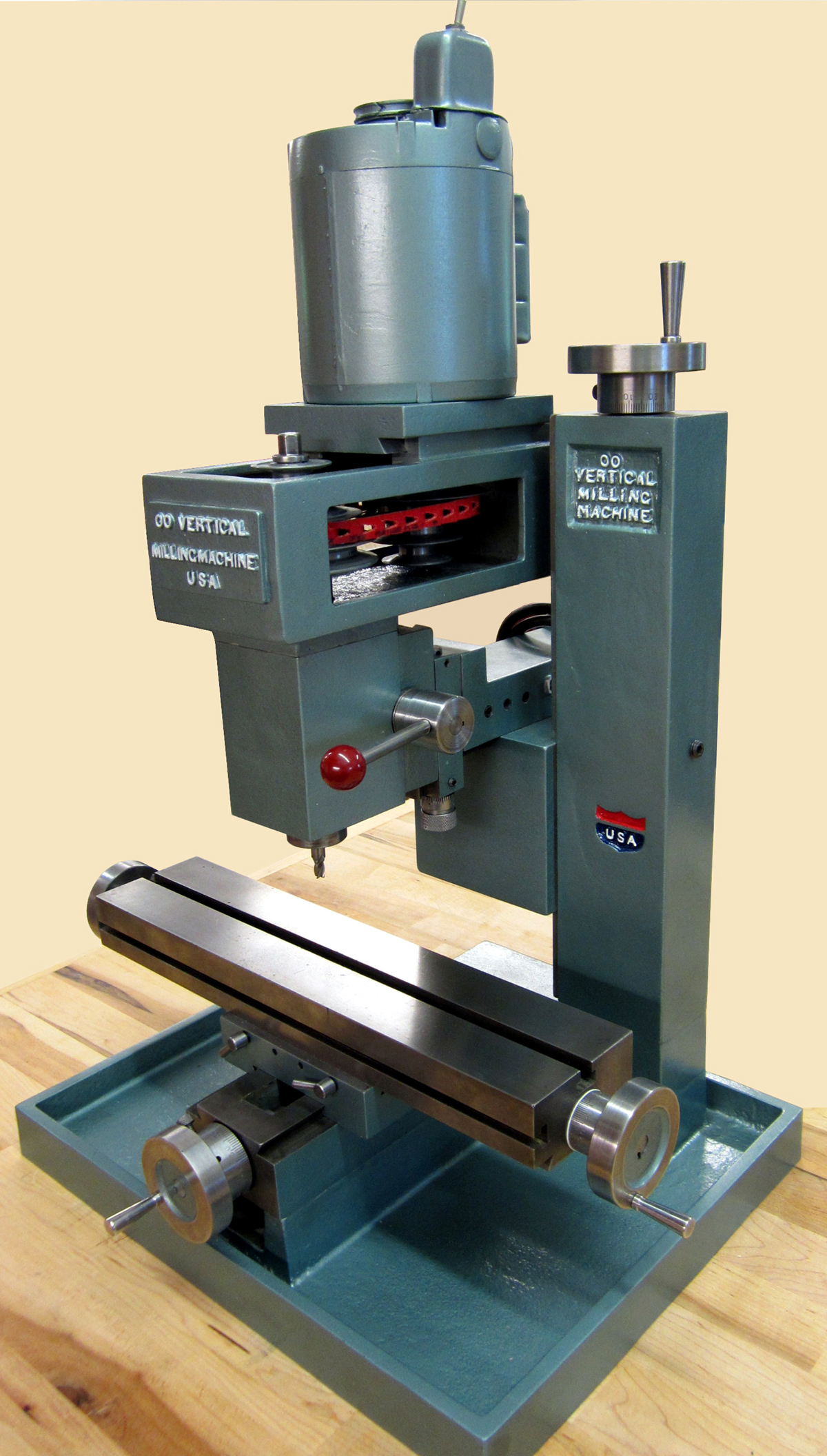
Of unusual design for so small a machine, the other known Childs millers, miniature vertical "ram-type verticals Models 00 and 0000l", appears to have had all their major parts made from rectangular castings. Both had their vertical column offset to the right of the table's lateral centre line - giving a rather unbalanced appearance - with the "knee" sliding up and down the left-hand face under the control of a vertical screw.
If you own a Child's Miller or can contribute additional information about the Company - especially copies of sales or technical literature - the writerwould be very interested to hear from you.
|
|