email: tony@lathes.co.uk
Home   Machine Tool Archive   Machine-tools Sale & Wanted
Machine Tool Manuals   Catalogues   Belts   Books   Accessories

lathes.co.uk
Austin 7 Vans

Continued on Page 2

Many more pages on the Austin 7 Here


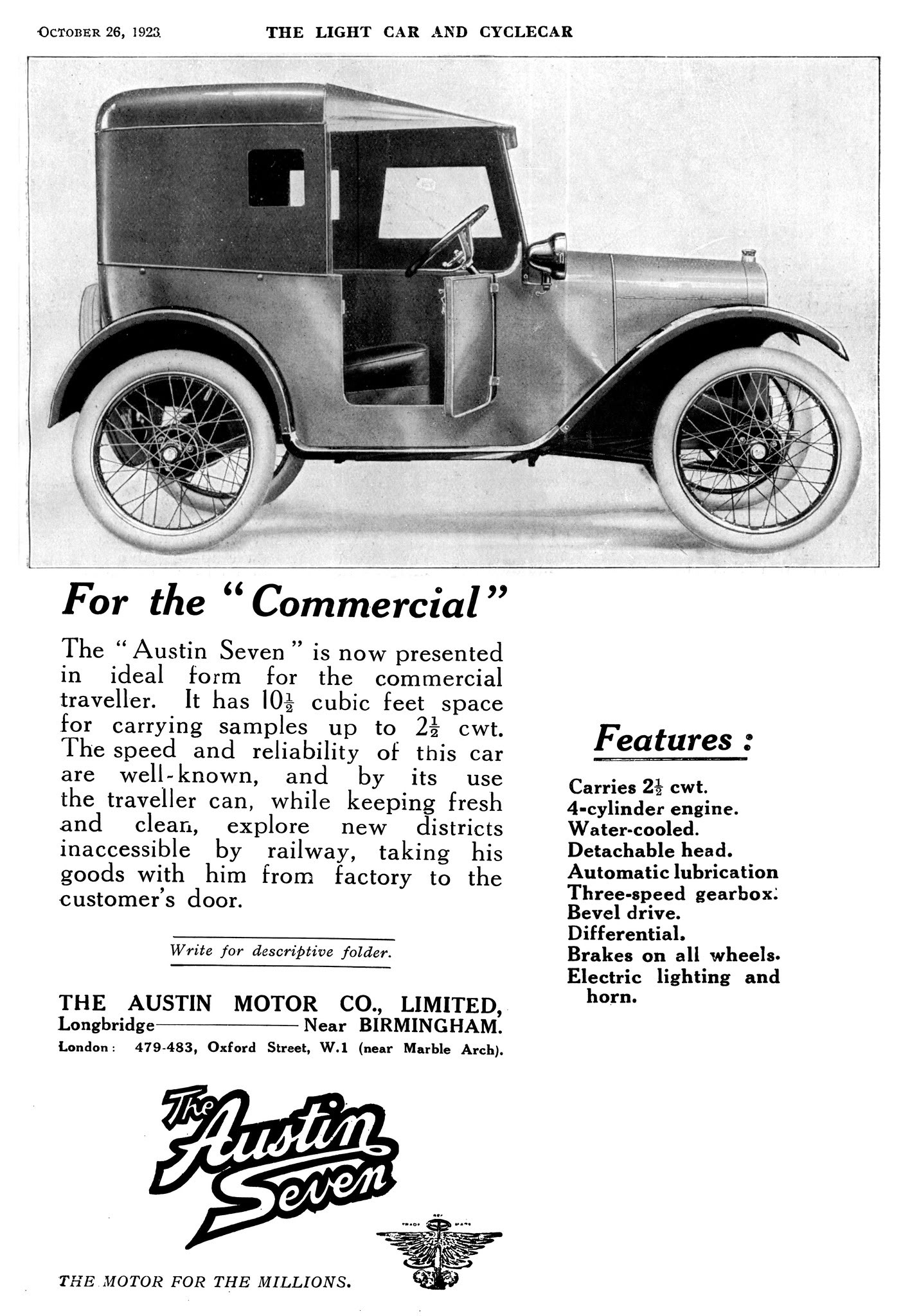
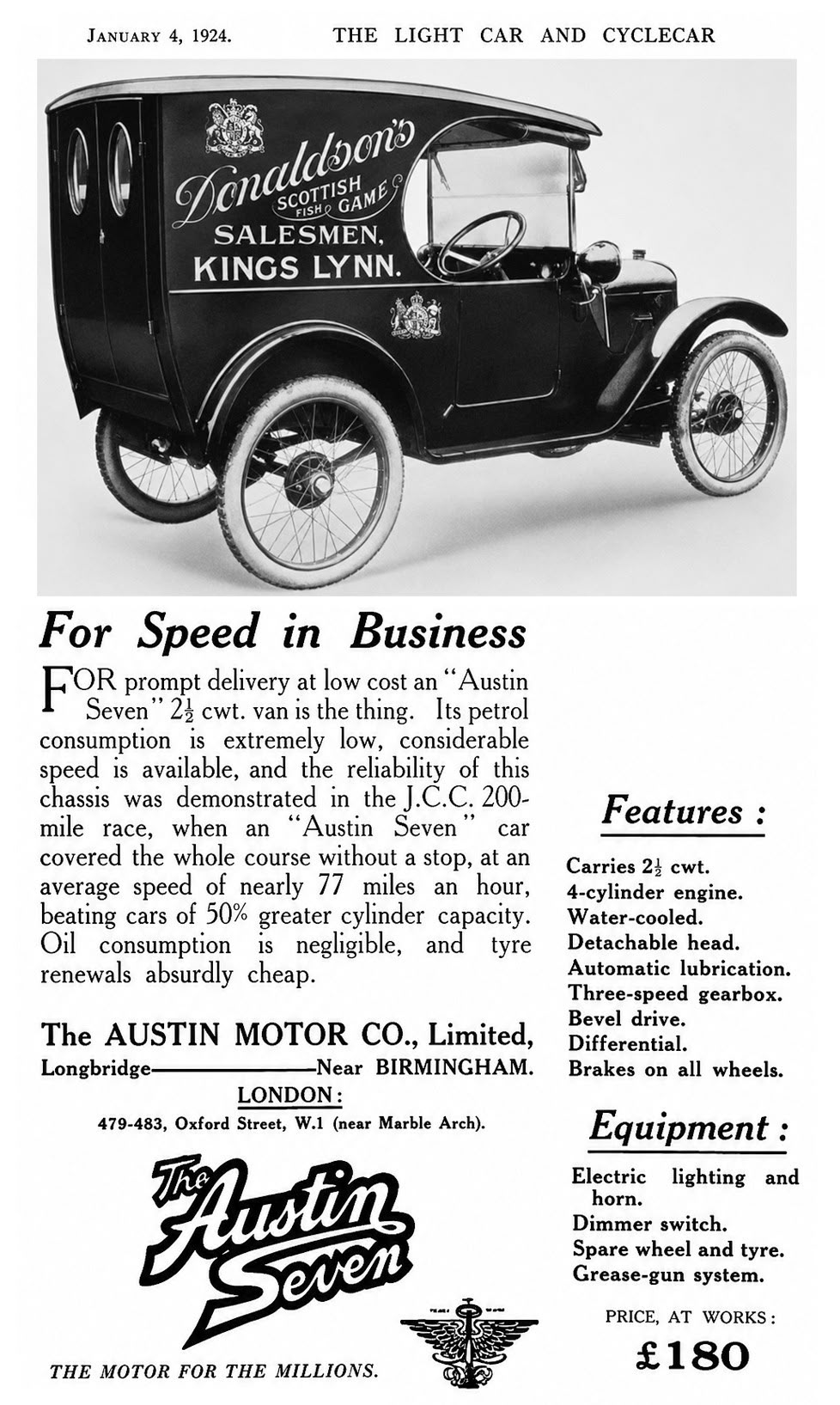
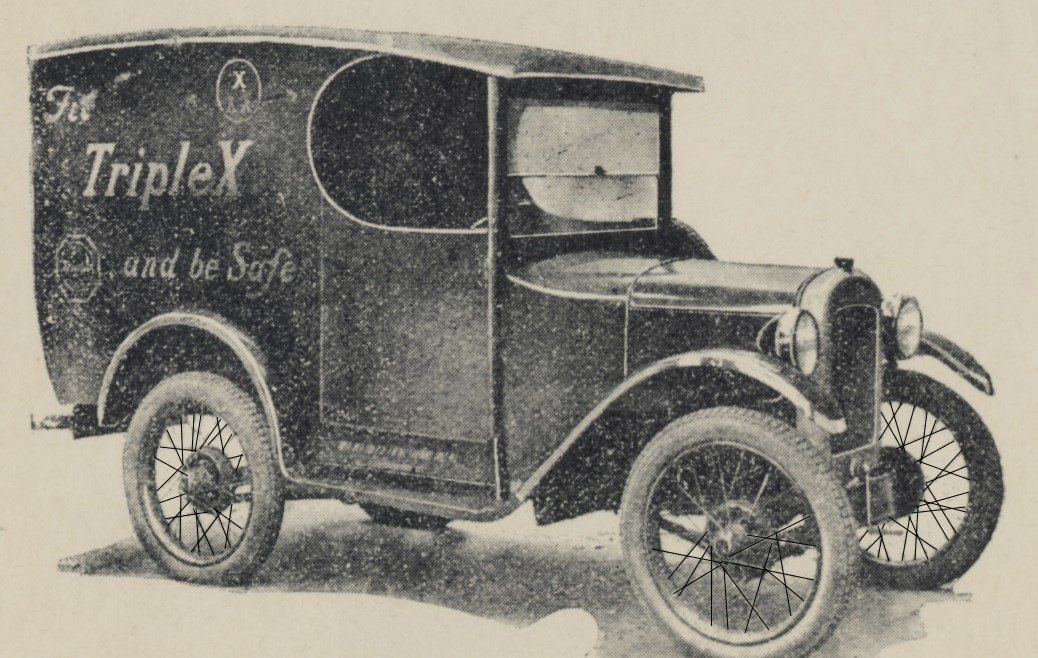
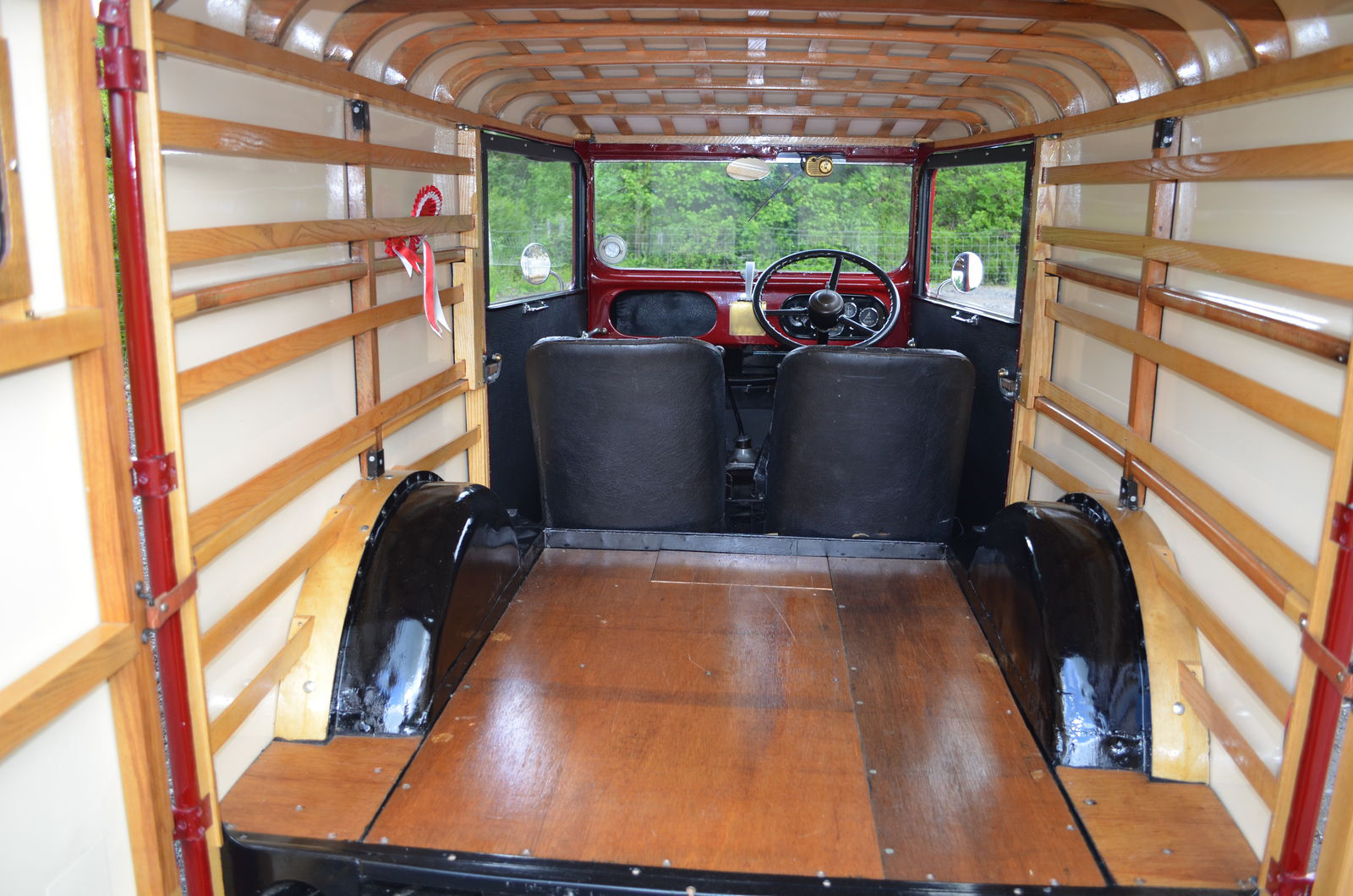
Austin designed its first vans in-house, but an outside company in Birmingham, Startin, built them. This charming vehicle was based on the second Chummy body, the Type B, introduced in March 1923, and used that car's bulkhead, bonnet, 'coal-scuttle' scuttle, and presumably the front floor pan. This advertisement is from January 1924, just two months after the introduction of an electric starter. As this feature isn't mentioned in the text, it might have been omitted to save money. As there was no means of fitting rigid sidecreens, on each side of the C-shaped openings was a roll-down side curtain. Behind the standard-fit bench seat was a full-height bulkhead. The van, advertised as carrying a load of 2.5 cwt, was usually supplied in primer and stayed in production for about a year. Its replacement, a very similar-looking model, was based on the next Chummy body, the Type C.
A summary of van models
VANS
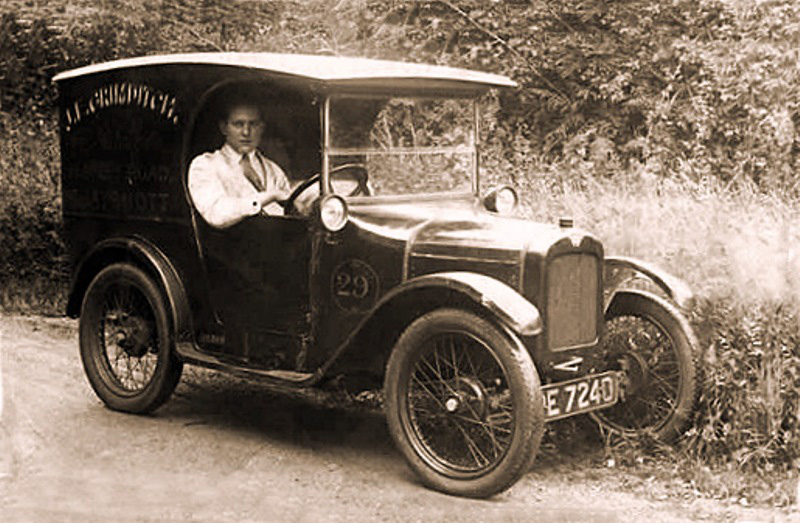
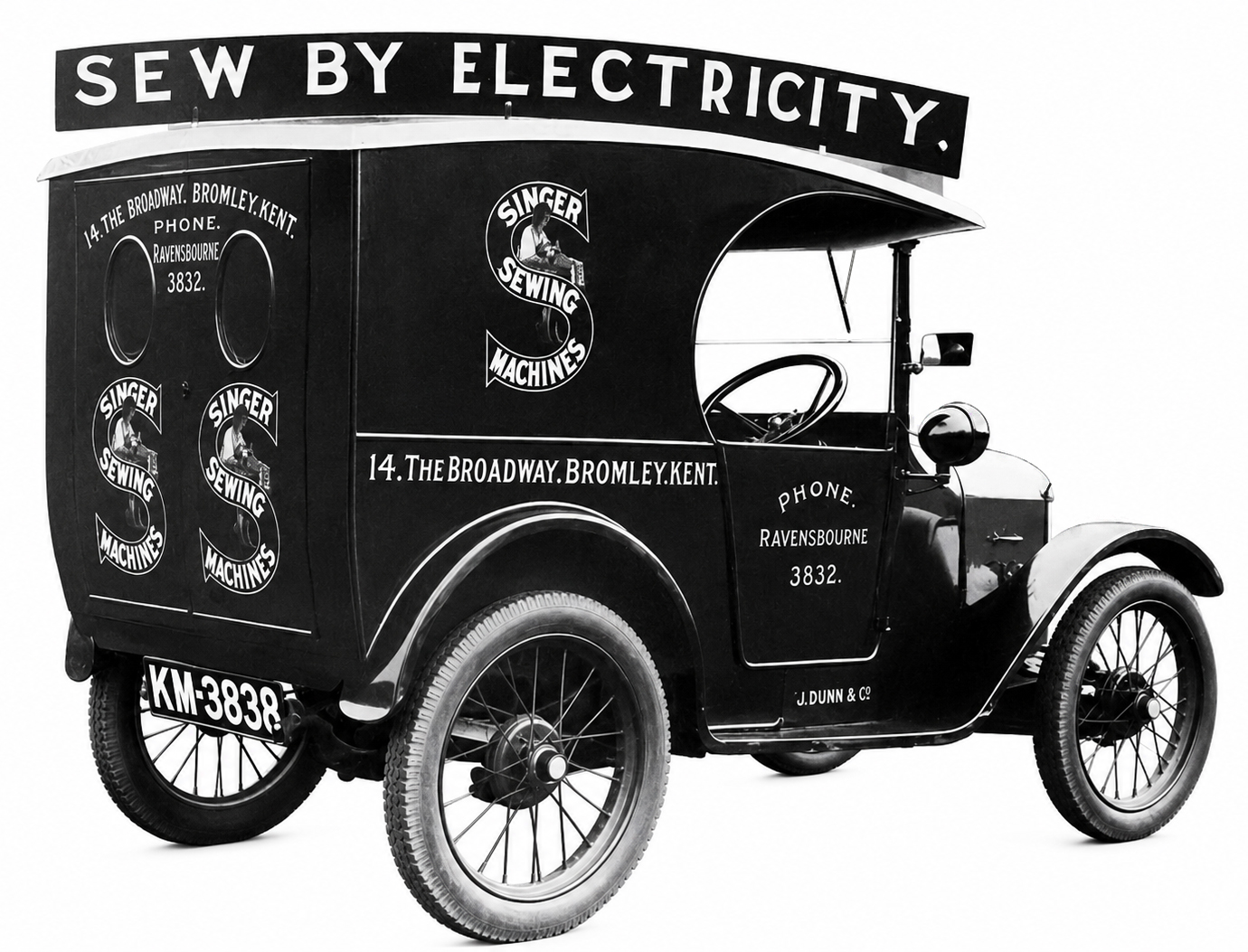
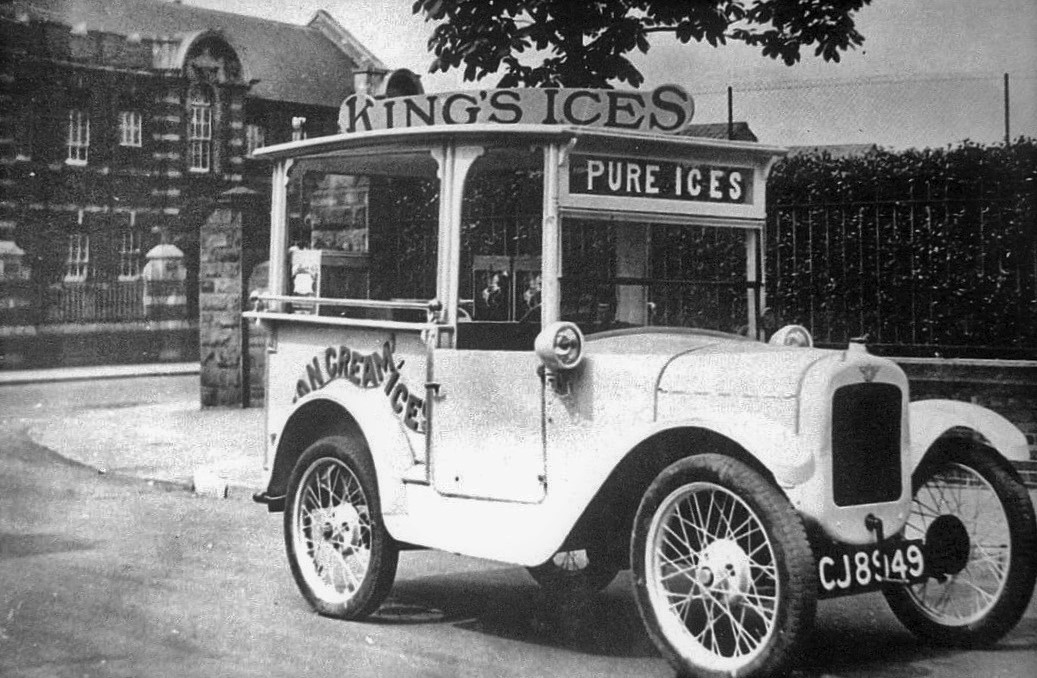
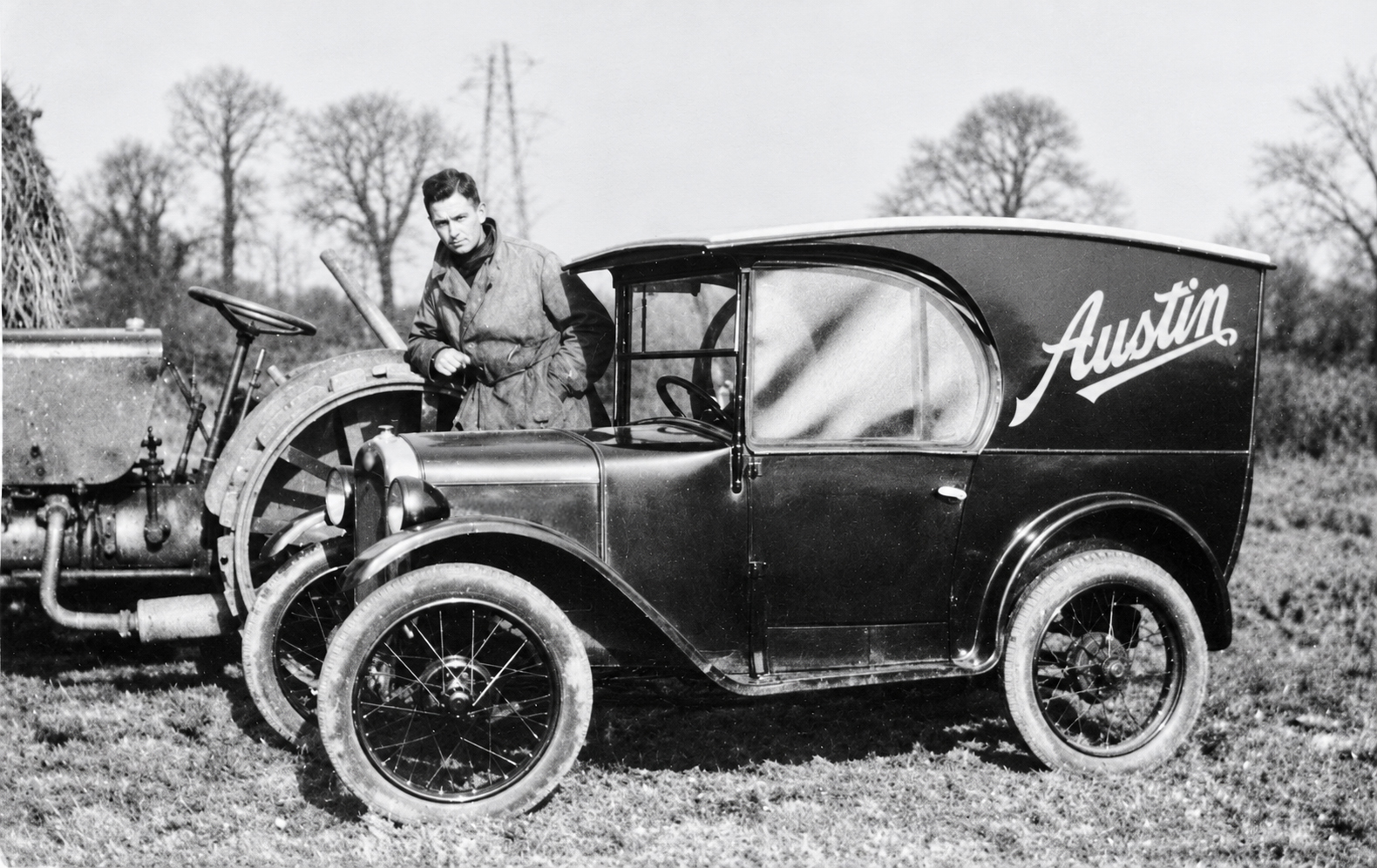
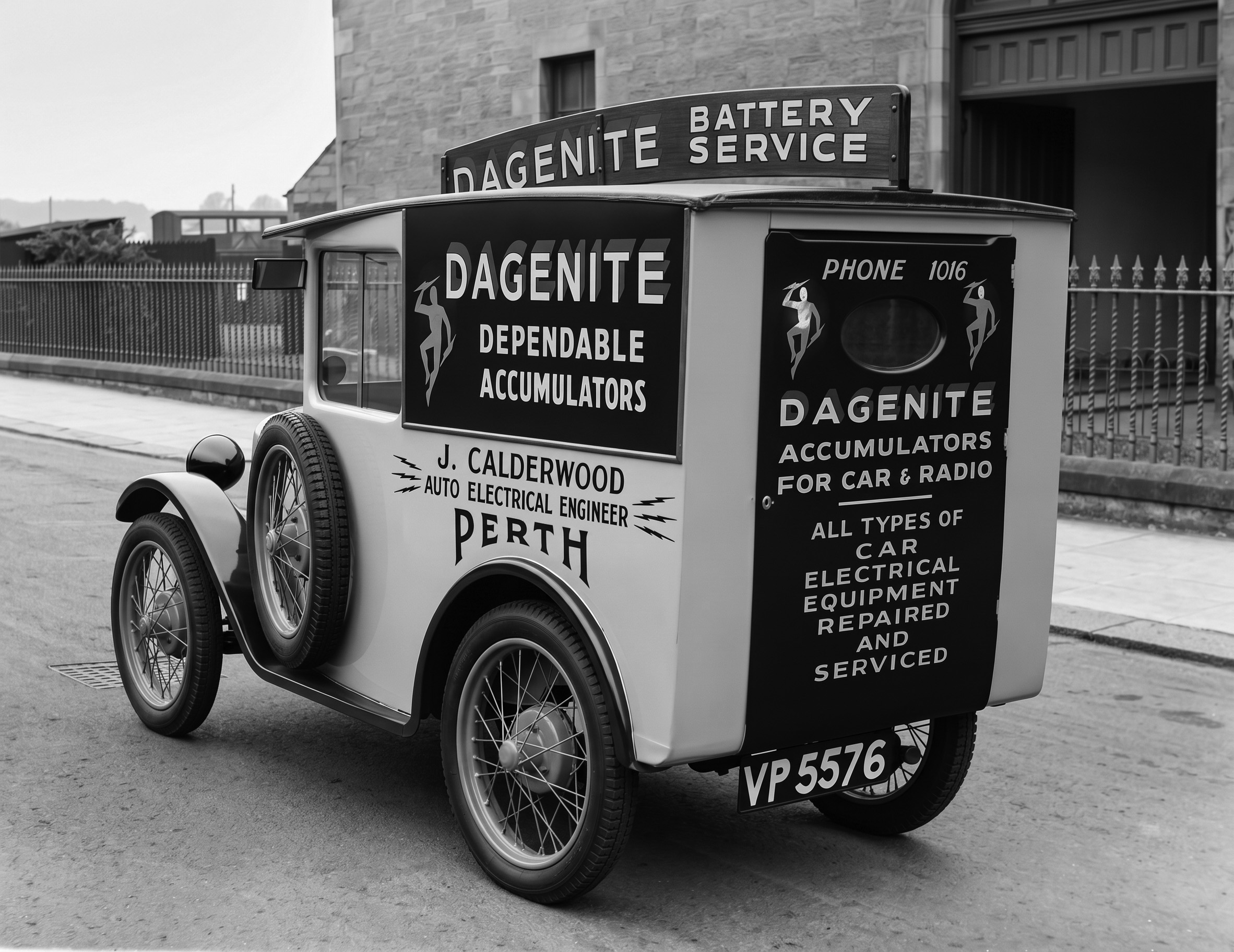
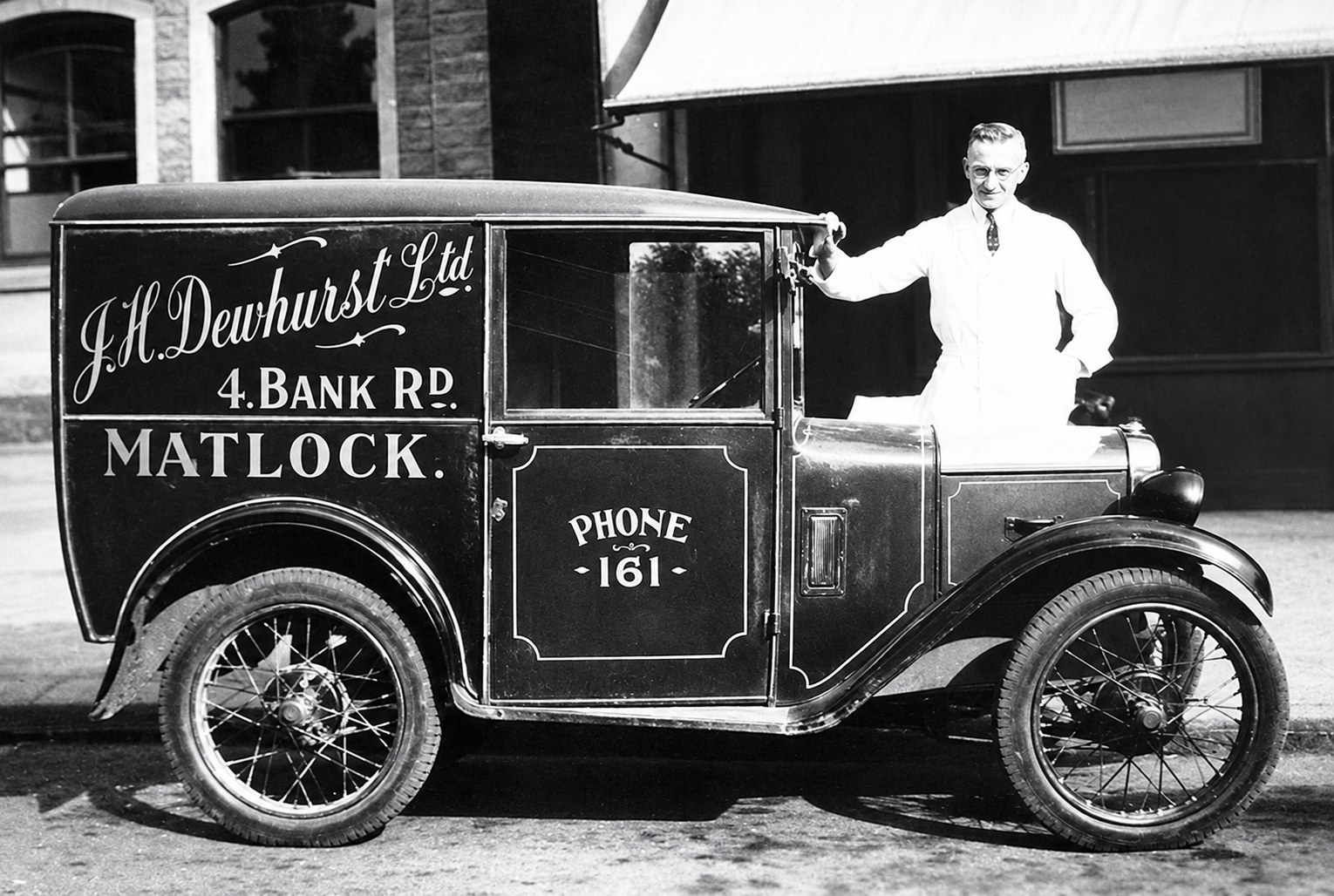
The Types B, C, D (later the AD) and AE vans were bodied by the Birmingham Company Startin and some later ones by Gordon England.
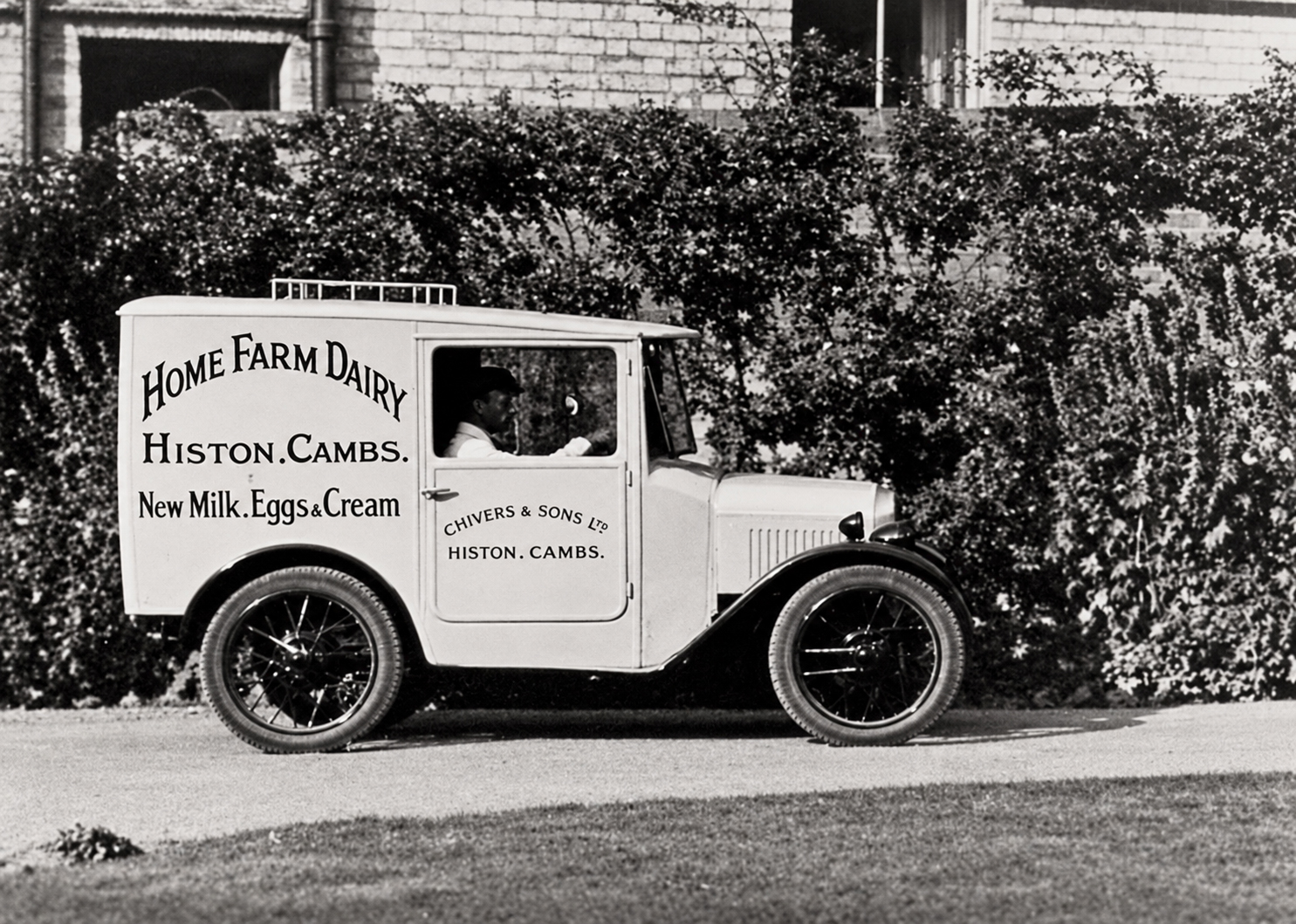
Type VD: Introduced in June 1930 and based on the new all-steel RL saloon with coupled brakes. The steel body, made faster and more economically from machine-pressed panels, enabled Austin to bring van manufacture in-house.
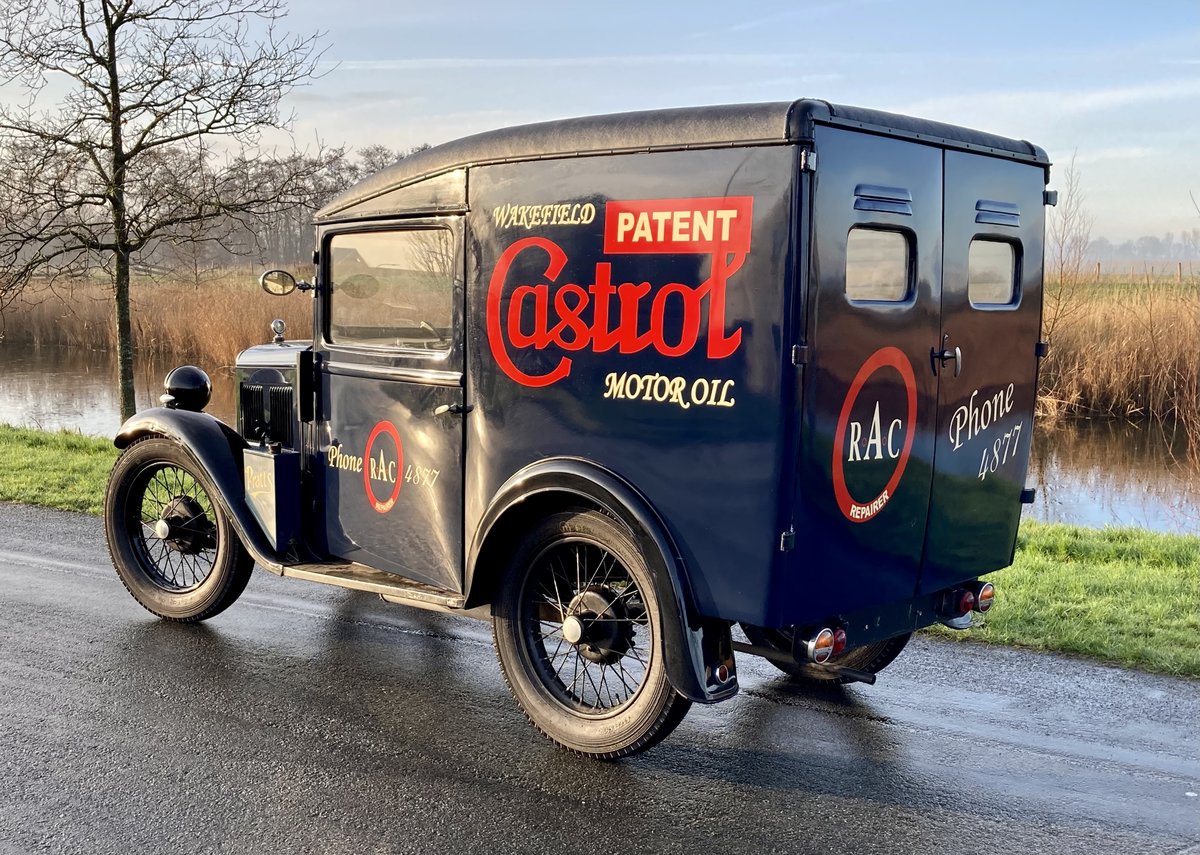
Type VE: Bodied by Austin, short wheelbase. January 1931 to November 1931. It can be distinguished from the VD by its rear door with rectangular instead of oval windows
Type VG and AGV: 5 cwt; and its capacity increased to 46 cu. ft. Long wheelbase (LWB), adapted from the RN body. Made from mid-1932 until December 1932
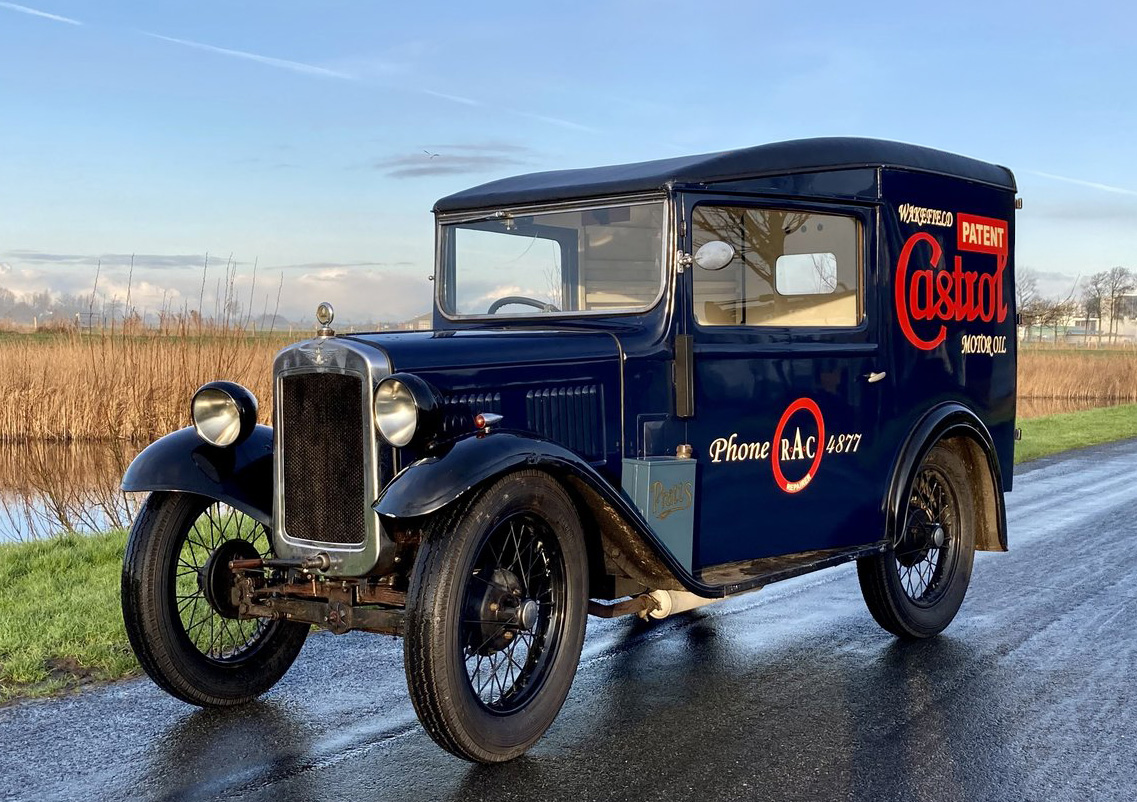
Type AVH: high frame, LWB, 4-speed gearbox, passenger seat optional. Made from January 1933 to 1935
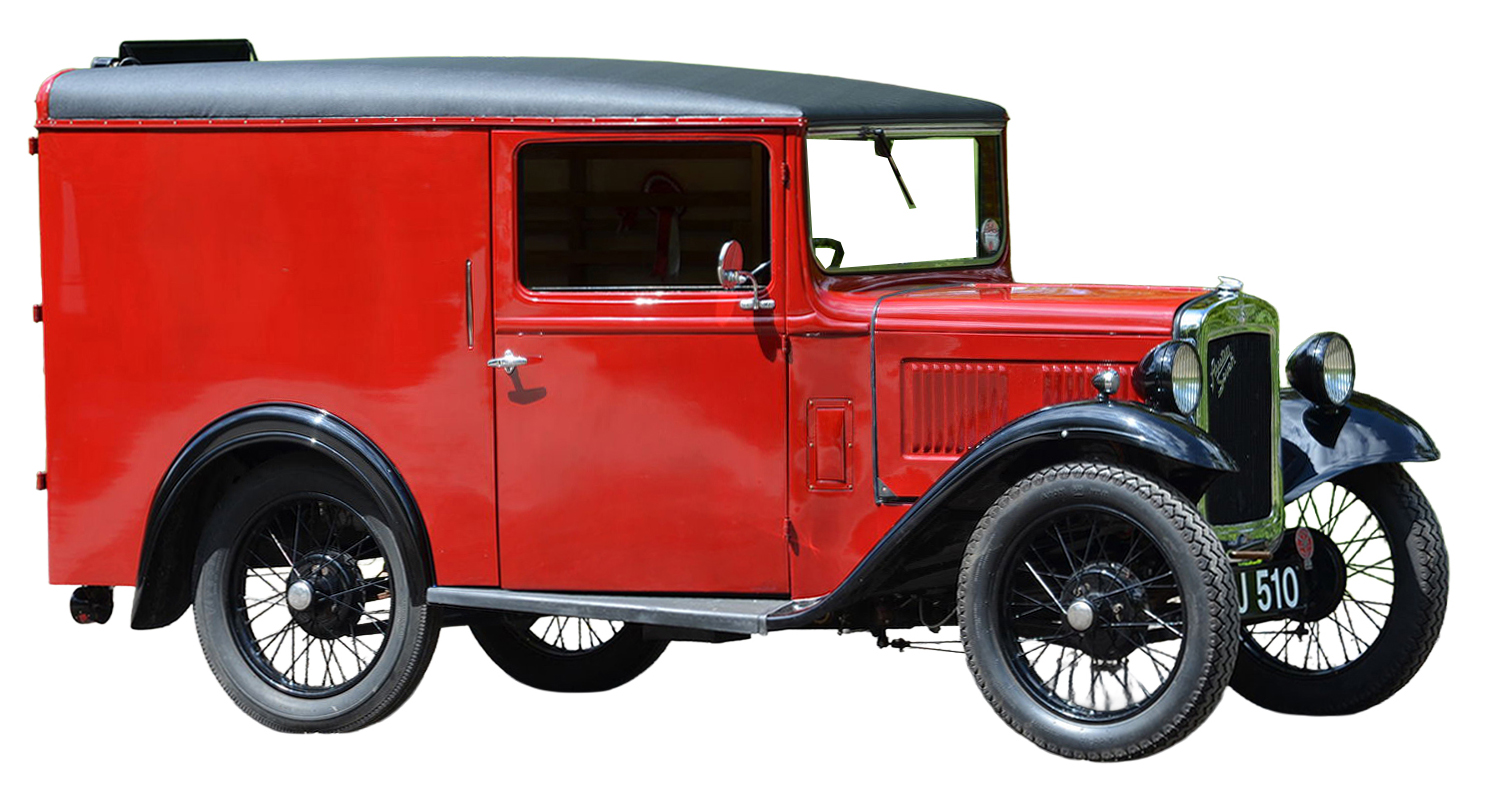
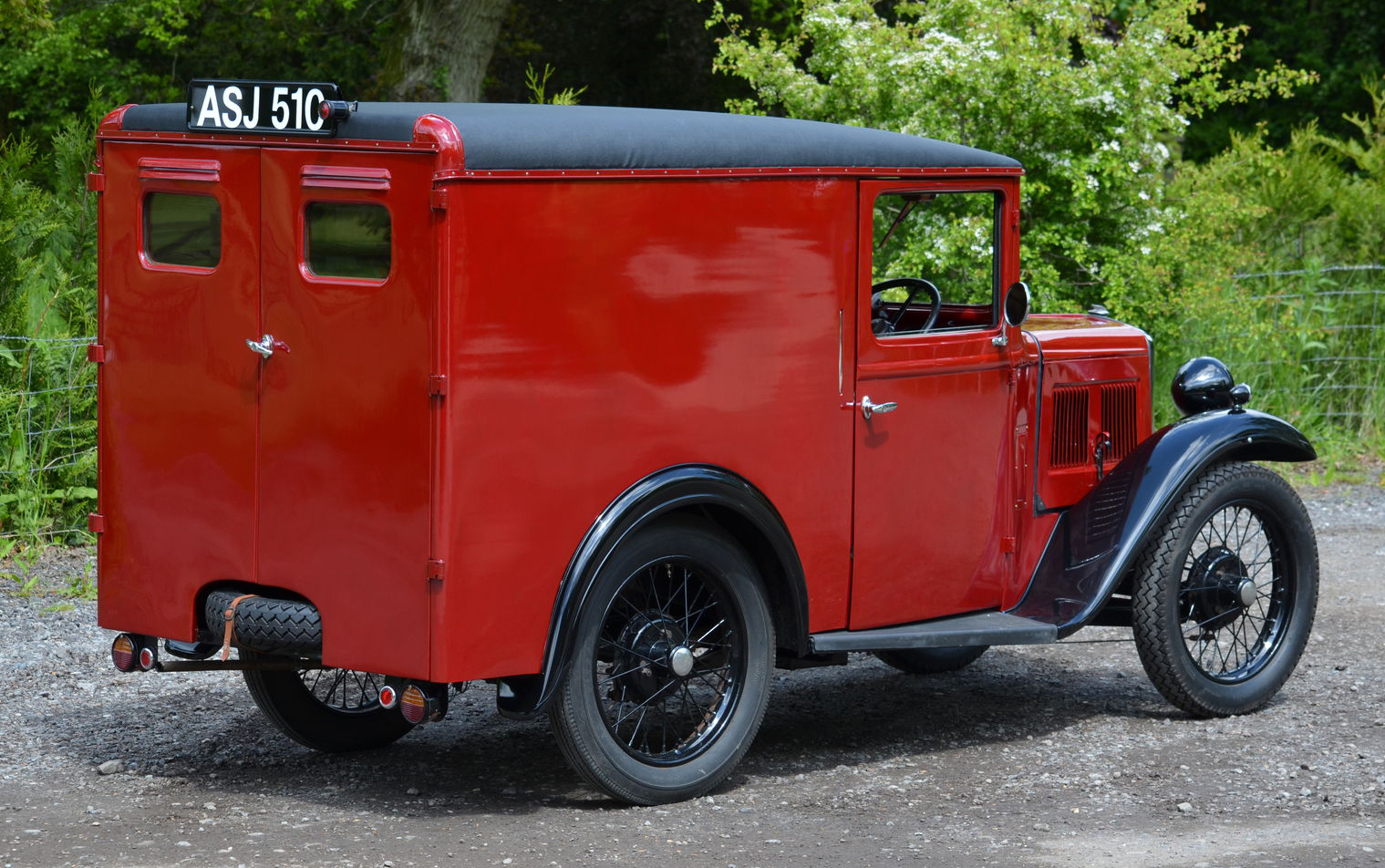
Type AVJ: Girling brakes, flatter roofline, spare wheel protrudes through a cut-out in the bottom of the rear doors. LWB. Made from January 1935 to July 1937. The three-bearing engine was fitted at some point in 1936.
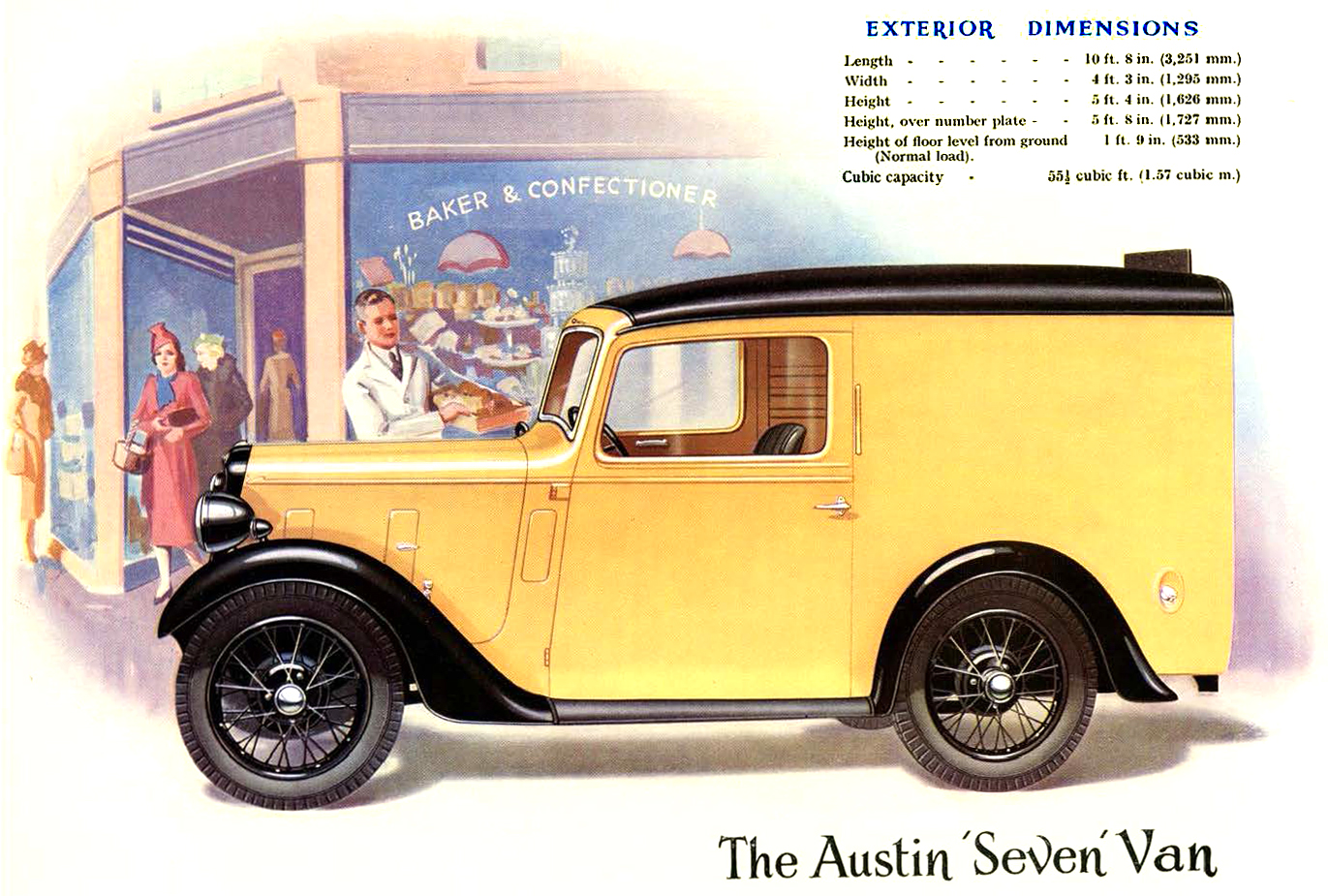
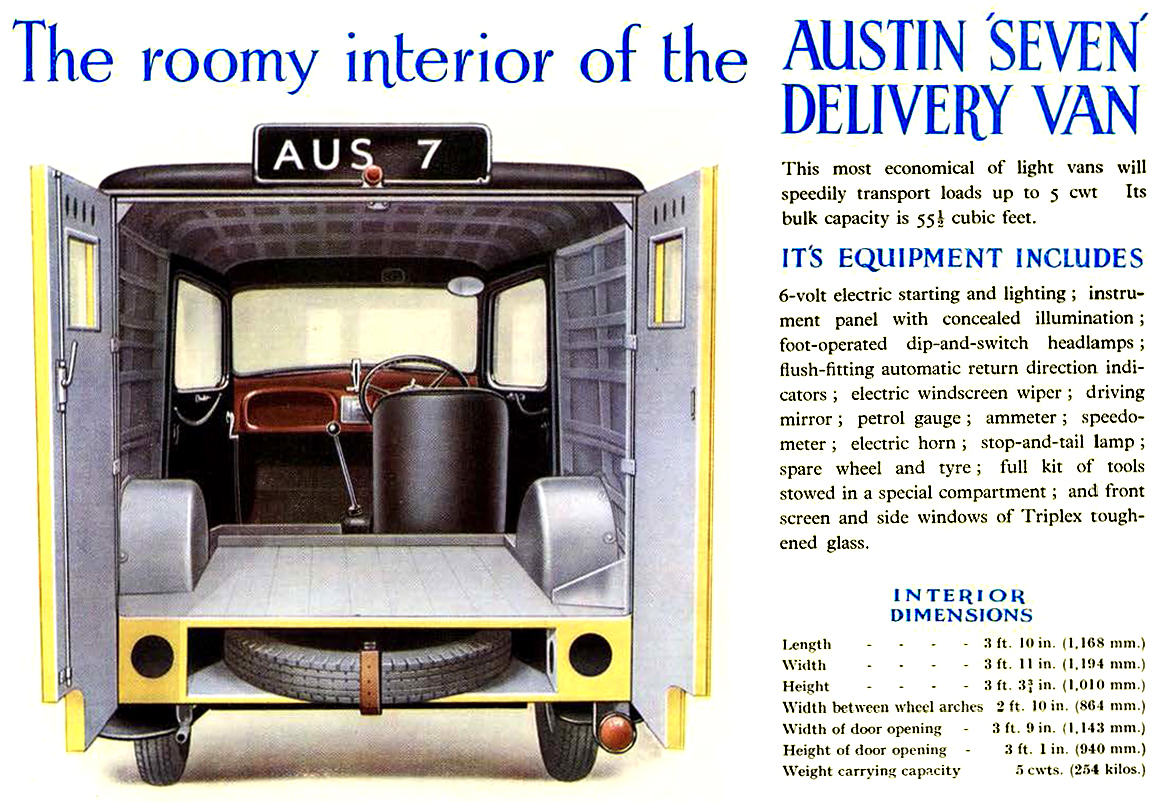
Type AVK low frame, LWB, black-painted Ruby radiator cowl, 55 cu ft capacity, based on the New Ruby and built from July 1937 to 1939. This was the first van to have been built on the low-frame chassis--presumably after stocks of the high-frame had been exhausted.
As a final touch of modernity, an all-Girling brake system fitted from October 1938, this welcome improvement undoubtedly came in handy whenever business urgency forced drivers to exceed the official 5 cwt (254 kg) payload limit….
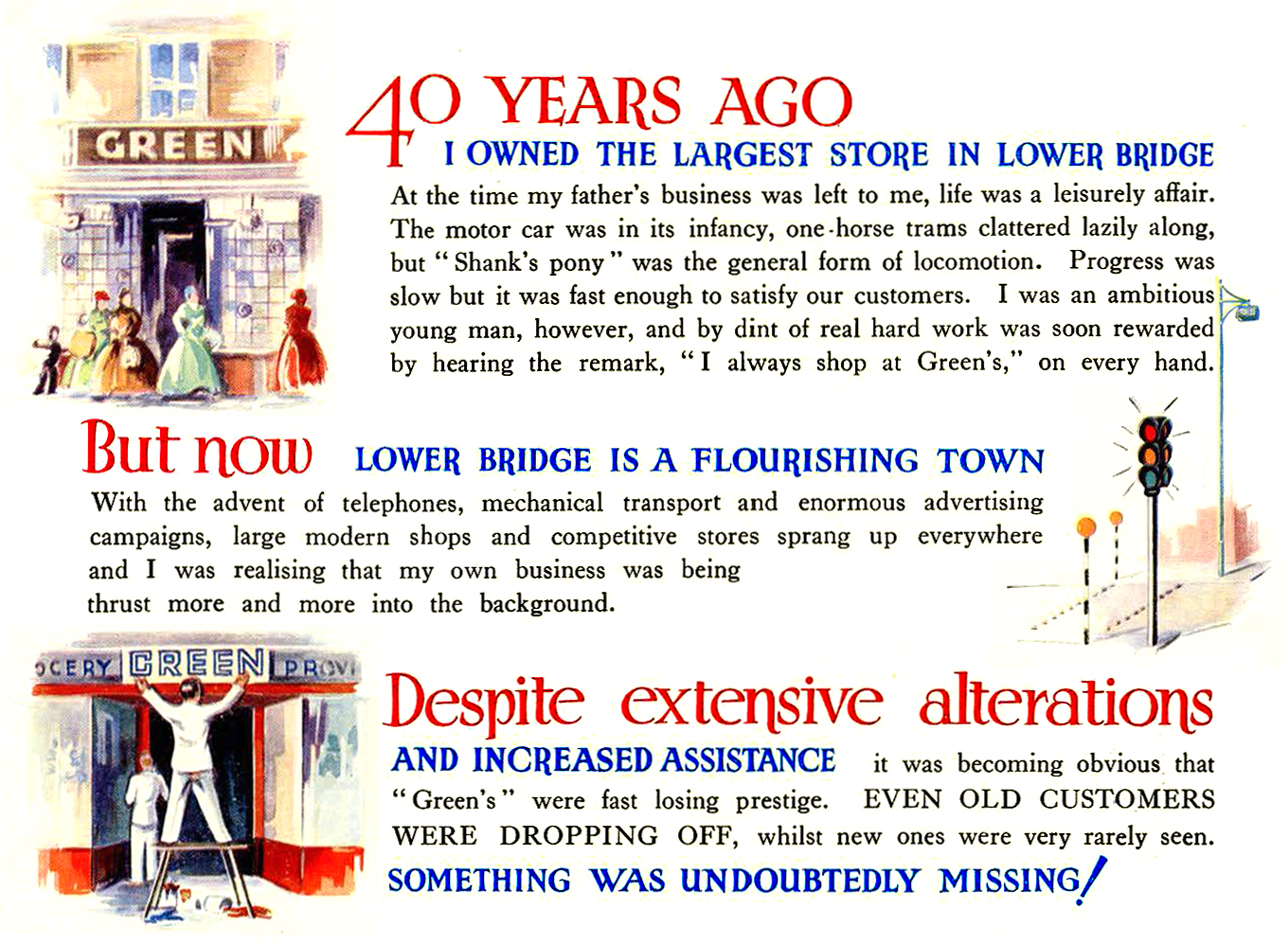
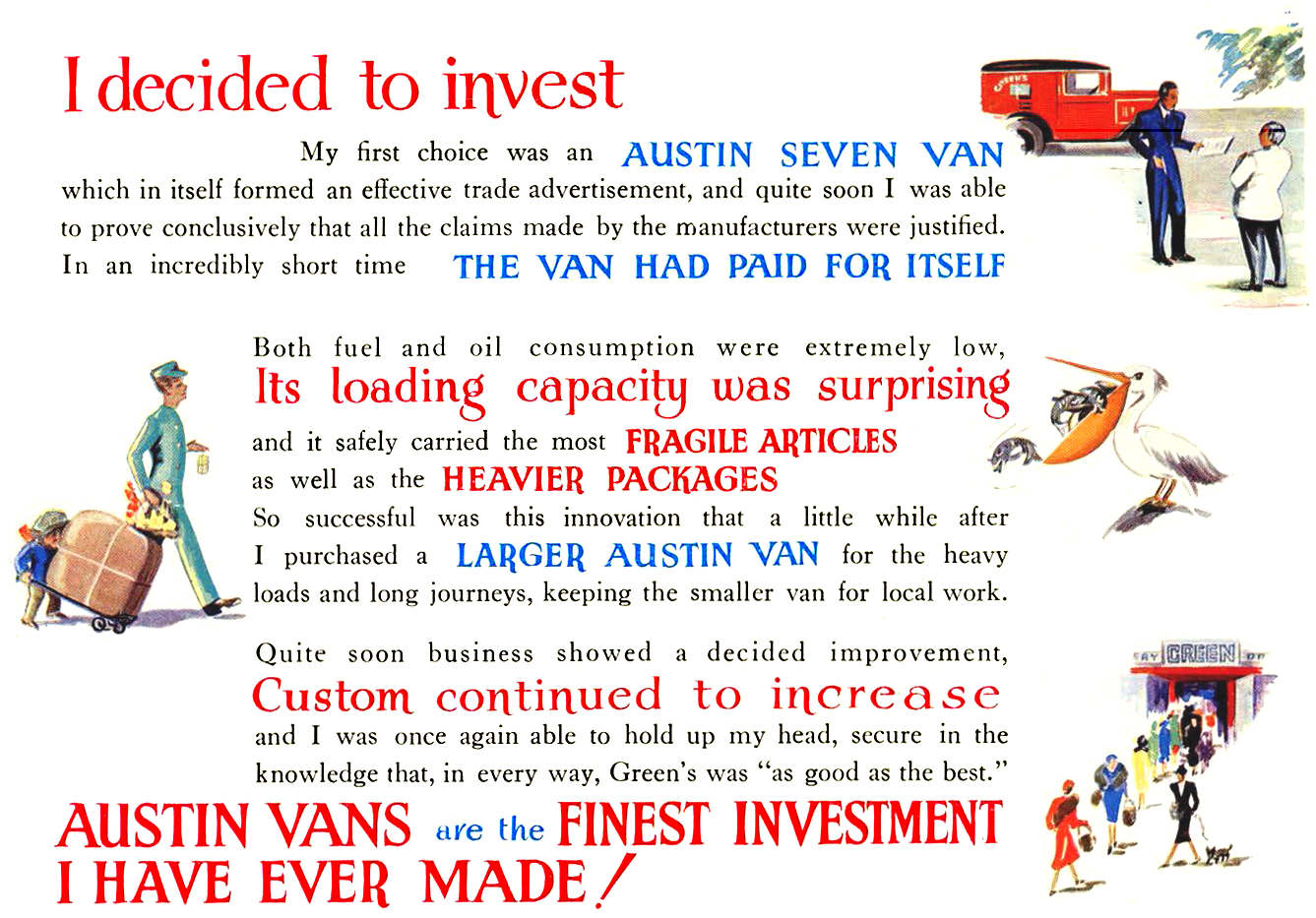
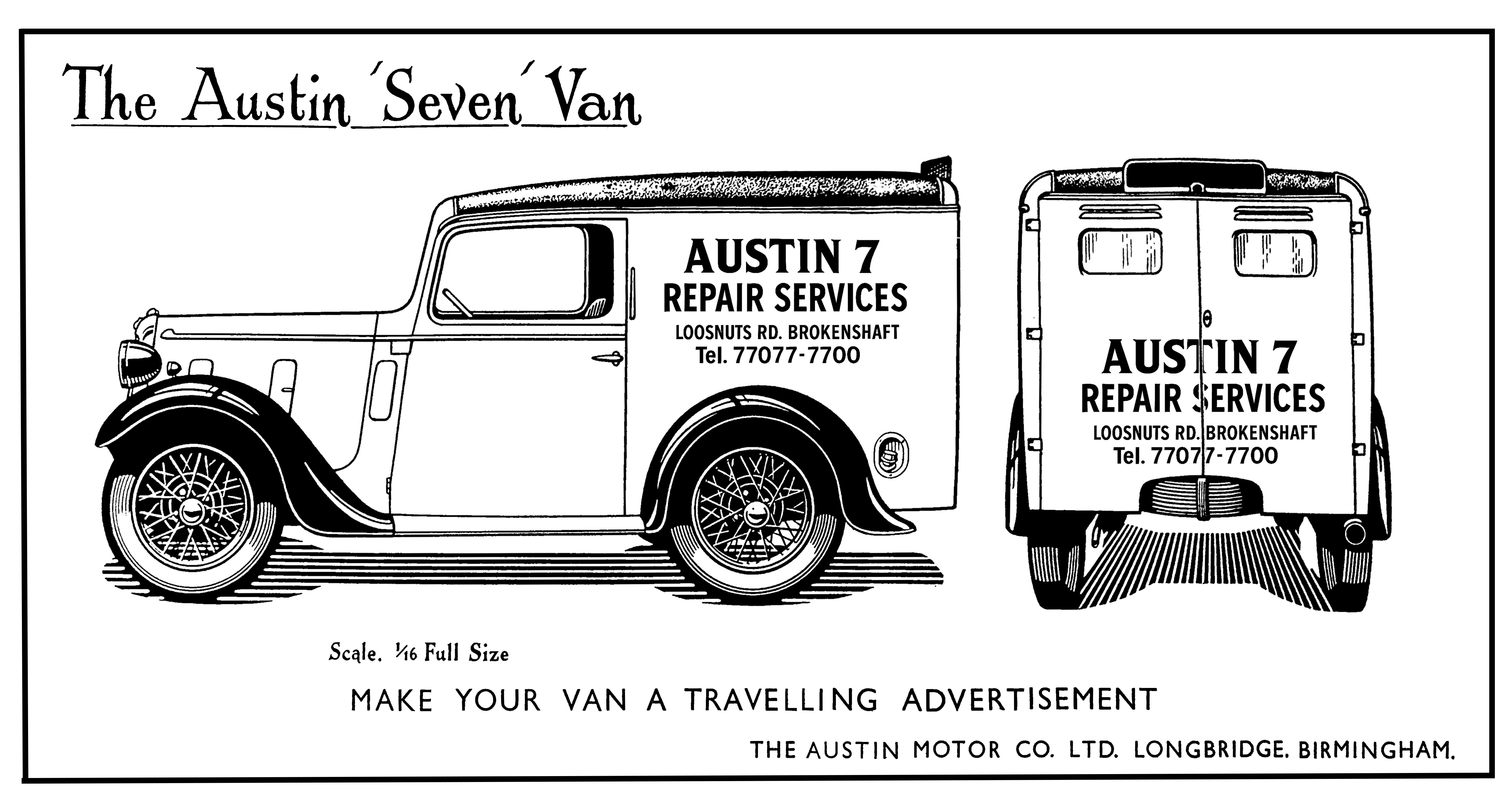
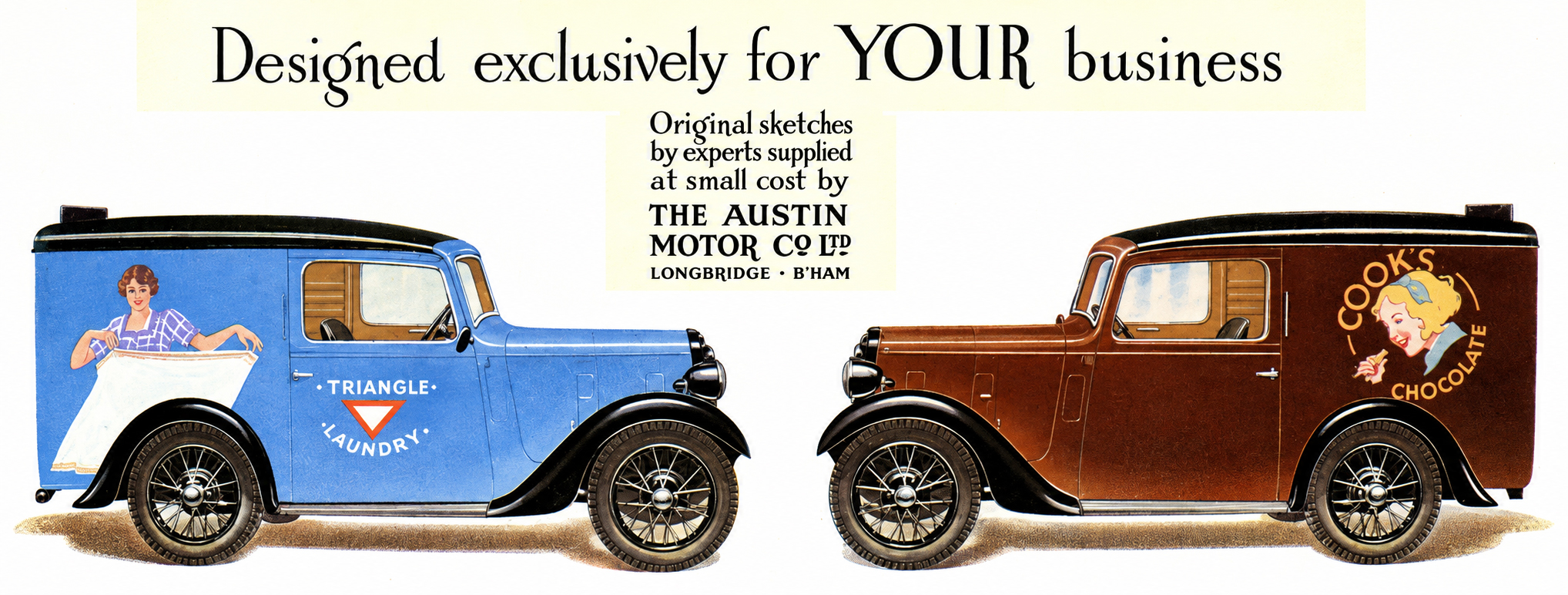
With the advent of the "Ruby" Van, the AVK, Austin's Publicity Department produced a sales-promotion sheet inviting the butcher, baker, grocer, ironmonger, or other pillar of hard-working municipal enterprise to transform his or her modest transport into a rolling billboard. If you have a van, why not copy and print out the Austin-issue blanks amongst the pictures below, hand them to your children (or grandchildren) to fill in, and post online for us to enjoy?
The last model of Austin 7 made was a van;; these were built, it's believed, until July 1939, with the last batch exported.
Seven vans are such good fun, very popular (next to the Ulster, the most copied of body styles) and even today eminently usable for promotional purposes - as demonstrated by the Peninsula Hotel serving coffee at the start of the London to Brighton Run.
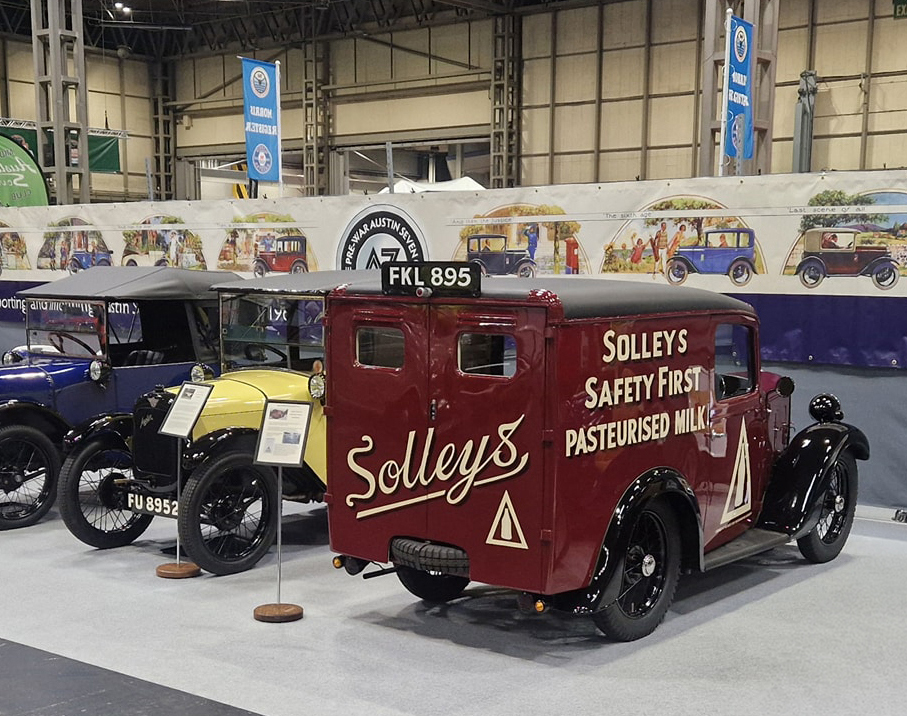
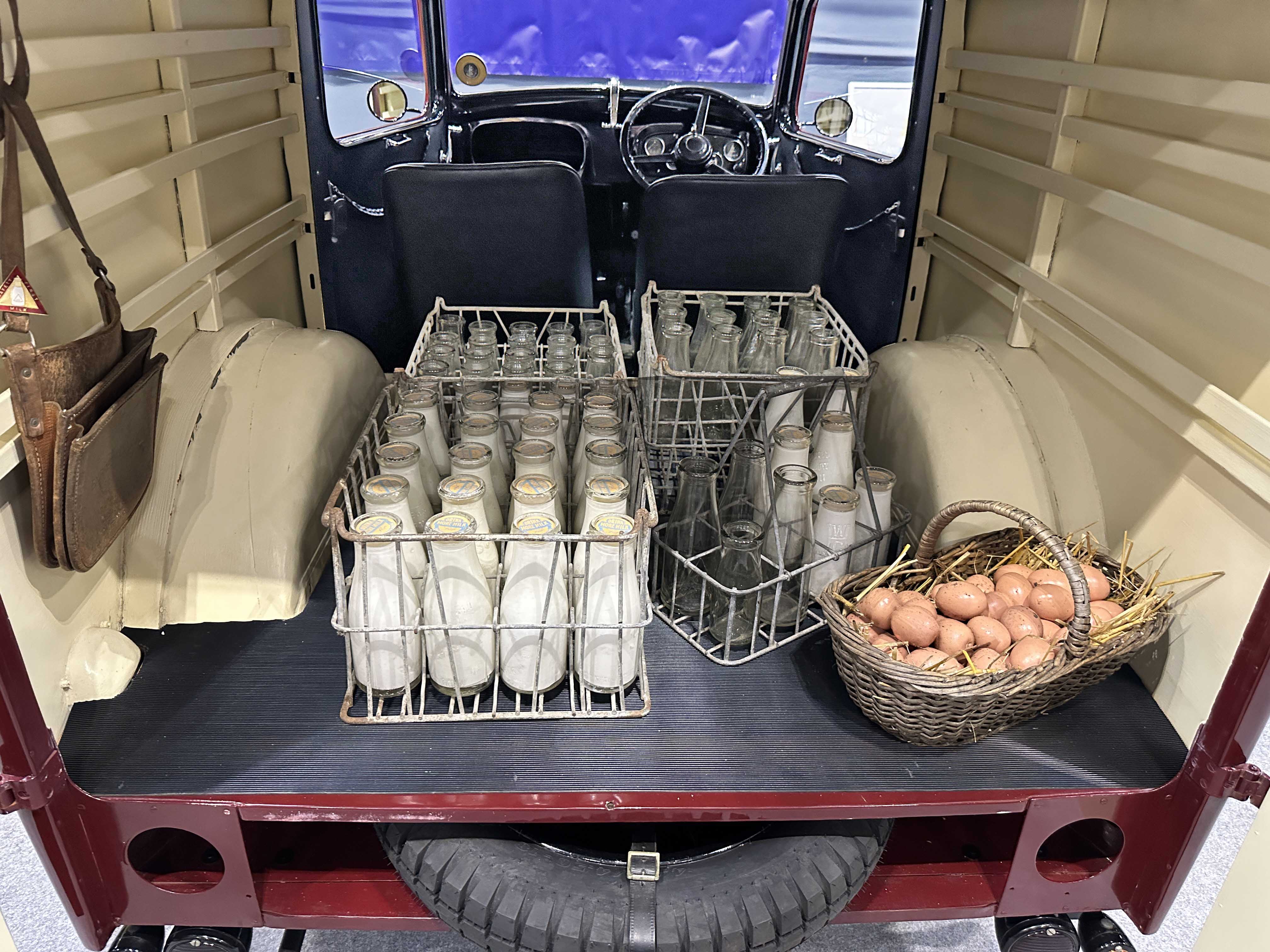
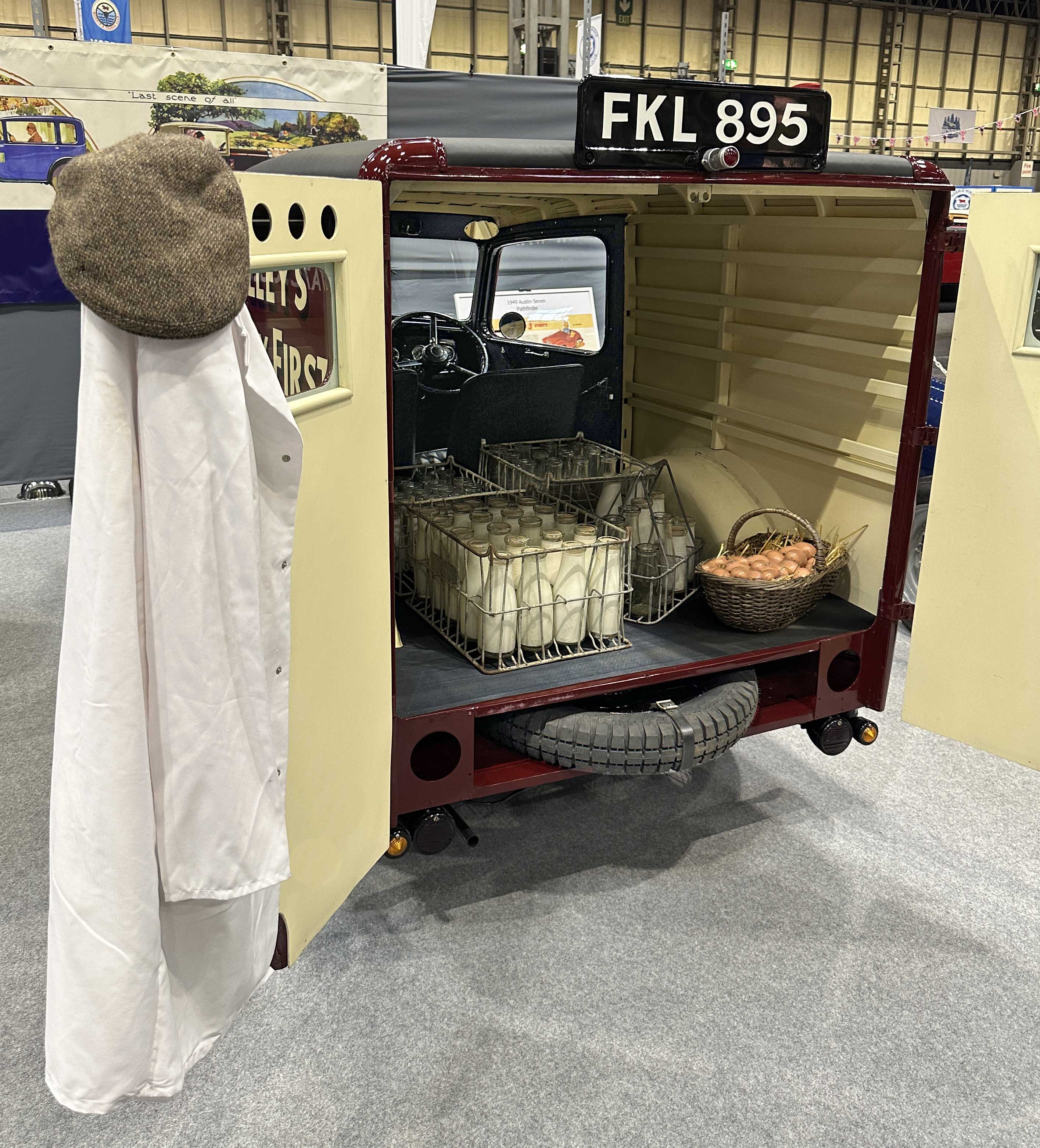
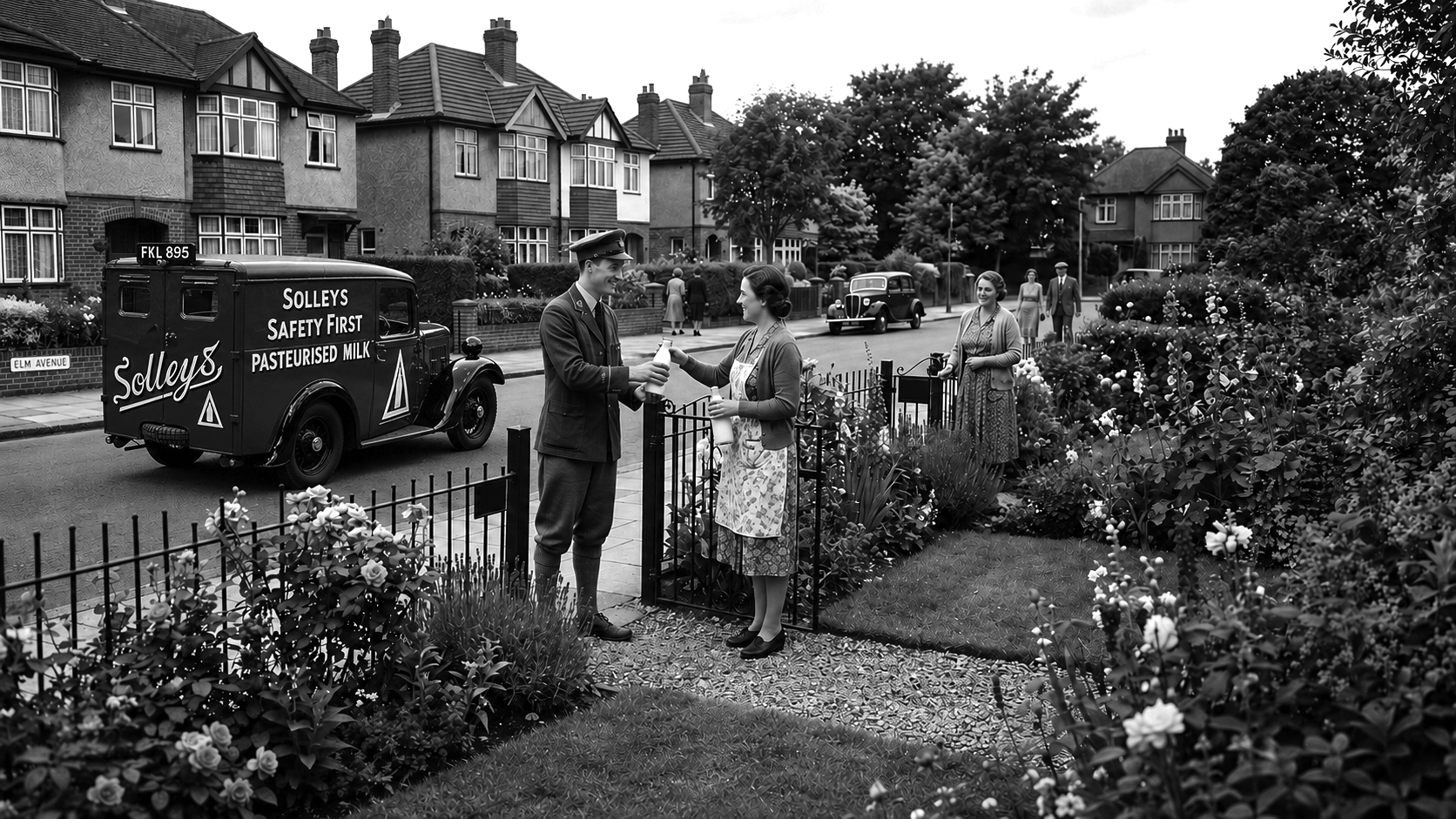
A true highlight at the Pre-War Austin Seven Club's stand at the 2026 Classic Car Show at the NEC was David Mawby's beautiful 1938 Ruby "AVK" Van, the very last of its type. Having restored the van to its original specification-complete with "Solleys" livery to match its first dairy owner-David set out to discover exactly what it would have hauled during its late 1930s to 1940s working life. His meticulous research paid off. Inside the load bay sit three original 1930s milk crates, holding period-correct "Safety First Milk" bottles sealed with contemporary waxed cardboard tops. A close look at the photographs reveals a lovely detail: a small, central 'press-to-pour' circle used to open them. David's diligent work also unearthed, for the display, a new-old-stock dairyman's white overalls, together with a matching cap. The crowning glory, however, is an original leather satchel featuring a triangular "Safety First Milk" enamel badge-a period slogan that promoted the benefits of pasteurised milk.
Interesting details of the car and era abound; the original Ruby interior mirror is retained, but rather than sitting dead centre, it's mounted upside down on the upper right-hand side of the windscreen to give the driver a sightline through the offside rear door window. The livery even hid a fascinating fact: when David showed the artwork to the curator of the Malvern Milk Bottle Museum, he learned the painted bottle was scaled to represent a rare one-and-a-half-pint measure, rather than a standard pint.  Flick through more pictures of the van that I posted here: https://www.facebook.com/photo/?fbid=10174730795940223&set=pcb.1581084630202566
Listen to a broadcast about the milk bottle museum at: https://www.bbc.co.uk/programmes/p0j3jjq7
To appreciate the enormous amount of research and work that goes into creating a new, high-quality van body, see this description of one currently in build: https://www.austinsevenfriends.co.uk/forum/showthread.php


From the shape of the wings with their deep profile (Type K) with a bead around their edges, this is probably a Type AE made from January to June 1930

Austin 7 van Type AVH manufactured January 1933 to 1935. This 4-speed model was built on the longer 81" wheelbase chassis

Austin 7 van Type AVJ: Girling brakes, flatter roofline, spare wheel protrudes through a cut-out in the bottom of the rear doors.
Made from January 1935 to July 1937.


A true highlight at the Pre-War Austin Seven Club's stand at the 2026 Classic Car Show at the NEC was David Mawby's beautiful 1938 Ruby "AVK" Van, the very last of its type. Having restored the van to its original specification-complete with "Solleys" livery to match its first dairy owner-David set out to discover exactly what it would have hauled during its late 1930s to 1940s working life. His meticulous research paid off. Inside the load bay sit three original 1930s milk crates, holding period-correct "Safety First Milk" bottles sealed with contemporary waxed cardboard tops.

David's meticulous research paid off. Inside the load bay sit three original 1930s milk crates, holding period-correct "Safety First Milk" bottles sealed with contemporary waxed cardboard tops. A close look at the photographs reveals a lovely detail: a small, central 'press-to-pour' circle used to open them. David's diligent work also unearthed, for the display, a new-old-stock dairyman's white overalls, together with a matching cap. The crowning glory, however, is an original leather satchel featuring a triangular "Safety First Milk" enamel badge-a period slogan that promoted the benefits of pasteurised milk.

Interesting details of the car and era abound; the original Ruby interior mirror is retained, but rather than sitting dead centre, it's mounted upside down on the upper right-hand side of the windscreen to give the driver a sightline through the offside rear door window. The livery even hid a fascinating fact: when David showed the artwork to the curator of the Malvern Milk Bottle Museum, he learned the painted bottle was scaled to represent a rare one-and-a-half-pint measure, rather than a standard pint. 

Type AVK low frame, LWB 55 cu ft capacity, based on the New Ruby and built from July 1937 to 1939. Black-painted Ruby radiator cowl.
This was the first van to have been built on the low-frame chassis--presumably after stocks of the high-frame had been exhausted.


Continued on Page 2

Many more pages on the Austin 7 Here

Lathes.co.uk
Austin 7 Vans
email: tony@lathes.co.uk
Home   Machine Tool Archive   Machine-tools Sale & Wanted
Machine Tool Manuals   Catalogues   Belts   Books   Accessories