
|
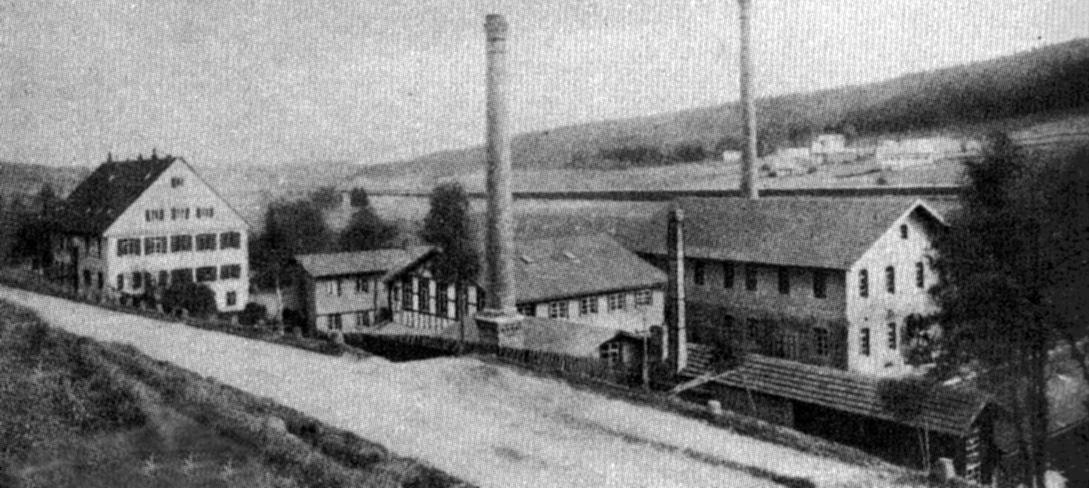
In Germany there were two machine-tool companies with the name Weisser: Eugen Weisser from Heilbronn and the subject of these pages, Johann Georg Weisser of St.Georgen in the Black Forest (also listed as J.G.Weisser Söhne and founded in 1856). Still in business, the Company's origins can be traced back to 1830 when Jacob Weisser operated, in Langenschiltach, a postal station and blacksmiths shop. From the earliest days Jacob and his son Johann Georg, together with two employees, manufactured small bench lathes and bench vices, In 1842 a move was made 4 km away to St. Georgen, a small town conveniently situated on a new post road, where a larger smithy was built. As the new road brought increased economic activity, the local trades - mainly clock-making - saw an increase in business and hence an expanding demand for hand and machine tools of all kinds. With demand now beyond the capacity of his modest workshop by 1855 Johann Georg Weisser had established himself in a new and much larger factory - which still stands as the home of J.G. Weisser Söhne. Products eventually included a range of presses, shapers, grinding machines and a number of popular milling machines. Until around 1957 their lathe range consisted of conventional centre, bench precision in small and larger sizes and capstan lathes - but from then on, cleverly foreseeing the future, concentrated their efforts on machines using various forms of electronic control. Today, based at Bundesstrasse 1, Saint Georgen, Baden, they remain part of the hugely successful German machine-tool industry manufacturing a range CNC machine tools with many built specially for the automobile industry. |
|
|
|
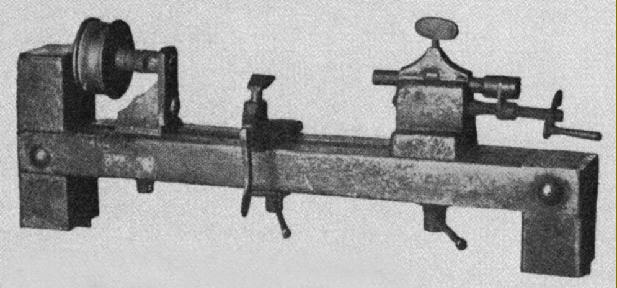
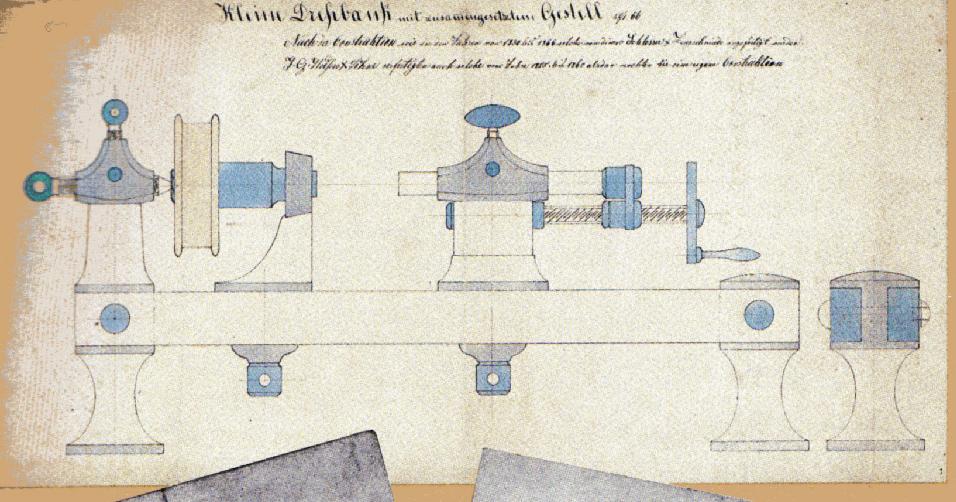
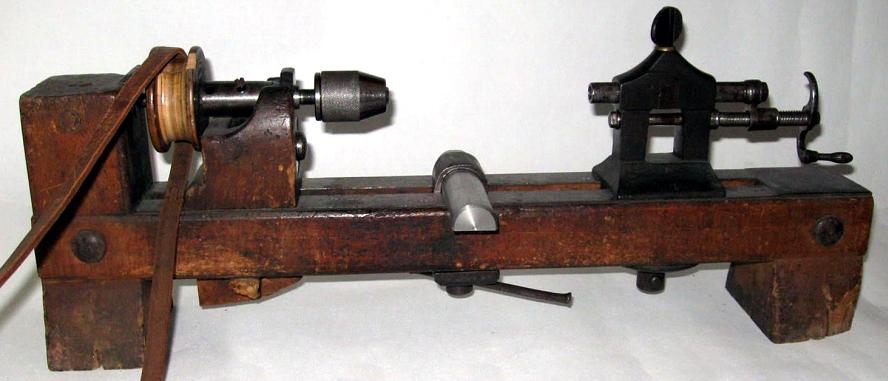
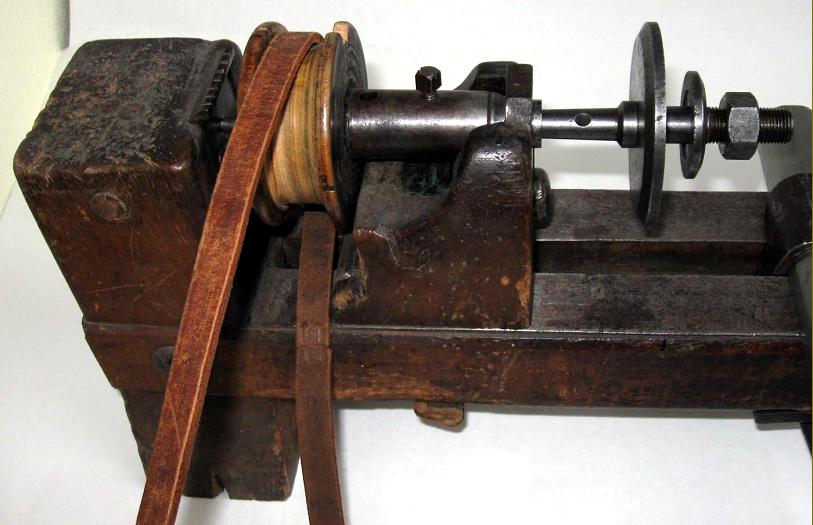
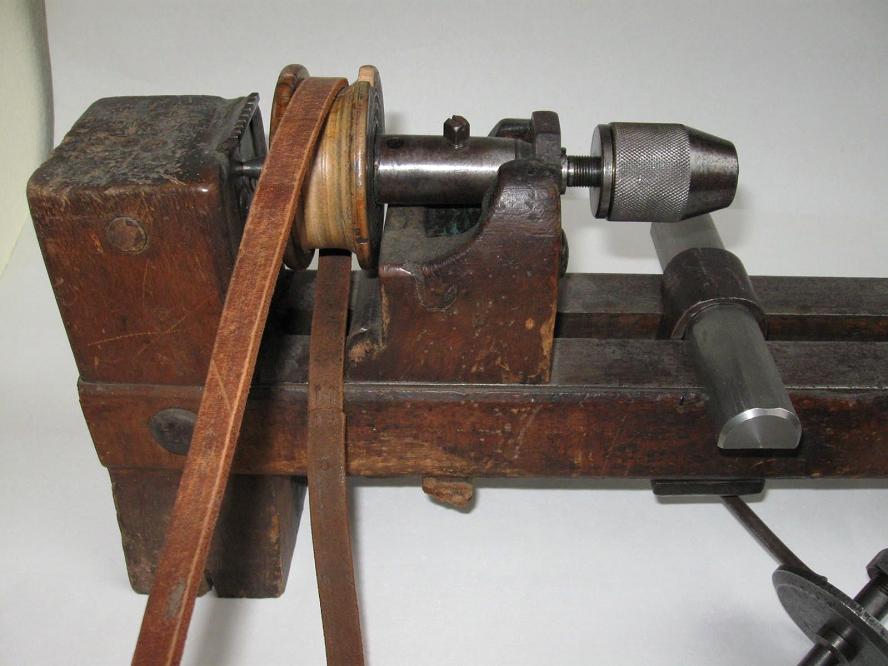
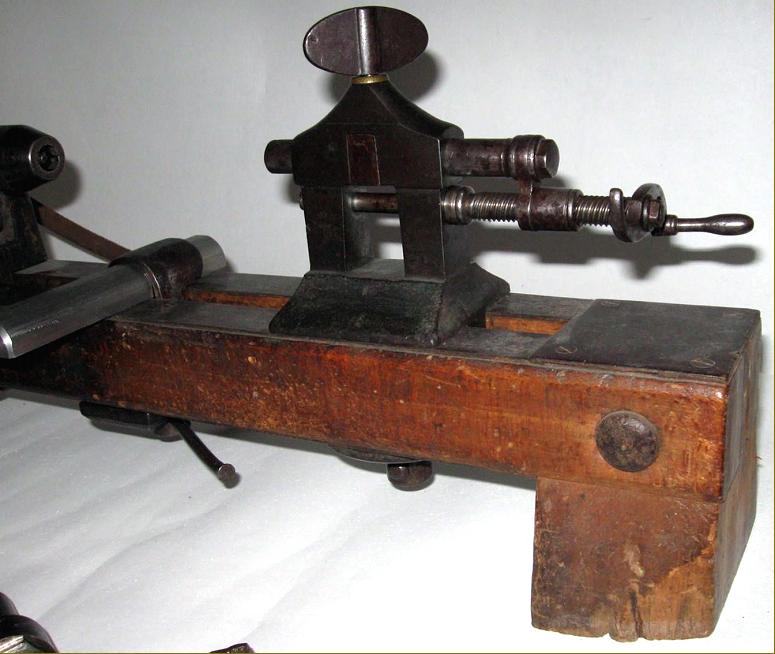
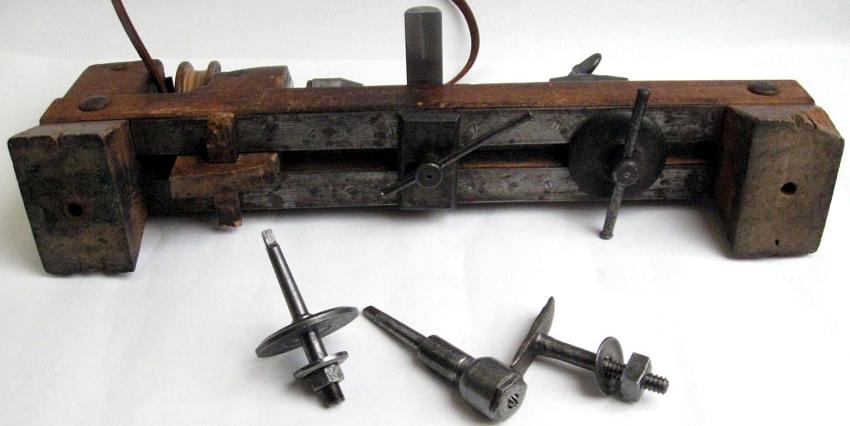
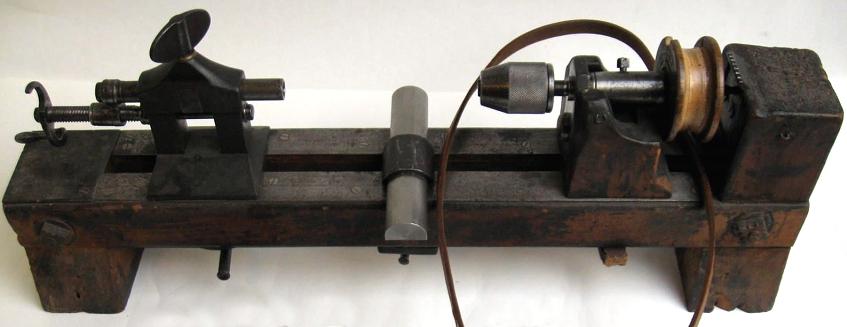
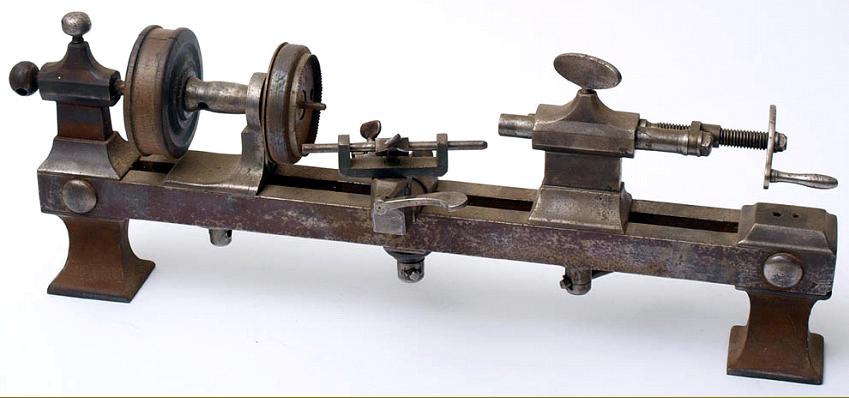
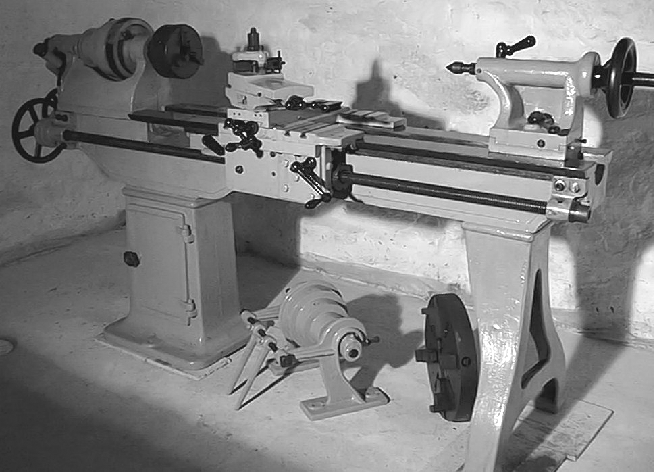
A surviving example of what my be an early Weisser lathe. However, this type of lathe was once common in Black Forest clockmaking workshops - so could well be by another maker, though the complex, all-metal tailstock probably rules out it being a home-constructed job |
|
|
|
|

|
|
|
|
|
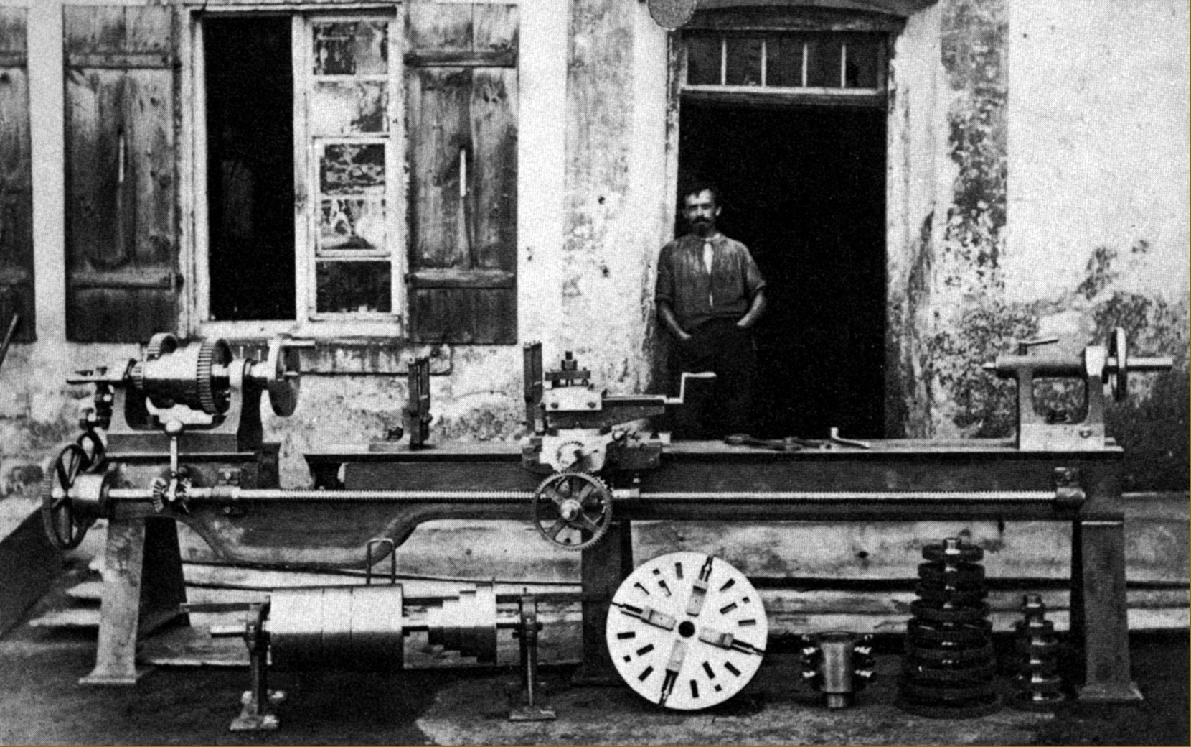
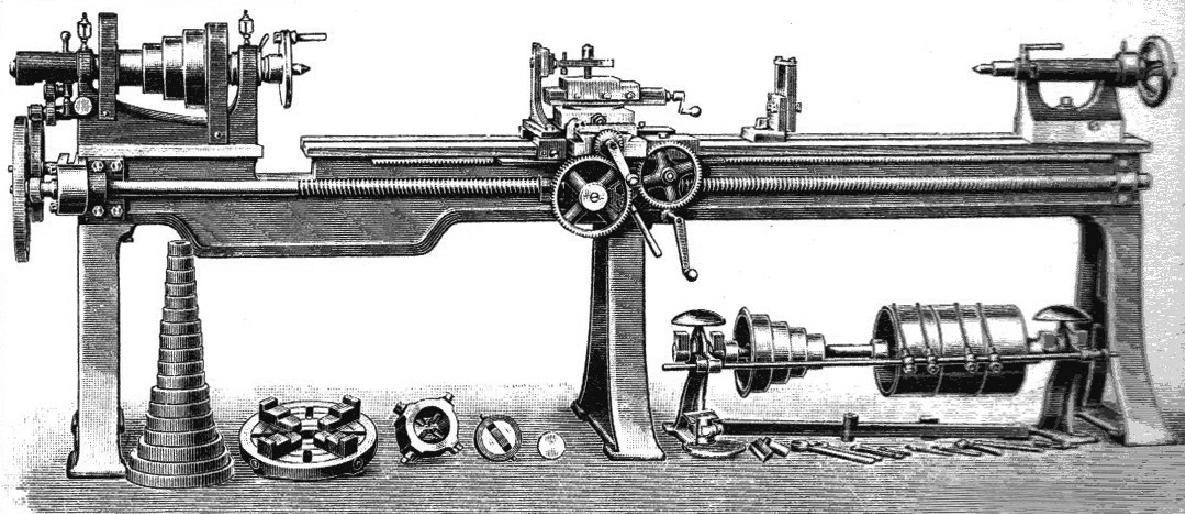
Long-bed Weisser lathe ready for delivery in 1876. Note the extra foot in the middle of the bed, the two early-type fixed-steadies (they had drop-in sections of various depths) and the bevel-gear leadscrew reverse (as used on American Atlas 10-inch lathes for many years). Not only were the changewheels and headstock backgears unguarded (as on many other contemporary machine tools) the unusual - and dangerously exposed - gearing on the apron had almost become a Weisser trade mark. This lathe appears to lack the usual hand-operated rack-and-pinion gearing to propel the carriage up and down the bed and instead is fitted with just power feed. |
|
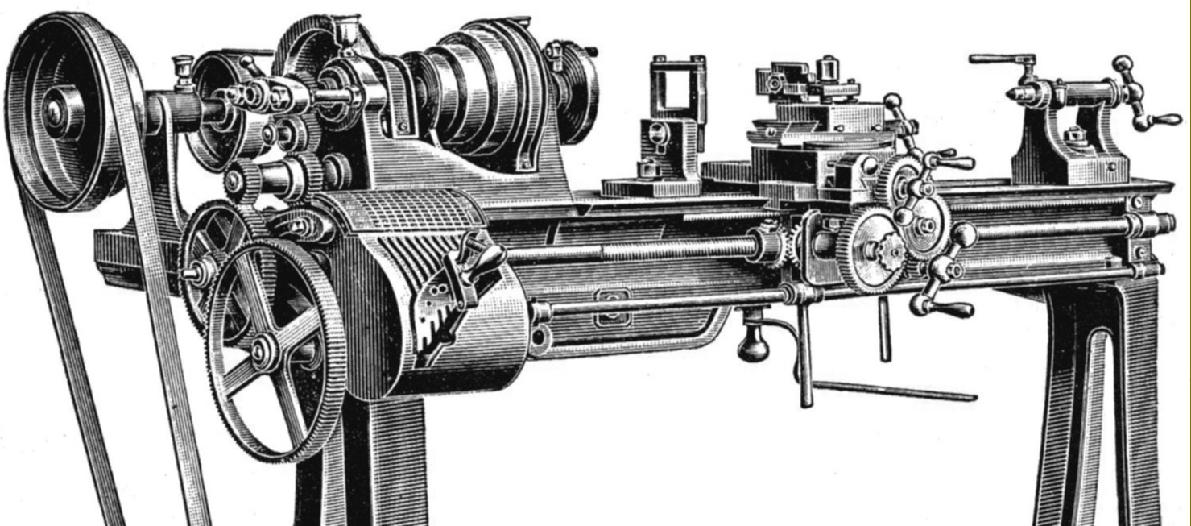
Also from 1876 this Weisser is of lower centre height than the example above but appears to have a bed of around the same length. Instead of bevel-gear reverse to the leadscrew a conventional tumble-reverse assembly was incorporated in the changewheel drive. With an absence of guards over gears and belts, and the crude bell chuck with its protruding screws, in today's terms this lathe was a nasty accident waiting to happen. |
|
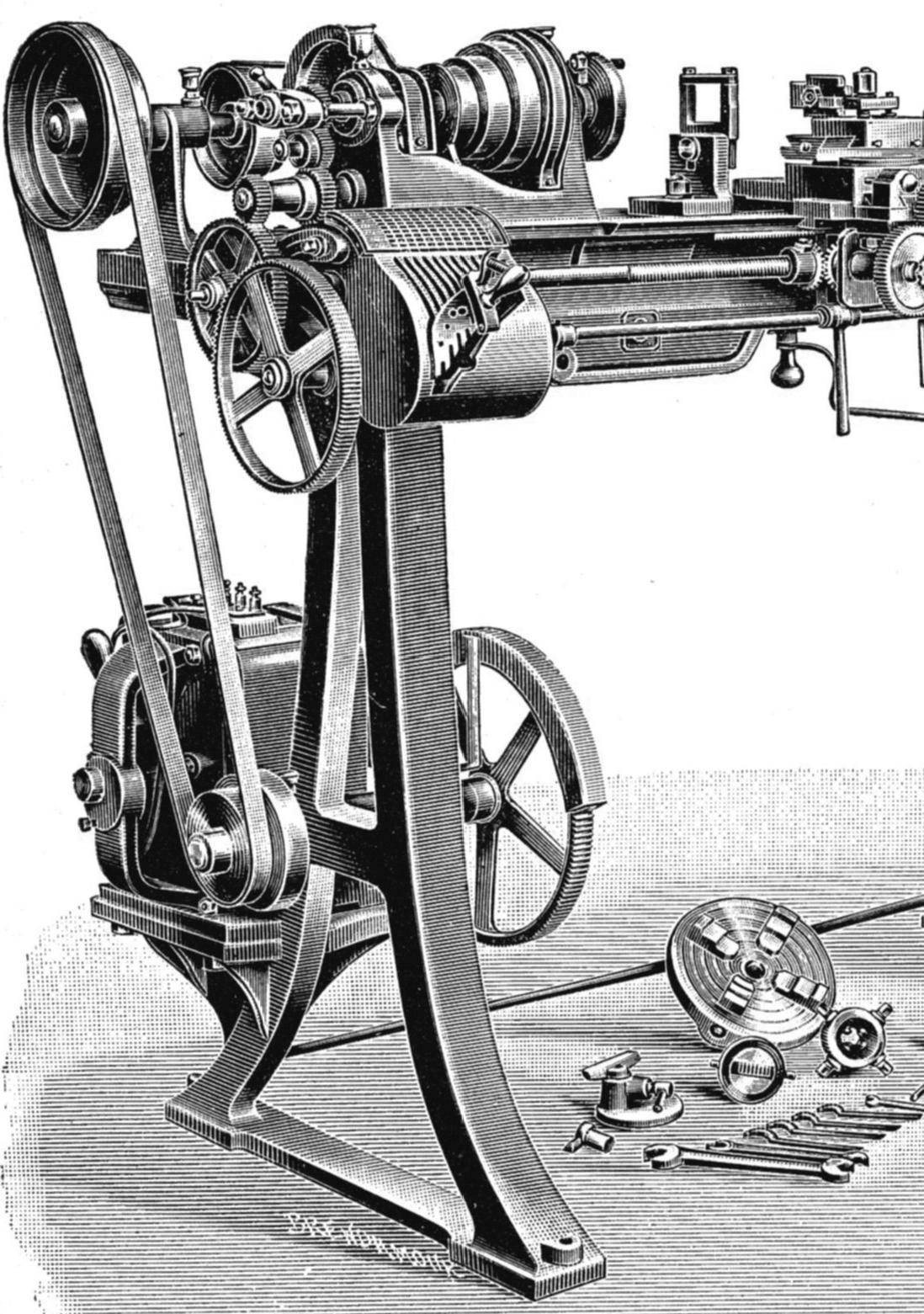
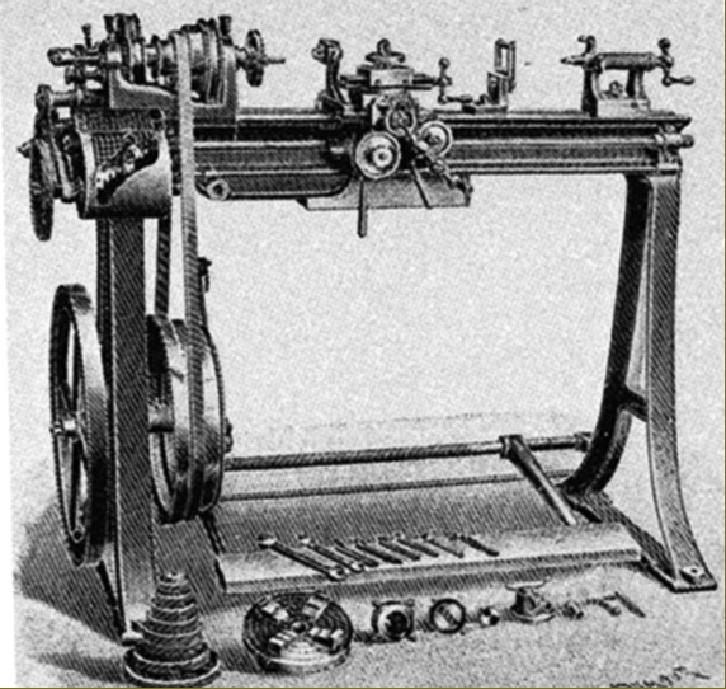
Backgeared and screwcutting Weisser of 1896. This lathe has a number of interesting features including the design of headstock spindle - with the end thrust taken on an outboard plate - a feature that all makers dropped just a few years later. Whilst the carriage still has its crudely exposed gears for power sliding and surfacing speeds the drive arrangement is surprisingly up-to-date with an "open-frame" electric motor carried on a cast-in plate at the rear of the headstock-end leg. The motor is geared down to run a countershaft - again built in as part of the structure - though its guard is, as ever, perfunctory. This must have been one of the earliest uses of a screwcutting gearbox on a Weisser, the type looking like a Norton quick-change, as invented in America. There was no tumble reverse fitted to the changewheel drive to the gearbox, instead a rod was provide, running the length of the bed, that operated a simple dog-clutch to stop and start the cut. There is a good chance that the system worked both when screwcutting and using the power sliding feed. |
|
|
|
|
|
|
||
|
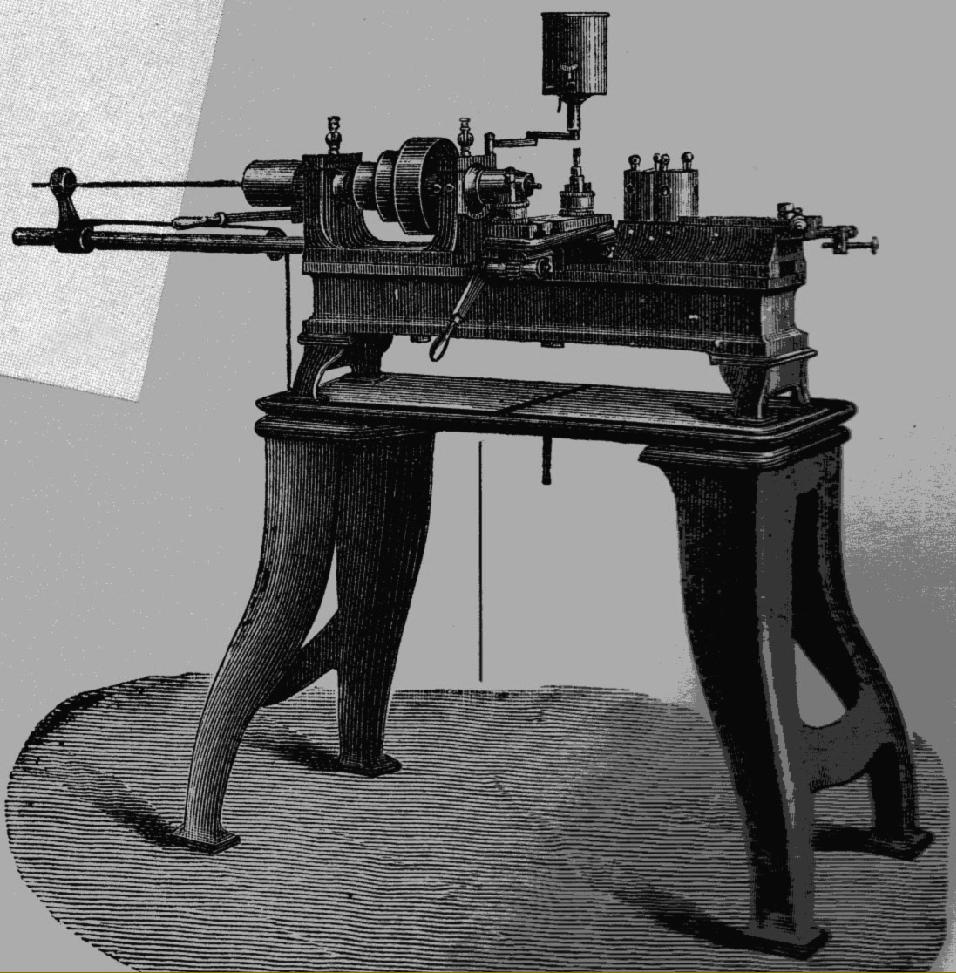
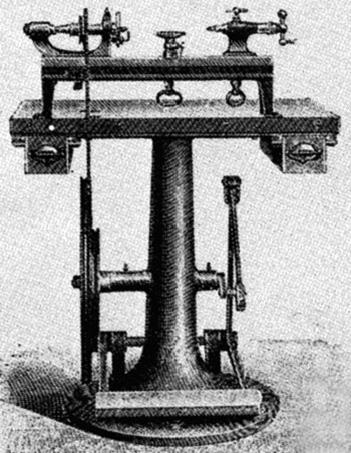
1898 precision lathe on self-contained "trumpet" treadle stand. For lightweight lathes this was a popular arrangement and also used by, amongst others, Pittler |
||
|
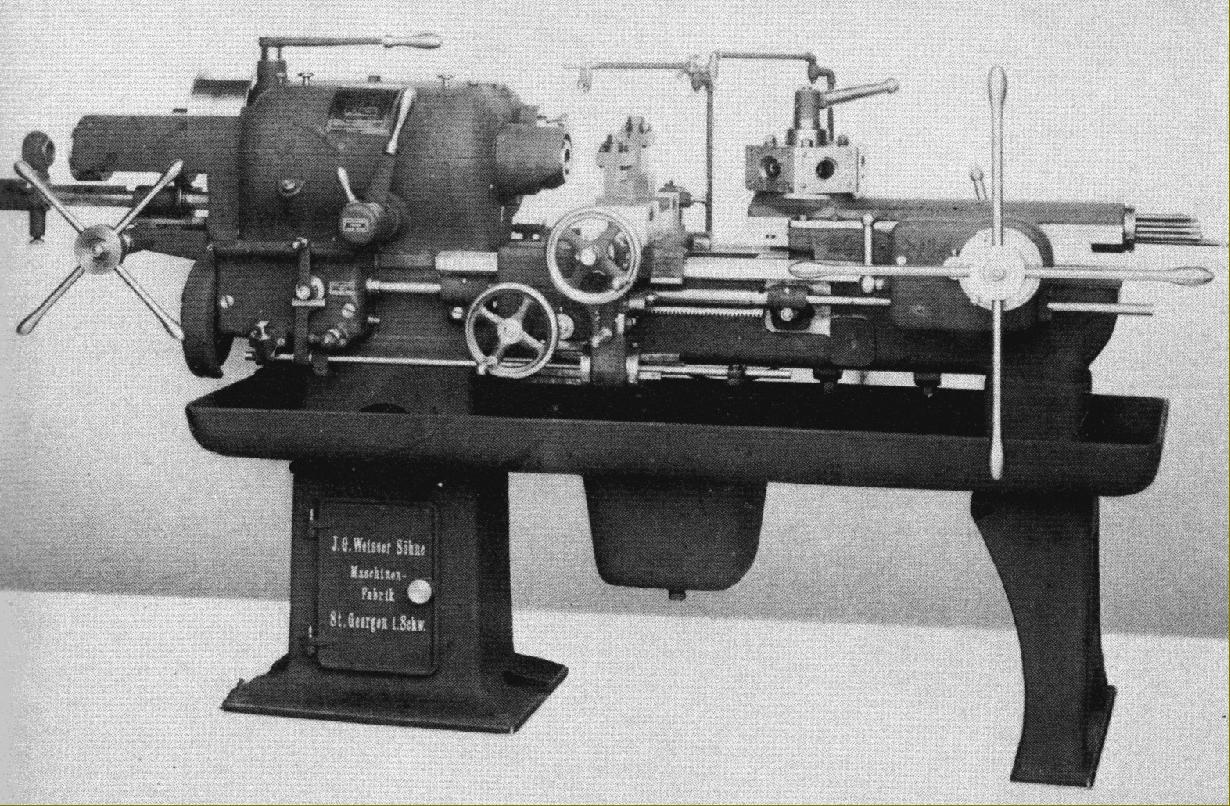
A particularly well-specified capstan lathe from 1919 with clutched drive, all-geared headstock with centralised spindle-speed control, power sliding to the turret head and carriage and a hand-operated capstan feed in addition to the gravity bar feed unit. |
|
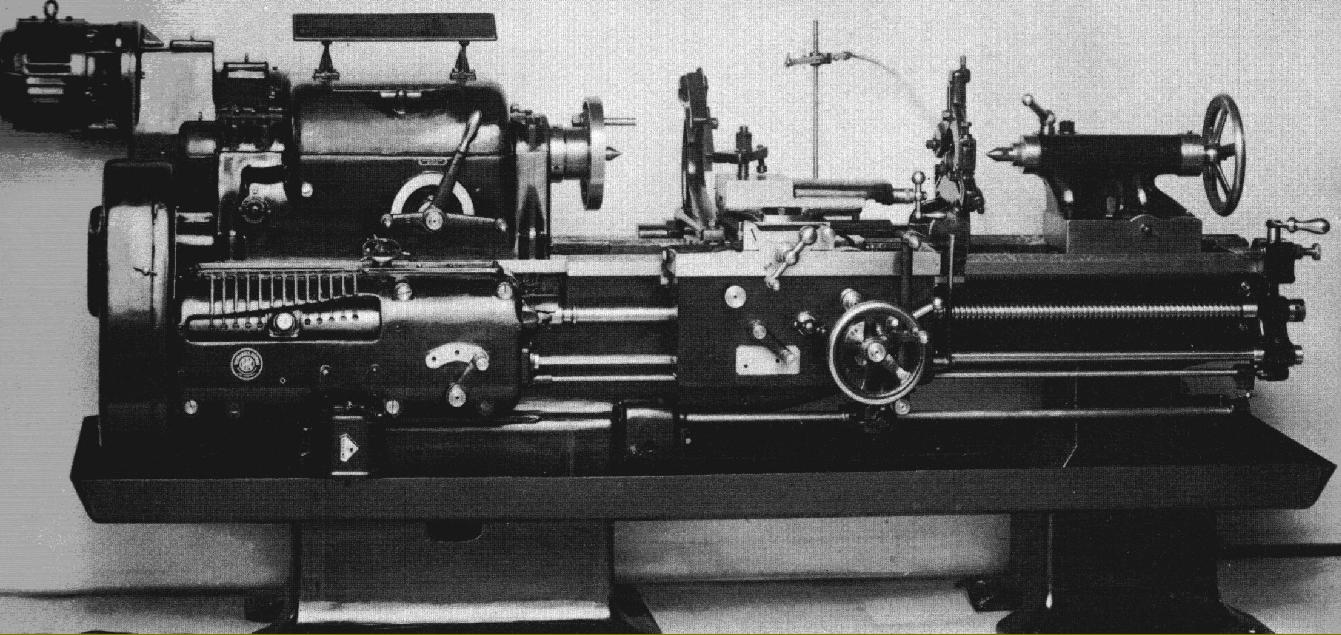
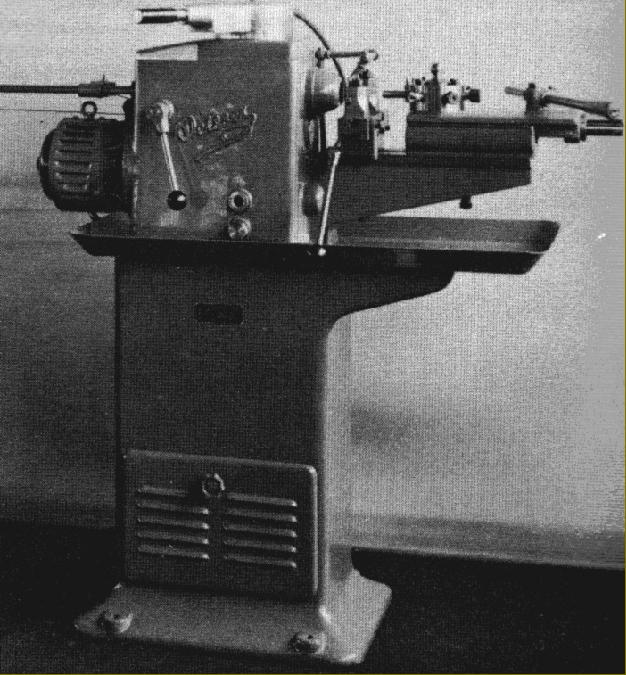
A beautifully built and very heavy precision toolroom lathe as manufactured from 1920 to 1932. This lathe featured a very deep and heavy bed; concentric levers giving centralised control of the spindle speeds; third-shaft control of the spindle and what seems to have been an arrangement to provide automatic disengage to the carriage drive |
|
|
|
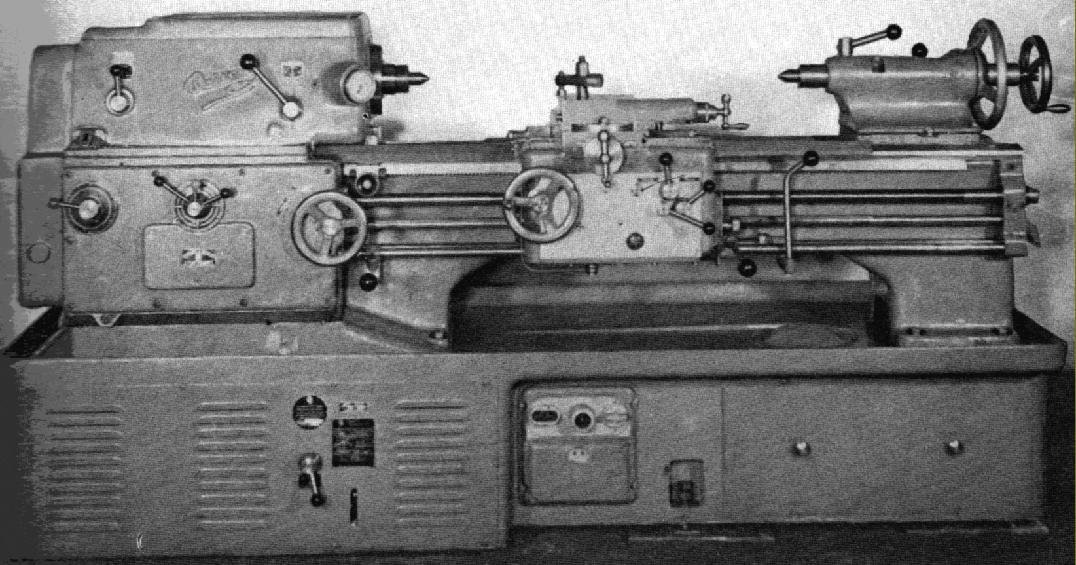
A heavily-built general-purpose lathe from 1940 with distinctively American lines . However, the threaded headstock spindle shows that it lacks that most essential USA development of the 1930s, the rigid and safe "American long-nose taper" fitting |
|
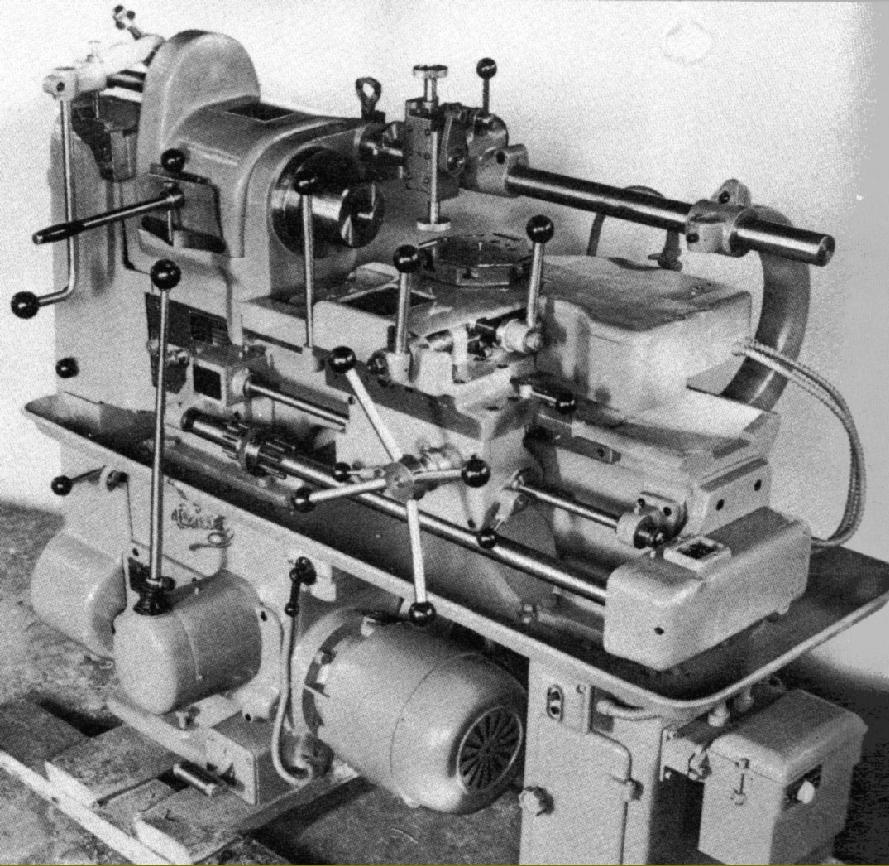
1925 to 1949 A well-specified small capstan lathe with chase screwcutting and 12-position carriage stops that worked for movements both towards and away from the headstock. The motor protruding from the front, and the large boss supporting the spindle-speed change lever must both have come between the operator and his efficient operation of the lathe. |
|
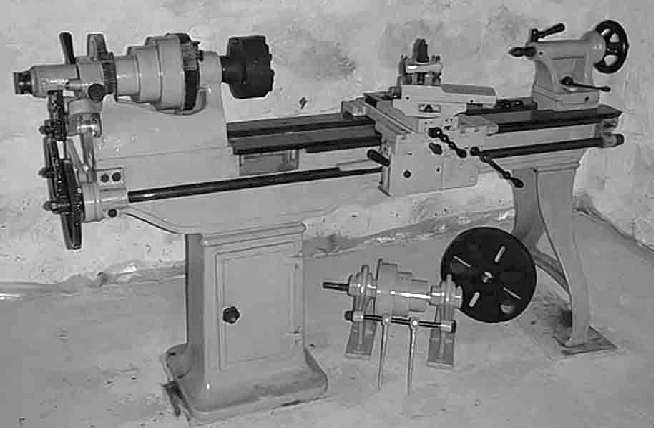
With the appearance of a machine that could have been made before 1910, this Weisser 8" x 42" (205 mm x 1100 mm) gap-bed backgeared and screwcutting lathe shown above and below was described by its makers as a "Type EE Non Plus Ultra". Flat-topped, the V-edged bed had a removable gap section that, when lifted out, enabled work up to 25-inches (630 mm) to be turned. The spindle, which ran in plain bronze bearings retained by screwed rings, carried a 3-step cone pulley and a 2.125-inch diameter, 4 t.p.i thread; a conventional backgear assembly was fitted with the gears engaged by being rotated on an eccentric shaft. |
|
Today, few early machines survive with their original countershafts intact but this Weisser is complete with its correct drive system for wall or ceiling mounting. The large but "light-duty" faceplate-cum-four-jaw chuck was a popular contemporary fitting. |