
|
Home Machine Tool Archive Machine-tools Sale & Wanted additional information about the Sypher Manufacturing Company |
||
|
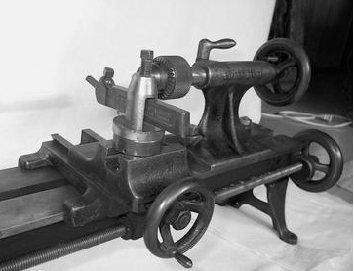
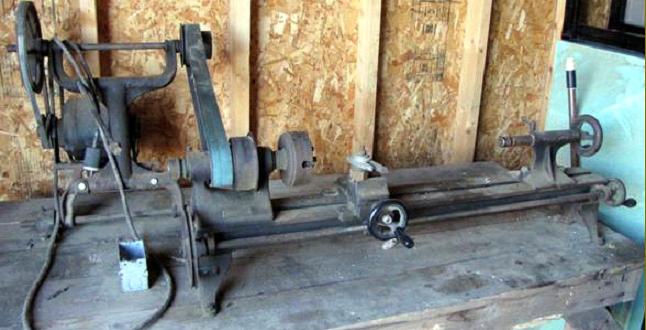
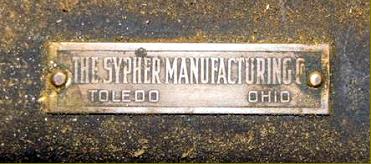
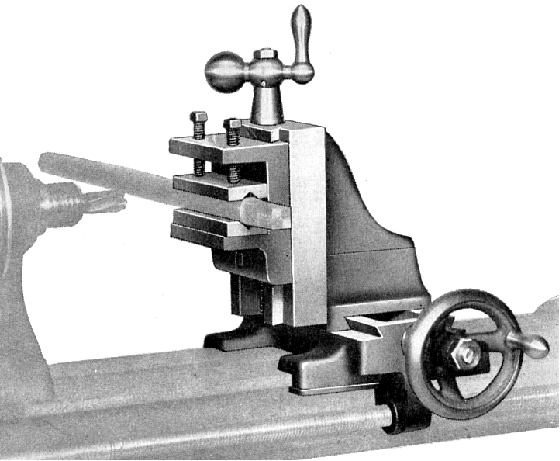
Based in Toledo, Ohio, the "Sypher" Manufacturing Company (later Syper-Arcon) made a variety of band saws, scroll and jig saws, bench saws, a small bench drill, a grinding head and a range of simple, small plain-turning metal and wood lathes. Even the company's top-of-the-range lathe lacked screwcutting and had only a simple compound slide rest, moved along the bed under power by a belt driving directly from the headstock to a large pulley on the end of a leadscrew. Because the apron carried a "full" nut, permanently engaged with the leadscrew (and without even the luxury of a dog-clutch to disengage the drive) there was no possibility of fitting a quick-action rack feed and, with the power drive permanently engaged, the operator was left with something of a problem as the cutting tool approached a shoulder. |
|
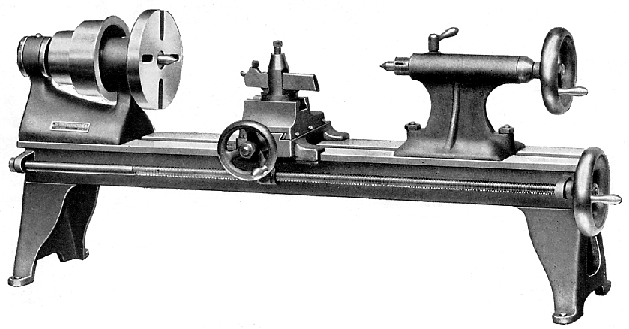
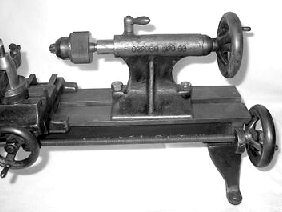
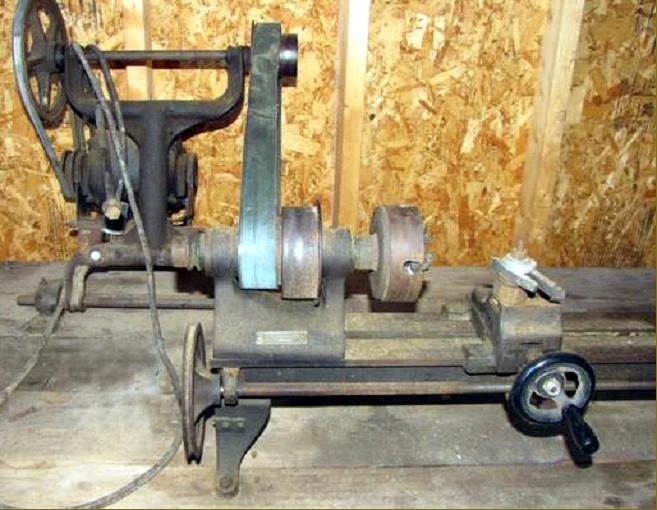
7-inch swing by 14-inches between centres Sypher No. 10 lathe. Fitted with a single tool slide and with carriage traverse by means of a handle on the leadscrew end, the flat-belt drive cone pulley on the headstock carried only two speeds. In the 1930s this lathe was offered, as shown, for $60. |
||
|
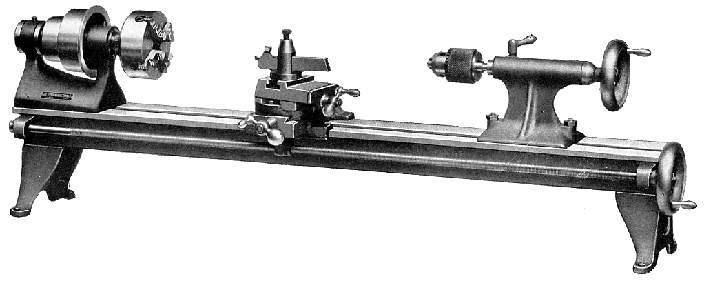
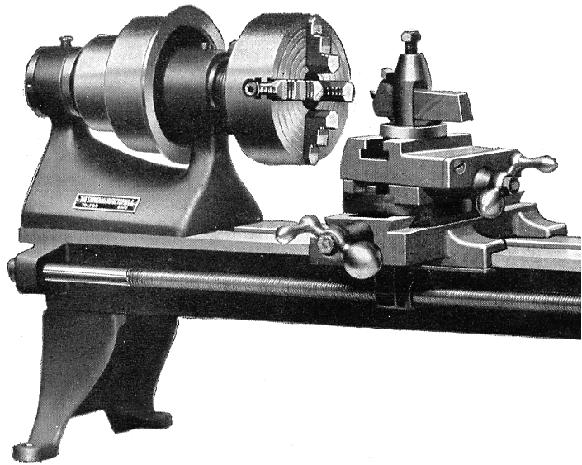
If you could force the children to go without shoes for a month or so, and find an extra $15, then the Sypher 7.75" x 24" No. 11 was within your reach. Although the swing was increased to a 7.75" and the capacity between centres to 24" - and a proper compound slide rest fitted with "balanced" ball handles but no micrometer dials - the owner still had to contend with the limitations imposed by a two-speed headstock. |
|
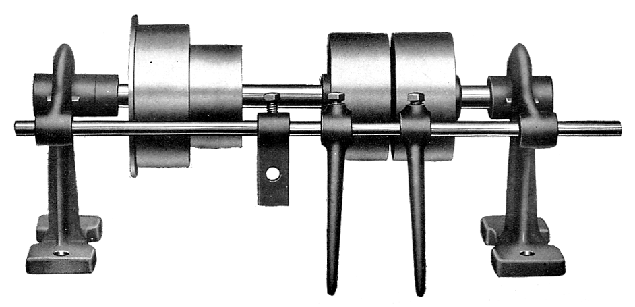
two-speed countershaft unit - listed in the catalog as Part No. 9. |
||
|
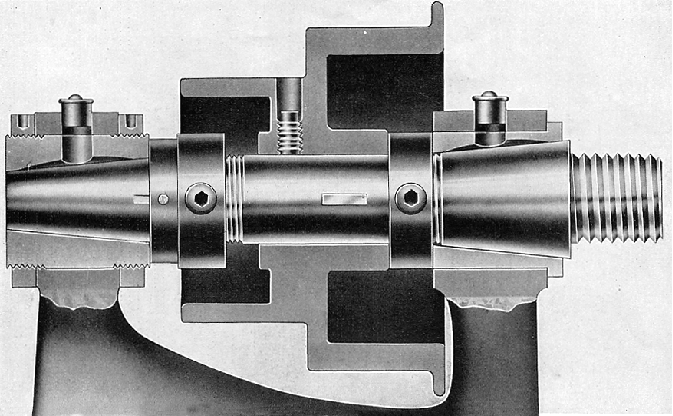
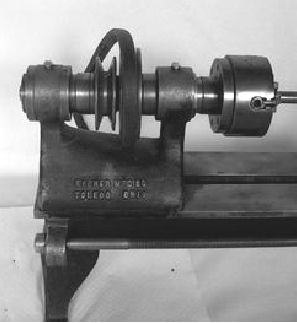
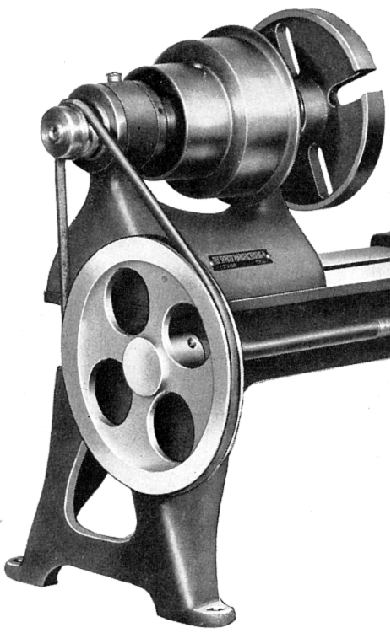
Although the headstock casting suffered an exaggeratedly-narrow waisting below the line of the spindle the bearings (and the spindle itself) were well designed and of generous proportions. The front bearing, parallel on its outside surface, was tapered 5 degrees on its inner and could be adjusted for initial clearance by a ring, screwed to the spindle, which also acted to absorb end thrust. |
||
|
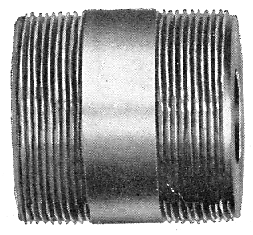
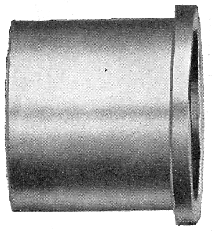
The double-taper headstock spindle of the Nos. 10 and 11 lathes |
||
|
|
||
|
|
||
|
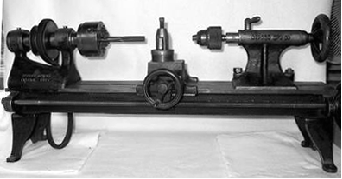
appears to be a Sypher No. 10 |
|
|
|
The Automatic Feed Attachment (Part No. 26) drove from a V groove on the end of the headstock spindle to a large-diameter pulley on the end of the leadscrew. |
||
|
The milling attachment (Part No. 24) had a useful, built-in vice and attached to the cross slide with a single bolt. |
||
|
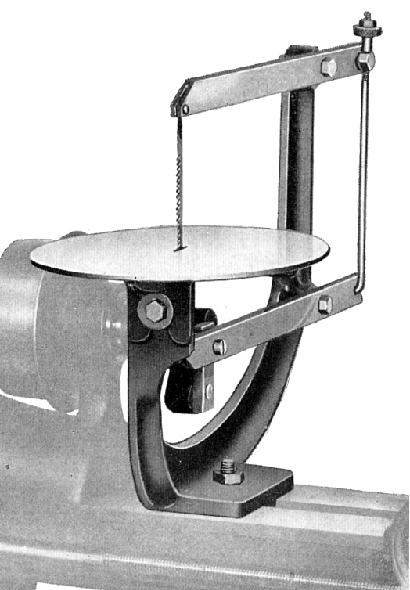
The Jig Saw Attachment (Part No. 22) had a stroke of 1.5 inches and could cut wood up to 2-inches thick. The table was 7-inches in diameter and could be tilted through 5 degrees. |
||
|
|
|
information about the Sypher Manufacturing Company. Home Machine Tool Archive Machine-tools Sale & Wanted |