|
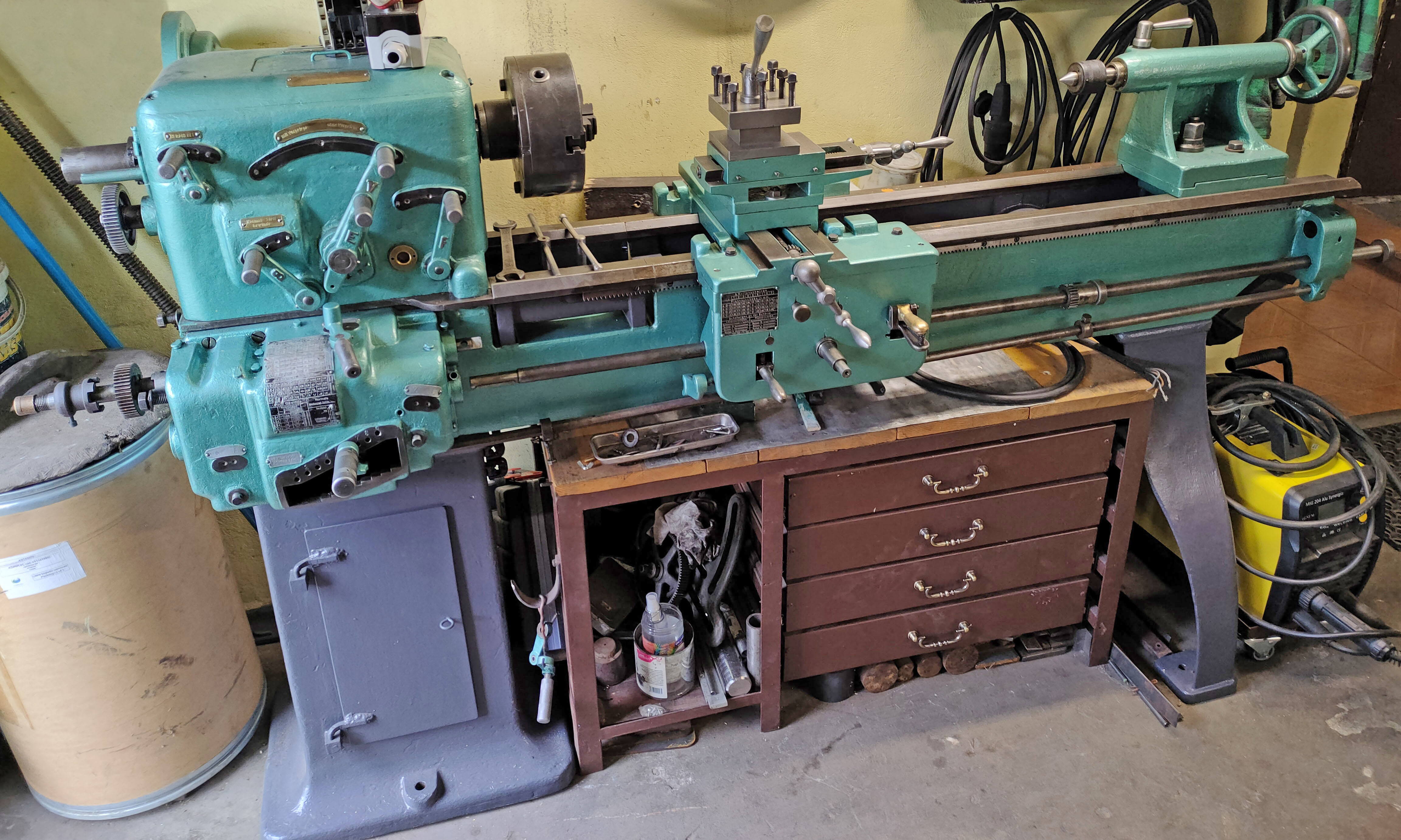
A Chinese copy of the Unimat 3/4 model, as produced by the SIEG factory and branded as their C1.
I got hold of one on impulse from Axminster Tools, with a view to developing a series of 'add-on' kits and upgrades for it, but, after looking more deeply into the marketplace, I have regretfully come to the conclusion that, however useful anything I might come up with could be, no one would buy it unless I sold the stuff at a loss.
By this time, I'd already worked out how to produce a reduction-speed toothed-belt pulley system to halve the top speed and double the torque available at the tool tip, and am quite a long way down the road towards figuring out an angular-contact bearing upgrade for the headstock. The same goes for threading under power using change gears and a banjo.
Although based upon the original Austrian Unimat 3, there are some important and significant differences. The major ones are the use of cast iron for the carriage and cross slide, a hardened bed, and a leadscrew with separate end bearings (from what I can see, the Unimat's runs directly in the bed casting), plus a separate leadscrew nut, as opposed to the Unimat, where the thread runs directly in the carriage casting.
Unfortunately, as with the original Emco product, the distance between centres is still a puny five to six inches. The whole thing, of course, falls down because of the varying levels of quality control applied to meet the profit margins of importers, both here and abroad. At present, I think the only dealer in the UK that still lists the C0 is Axminster. That said, I found a factory specification sheet on the web that gives the spindle runout as 0.05 mm, yet when I clocked my sample, I was surprised to find the runout was getting on for zero.
At around the £500 mark, the C1 is only a little less expensive than the cheapest Mini Lathe, and I suspect many newcomers are being steered towards the latter because, of course, there is more scope for profit margin, both from the 'bigger-ness' of the machine and from the plethora of additional tooling now available for them. One of the criticisms levelled at the C0 was the tailstock alignment, especially given the expectation that users might drill small holes without breaking the drill bit. Arc Euro Trade at one stage offered a 'sort of' floating tool holder that allowed a live centre or drill chuck to be set dead on the spindle centre line, and I think Aussee Machines in Australia do a version of the tailstock that can be offset, as on a full-size machine. In addition, the C0 has a maximum spindle speed of 3,000 rpm, which, of course, means that the low- and mid-range torque available for getting stuck into a reasonable-diameter steel workpiece falls right off as the motor speed drops. And yes, I know it's positively unchristian to do this to a small lathe... but what if it's the only one you have?
|
|