Home        Machine Tool Archive       Machine Tools For sale 7 Wanted
E-MAIL   Tony@lathes.co.uk

Sherline Lathes USA

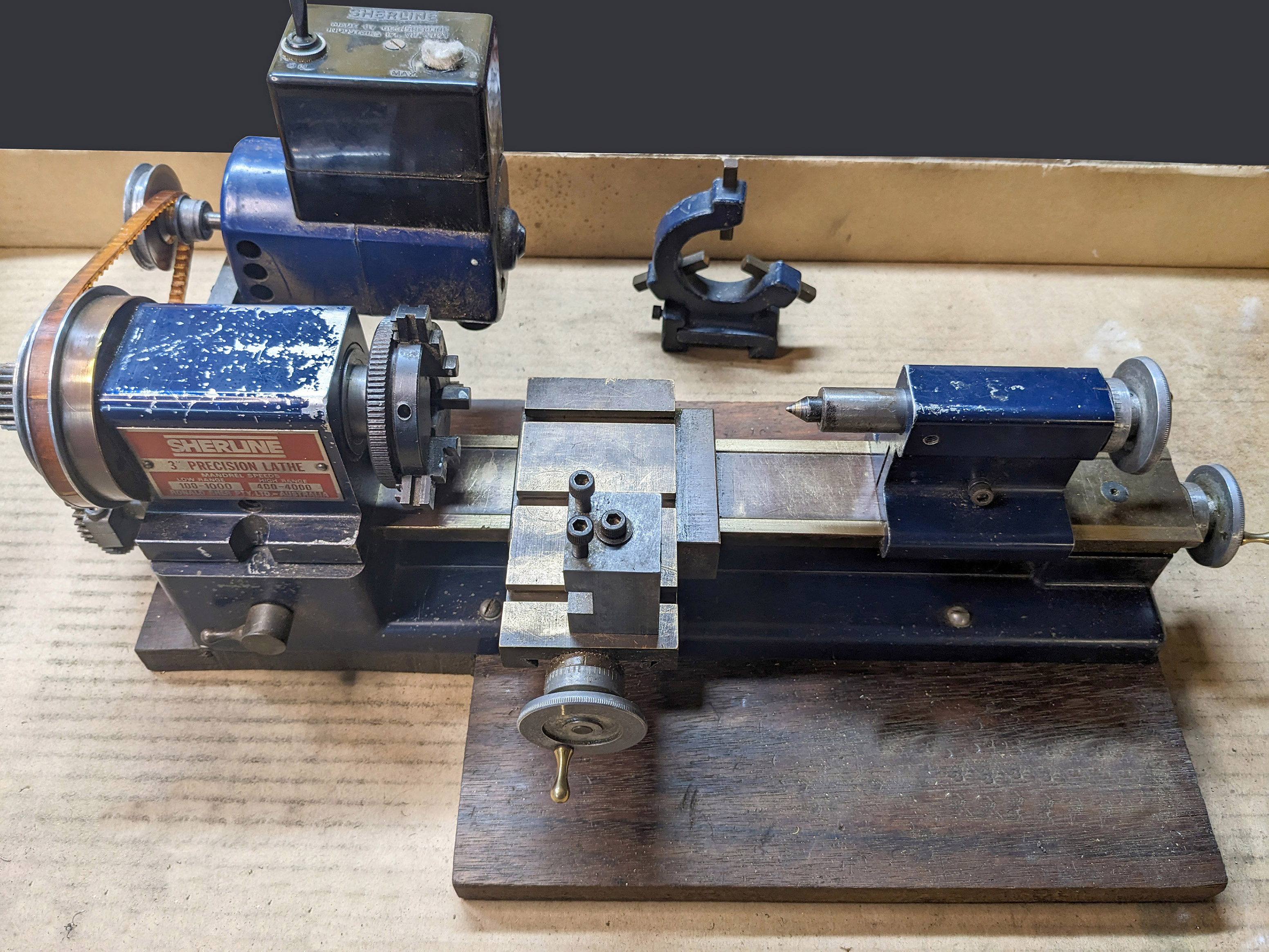
The Sherline miniature 3.5" (1.75" centre height) by 8-inches between centres lathe was designed by Harold Clisby in Australia in 1970, and first manufactured in that country. In 1972 the design passed into the hand of the American Sheerline Company and the lathe is now produced, together with a range of small milling machines - and an extensive range of accessories - in the USA. This well-engineered little lathe has remained essentially unchanged since its introduction with the result that the latest accessories can be used on  the earliest machine - and spare parts easily and reliably obtained. Some versions of the lathe and miller have also been rebranded for sale in Europe using the "Unimat" name.

Sherline Products
2350 Oak Ridge Way, Vista, VC 92083 USA
International Phone: 001-760-727-5857   Fax: 001-760-727-7857
Toll Free (orders only) 1-800-541-0735
http://www.sherline.com

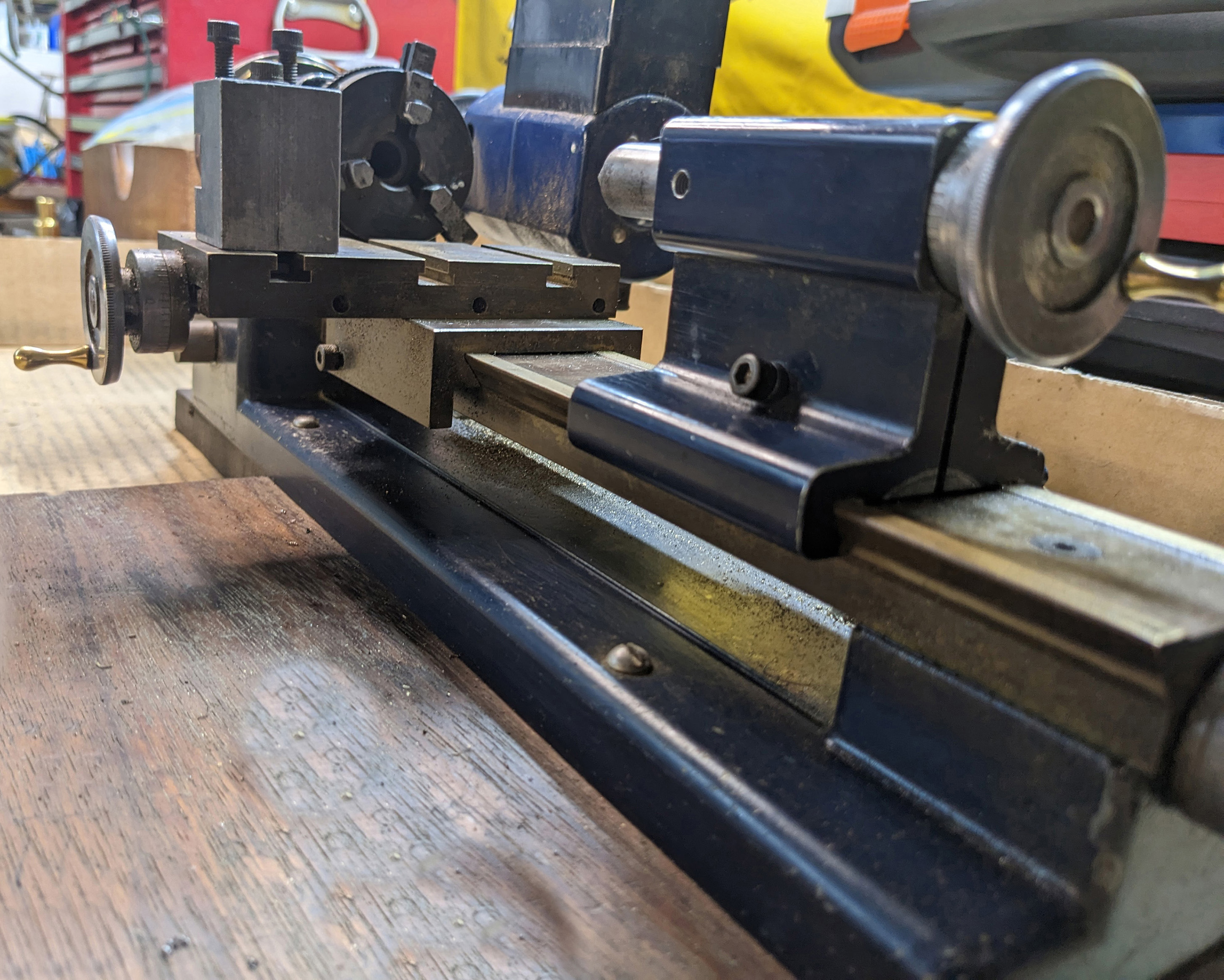
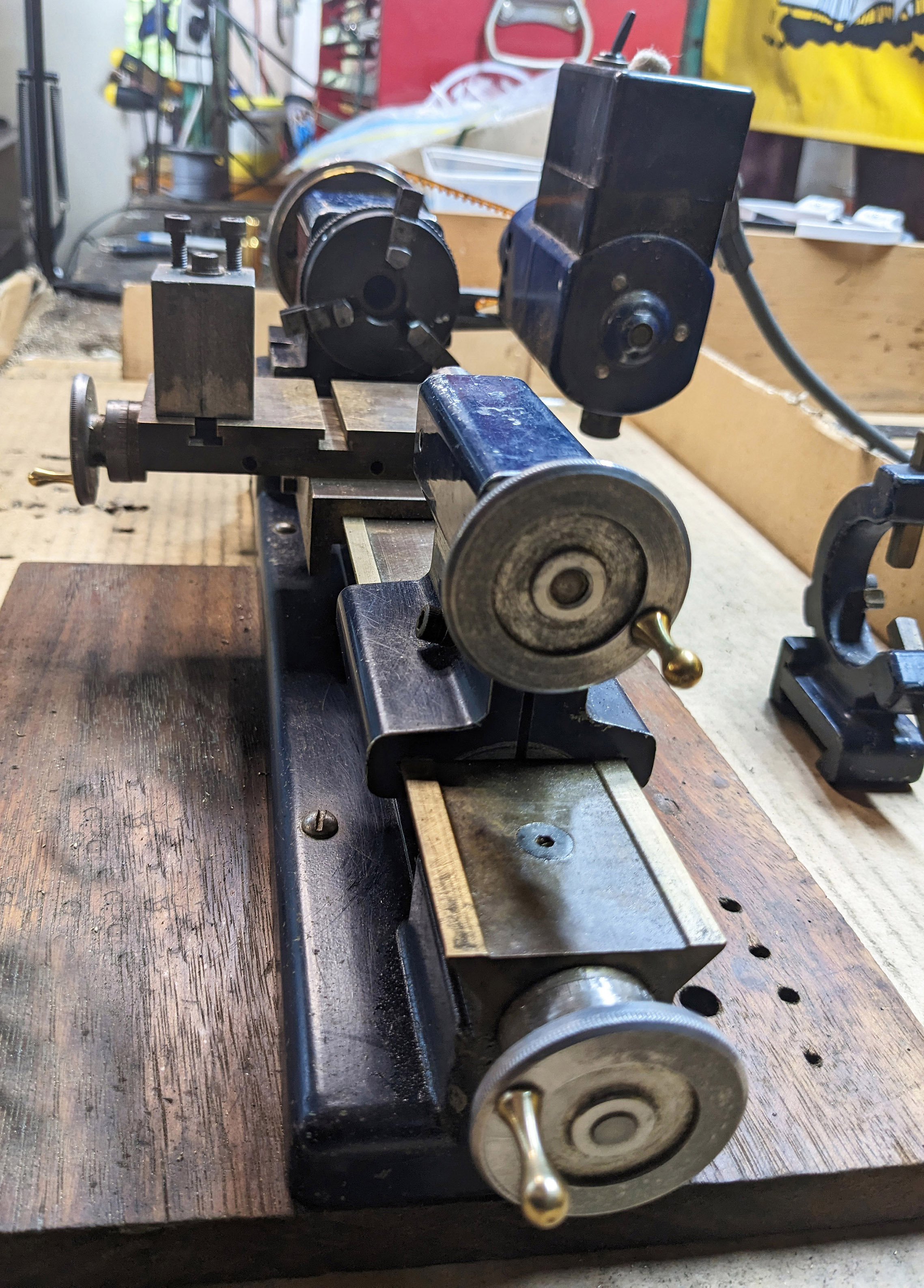
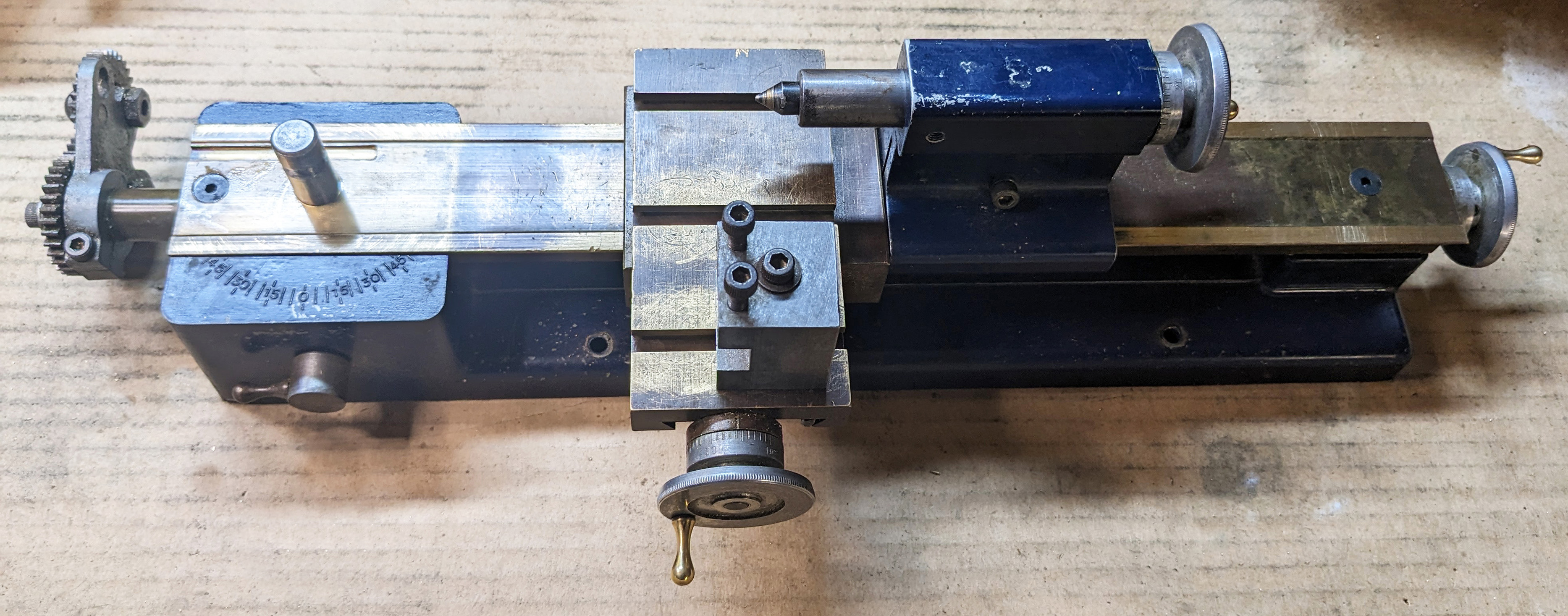
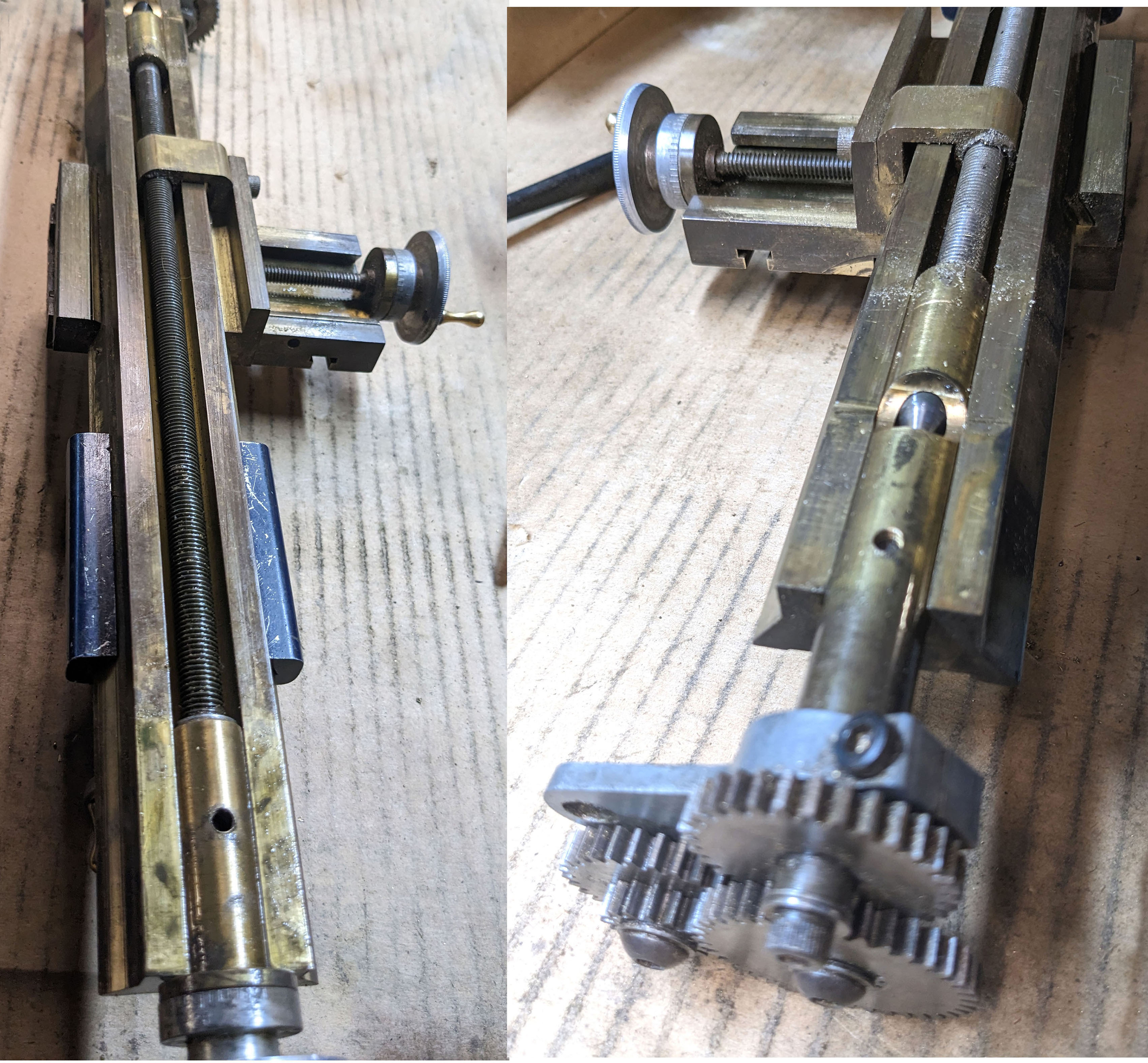
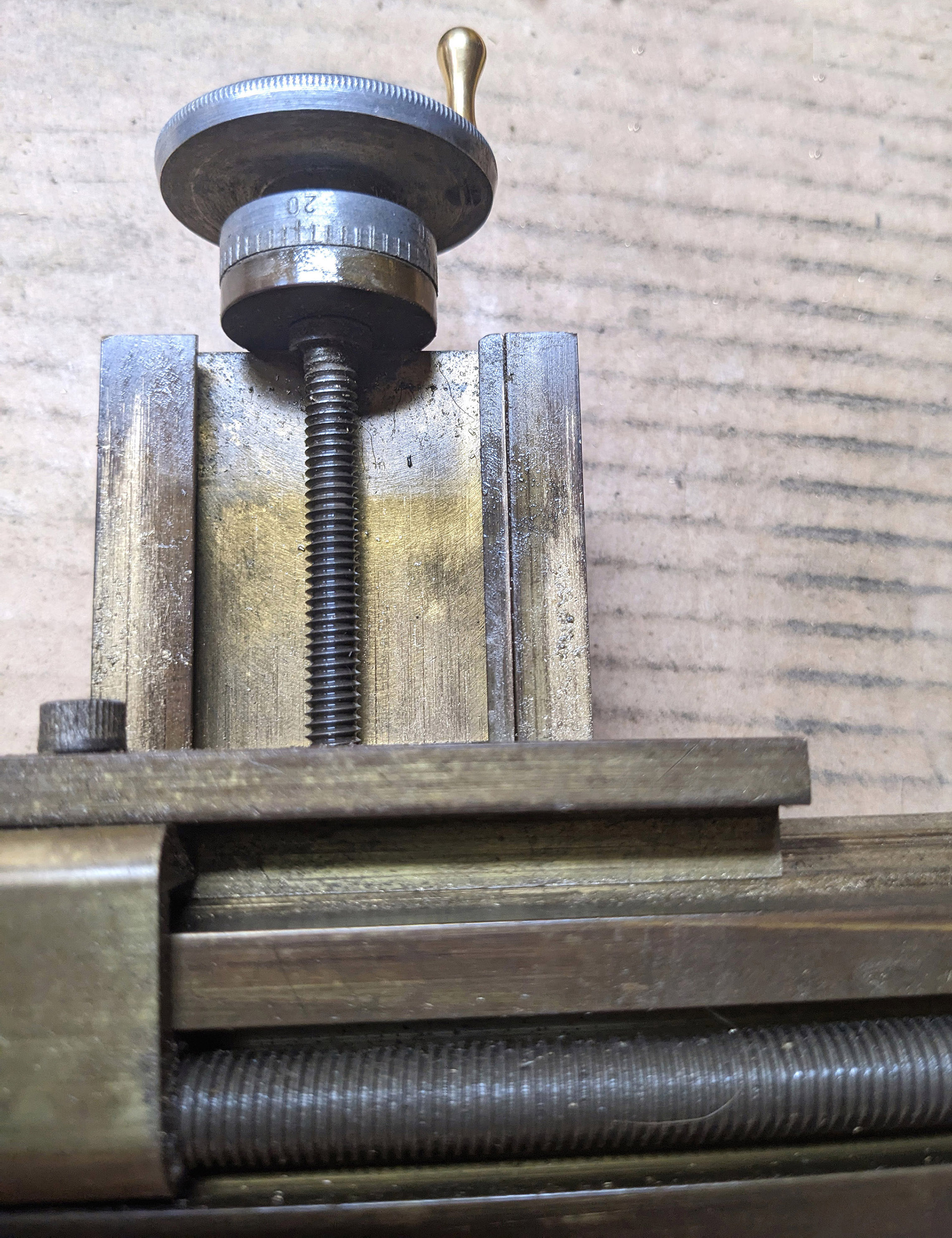
The base of the lathe is an aluminium casting to which is fastened a steel bed, machined to form dovetail slides along its edges. The "leadscrew" runs down the centre of the bed, protected from swarf and engaging with the carriage via a "full nut"; this simple and reliable arrangement means, unfortunately, a lot of hand twirling by the operator to reposition the cutting tools on longer jobs, there being no quick-feed rack as on most larger lathes. The saddle is adjusted to the bed, and the cross slide to the saddle, by long tapered gib blocks - a more expensive but superior method to the usual row of small adjusting screws and loose, thin, flexible gib strips.
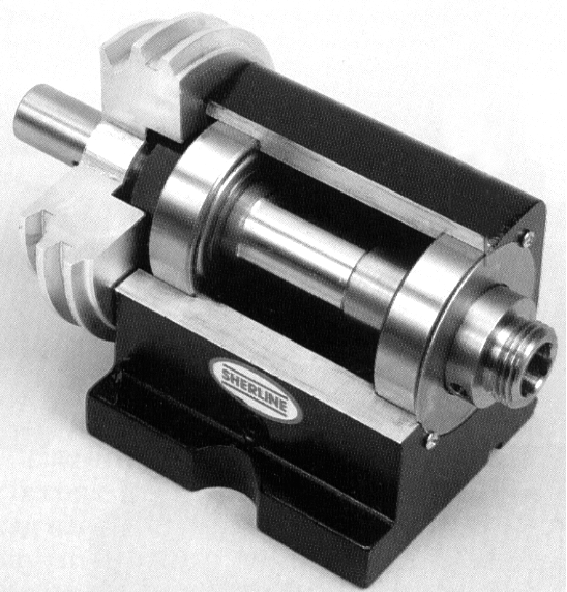
The box-casting, non-backgeared headstock with 20mm sealed-for-life bearings is bolted to the bed but can be rotated on it, to a limited degree, to allow taper turning.
The 0.4.5" (10mm) bore No. 1 Morse taper spindle with its 3/4" x 16 t.p.i thread is driven by a 100/240v 50/60 Hz motor (which adjusts automatically to voltage and Hz) through an electronic controller giving infinitely variable speeds from 70 to 2800 rpm. The drive from motor to headstock is via two-step pulleys, giving high and low speed ranges and effectively increasing the torque at lower rpm. - a useful feature when trying to turn larger diameters in more resilient materials.

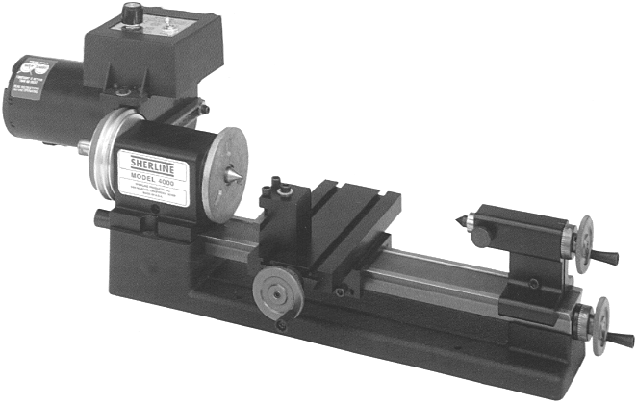
Basic Model 4000 Sherline lathe. 3.5" swing by 8 inches between centres

The basic Sherline lathe, the Model 4000 (or 4100 with metric graduations) is supplied as standard with a motor and speed controller, faceplate, drive dog for between-centres work, two centres (No. 0 Morse for the tailstock) a single cutting tool for the tool post and a simple cross slide - although a swivelling top slide (compound) is now available as an accessory. A ring-scroll three jaw chuck would be first on anyone's options list and, at around £80, this unit has found favour with owners of older miniature machine tools, where the  non-availability of reasonably-priced self-centring chucks has been a problem for many years.
A pleasing feature of the lathe is the provision of crisply engraved micrometer dials, with inch or metric graduations and with the option of an adjustable "zeroing type" which can be locked and unlocked by a screw on the face of the handwheel. These dials are not of the quick-setting friction-held type (which can, in practice, unless well engineered, be difficult to set up properly) but positive-locking ones which require a deliberate action on the part of the operator to use correctly. If fitted with these dials from new the Models become the 4500 (inch) and 4530 (metric).
A long-bed version of the lathe admitting 17" between centres is also produced, and fitted as standard with some of the the more desirable extras - zeroing micrometer dials on the feedscrew and cross slide and a rocker type ("American" to British readers) adjustable-height toolpost in place of the standard unit.
One useful extra not included in the long-bed specification is the power feed attachment - a simple, constant-speed motor which drives the carriage under power from right to left at a steady 0.9" per minute. The unit is positioned to the left hand-side of the lathe and can be switched on and off electrically - or disengaged at any point in its travel by a mechanism included with the drive.
The newest Sherline lathes and millers incorporate two modifications:
       - the tailstock on the lathe is now locked to the bed by a screw, tightening vertically against an adjustable brass gib; this eliminates the tendency, caused by the split-base assembly used previously, for the tailstock spindle to be pulled out of alignment. The whole assembly is adjustable for wear - and the tailstock can also be removed for the fitting of a raiser block without having to remove the handwheel first.
       - the miller now features a simple rotating-locking lever that secures the Z-axis in a positive fashion without the need to find a wrench - it replaces a friction lock that previously tightened against the dovetail.
There are numerous third-party suppliers of CNC kits for Sherline lathes and millers, and the factory have recently introduced "CNC-ready" stepper-motor mounts to simplify installation of these fascinating toys.
Other computer controlled accessories are also in production - a self-contained CNC rotary indexer (P/N 8700) which can be used on millers of all sizes - with a linear version available to convert any of the lathe or miller feeds to a power drive.

Sectional view of the small but robust Sherline headstock and spindle assembly.

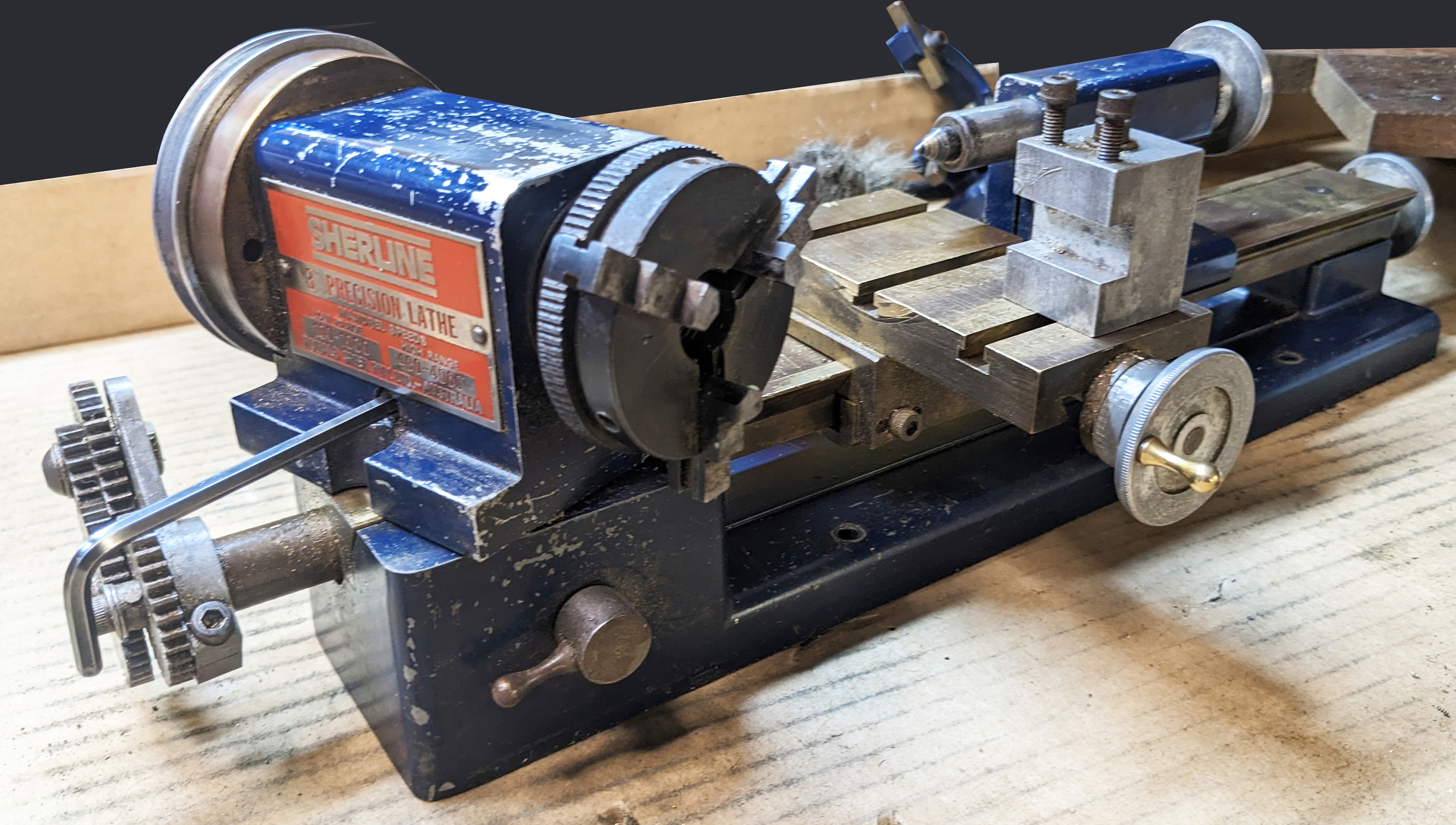
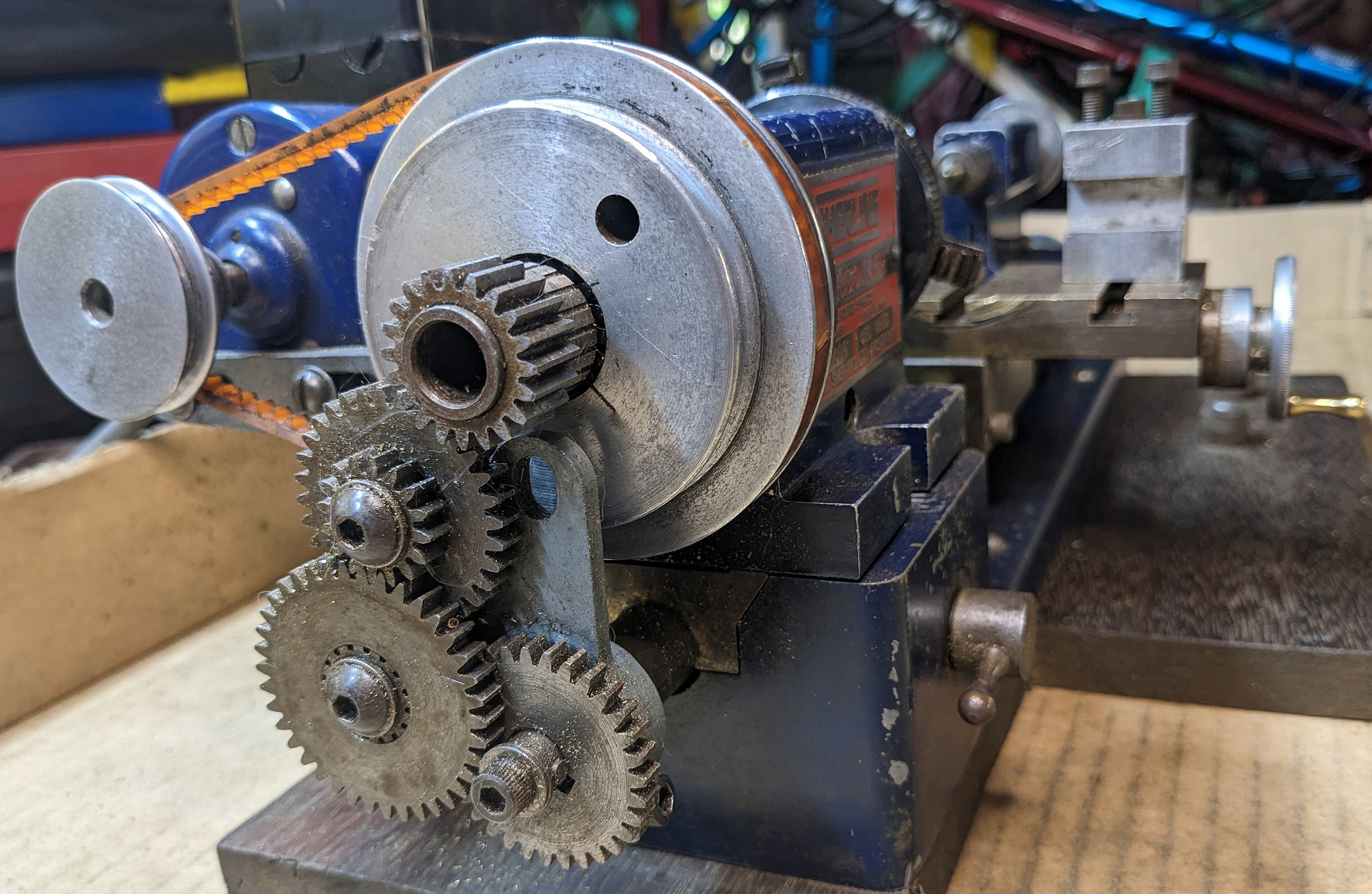
One of the more unusual accessories for the Sherline in the Screwcutting Attachment. The lowest speed on the lathe being too fast for generating threads, this simple but effective substitute has been designed to overcome the problem. In order to use it the motor is removed and replaced by a large handwheel and, whilst it would be difficult to manufacture a thread of any length in hard steel, for occasional use on brass or aluminium it appears to be a very satisfactory arrangement.
With the changewheels supplied 31 unified threads from 10 to 80 t.p.i and 28 metric threads from .25 to 2.0 mm can be generated in both left and right-hand forms.
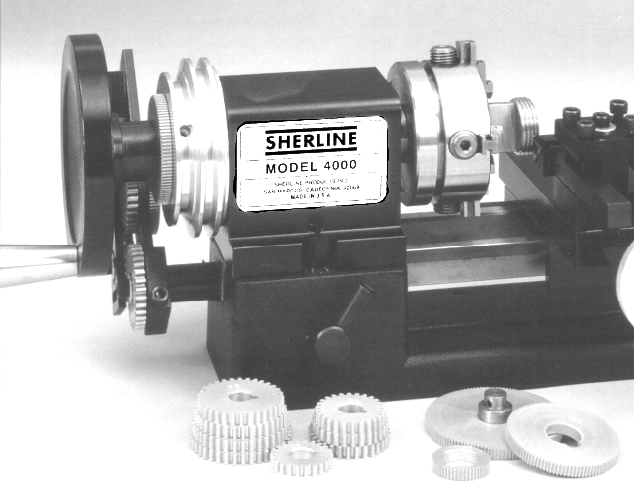
The unit consists of fifteen changewheels, a mounting bracket, a dog-clutch arrangement to engage and disengage the drive (the operating handle for which can be seen on the front face of the unit, immediately below the headstock badge) and a handwheel. Fitted with this device both the inch and metric lathes can cut threads of the opposite persuasion.
Being able to drive the spindle by hand has certain advantages in other machining operations as well - and the use of the handwheel is not, therefore, confined to just screwcutting use.
The idea of a hand-powered spindle is not, of course, new and another lathe fitted with a similar mechanism was the little known Jason  - which was made in Norwich, England until the early 1970s.

Sherline hand-powered screwcutting attachment.

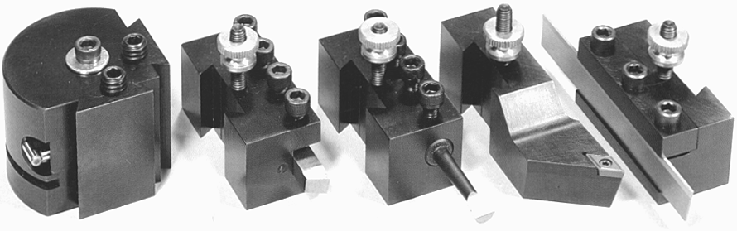
Sherline's own design of quick-set tooling.


Home        Machine Tool Archive       Small lathes for Sale
E-MAIL   Tony@lathes.co.uk

Sherline Lathes
USA