|
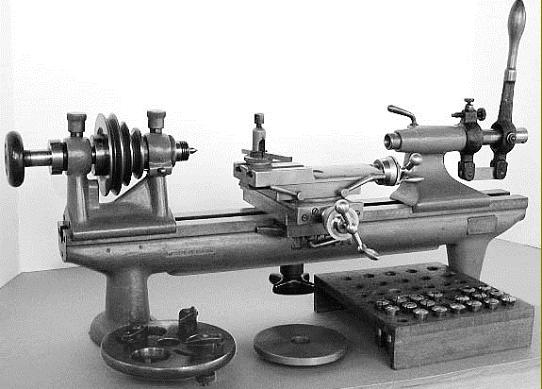
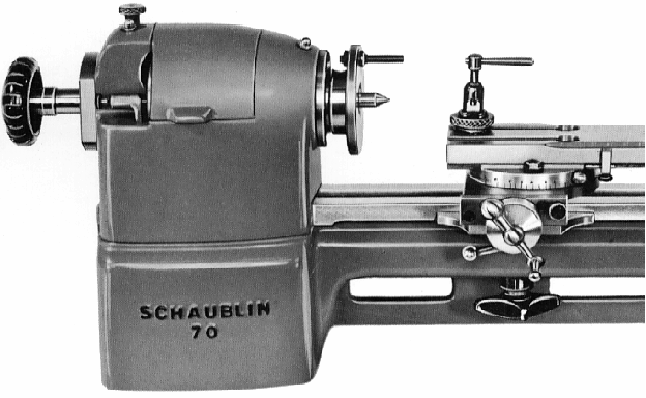
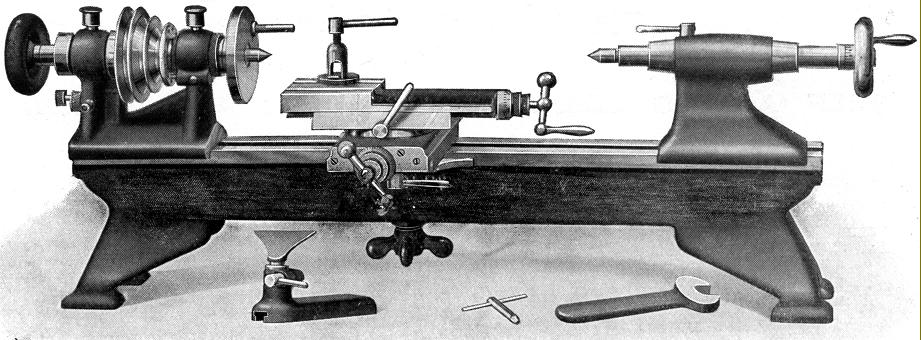
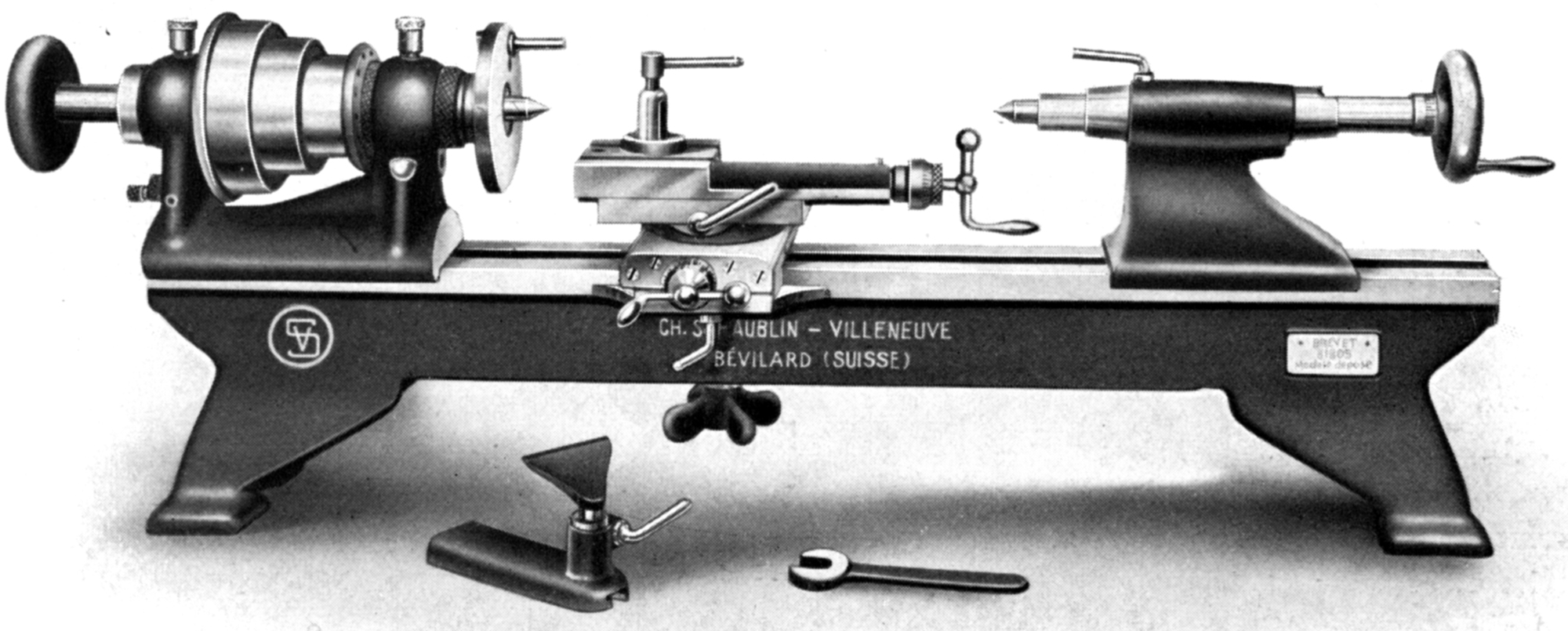
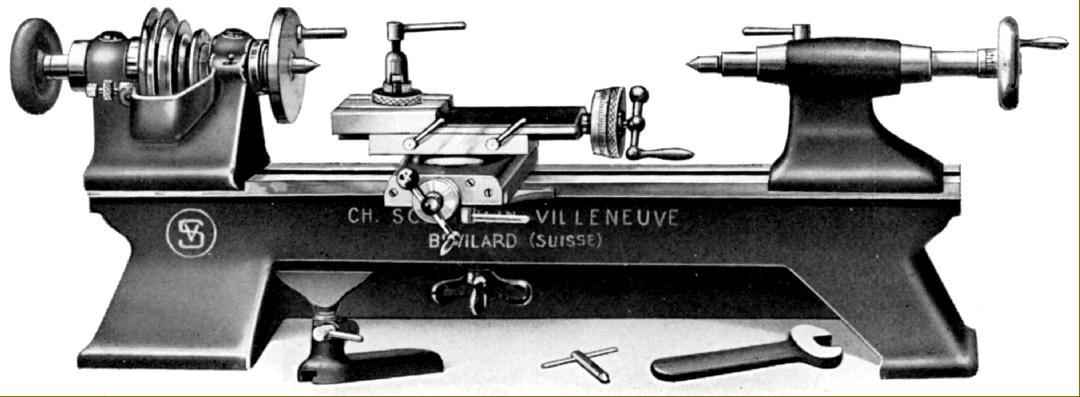
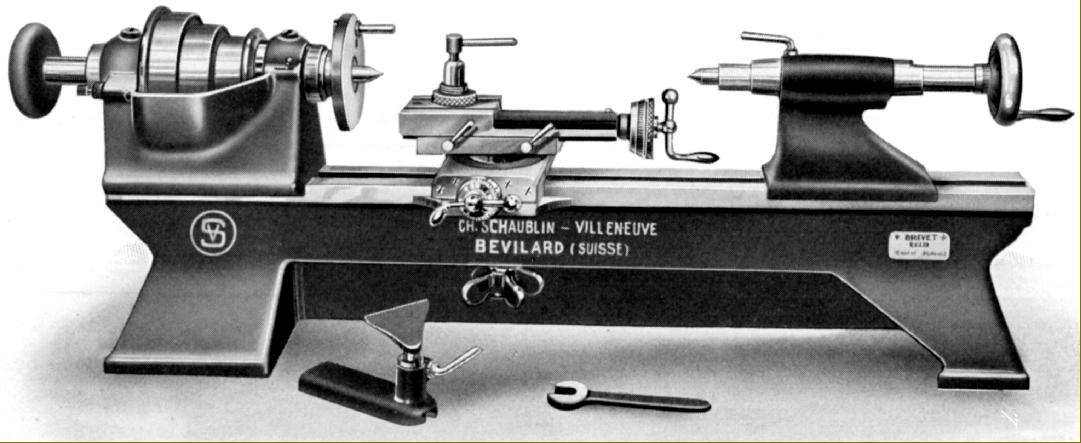
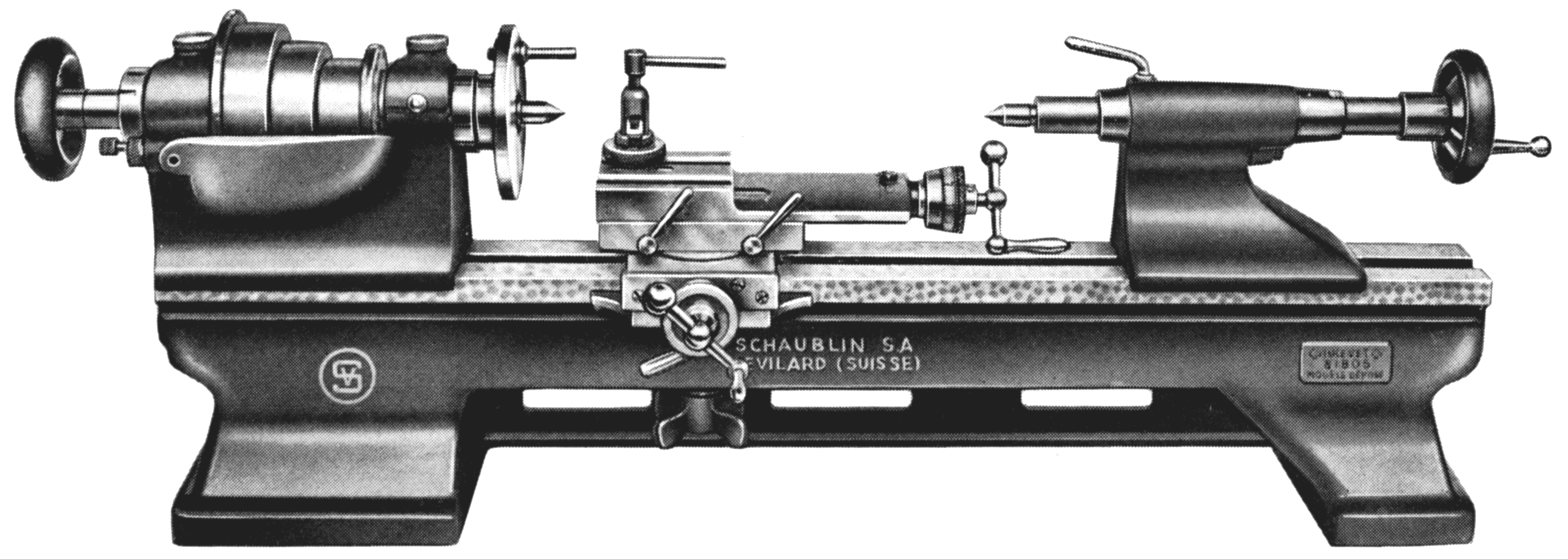
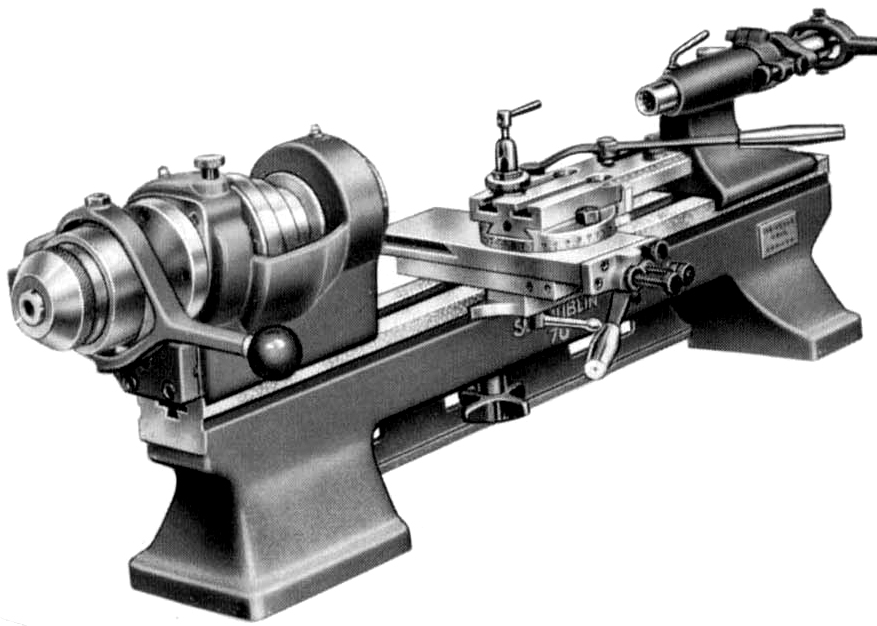
Still highly sought-after in all it forms, Schaublin's smallest lathe started life in the very early 1920s as the Type 65 (65 mm centre height) plain-turning precision lathe, a type that took now hard-to-find 10 mm collets and was driven by a round belt.. A less expensive version, the "Jura", was also offered, a model with its name cast into the front of the bed and sufficiently different in appearance to make it immediately obvious that the buyer had been guilty of penny pinching. A slightly larger version, the Type 70 (70 mm centre height) with a more powerful flat-belt drive, was soon introduced (to run alongside the larger 90 and 102 models) and both were then developed steadily, year on year, to become heavier and more rigid - with a corresponding increase in headstock spindle diameter and with more massive beds. By the early 1930s the 65 and 70 had become internationally recognised as top-quality machines for toolroom and experimental shop work and sales increased dramatically. After WW2, at some point in the early 1950s, the Type 65 was dropped in favour of a reworked Type 70 - though it did run alongside the model for a short period. After this changes were slow - indeed, a Type 70 made in 1946 looked almost identical to one produced in the mid 1960s - though the option had been introduced, during the late 1940s, of "anti-friction" (ball-race) headstocks instead of the long-established plain-bearing type (a move also made in America during the 1930s on some of that country's "bench precision lathes", many of a similar quality to Schaublin). The front bearing was of the adjustable double-row roller type and at the rear just a couple of deep groove ball races to take thrust (these being replaced later by a pair of angular-contact types). Very late models - from some point in the 1970s - had a redesigned headstock fitted with a singular angular-contact baring at each end.
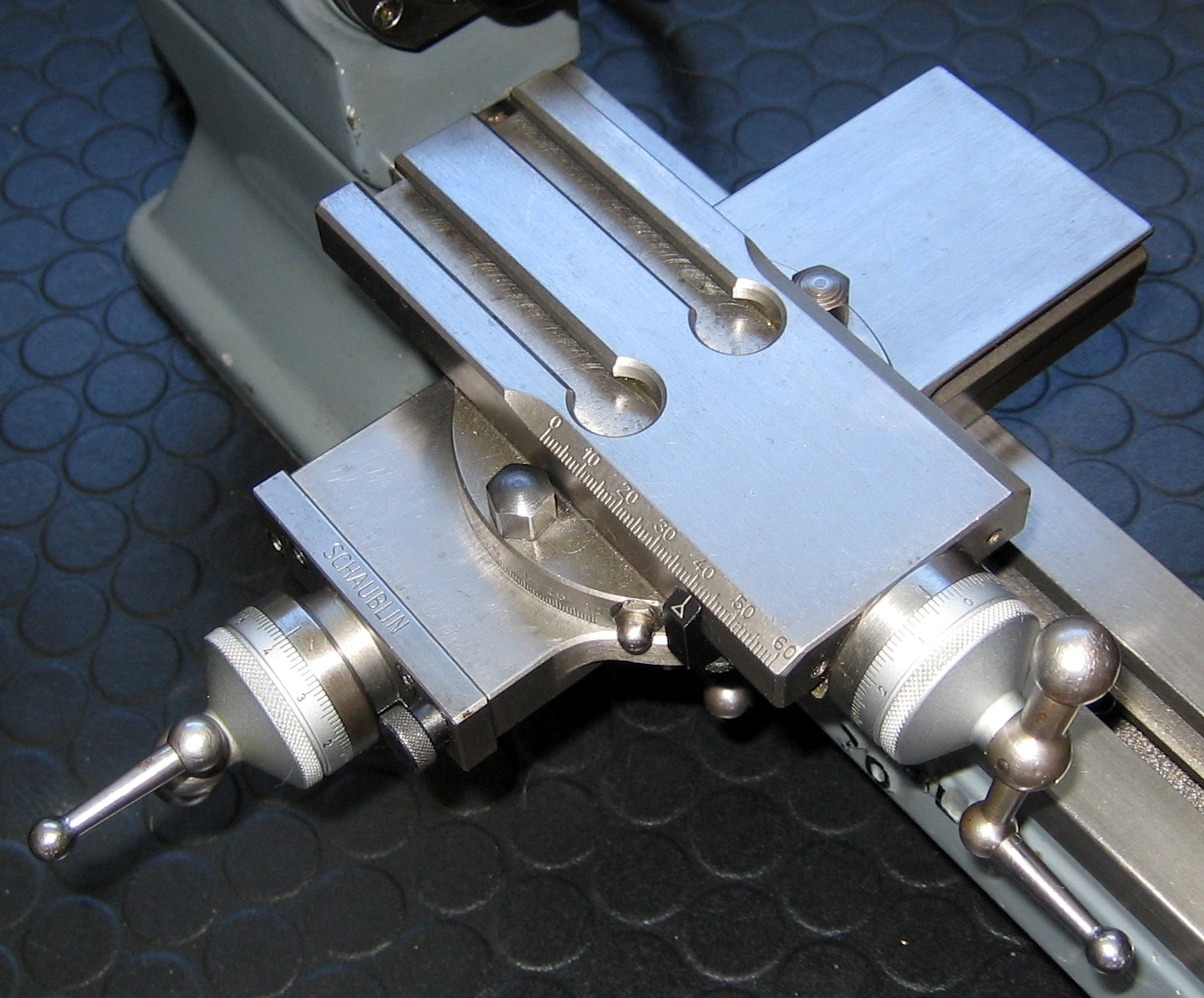
Compound slide rest assemblies were always of the very highest quality, smooth turning and very accurate, the hardened feed screws and nuts (generally cast-iron on the top slide and bronze on the cross) being individually hand fitted. Early slides had painted casting - later versions were machined all over to give a very pleasing, superior cosmetic finish. The tailstock too can only be described as engineering work of art, especially the late type with a "window" where the ultra smooth action of the hardened spindle (with its 2-degree nose taper) running in a honed bore has to be experienced to be believed.
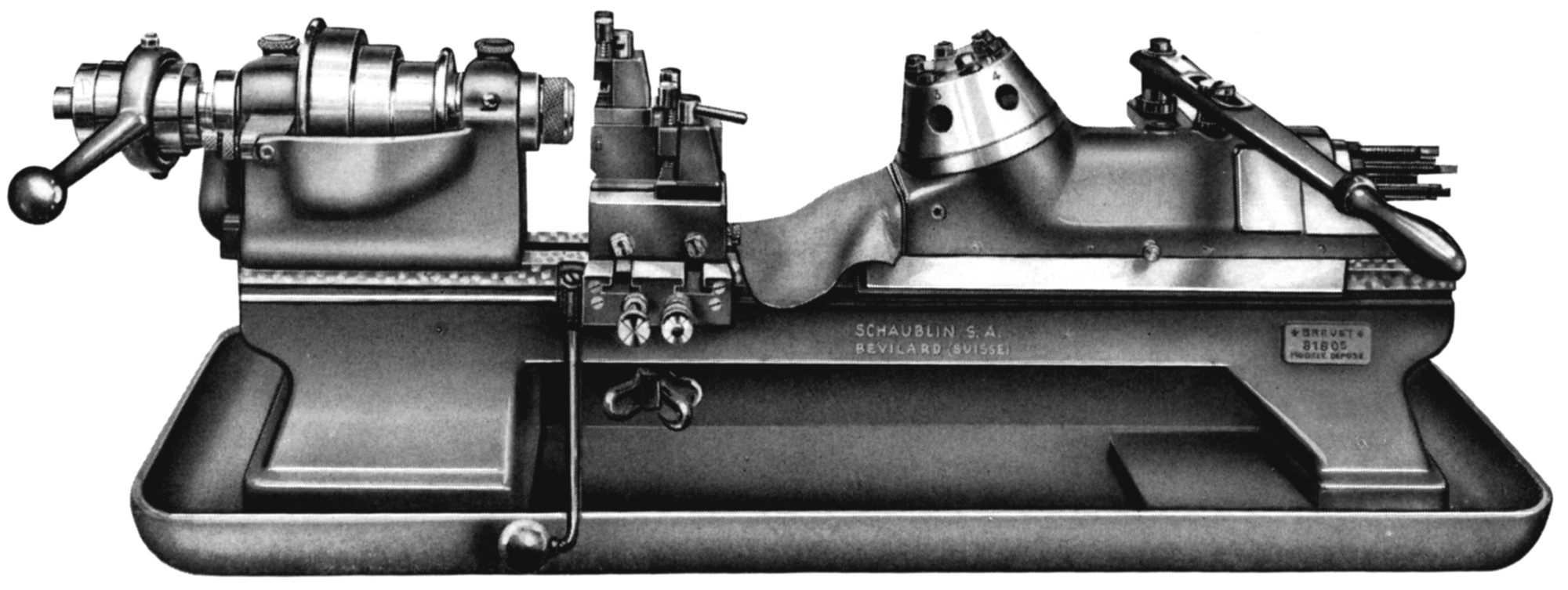
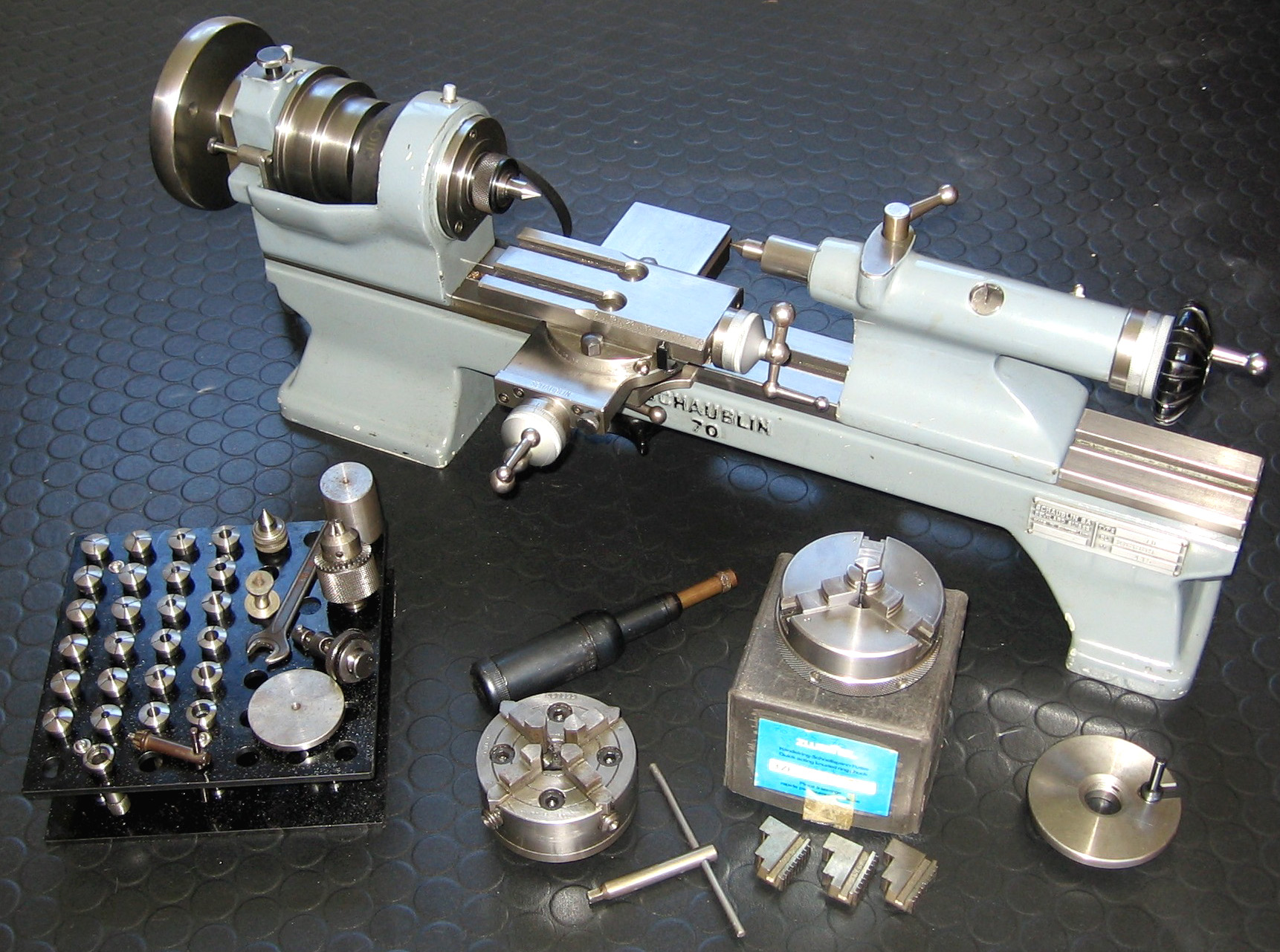
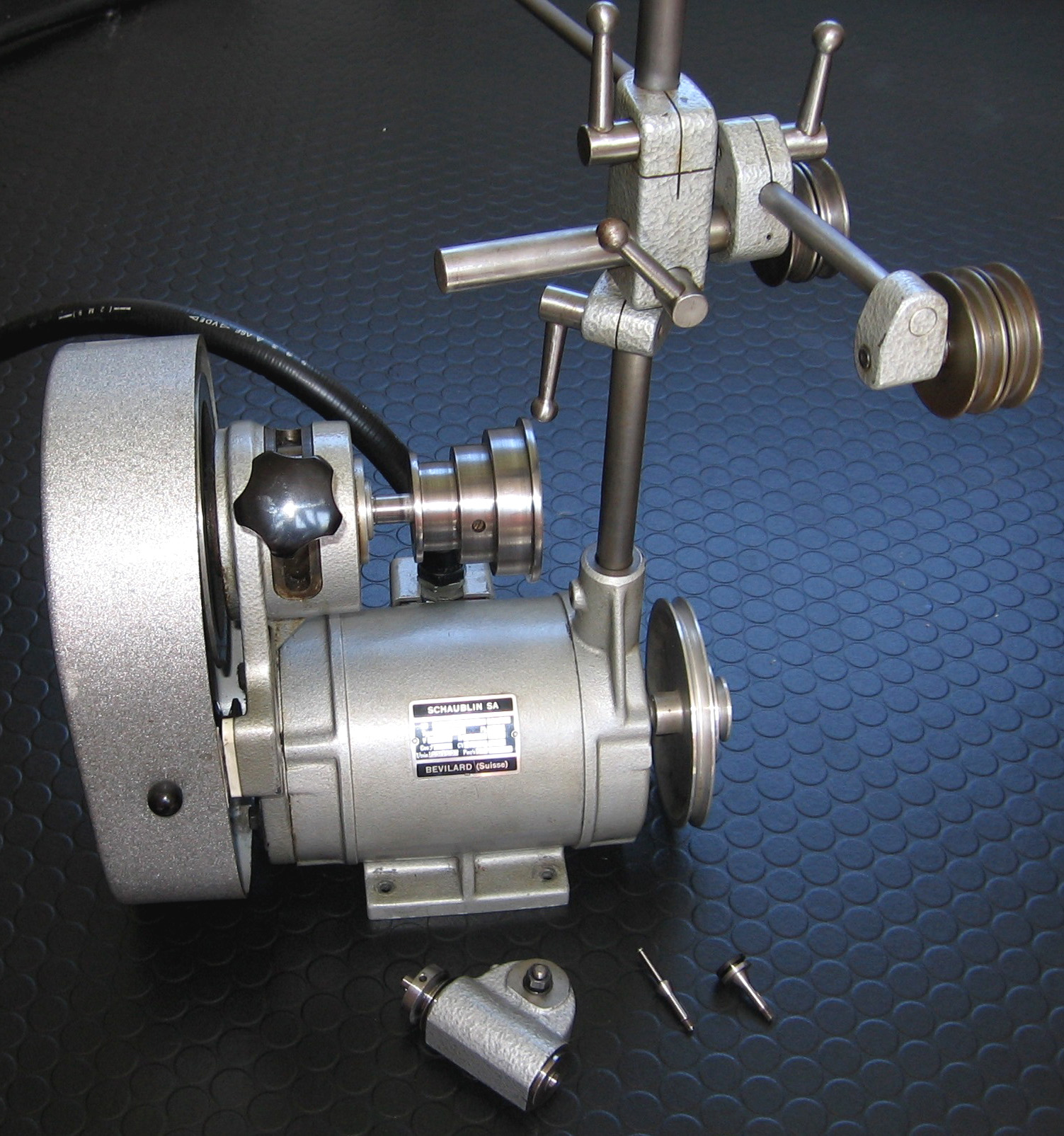
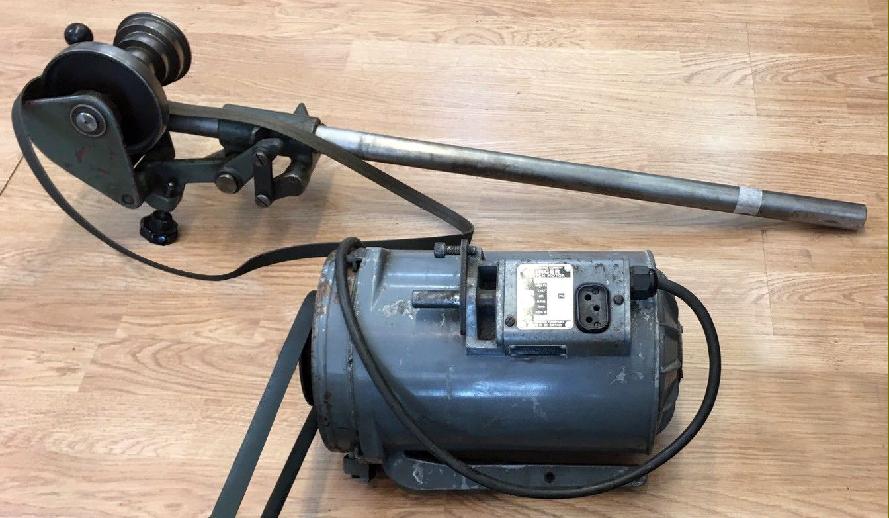
Currently still the smallest of Schaublin's precision plain lathe range, the Type 70 (70 mm centre height) has always been available as a Toolmakers' (model TO), Second Operation (TL) or fitted with a Turret (TR) for production work. Available for mounting on the owner's own bench using a rear-drive countershaft (as illustrated below) it is also found on a superb (and very hard to find) cast-iron stand incorporating an underdrive motor system. A good range of accessories is still available, although now (2017) only a fraction of those listed in earlier decades when an almost bewildering variety of fittings and lathe specifications could be ordered - the beautifully produced, art-worked catalogues of the time illustrating them all. Today, several different types of headstock to take either type W or type F collets are available, together with bed-mounted capstan units and cut-off slides for production use. Happily, many items are interchangeable over several generations of manufacture (some even with those for the 102); for example, the older and much larger capstan turret can be used in place of the smaller, lighter later version - or visa-versa. A particularly sought-after extra is the screwcutting and power-feeds attachment - an item so expensive that, relative to total production of the model type, few can have been sold (though it was available from the early 1920s). Many accessories are identical in function to (and occasionally interchangeable with) those from the 102 range
A tip when looking for the F-16 collets that fit a Schaublin 70 is to ensure that they are exactly the correct type: Art. 76-104 - and do remember, that although built to the very highest standard when new, like any quality article a Schaublin lathe can be worn out and less accurate than desired. Happily, for all the late models, a spares service is still available and most parts can be restored to an "as-new" specification - though the cost is considerable
The writer seeks very early advertising illustrations and photographs of Schaublin lathes from the 1920s. If you can help, pleases do make contact.
Picture sets of the Schaublin 65 and 70 continued here , here and here together with details of many accessories here..
|
|