|
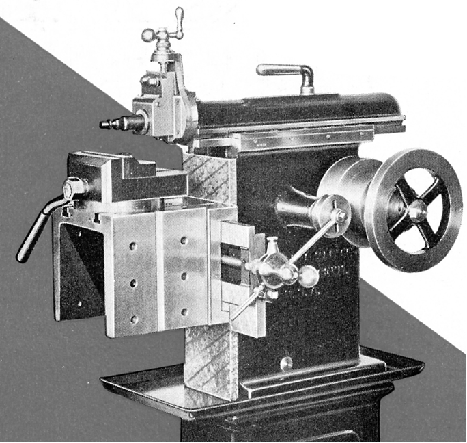
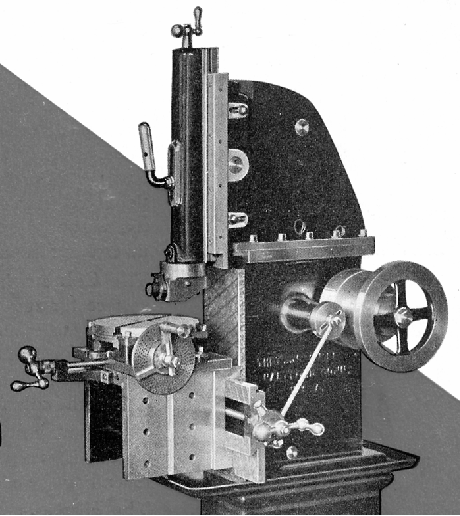
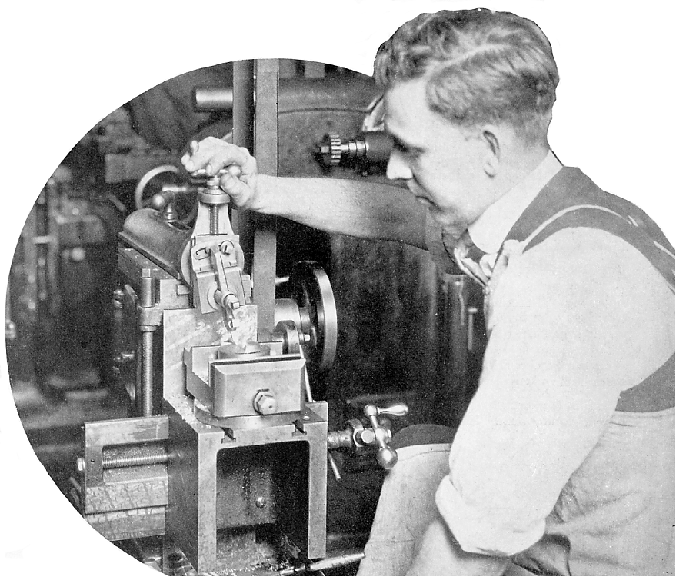
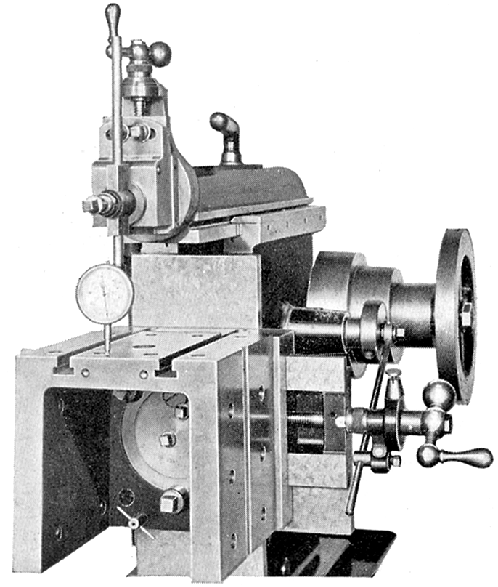
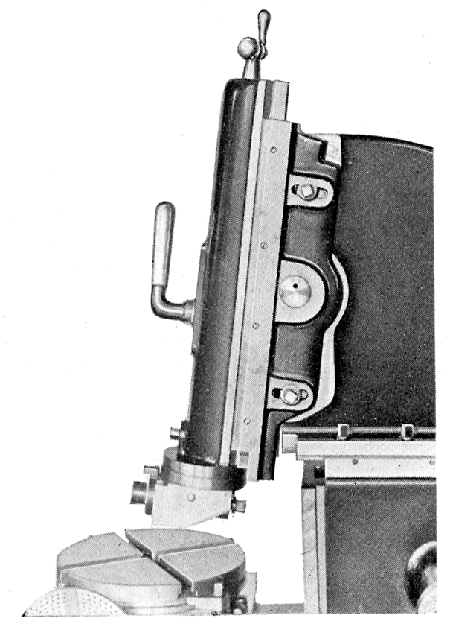
Manufactured in Waltham, Massachusetts by the Rhodes Manufacturing Company, the interesting and useful Rhodes "Convertible" was both a 7-inch stroke shaper and a 3.5-inch vertical slotter.
The machine appear to have been current in the 1920s and 1930s and, though well-made, was of relatively light construction. The main body was cast from close-grained, grey iron with the horizontal bearing surface for the ram, and vertical cross rail surface, both being hand scraped; the horizontal bearing surface for the ram also provided a location for the vertical Slotter Attachment. The driving gears and power take-off for the table cross feed were enclosed in the main column and accessed through a small, cast-iron door.
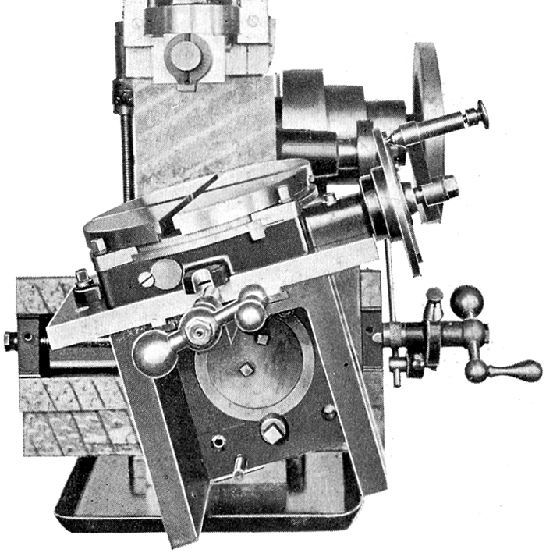
Instead of the expected box form the knee was open across its lower surface - so depriving it on some rigidity - and carried two T slots in its top surface and, on the two vertical, tapped holes in both together with a single V-slot on the right-hand face. As standard the knee could not be rotated, but available as an optional-extra was a swivelling knee, able to be moved through 90 degrees in either direction and located in its central position by a hardened and ground dowel. Table power cross-feed worked in both directions and was engaged by the usual lift-and-turn pawl.
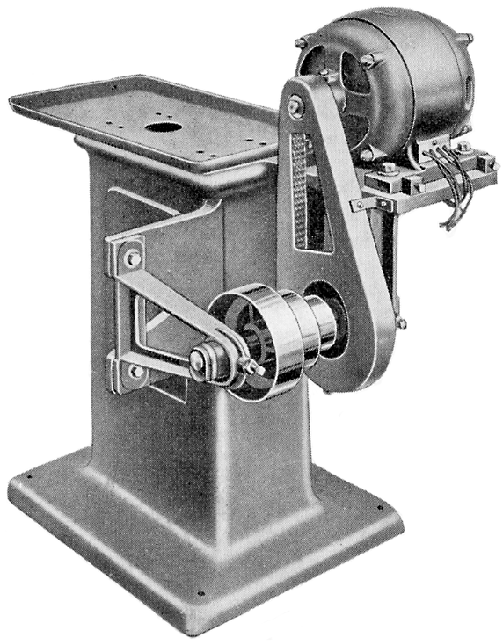
Drive was by a 3-step, flat-belt pulley mounted on sleeve bearing that relieved the shaft of belt strain and helped to ensure that the gears were not taken out of the correct mesh when under heavy loads. A good quality, robustly-constructed, swivelling-base, all-steel vice was provided, with its jaws made from hardened and ground tool steel.
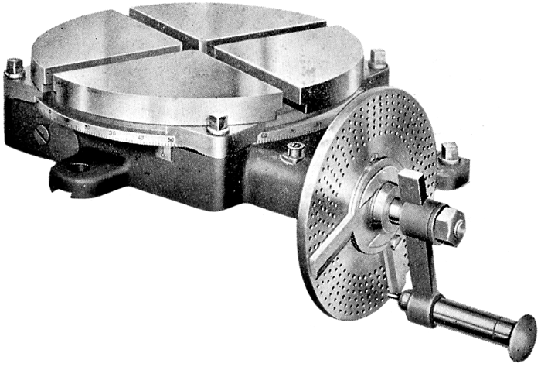
When the machine was used as a slotter, some means of moving the work around under the cutter was, of course, required and to accomplish this a compound table was mounted on the knee - with the in-out feed screw attached to a separate bracket carried on the front edge. The slotter ram was fitted with a through screw, by which means the tool could be accurately set, adjusted and also moved through an arc of 10 degrees.
Other Rhodes "Convertibles" have been found with a third T slot in the table and the castings carrying the legend " L.E.Rhodes Hartford Conn". Whether these are younger or older machines is not known and should any reader has further information, the author would be pleased to hear from you..
|
|