|
Continued:
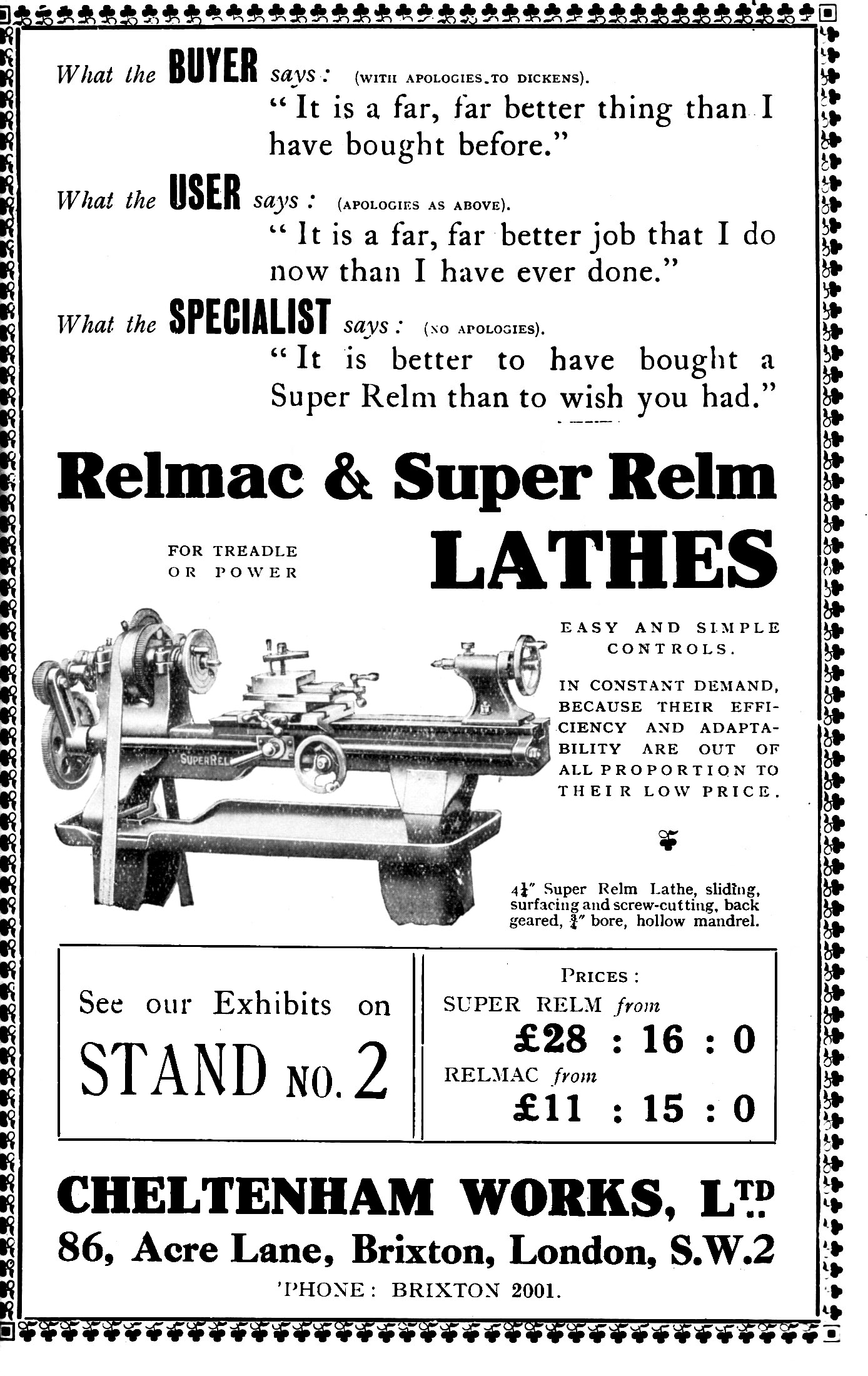
Relm lathes were also to be found advertised as the RelMac in both technical and non-technical magazines with the firm advising the availability of machines from 2 to 5.5-inches in centre height - though most surviving examples are of 4.25-inches with either 15 or 24-inches between centres. In line with the economic stringency of the time, they were made available not only as complete, working lathes but also as a kit of parts, semi-finished, for home assembly.
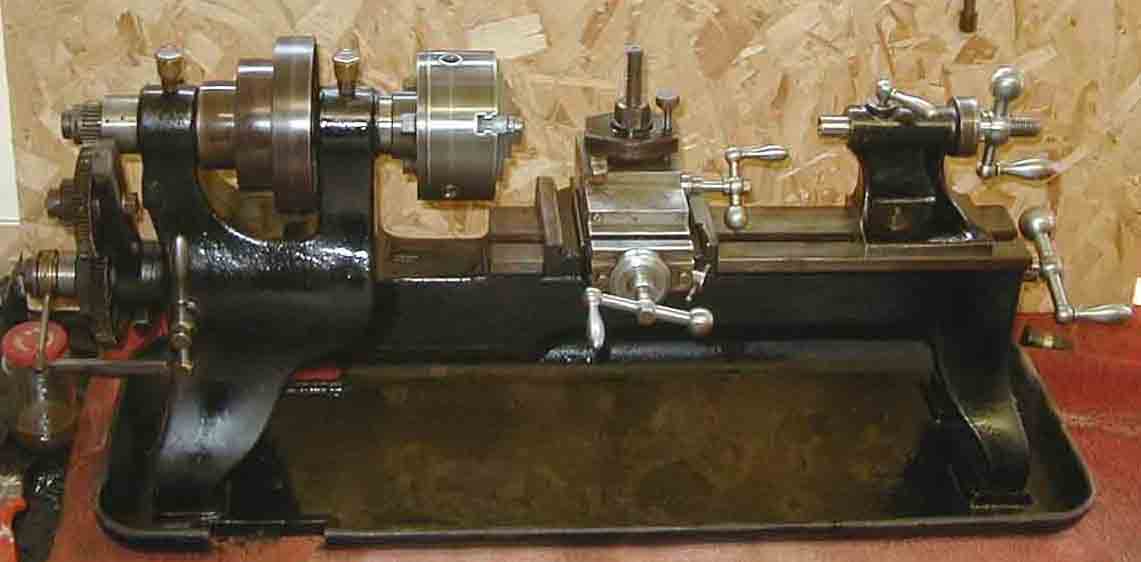
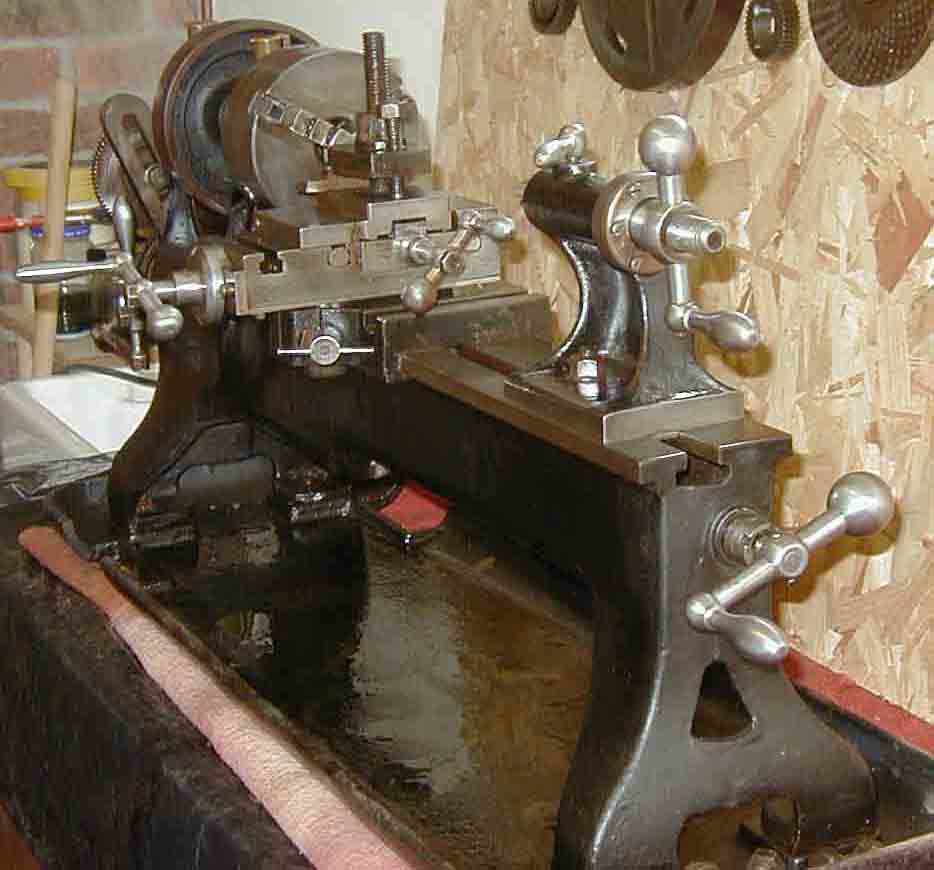
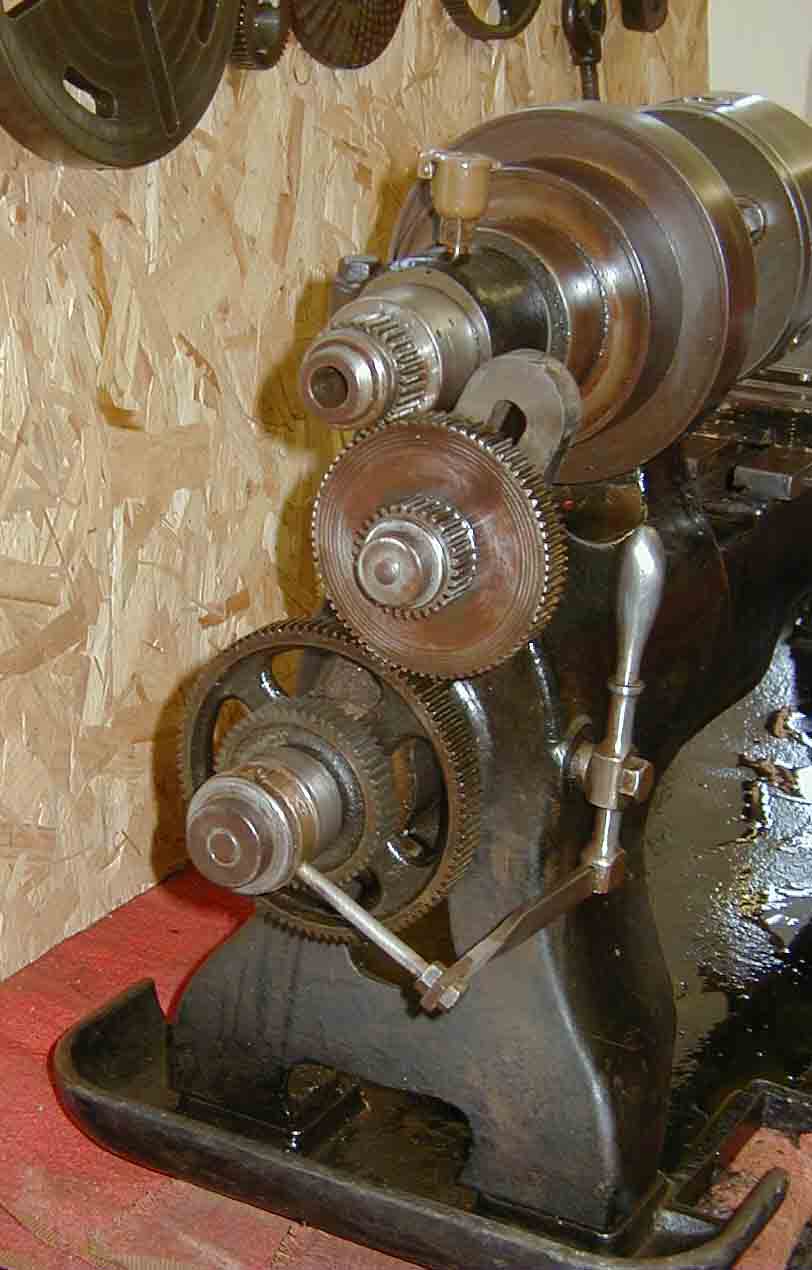
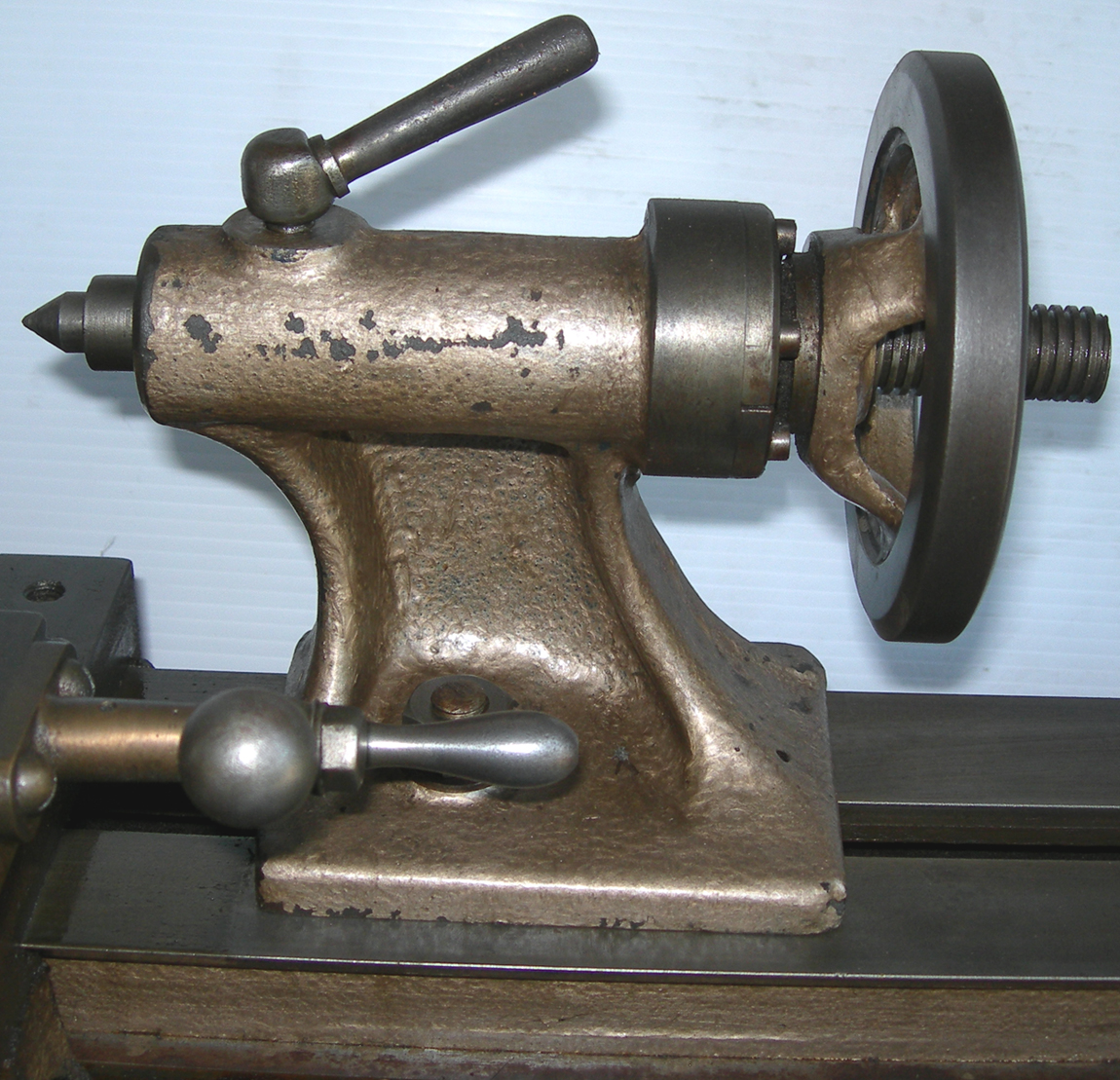
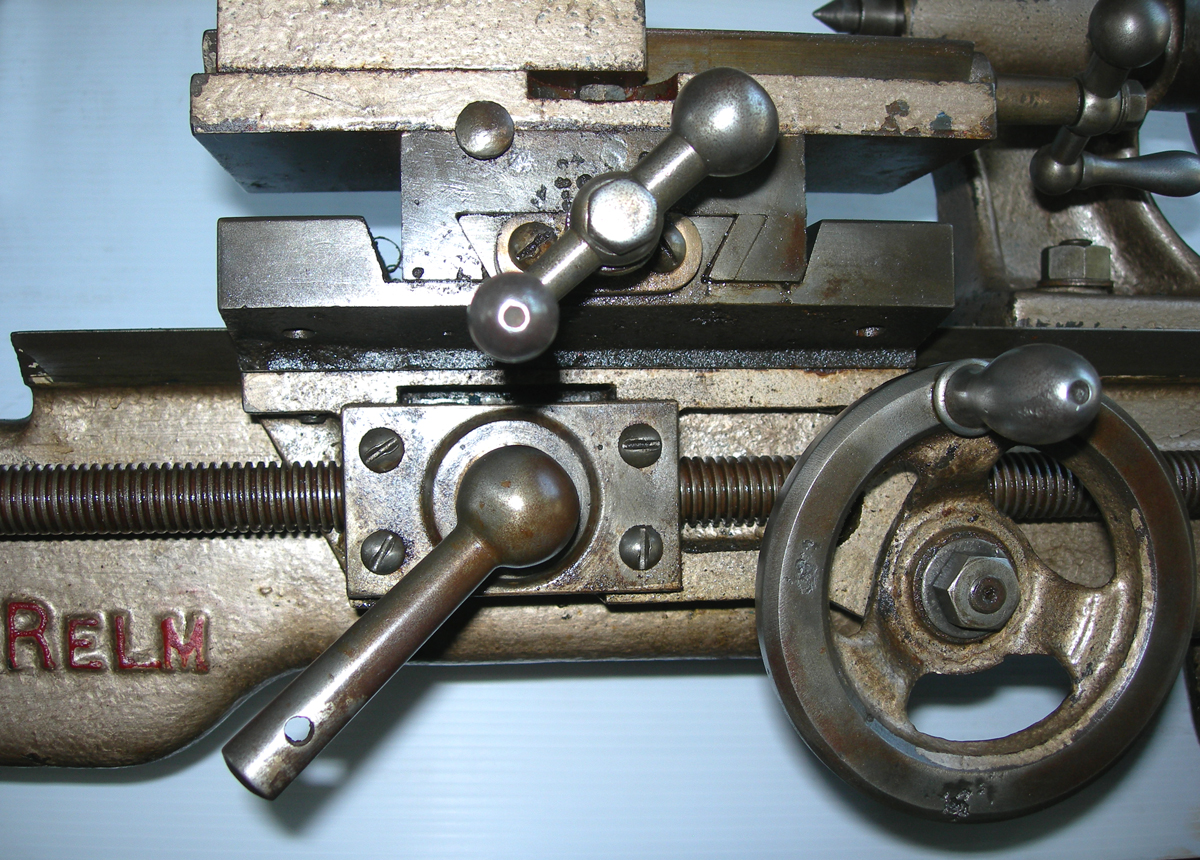
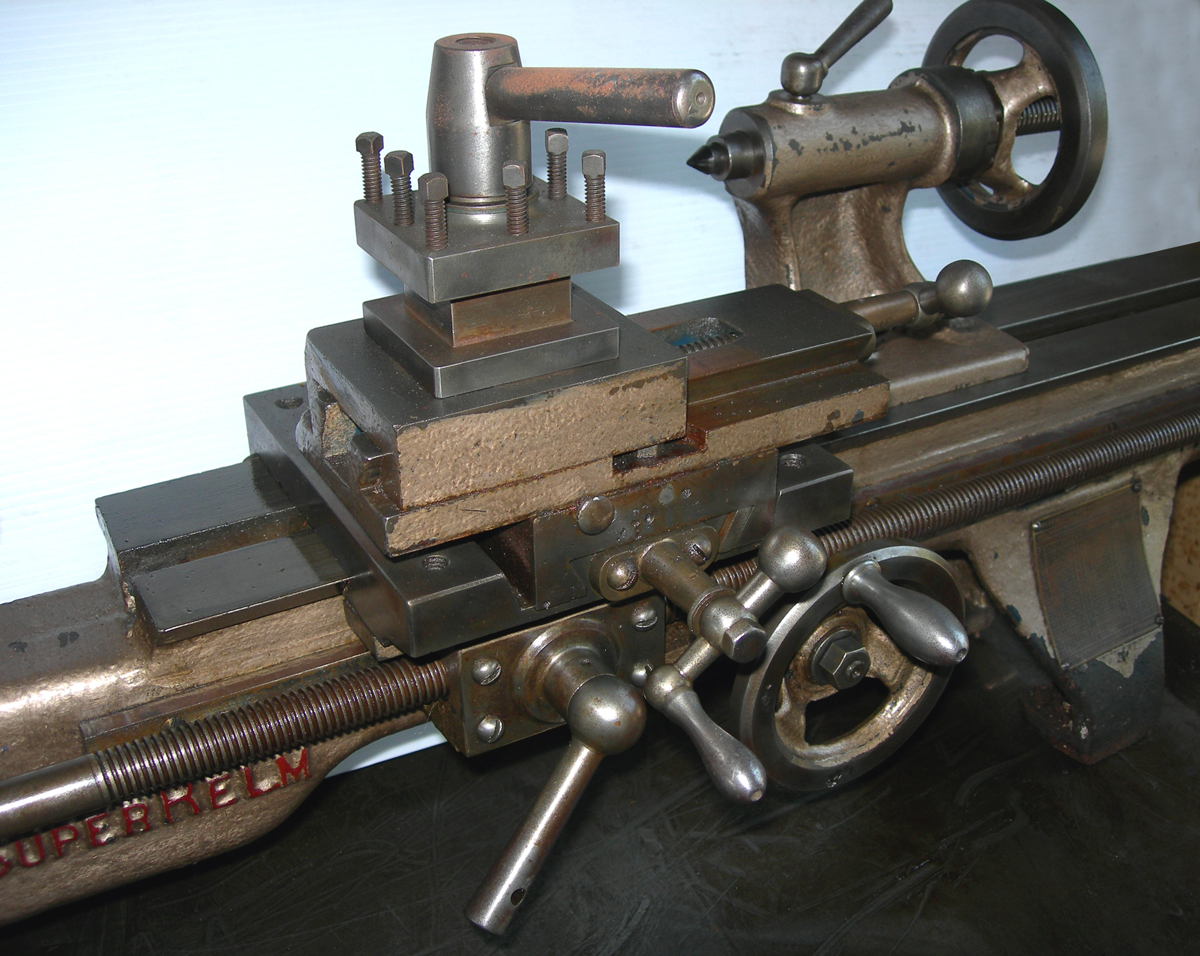
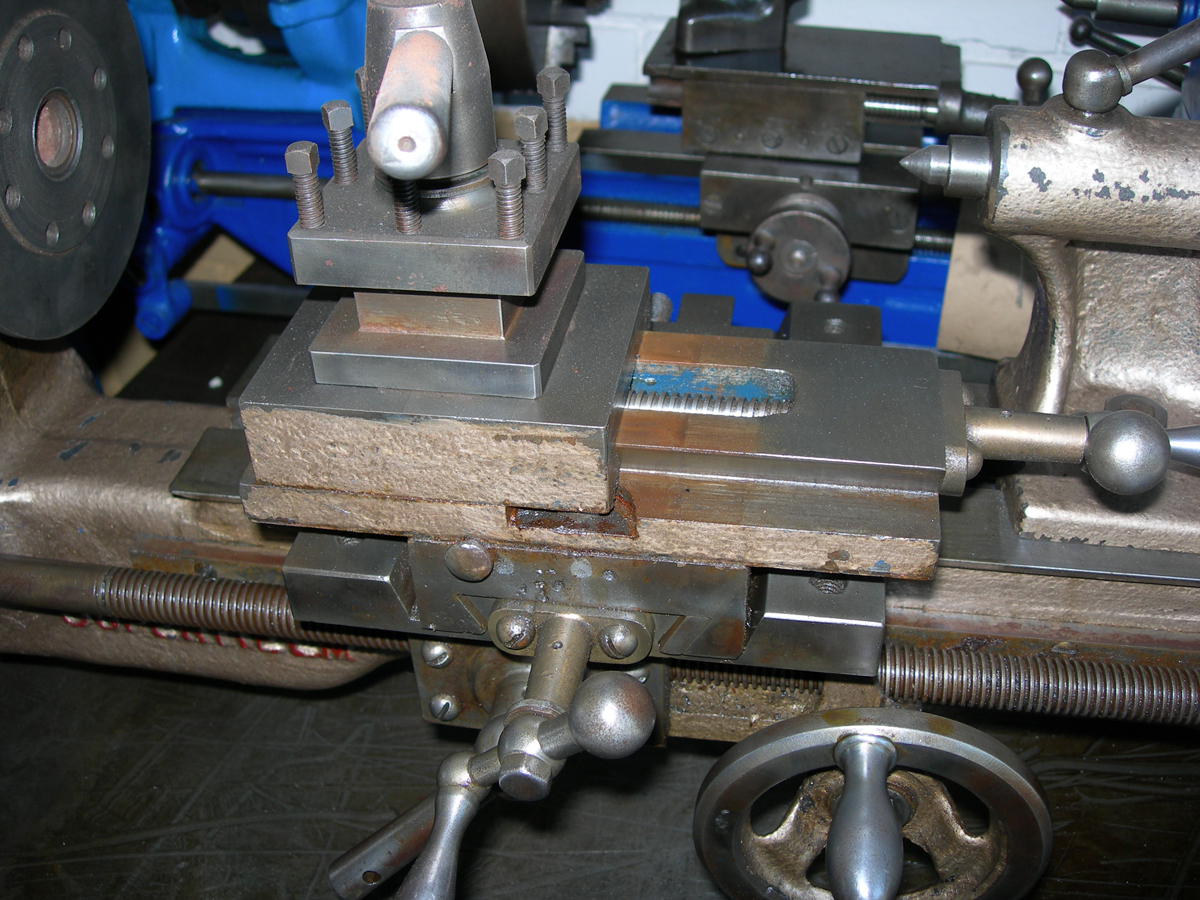
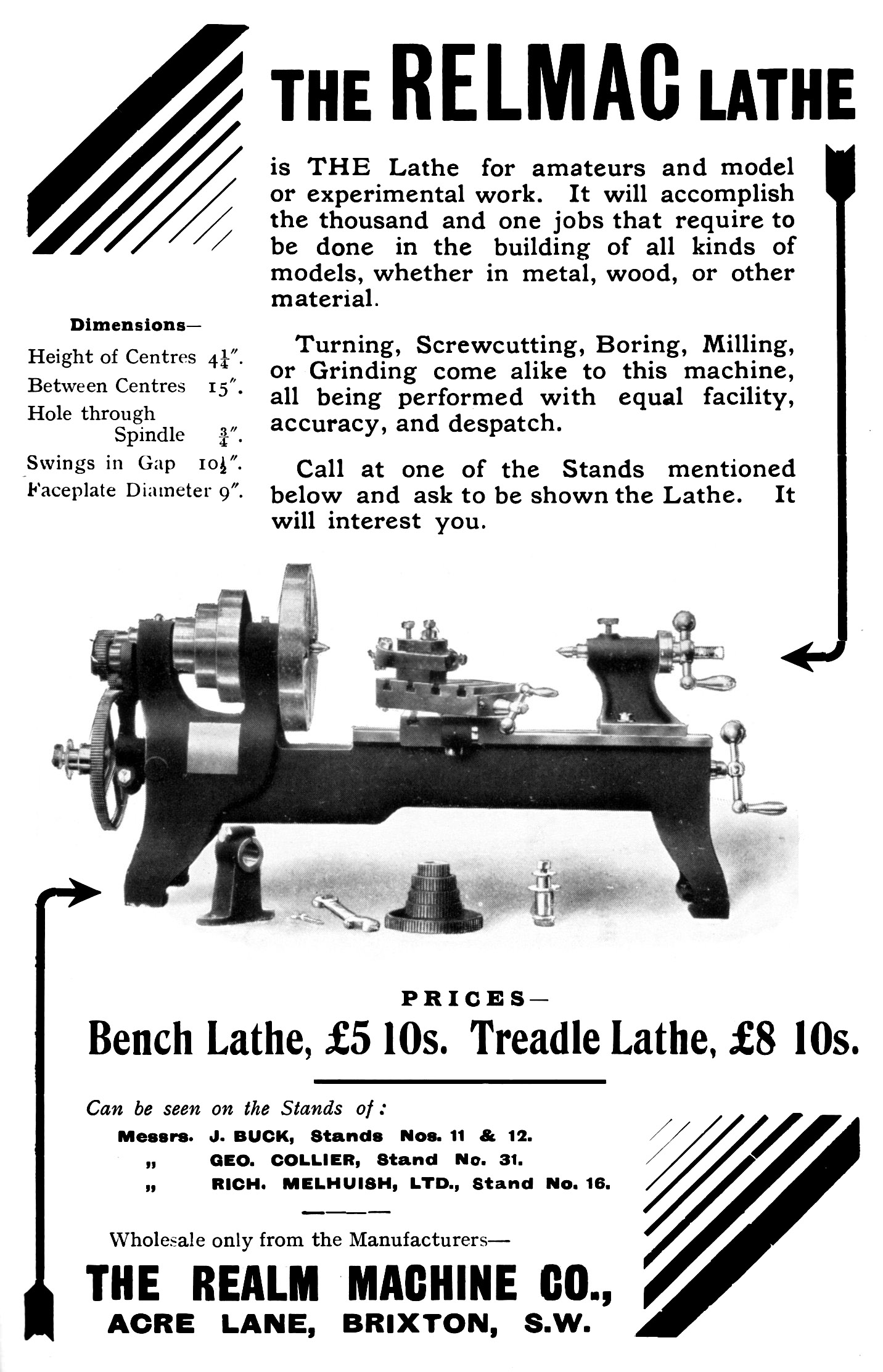
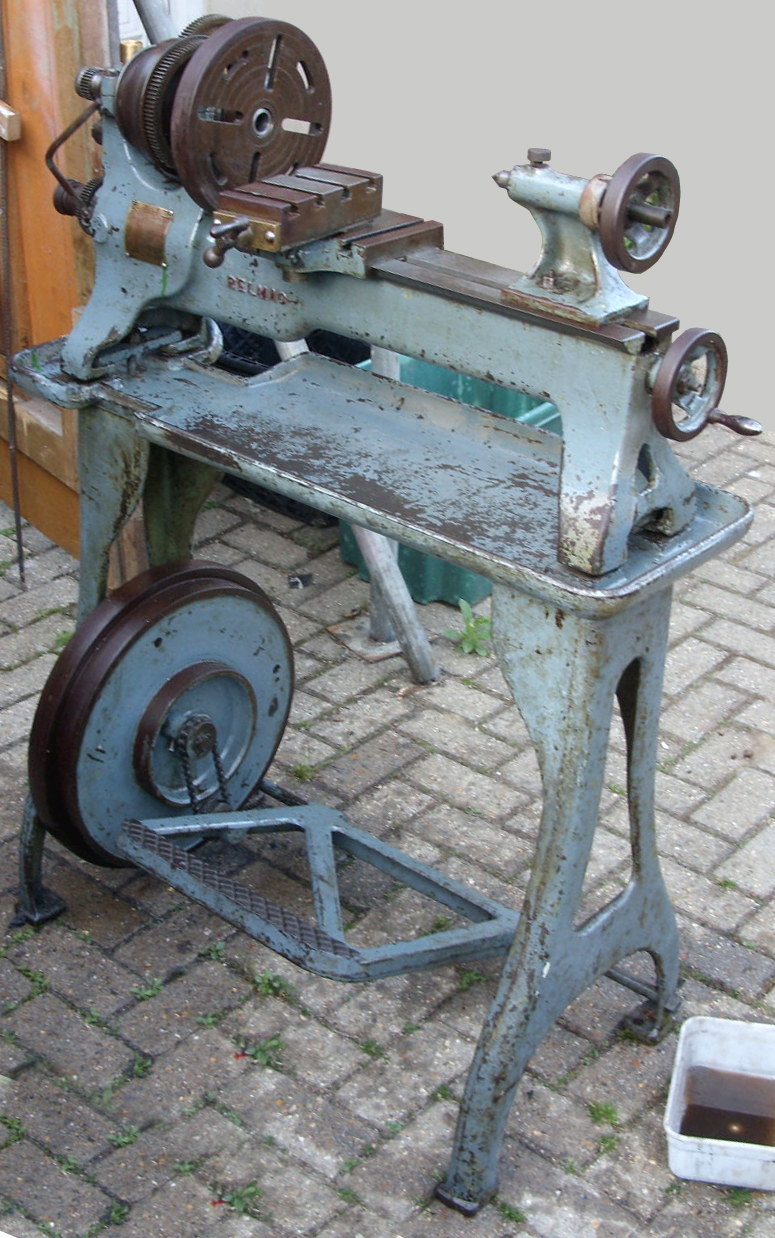
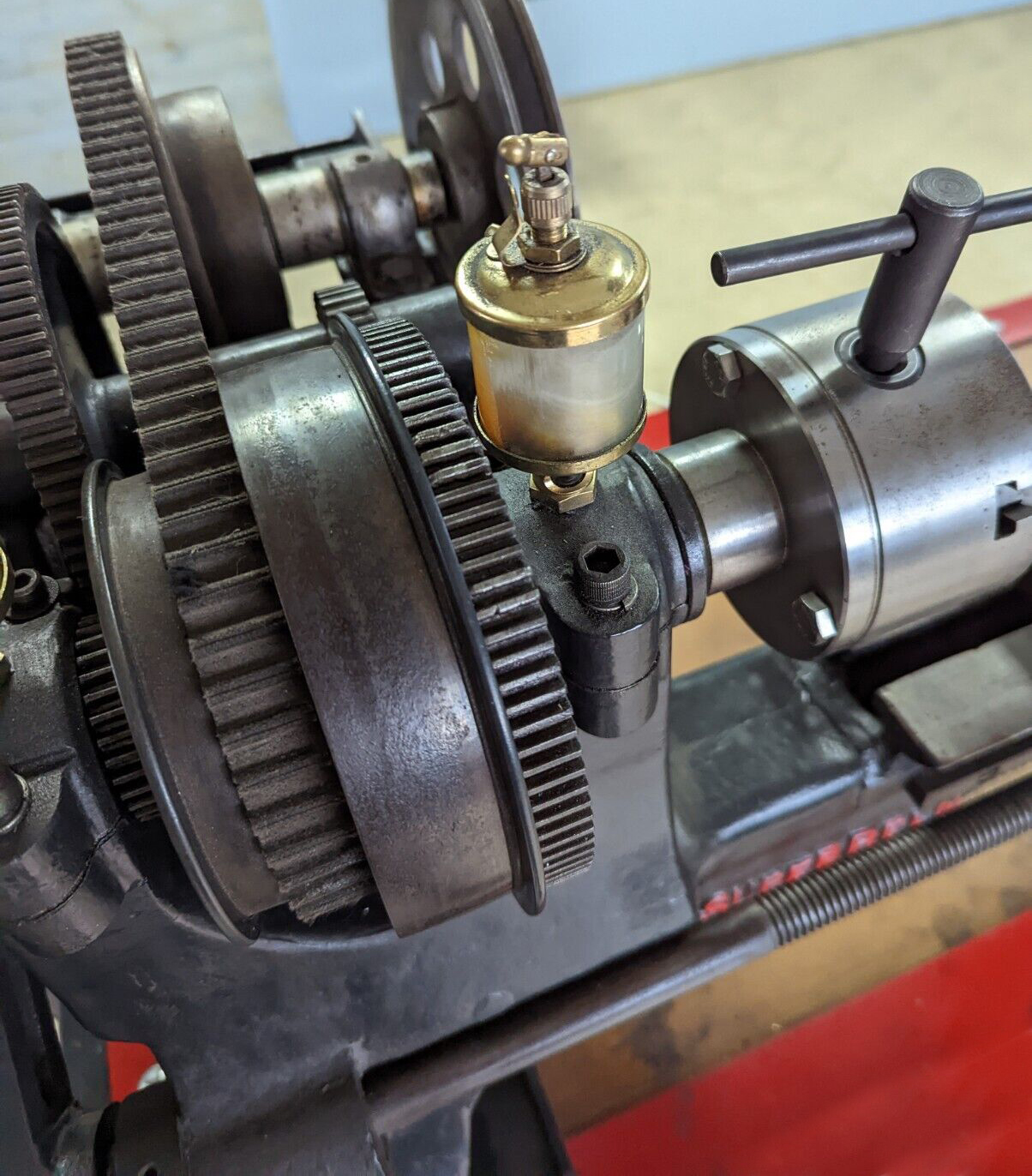
As with lathes from Portass, in order to cover as wide a market segment as possible, numerous variations on a basic model were always offered - these consisting of simple and inexpensive plain-turning types, ones fitted with backgeared and finally the full-price, backgeared and screwcutting versions - these also being available, as were many contemporary small lathes, on a treadle stand. In 1913 the screwcutting (but not backgeared) 4.5-inch centre height gap-bed "Relmac" was advertised at £5 : 10s : 0d for bench mounting or at £8 : 10s : 0d on the (now very rare) self-contained stand and treadle assembly. The Relmac had a number of interesting design quirks: the cross slide was supported on a post carried in a extension to the saddle casting (in the photograph below the T-headed locking lever can be seen protruding from the side of the casting) while the top slide was fixed rigidly to the T-slotted cross slide and could not be swivelled - a most frustrating feature. Both slide feed-screws carried micrometer dials - an unusual luxury on many cheaper lathes at the time, though the tailstock could not be set over to turn tapers. The leadscrew ran down the centre line of the bed, as on the original Drummond 3.5-inch flat-bed lathes from the early years of the 20th century, and was fitted with a dog clutch, a device necessitated by the full nut carried under the saddle. However, its operation depended upon an over-complex and unnecessary arrangement involving a lever, crank rod and collet-closer type arrangement passing through the hub of the boss that carried the headstock-end of the leadscrew (perhaps the designer should have looked at the simple system used on the previously mentioned Drummond lathes).
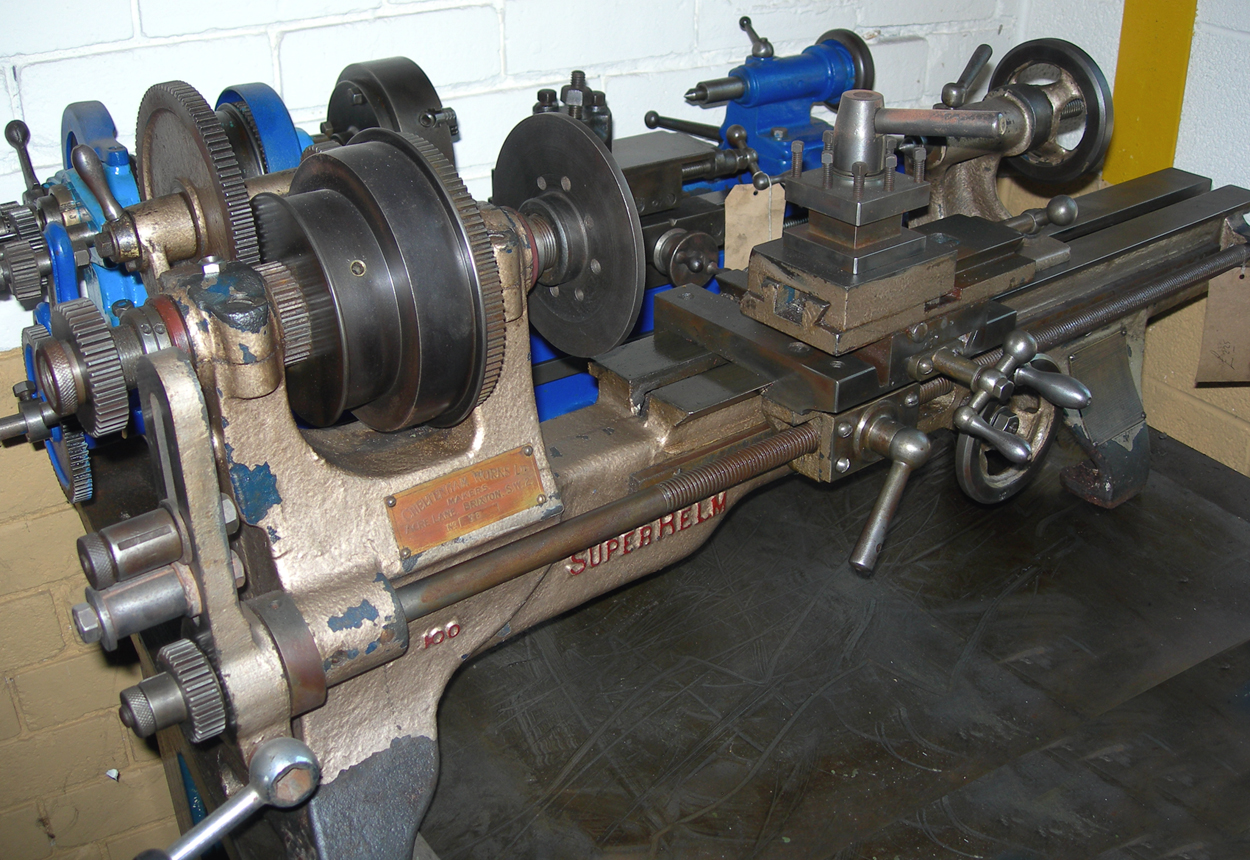
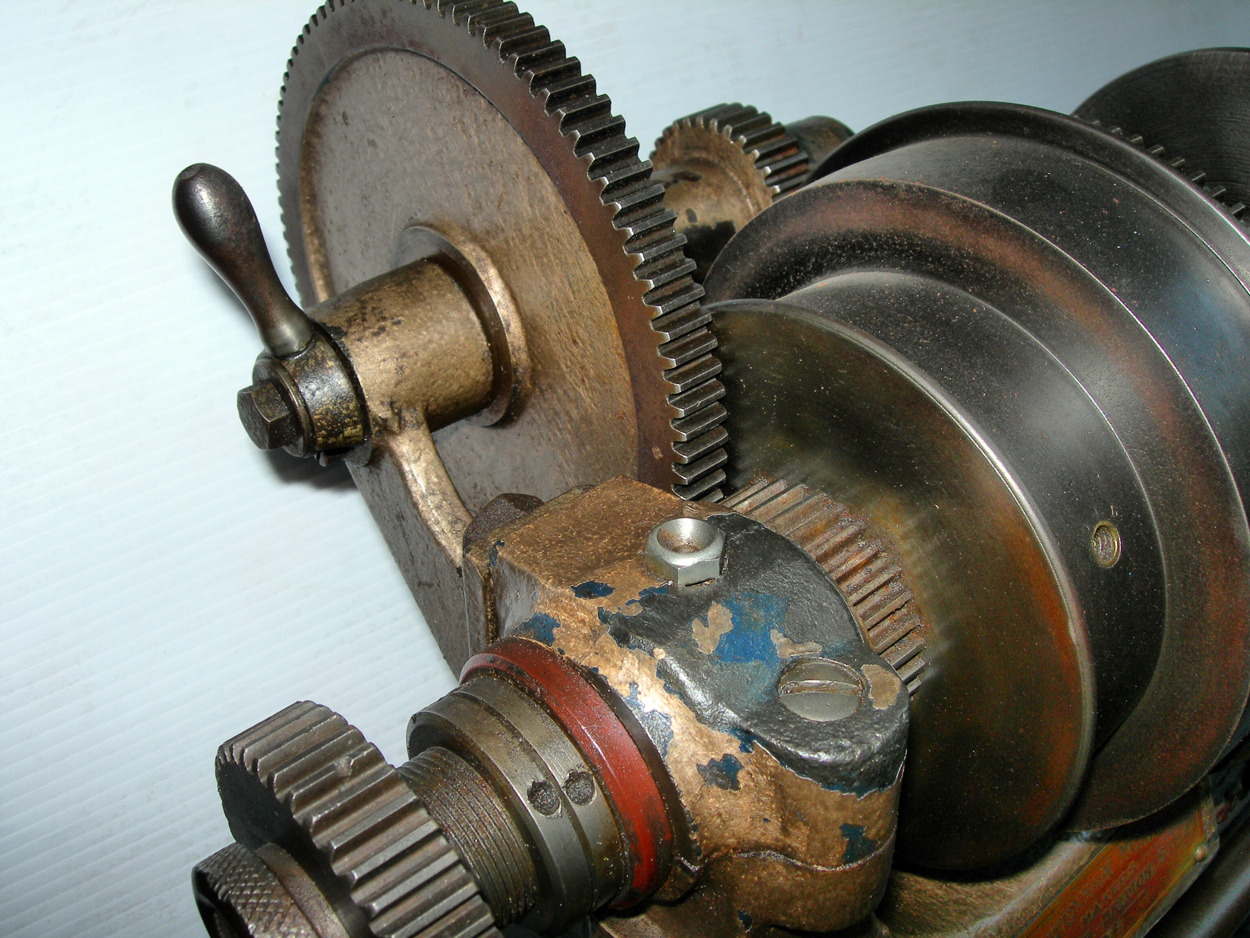
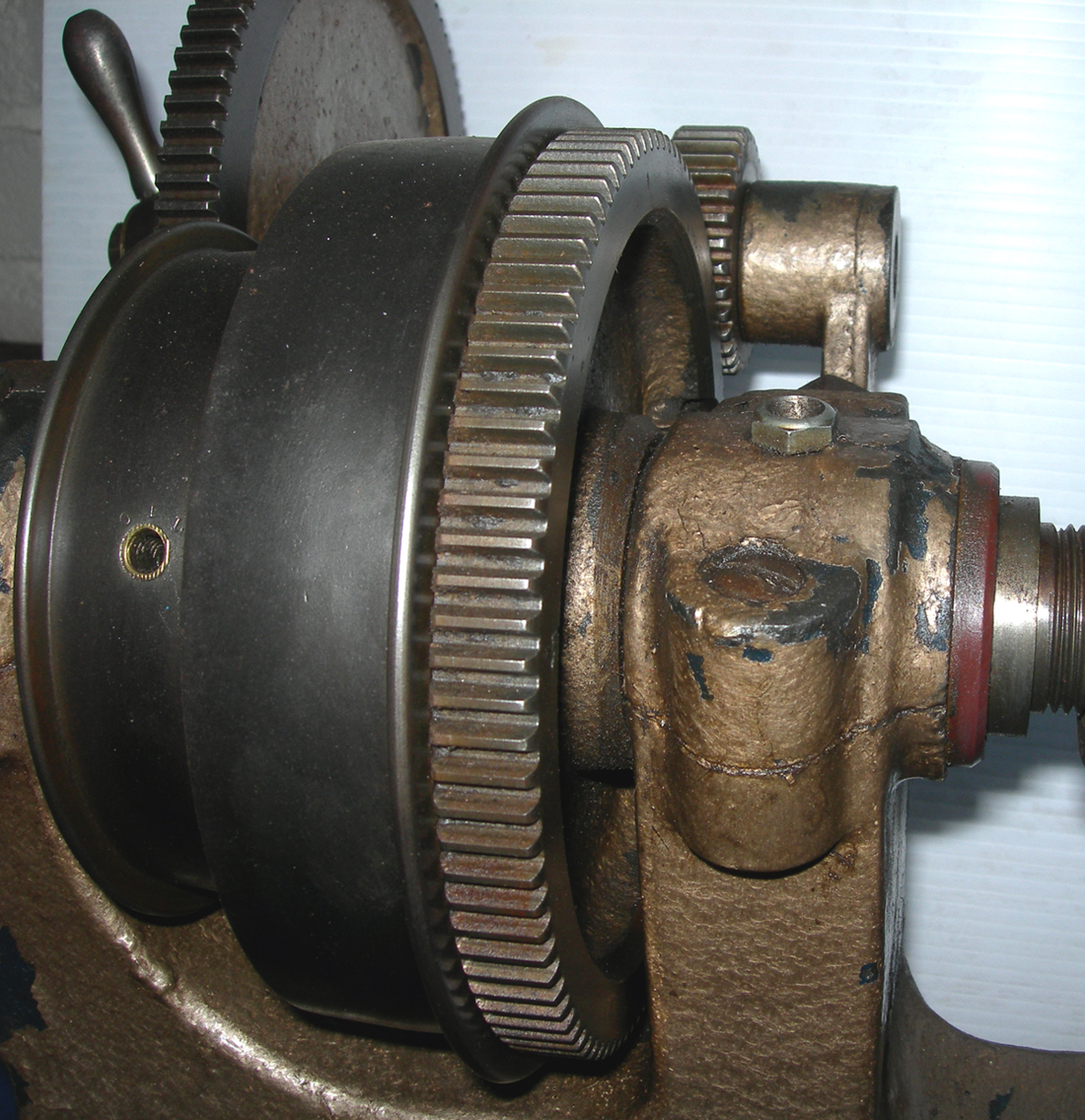
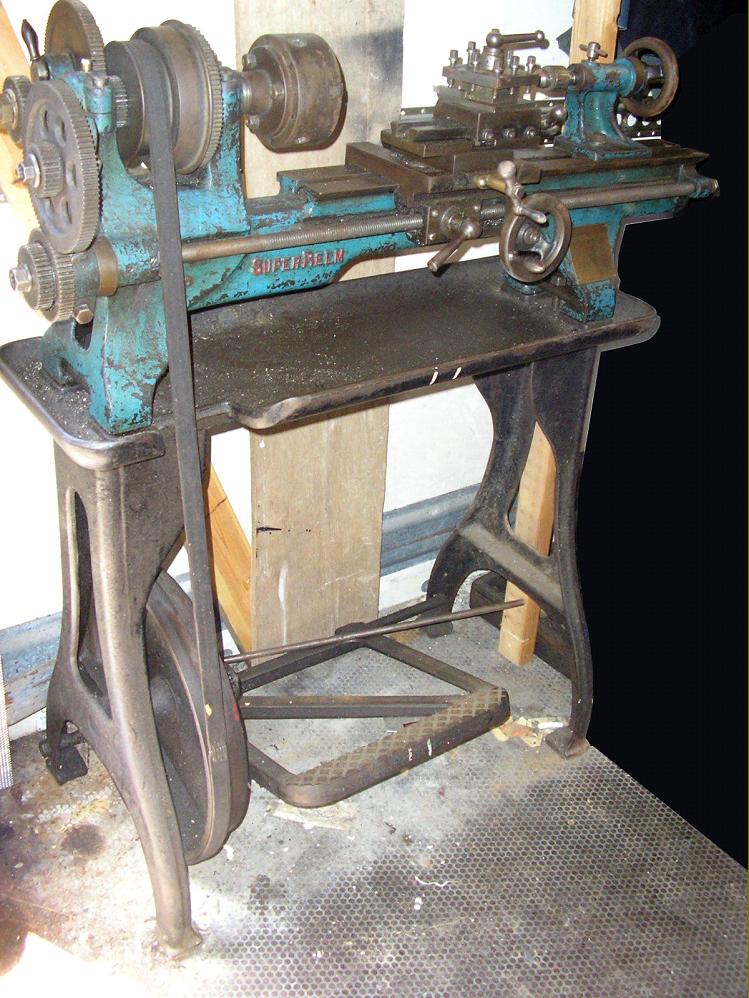
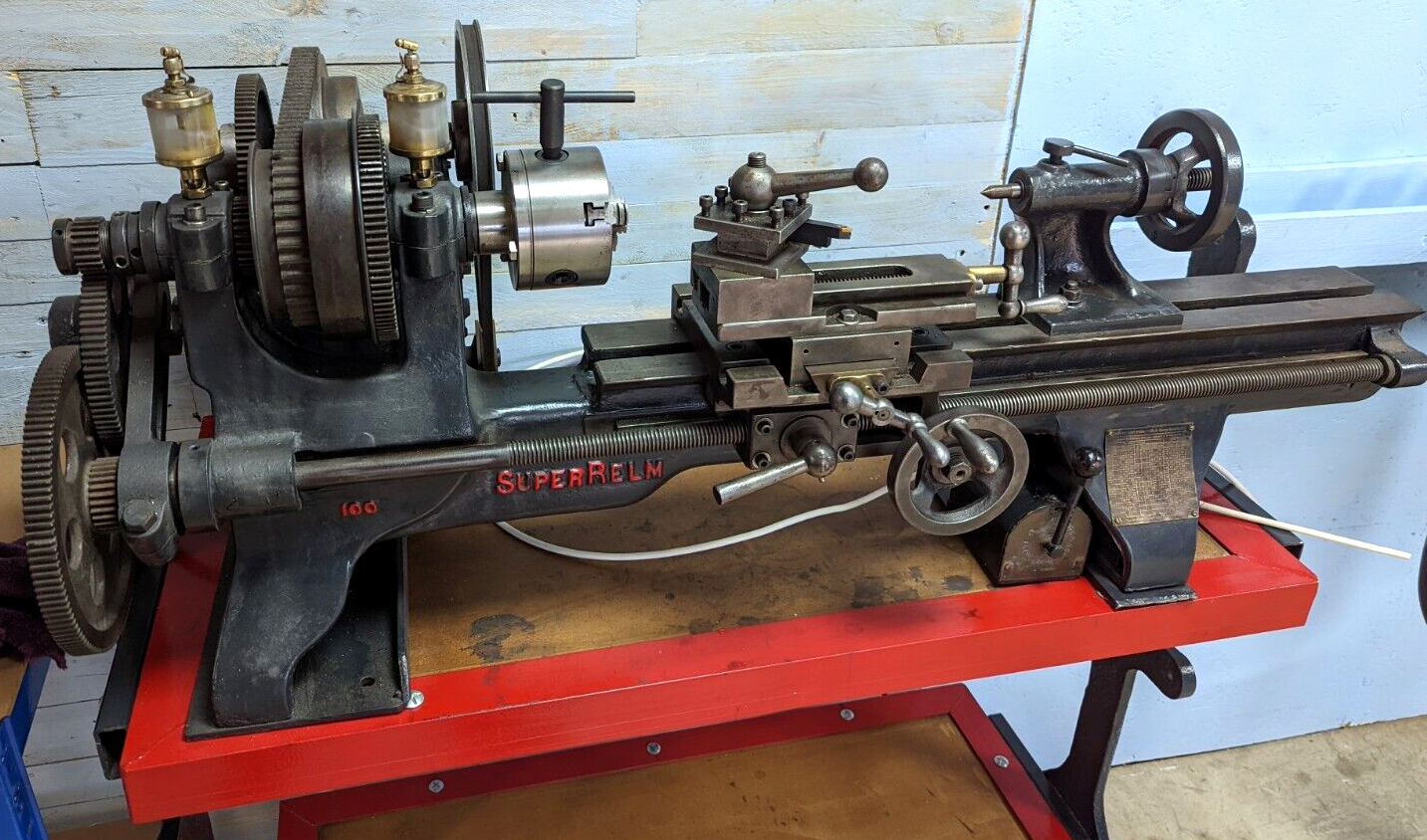
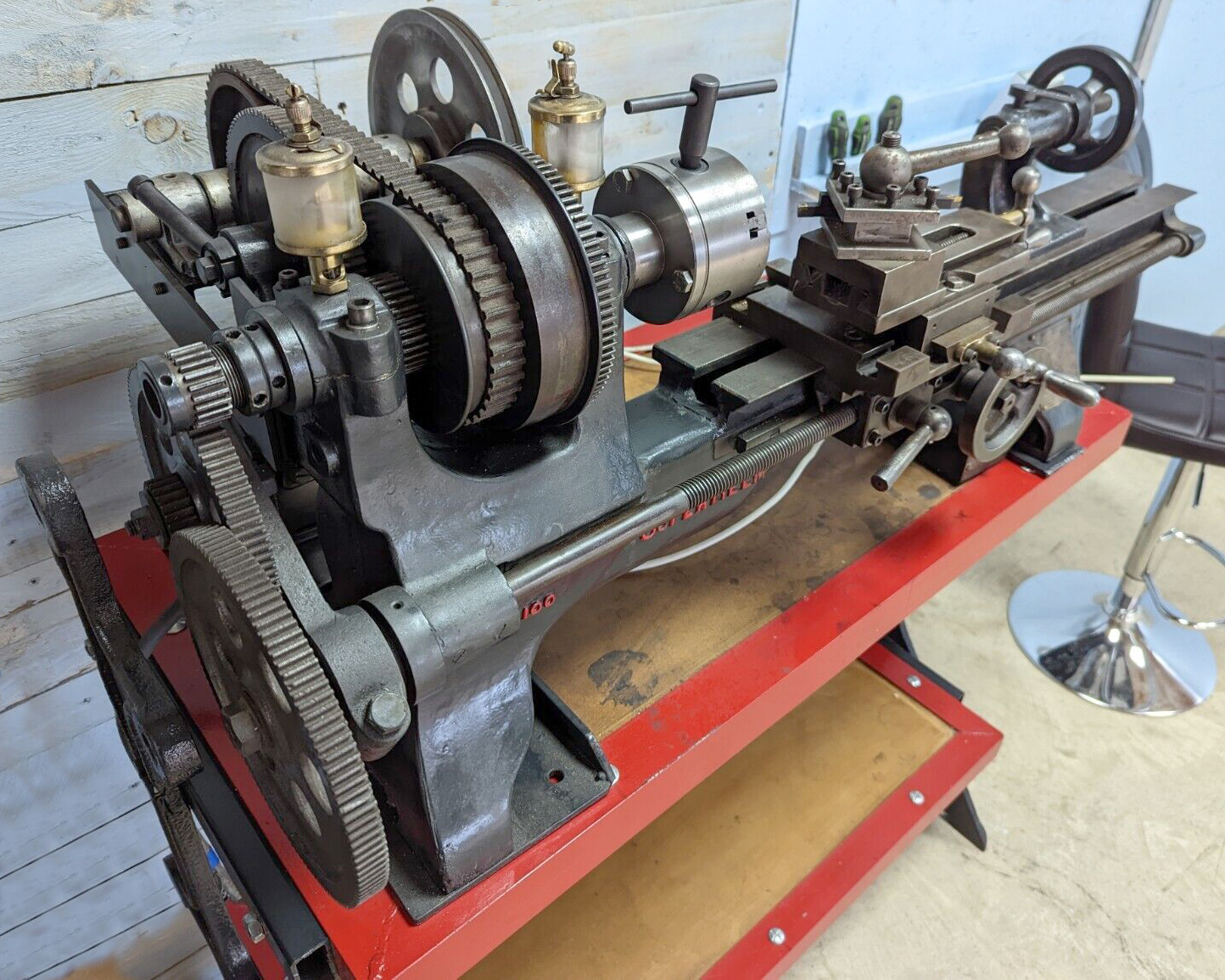
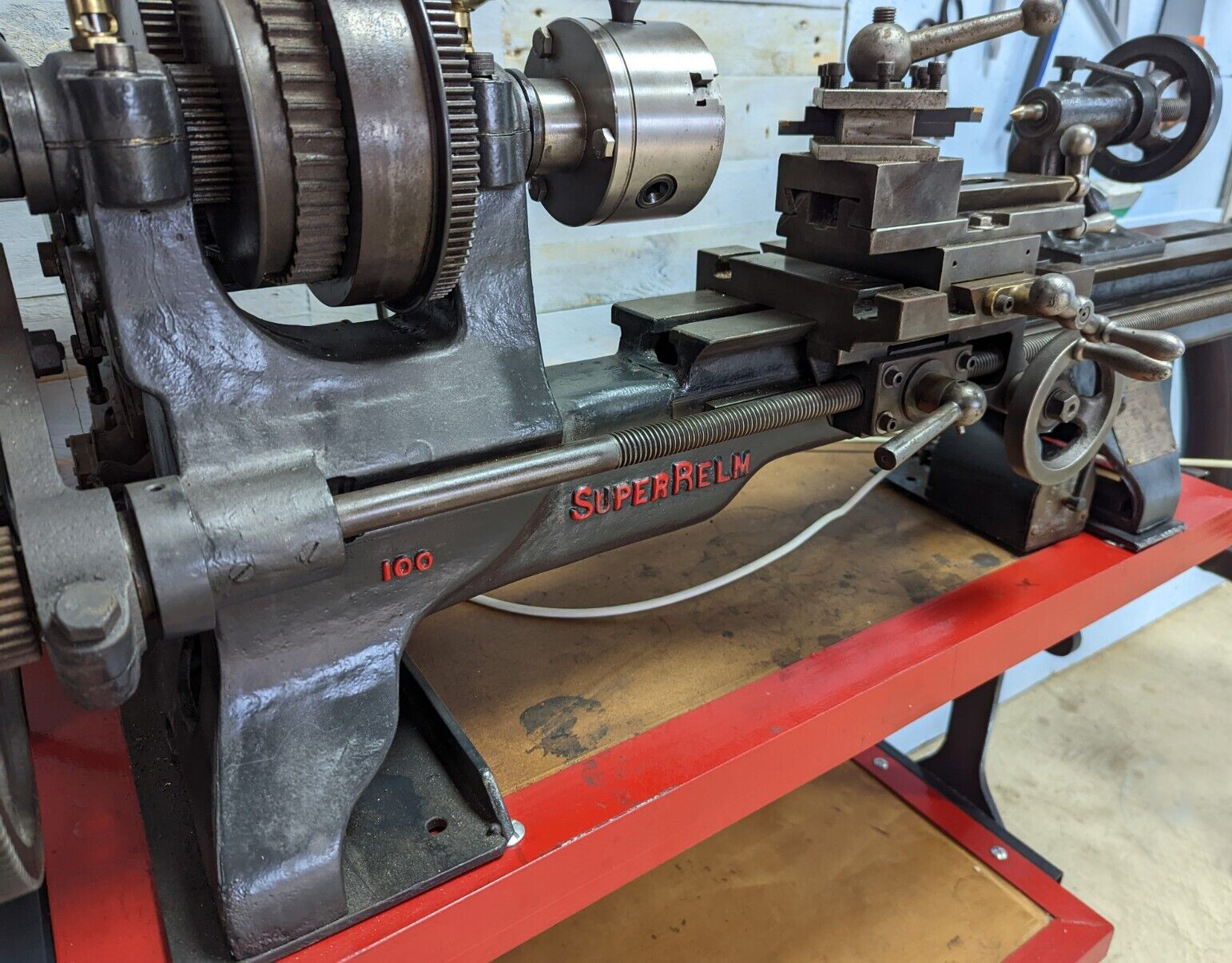
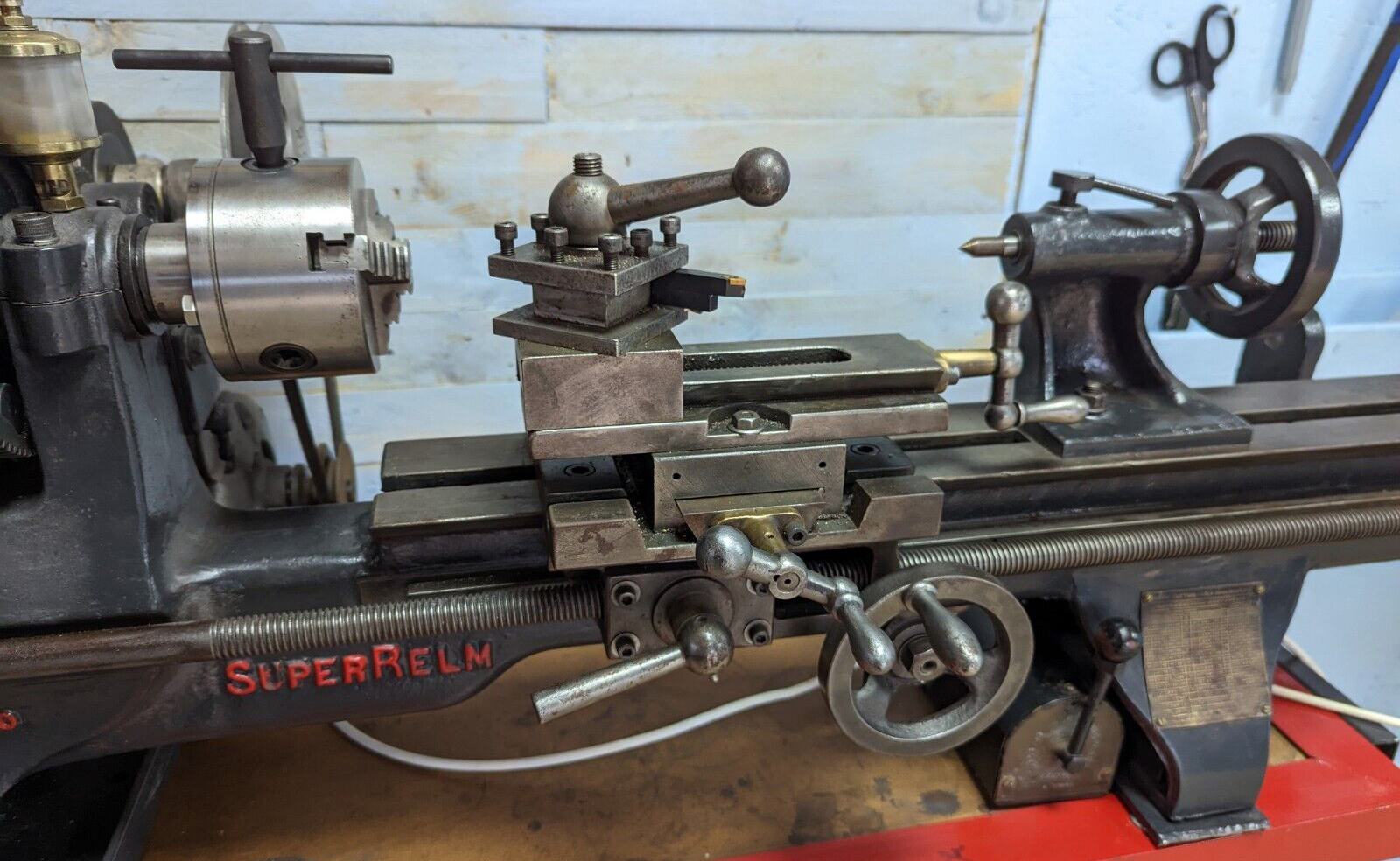
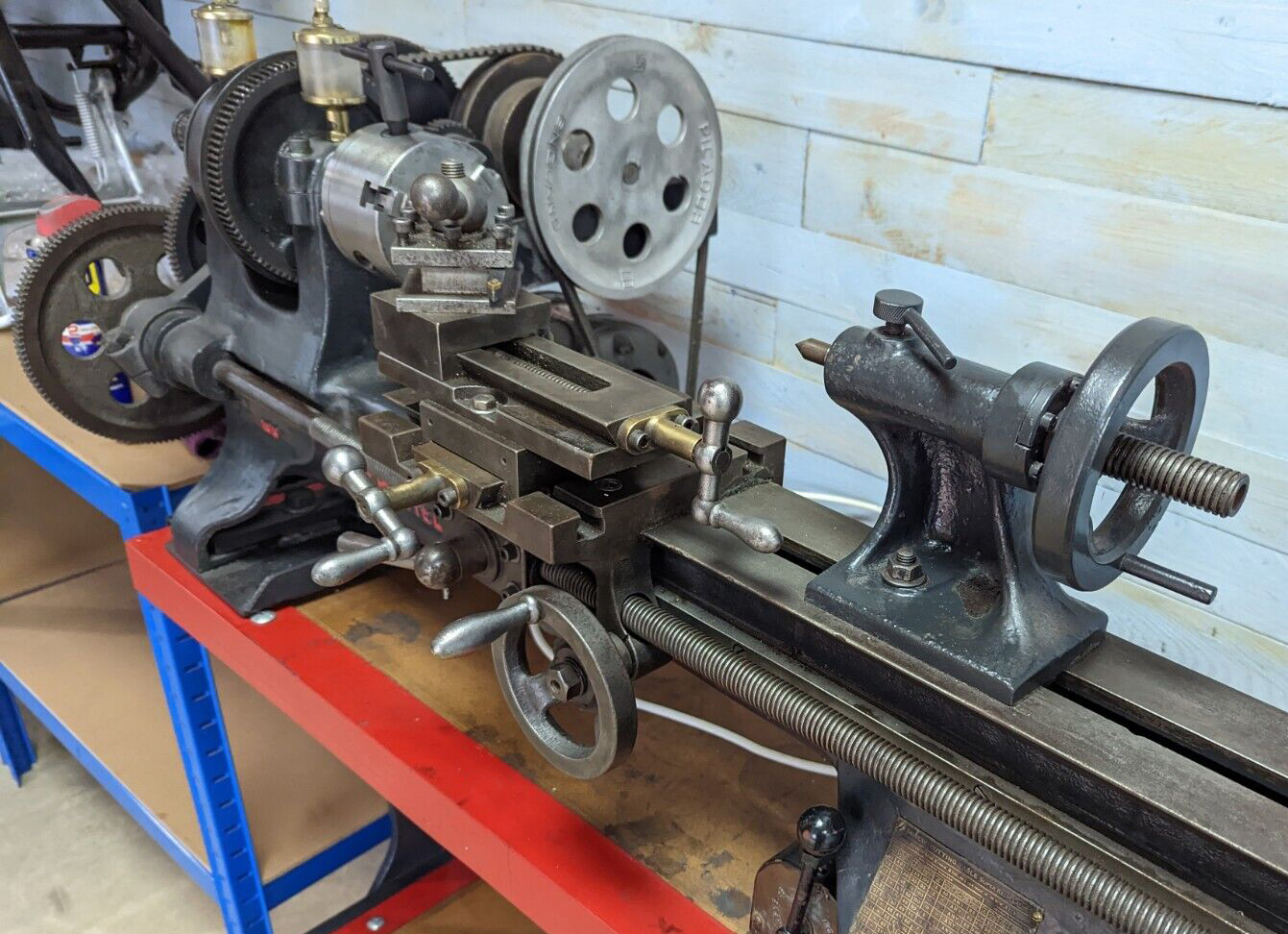
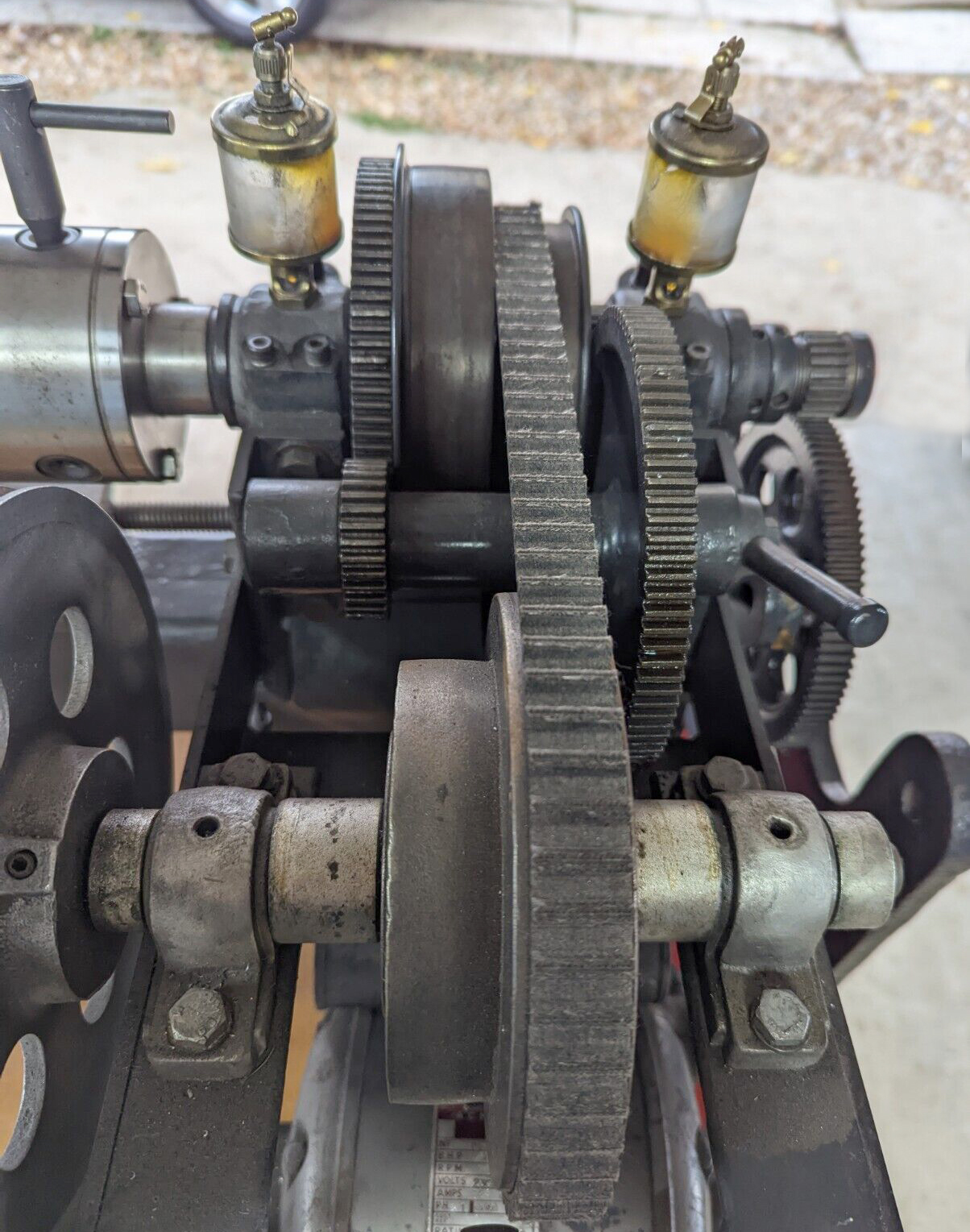
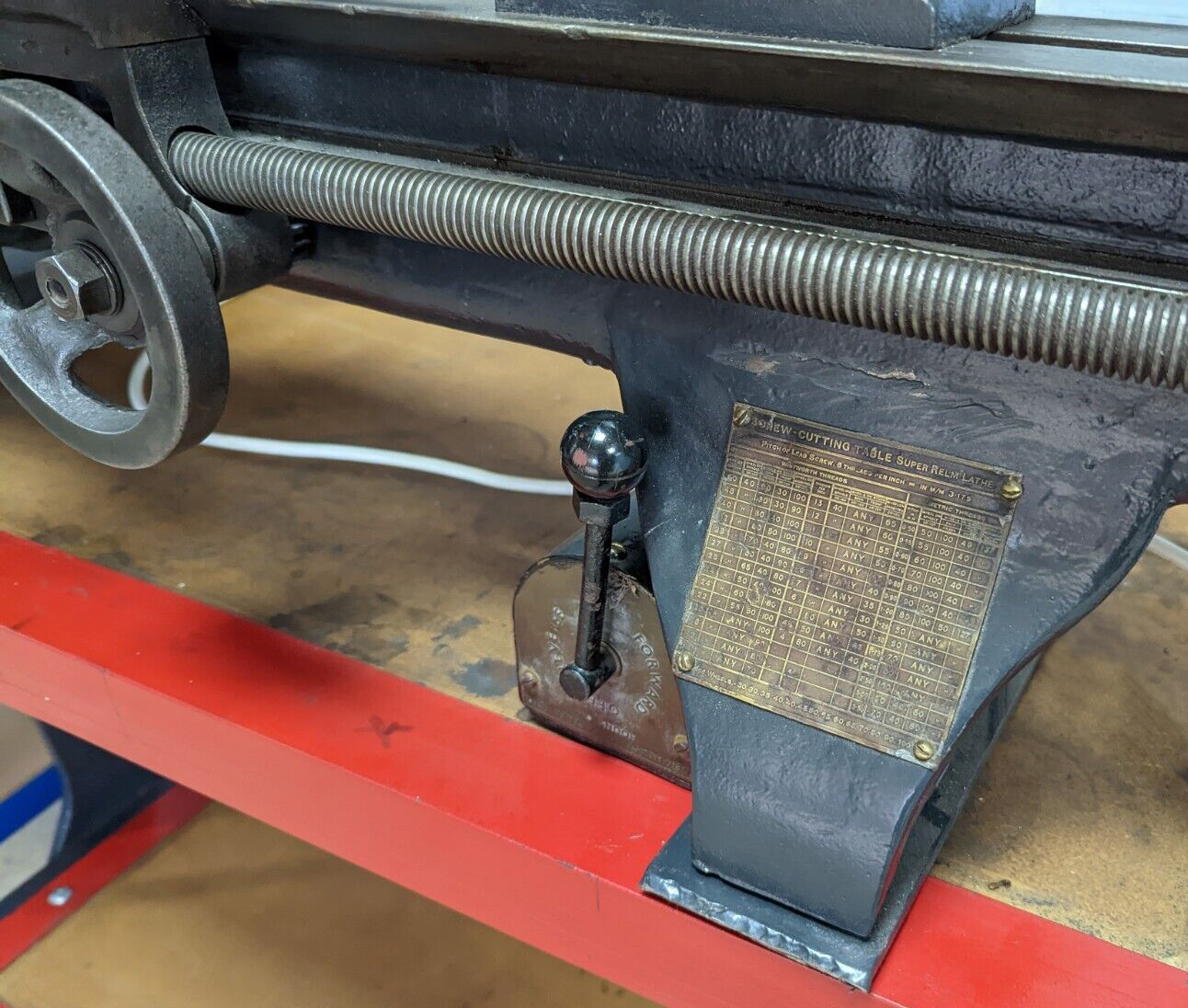
Of more advanced design, the 4-inch "Super Relm" was the company's most useful lathe and, for an inexpensive machine, well built and finished - at least in its early years. Production was to span the 1914-1918 "Great War" and, judging by the numbers surviving, it must have been a popular buy. Obviously a development of the original Relmac it featured a longer bed and, of greater importance, a proper compound slide rest with a swivelling top slide in place of the former fixed assembly. Repositioned at the front of the bed, the leadscrew was clasped by two substantial bronze half nuts (though the apron, as on so many similar lathes, was of the most perfunctory sort) with the carriage able to be propelled independently by a handwheel working through the usual rack-and-pinion gearing. Of similar appearance the headstock carried a plain-bearing spindle with the same 1.25" x 12 t.p.i. Thread and a No. 1 Morse taper socket. The screwcutting changewheels were beefed up, being increased in width from 3/8" to 5/8" thick and the tooth form altered from a rather delicate 20 DP to a stronger 16DP. While the bore remained at 1", instead of running directly on studs and being held together by pins when compounded in pairs, each gear was fitted to a keyed sleeve - the sleeve running on the mounting stud and so preventing wear from occurring in the bore of the gear.
In 1923 the Cheltenham Works Co. Ltd. announced the RelMinor, an inexpensive but remarkably robust small lathe with a 3-inch centre height, 12-inches between centres and a 10.5-inch swing in the gaps. Although the option was offered of backgear and screwcutting, the few surviving examples tend to be just simple, plain-turning types. During 1924 what was probably the company's last new machine, the much smaller and lighter 2-inch centre height RelmBee was introduced. However, as competition in the model-engineering field increased and more makers, including Patrick, Portass, ETA, Ideal, Granville, Pools, Grayson, EXE, Randa, Zyto and others made for an overcrowded and very competitive market with thin profit margins. In addition, as well-established makers such as Drummond continued to develop and refine their small lathes, the Relm Machine Company failed to respond and gradually vanished from the scene.
If you have a Relm lathe of any kind, or any literature about them, the writer would be pleased to hear from you.
|
|