
Home Machine Tool Archive Machine-tools Sale & Wanted
Myford Home Page
A Manual & Catalogue Set is availablefor the Tri-Leva
Invented by one Ernest Smith, the Tri-Leva speed selector unit was the subject of a provisional patent, issued in 1956, and a full patent granted on April 26th, 1957 under the number GB818947. As this was assigned to the Myford Company, one must assume that Smith was an employee - the words of the application stating: Variable-speed gearing; stopping and starting machinery. Myford Engineering Co. Ltd.
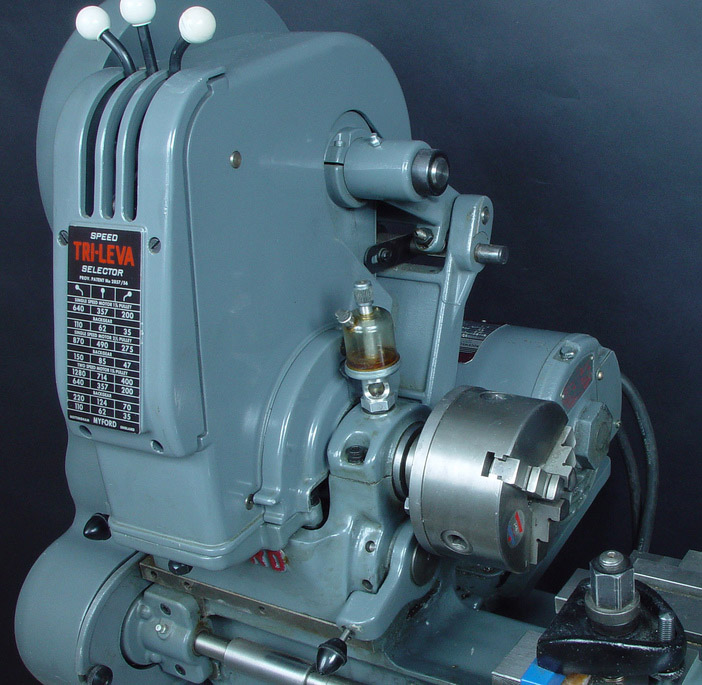
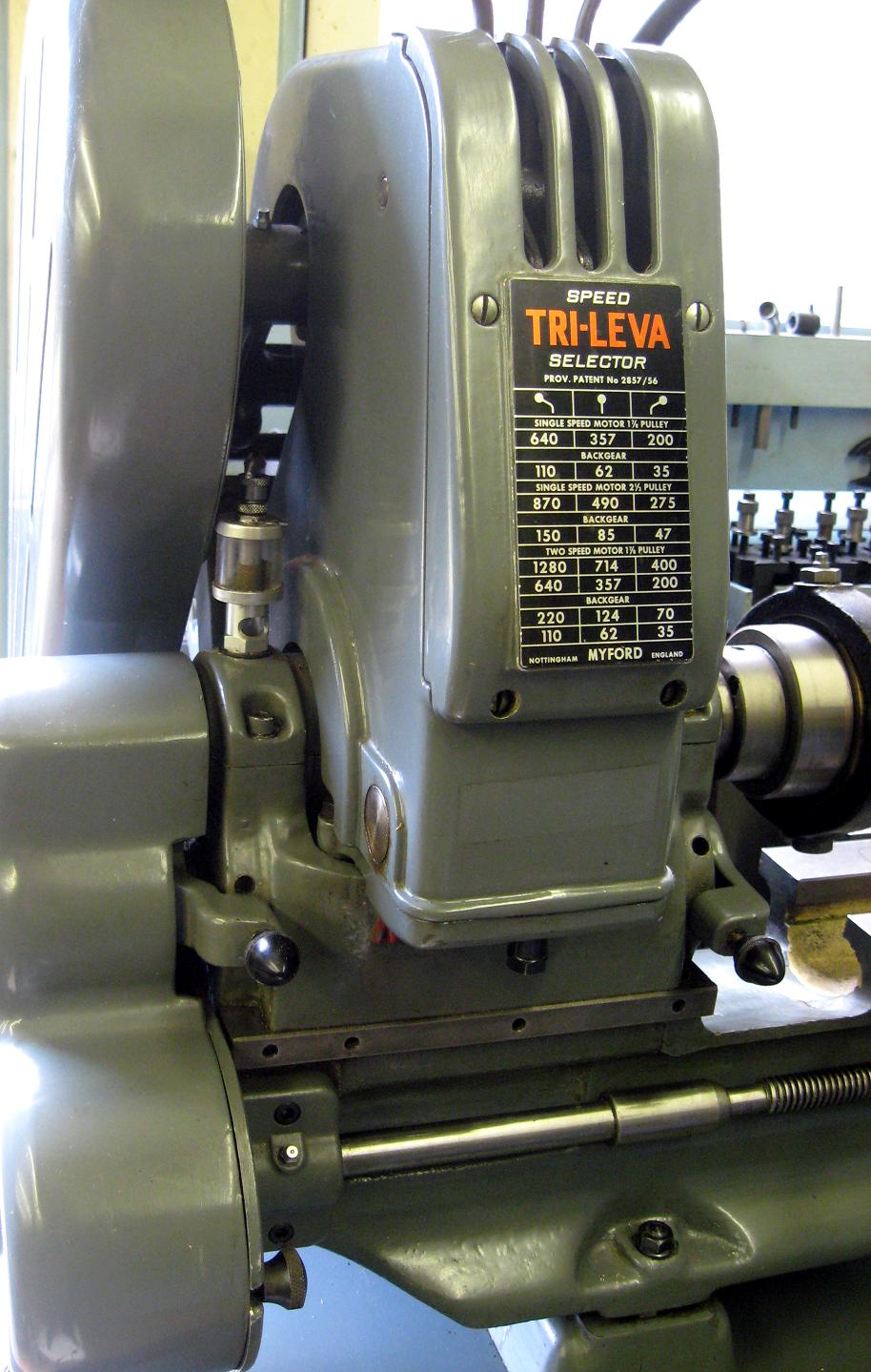
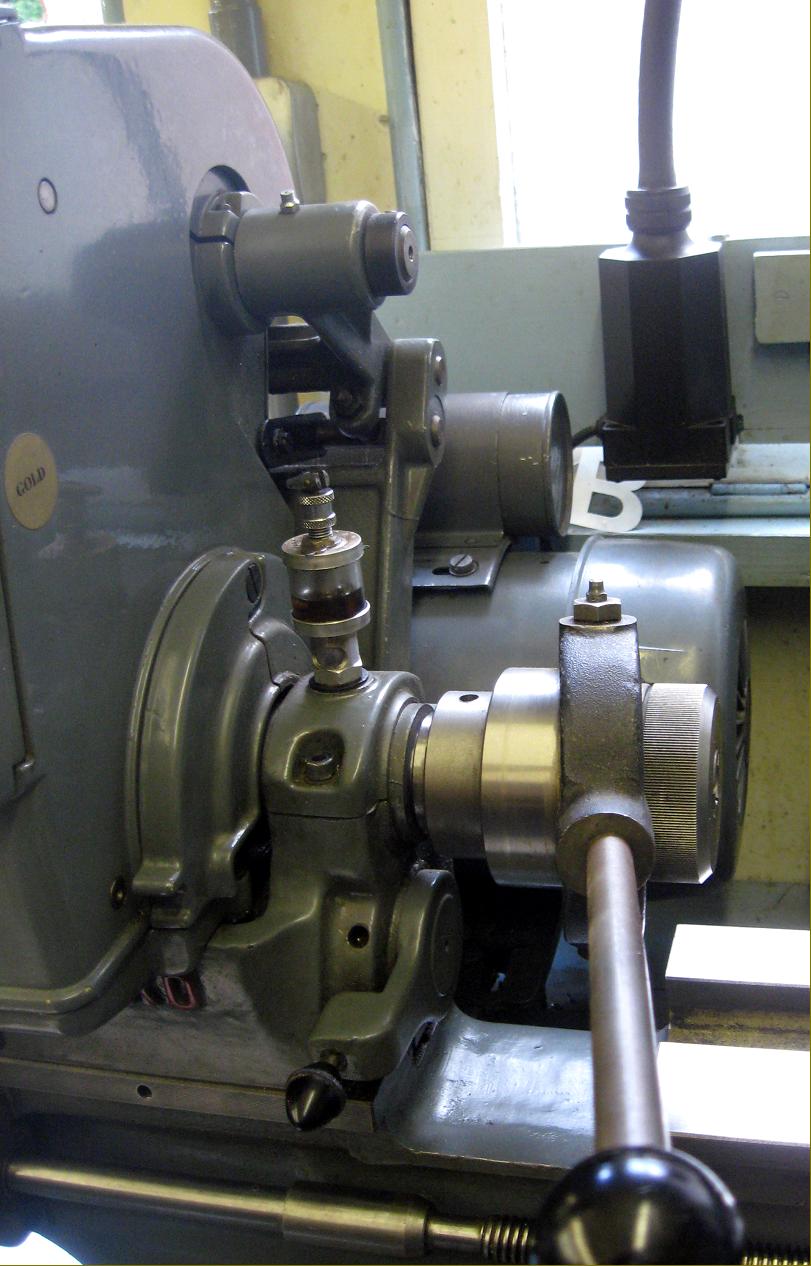
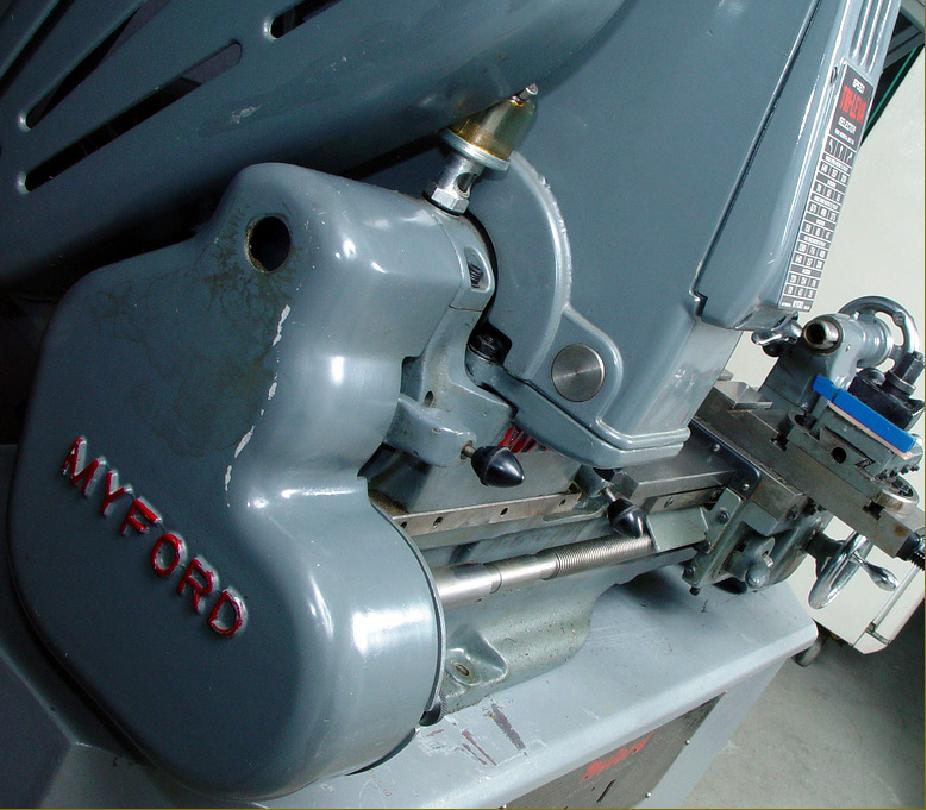
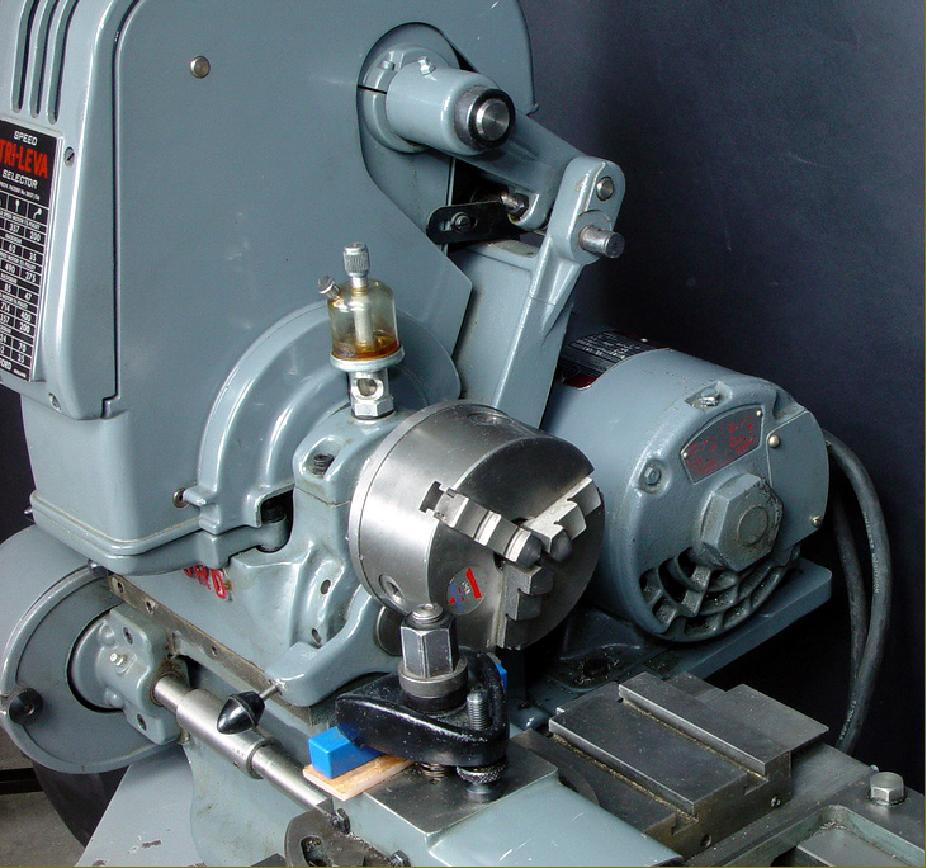
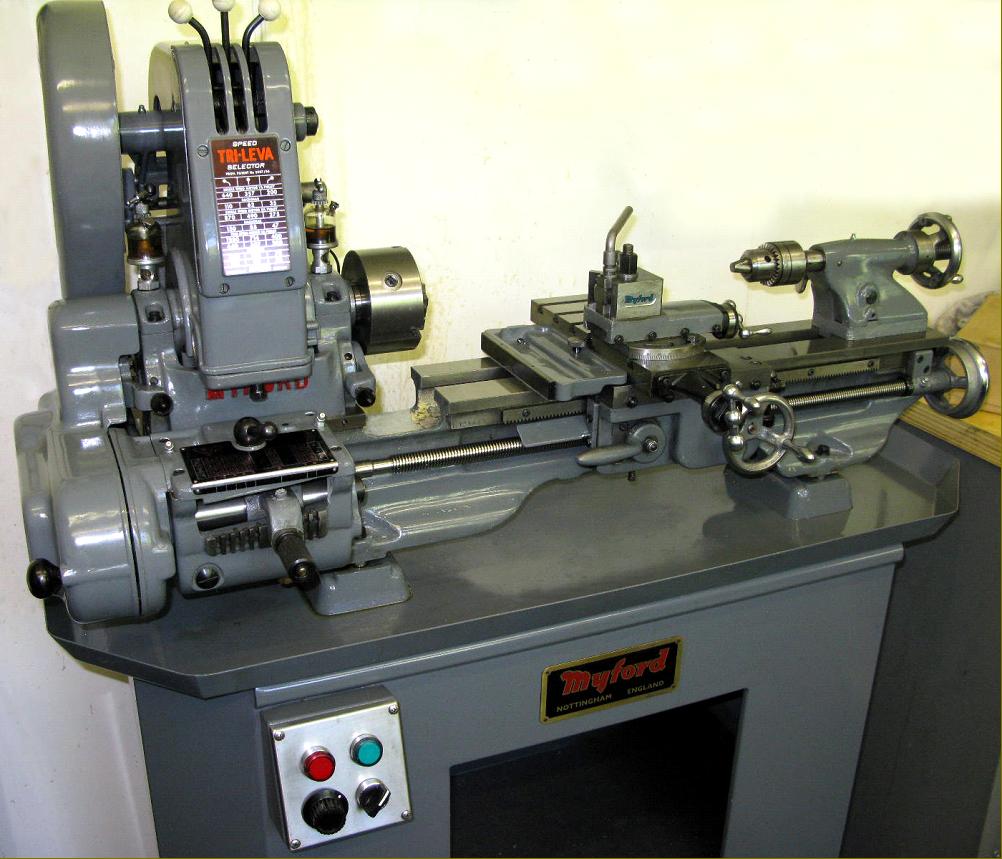
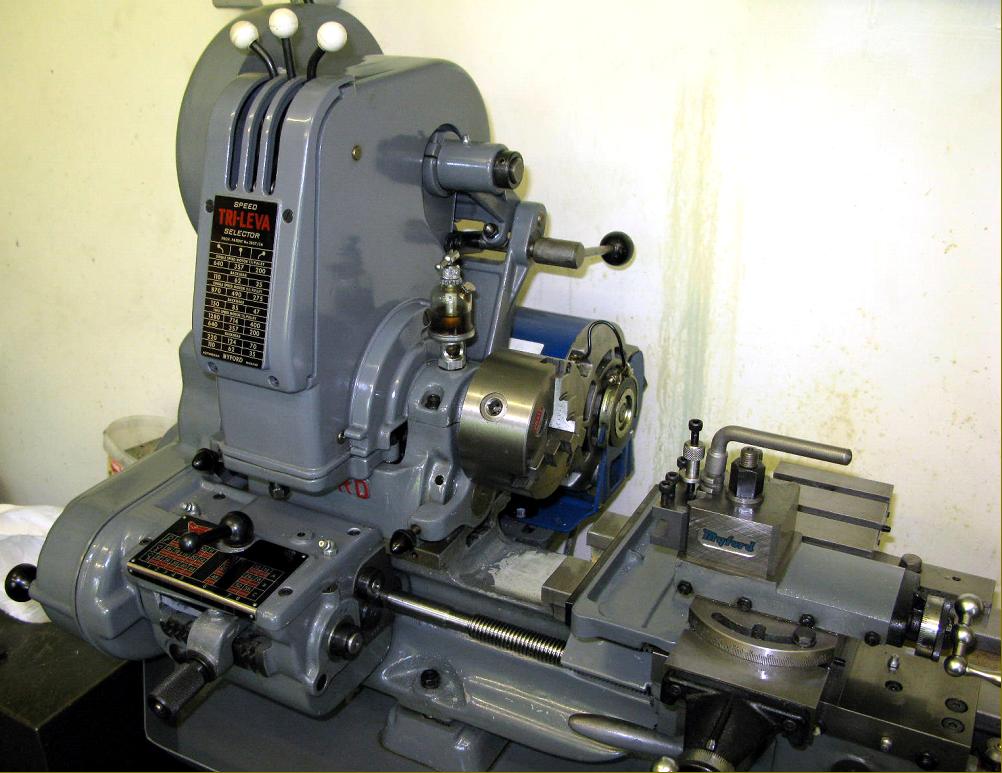
There can be no doubt that a Myford ML7 fitted with a Tri-Leva speed-change unit is a highly-effective small lathe - and one in good condition is well worth seeking out. The Tri-Leva unit itself was a cleverly-designed, exceptionally well-engineered device intended to be mounted on the headstock of an ML7 (but not Super 7) to perform both as a clutch and also to allow instant changes of spindle speed; it could be supplied ready-fitted to a new machine, or purchased as an aftermarket accessory.
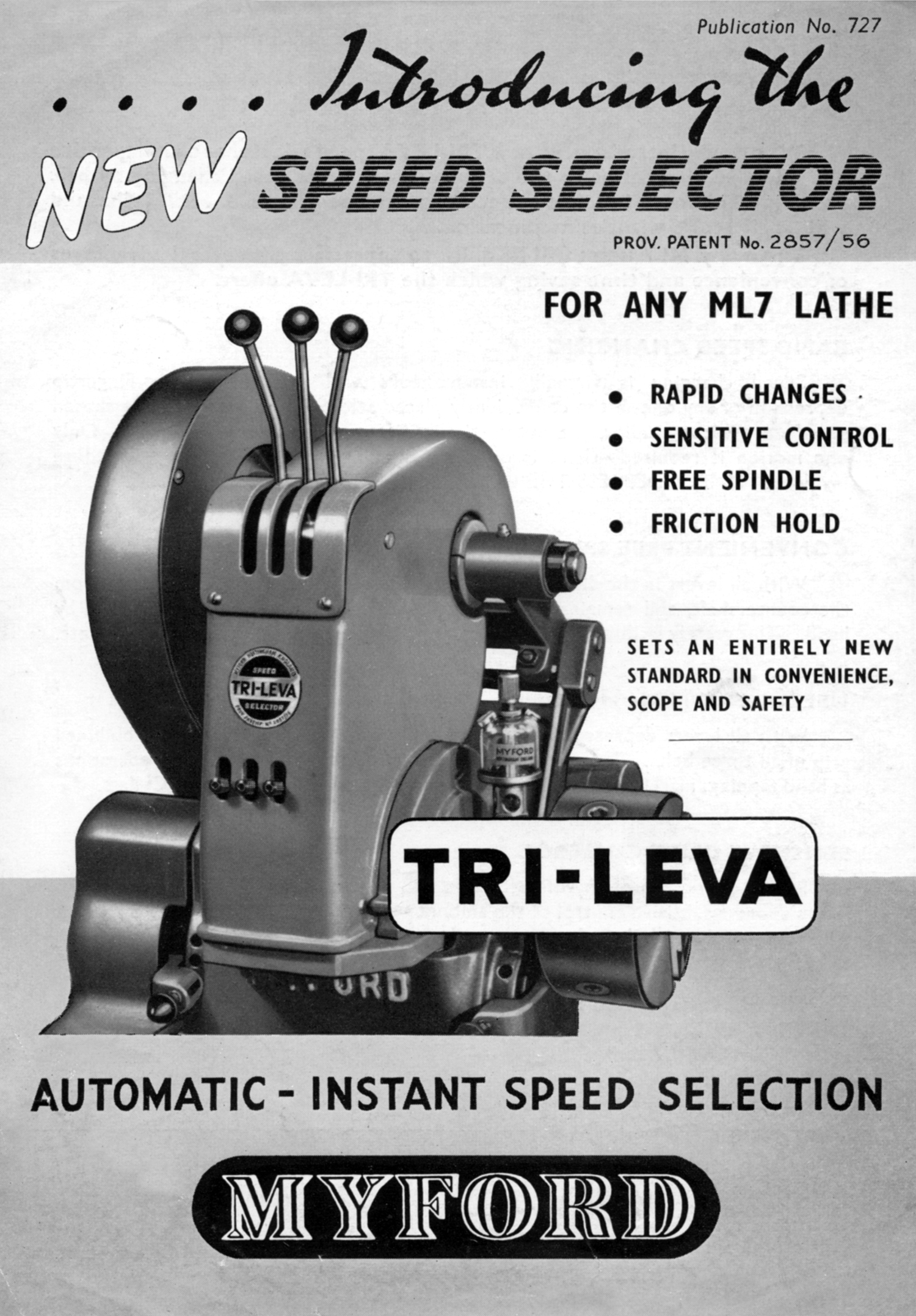
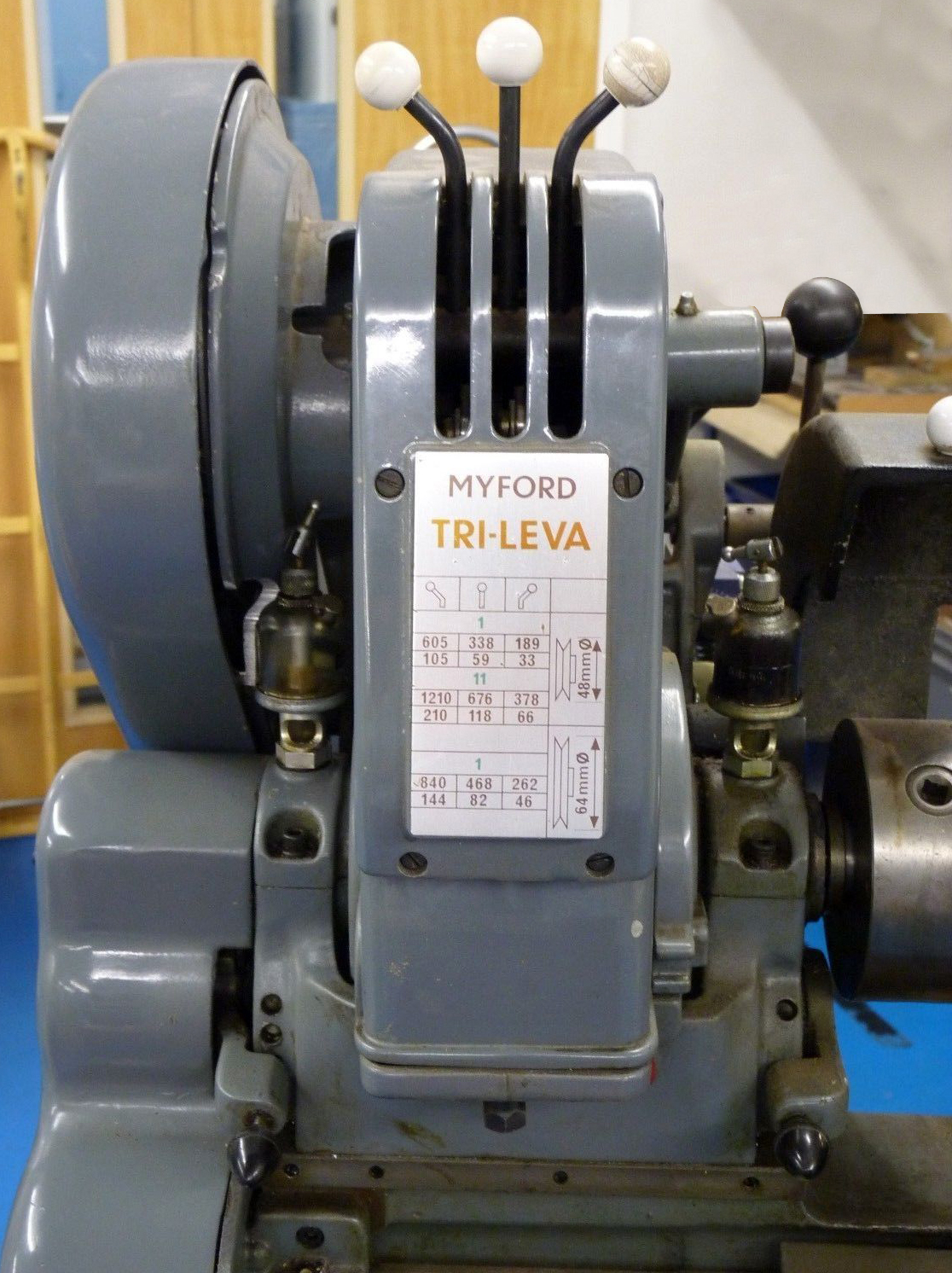
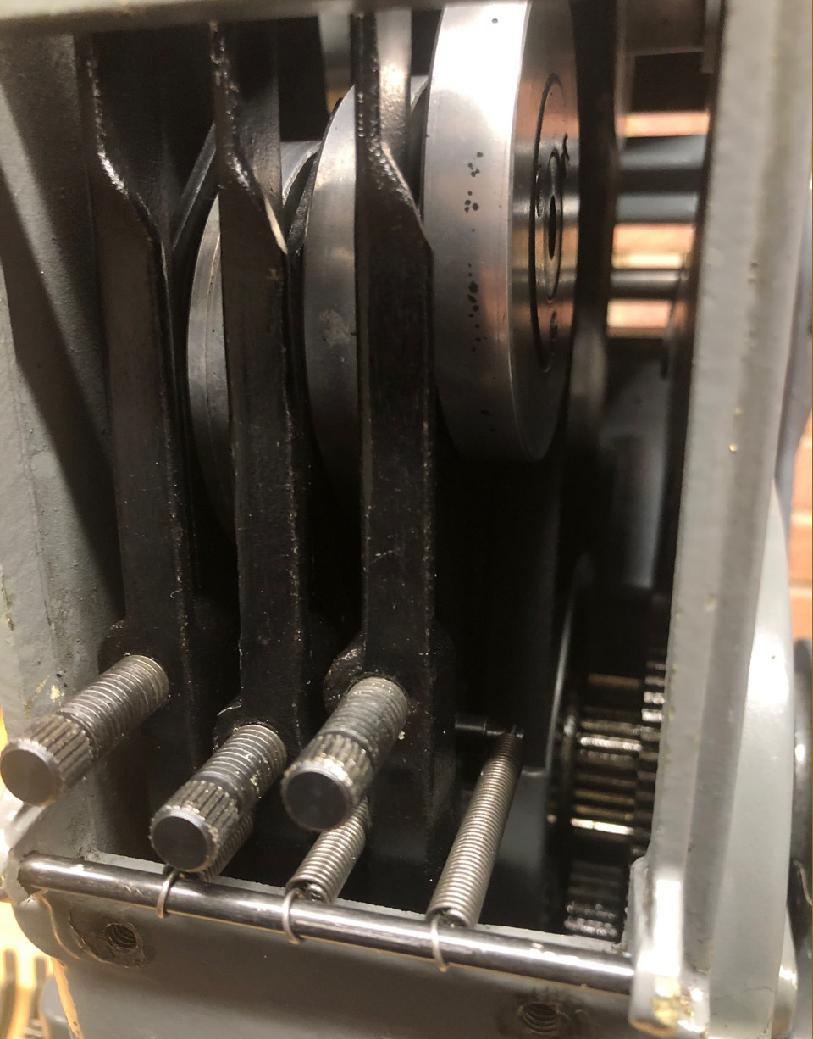
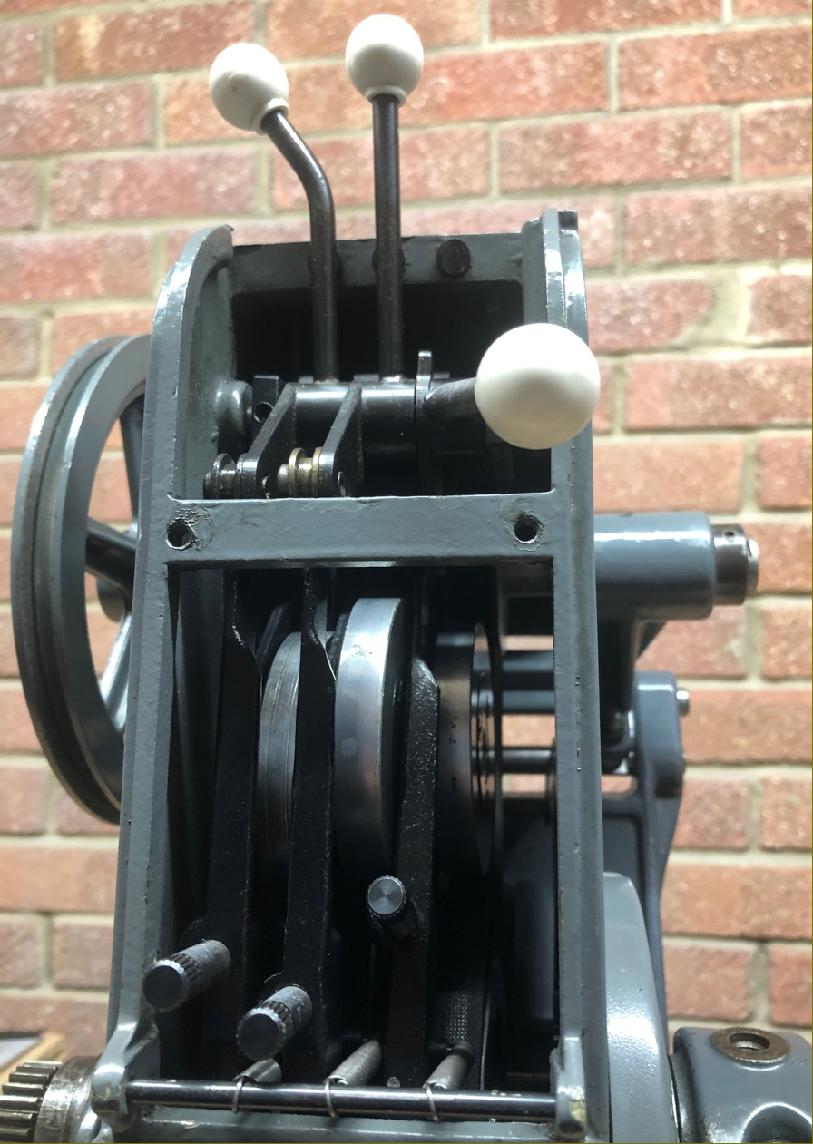
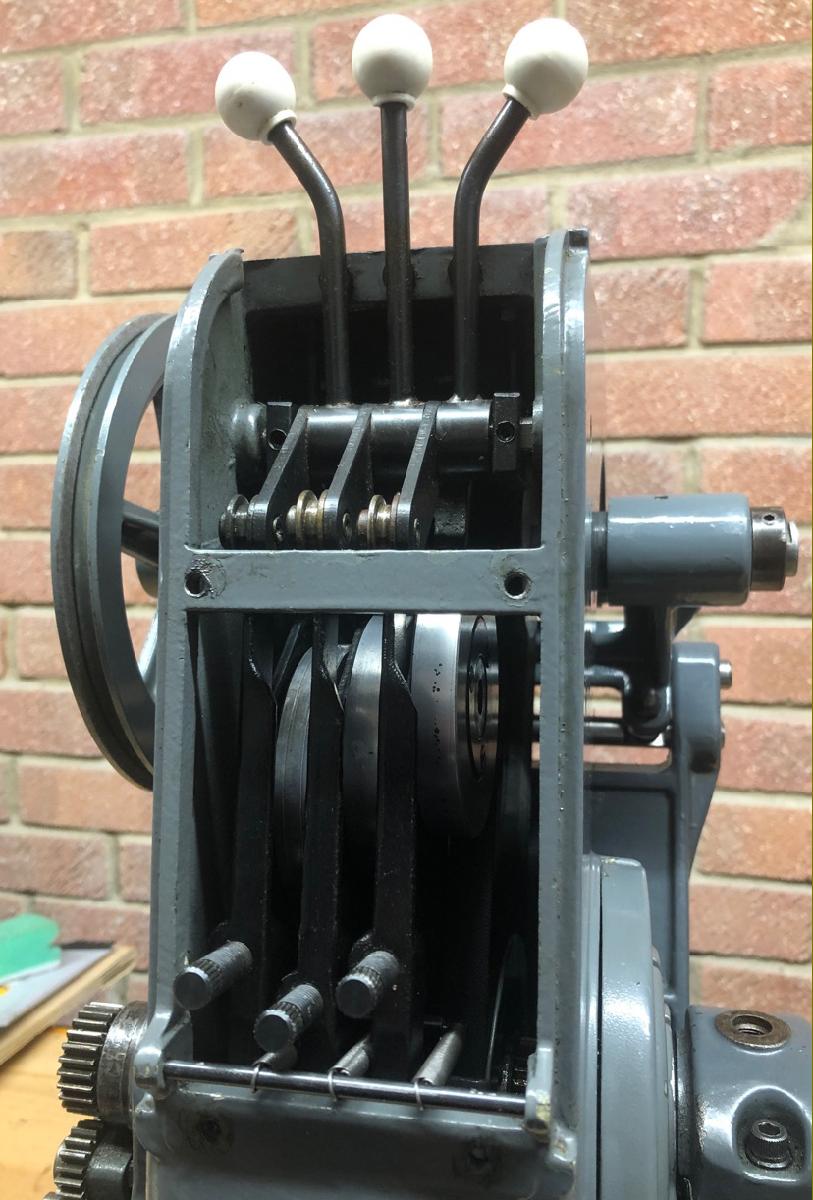
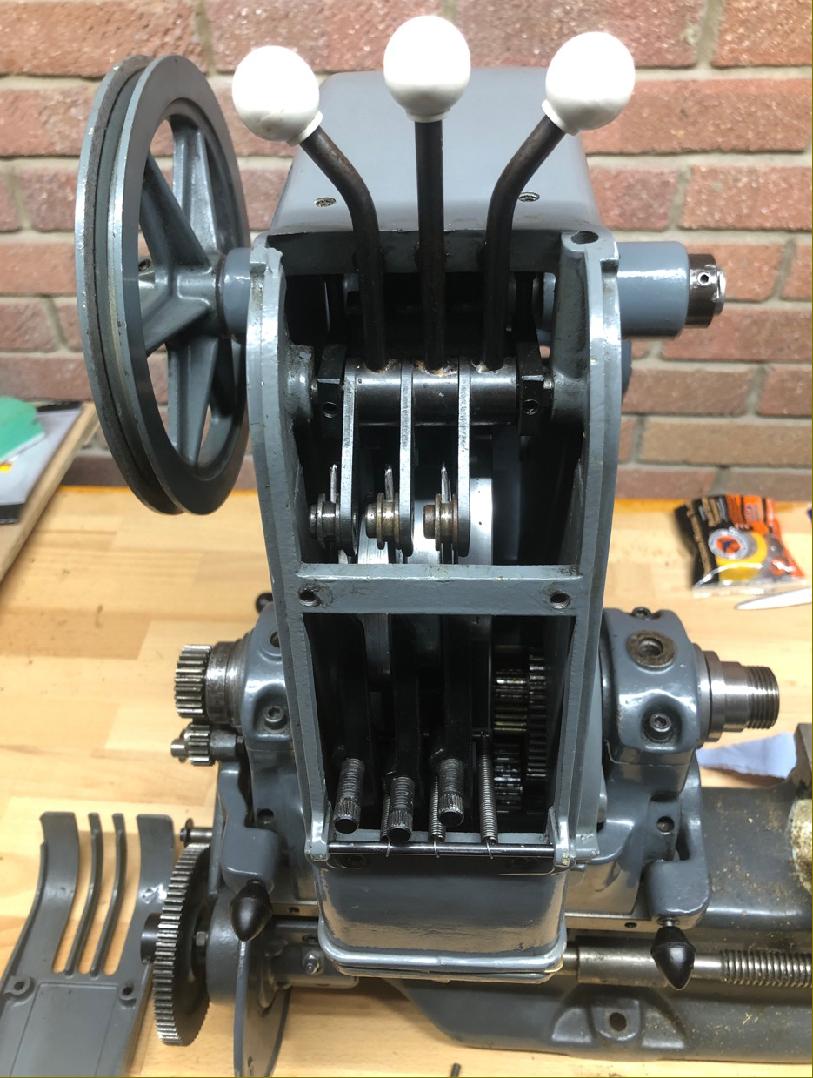
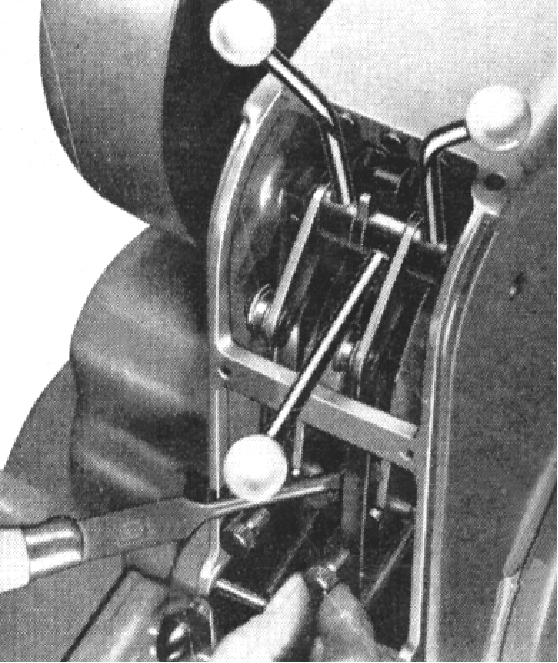
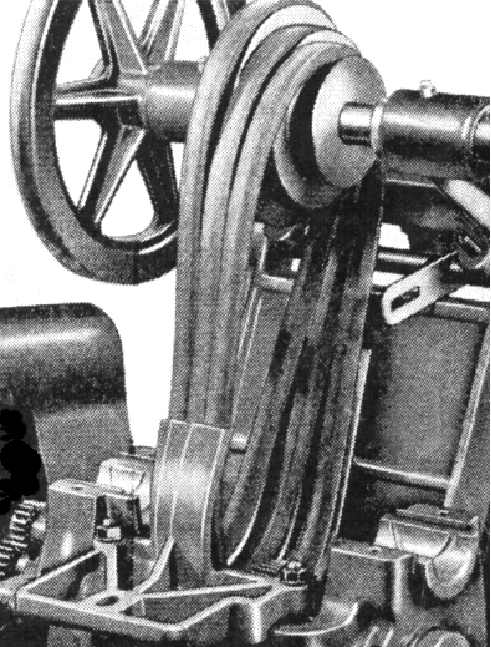
Made in die-cast aluminium, the device consisted of a lower housing fastened in place under the headstock spindle by the use of three modified headstock-mounting bolts, each of which was threaded at both ends. The lower housing served both a mounting shelf for the upper part of the unit and as a guide for the three permanently-mounted drive belts that formed the heart of the conversion. An upper housing held a similar belt guide together with three spring-loaded roller selectors, each of which could be pressed against the belt that ran beneath it. The tension of each belt could be adjusted individually by a small knurled knob; on the original design these protruded, in a line, through the front cover but all production versions are believed to have been hidden behind a detachable facia panel. As one lever was pressed down an interlock automatically disengaged the one previously engaged. The Tri-Leva performed best when driven by a two-speed motor, this giving six high speeds (and six low in backgear) that could be selected instantly by a combination of mechanical and electrical control Many professional users, especially those intending to use the lathe for production work in the guise of the C7 Capstan Model, chose this option and found the lathe to be perfectly capable of sustained hard work (on small parts) over many years. Unfortunately, the entire set up was relatively expensive - in 1962 a Tri-Leva unit, two-speed motor and its associated electrical-control gear added 35% to the £70 : 15 : 0d cost of a standard machine.
Although the solid-mount, 2-speed motor was much heavier than the standard unit, the same mounting plate was used. As might be expected, this objected to the extra strain and has been known to crack. However, this can be prevented by adding a simple support bracket (just a snug-fitting length of wood will suffice) between the plate and top of the stand. Full details of the ML7 range here..
|
1959 cover of the first (and rarest) of the Tri-Leva sales catalogues. Between this illustration and the start of production the face was fitted with a detachable cover, so hiding the three belt-tension adjusters pins seen protruding through the front of this pre-production unit |
|
|
||
|
|
||
|
|
||
|
Partially assembled Tri-Leva unit. The headstock spindle has been removed and the base plate cum belt guide bolted in position. |
||
|
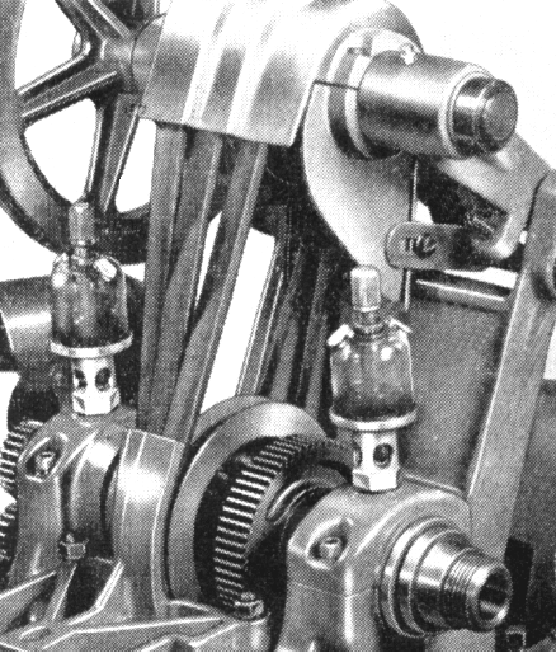
The upper housing held a belt guide and three spring-loaded roller selectors that could be pressed individually against the belt beneath them. An interlock disengaged one selector when the handle of another was pressed down. |
||
|
Partially assembled Tri-Leva unit. The upper and lower belt guides are in position and the headstock spindle has been reunited with its bearings. |
||
|
|
|
|
|
|
|
|
||
|
|
|
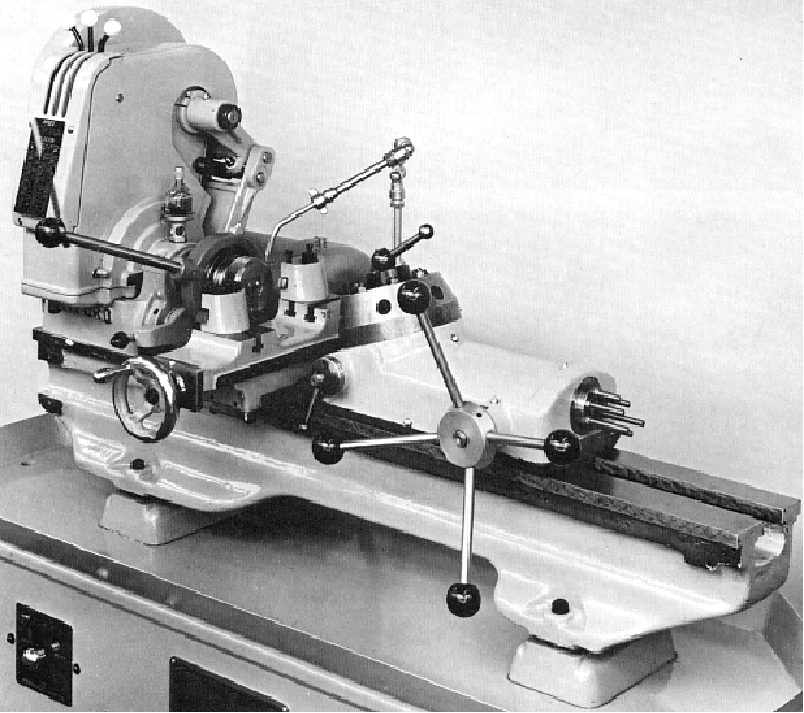
Myford C7 Capstan. A rare machine this is an early version (identifiable by the screw-feed cut-off slide) fitted with a Tri-Leva spindle-speed selector, standard bed-mounted capstan unit, coolant unit and two-speed electric motor. |
||
|
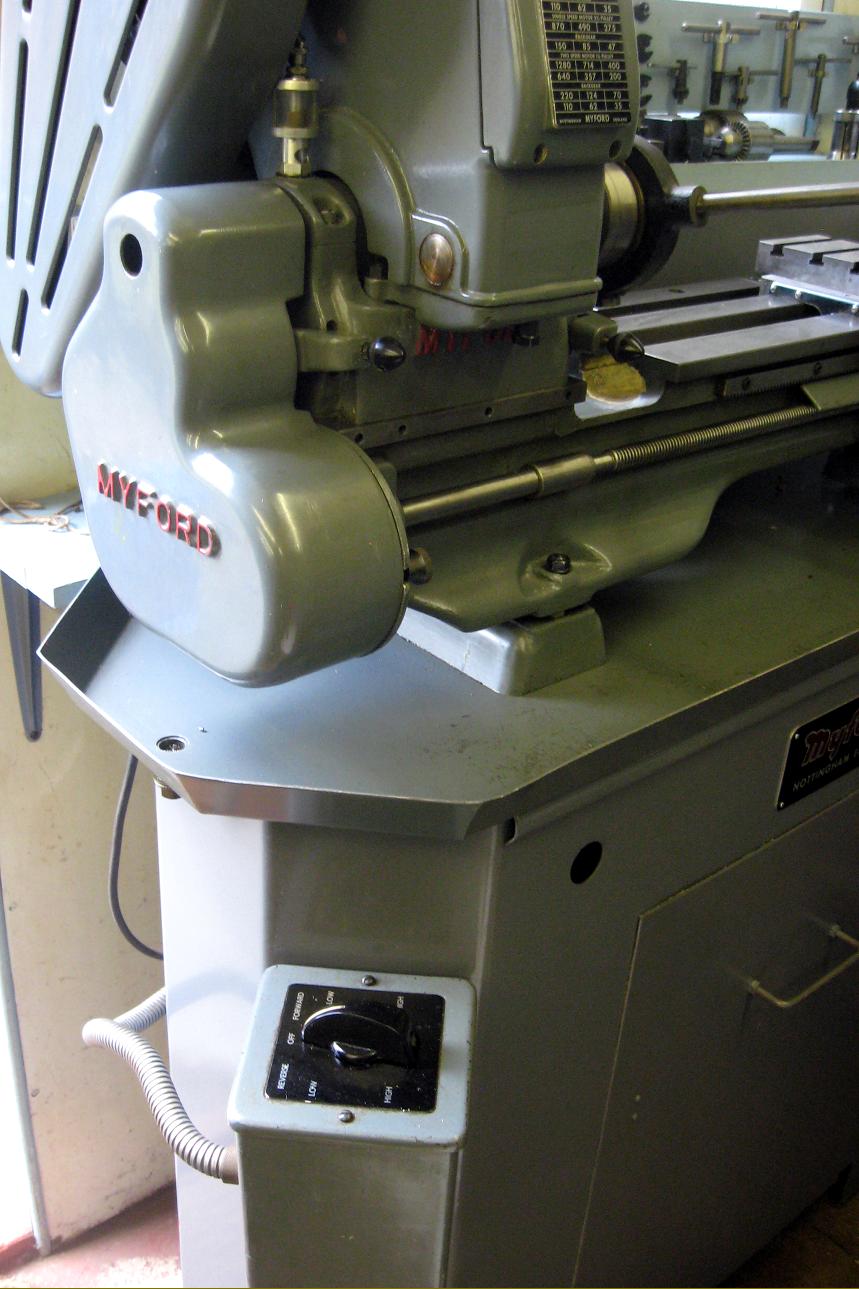
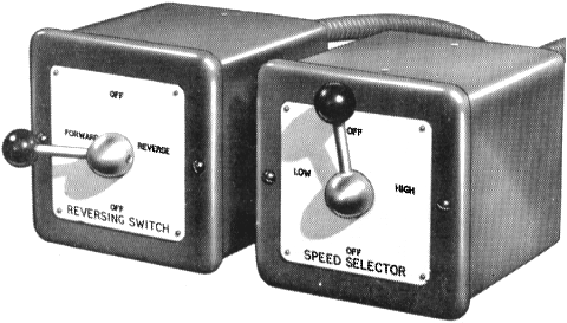
The original two-speed switch gear was held in two separate boxes -either as shown above or flush with the front panel on the maker's cabinet stand. Later models had the switchgear incorporated into one switch unit. Today, as this equipment in unavailable, a modern type of cylindrical switch can be used instead. |
||
|
Home Machine Tool Archive Machine-tools Sale & Wanted Myford Home Page A Manual & Catalogue Set is availablefor the Tri-Leva |