E-MAIL   Tony@lathes.co.uk
Home    Machine Tool Archive    Machine Tools For Sale & Wanted
Machine Tool Manuals   Machine Tool Catalogues

   
4-inch Myford "Precision" MF Series
page 1   page 2   page 4   page 5   page 6   page 7  page 8
4-inch Home Page   4-inch Catalogue Pictures   Early Mode
Original MF30 on cast-iron stand
   
A copy of the very rare catalogue for this lathe is available. E-mail for details

1.125" x 12 tpi spindle nose - with the "register" behind the thread set at the thread diameter.
The domed-headed, knurled-edge bullwheel-to-pulley disengagement pin was spring loaded and fitted with a stiff wire cross piece that dropped into a slot cut in the face of the gear.

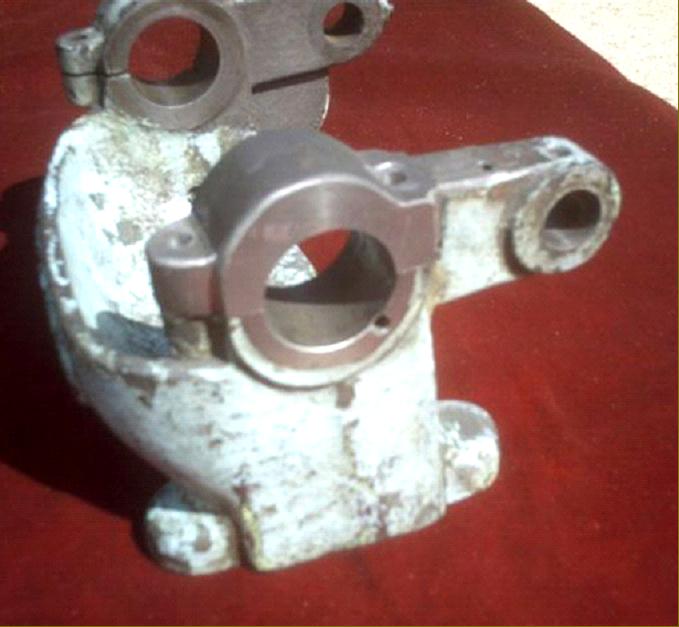
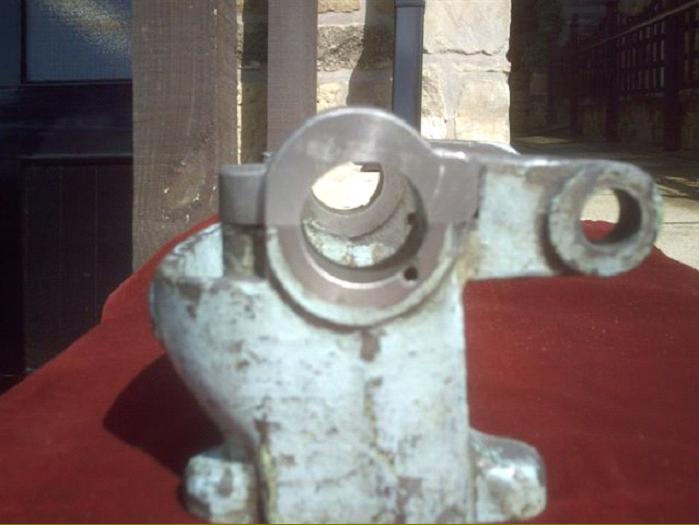
Clearly visible just to the left of the front headstock clamping screw is one of the pair of headstock pivot-adjustment screws fitted to some MF32s and MF74s. The other screw was behind the headstock against the other clamping bolt.

Left: the Model designation "MF74" can be seen cast into the backgear guard. For the first time Myford Changewheels were fitted to proper studs with replaceable bearings - thus obviating the age-old problem of the gears wearing on their bores. A strong cast-iron guard covered the changewheels, but there was no way of locking it closed.

The 60 degree V edge to the bed, the clasp-nut adjustment screws set into the single-sided apron, the large boss to support the carriage traverse handwheel, the large diameter to the dial thread indicator - are all visible in this picture.

Limited travel cross slide:
The cross slide (there appear to have been two different lengths - short and very short) was unusual in having, like some Emco lathes of recent years, two T slots running from front to rear, rather than in line with the bed. Being short, and lacking an "overhung" type of end bracket as fitted to the 7 Series Myfords, its travel was very limited (and many owners have modified theirs to give more). The picture above shows clearly that when moved back into its operating position, the slide was only supported for half its length - a state of affairs that was far from ideal.
For the first time (left) a Myford was fitted with a replaceable cross slide feed-screw nut, similar to the 7s, but rather larger, and in bronze. The cross feed screw thread was 10 tpi and of square section; it was fitted with a knurled-edge zeroing micrometer dial - something that did not appear again on a Myford-designed lathe until the Super 7 of 1953.

The knurled handwheel holding the Dial Thread Indicator in place is as supplied - but the carriage-traverse handwheel, which was originally far too short, is not ...