|
Seldom found, even in their native Europe, these small Italian-built machine tools were manufactured in Forlì, Italy. The Company was established in 1981 using the name Meccanica Cortini di Cortini Bruno & c. S.n.c. but in 1986, after some financial juggling, became Meccanica Cortini S.r.l. Having formed a joint-stock company in 1988, with registered offices in Forlì, they were taken over in 1990 by the large international company Fidia. Today they produce, as part of the very wide-ranging Fida Group product line, a number of advanced CNC machine tools.
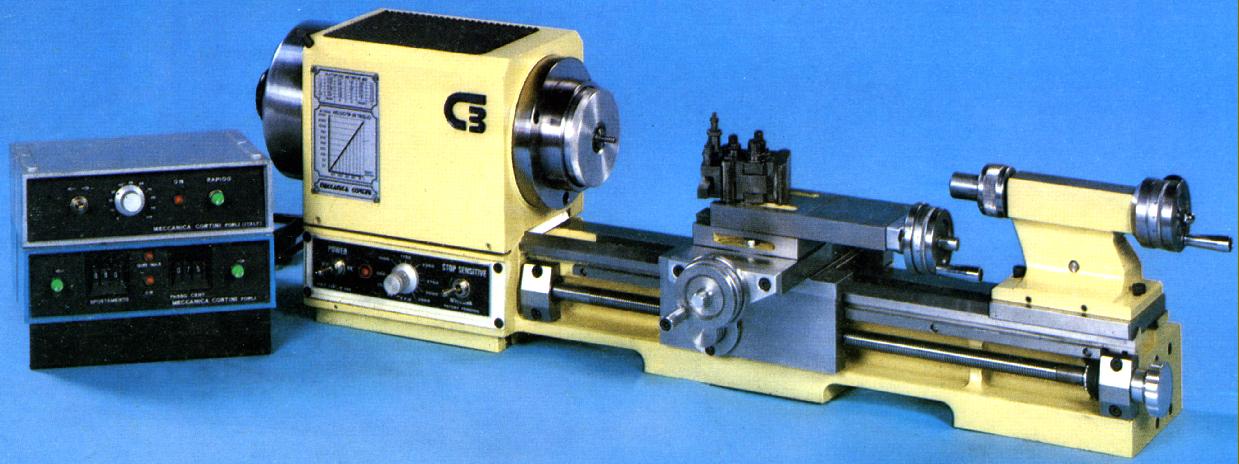
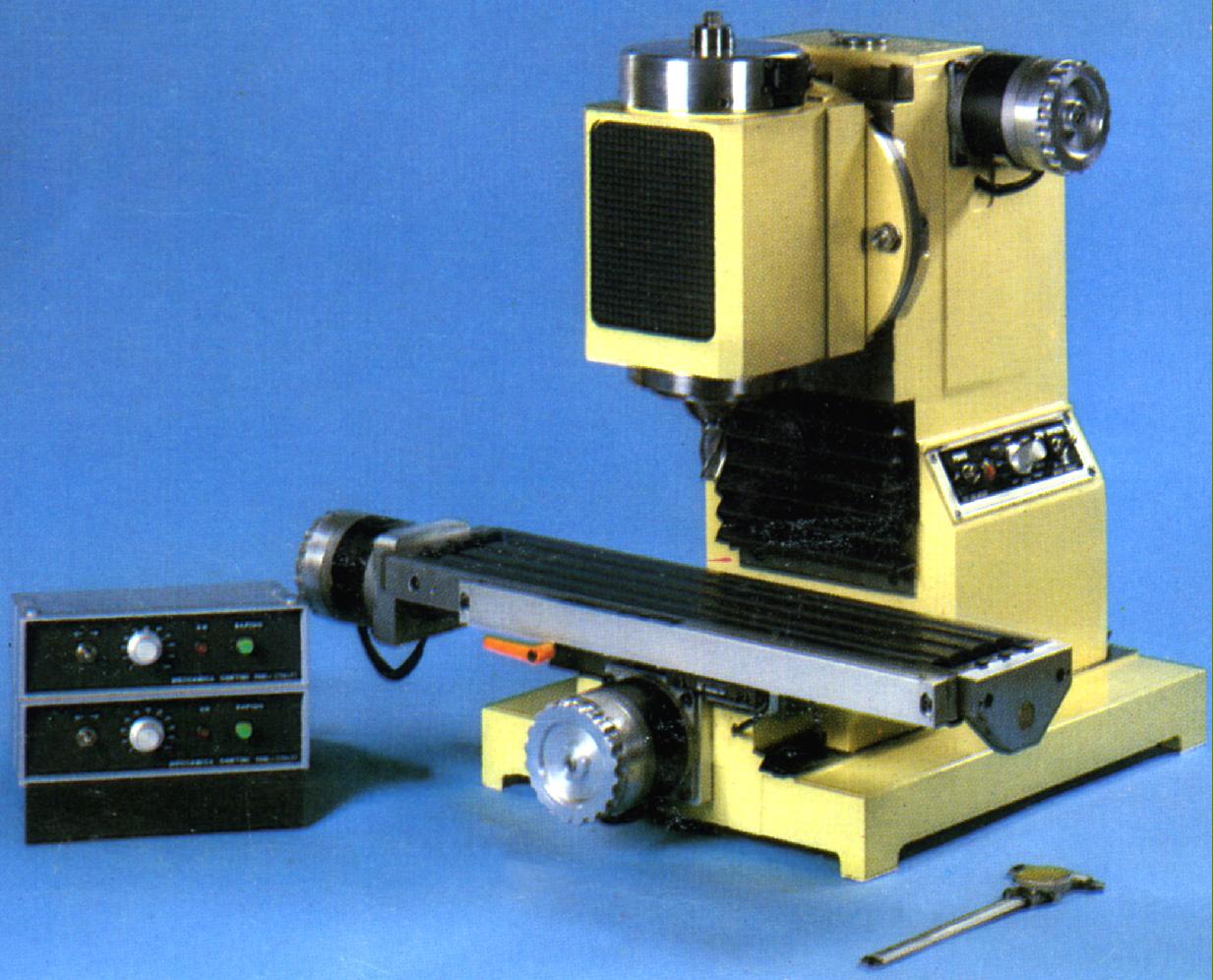
Beautifully made (though not, owners report, as well as a Schaublin 102), and produced in what must have been limited numbers, evidence of just three lathes has so far emerged: the 105 mm centre height by 500 mm between-centres H105 - and the 75 mm by 350 mm H75 and the 80 mm centre height H80. Also offered - and again in unusual sizes and specifications - were two small vertical milling machines the H111 and the L300 - the former with power-feed to all three axes and infinitely-variable spindle speeds from 200 to 3400 or, optionally, 5000 r.p.m. Of a similar specification to the H111, the L300 had a spindle that took W12 collets (or what was described as "cm,2") and was driven by a 0.5 h.p. motor and ran at speeds from 200 to 3400 r.p.m. or, optionally, to 5000 r.p.m. The head could be swivelled 90° each side of central and was moved up and down the machined inner face of the column through a travel of 200 mm operated by a handwheel on the right-hand face of the column that worked through bevel gears and a feed screw. 500 mm long and 110 mm wide, the table had a longitudinal travel of 250 mm and in traverse of 140 mm. All three feeds could be by hand or through a variable-speed power feed. With overall dimensions of 700 x 550 x 500 mm, the weight was approximately 120 kg.
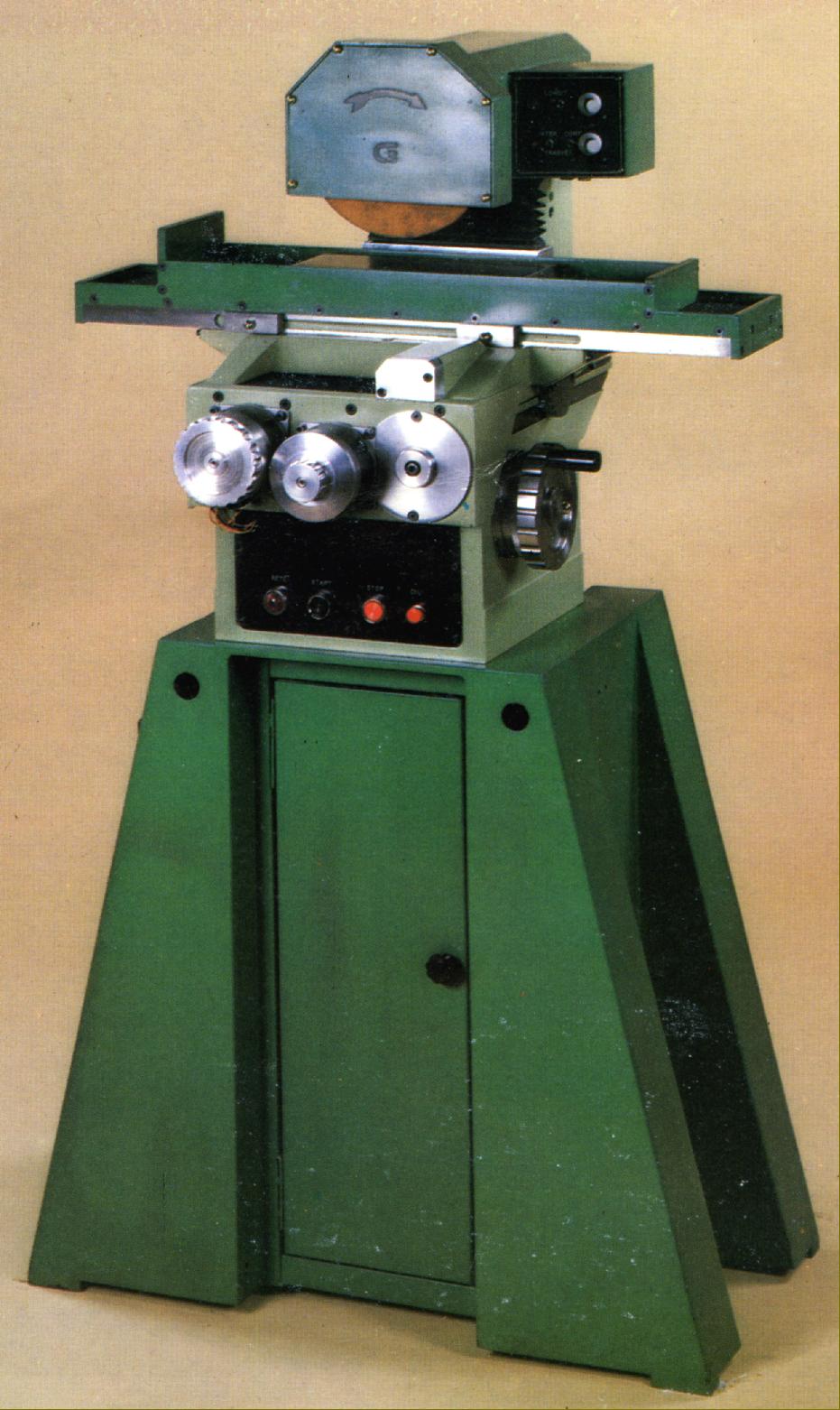
Another most unlikely addition the maker's range was the H555, a miniature surface grinder that appears to have been even smaller than that made by EXE. In later years a number of CNC lathe and milling machine conversions were listed including, in the 1980s, the Cortini Type L302/C a computer-controlled milling machine for whom the UK agent was E.H.B. (Bernfield). A sturdy, well-made machine, it was equipped with a large black box fitted with a CTR with machining instructions provided via cassette tape. All three axis were under CNC control and an extensive range of accessories was offered. Unfortunately, like Italian motorcycles of the same era, the electrical system proved a fatal weakness.
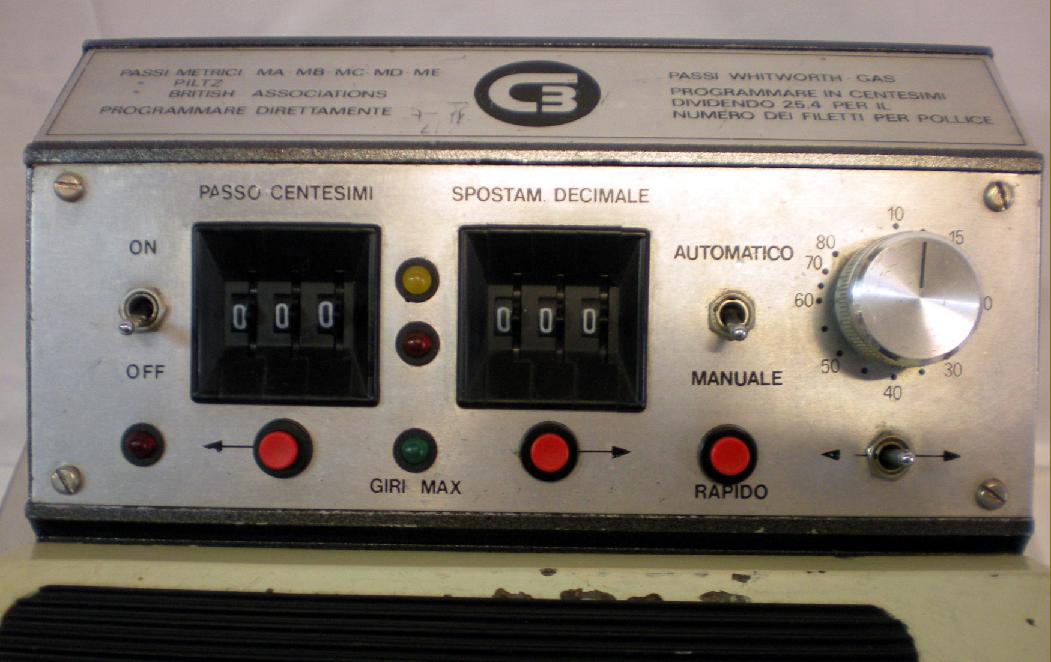
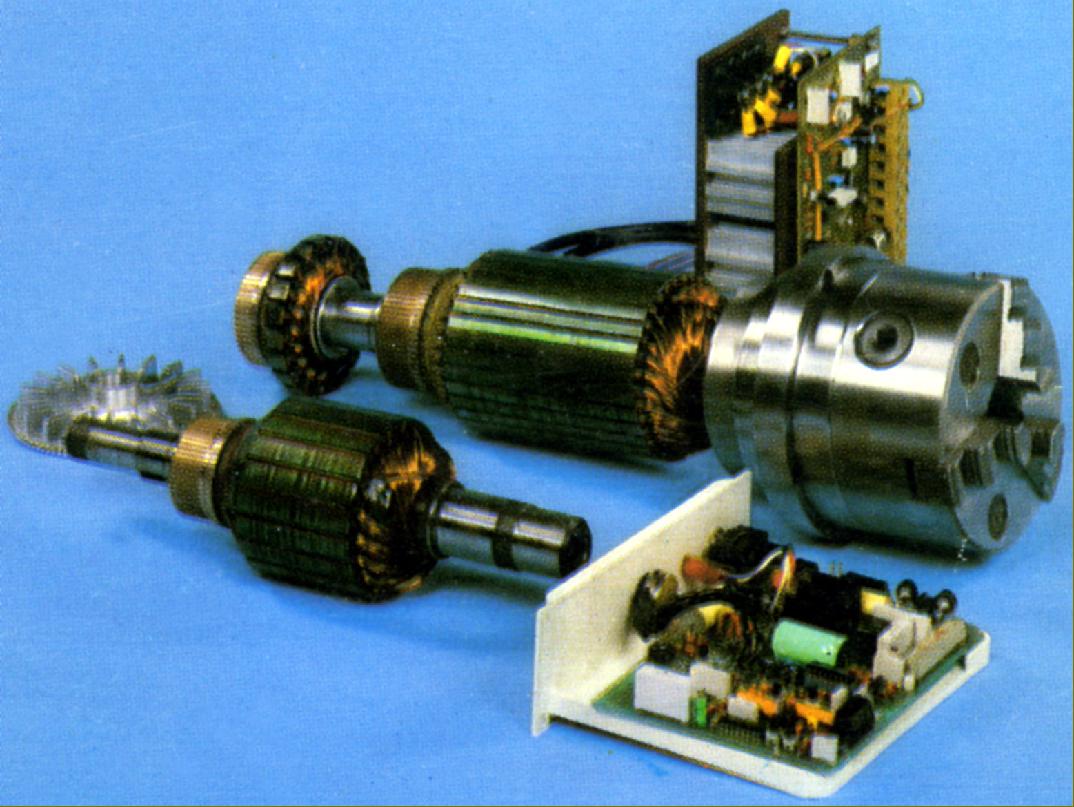
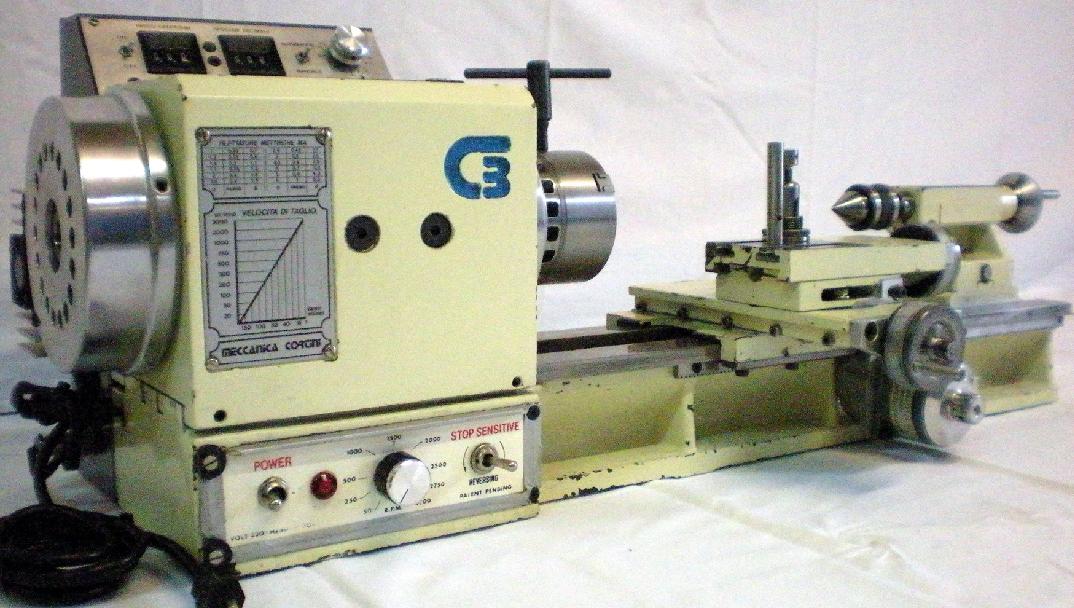
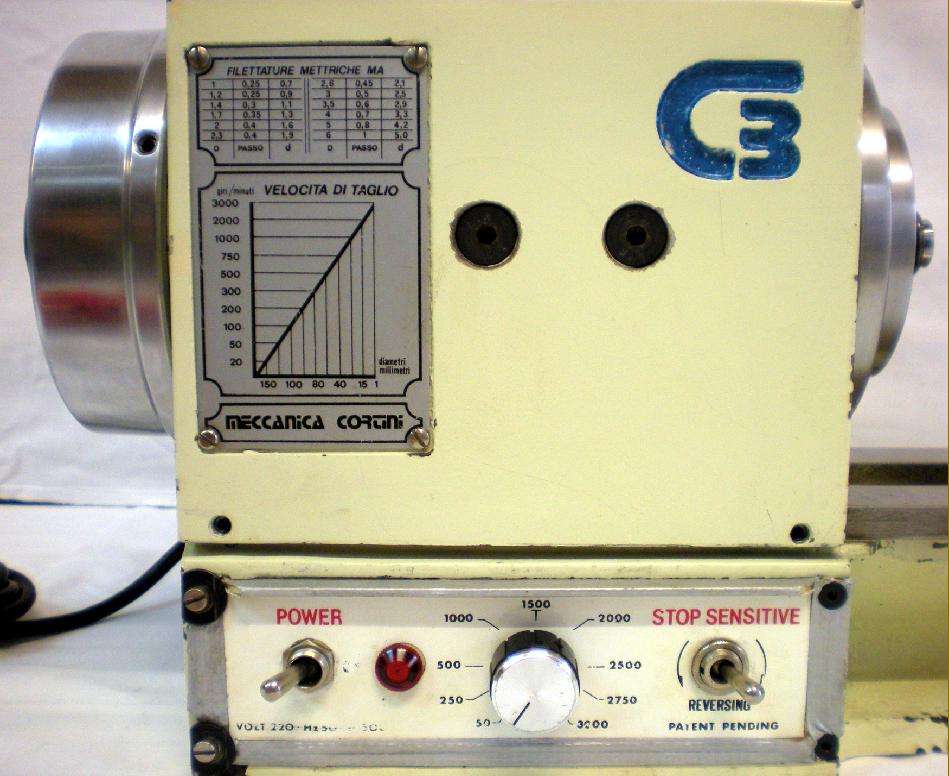
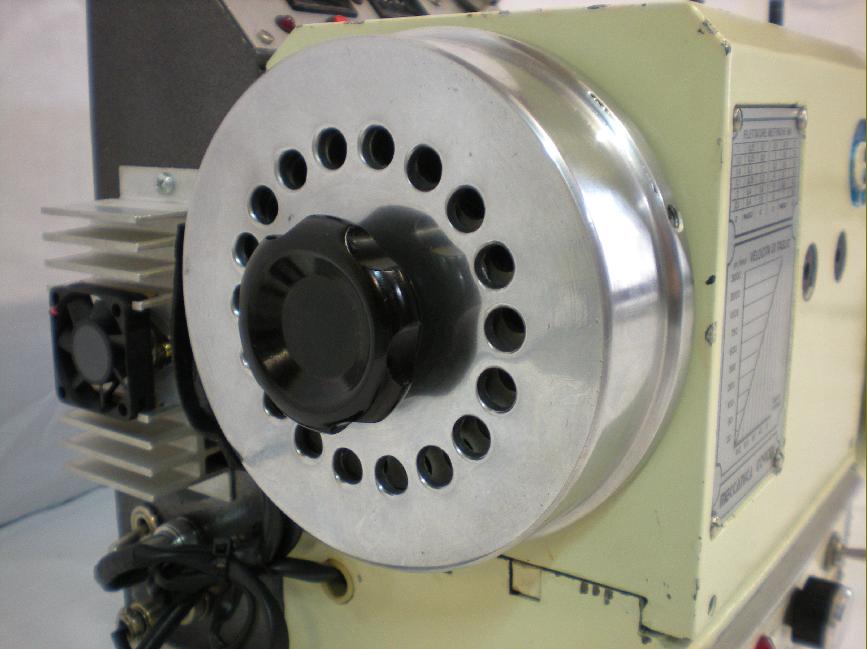
All Cortini lathes were unusual in adopting a practice more common on wood lathes where the main spindle (20 mm bore on the H105 and 12 mm on the H75) doubled as the shaft of an electronically-controlled motor. To drive the sliding feed a second, much smaller motor was carried on a ball race on the outboard end of the spindle and used to turn the leadscrew. The drive arrangement gave, of course, a remarkably compact installation - though the durability of the motor must have been a limiting factor in the longevity of the lathe. The control box was interesting and rather sophisticated: fitted with the usual on/off/forward and reverse controls it also featured a touch-sensitive switch marked stop sensitive. Pressing this stopped the motor; tapping it advanced it in jogs - whilse releasing it allowed the motor to run back up to speed.
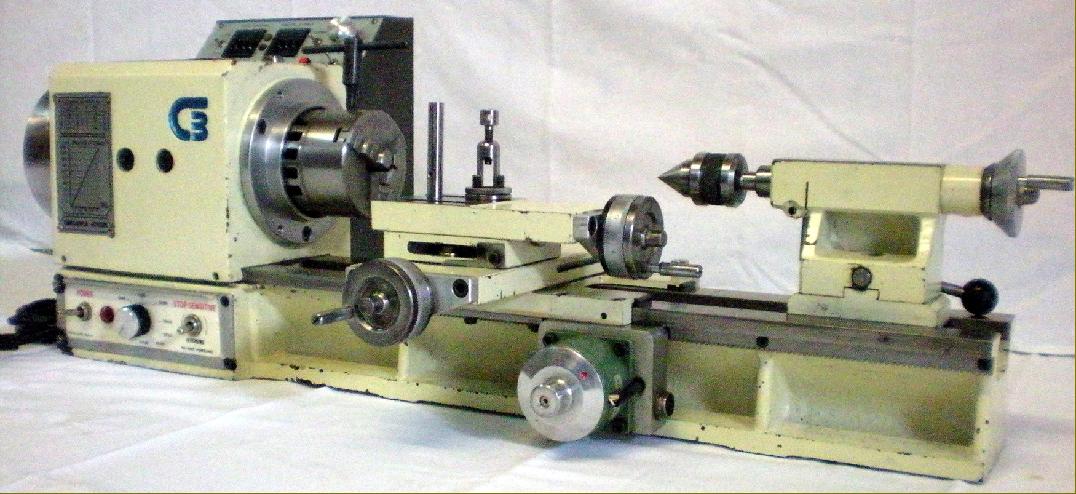
Just over 1000 mm long, the H105 had a very heavily constructed bed with a single V-way at the front with a broad outer surface to absorb wear and a shorter, steeper one on inside to better take tool thrust. Both the V and the single flat way (at the back) were shared by carriage and tailstock - an arrangement acceptable when new but one that would have caused the tailstock to become misaligned near the headstock as wear from the carriage its toll after years of use.
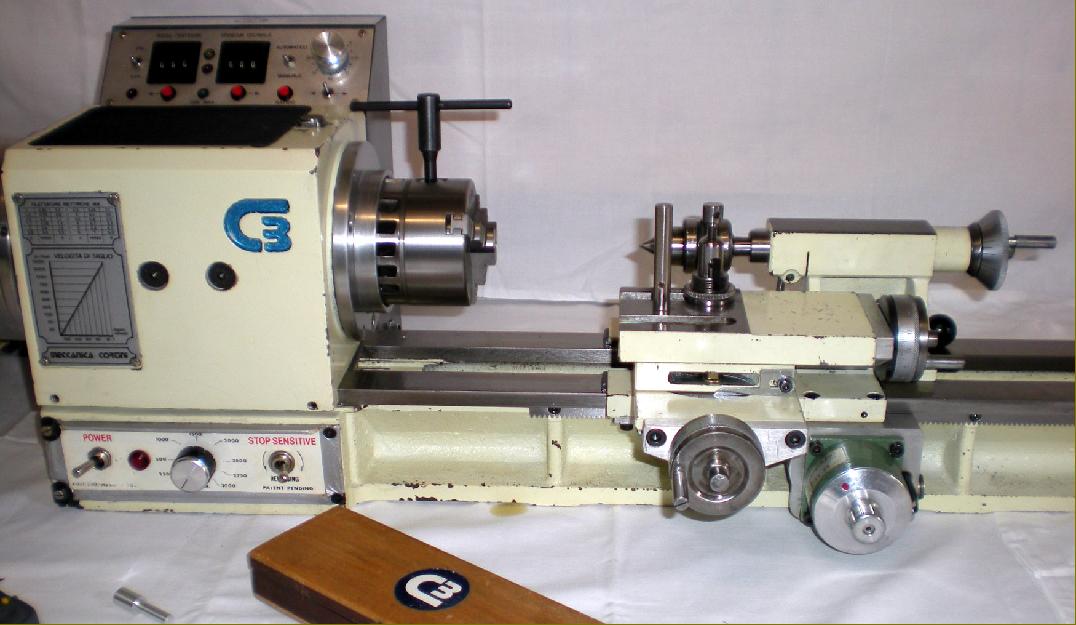
Fully machined on all surfaces, the carriage carried a compound slide rest with large, clearly-marked micrometer dials locked by neat, finger-grip rings. By using just an axial motion, the rings had no effect on the setting of the micrometer dials. The 120 mm-travel cross slide had a row of closely spaced gib-strip adjustment screws - always a good sign of thoughtful design - and the top slide could be swivelled through 350° One highly unusual feature was a power-driven tailstock barrel, though if this was part of the standard equipment, or an extra, in not known.
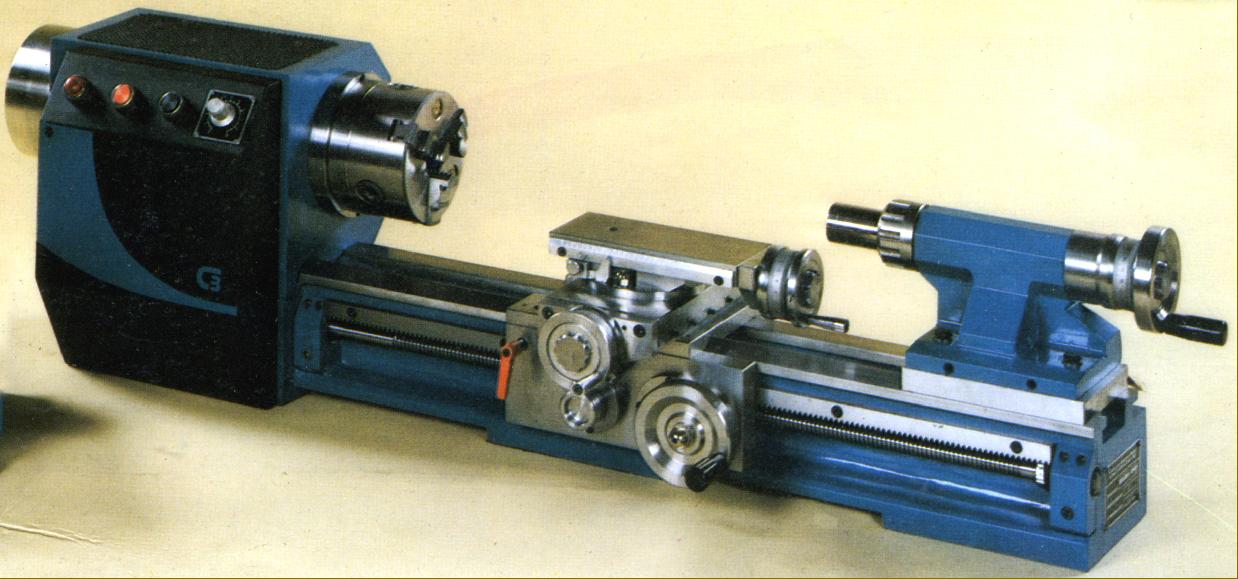
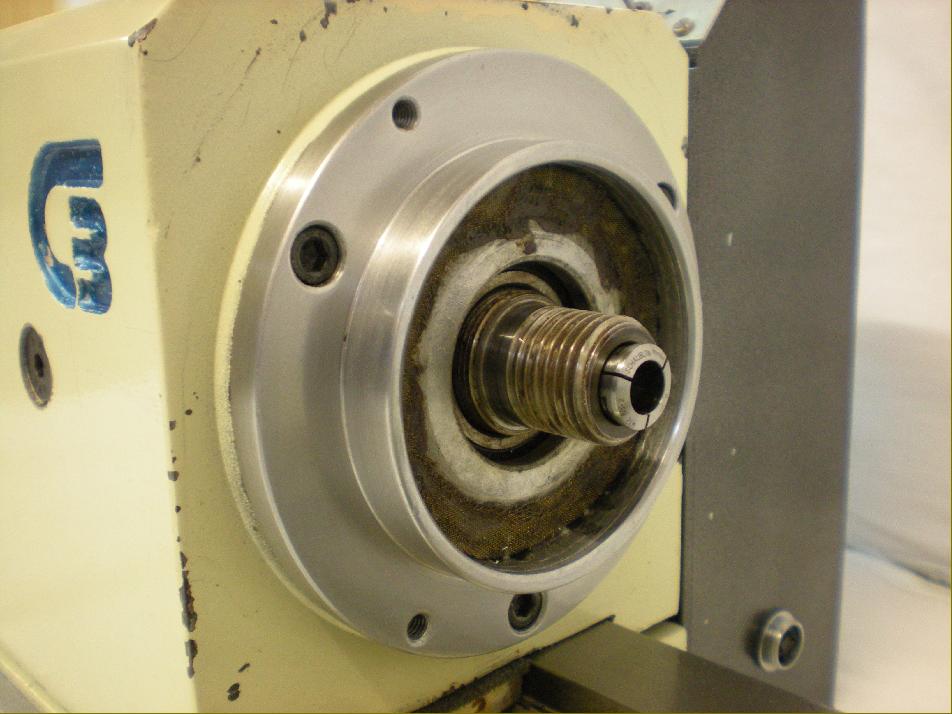
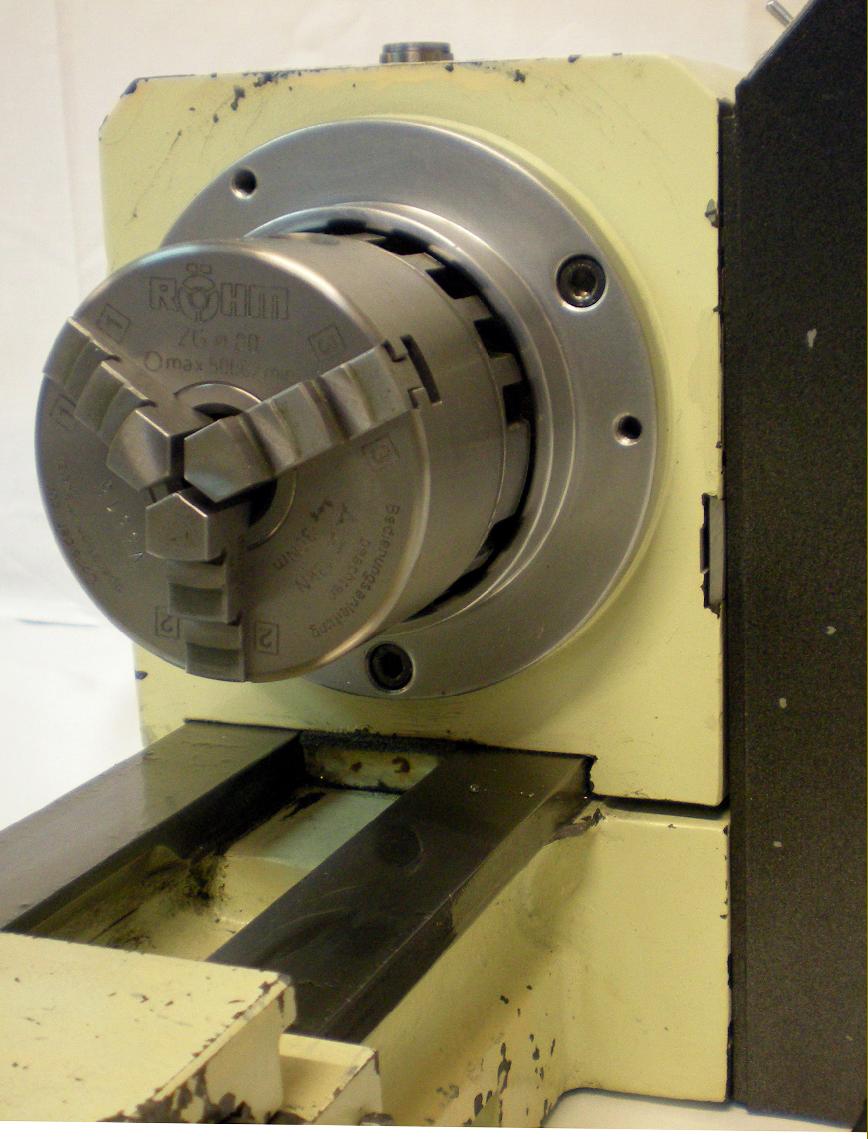
With a flat-way bed braced by distinctive vertical ribs on the front and rear faces, the lighter H75 was, for a small lathe, very heavily built and of pleasingly robust appearance. Its carriage was guided, like that on a Series 7 Myford, by narrow vertical ways - though unaccountably the loose gib strip was located at the rear, instead of the front, where it had to contend with the the tool thrust. However, by means of compensation, both cross and top slides were of delightful appearance being fully machined all over and fitted with with large-diameter micrometer dials. Both slides used one of the maker's trade-mark features - a line of closely-set gib-strip adjustment screws - with no fewer than seven being used on the top slide.Cross slide travel was 80 mm and for the top slide 70 mm, the latter able to be swivelled through 50° each side of central. The tailstock could be set over on its base plate for the turning of slight tapers and its No. 1 Morse spindle had a travel of 60 mm with a micrometer dial as part of the regular equipment. Spindle speeds were infinetly variable - using the same control system as on the H105 - with a range from 50 to 3000 r.p.m. Interestigly at least one verion of the lathe (shown below) had motor cooling built in by means of a stepped-out chuck backplate, slotted on its periferey with a ring of holes on the motors end-plate acting as exhausts.
At least two types of carriage feed were offered: one with both leadscrew and hand-feed drive and another with an electric motor drive working through simple rack-and pinion gearing.
Accessories included the usual 3 and 4-jaw chucks in various sizes, a T-slotted faceplate, collets, Morse centres, rotating centres, precision keyless tailstock chucks, chuck guards, quick-set toolposts, fixed and travelling steadies and a small tooling set, in a wooden box and neatly badged with the maker's logo..
|
|