|
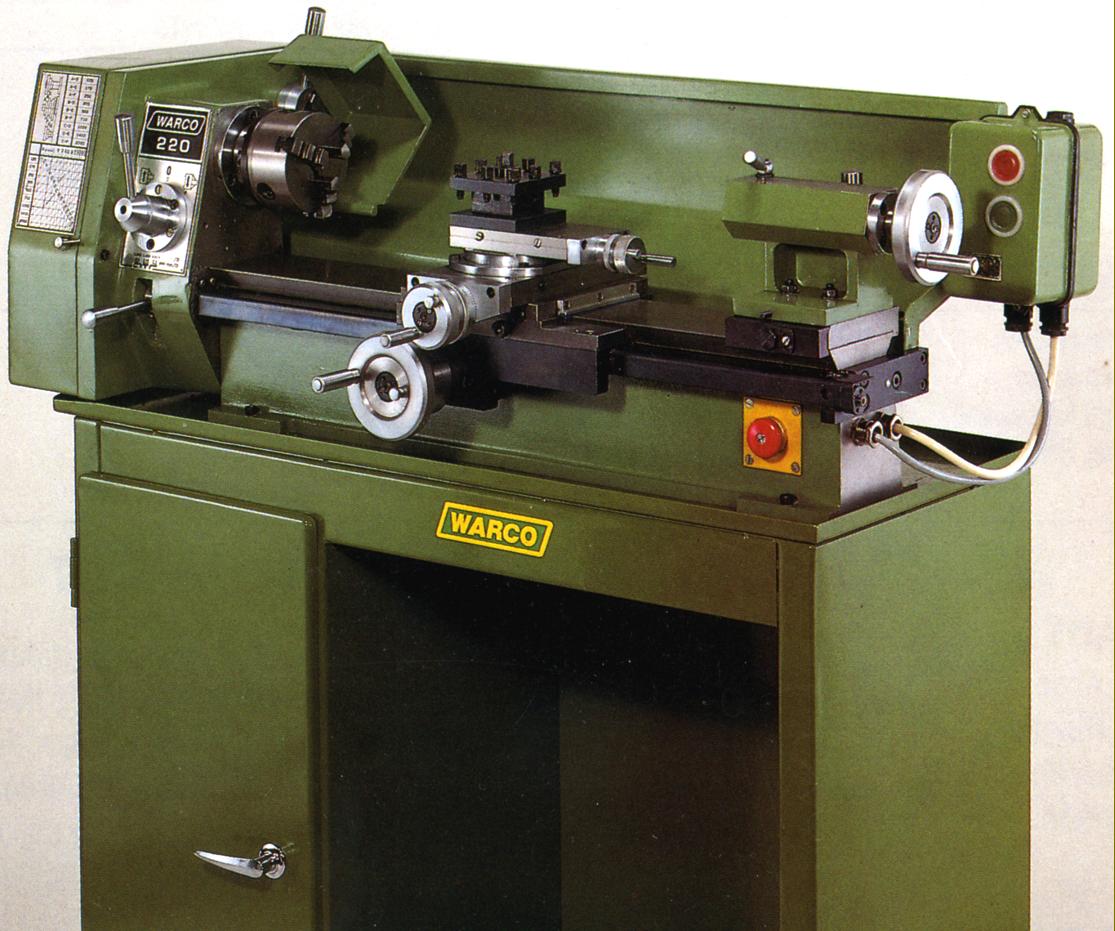
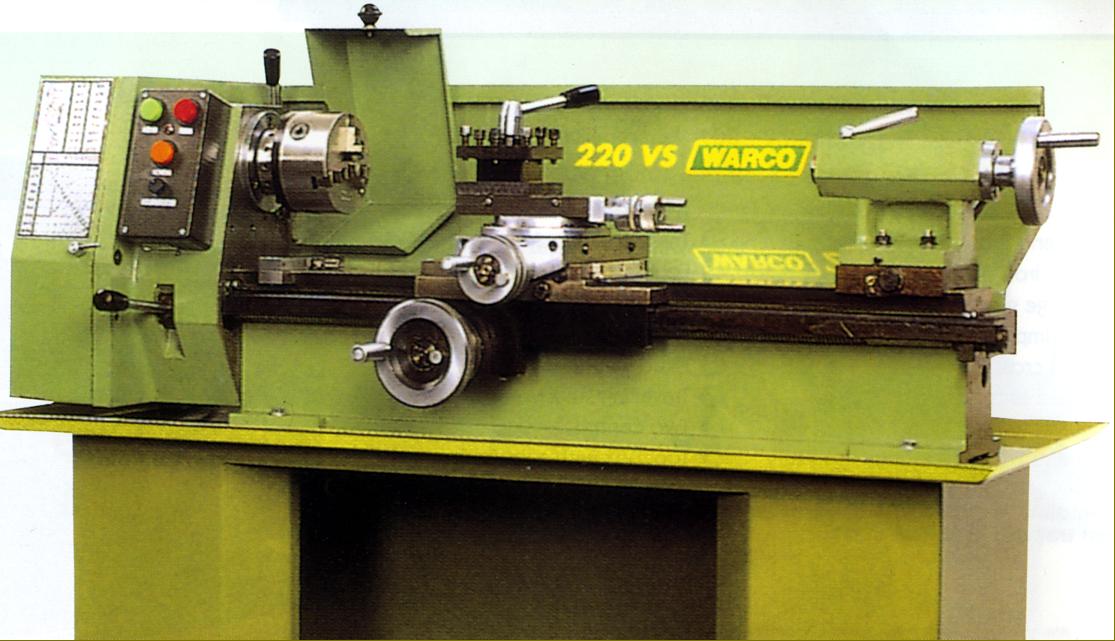
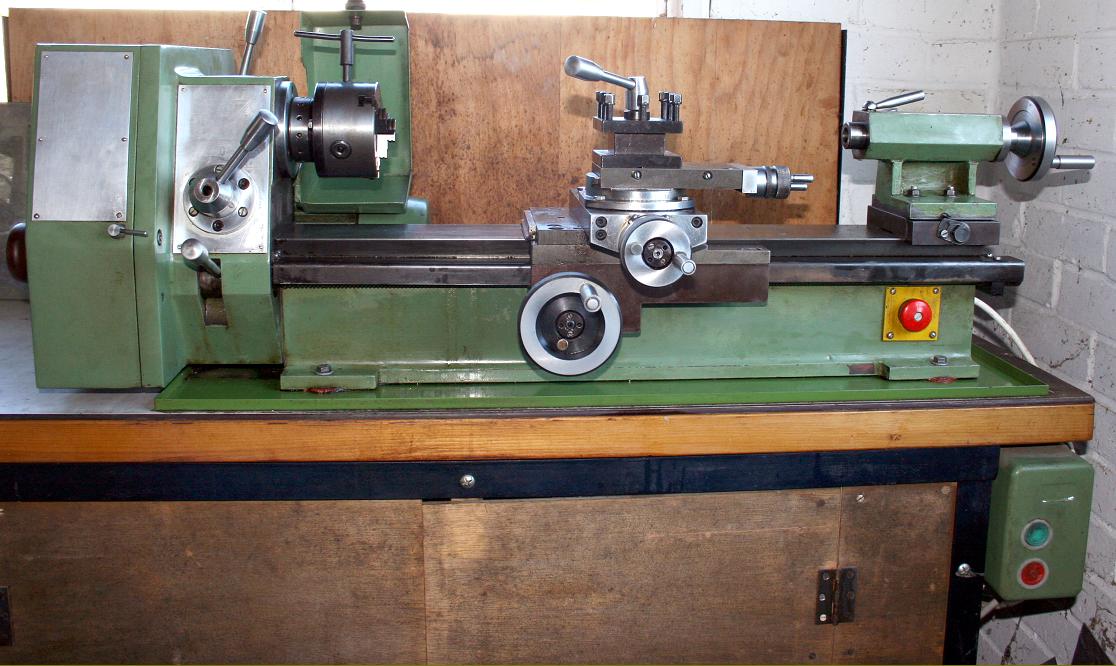
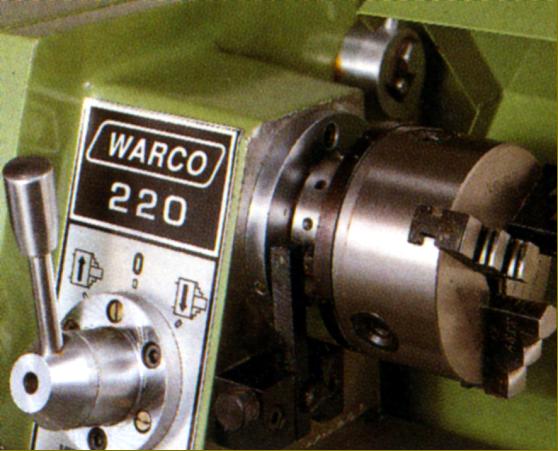
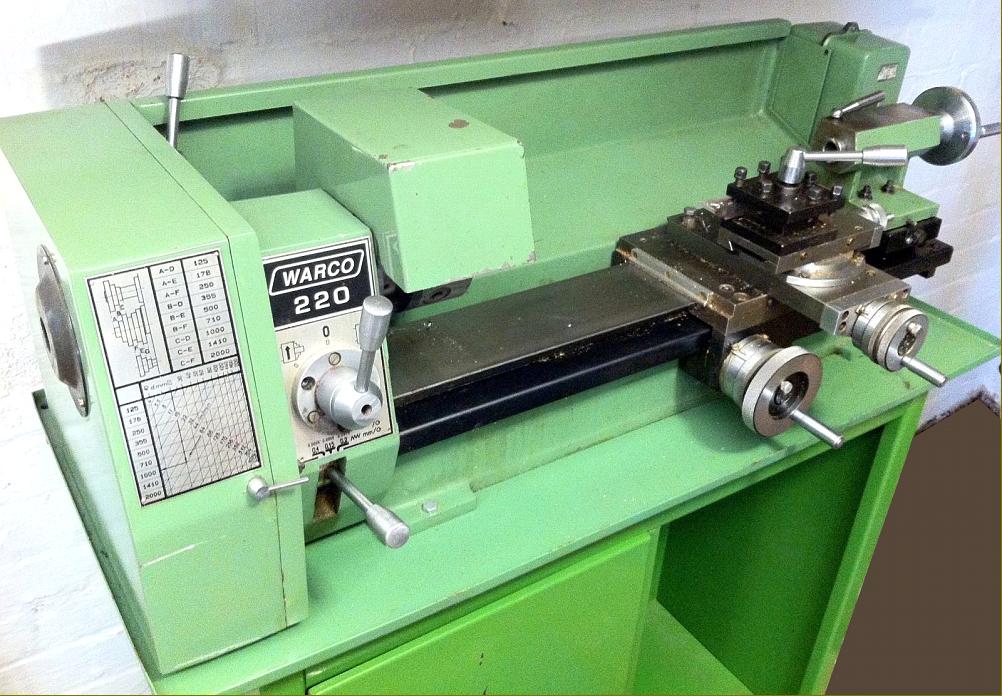
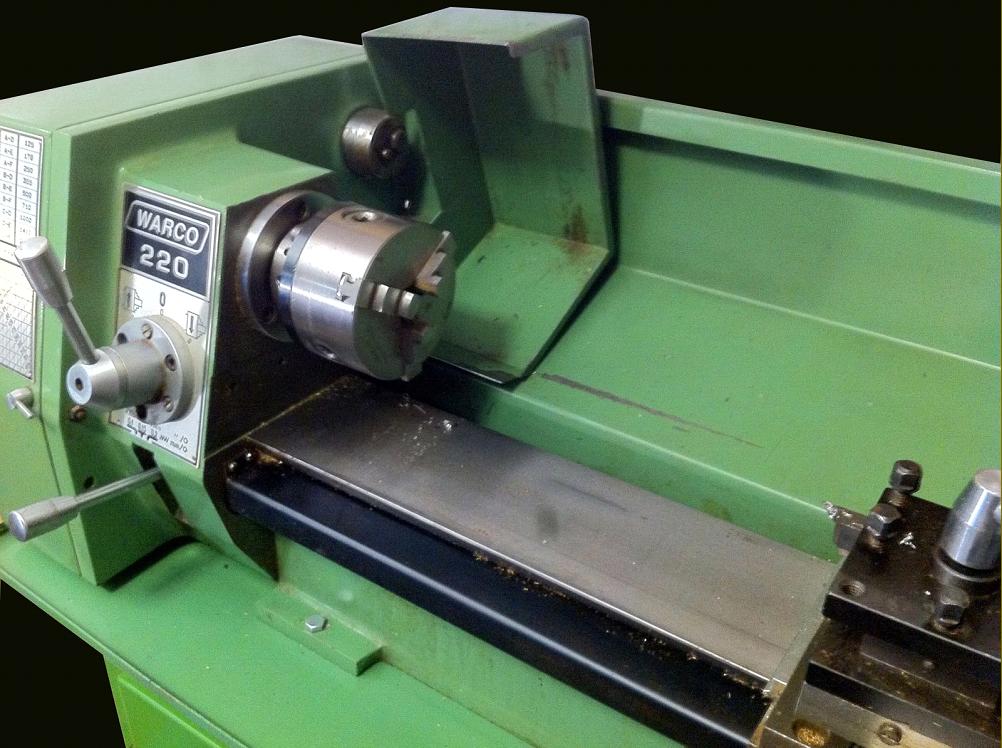
Made in Bulgaria by machine-tool builders Mashstroy and imported into the UK by Warco (better known for their Taiwanese machine tools) the 4" x 19" Mashstroy Series 210 and 220 lathes had an interesting combination of features. Produced for over 20 years they boasted a box-section induction-hardened bed of great depth with a wide, flat top with angled edges - an arrangement resembling that used on the toolroom-class Hardinge HLV. Finished to a very good cosmetic standard, in 1995 the C210T was, at £1500 ready to run with a few essential extras, a rather expensive proposition. However, the standard equipment supplied was usually generous and included a smooth-running 0.75 h.p. single phase motor with an emergency stop button (and sometimes a reversing switch), 3 and 4-jaw chucks, a 4-way toolpost, a high-quality faceplate with radial T-slots, a set of screwcutting changewheels, 4-way toolpost, Morse centres, a chip tray with a full-length splashback, and an electrically interlocked chuck guard.
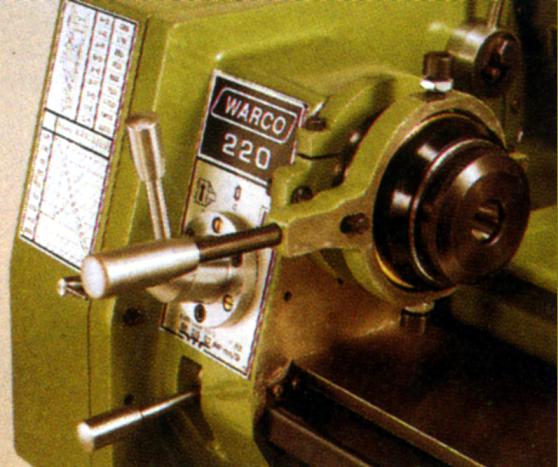
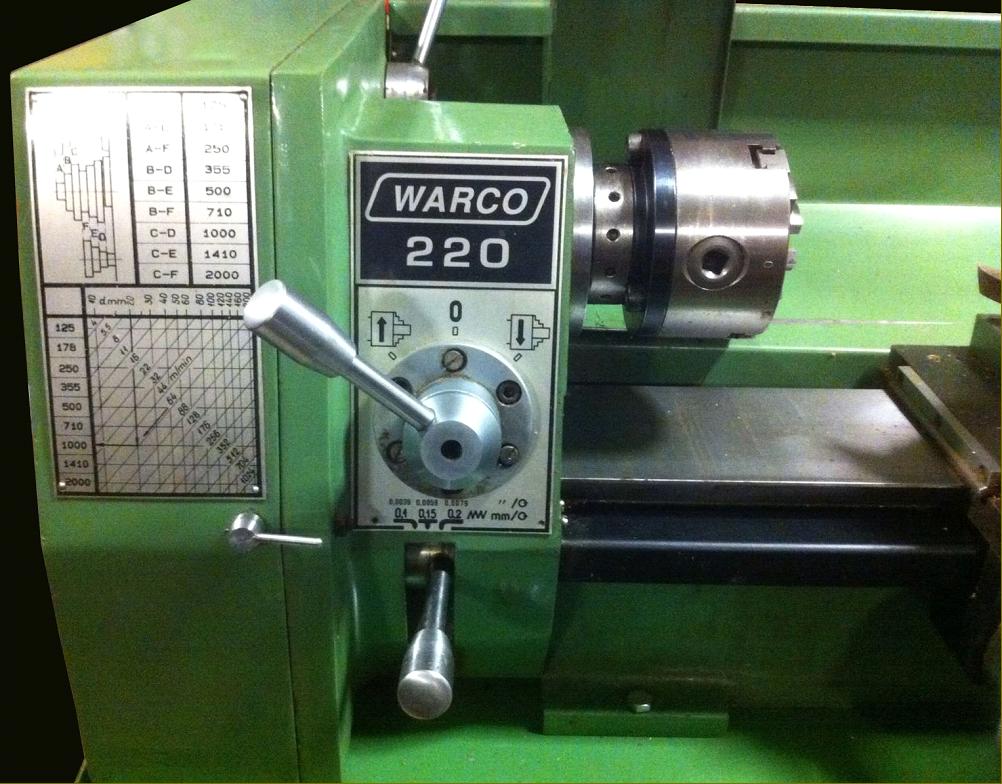
Although late models were supplied with variable-speed drive, earlier types were driven by a miniature "Gates" V-belts (as used on the Emco Compact 8) running over two sets of pulleys (both belts slackened and tightened by a single lever, so speeding up changes) to give nine spindle speeds from a rather fast bottom of 125 to a useful maximum of 2000 r.p.m. As the final drive pulley on all types was mounted outboard of the left-hand spindle bearings, this allowed the headstock casting to be formed as a very rigid, enclosed box. Bored through to clear 21 mm (3/4") and with No. 3 Morse taper nose, the spindle rotated on sealed roller-bearing. Handily, that section of the spindle inboard of the end was drilled with a ring of indexing holes engaged by a spring-loaded detent lever. Unfortunately the method of mounting chucks and faceplates (though very safe at high speed in reverse) was agonisingly slow with six screws having to be released each time a change was made.
Screwcutting was by changewheels only - there being no option ever listed of a screwcutting gearbox - with gears provided to generate 23 metric pitches from 0.4 to 12 mm, 29 inch from 3 to 72 t.p.i. and 15 Module from 0.2 to 2.5. For each setting of the changewheels the operator can select three sliding feeds, a useful facility that allowed jobs to be completed not only more quickly but also to a better standard. Drive to the permanently-engaged leadscrew was unusual; for normal turning the changewheels were disengaged and a friction drive employed, engaged by depressing a lever and moving it sideways to align with a feed-rate mark. When screwcutting the lack of clasp nuts or a dog clutch to the leadscrew meant that at the end of every pass the cutting tool had to be withdrawn from the workpiece and the motor reversed to bring the saddle back to the starting point. Although an inconvenience, at least this method meant that errors in re-engaging the leadscrew were entirely avoided.
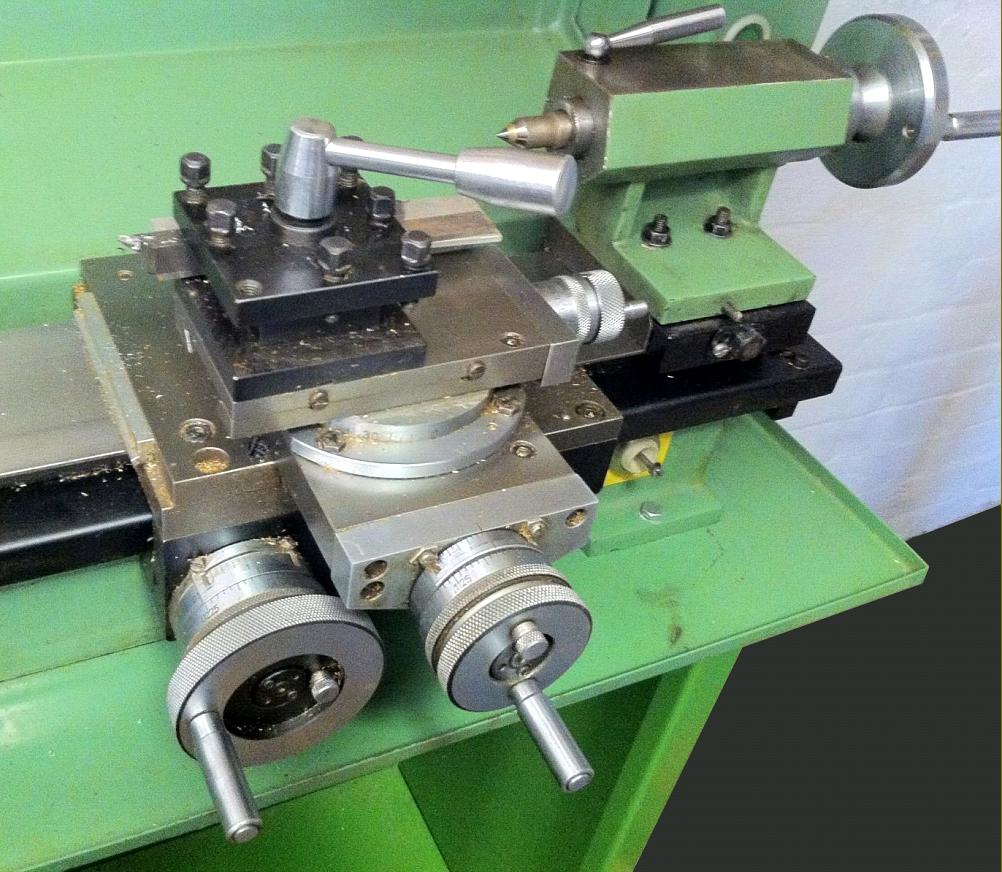
On the Warco version, the 100 mm (4-inch) travel cross slide featured a beautifully constructed and clearly engraved dual inch/metric micrometer dial - as did the carriage-drive handwheel - both being fitted with through-the-face locking screws ensured no loss or change of position as they were tightened. Top and cross-slide, tailstock and carriage handwheels were all fitted with handles the outer part of which was able to rotate, comfortably, around its stem. Instead of dual dials some machines (badged as the maker's own and obviously intended for the European market) were supplied with feed screws marked with just metric graduations.
Able to be set over to turn slight tapers, the tailstock carries a 30 mm (1.2") diameter, No. 2 Morse taper spindle with a stroke of 60 mm (2.4")..
|
|