|
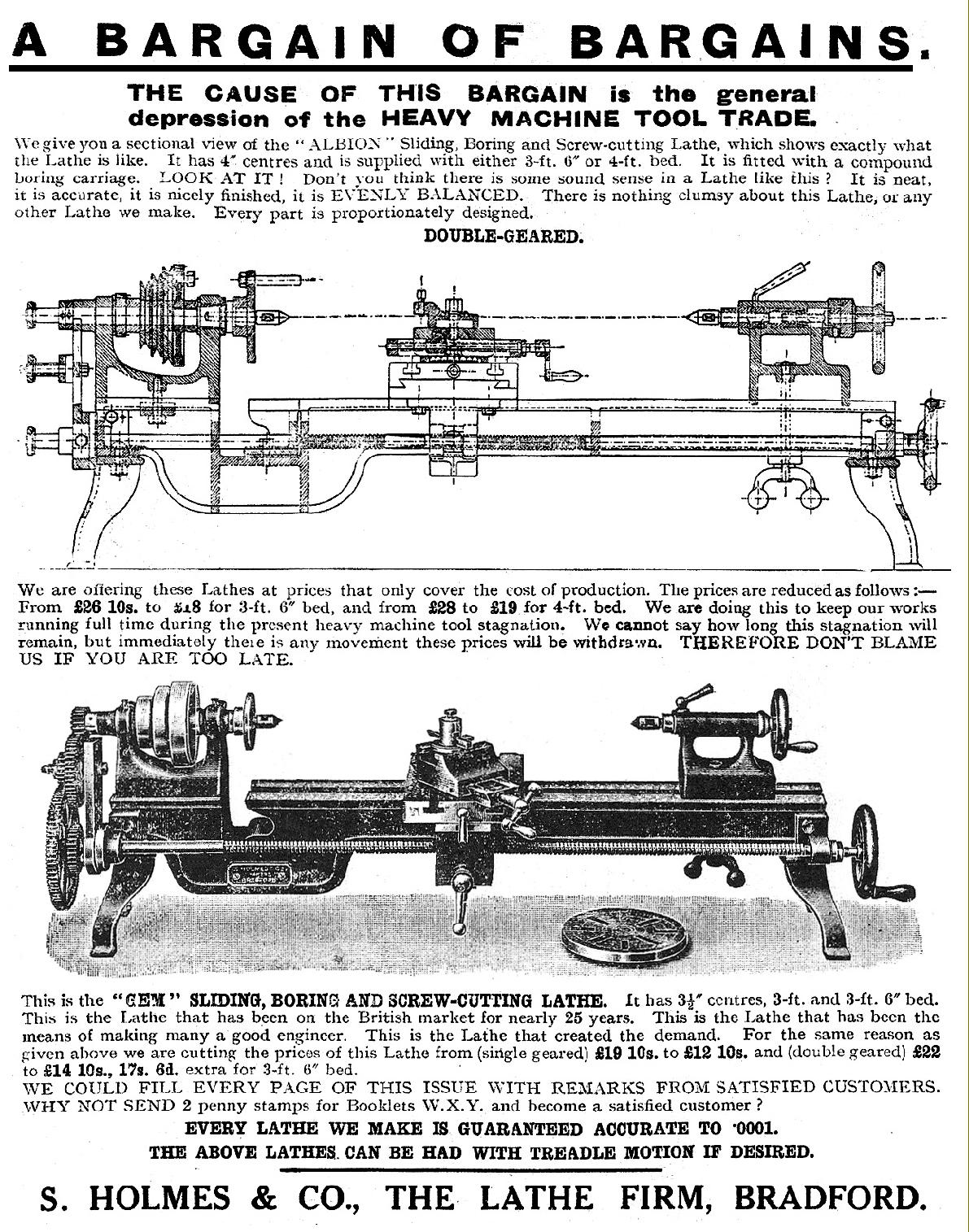
Built, it is believed, until the late 1920s, Holmes lathes were manufactured by S. Holmes & Co. a Bradford-based firm (distinct from the much larger concern, Henry Holmes, of Halifax) who were also involved in making a wide range of universal and twist-drill grinders. Post Great War (1914--1918) advertisements placed during the early 1920s made a claim that "...over 18,00 lathes. What a gigantic number! " had been made before 1914 with many, during the ensuing war, being fitted to ships or "used for more delicate tasks on range-finder and surgical instrument parts."
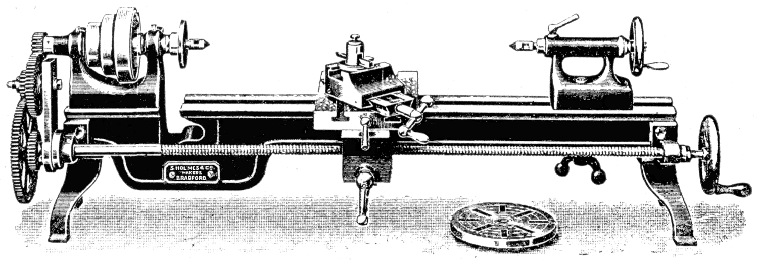
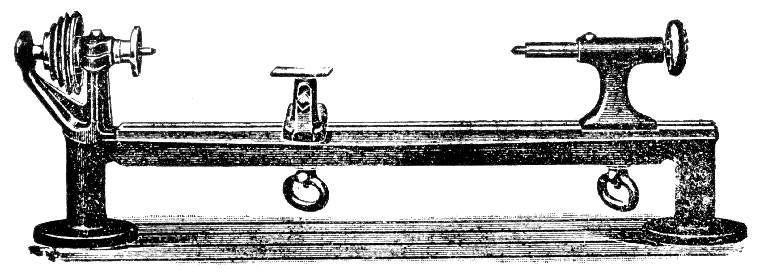
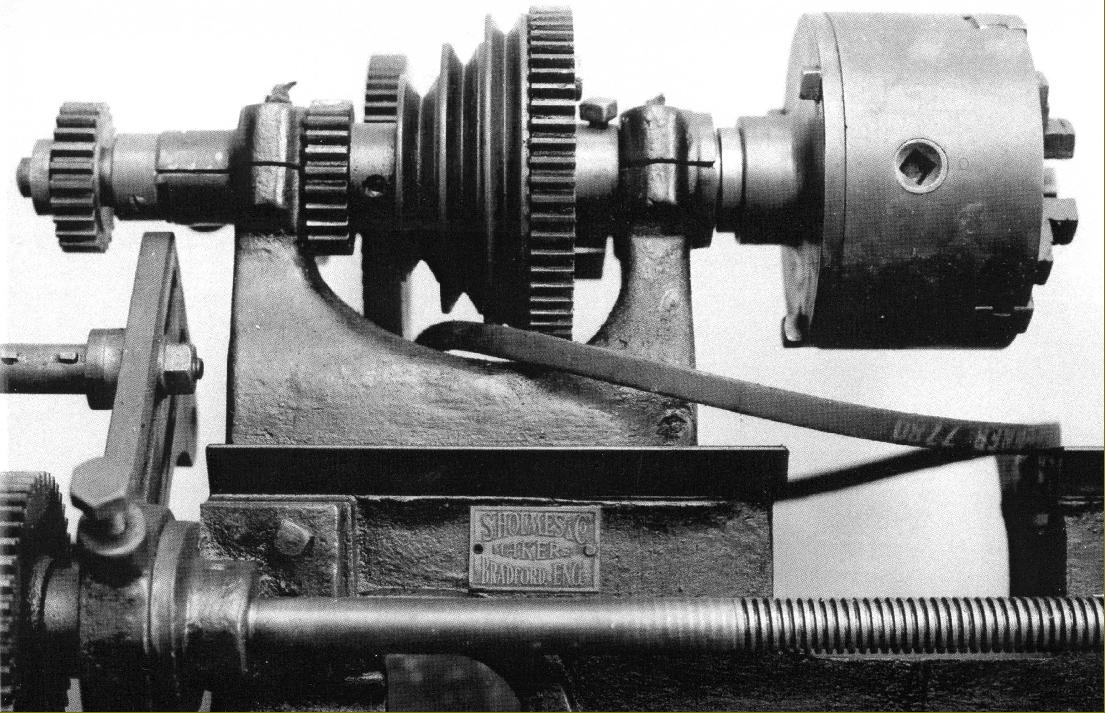
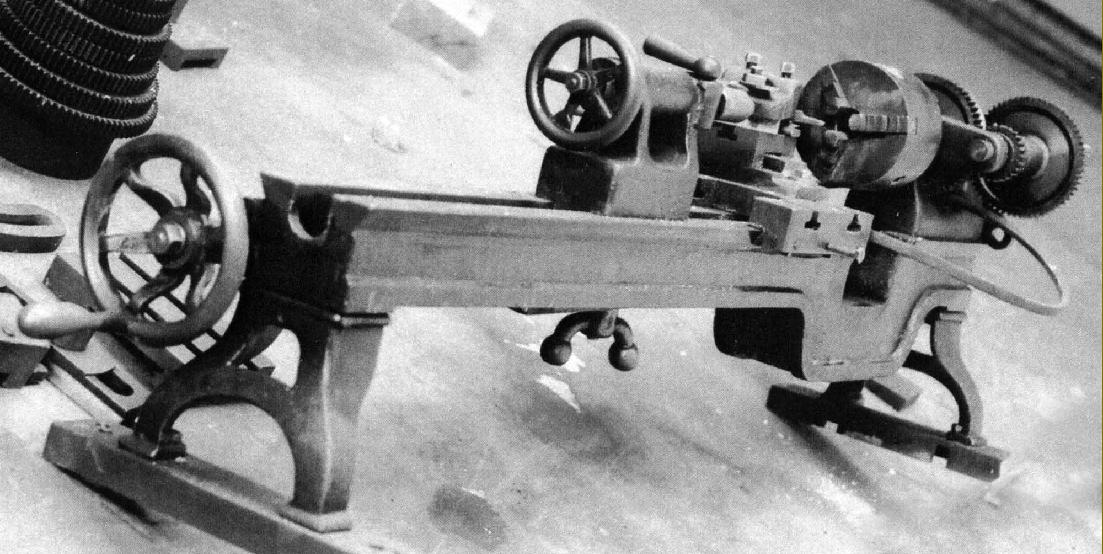
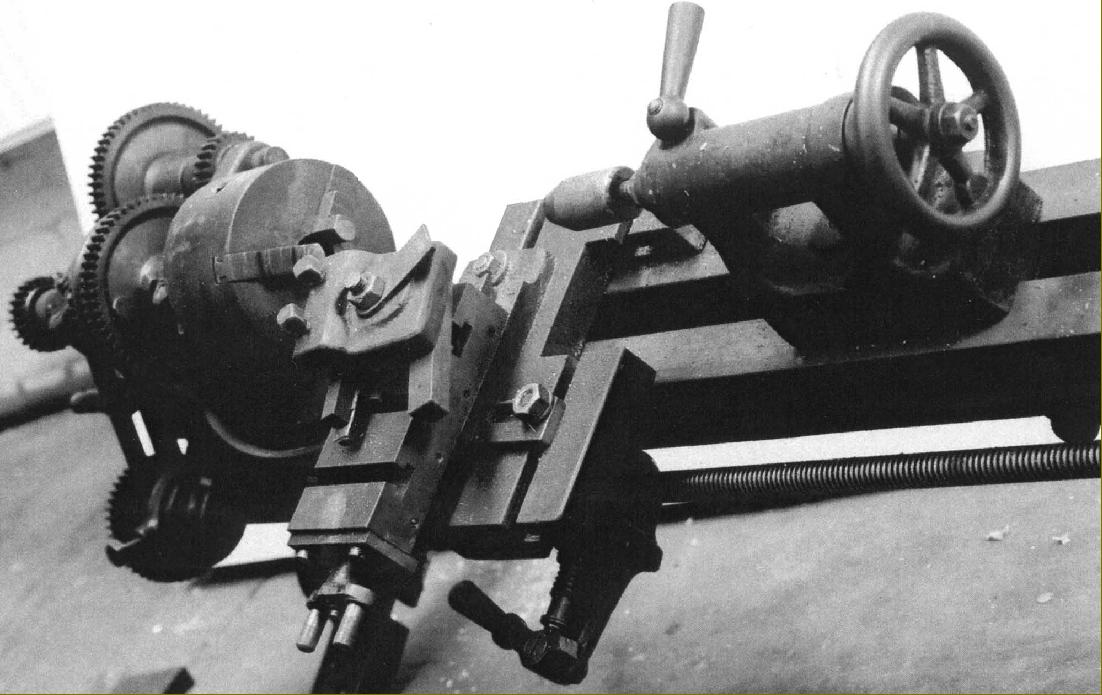
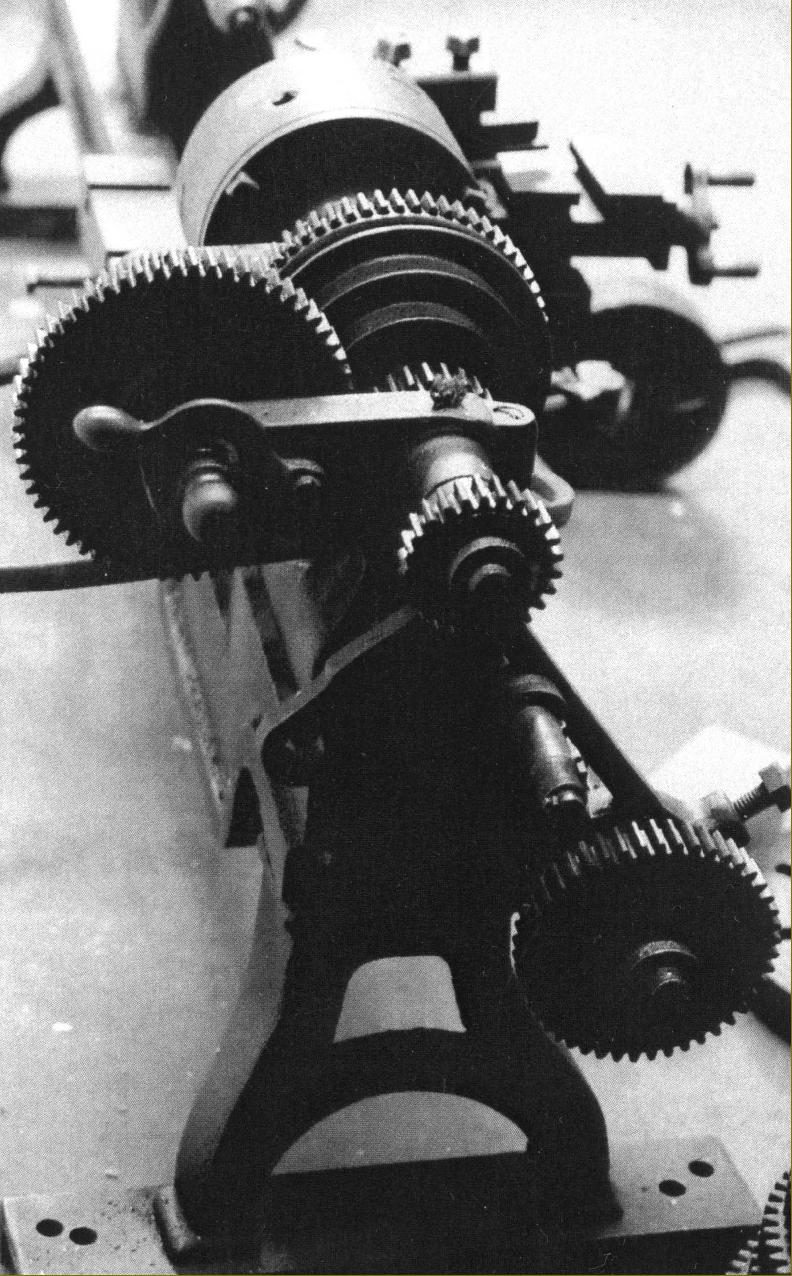
Holmes concentrated on smaller lathes and, in their backgeared and screwcutting range, included the "Gem", a lightly-constructed, 3.5" x 20" gap-bed machine of utterly conventional design with a hollow spindle running in adjustable tapered bronze bearings. Although produced into the 1920s, the machine dated back to 1897, and possibly earlier, with the company claiming: "It is in every corner of the Globe. It has stood the world's markets for 25 years." - this confirmed by examples being found in Australia, New Zealand, India and Canada. Its design era may be judged from the pictures below, where the tailstock is retained by a ball-ended handle beneath the bed (a feature continued on precision bench lathes for many years after 1900, but on few ordinary ones) - and the use of square-headed bolts. Another long-advertised Holmes lathe was the 3" x 18" plain-turning "Junior", yet another simple model for the amateur that had first seen the light of day in the closing years of the previous century. Looking remarkably like the mass-produced American Goodell-Pratt (which may have provided the inspiration) it was still being offered by Holmes at the 1922 Model Engineer Exhibition (staged at the Royal Horticulture Halls, London) at a discounted £2 : 5s : 0d - the usual price being £3 :10s : 0d.
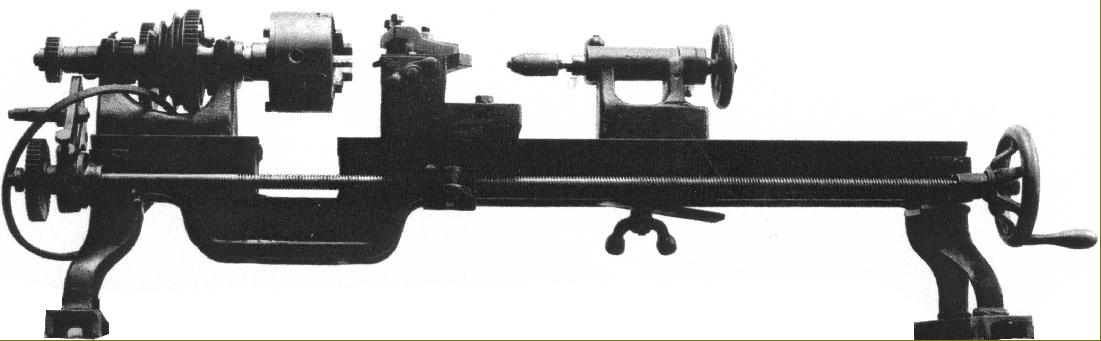
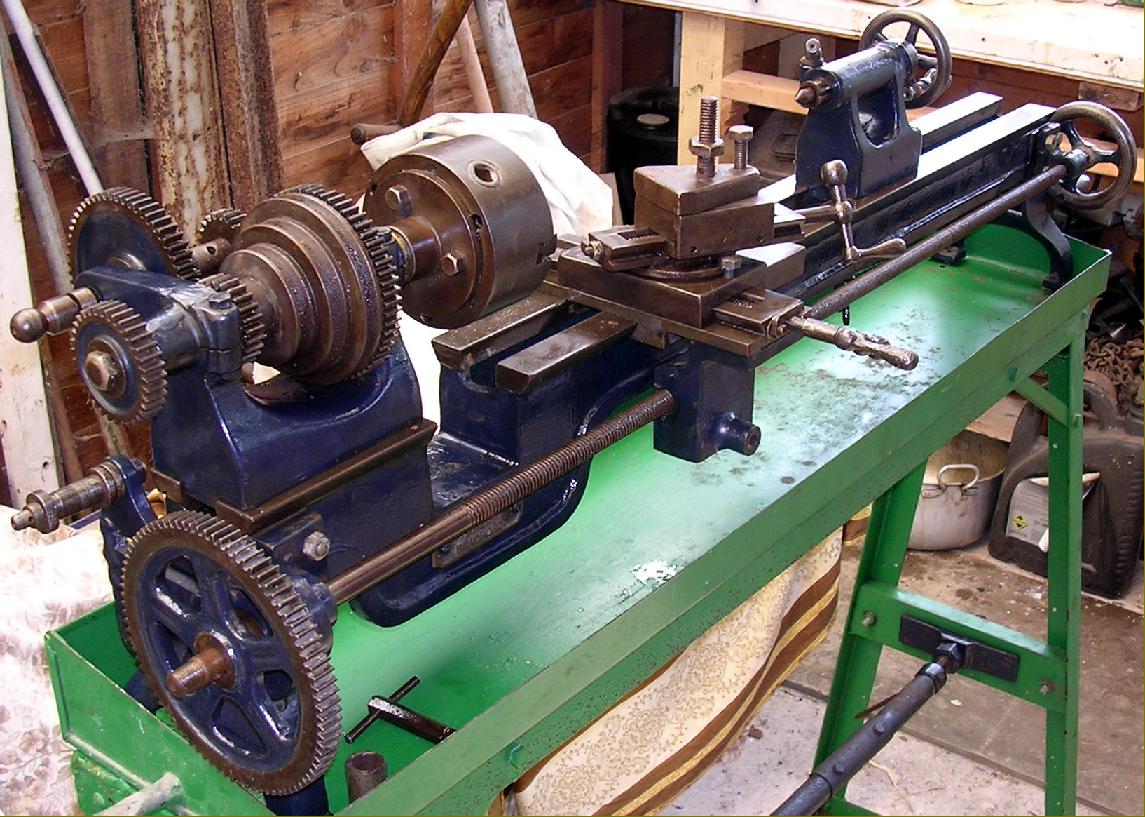
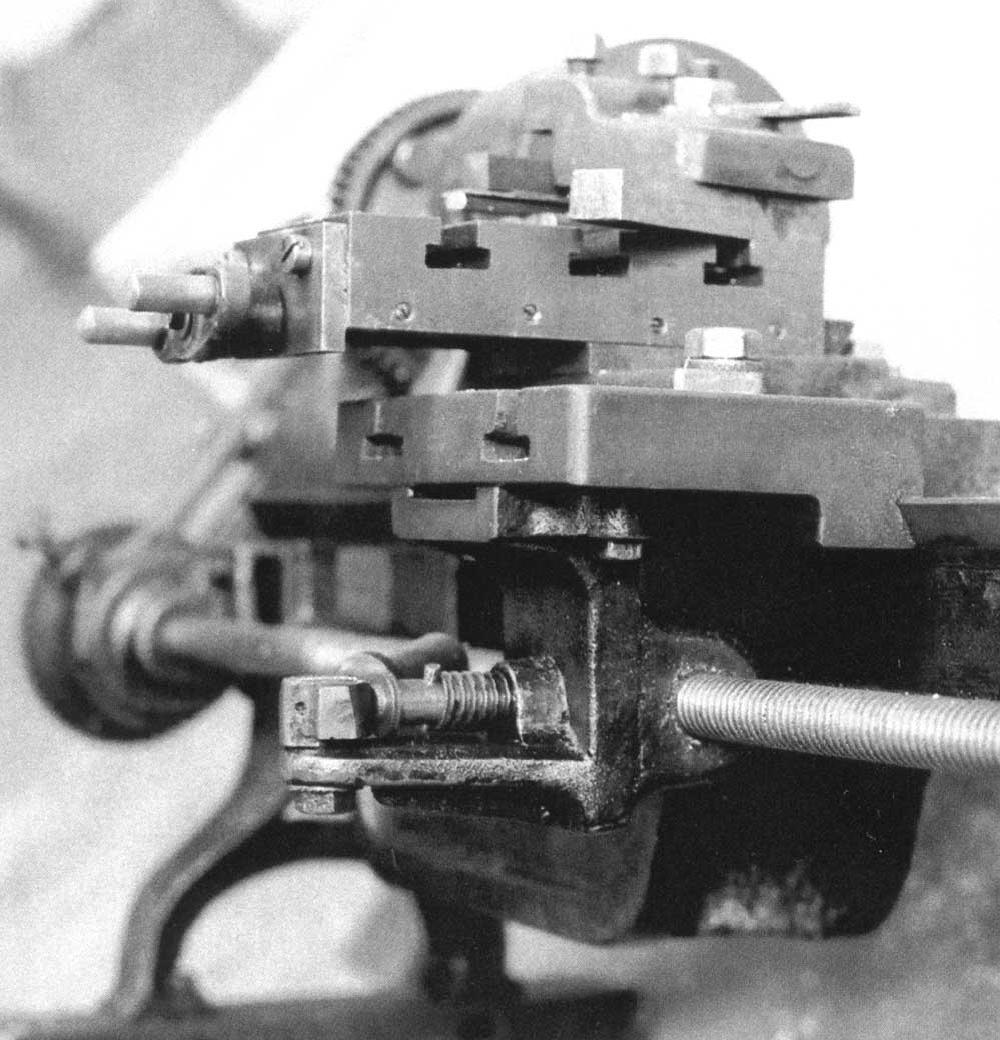
One of the better and later Holmes lathes was probably the largest produced, the 4" x 24" backgeared, screwcutting and gap-bed "Albion". This appears to have been more often sold complete on a treadle stand and fitted with flat rather then round-belt drive to the headstock. Some care had been taken to make the lathe was versatile as possible with the fitting of a large (non-traversing) T-slotted boring table that was topped by a tool-slide with a reasonably long travel. The arrangement allowed a considerable degree of versatility with the tool slide pivoting on a base secured to the boring table by two bolts that could be secured in either T-slot. Hence, the slide could be easily positioned for turning or facing work or angled to machine awkwardly-shaped components. If your P & M Panther needed a rebore before the family holiday by sidecar to Filey, strapping its cylinder down to the boring table using a suitably-shaped piece of wood allowed the job to proceed.
One feature common to screwcutting Holmes lathes (and a useful identification feature if no badge is fitted) was the way of mounting the leadscrew half-nut - this being carried in an extension to a very perfunctory apron and pushed into engagement by a shaft acted upon by some form of eccentric turned by a handle or full-circle wheel.
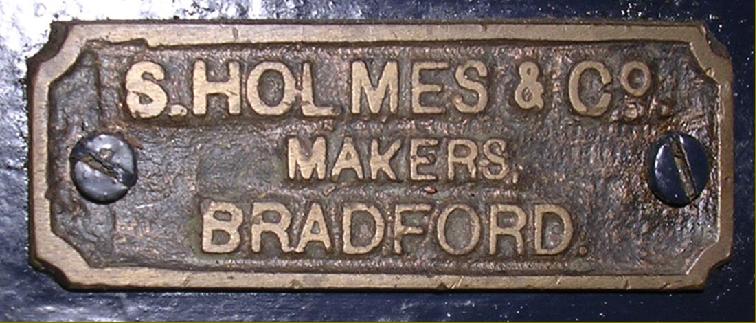
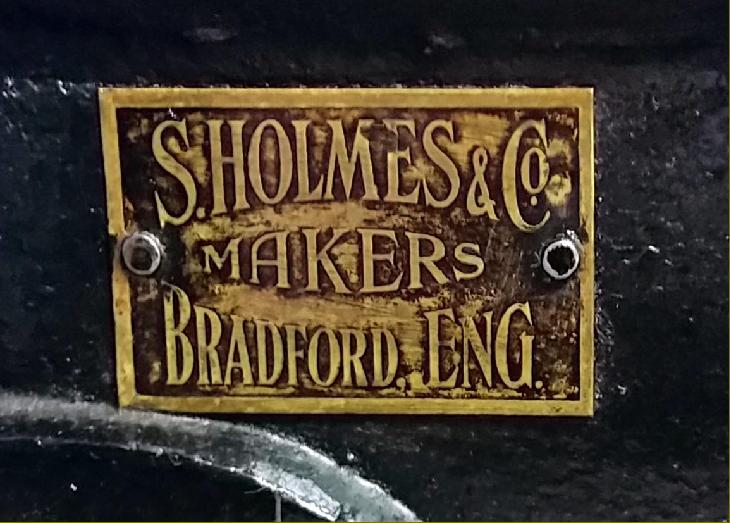
Unlike many makers, who seemed either remarkably sensitive about revealing their identity - or failed to realise the opportunity for providing spares and accessories - Holmes were proud of their machines and adorned them with a neat badge in cast bronze.
If you have a lathe by S. Holmes, the writer would be interested to hear from you..
|
|