|
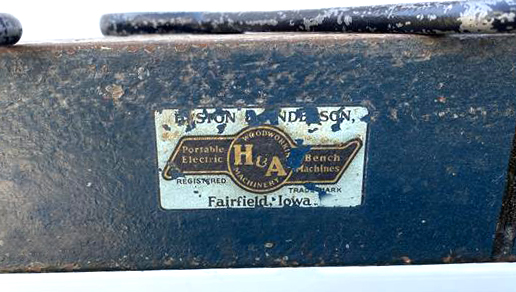
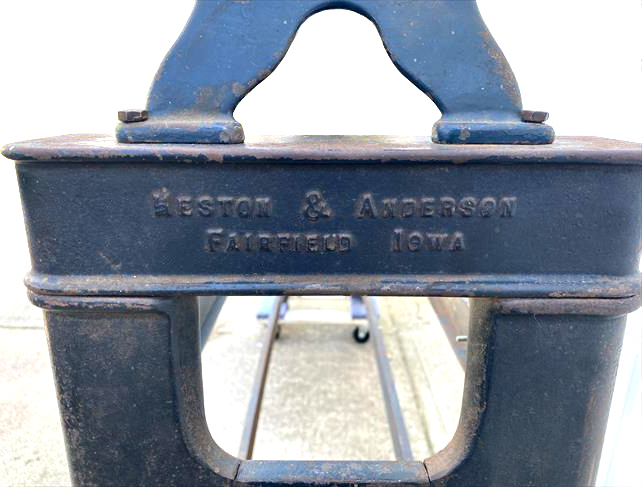
The Heston & Anderson Company was based in Fairfield, Iowa, U.S.A. and originally known for band and table saws. The company was developed, on a part-time basis, from 1915 to 1924 by a partnership of L.R.Heston, a draftsman and designer, and A.L.Anderson, a pattern and tool maker. The two men opened their first factory in 1925 and quickly built up a line of what was to become a range of popular woodworking machines aimed at light-duty professional use and the serious end of the amateur market.
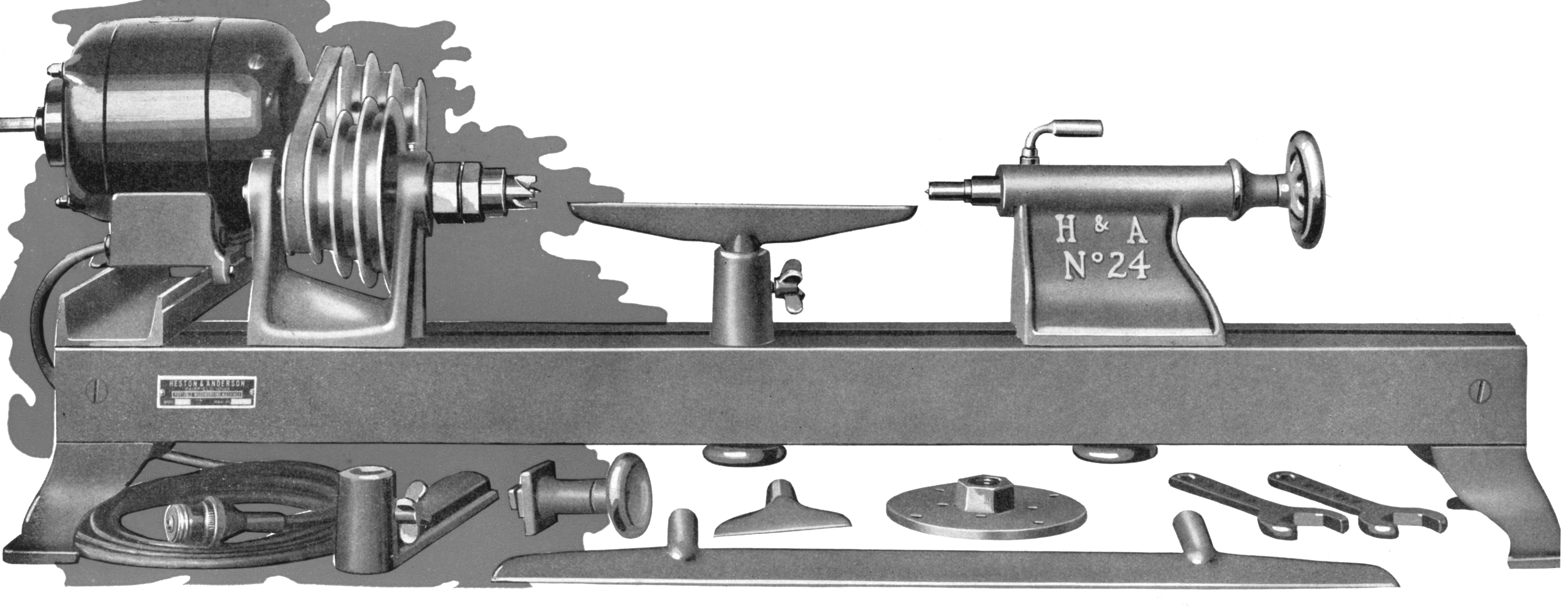
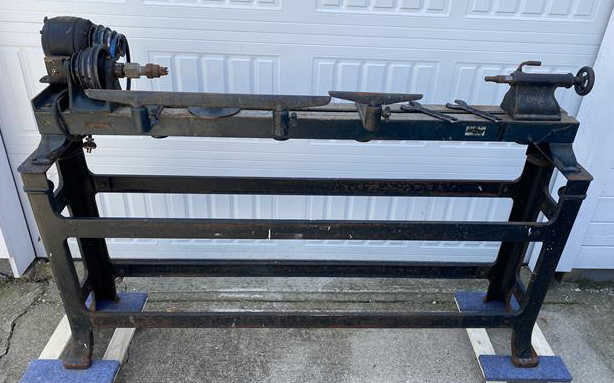
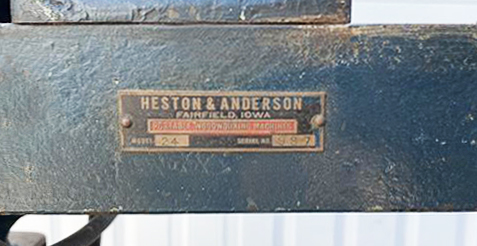
Of simple construction, their No. 24 lathe had a bed built from quarter-inch thick steel mounted on cast-iron feet and fitted with a strong headstock - its spindle running in double-sealed ball races by the New Departure Company. Bored through hollow (many cheap wood lathes of the time were solid) the spindle carried a No. 2 Morse taper nose and a 4-step V-belt pulley.
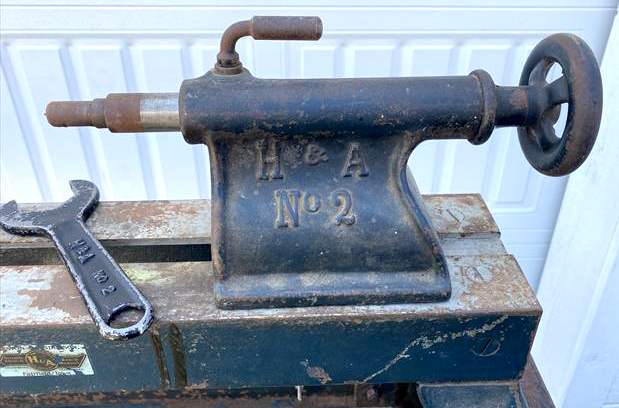
Permanently fixed handwheels locked the swivelling tool-rest base and No. 2 Morse taper tailstock to the bed - while extra-long through-bolts were used to attach the headstock in the expectation that the user might want to: "...raise it on hardwood blocks" - presumably for a spot of 25-inch diameter bowl turning….
The bed could be ordered in any length, an extra foot costing one dollar and adding added 10 lbs to the weight. Standard equipment included 4-inch and 10-inch cast-iron tool rests, ( a 24" rest was an optional extra) one tool-rest base, a 6-inch faceplate, spur and pointed centres, a V-belt, two spindle-adjusting spanners and a cross beam to act as a motor support - the motor itself being extra, of course
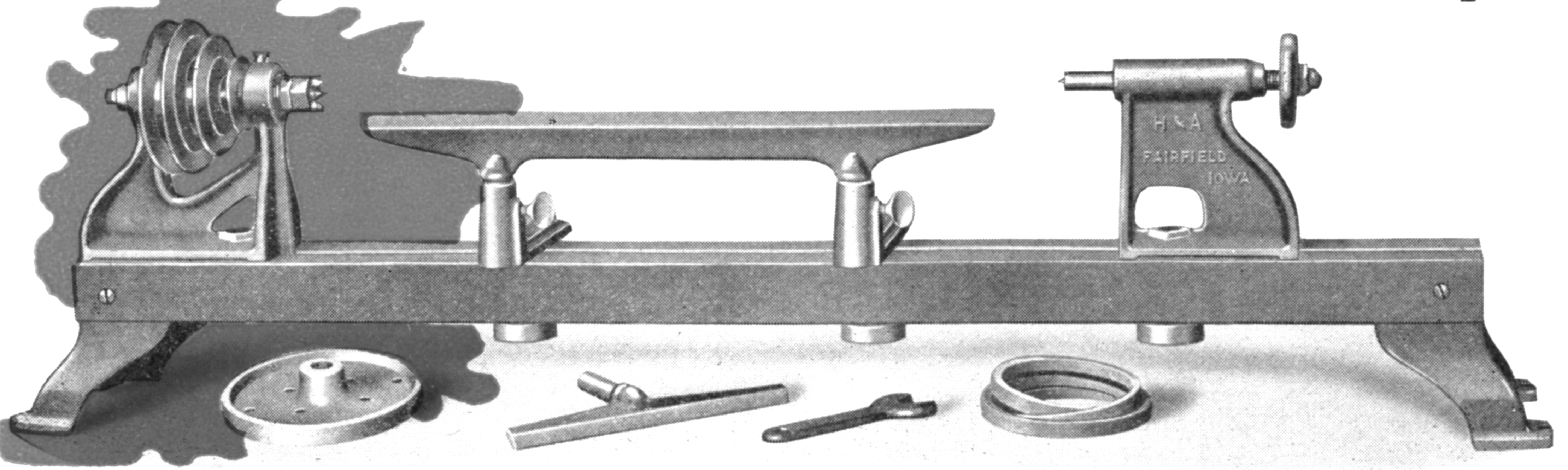
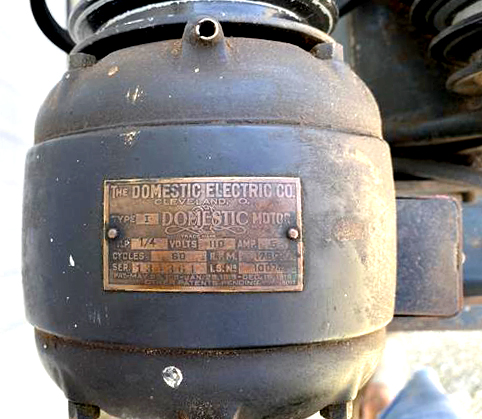
Also offered was a very much lighter lathe, the Model 100. This was constructed as economically as possible, through happily the headstock eschewed plain bearings in favour of New Departure sealed-ball races and was fitted with a 3-step V pulley. However, the spindle was just 1/2" in diameter, not bored through and, with no taper in the nose, could only take screw-on wood-drive centres. Built in a similar, cheap-to-produce way, the tailstock spindle was also solid with screw-on fittings and a plain handwheel. Driven directly from an 1800 r.p.m. motor, the makers stated that spindle speeds of 900, 1800 and 3600 rpm would be obtained.
Constructed from 3/16" thick steel plate, the bed of the Model 100 was just 11/2" wide and 11/2" deep. As with the larger model, any length could be ordered, an extra foot cost 75 cents - each adding 4 lbs to the standard machine's weight of 32 lbs.
Decently made in cast iron, the tool rests were fitted to swivelling bases with thumb screws to lock the chosen setting. As part of the standard equipment two tool-rest bases were supplied, these having 8-inch and 16-inch rests. The faceplate was in cast iron and provided with holes to attach work with wood screws. The tailstock centre was formed as part of the 1.25-inch travel barrel - an economical idea though not one destined for long life.
If you have a Heston & Anderson wood lathe, the writer would be delighted to have a set of photographs to include in the Archive..
High resolution files - may take time to open
|
|