|
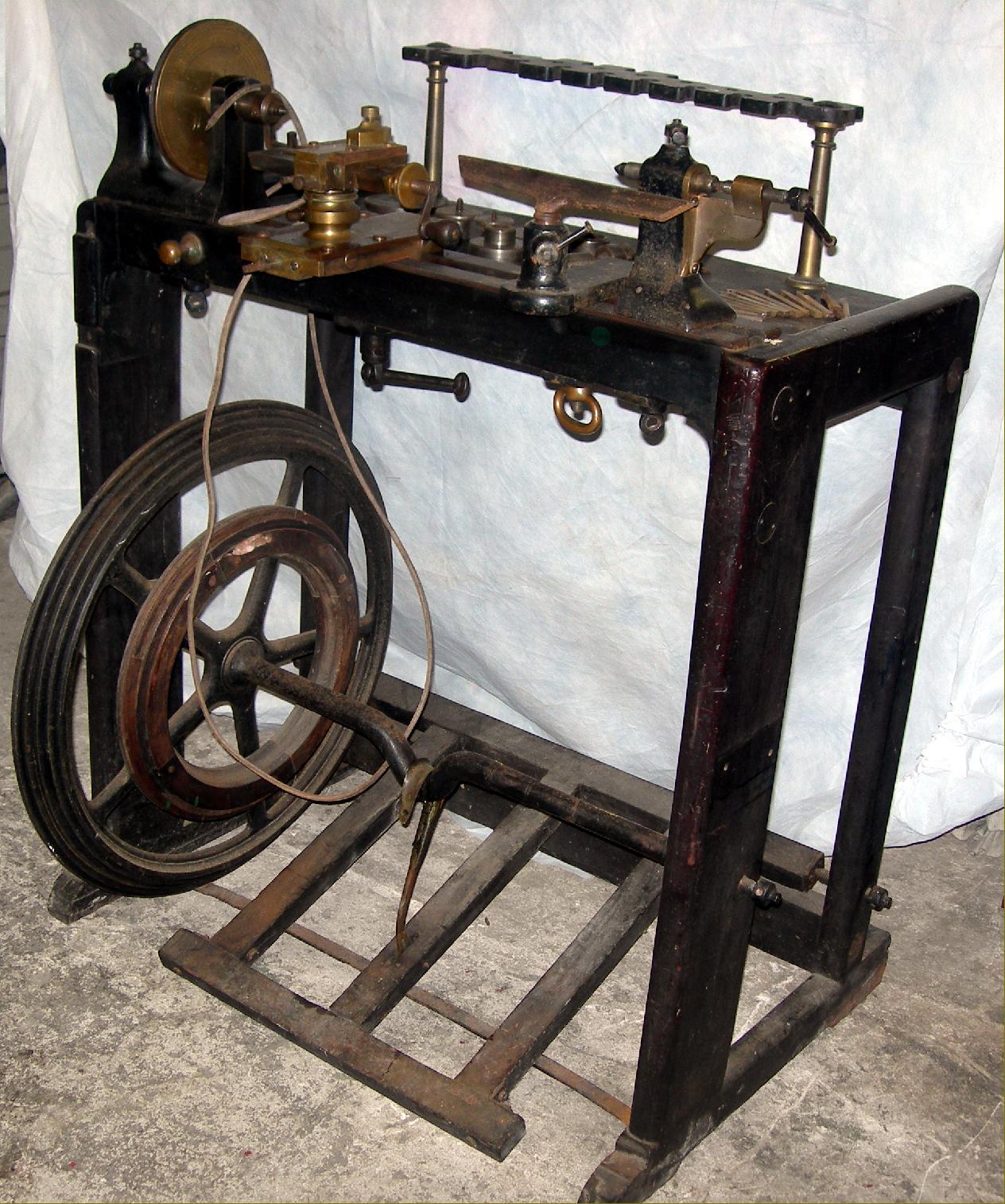
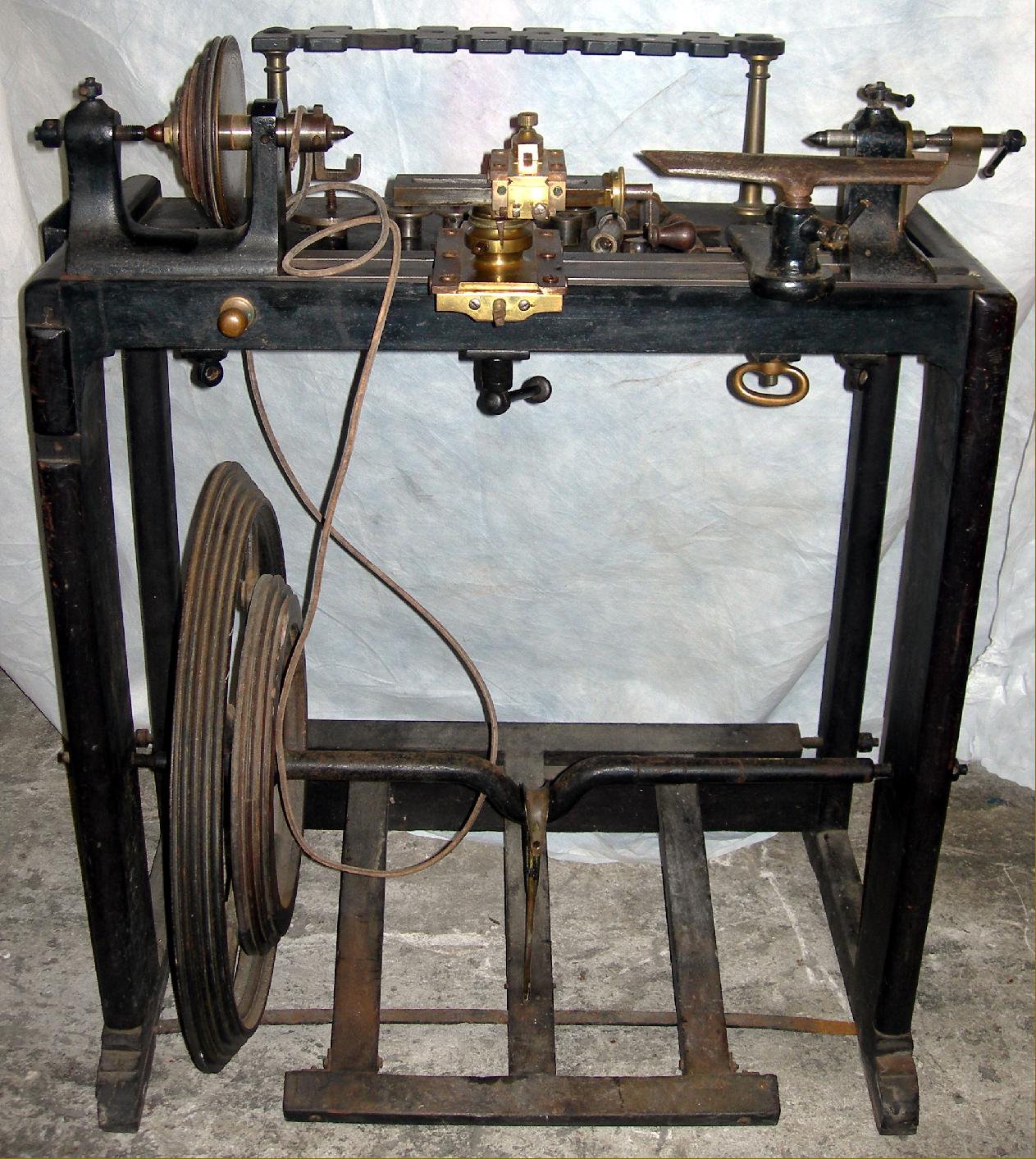
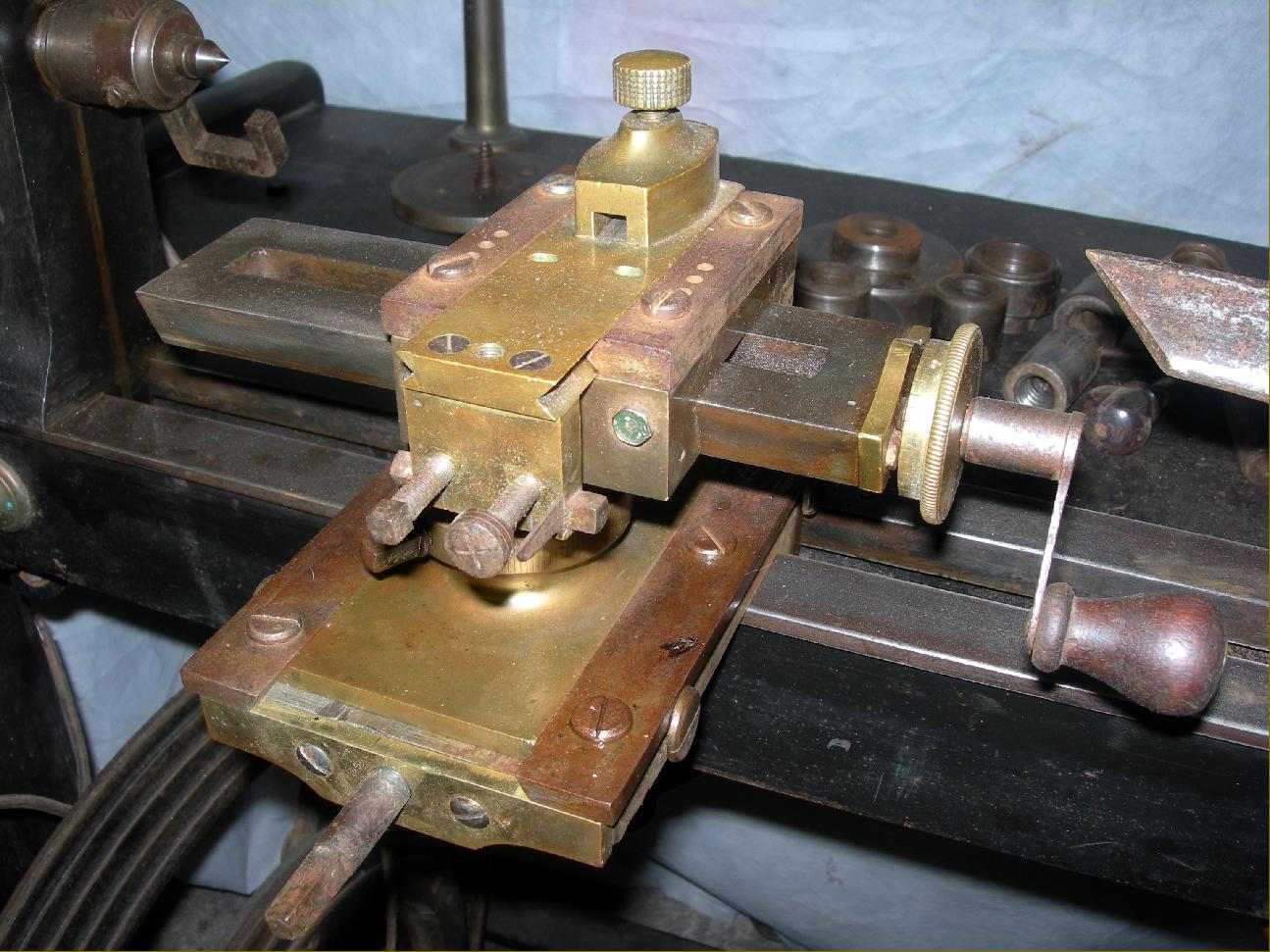
A rare survivor from a time when a lathe of this type was a very expensive proposition, this Hayward was purchased prior to 1830 and taken to Ireland where it remained until 2009. With a 4.75" centre height and 21" between centres it served both as a wood-turning machine and, equipped with an expensive compound slide rest constructed mainly in bronze, as a lathe for ordinary metal wok and (equipped with further accessories) as a machine for ornamental turning).
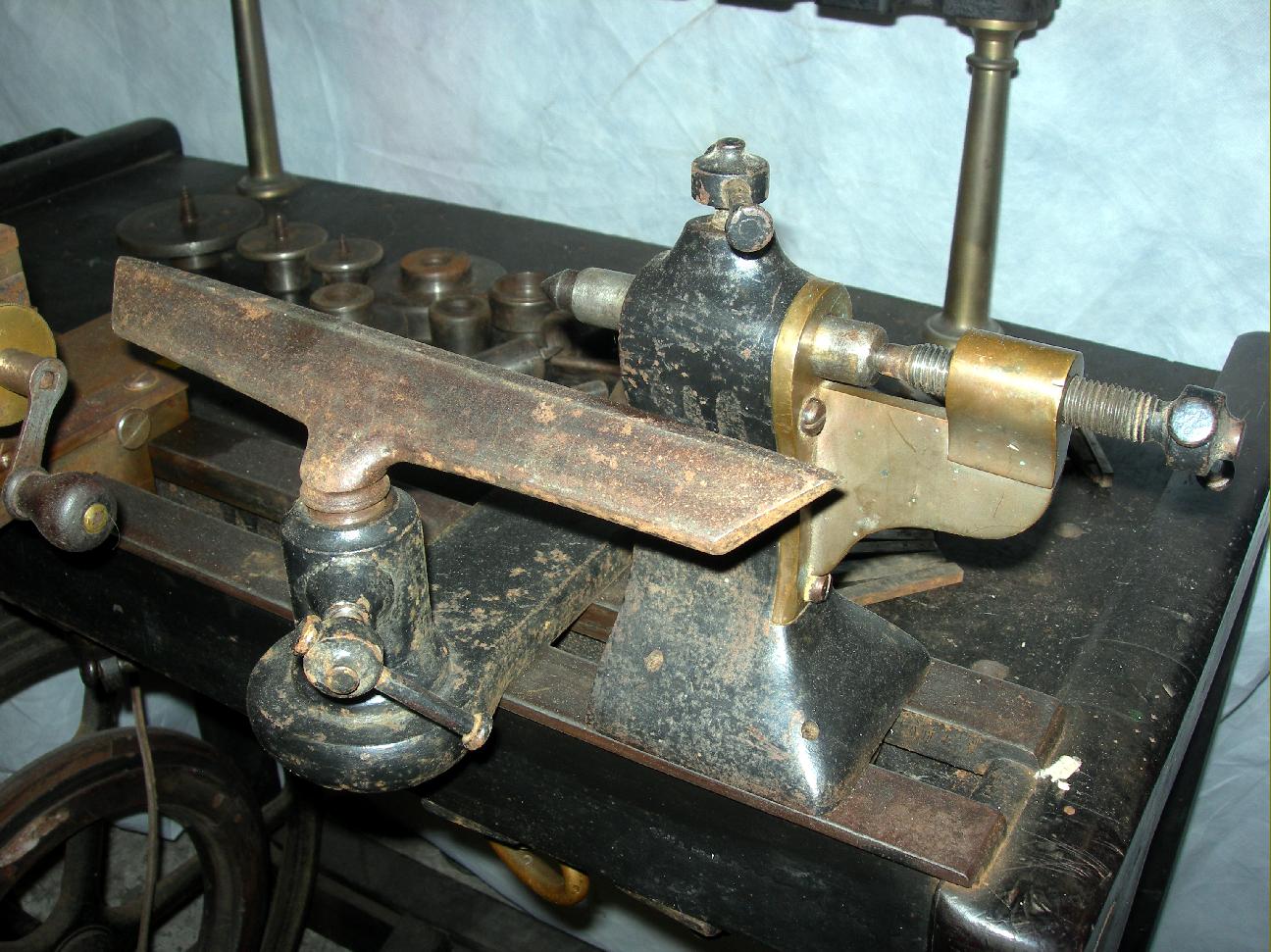
Of an early pattern, the lathe displays an interesting design feature of the time, a mix of materials used where one should have been sufficient. For example, the Holtzapffel-type flywheel had its outer pulley set in cast iron, but the inner in wood, while the tailstock (a very early pattern indeed) used iron for its centre section but bronze for the outer support that carried the centre "pusher screw. Also typical of early contemporary practice - though by this date it was less common - was the fitting of the bed into the front part of a wooden stand. The drive system was supported in simple "point" bearings (and turned very easily) and the treadle gear ofall-wood construction - pointing to Mr. Hayward being expert in both metal and wood-working techniques.
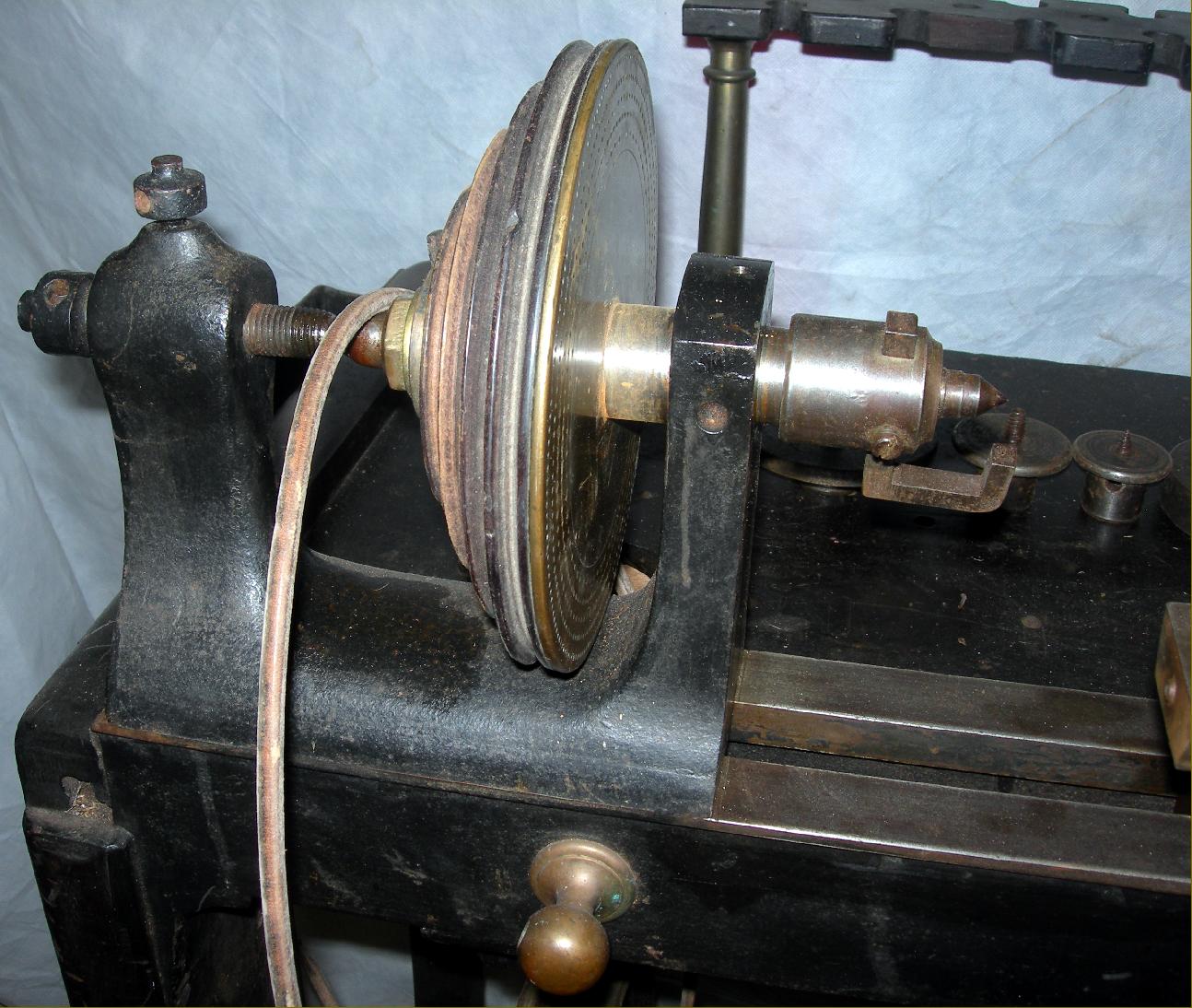
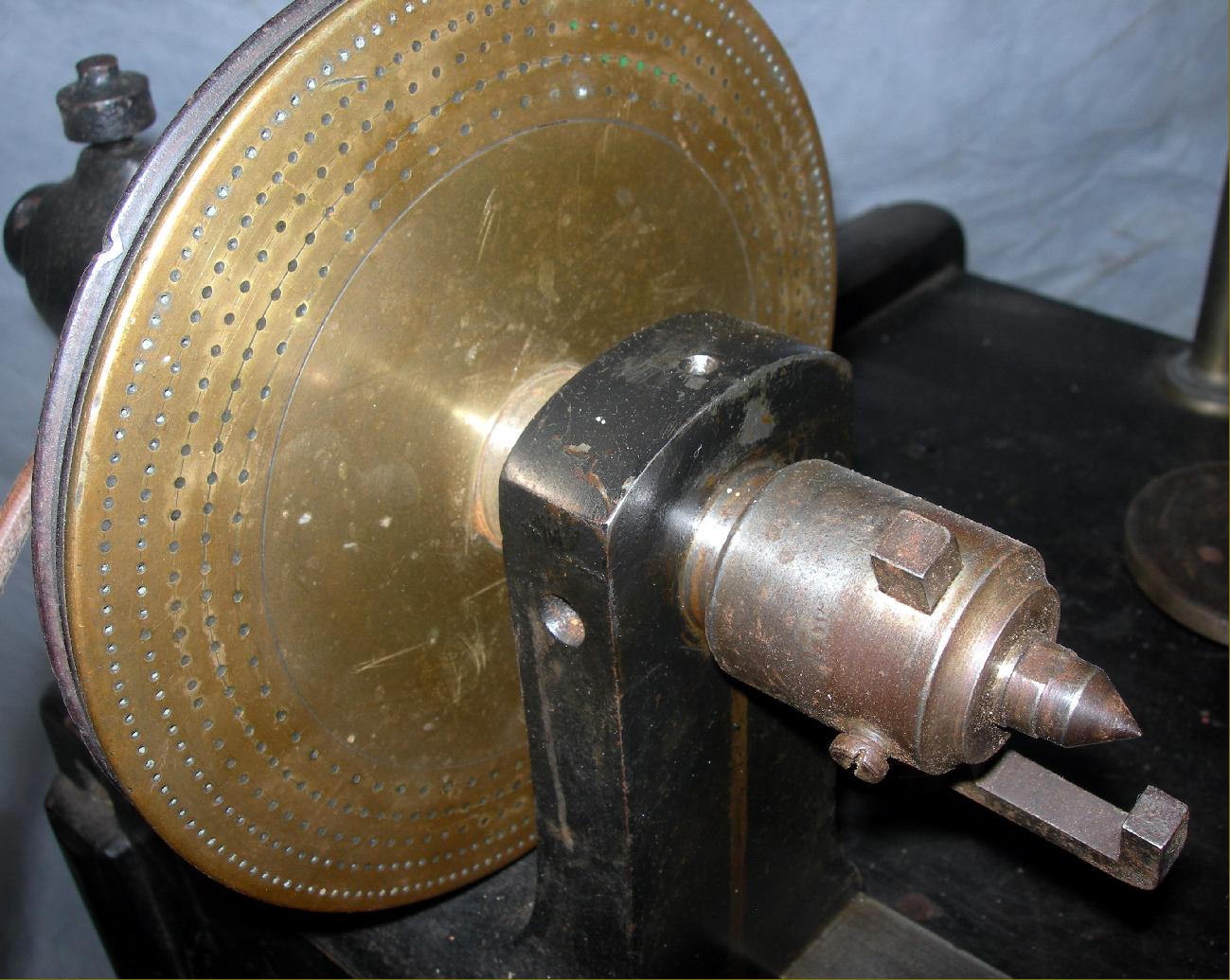
Arranged with a single plain front bearing, the headstock spindle was supported at its left-hand side by another point bearing with a hardened centre. The large-diameter, 4-step headstock pulley took a 1/4" round leather belt and was equipped, on the face of the largest diameter, with four rings of division holes.
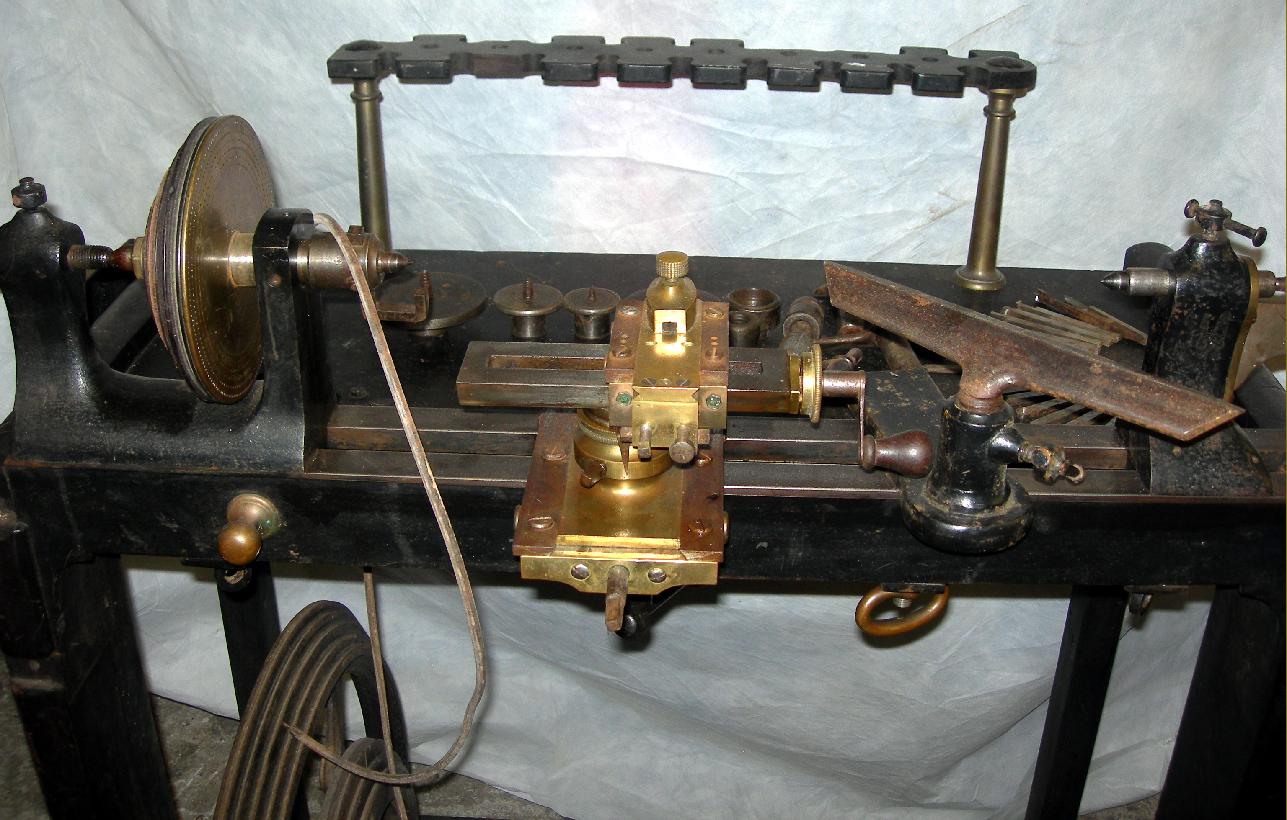
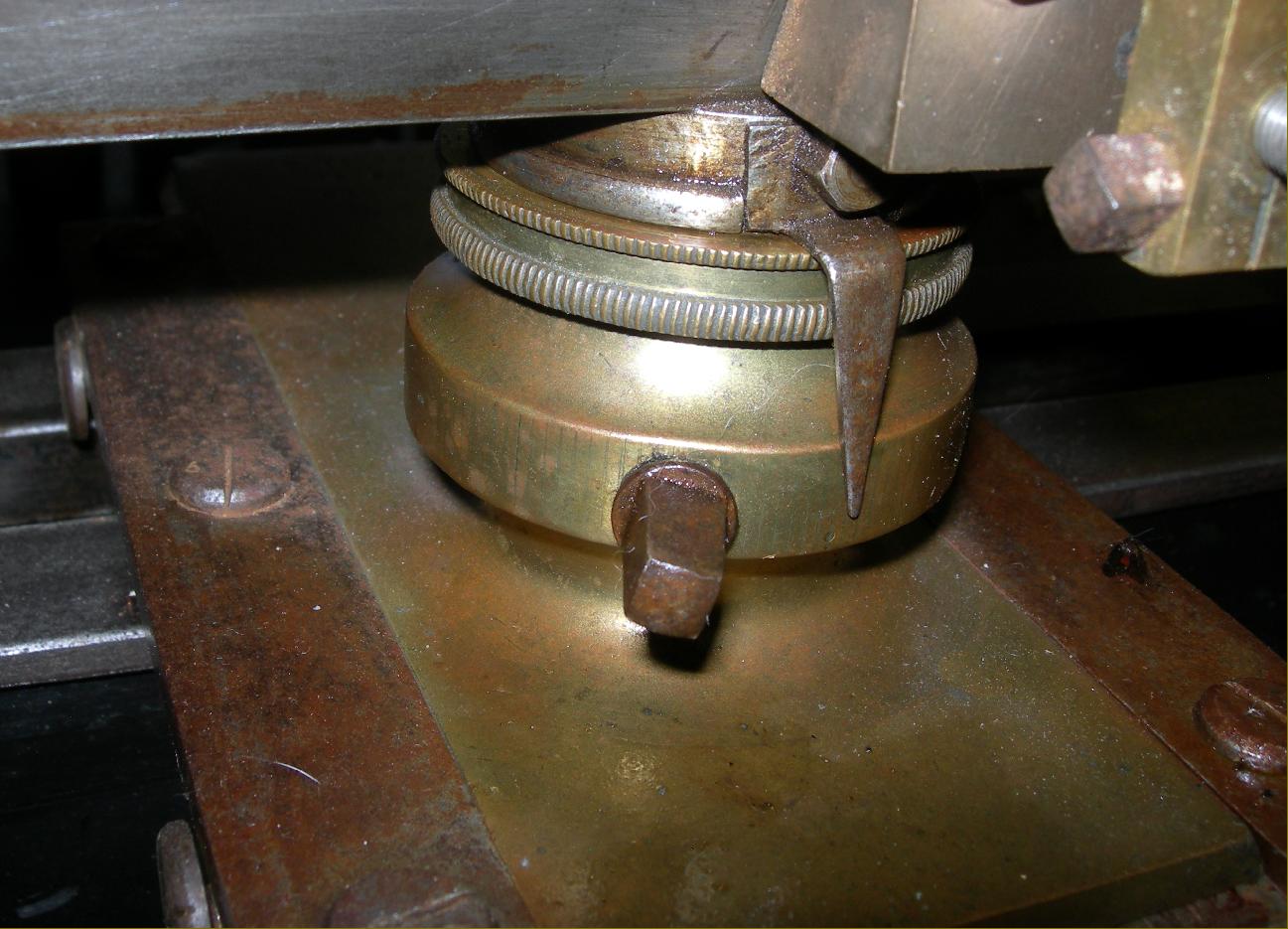
Unusually complex, as were many slide-rests of the time, that fitted to the Hayward was unusual in being a compound type. Instead of fully-machined castings the construction was built-up, with bolt-on plates forming the ways, adjustment being by large- headed side screws that pushed against the edges of the plates to slightly reduced the original hand-fitted clearances.
One notably fine detail was the wooden chisel-storage rack - a length of wood with the necessary cut-outs carried on a pair of bronze uprights fitted to the toolboard at the back of the lathe.
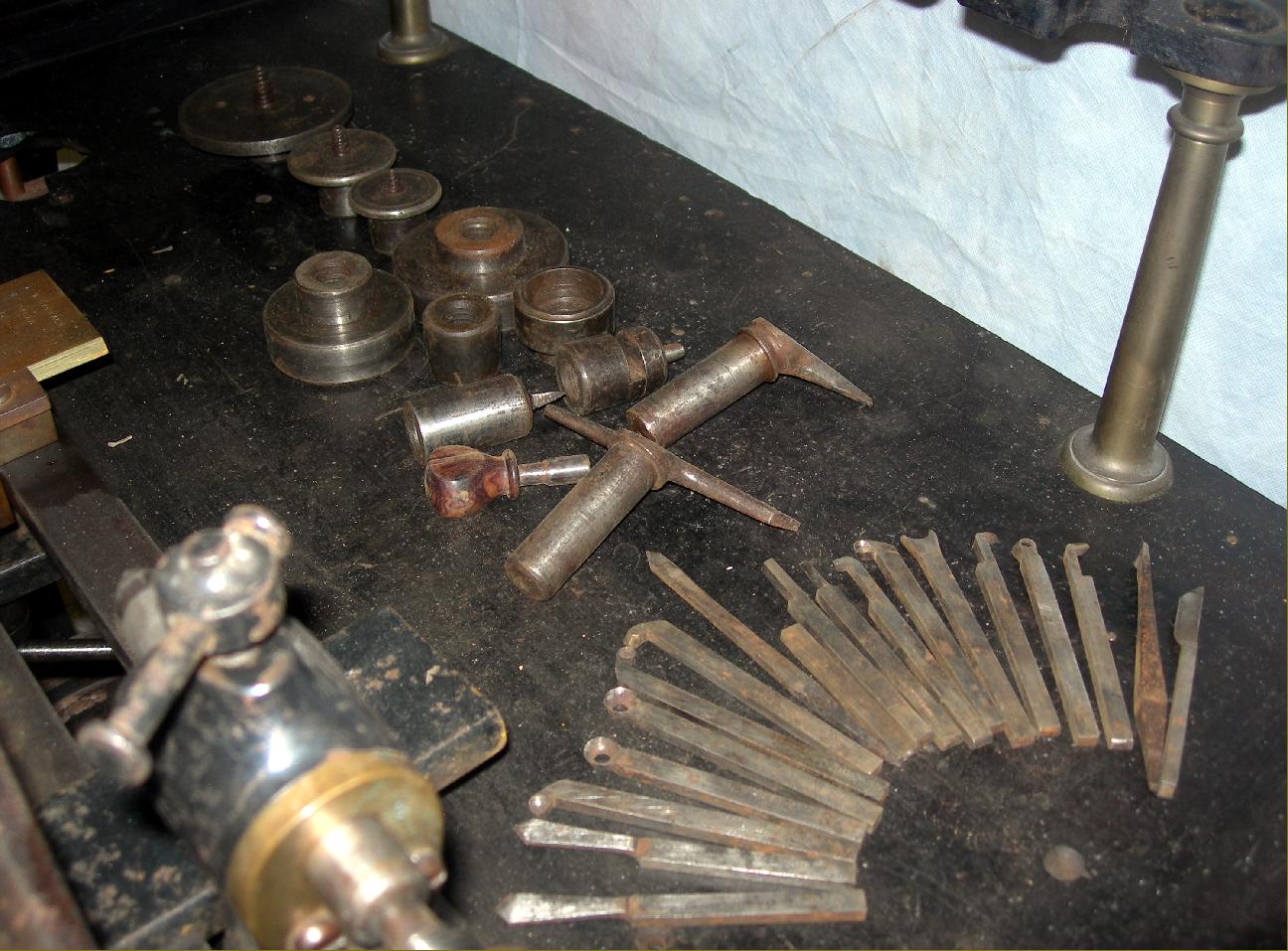
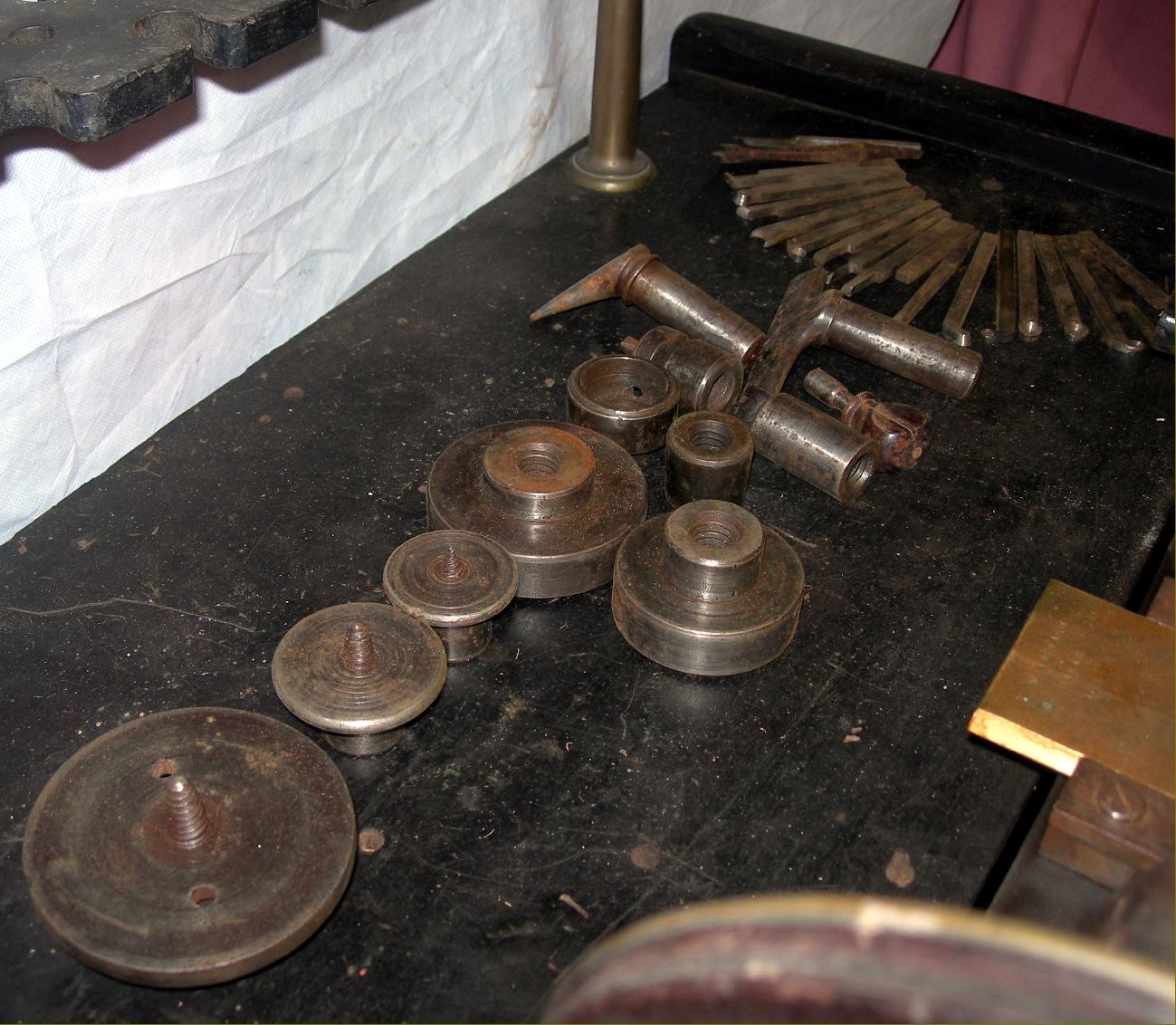
A number or original attachments survived with the lathe including the original wood-turning tool storage bracket at the rear, the original centres, faceplates, wood chucks in steel (these are normally in bronze and the only known ones of their type) - and even, astoundingly, what appears to be the original and complete a set of hand-made metal-turning tools by the lathe maker and stamped "W.H."
|
|