 |
|
|
|
|
|
|
|
|
|
|
|
|
|
|
|
|
|
|
|
|
|
|
|
|
|
|
|
|
|
|
|
|
|
|
|
|
|
|
|
|
|
|
|
|
|
|
|
|
|
|
|
|
|
|
|
|
|
email: tony@lathes.co.uk
Home Machine Tool Archive Machine-tools Sale & Wanted
Machine Tool Manuals Catalogues Belts Books Accessories
J. Emrich Shaper - Germany
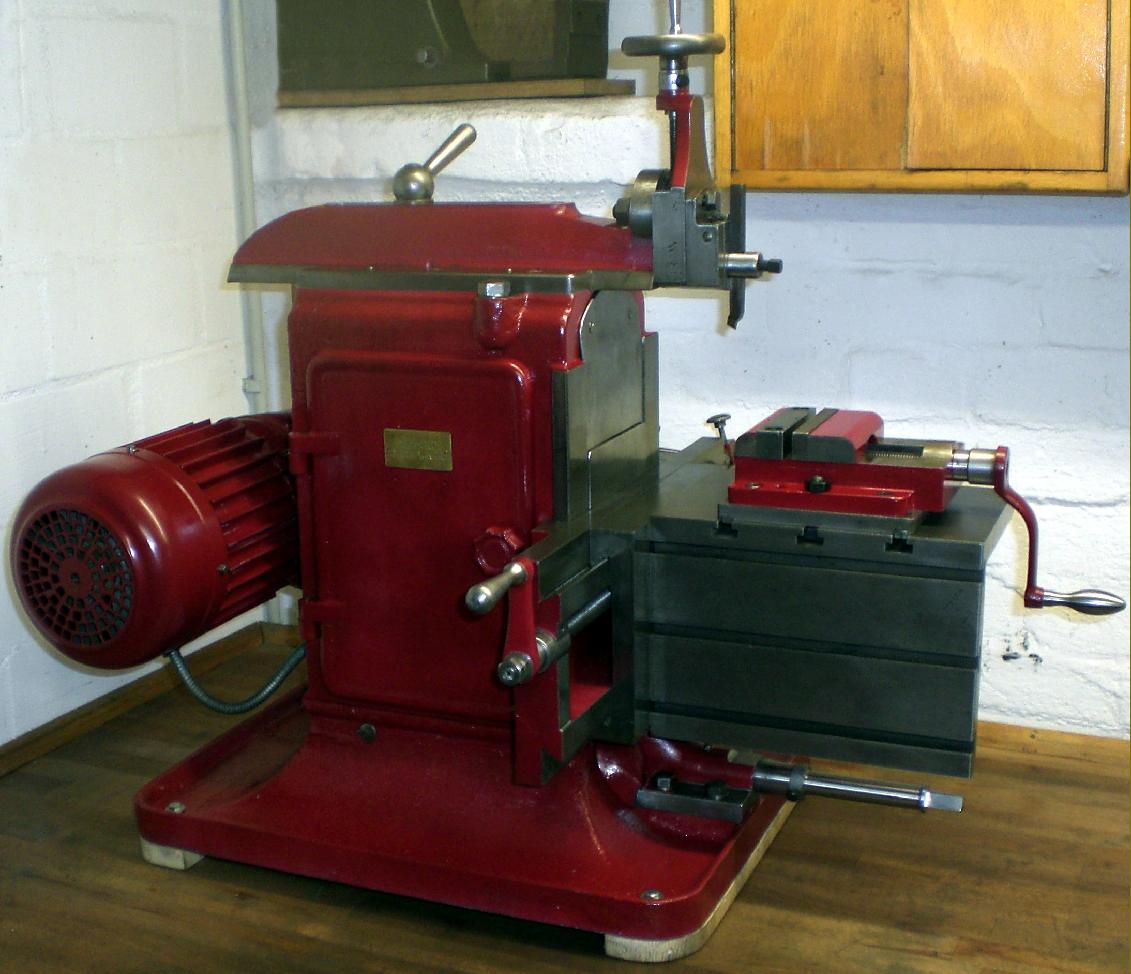
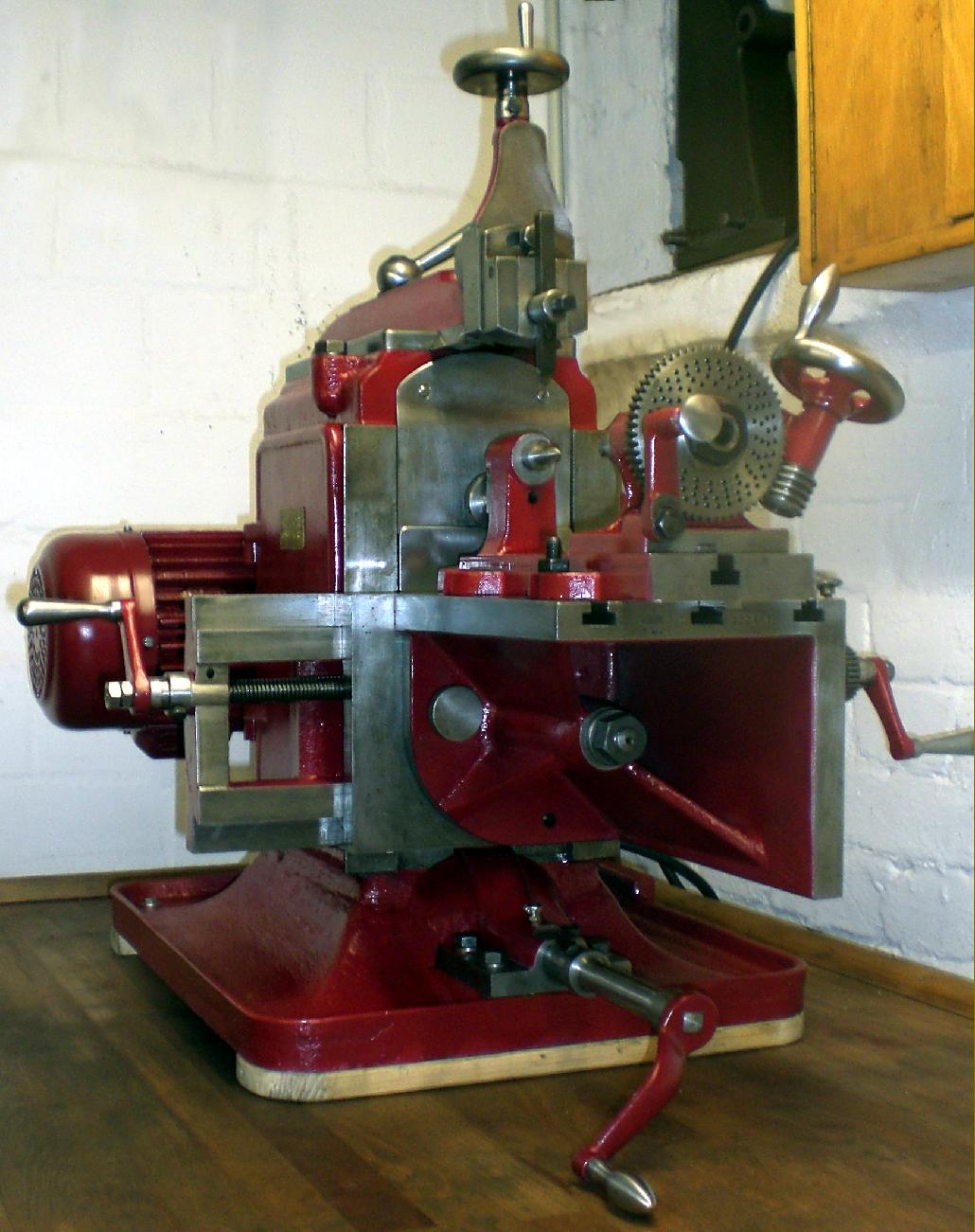
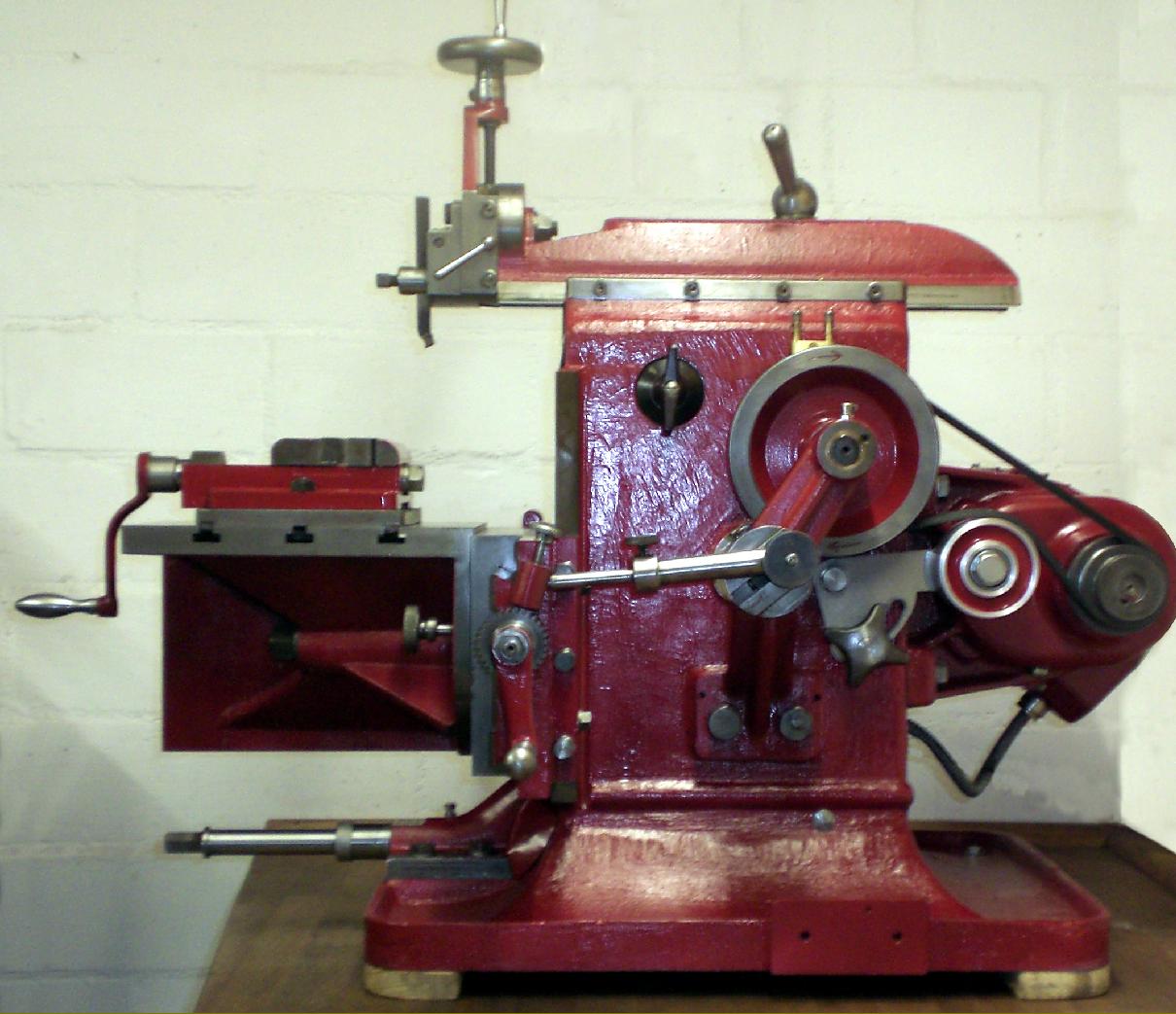
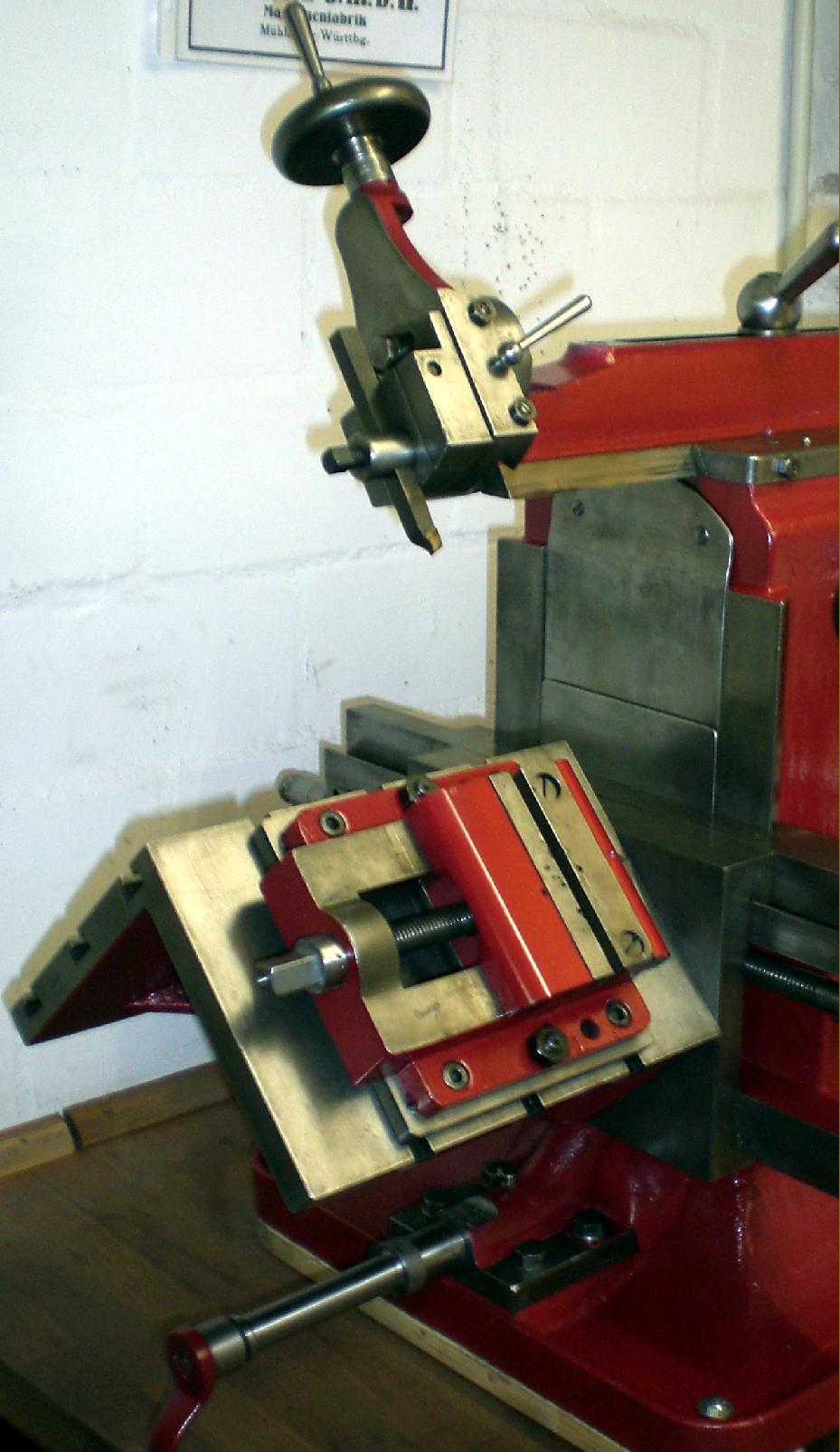
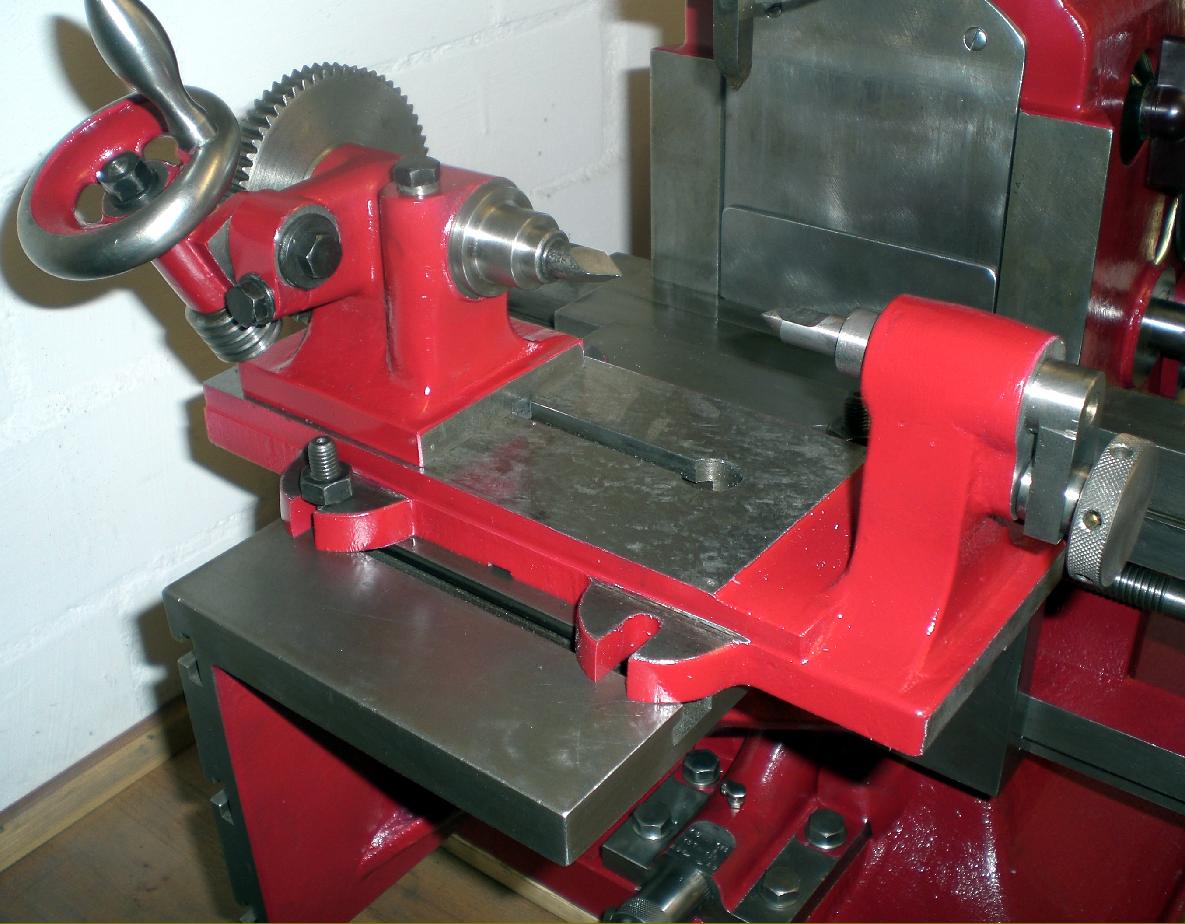
Built by J.Emrich at Mühlacker during the 1920s this was one of the smallest German-made shapers ever constructed and combined quality of construction with automatic feeds and a pivoting table. The ram stroke could be extended to a maximum of 150 mm whilst the table had a longitudinal travel of 220 mm and 125 mm vertically. Although various configurations were offered, the machine illustrated below has a pivoting, double-faced table formed as a simple braced angle plate - its relatively light construction and lack of a front support being typical of many similar contemporary machines. Even so, the table was of enormous depth and able to mount the dividing attachment either sideways or facing inwards. T-slots on one face ran from left to right and on the other from front to back - with both a vice and dividing attachment mounted separately by T-bolts.
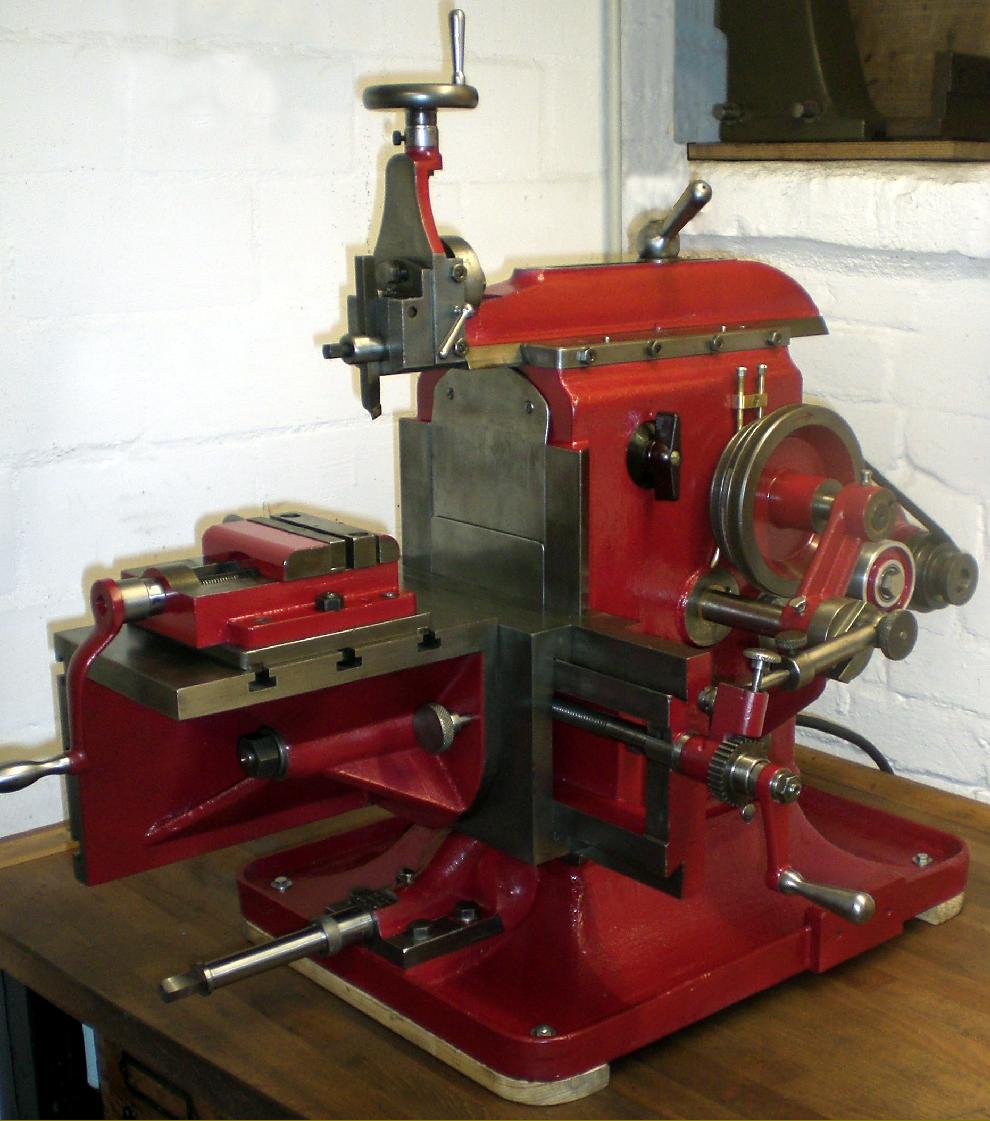
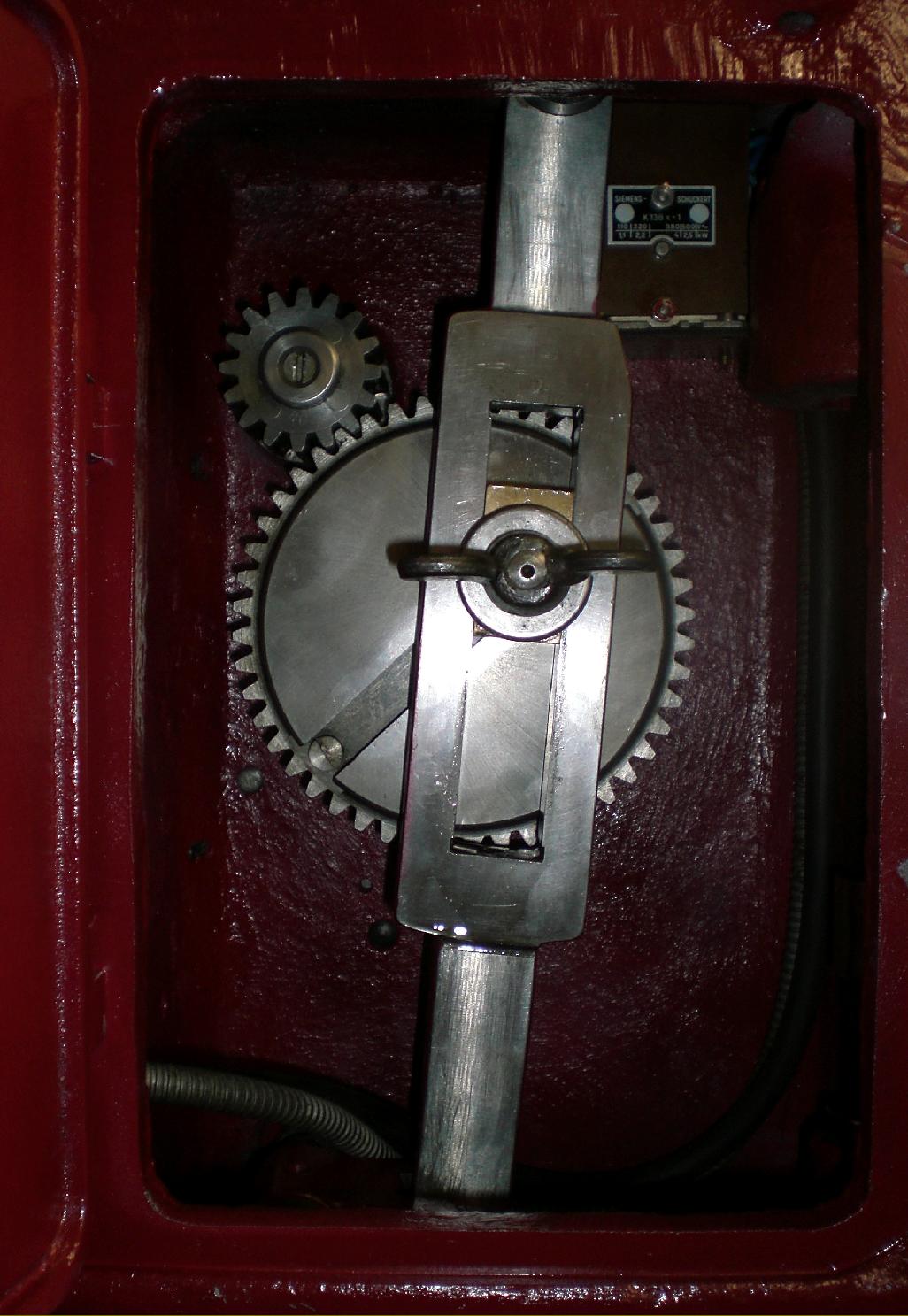
Originally driven by a flat-belt (from a ceiling-mounted line shaft) the shaper illustrated has been very neatly converted to a self-contained drive by V-belts running over a jockey wheel. Although now fitted with the part in steel, the original drive pinion that engaged with the crank gearwheel was made from laminations of leather pressed and riveted together. This construction, widely used at the time on other lower-powered machine tools, gave a noticeably smooth and silent drive, though it would prove unreliable when subjected to continuous, heavy use. Interestingly, all the nuts and bolts on the machine were English Whitworth form, the change to metric fasteners not being complete in German industry until well into the 1930s.
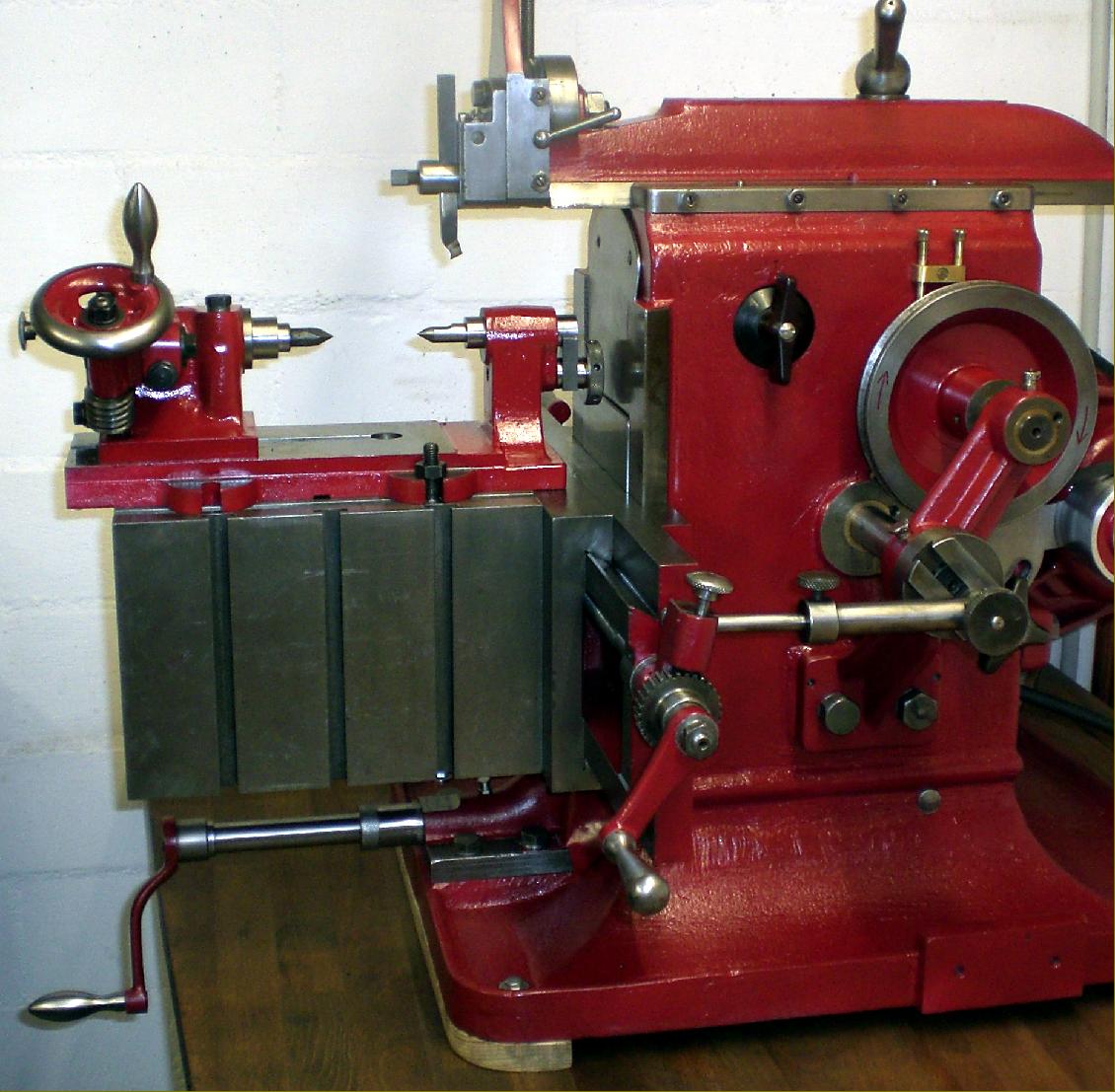
Arranged with conventional right-hand threads, the operating crank handles had a sense of movement that was "clack-handed" - a rotation of a handle to the right causing the slide to move out, not in. Despite this aberration, the designers had tried to make life easy for the operator by providing circular, knurled-edge screws to alter the settings of the table power feed - there was no need to go hunting for the infamous "self-hiding" spanner.
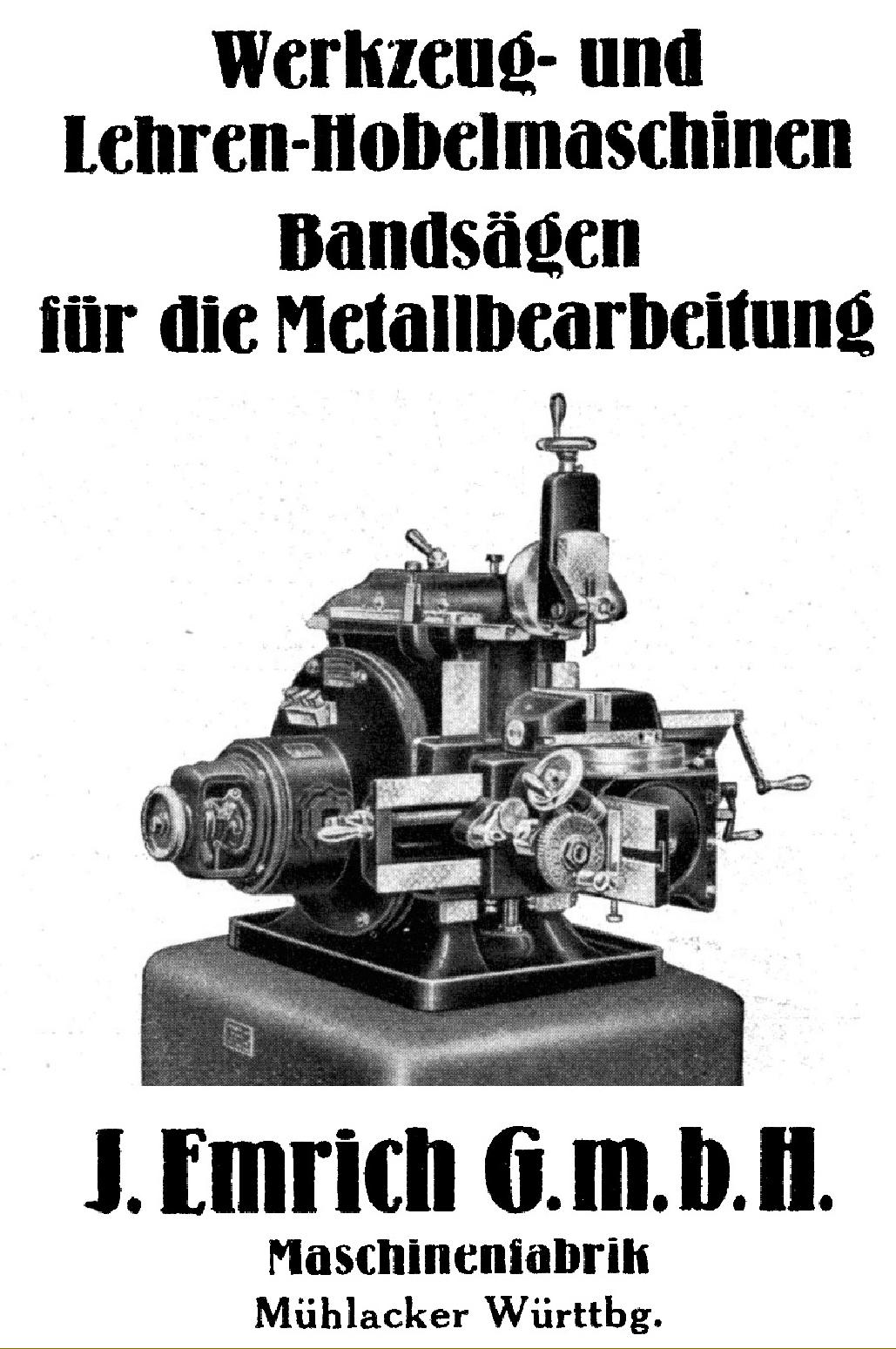
While this model of the Emrich shaper cut metal in the conventional way, on the push stroke, some later types (see the last illustration on this page) were changed so that the action took place when "pulling". The newer models were also more heavily built, with self-contained drive systems and 3-faced box tables with sturdy, built-in vices and other accessories. Although not as well known, Emrich were the forerunners of the celebrated Ludwig Gack, makers of many ingenious and complex shaping and slotting machines.
|
|
|
|
|
|
|
|
|
|
|
|
 |
|
|
|
|
|
|
1920s Emrich shaper. Note the immensely deep table and the lack of a forward support
|
|
|
|
|
|
|
 |
|
|
|
|
|
|
The pivoting, double-face table was formed as braced angle plate - it's relatively light construction and lack of a front support being typical of similar contemporary machines
|
|
|
|
|
|
|
 |
|
|
|
|
|
|
The table power feed was easily and quickly adjusted without spanners by means of circular, knurled-edge screws
|
|
|
|
|
|
|
 |
|
|
|
|
|
|
|
|
|
|
 |
|
|
|
|
|
The present owner's conversion to a self-contained drive system has been carried out with great mechanical sympathy
|
|
|
|
|
|
|
|
 |
|
|
|
|
 |
|
|
|
|
|
|
Although now fitted with a steel component, the original drive pinion that engaged with the crank gearwheel was made from laminations of leather pressed and riveted together,.
|
|
|
|
|
|
|
 |
|
|
|
|
|
|
Dividing attachment with tailstock - a useful through seldom-found shaper accessory.
|
|
|
|
|
|
|
 |
|
|
|
|
|
|
A later Emrich shaper of advanced design and construction. The ram cut on the in stroke, the motor was flange-mounted to a built-in gearbox whilst the table had a permanently-mounted vice and diving apparatus.
|
|
|
|
|
|
|
|
|
|
|
|
|
|