|
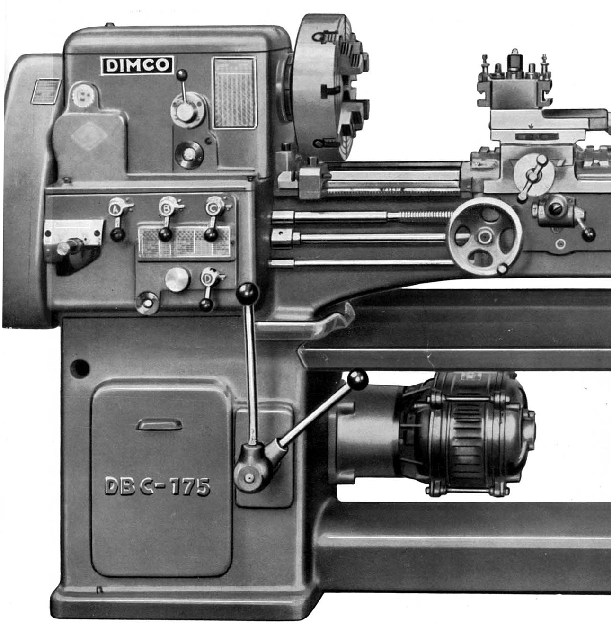
Dimco, based in Milan, Italy, were once a well-known manufacturer of machine tools and had branches in London, New York, Caracas and Buenos Ayres. Their range included grinders, power presses and lathes, the latter all of industrial quality and size and popular from the 1940s until the 1960s. Typical of the company's products were the "Model D.B.C. 175" (described below) and the larger "D.G.M 225"
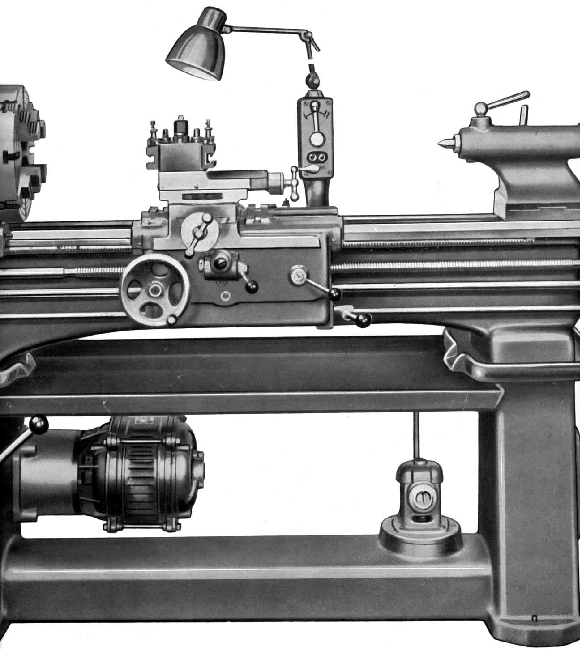
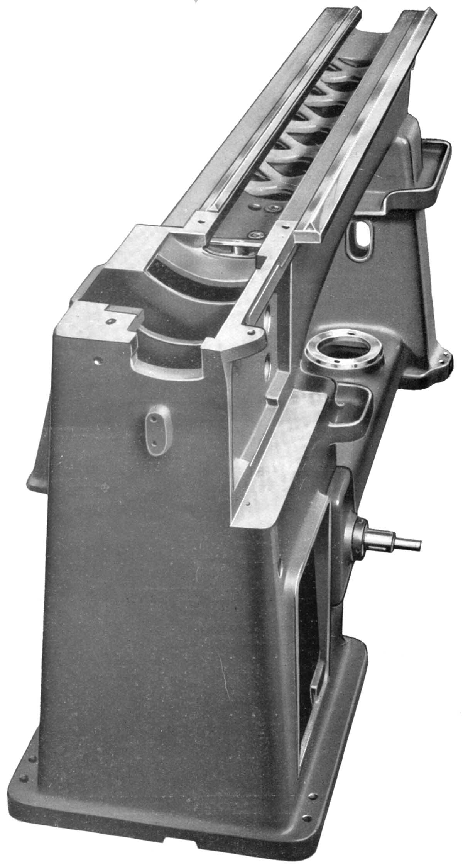
The D.B.C. 175, with a 67/8-inch centre height and a between-centres capacity of 39 inches, was a well specified and heavily-built lathe advertised as being suitable for both toolroom and production work. Unlike most makers of the period, who fitted their lathes to fabricated sheet-metal or cast-iron stands, Dimco cast their machines as a single unit with the bed and its two supporting columns fabricated from one large pattern. Even the floor-level section that braced the headstock-end plinth and tailstock foot was usefully employed as the coolant tank. The close-grain, cast-iron V-way bed was 105/8-inches wide with multiple lattice-like cross braces between the front and back walls. A 7-inch long removable gap was provided as standard and, when lifted out, enabled a piece of metal up to 20¾-inches in diameter and 4½ -inches deep to be turned on the faceplate.
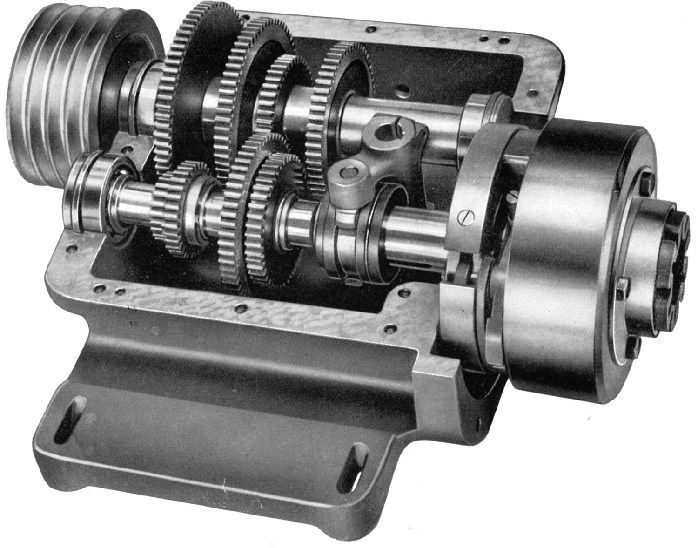
Inside the headstock-end plinth, and driven by a 3 hp motor flange-mounted externally to its right-hand face, was the 4-speed spindle-drive gearbox. Mounting a self-contained box in this position, with drive to the headstock by belts, was intended to reduce vibrations associated with meshing gears from being transmitted to the workpiece and was usually a design employed on better-quality toolroom lathes - its use in a more modestly-priced lathe was unusual, though not unique. The gearbox contained two alloy-steel shafts running in ball races and carrying hardened and ground gears with lubrication by splash and centrifuge. Built into the drive flange between electric motor and box was a clutch and brake unit that used a combination of brake shoes and cast-iron expansion rings; this assembly allowed the spindle to be stopped and started by the control of a single lever mounted concentrically with the speed change lever on the front face of the headstock-end plinth.
The headstock was of box form, in grey cast iron and internally ribbed for greater rigidity. It carried a case hardened, tempered and ground 13/8-inch bore (5-Morse taper) spindle that ran in a 2.9-inch diameter by 4.5-inch long adjustable front bronze bearing and a pair of ball races at the rear that were also arranged to take end thrust. Built into the front section of the headstock was a splash-lubricated, hardened and ground backgear assembly that gave a low-speed range of: 26, 44, 74, and 126 rpm and a high of: 220, 352, 592 and 1000 rpm. A special high-speed model with a maximum of 2000 rpm was also available but this required a different spindle, probably running on roller races front and rear, and had to be specially ordered. Unfortunately the spindle nose was a simple thread - and this at a time when machines of similar capacity from the likes of Colchester, Harrison, LeBlond and Delta-Rockwell had been available with the much-superior American long-nose taper for some years.
Continued below:
|
|