|
Continued:
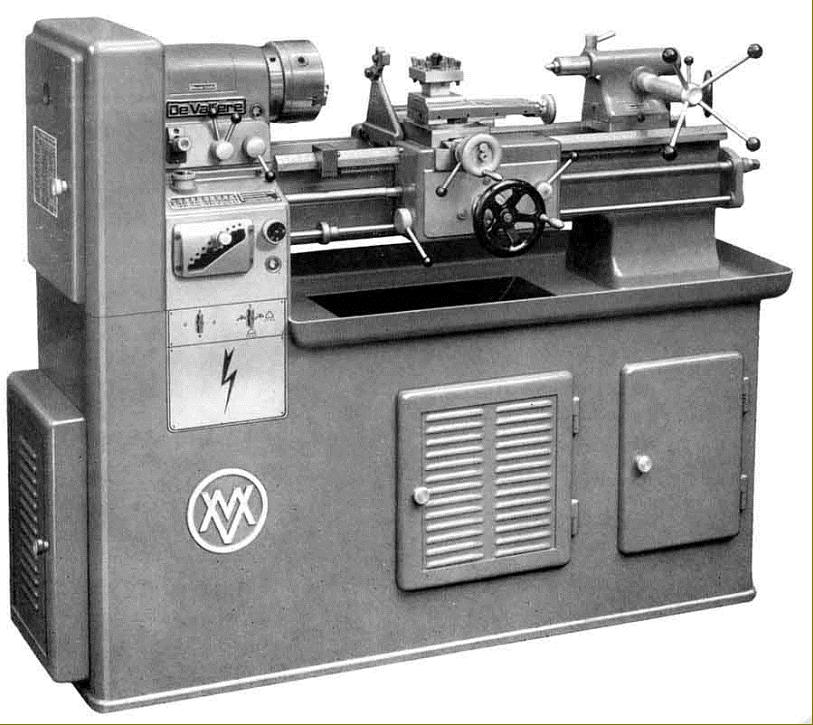
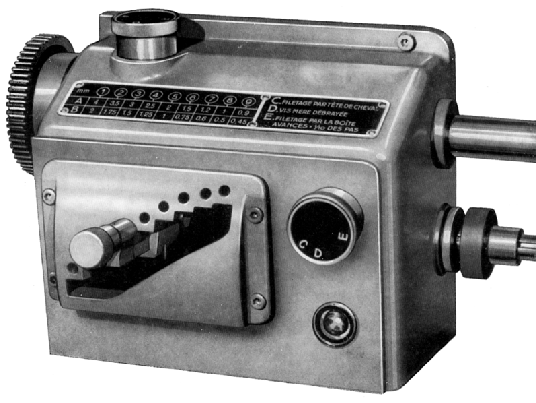
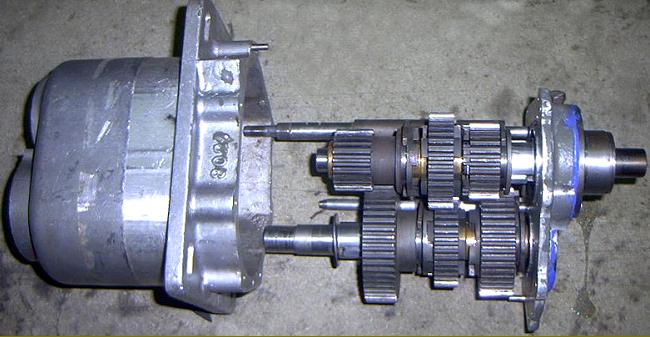
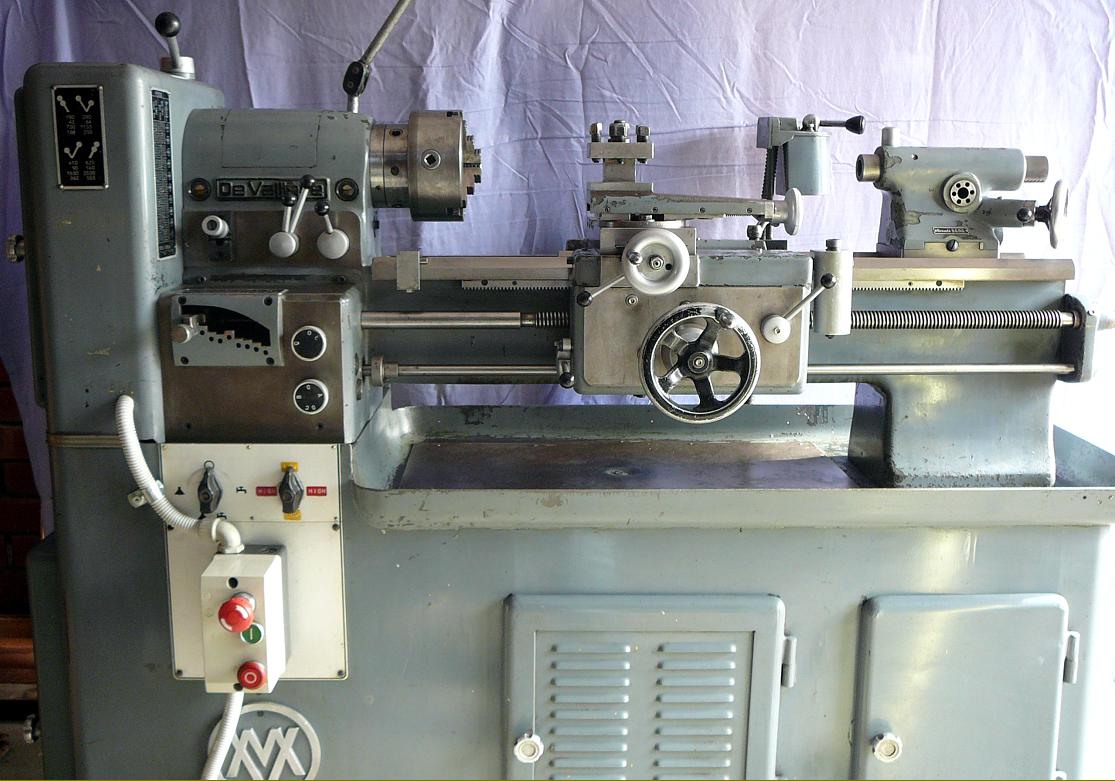
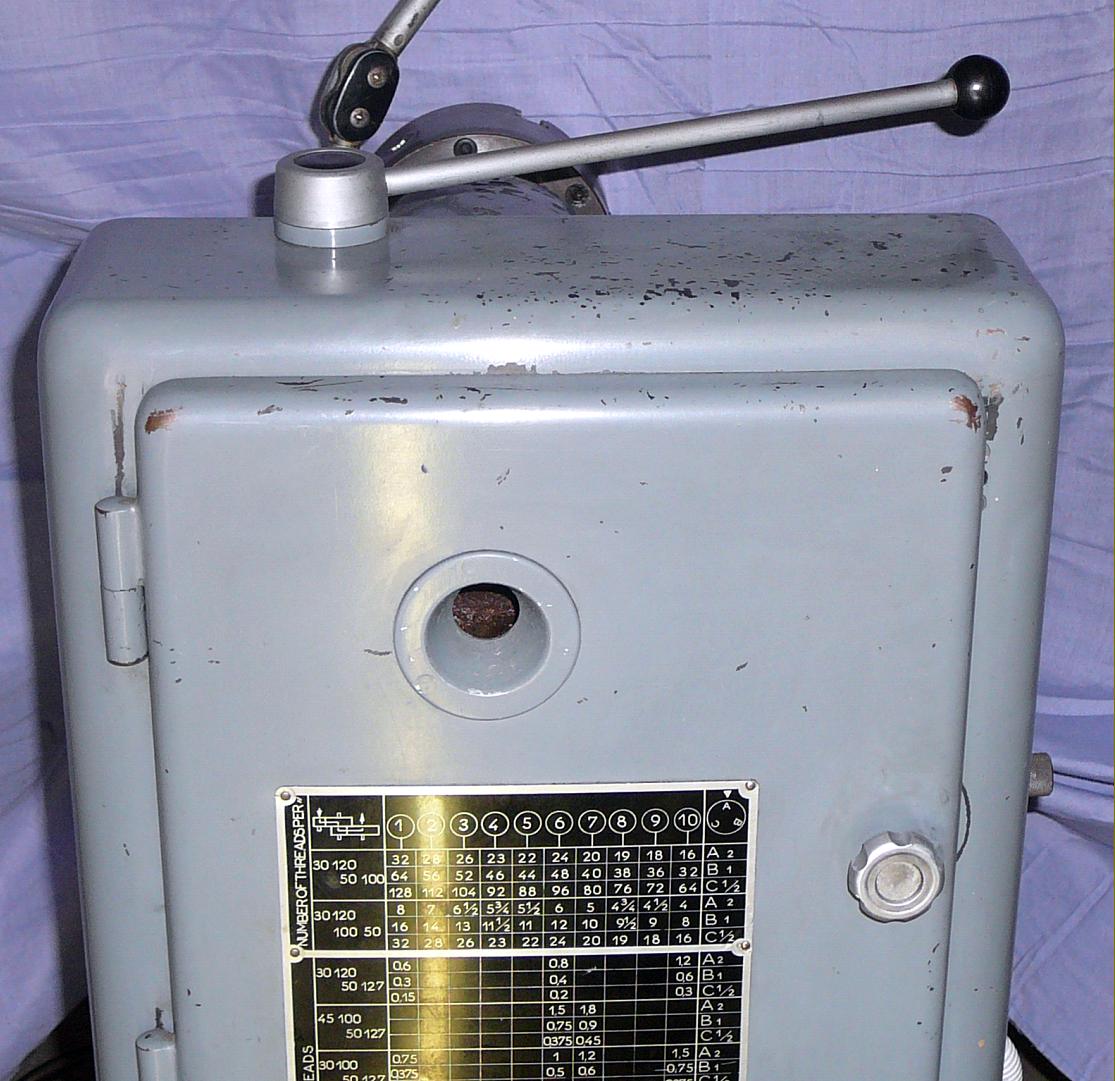
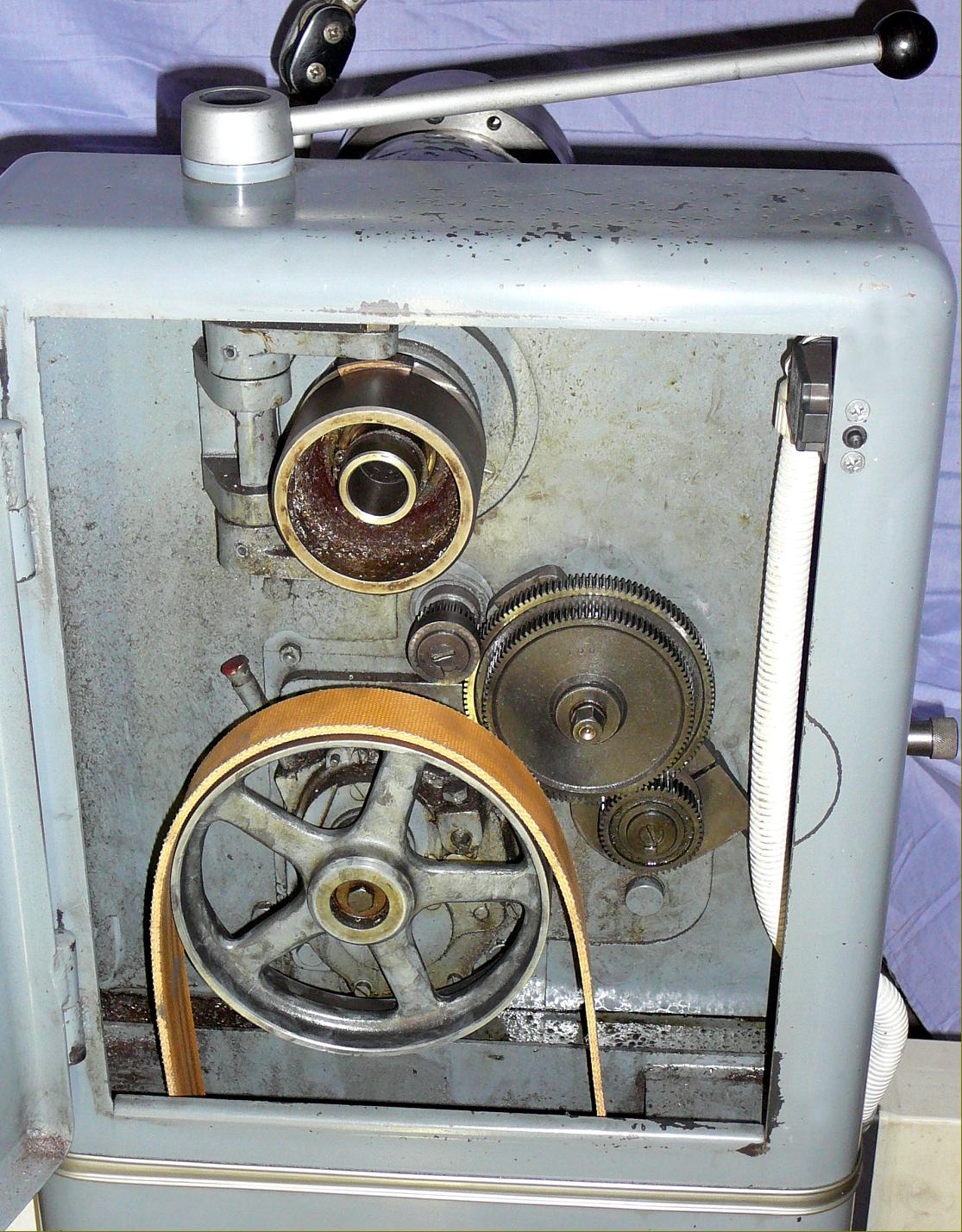
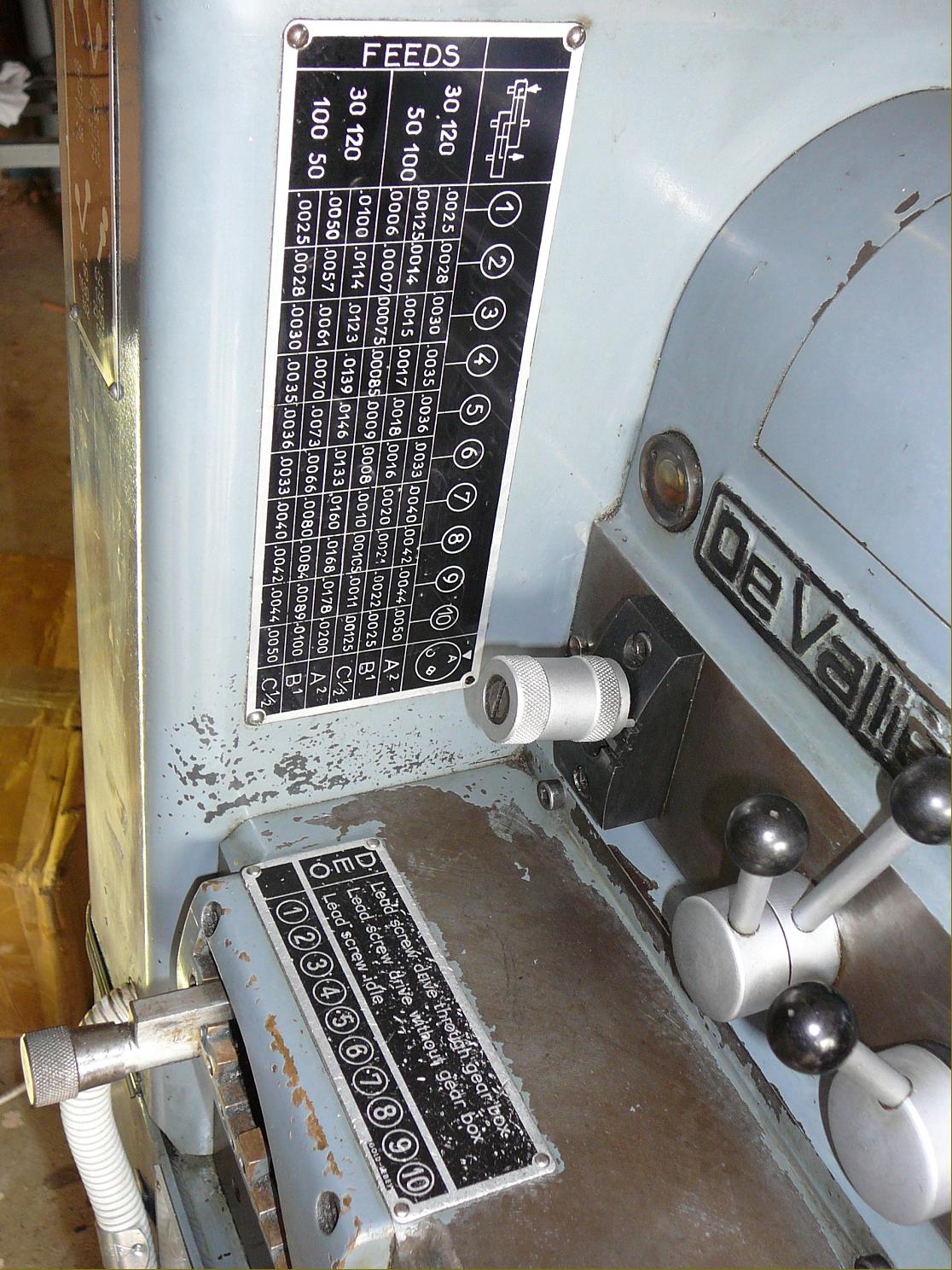
Drive to the oil-sump, splash-lubricated, quick-change screwcutting gearbox was by changewheels through a conventional tumble-reverse mechanism; with an eye to lucrative export markets in the USA and Great Britain the makers decided to offer properly engineered, individual metric and English gearboxes with leadscrews of 5 t.p.i. and 4 mm pitch respectively. The metric box gave 18 pitches from 0.45 to 4 mm pitch and, with conversion gears, a further range of English threads from 2 to 72 t.p.i. The English box gave 30 pitches from 4 to 128 t.p.i. and, with metric translation gears, a selection of metric threads from 0.25 to 7 mm pitch. a clutch allowed the leadscrew drive to pass straight through the box and so be used for generating "special leads" - presumably very coarse pitches (by arranging changewheels) that would otherwise not have been available. On some versions of the lathe the leadscrew was hardened and ground and on all units the leadscrew clasp-nut was of "high quality bronze" and ran in hardened guides. A separate power shaft, protected by a shear-pin and running at 1/10 the speed of the leadscrew, drove the sliding and surfacing feeds; fitted with an automatic knock-off control for the longitudinal feed it was able to disengage the longitudinal feed to a repeat accuracy of 0.05 mm (0.002"). A single lever, mounted on the left-hand face of the very heavy double-wall apron both selected and engaged the feeds.
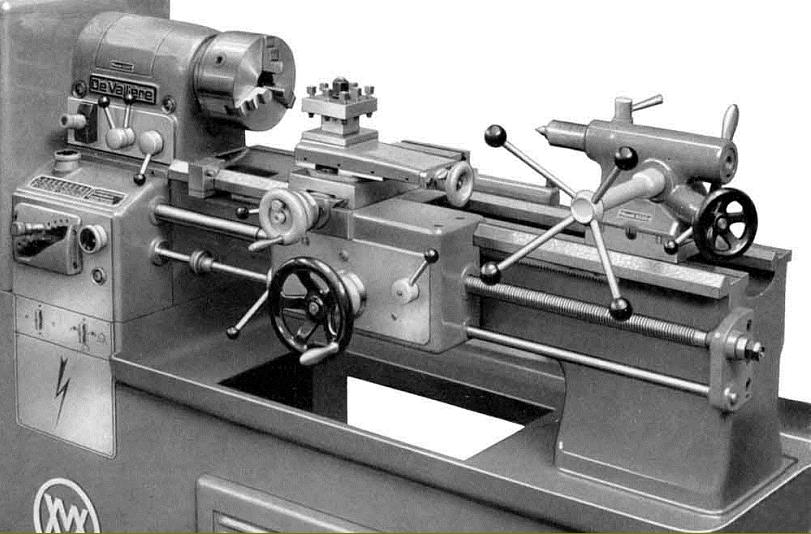
Strongly built and of deep section the saddle was long and fitted with both front and rear tapered gib strips; the cross slide was machined from a robust casting and of the full-length type; it was fitted with a raised platform at the rear carrying two T slots to allow the mounting of a parting or other tool holder.
Full-circle, the handwheels carried zeroing satin-chrome micrometer dials and, while that fitted to the cross slide was of a reasonable size and fitted with a knurled rim of greater-than-usual depth, that used on the top slide was (as ever) too small. The cross-slide dial had a through-the-face thumb screw that locked the setting without disturbance. Both feed screws were hardened and ground and that operating the cross slide benefited from running through a small oil bath and, like the contemporary Hardinge HLV, was equipped with a lever-operated quick-withdrawal mechanism designed to allow the operator to screwcut at high speed; as the lever was operated the cutting tool was withdrawn 6 mm (1/4") and could then be reset (against a positive stop) without disturbing the setting of the micrometer dial. A rather large precision 4-way toolpost of patent design was supplied as standard though, if so inclined, the customer could opt for a simple "American" single-post type instead. During final assembly the cross and top slides and their ways were all hand scraped to a "perfect" fit. During final assembly the cross and top slides and their ways were all hand scraped to a "perfect" fit.
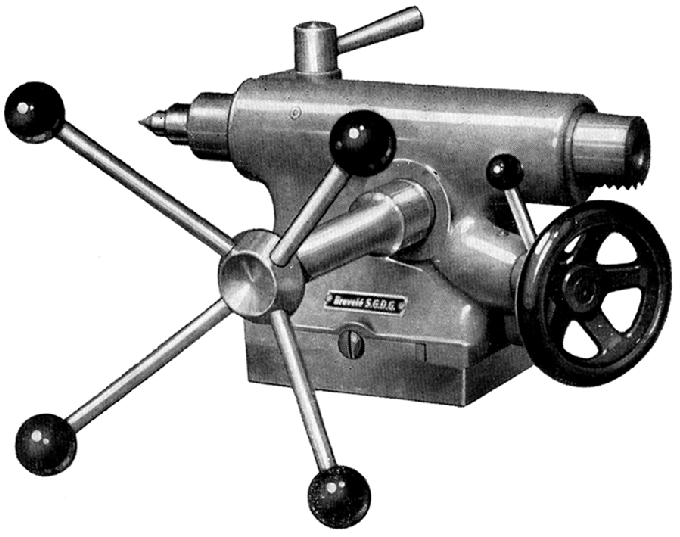
Of unusual (and patented) design, the set-over tailstock, though comparatively small, had a spindle fitted with an angled, fine-feed handwheel drive that, once the worm-and-wheel feed was disengaged, could also be activated by a quick-action, capstan-handled control operating through rack-and-pinion gearing. The No. 3 Morse taper barrel had a diameter of 40 mm (19/16"), a travel of 180 mm (7") and, even when fully extended, a good proportion (150 mm/6") remained fully supported within the casting.
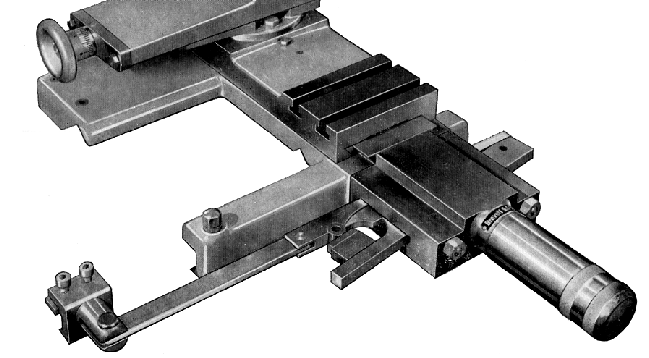
Besides the usual range of accessories - steadies, chucks, collets, capstan attachments and various kinds of toolpost - an ingenious and neatly designed taper-turning attachment was also available that could be brought into operation without the need to disengage the cross feed nut from its screw. The unit was also able to turn against templates and the makers offered a variety of standard profiles including those for the common sizes of Morse taper.
The French used a home-grown system for testing the accuracy of precision machine tools - the "Salmon Standard" - though the makers admitted that for the benefit of a customer they would also check and apply any of the other standards by Schlesinger, D.I.N. or ISO and would also, for a small additional charge, apply a higher standard of checking during the build and on the finished machine if that were considered necessary.
The H. 130C proved to be a very successful machine, selling into markets worldwide and, by the end of 1968, over 8000 examples had been manufactured.
If you have a DeValliere lathe of any type and would like to contribute a set of high-resolution photographs, the writer would be pleased to hear from you..
De Vallière H.130C Lathe pictures continued on page 2
|
|