|
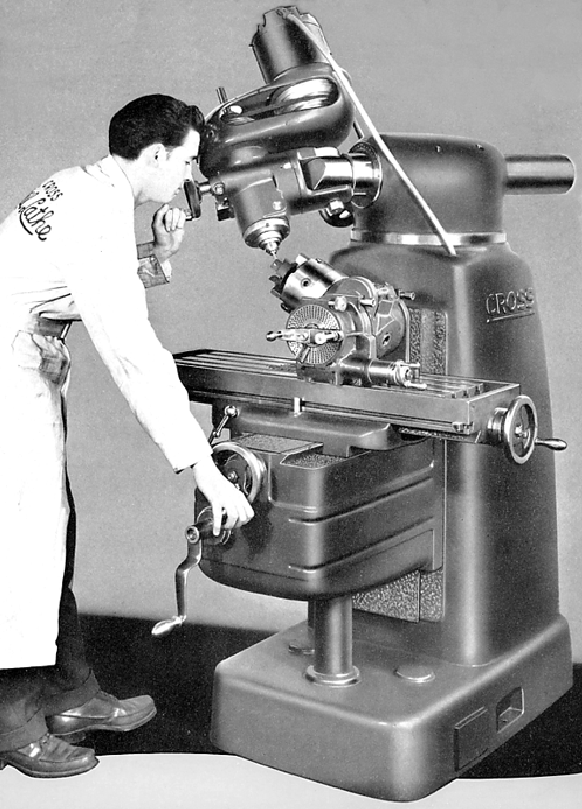
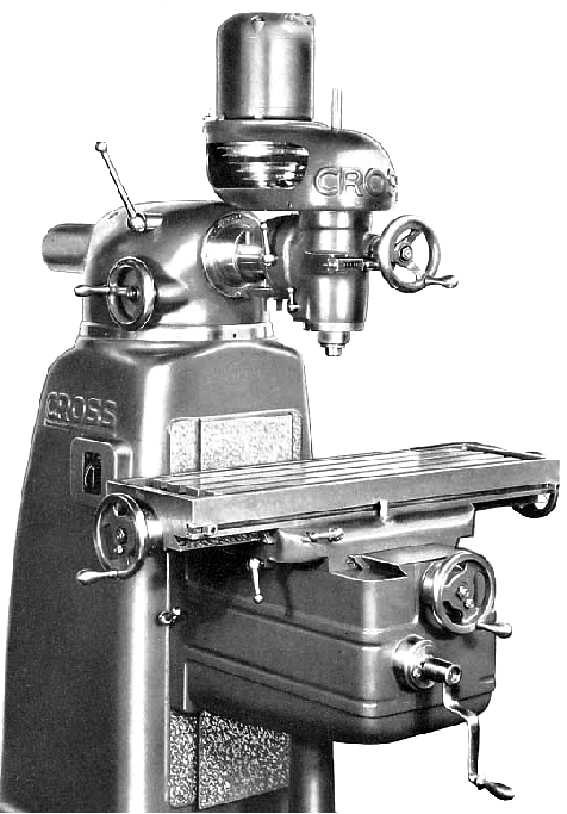
Resembling in from and function the much better-known Bridgeport, the Cross No. 20 Universal Miller was styled to reflect the 1930's interest in "streamline" designs and manufactured by a company established in 1898 - the Cross Gear and Machine Co. of 3250 Bellevue Avenue, Detroit, Michigan.
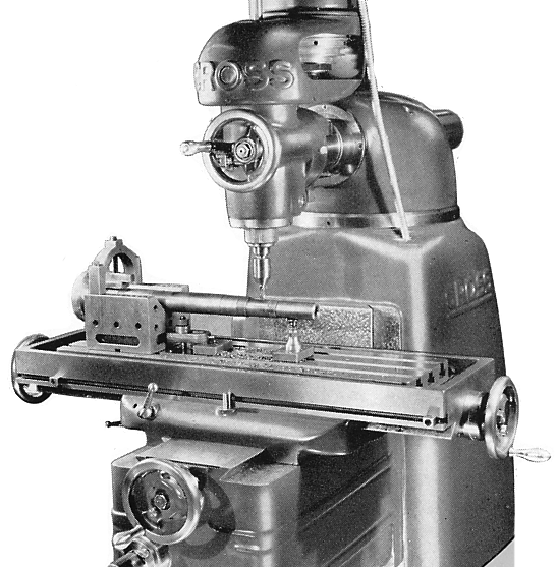
Only one table size was available, 10.5" x 36", which was also its working area, with longitudinal, cross and vertical travels of 20", 9" and 16.5" respectively. The table and knee ways (the front of the knee was of a pleasingly clean design - and completely enclosed against the ingress of swarf and dirt) were all hand scraped and fitted with tapered gib strips - however, no table power feeds were fitted as standard although a longitudinal feed, with four rates of 0.75" to 4.5" per minute, was offered at extra cost. All the micrometer dials zeroed and were positively locked by simple knurled-head through screws; the very best method - if properly designed - that prevents the setting changing as the lock is applied.
Mounted on the end of a round ram (which could moved in and out through a range of 12 inches), the vertical head was locked to it by a simple "clevis" connection. This startlingly basic arrangement gave the head the ability to be positioned at any angle in any plane - although it cannot have been the most rigid of assemblies - and one wonders if it had a propensity to generate chatter when the ram was fully extended and the machine working with a large cutter at its maximum rate of metal removal.
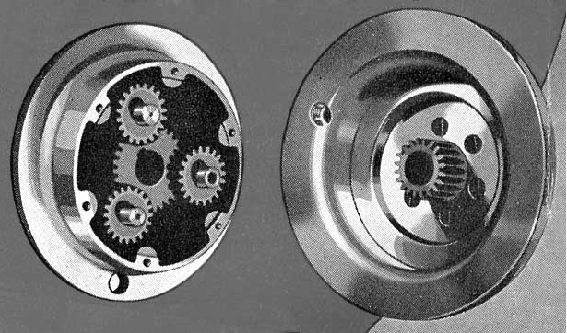
The head motor was either a 0.5 hp, 1200 rpm unit - which drove the spindle though a V belt at speeds of 350, 570, 890, 1510, 2360 and 3880 rpm - or a 1800 rpm version which offered 520, 855, 1335, 2265, 3540 and 5830 rpm. As an option, an epicyclic-type backgear assembly could be built into the spindle pulley and resulted in speeds of 104, 165, 320, 330, 515, 580, 1000, 1100, 1800 and 3400 rpm with the slower of the two motors - and 160, 250, 485, 500, 790, 880, 1530, 1650, 280 and 5250 with the faster.
Fitted with a No. 3 Morse taper or 30 International Standard nose fitting the quill had a travel of 4" and was controlled exclusively by a fine downfeed handwheel, there being no quick-action drill mechanism; the quill travel readout was in the form of a direct-reading counter in thousandths of an inch. The maximum clearance beneath the spindle nose was 16.5 inches.
If you have a surviving Cross miller, the writer would be very interested to see photographs and hear of your experience with it..
|
|