|
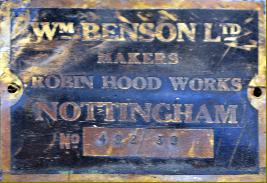
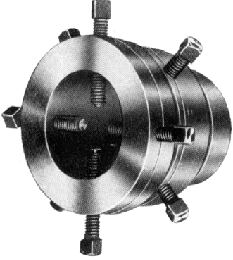
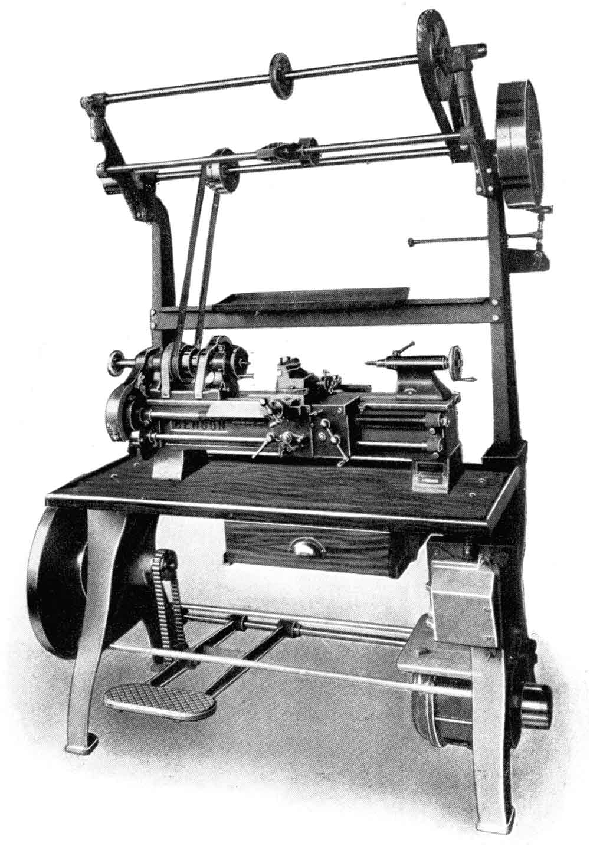
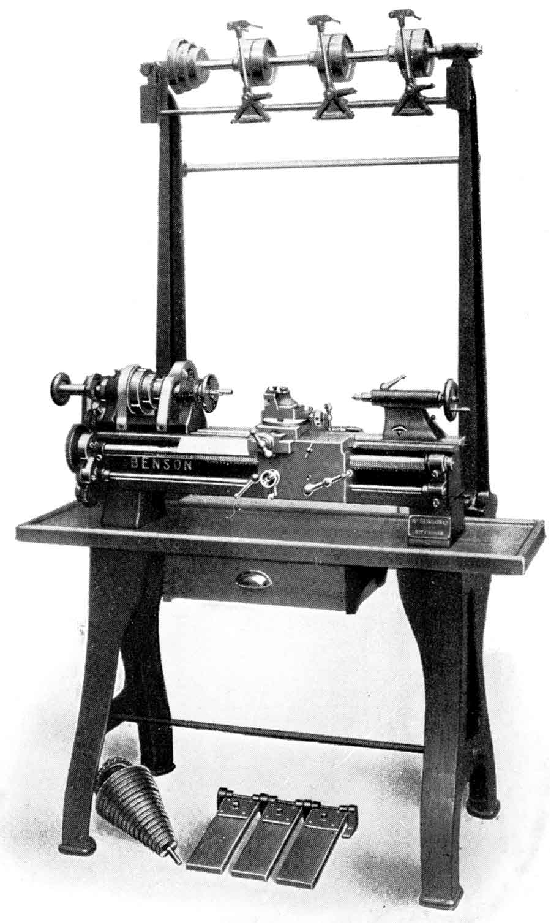
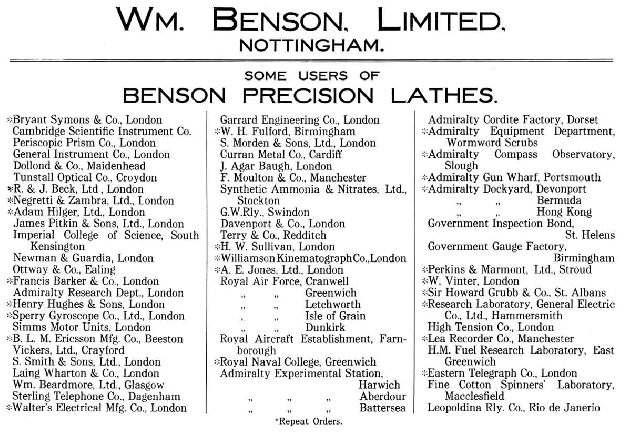
William Benson established his company in 1855 at first describing himself as an "Engineer, Millwright and Tool Makers". The firm, based in the St. Ann's area of Nottingham in the Robin Hood Works, Robin Hood Street, was engaged originally in the manufacture of machines for use in the extensive and important Nottingham lace trade and only later branched out to include such diverse products as steam engines, pumps, boiler fittings, hand and power presses, swaging machines, malt crushers, chuck jaws, lathe slide rests, a tiny hand-operated shaper, a similarly tiny bench horizontal milling machine and a line of surface plates, straight edges and other inspection and precision measuring equipment. One of their advertisements boasted: "Patentees, designers and builders of the most improved machinery for cutting Jacquard loom cards" - the revolutionary and ingenious Jacquard being worthy of close study by anyone fascinated by in ingenious machinery. Like many similar organisations of the time the firm also had the facility to design and manufacture special-purpose tools - their boast being that they could: "design and make any high-grade single-purpose machines for any operation." In the years leading up to WW2 in 1939, they became known in the machine-tool trade for their small, high-precision lathes, the company using, in their catalogues, the contemporary American nomenclature Bench Lathe for a small, non-screwcutting, high-class machine intended for use on the bench of a skilled craftsman. However, not all their lathes were so small, and limited numbers of larger more conventional backgeared and screwcutting machines were made, probably up to 6-inches in centre height. Benson lathes enjoyed a formidable reputation and were favoured by users engaged in critical work including, amongst many others, the Royal Air Force, numerous Admiralty Experimental Stations (dotted around the country), The Government Gauge Factory, Sperry Gyroscopes, Cambridge Scientific Instruments Ltd., the Royal Aircraft Establishment at Farnborough and the Navy - there is one on H.M.S. Belfast moored in the Thames.
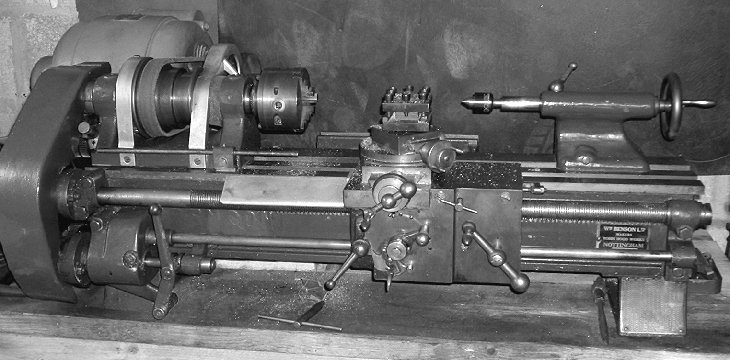
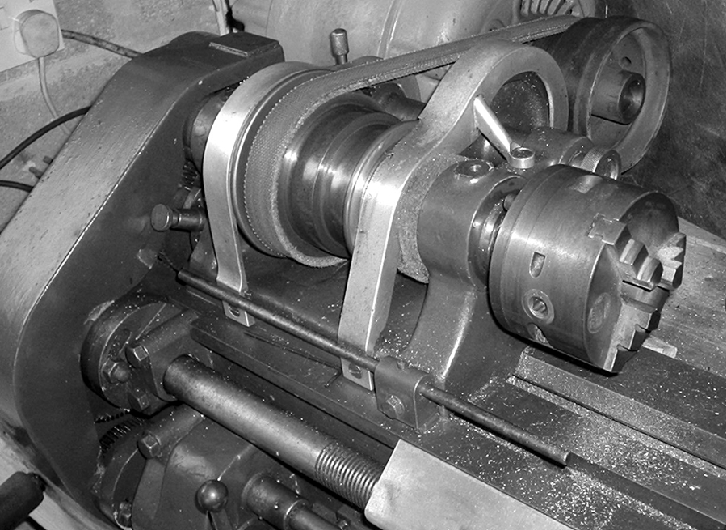
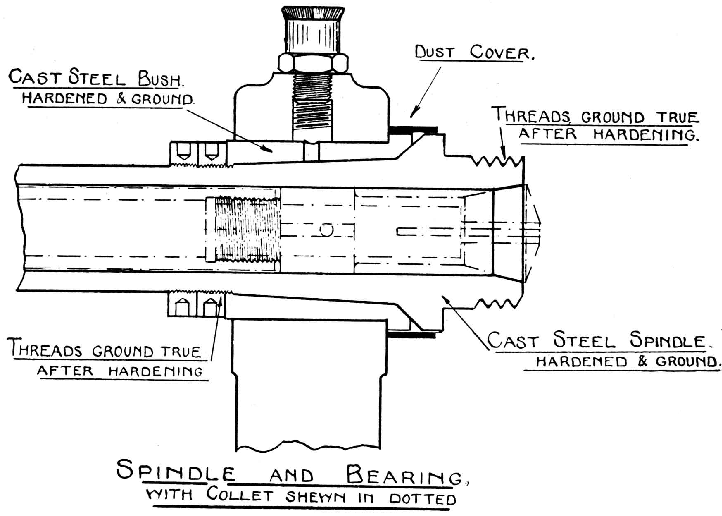
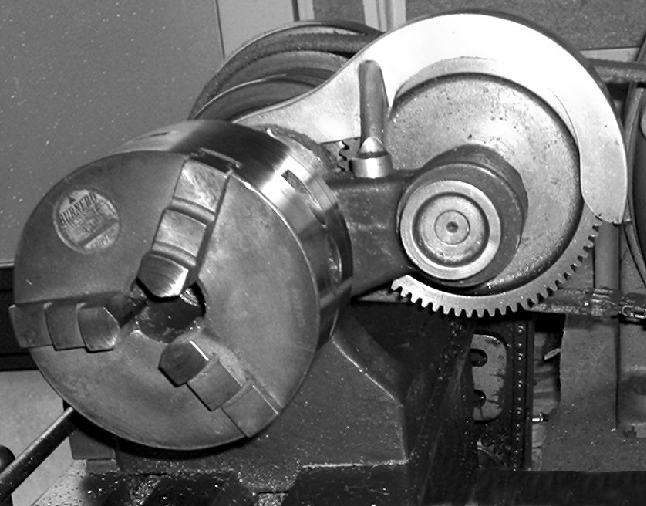
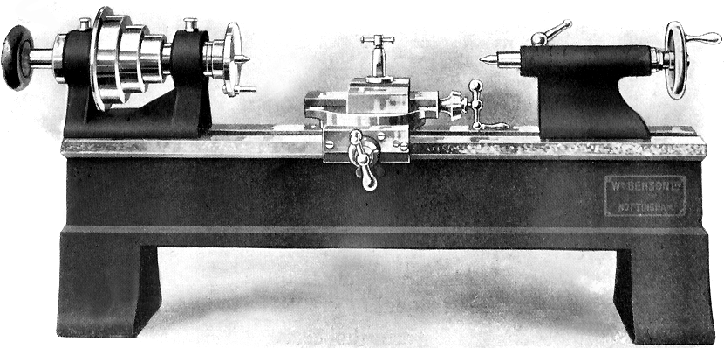
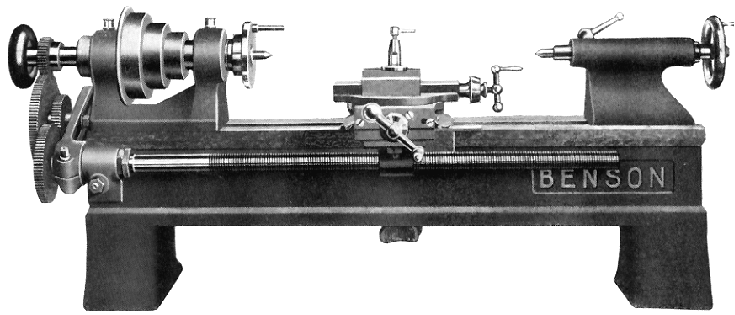
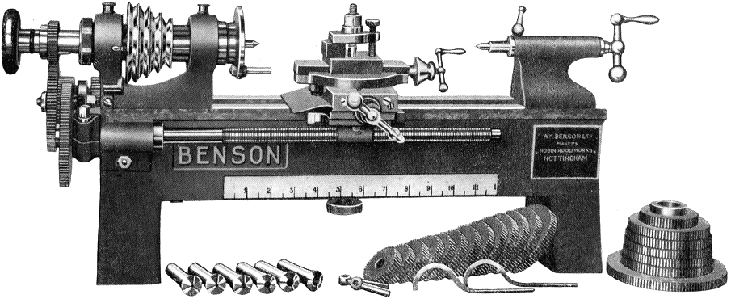
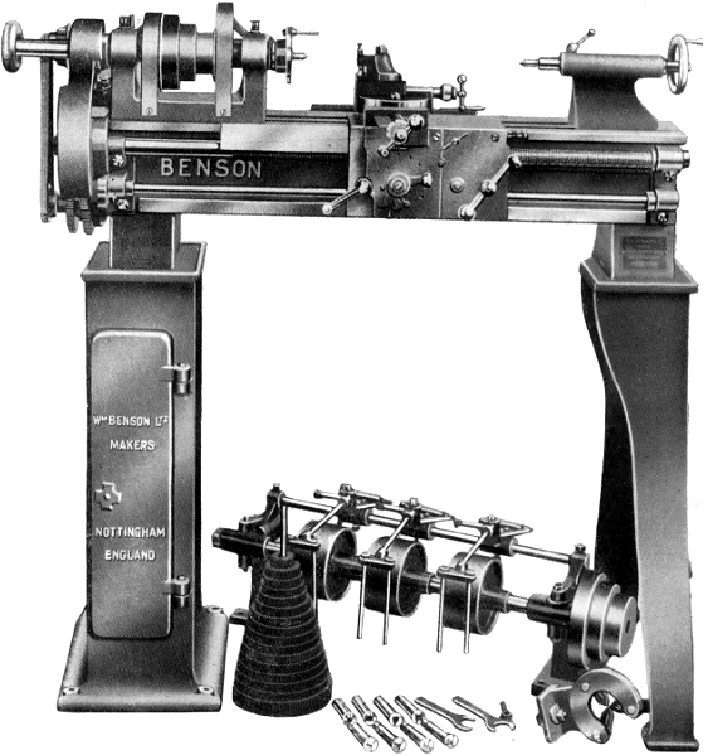
Oddly, the Company used a set of rather confusingly similar code names for their lathes including: "Benla", Benle", "Benli", "Benlow", "Benly" and "Benlo". Fully-specified and beautifully constructed, the Company's main product was the Benli, a lathe built in early and late types and always fitted with taper turning (9-inch and 25-degree capacity) as standard; backgear, however, was listed as an option and, when fitted, allowed spindle speeds to span 70 to 840 rpm. The headstock carried a hardened and ground spindle whose nose threads ground were finished in situ after assembly to ensure absolute concentricity. The spindle bearings were of traditional "precision bench lathe" type - as first developed by Stark in the U.S.A. during the 1800s - in hardened and ground cast steel and formed as a double cone (shallow for support and steep to absorb thrust) at the front and a tapered bronze at the rear. Although the 3-step cone pulley was set with its largest diameter to the left the purpose of this arrangement - to allow a greater mass of supporting metal to surround the front bearing - was, unfortunately, not taken advantage of by the makers, the cut-out beneath the bearings being purely rectangular in shape and the casting the same width from end to end. It is believed that later lathes had this deficiency corrected by the addition of a large fillet in the casting arranged so as to give better support to the bearing housings.
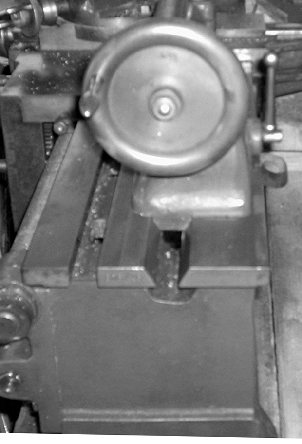
As befitted a genuine precision lathe, the bed of the Benli was enormously wide and deep in comparison to the centre height and carried an unusual combination of ways: flat-topped with narrow 90-degree sides for the saddle and a sunken, central V for the tailstock. Located against front and back 60° ways, the the saddle was gibbed to the bed by a tapered wedge, the adjustment being by a screwed rod and locknuts
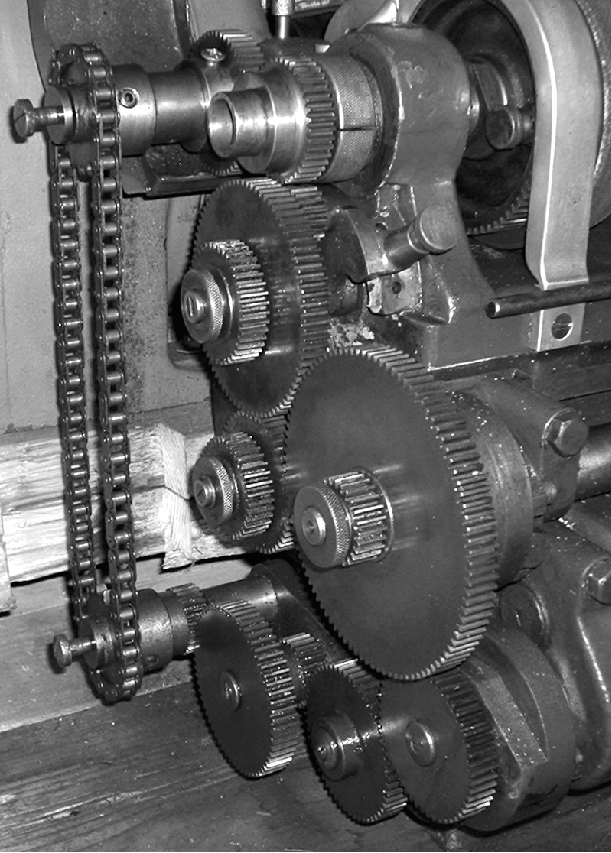
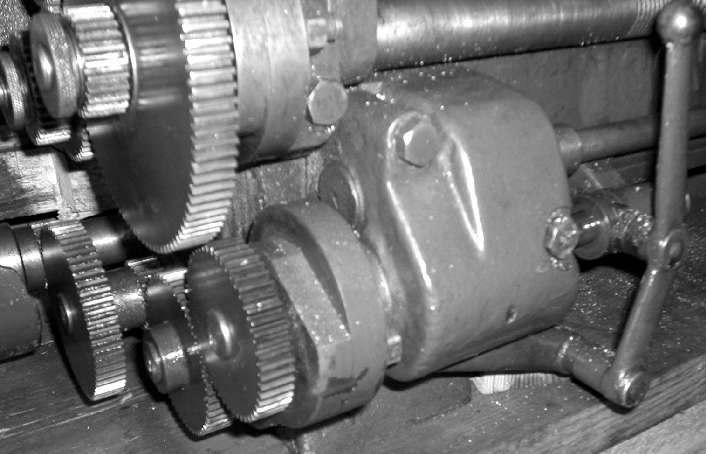
To preserve its accuracy the leadscrew (clasped by double nuts) was used only for screwcutting, the power sliding and surfacing feeds being provided by a separate powershaft with selection by a quadrant arm (located by a spring indent) and engagement by a flick-up-and-down lever on the front of the apron. On early models the power shaft could be driven from either the screwcutting changewheels or, at a much finer rate of feed, by an auxiliary flat-belt, the drive pulley being (rather ingeniously) mounted not on the headstock spindle but on a shaft geared down from it. On later machines the fine feed was arranged differently to give, presumably - though it has not been possible to confirm this - an even slower rate This system (besides connecting as usual to the screwcutting changewheels) had a gear on the end of the headstock spindle driving a rear-mounted layshaft that took a drive, via sprockets and chain, to a separate train of gears feeding into a 4-speed gearbox from which emerged the front-mounted power shaft.
On early models power cross feed was not fitted and, because the drive to the power-shaft gearbox did not pass through the headstock-mounted tumble reverse, the apron had to be fitted with a feed reversing mechanism that used bronze bevel gears. Selection was by a quadrant lever and engagement through a flick-up-and-down bronze "finger-hook" lever positioned in the bottom left-hand corner of the apron's front face. This mechanism, also used on many other lathes including the Harrison L5, ensured that, no matter how heavy the cutting load, the disengagement was instantaneous. A long cover, extending from the left-hand face of the apron, gave protection to the 1-inch diameter precision-cut leadscrew.
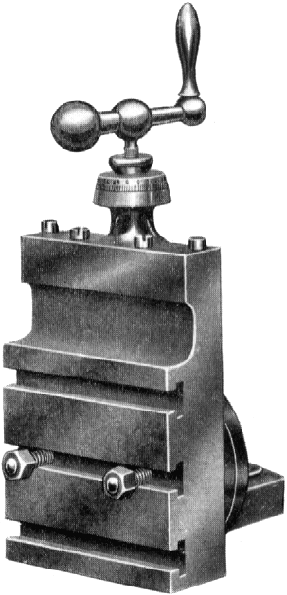
Top and cross slides were hand-fitted, individually scraped to a perfect fit and driven by square-section threads running through bronze nuts. The top slide was mounted on a large, very stable round boss and the micrometer dials, even on the models from the 1920s, were of an unusually generous size for the time.
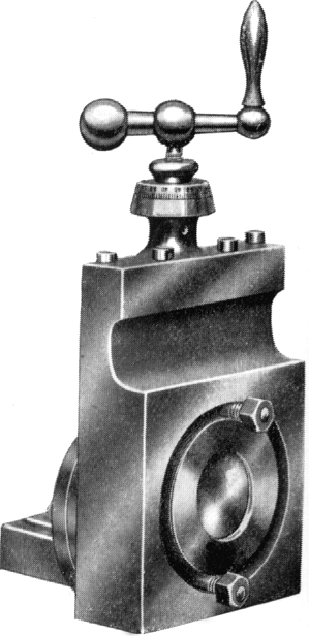
Inexplicably, but as on so many precision bench lathes, the tailstock barrel carried an inadequate a No. 1 Morse taper and the barrel locked by that most crude of methods, a long slot cut along the casting and closed down by a pinch bolt - an arrangement possibly copied from Schaublin practice.
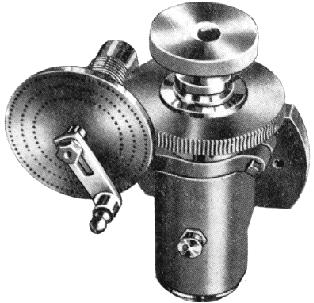
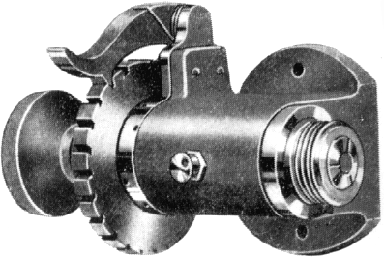
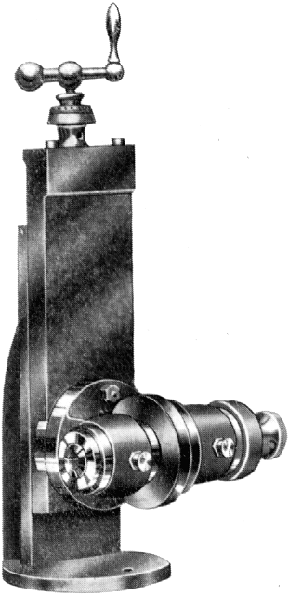
Although in post WW2 years only the larger 33/4-inch centre-height (actually 313/16") backgeared and screwcutting "Benli" was built (together with a basic version) originally others sizes were offered: the "Benla", a 33/4-inch centre height plain-turning model (with detachable screwcutting as an option, when it became the "Benle" ) and the "Benly" a 21/2-inch x 22" screwcutting lathe. A useful range of beautifully-finished accessories was also listed.
Benson Serial Numbers allow some insight into production numbers - one marked 598/45 for example would almost certainly have been made in 1945 and have been the 497th example made - assuming numbers had started at 101, as they often did. Sadly, production of these fine machines stopped during the mid 1940s - and they are now rare and sought after with experienced turners all agreeing that the quality of their construction is outstanding.
The Benson works closed in 1963, the St. Ann's area being, by then, a sadly run-down and semi-derelict area ripe for residential development. All traces of the original factory have disappeared and even the original road layout has vanished under a new arrangement of streets and housing estates.
If any reader has a Benson machine tool, the writer would be pleased to hear from you.
|
|